

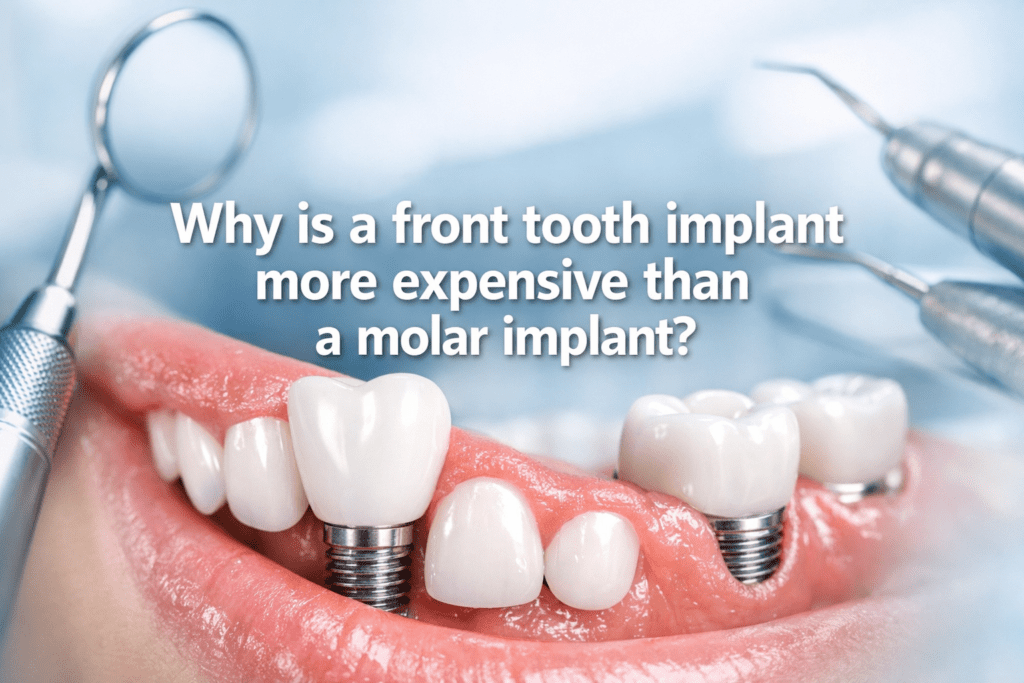
Losing a tooth can be a jarring experience, but thanks to advancements in dental technology, dental implants offer a durable and natural-looking solution for tooth replacement. However, as you begin to explore your options, you might notice a significant difference in pricing, particularly wondering, “Why is a front tooth implant more expensive than a molar implant?” This isn’t just a random fee; it’s a reflection of the intricate demands, specialized skills, and advanced materials required for achieving a flawless result in the highly visible front of your mouth compared to the more functional, less visible back teeth. In this comprehensive article, we’ll delve deep into the multifaceted reasons behind this cost disparity, ensuring you understand the value behind every dollar spent on restoring your smile in 2026.
Key Takeaways
- Aesthetic Priority: Front tooth implants demand superior aesthetic precision to match existing teeth perfectly in color, shape, and gum line contour, directly increasing costs.
- Surgical Complexity: The limited bone volume and delicate gum tissue in the front of the mouth often necessitate more complex surgical techniques and potential bone/gum grafting.
- Specialized Materials & Components: Premium, often custom-made, crowns and abutments are used for front teeth to ensure optimal appearance and fit, contributing to higher expenses.
- Expertise & Time: The procedure requires a highly skilled dental surgeon and prosthodontist, along with more chair time, due to the intricate nature of achieving a seamless result.
- Anatomical Differences: Front teeth typically have single roots and are critical for speech and biting, while molars are multi-rooted and built for heavy chewing, influencing implant design and placement.
The Aesthetic Imperative: Why Front Tooth Implants Demand More
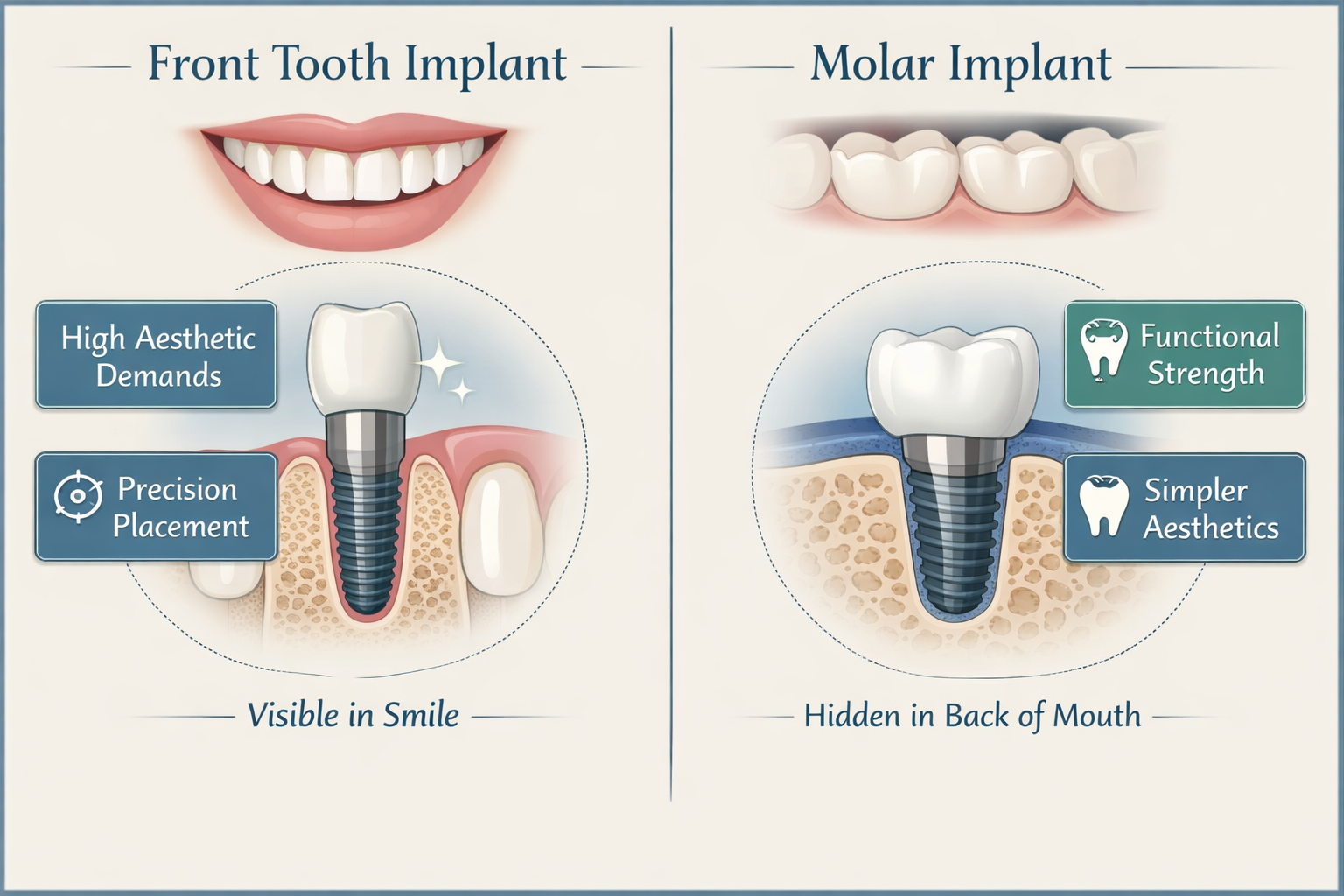
When it comes to replacing a missing tooth, the location within your mouth dictates much of the treatment plan and, consequently, the cost. The difference in cost when considering “Why is a front tooth implant more expensive than a molar implant?” largely boils down to the aesthetic demands placed on a front tooth.
The Spotlight Effect: Visibility and Perception
Your front teeth, specifically the incisors and canines, are the stars of your smile. They are visible every time you speak, laugh, or simply open your mouth. A front tooth implant must blend seamlessly with your natural teeth, matching in:
- Color: Achieving an exact shade match is crucial and can involve meticulous layering of porcelain or other restorative materials.
- Shape and Size: The crown must mimic the natural contours and dimensions of its neighboring teeth, which are often unique to each individual.
- Translucency: Natural teeth are not opaque; they have varying degrees of translucency. High-quality front tooth crowns replicate this characteristic to avoid a “fake” appearance.
- Gum Line Architecture: The way the crown emerges from the gum line is critical. An improperly contoured gum line around a front implant can be a dead giveaway.
To achieve this level of aesthetic perfection, dental professionals often need to use more advanced techniques and materials. For example, custom-shaded zirconia or highly aesthetic porcelain crowns are typically chosen over more basic options suitable for less visible molars. The artisanry involved in crafting a truly undetectable front tooth is akin to sculpting, requiring immense skill and time from the dental lab technician.
Delicate Anatomy and Bone Volume
The bone structure in the front of your jaw tends to be thinner and less dense than in the back. This presents several challenges for front tooth implants:
- Bone Grafting: Often, patients who have lost a front tooth may also have experienced bone loss in the area. To ensure the implant has a stable foundation, bone grafting might be necessary, adding to the overall cost and treatment time [1]. You can learn more about this process and recovery at bone graft recovery dental implant.
- Ridge Augmentation: Sometimes, the alveolar ridge (the bone that supports the teeth) can be deficient. Rebuilding this ridge to provide adequate support and aesthetic contour for the implant is a delicate procedure.
- Gum Grafting: To achieve a natural-looking gum line and prevent recession around the implant, soft tissue grafting might be required. This specialized procedure ensures the gum tissue frames the new tooth perfectly.
These supplementary procedures are less commonly needed or are less extensive for molar implants, where the primary concern is often functional stability rather than intricate aesthetics.
Surgical Complexity and Specialist Expertise
The answer to “Why is a front tooth implant more expensive than a molar implant?” also lies in the heightened surgical precision and the level of specialist expertise demanded by front tooth placement.
Precision Placement and Angulation
Placing a dental implant in the front of the mouth requires extreme precision. The implant must be:
- Perfectly Angled: Even a slight deviation in angle can compromise the final aesthetic outcome, making the tooth appear misaligned or causing issues with the prosthetic attachment.
- Precisely Positioned: The implant’s exact depth and rotational position are critical to allow for proper crown emergence and gum contour.
In contrast, molar implants often have more leeway in their angulation and position, as their primary role is chewing, and aesthetic perfection is secondary. The margin for error in a molar implant is much greater without impacting the final function or appearance significantly.
The Role of Advanced Technology and Planning
Modern dental implant procedures, especially for front teeth, heavily rely on advanced diagnostic and planning tools. This includes:
- 3D Cone Beam Computed Tomography (CBCT): This imaging technology provides detailed 3D views of the bone structure, nerve pathways, and sinuses, allowing for highly accurate implant planning and placement [2]. This helps surgeons avoid vital structures and precisely plan the implant’s trajectory. You can read more about this at ct scan and dental implants.
- Surgical Guides: For front teeth, custom-fabricated surgical guides, often created using CAD/CAM technology, are frequently employed. These guides ensure the implant is placed exactly as planned, minimizing risk and maximizing precision.
- Temporary Restorations: While the implant heals, a temporary crown is often placed on a front tooth to maintain aesthetics and allow the gum tissue to heal around a natural-looking contour. This temporary prosthetic itself adds to the cost and complexity.
Specialist Fees: The Cost of Expertise
The intricate nature of front tooth implant procedures often necessitates the involvement of highly specialized dental professionals, such as:
- Oral Surgeons or Periodontists: These specialists possess extensive training and experience in implant placement and complex bone/soft tissue grafting procedures.
- Prosthodontists: These experts specialize in the aesthetic and functional restoration of teeth. They are crucial for designing and fitting the final crown to ensure it looks and functions perfectly.
Working with a team of specialists, each bringing their unique skill set, naturally contributes to a higher overall cost. Their combined expertise ensures the best possible outcome, particularly when the aesthetic stakes are high. If you’re looking for specialists in your area, consider exploring options like dallas periodontics dental implants.
Materials, Components, and Laboratory Work
The components used for a front tooth implant and the laboratory work involved are typically more sophisticated and customized than those for a molar implant. This is another key factor in understanding why a front tooth implant is more expensive than a molar implant.
Implant Abutments: Custom vs. Stock
The abutment is the connector piece between the implant post (which is surgically placed in the jawbone) and the final crown.
- Custom Abutments: For front teeth, custom abutments are almost always preferred. These are individually designed and milled to fit the patient’s unique gum line and tooth anatomy perfectly. This customization is essential for creating a natural emergence profile and optimizing gum tissue health and aesthetics. They are made from high-grade materials like zirconia, which offers excellent aesthetic properties, especially in visible areas. Learn more about this crucial component at complete guide to the dental implant abutment procedure what you need to know.
- Stock Abutments: While custom abutments can be used for molars, stock (pre-manufactured) abutments are often a viable and more cost-effective option. Their fit might not be as precise, but in the less visible, more functional back of the mouth, the aesthetic implications are minimal.
The design and fabrication of a custom abutment are complex, requiring specialized CAD/CAM technology and skilled laboratory technicians, which adds significantly to the cost.
Crowns: Aesthetics vs. Durability
The final crown placed on the implant also plays a major role in the cost difference.
- Front Tooth Crowns: These are typically crafted from highly aesthetic materials like all-ceramic (e.g., zirconia, porcelain fused to zirconia, or e.max). These materials are chosen for their ability to mimic the translucency, color, and texture of natural teeth. The process involves multiple layers, hand-finishing, and precise color matching by a skilled ceramist.
- Molar Crowns: While aesthetics are still important, the primary concern for molar crowns is durability and strength to withstand the heavy chewing forces. Materials like porcelain fused to metal (PFM) or full-contour zirconia are commonly used. While still high-quality, the aesthetic requirements are generally less demanding, leading to less complex laboratory procedures and lower costs.
The Artistry of the Dental Lab
The dental laboratory plays a pivotal role, especially for front tooth implants. The ceramist working on a front tooth crown is an artist, meticulously layering porcelain, staining, and glazing to achieve a lifelike result that seamlessly integrates with the patient’s existing dentition. This detailed, time-consuming work by highly skilled technicians contributes significantly to the higher price tag. The commitment to perfection is paramount.
Long-Term Considerations and Maintenance
While the initial cost is a major factor, it’s also important to consider the long-term success and maintenance of your dental implants.
Durability and Longevity
Both front and molar implants are designed to be long-lasting solutions. With proper care, they can last for many decades, often a lifetime [3]. However, the precision involved in front tooth implants means that the initial investment often translates into a more stable and aesthetically pleasing result over time. Maintaining good oral hygiene is critical for the longevity of all implants. You can find excellent advice on best dental implant aftercare products.
Potential for Revisions
Because of the high aesthetic expectations for front teeth, any minor imperfection in color, shape, or gum line can be a major concern for the patient. This sometimes means that adjustments or even re-fabrication of the crown may be necessary, adding to the overall cost and time involved. While revisions can occur with molar implants, they are less often driven by subtle aesthetic discrepancies.
Maintenance and Oral Hygiene
Regular check-ups and professional cleanings are essential for all dental implants to prevent peri-implantitis, an inflammatory condition that can affect the tissues around implants. The cost of maintaining implants is generally similar for front and back teeth, though specialized cleaning tools may be recommended for complex restorations. For insights into implant care, see best mouthwash for dental implants and best toothpaste for implants.
Comparing Front Tooth vs. Molar Implant Costs: A Summary
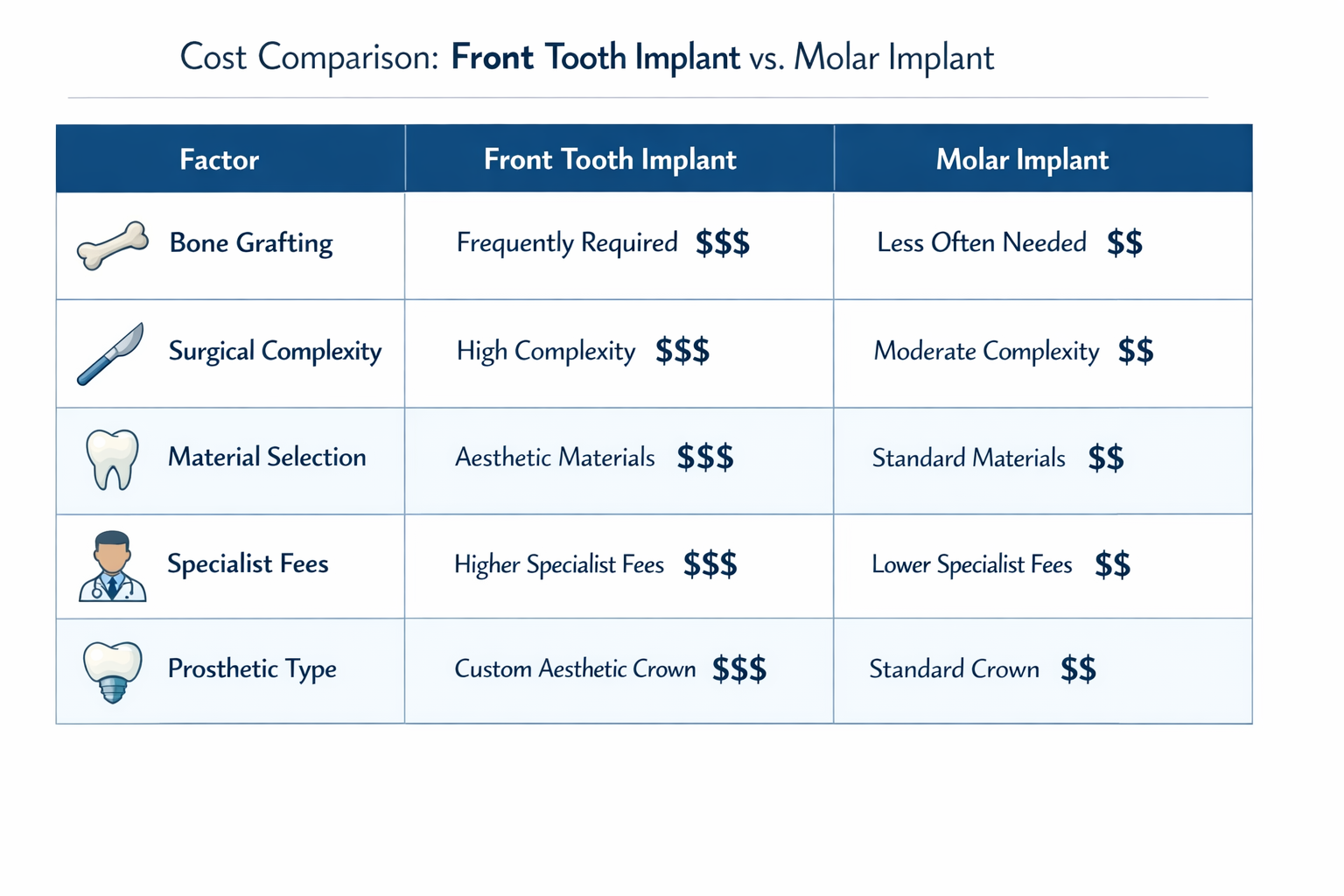
To further illustrate “Why is a front tooth implant more expensive than a molar implant?”, let’s summarize the key differentiating factors in a comparative table for 2026.
| Feature | Front Tooth Implant | Molar Implant | Cost Impact (Relative) |
|---|---|---|---|
| Primary Goal | High aesthetics, natural look, speech, biting | High functionality, chewing efficiency, stability | Higher |
| Visibility | Very high (smile line) | Low (back of mouth) | Significant |
| Bone Density | Often thinner, less dense, frequently requires grafting | Often thicker, denser, less frequent need for extensive grafting | Higher |
| Gum Tissue | Delicate, precise contouring crucial, often requires grafting | More robust, contouring less critical for aesthetics | Higher |
| Surgical Difficulty | High precision in angle, depth, emergence profile | More robust bone, greater tolerance for minor angle variations | Higher |
| Abutment Type | Almost always custom, zirconia/aesthetic material | Often stock, sometimes custom, metal or zirconia | Higher |
| Crown Material | All-ceramic (e.g., e.max, layered zirconia) for superior aesthetics, complex lab work | Full-contour zirconia, PFM (porcelain fused to metal) for strength, simpler lab work | Higher |
| Specialist Fees | Often involves prosthodontist for aesthetic design, oral surgeon/periodontist for placement | Primarily oral surgeon/periodontist for placement | Higher |
| Ancillary Procedures | Bone grafts, soft tissue grafts, temporary restorations more common | Bone grafts less common/extensive, soft tissue grafts rare | Higher |
| Time Investment | Longer planning, surgical, and prosthetic phases | Shorter overall process | Higher |
This table clearly shows that the combination of aesthetic demands, anatomical challenges, and the need for highly customized components and specialized expertise directly answers “Why is a front tooth implant more expensive than a molar implant?” The investment reflects the intricate work required to restore not just a tooth, but a crucial part of your smile and self-confidence.
Financial Planning for Dental Implants in 2026
Understanding the cost factors is one thing, but planning how to finance your dental implant is another. While front tooth implants may be more expensive, there are various options available in 2026 to make them more accessible.
Insurance Coverage
Many dental insurance plans offer some coverage for dental implants, though the extent varies widely. It’s crucial to check with your provider to understand your benefits, deductibles, and annual maximums. Some plans may cover a percentage of the surgical costs but not the prosthetic components, or vice versa. Always clarify what is covered before beginning treatment.
Financing Options and Payment Plans
Most dental practices understand that implants are a significant investment and offer flexible financing solutions. These can include:
- In-house payment plans: Many clinics allow you to spread the cost over several months or even years.
- Third-party dental financing companies: Companies like CareCredit or LendingClub offer specialized healthcare financing with various interest rates and repayment terms.
- Medical credit cards: Some credit cards are specifically designed for healthcare expenses, often with promotional interest-free periods.
Don’t let the upfront cost deter you from seeking the best solution for your smile. Discussing financing options with your dental office is always recommended. For those needing assistance, resources like best dental implant financing can be helpful.
Health Savings Accounts (HSAs) and Flexible Spending Accounts (FSAs)
If you have an HSA or FSA through your employer, these are excellent ways to pay for dental implants with pre-tax dollars. Since dental implants are considered a qualified medical expense, you can use these funds to cover the cost, effectively saving you money.
Consultation and Transparent Pricing
The best first step is always a comprehensive dental implant consultation. During this appointment, your dental professional can assess your specific needs, develop a personalized treatment plan, and provide a detailed breakdown of all costs involved. They should be able to clearly explain why certain procedures or materials are necessary for your case, especially when addressing “Why is a front tooth implant more expensive than a molar implant?” This transparency ensures you understand exactly what you are paying for. A thorough consultation is key to making an informed decision, and you can even book a dental implant consultation to start.
Conclusion
The question, “Why is a front tooth implant more expensive than a molar implant?” unveils a fascinating interplay of aesthetics, anatomy, surgical mastery, and advanced materials in modern dentistry. While the functional goal of tooth replacement is consistent, the journey to restore a front tooth is significantly more complex due to its highly visible location and the meticulous precision required to replicate natural beauty. From delicate bone and gum tissue management to custom-fabricated crowns that are works of art, every additional layer of complexity contributes to the higher investment.
Choosing a dental implant, particularly for a front tooth, is an investment in your oral health, your appearance, and your overall confidence. It’s about restoring not just a tooth, but the natural harmony of your smile. As you consider your options, remember that the cost reflects the exceptional skill, advanced technology, and premium materials dedicated to achieving an outcome that is both functional and aesthetically flawless. Don’t hesitate to consult with a qualified dental professional to discuss your individual needs and explore the best treatment and financing options available in 2026. Your perfect smile is worth the investment.
References
[1] Al-Nawas, B., & Schiegnitz, E. (2014). S2k guidelines for the “surgical stage of implant dentistry”. International Journal of Implant Dentistry, 1(1), 1-28.
[2] Hatcher, D. C., Dial, C., & Mayorga, C. (2003). Cone beam CT for pre-surgical assessment of implant sites. Journal of the California Dental Association, 31(11), 825-833.
[3] Jung, R. E., Pjetursson, B. E., Glauser, W., Zembic, A., Zwahlen, M., & Thoma, D. S. (2012). A systematic review of the 5-year survival and complication rates of implants supporting fixed dental prostheses. Clinical Oral Implants Research, 23(s6), 2-10.
Front Tooth vs. Molar (2026)
Tooth Location & Complexity
Additional Procedures (Common for Implants)
Restoration Type & Aesthetic Level
Estimated Implant Cost (2026)
Your estimated cost for a implant is: lt;/span>0
Please note: This is an **estimate** based on general factors. Actual costs vary significantly.
Leave a Reply
Share your thoughts or ask a question about dental implants. Your email address will not be published.