

Imagine waking up one morning to discover that the persistent pain in your back molar has escalated to the point where eating your favorite foods becomes unbearable. This scenario affects millions of people worldwide, and often, the solution involves both removing the problematic tooth and replacing it with a modern dental implant. The dental extraction and implant process has revolutionized how we approach tooth loss, offering patients a permanent, natural-looking solution that can last a lifetime with proper care.
The combination of dental extraction and implant represents one of the most significant advances in modern dentistry. Unlike temporary solutions such as dentures or bridges, this comprehensive approach addresses both the immediate problem of a damaged tooth and provides a long-term replacement that functions just like your natural teeth. Whether you’re dealing with severe decay, trauma, or periodontal disease, understanding the dental extraction and implant process can help you make informed decisions about your oral health.
Key Takeaways
• Dental extraction and implant procedures offer a permanent solution for severely damaged or missing teeth, with success rates exceeding 95%
• The complete process typically takes 3-6 months, allowing time for proper healing and osseointegration between extraction and final crown placement
• Immediate implant placement is sometimes possible during the same appointment as extraction, reducing overall treatment time
• Proper aftercare and soft food diet are crucial for successful healing and long-term implant success
• Cost considerations vary widely but represent a valuable long-term investment in oral health and quality of life
Understanding the Dental Extraction and Implant Process 🦷
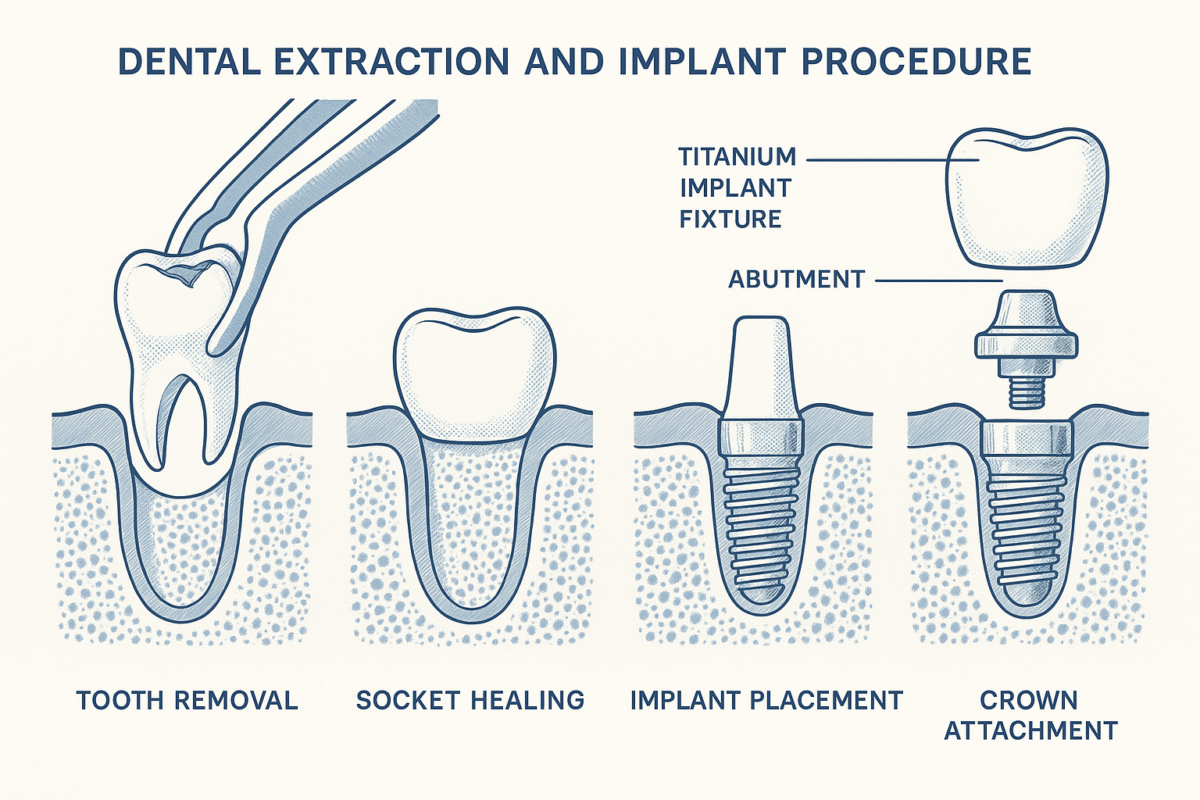
The dental extraction and implant journey begins with a comprehensive evaluation of your oral health. During this initial assessment, your dental professional will examine the affected tooth, surrounding tissues, and bone structure using advanced imaging techniques like CT scans. This detailed analysis helps determine whether immediate implant placement is possible or if a healing period is necessary.
When Is Dental Extraction Necessary?
Several conditions may necessitate tooth extraction before implant placement:
- Severe tooth decay that has compromised the tooth’s structure beyond repair
- Advanced periodontal disease affecting the tooth’s supporting structures
- Trauma or injury resulting in irreparable damage
- Orthodontic requirements for proper teeth alignment
- Impacted wisdom teeth causing crowding or pain
The extraction process itself varies depending on the tooth’s condition and location. Simple extractions involve loosening the tooth and removing it with dental forceps, while surgical extractions may require incisions and bone removal for impacted or severely damaged teeth.
The Science Behind Dental Implants
Modern dental implants consist of three main components: the titanium fixture (implanted into the jawbone), the abutment (connecting piece), and the crown (visible tooth replacement). The success of dental implant procedures relies on a biological process called osseointegration, where the titanium implant fuses with the surrounding bone tissue.
This remarkable process typically takes 3-6 months to complete, during which time the implant becomes permanently anchored in your jaw. The biocompatible nature of titanium makes it an ideal material for this purpose, as it rarely causes allergic reactions and integrates seamlessly with human bone tissue.
Timeline and Healing Stages for Dental Extraction and Implant
Understanding the timeline for your dental extraction and implant treatment helps set realistic expectations and ensures optimal outcomes. The process can be divided into several distinct phases, each with specific healing milestones and care requirements.
Immediate Post-Extraction Period (Days 1-7)
The first week following tooth extraction is critical for proper healing. During this time, a blood clot forms in the extraction socket, which serves as the foundation for new tissue growth. Key considerations during this phase include:
Day 1-2:
- Manage bleeding with gentle pressure using gauze
- Apply ice packs to reduce swelling
- Take prescribed medications as directed
- Avoid strenuous activities
Day 3-7:
- Transition to warm salt water rinses
- Gradually introduce soft foods into your diet
- Monitor for signs of infection or complications
- Attend follow-up appointments as scheduled
Healing and Bone Remodeling (Weeks 2-12)
During this extended healing phase, your jawbone undergoes significant remodeling to prepare for implant placement. The extraction socket fills with new bone tissue, while surrounding structures adapt to the changes. This period is crucial for:
- Soft tissue healing and gum formation
- Bone regeneration in the extraction site
- Assessment of implant candidacy through follow-up examinations
- Treatment planning for optimal implant positioning
In some cases, bone grafting procedures may be necessary to ensure adequate bone volume for successful implant placement. This additional step can extend the overall timeline but significantly improves long-term success rates.
Implant Placement and Integration (Months 3-6)
Once adequate healing has occurred, the implant placement procedure can begin. This surgical procedure typically takes 1-2 hours and involves:
- Local anesthesia administration for patient comfort
- Precise implant positioning using surgical guides
- Immediate temporary restoration in some cases
- Post-operative care instructions and medication management
The subsequent 3-4 months allow for osseointegration to occur, during which the implant becomes permanently anchored in your jawbone. Regular monitoring appointments ensure proper healing and identify any potential complications early.
🦷 Dental Extraction and Implant Timeline Calculator
Get a personalized timeline for your dental extraction and implant procedure
Final Restoration and Long-term Care
The final phase of your dental extraction and implant journey involves abutment placement and crown fabrication. This process typically requires 2-3 appointments over several weeks:
Abutment Placement: A small connector piece is attached to the implant, which will support your final crown. This minor procedure may cause temporary discomfort but is generally well-tolerated.
Crown Fabrication: Detailed impressions are taken to create a custom crown that matches your natural teeth in color, shape, and function. Modern porcelain ceramic crowns offer exceptional aesthetics and durability.
Final Placement: Your completed restoration is carefully fitted and adjusted to ensure proper bite alignment and optimal comfort.
Cost Considerations and Treatment Options for Dental Extraction and Implant
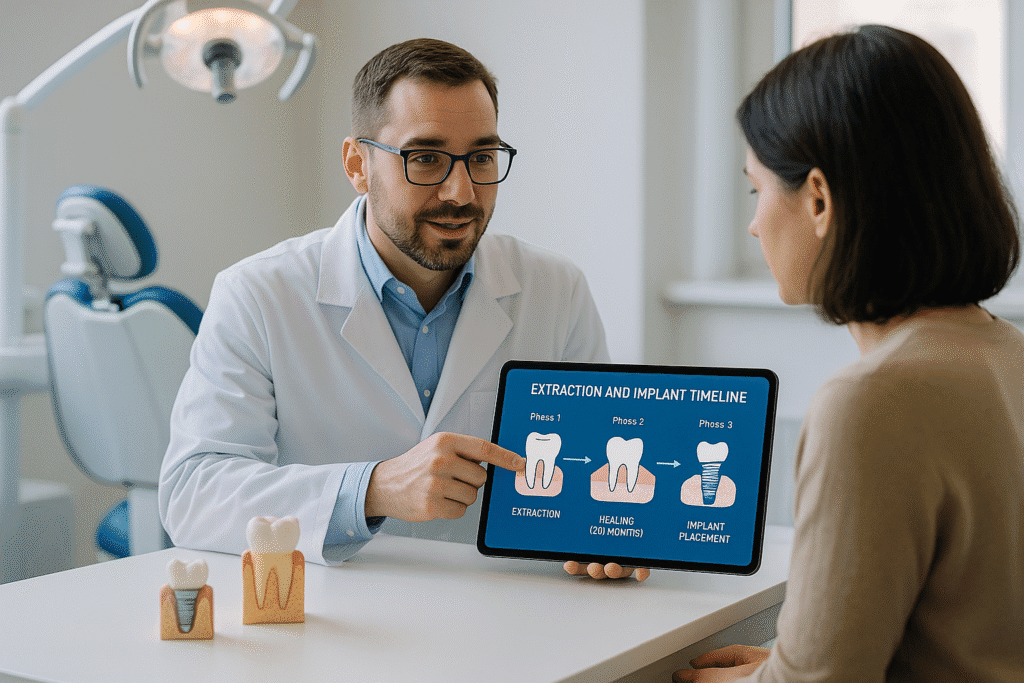
The financial investment in dental extraction and implant treatment varies significantly based on multiple factors, including geographic location, complexity of the case, and specific treatment requirements. Understanding these cost components helps patients make informed decisions about their oral health investment.
Factors Affecting Treatment Costs
Extraction Complexity: Simple extractions typically cost less than surgical extractions or wisdom tooth removal. The time, expertise, and resources required for complex cases naturally increase the overall investment.
Implant System Quality: Premium implant systems from established manufacturers may cost more initially but often provide superior long-term outcomes and warranty coverage.
Additional Procedures: Bone grafting, sinus lifts, or soft tissue management can add to the overall treatment cost but are often necessary for optimal results.
Geographic Location: Treatment costs vary significantly between different regions and metropolitan areas, with urban centers typically having higher fees.
Financing and Insurance Options
Many dental practices offer flexible financing options to make dental extraction and implant treatment more accessible:
- Payment plans with low or no interest options
- Dental insurance coverage for portions of the treatment
- Health Savings Accounts (HSAs) for tax-advantaged payments
- Third-party financing through specialized dental lending companies
When considering affordable dental implant options, it’s important to evaluate the total value rather than just the initial cost. High-quality implants with proper placement and restoration can last decades with proper care, making them a cost-effective long-term solution.
Comparing Treatment Alternatives
While dental extraction and implant represents the gold standard for tooth replacement, other options include:
Removable Partial Dentures:
- Lower initial cost
- Requires replacement every 5-7 years
- May affect speech and eating comfort
- Potential bone loss over time
Fixed Dental Bridges:
- Moderate initial investment
- Requires modification of adjacent healthy teeth
- Typical lifespan of 10-15 years
- May complicate oral hygiene
Complete Dentures:
- Lowest initial cost for multiple tooth replacement
- Significant adjustment period required
- Progressive bone loss and fit issues
- Regular relining and replacement needed
The comprehensive comparison of alternatives reveals that while implants require a higher initial investment, their longevity and functionality often provide superior value over time.
Aftercare and Recovery for Optimal Dental Extraction and Implant Success
Successful dental extraction and implant outcomes depend heavily on proper aftercare and patient compliance with post-operative instructions. The recovery process involves multiple phases, each with specific requirements and potential challenges that require careful attention.
Immediate Post-Operative Care (First 24-48 Hours)
The first two days following your procedure are critical for establishing proper healing patterns and preventing complications. Key priorities during this period include:
Pain Management:
- Take prescribed medications as directed
- Apply ice packs for 15-20 minutes every hour while awake
- Avoid aspirin-based medications that can increase bleeding
- Use over-the-counter pain relievers only as recommended
Bleeding Control:
- Bite gently on gauze pads for 30-45 minutes
- Replace gauze as needed if bleeding continues
- Avoid spitting, rinsing, or using straws for 24 hours
- Contact your dentist if bleeding doesn’t subside
Diet Modifications:
Following your dental extraction and implant procedure, your diet plays a crucial role in healing. The first few days require carefully selected soft foods that provide nutrition without compromising the surgical site.
Weekly Recovery Milestones
Week 1: Initial Healing
- Soft tissue begins to close over extraction site
- Swelling peaks around day 3, then gradually decreases
- Pain levels should steadily improve
- Return to gentle oral hygiene with soft-bristled toothbrush
Week 2-3: Tissue Maturation
- Sutures may be removed (if non-dissolvable)
- Gradual return to normal diet as comfort allows
- Light exercise and normal activities can resume
- Continue prescribed medications until completed
Week 4-6: Bone Healing Initiation
- Deep tissue healing continues
- Bone remodeling begins in extraction site
- Regular follow-up appointments for progress monitoring
- Oral hygiene routine should be fully established
Long-term Maintenance and Care
Once your dental extraction and implant treatment is complete, long-term success depends on consistent oral hygiene and regular professional care. Unlike natural teeth, implants cannot develop cavities, but they remain susceptible to peri-implantitis (inflammation around the implant).
Daily Oral Hygiene Protocol:
- Brush twice daily with implant-specific toothpaste
- Use water flossers designed for implants to clean around the restoration
- Rinse with antimicrobial mouthwash as recommended
- Avoid tobacco products and excessive alcohol consumption
Professional Maintenance:
- Schedule regular dental cleanings every 3-6 months
- Annual radiographic evaluation of implant integration
- Professional assessment of restoration fit and function
- Early intervention for any signs of complications
Recognizing Potential Complications
While dental extraction and implant procedures have high success rates, patients should be aware of potential warning signs that require immediate professional attention:
Infection Symptoms:
- Persistent or worsening pain after the first week
- Swelling that increases rather than decreases
- Fever or general feeling of illness
- Unusual discharge or bad taste
Implant-Related Concerns:
- Loosening of the implant or restoration
- Changes in bite or crown fit
- Persistent bleeding around the implant site
- Numbness or tingling that doesn’t resolve
Early recognition and treatment of complications significantly improve outcomes and prevent more serious problems from developing.
Conclusion
The dental extraction and implant process represents a remarkable advancement in modern dentistry, offering patients a permanent, natural-looking solution for damaged or missing teeth. Throughout this comprehensive guide, we’ve explored every aspect of this transformative treatment, from initial evaluation through long-term maintenance.
Understanding the timeline, costs, and aftercare requirements empowers you to make informed decisions about your oral health. While the process requires patience and commitment, the results can dramatically improve your quality of life, allowing you to eat, speak, and smile with confidence for decades to come.
The key to successful dental extraction and implant treatment lies in choosing an experienced dental team, following post-operative instructions carefully, and maintaining excellent oral hygiene throughout the healing process. With proper care and regular professional monitoring, your dental implant can provide a lifetime of service.
Take Action Today:
- Schedule a consultation with a qualified implant dentist to evaluate your specific needs
- Discuss financing options to make treatment affordable and accessible
- Prepare for treatment by optimizing your overall health and oral hygiene
- Plan for recovery time to ensure optimal healing and success
If you’re considering dental extraction and implant treatment, don’t wait for the problem to worsen. Early intervention often leads to better outcomes and may reduce the overall complexity and cost of treatment. Contact a qualified dental implant specialist to begin your journey toward a restored, healthy smile.
Leave a Reply
Share your thoughts or ask a question about dental implants. Your email address will not be published.