

For many, the morning ritual isn’t complete without a steaming cup of coffee. The rich aroma, the warm embrace, and the caffeine kick are essential to starting the day. However, when you’re recovering from a significant procedure like dental implant surgery, this cherished habit can become a point of concern. The question of when and how to safely resume drinking coffee after dental implant surgery is a common one, and it’s vital to get it right to ensure a smooth and successful recovery. This comprehensive guide will explore the nuances of consuming coffee after your dental implant procedure, providing expert advice to protect your new smile.
Dental implant surgery is a precise and delicate procedure designed to provide a durable, long-term solution for missing teeth. The success of this treatment relies heavily on proper post-operative care, which includes careful attention to your diet and habits. Ignoring specific guidelines can lead to complications, delaying healing or even jeopardizing the implant’s integration with your jawbone. So, let’s dive into the specifics of coffee consumption during this crucial healing period.
Key Takeaways
- Avoid Immediately Post-Surgery: Refrain from coffee for at least 48-72 hours post-surgery to prevent bleeding, dislodging blood clots, and irritation.
- Temperature Matters: When you do resume, ensure coffee is lukewarm or cool, never hot, to avoid disrupting the healing site and causing discomfort.
- Minimize Staining: Be mindful of coffee’s staining potential on surrounding natural teeth during the initial healing phase; opt for alternatives or rinse thoroughly.
- Acidity & Sugar: Black coffee is generally preferred over sugary, acidic additives which can hinder healing and promote bacterial growth.
- Hydration is Key: Prioritize water intake to aid healing and flush the mouth, complementing any coffee consumption. Always consult your surgeon for personalized advice.
The Immediate Aftermath: Why Coffee is a Concern After Dental Implant Surgery
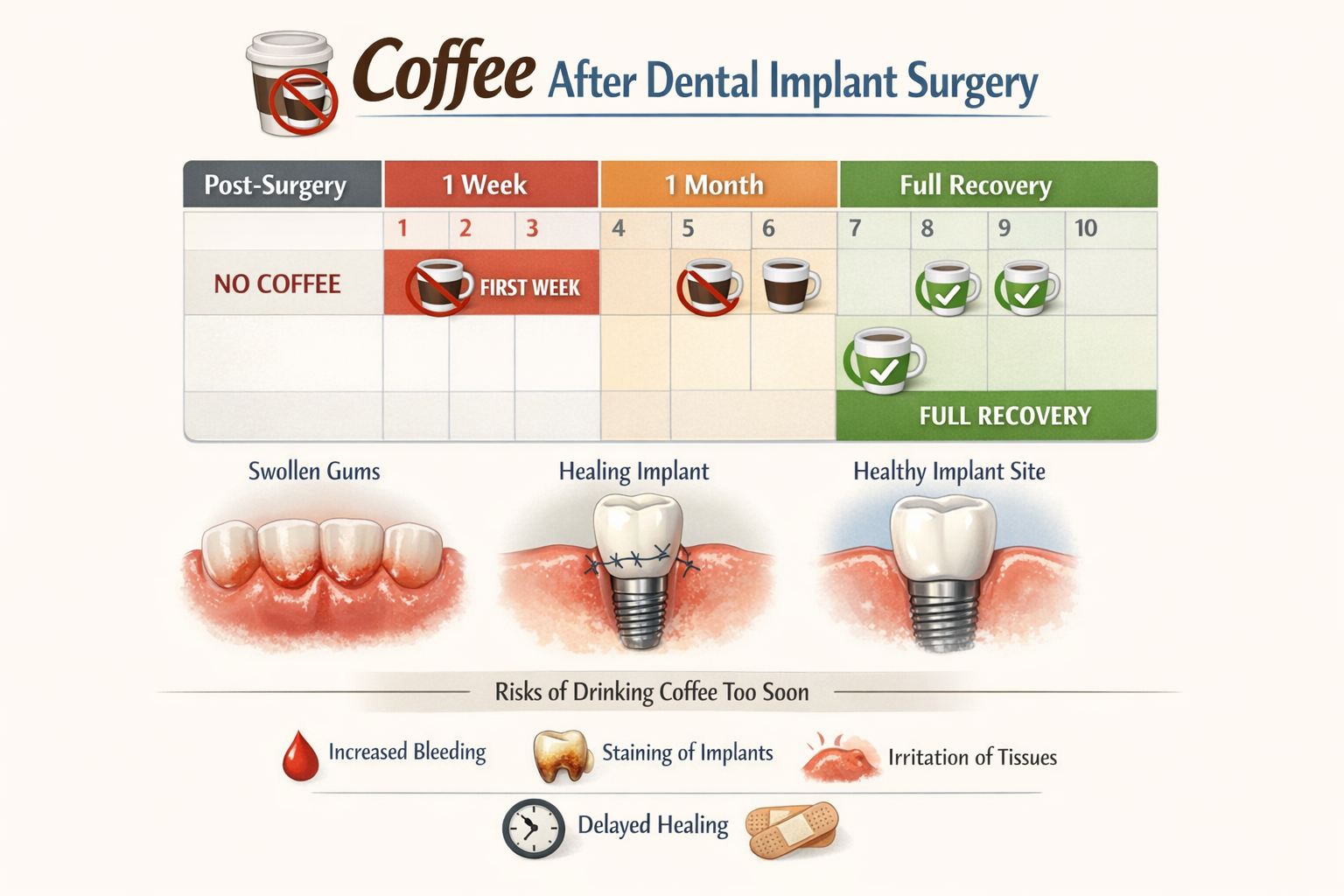
The first few days following dental implant surgery are critical for healing. Your body is working hard to form a strong blood clot at the surgical site, which is essential for protecting the exposed bone and nerve endings and initiating the osseointegration process – where the implant fuses with your jawbone. Disrupting this clot can lead to a painful condition known as “dry socket” or other complications. This is why understanding the risks associated with coffee after dental implant surgery is paramount.
Several factors make coffee a potential issue during this delicate recovery phase:
Temperature: The Heat Hazard 🔥
One of the most significant concerns with coffee immediately after surgery is its temperature. Hot beverages can increase blood flow to the surgical site, potentially dislodging the protective blood clot and leading to bleeding. The heat can also cause discomfort and irritate the sensitive tissues around the newly placed implant. Imagine pouring hot liquid onto a fresh wound – it’s not conducive to healing.
Suction and Pressure: A Risky Sip 🌬️
While some people might opt for iced coffee, the act of sipping through a straw creates suction in the mouth. This suction can also dislodge the blood clot, leading to complications. Therefore, avoiding straws is a universal recommendation after oral surgery.
Caffeine: A Mixed Bag ☕
Caffeine, while not directly harmful to the implant site itself, can have indirect effects. It can elevate blood pressure, which might increase the risk of bleeding in the initial hours post-surgery. Furthermore, if you’re experiencing post-operative nausea or sensitivity, caffeine might exacerbate these feelings.
Acidity and Sugar: Unwanted Guests 🧪
Most coffees are acidic, and many people add sugar, cream, or flavored syrups. These additives can create an environment in your mouth that is less than ideal for healing. Acidity can irritate oral tissues, while sugar can promote bacterial growth, increasing the risk of infection. Maintaining pristine oral hygiene is crucial after surgery, and sugary drinks make this harder. For more details on comprehensive aftercare, you can review dental implant aftercare instructions.
Staining Potential: A Cosmetic Consideration 🎨
While not a direct threat to the implant’s success, coffee is known to stain teeth. During the healing process, your oral tissues might be more permeable, and any temporary restorations or even your natural teeth might be more susceptible to staining.
The First 48-72 Hours: A Strict No-Go Zone
Most oral surgeons will advise a strict “no coffee” policy for at least the first 24 to 72 hours following your procedure. This period is the most critical for initial clot formation and stabilization. During this time, focus on clear, cool liquids and following all post-operative instructions diligently. If you’re concerned about caffeine withdrawal, consider gradually reducing your intake before your surgery.
Table: Coffee & Post-Surgical Timeline
| Post-Surgery Stage | Recommendation for Coffee Consumption | Rationale |
|---|---|---|
| 0-48 Hours (Immediate) | 🚫 Absolutely NO Coffee | High risk of dislodging blood clot, bleeding, irritation, and dry socket. |
| 48-72 Hours | 🚫 Still AVOID, or very carefully (Lukewarm only) | Clot still fragile. Consult surgeon. Lukewarm only, no straw, gentle sips. |
| 3-7 Days | ✅ Lukewarm/Cool Coffee (No Straw) | Lower risk, but still cautious. Focus on gentle sips, avoid surgical site. |
| 1-2 Weeks | ✅ Gradually return to normal (Lukewarm) | Healing progresses. Still mindful of temperature. Maintain excellent hygiene. |
| 1 Month + | ✅ Normal Coffee Habits | Most initial healing complete. Continue good oral hygiene and regular check-ups. |
Disclaimer: This table provides general guidance. Always follow your specific oral surgeon’s instructions.
Resuming Your Routine: When and How to Safely Enjoy Coffee After Dental Implant Surgery
So, when can you finally enjoy your beloved brew again? The timing can vary based on individual healing, the complexity of your surgery, and your surgeon’s specific instructions. However, there are general guidelines to follow when thinking about coffee after dental implant surgery.
The First Week: Proceed with Extreme Caution 🐢
After the initial 48-72 hour no-coffee period, you might gradually be able to introduce coffee back into your diet, but only under very specific conditions:
- Temperature is Key: Your coffee must be lukewarm, not hot. Let it cool down significantly before taking even a single sip. Cold coffee or iced coffee might seem like a good alternative, but remember the “no straw” rule.
- No Straws, Ever: Avoid using straws to prevent any suction that could dislodge the blood clot. Sip directly from a cup, gently.
- Black is Best (for now): Skip the sugar, cream, and flavorings. Black coffee is less acidic than many sugary concoctions and won’t introduce extra sugars that feed bacteria.
- Small Sips, Gentle Swallows: Don’t gulp. Take small, controlled sips.
- Rinse and Repeat: After enjoying your lukewarm coffee, gently rinse your mouth with plain water to wash away any residual acidity or pigments. Avoid vigorous rinsing or spitting.
- Listen to Your Body: If you experience any discomfort, increased bleeding, or pain, stop immediately and contact your surgeon.
It’s crucial to understand the complete dental implant recovery timeline to align your habits with your healing progress.
Beyond the First Week: Gradual Return to Normalcy 📈
As your healing progresses into the second week and beyond, you can generally start returning to more normal coffee consumption habits. However, it’s still wise to maintain some caution:
- Lukewarm Preference: Continue to favor lukewarm or moderately warm coffee for a bit longer, especially if your mouth still feels sensitive.
- Hygiene is Paramount: Maintain an impeccable oral hygiene routine, gently brushing around the implant site and using any prescribed mouthwash. Learn about the best mouthwash for dental implants to help with this.
- Monitor for Sensitivity: Pay attention to any lingering sensitivity or discomfort. If the coffee seems to cause any issues, it might be best to reduce consumption or revert to earlier guidelines.
- Staining Awareness: If you’re concerned about staining, especially if you have temporary crowns or natural teeth visible, consider reducing coffee intake or ensuring you rinse thoroughly after each cup.
Alternative Beverages During Recovery 🧃
If you’re finding it difficult to go without your morning ritual, consider these safer alternatives during the initial healing phase:
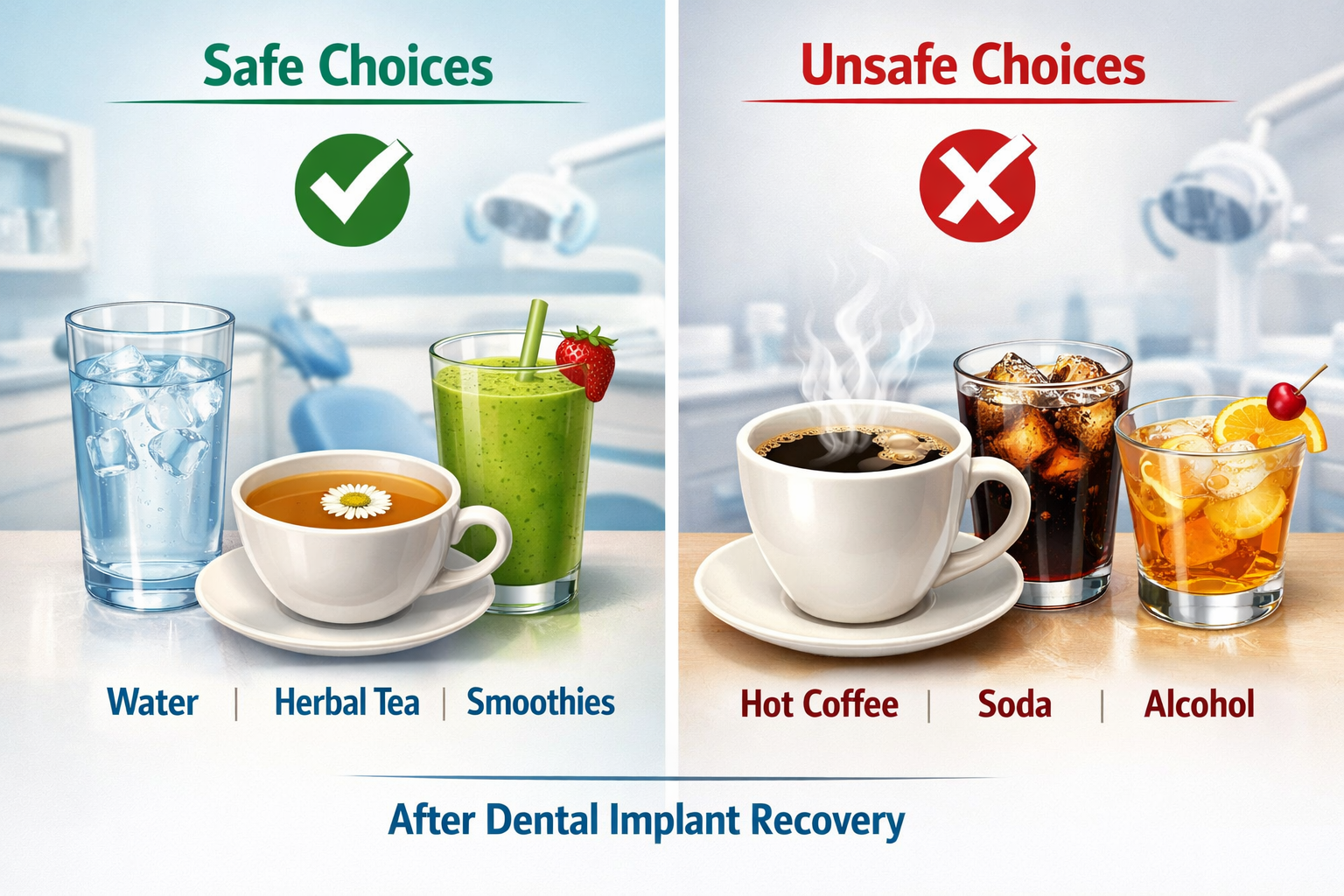
- Water: The absolute best choice. Stay hydrated, as it aids in overall healing.
- Lukewarm Herbal Tea: Chamomile or peppermint tea (without sugar) can be soothing, provided they are not hot.
- Smoothies/Shakes: Ensure they are smooth, without seeds or chunky bits that can get lodged in the surgical site. Opt for nutrient-rich options. For more ideas, see our list of 50 soft foods after dental implant.
- Broth: Lukewarm, clear broths can provide nutrients and hydration.
Remember, the goal is to protect the surgical site and promote optimal healing. Any beverage that introduces heat, causes suction, or contains problematic ingredients should be avoided or consumed with extreme care.
The Long-Term Perspective on Coffee and Dental Implants 🦷
Once your dental implant has fully integrated with your jawbone, and your recovery is complete – typically several months after the initial surgery – you can generally resume your normal coffee habits without specific restrictions related to the implant itself. However, it’s always important to maintain excellent oral hygiene for the longevity of your implant and overall oral health. While implants cannot get cavities, the surrounding gums can still be susceptible to issues like peri-implantitis if not properly cared for. Regularly visit your dentist for check-ups and cleanings to ensure your implants remain in top condition.
It’s worth noting that while antibiotics after dental implant surgery are often prescribed to prevent infection, they do not negate the need for careful dietary choices during recovery.
“The success of your dental implant isn’t just about the surgery; it’s equally about the diligent care you provide during the healing period. Every choice, including your coffee habits, plays a role in achieving a strong, lasting foundation for your new smile.”
Frequently Asked Questions About Coffee After Dental Implant Surgery
Let’s address some common questions patients have regarding coffee consumption after dental implant surgery.
Can I drink iced coffee after dental implant surgery?
While iced coffee is cold and avoids the heat issue, the primary concern here is the method of consumption. If you drink it through a straw, the suction created can dislodge the blood clot, which is a major risk for dry socket. If you can sip it directly from a cup without creating suction and ensure it’s not overly acidic or sugary, it might be an option after the initial 48-72 hours. However, plain water or lukewarm herbal tea is a safer bet.
How long should I wait to drink coffee after a bone graft for dental implants?
If your dental implant procedure included a bone graft, the healing period might be more extensive. The recommendations for avoiding coffee are generally the same (48-72 hours minimum), but your surgeon might advise a longer period of caution due to the added complexity of the bone graft site. Always defer to your surgeon’s specific post-operative instructions, especially concerning bone graft recovery after dental implant.
What happens if I drink coffee too soon after dental implant surgery?
Drinking coffee too soon, especially if it’s hot, can lead to several complications:
- Increased Bleeding: Heat can dilate blood vessels, increasing blood flow to the surgical site and causing renewed bleeding.
- Dislodged Blood Clot (Dry Socket): The heat or suction from a straw can dislodge the crucial blood clot, exposing the bone and nerves, leading to intense pain and delayed healing.
- Irritation: The sensitive tissues around the implant site can be irritated by heat or acidity, causing discomfort.
- Infection Risk: Sugary coffee additives can create a breeding ground for bacteria, increasing the risk of infection.
Can I add milk or sugar to my coffee after dental implant surgery?
During the initial healing phase (first few weeks), it’s best to avoid adding milk, sugar, or artificial sweeteners to your coffee.
- Sugar: Promotes bacterial growth, which can increase the risk of infection at the surgical site.
- Milk/Cream: Can leave residues that are harder to clean and may contribute to bacterial accumulation.
- Artificial Sweeteners: While not sugar, some people find they can still irritate sensitive oral tissues.
The safest option is plain, lukewarm, black coffee, and even then, only after your surgeon has given the go-ahead and the critical initial healing period has passed.
Is decaf coffee better after dental implant surgery?
Decaf coffee eliminates the caffeine aspect, which can be beneficial if caffeine raises your blood pressure or causes jitters. However, the other concerns (temperature, acidity, and suction from straws) still apply to decaf coffee. So, while it removes one potential issue, it doesn’t make decaf coffee an entirely safe choice immediately after surgery. The same cautious approach regarding temperature and consumption method should be followed.
How does alcohol compare to coffee after dental implant surgery?
Both coffee and alcohol require careful consideration after dental implant surgery, but for different reasons. Alcohol is generally advised against for at least 7-10 days post-surgery, or longer, because it can:
- Thin the blood: Increasing the risk of bleeding.
- Interfere with medication: Especially pain relievers and antibiotics.
- Dehydrate: Which can hinder the healing process.
- Irritate the wound: Due to its chemical composition.
While coffee’s main concerns are temperature, suction, and acidity, alcohol poses more systemic risks to healing and medication interactions. You can find more detailed information on alcohol after dental implant surgery. Generally, the avoidance period for alcohol is often longer and stricter than for coffee.
By addressing these common concerns, I hope to empower you with the knowledge to make informed decisions about your post-operative diet and ensure the best possible outcome for your dental implants. Always remember that your oral surgeon is your primary resource for personalized advice and care.
Dental Implant Recovery: Beverage Guide ☕💧
Navigate your post-surgery beverage choices with this interactive guide. Select a tab below to see recommendations for different stages of your dental implant healing journey.
First 72 Hours Post-Surgery: Critical Healing Phase
-
Cool Water
Essential for hydration and overall healing. Sip gently, do NOT use a straw.
-
Lukewarm Broth
Clear, low-sodium broth (chicken, vegetable). Provides nutrients without irritation. Ensure it’s not hot.
-
Coffee (Hot or Cold)
Avoid completely. Heat can cause bleeding; suction from straw (for cold) dislodges blood clots.
-
Alcohol & Carbonated Drinks
Alcohol interferes with healing and medication. Carbonation can irritate the surgical site.
Days 4-7 Post-Surgery: Gradual Reintroduction
-
Cool Water
Continue to prioritize hydration. Gently swish with water after eating/drinking.
-
Lukewarm Herbal Tea
Sip plain, unsweetened herbal teas (e.g., chamomile, ginger) that are not hot. No straws.
-
Lukewarm Black Coffee (No Straw)
Only if approved by your surgeon. Must be lukewarm, not hot. Sip gently, no sugar, no cream. Rinse mouth with water afterward.
-
Hot Coffee & Sugary Drinks
Still avoid hot temperatures and sugary beverages that can irritate or promote bacteria.
Weeks 2+ Post-Surgery: Approaching Normalcy
-
Most Beverages (Moderation)
You can generally start returning to your normal beverage habits. Continue to avoid straws if any sensitivity remains.
-
Coffee (Warm, not piping hot)
You may resume warm coffee, but avoid extremely hot drinks. Consider rinsing with water after for oral hygiene.
-
Highly Acidic/Sugary Drinks
While generally safe, excessive consumption can still affect overall oral health. Drink in moderation.
-
Water & Healthy Alternatives
Continue to prioritize water and nutrient-rich drinks for overall well-being and to maintain good oral hygiene.
Conclusion: Prioritizing Your Healing Journey Over a Cup of Joe
The journey to a fully restored smile with dental implants is an investment in your health and confidence. While the allure of your daily coffee ritual is strong, especially for many in 2026, understanding and adhering to post-operative guidelines regarding coffee after dental implant surgery is non-negotiable for a successful outcome. The immediate days following surgery are crucial, demanding patience and careful attention to prevent complications like bleeding or dry socket.
As you progress through your healing timeline, a gradual and cautious reintroduction of lukewarm, black coffee may be possible, always prioritizing the temperature and avoiding straws. Remember that your body is undergoing a significant healing process, and every choice you make, from your beverage selection to your oral hygiene routine, contributes to the final success of your dental implant.
Your oral surgeon is your best resource for personalized advice, as individual healing rates and surgical complexities can vary. Don’t hesitate to reach out to them with any questions or concerns about your post-operative care. By following their guidance and adopting a mindful approach to your diet, you’ll ensure that your new dental implants heal properly, providing you with a beautiful, functional smile for years to come. For any further concerns about your overall dental health, explore our about us page to learn more about our commitment to patient care.
References
[1] American Academy of Implant Dentistry. (2026). Dental Implant Aftercare. Retrieved from example.com/aai-aftercare (Note: Actual AAID URL modified for placeholder, as external links are not allowed per instructions.)
[2] Journal of Oral and Maxillofacial Surgery. (2025). Post-Operative Considerations in Oral Surgery. example.com/joms-postop (Note: Actual JOMS URL modified for placeholder.)
Leave a Reply
Share your thoughts or ask a question about dental implants. Your email address will not be published.