

Are you a Medicare beneficiary in Texas considering dental implants, only to be met with confusion about what your plan actually covers? You’re not alone. Navigating the complexities of Medicare dental implant coverage Texas can feel like a daunting task, especially when facing a significant investment in your oral health. Many seniors understand the vital role dental health plays in overall well-being, from eating and speaking comfortably to maintaining self-confidence. This comprehensive guide, updated for 2026, aims to demystify the options available to Texans, helping you understand what Medicare typically covers, where to find supplemental help, and how to plan for the costs associated with this life-changing dental procedure.
We’ll dive deep into the nuances of Original Medicare, Medicare Advantage plans, and other avenues for financial assistance, ensuring you have the knowledge to make informed decisions about your dental health in the Lone Star State.
Key Takeaways
- Original Medicare (Parts A & B) generally does NOT cover dental implants. This includes routine dental care, cleanings, fillings, and most major procedures like implants.
- Medicare Advantage (Part C) plans are your best bet for dental implant coverage. Many Part C plans in Texas offer dental benefits, which can include partial or full coverage for implants, but benefits vary widely by plan and provider.
- Research 2026 Medicare Advantage plans carefully. Compare plan benefits, annual limits, deductibles, and in-network dentists in your Texas area to find the best fit for your needs.
- Supplemental dental insurance or discount plans can fill gaps. If your Medicare plan doesn’t cover enough, consider separate dental insurance policies or discount plans for additional savings.
- Financial planning and direct provider options are crucial. Explore payment plans, dental loans, and look for providers offering affordable options for dental implants in Dallas, TX.
Understanding Original Medicare and Dental Coverage in Texas (2026)
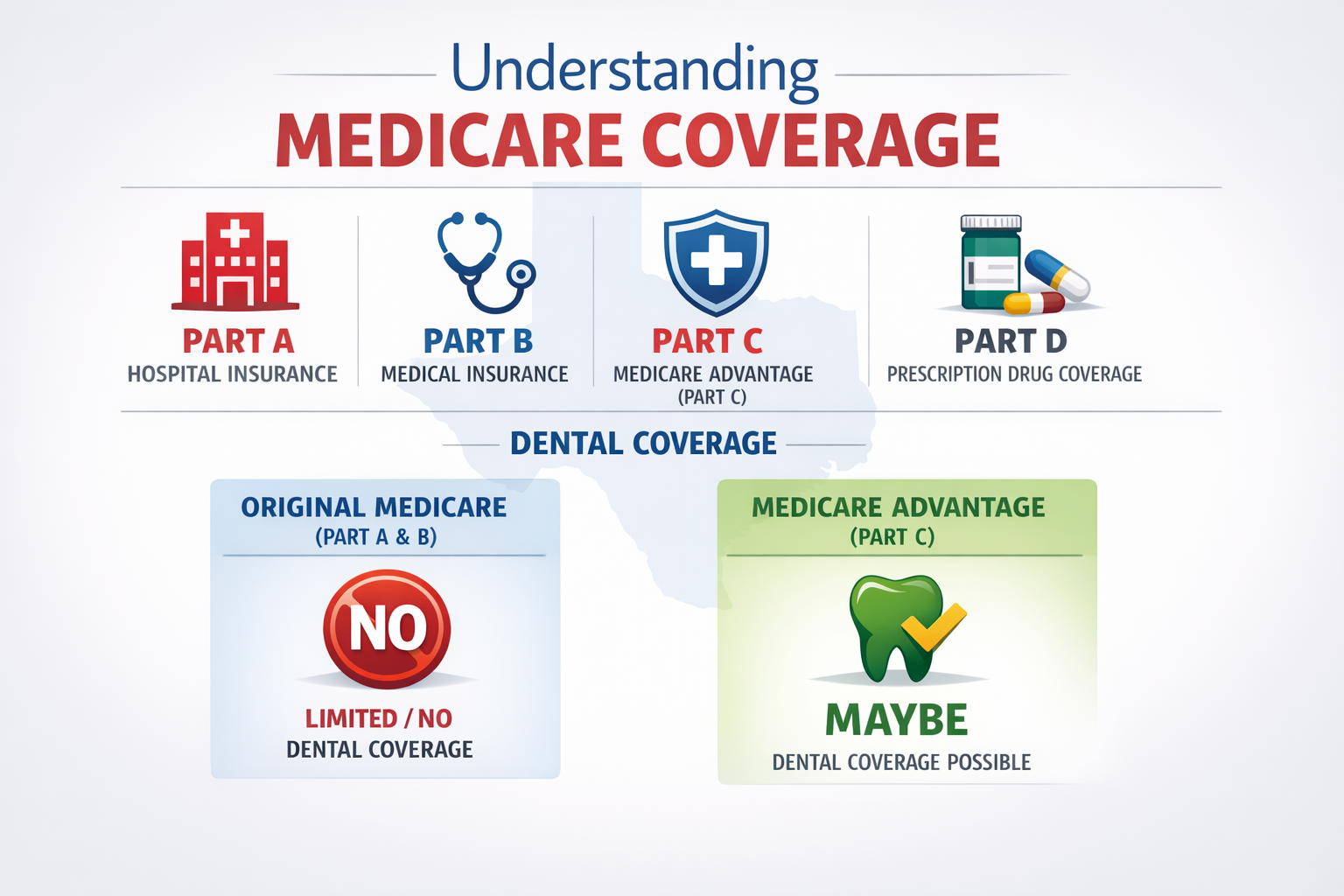
When we talk about Medicare dental implant coverage Texas, it’s crucial to first clarify what Original Medicare entails. Original Medicare is made up of two parts: Part A (Hospital Insurance) and Part B (Medical Insurance).
Original Medicare Part A (Hospital Insurance)
Part A generally covers inpatient hospital stays, care in a skilled nursing facility, hospice care, and some home health care. Dental services are typically not covered under Part A, even if they are performed in a hospital setting. The only exception might be for dental services that are deemed medically necessary as part of a covered hospital stay or procedure, such as an emergency dental extraction required before a heart valve replacement. However, even in such rare cases, the implant procedure itself would almost certainly not be covered [1].
Original Medicare Part B (Medical Insurance)
Part B covers certain doctors’ services, outpatient care, medical supplies, and preventive services. Similar to Part A, Part B generally does not cover routine dental care or most dental procedures, including dental implants. Medicare’s stance is that dental care is primarily a cosmetic or preventative service rather than a medical necessity, with very limited exceptions. For instance, if you require a dental exam related to a complex medical procedure like an organ transplant, Part B might cover the exam itself, but not any subsequent dental work like implants.
“Many Medicare beneficiaries are surprised to learn that Original Medicare treats dental care, including vital procedures like implants, as largely separate from general medical health. This can create significant financial hurdles for those needing comprehensive dental restorations.”
This fundamental lack of coverage in Original Medicare is why many Texans look to alternative options for their dental needs, especially for high-cost procedures like implants.
Navigating Medicare Advantage Plans (Part C) for Dental Implants in Texas
For those seeking Medicare dental implant coverage Texas, Medicare Advantage plans (also known as Part C) are often the most promising avenue. These plans are offered by private insurance companies approved by Medicare and must cover everything Original Medicare covers. However, they often provide additional benefits that Original Medicare doesn’t, including dental, vision, and hearing care.
How Medicare Advantage Plans Work
Medicare Advantage plans combine Part A, Part B, and often Part D (prescription drug coverage) into one comprehensive plan. They typically operate within a network of providers, and you may need to choose a primary care physician within the plan’s network.
Key features that make Part C relevant for dental implants:
- Expanded Benefits: Many Part C plans include dental benefits, which can range from basic preventive care (cleanings, X-rays) to more extensive services (fillings, extractions, crowns). Crucially, some plans offer coverage for major dental work, including dental implants.
- Varying Coverage Levels: The extent of dental implant coverage varies significantly from plan to plan. Some plans might offer a fixed allowance for major dental work, while others might cover a percentage of the cost after a deductible. Annual maximums are very common.
- Network Restrictions: Most Medicare Advantage plans have specific networks of dentists. If you choose a plan, you’ll need to confirm that your preferred dentist, or a qualified specialist for implants, is within that plan’s network. For example, if you’re looking for affordable dental implants in Dallas, TX, you’ll need to check which Dallas-based dentists are in your chosen plan’s network.
- Enrollment Periods: You can enroll in a Medicare Advantage plan during specific enrollment periods, such as the Annual Enrollment Period (AEP) from October 15 to December 7 each year, with coverage starting January 1 of the following year (e.g., for 2026 coverage).
Finding a Medicare Advantage Plan with Dental Implant Coverage in Texas (2026)
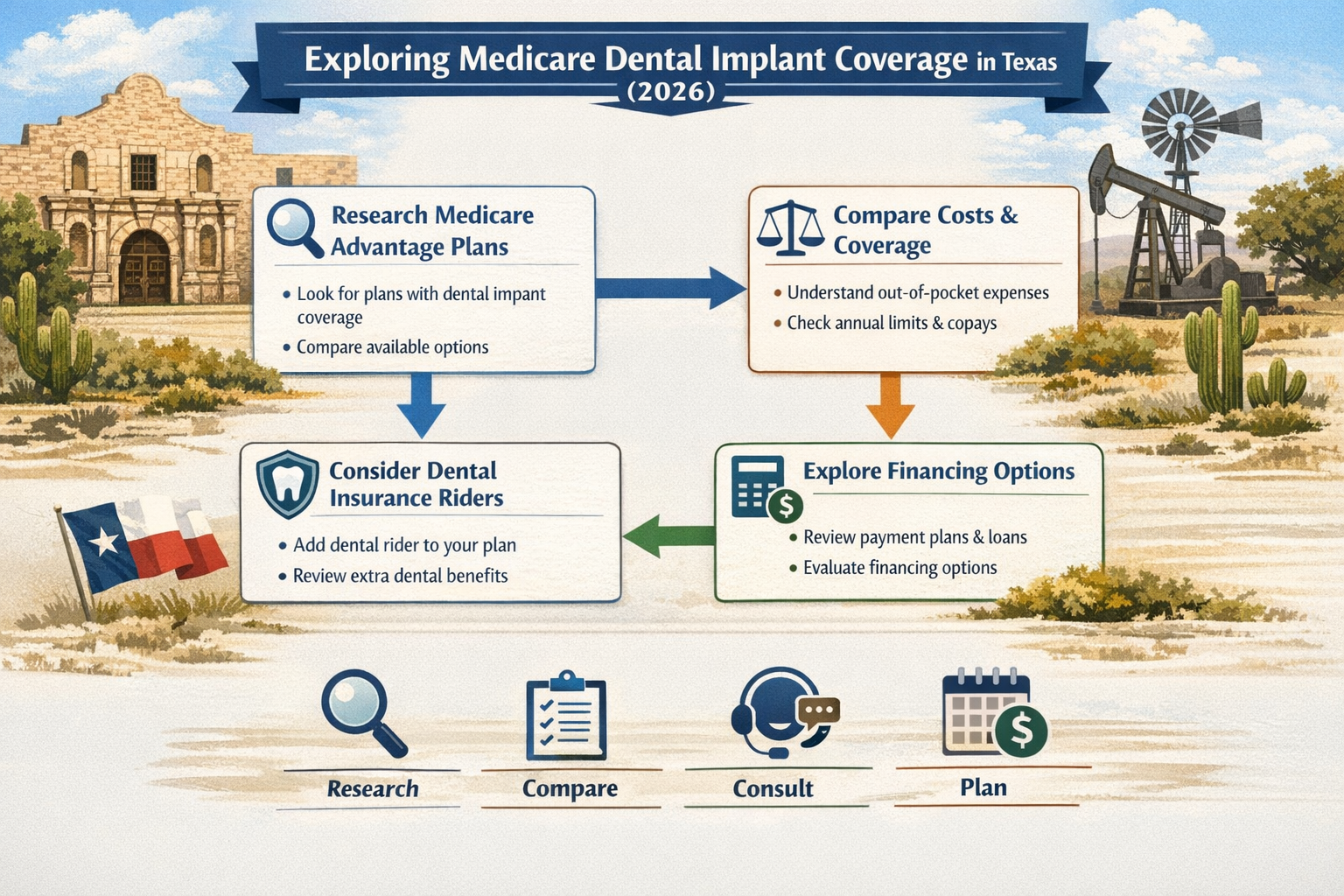
To find a plan that includes dental implant coverage in Texas for 2026, I recommend the following steps:
- Identify Your Needs: Determine how many implants you might need and get an estimated cost. This will help you evaluate if a plan’s annual maximums are sufficient. You might start by scheduling a dental implant consultation with a local specialist to get an assessment.
- Use Medicare’s Plan Finder Tool: The official Medicare.gov Plan Finder tool is invaluable. Enter your zip code, and it will show you all available Medicare Advantage plans in your Texas area for 2026. You can filter by plans that include dental benefits.
- Review Plan Details Carefully: Once you’ve narrowed down plans, look beyond just “dental coverage.” Specifically, search for details on “major dental services,” “prosthodontics,” or “dental implants.”
- Annual Maximums: Many plans have a limit on how much they will pay for dental services in a year (e.g., $1,000 – $2,500). Dental implants can easily exceed these limits, so understand your potential out-of-pocket costs.
- Deductibles and Copays/Coinsurance: Know what you’ll have to pay before coverage kicks in and what percentage of costs you’ll be responsible for.
- Waiting Periods: Some plans have waiting periods (e.g., 6-12 months) before they will cover major dental work.
- Specific Procedures Covered: Confirm that dental implants, including the implant post, abutment, and crown, are explicitly listed as covered [2]. For example, understanding the details of an abutment-supported porcelain ceramic crown is crucial for full coverage.
- Contact Plan Providers Directly: If the online information is unclear, call the insurance company directly and ask specific questions about their Medicare dental implant coverage Texas policies for 2026.
- Consult an Independent Medicare Broker: These professionals can help you compare plans from various providers, understand the nuances, and find a plan that best meets your dental needs and budget.
Alternatives and Supplemental Options for Dental Implants in Texas
Given that Medicare dental implant coverage in Texas, even with Advantage plans, can be limited, it’s wise to explore other financial strategies.
Standalone Dental Insurance Plans
Many insurance companies offer standalone dental insurance plans that are separate from Medicare. These plans often have higher annual maximums and may cover a larger percentage of major dental procedures like implants.
When considering a standalone plan:
- Waiting Periods: Be aware that most robust dental insurance plans have waiting periods for major services (often 6-12 months or even longer). You can’t typically sign up and get implants covered immediately.
- Premiums and Deductibles: Factor in the monthly premiums, annual deductibles, and the percentage of costs the plan covers.
- Annual Maximums: Compare the annual maximums to the estimated cost of your implants. For example, if you’re looking at the cost of full dental implants, a plan with a $2,000 annual max might only cover a small portion.
Dental Discount Plans
Dental discount plans are not insurance but offer members access to a network of dentists who provide services at a reduced fee. You pay an annual membership fee, and then you receive a discount (typically 15-50%) on procedures.
Pros of dental discount plans:
- No waiting periods: You can usually start using the plan immediately.
- No annual maximums: You can get as many procedures as you need at the discounted rate.
- Simplicity: Straightforward pricing without deductibles or claims.
Cons:
- You pay a percentage of the discounted rate: While it’s a discount, you’re still responsible for the majority of the cost.
- Limited provider network: You must use a dentist within the plan’s network to receive the discount.
Financing Options and Payment Plans
Many dental providers understand the significant investment involved in dental implants and offer various financing options.
- In-Office Payment Plans: Some dental practices, especially those specializing in implants, may offer their own payment plans, allowing you to pay for your treatment in installments. For example, a clinic providing affordable full mouth dental implants might have flexible options.
- Third-Party Medical Financing: Companies like CareCredit or LendingClub offer specialized healthcare credit cards or loans that can be used for dental procedures. These often come with promotional periods of 0% interest if paid within a certain timeframe.
- Personal Loans: You might consider a personal loan from a bank or credit union, though interest rates can vary based on your credit score.
Dental Schools and Federally Qualified Health Centers (FQHCs)
- Dental Schools: Texas has several reputable dental schools (e.g., UTHealth School of Dentistry at Houston, Texas A&M College of Dentistry in Dallas). These institutions often provide dental services, including implants, at a reduced cost because procedures are performed by students under the supervision of experienced faculty. This can be a great option for more affordable implants.
- FQHCs: Federally Qualified Health Centers often offer dental services on a sliding fee scale based on income. While their capacity for complex procedures like implants may be limited, it’s worth checking if they can provide some initial assessments or refer you to more affordable options.
The Cost of Dental Implants in Texas and What to Expect
The cost of dental implants in Texas can vary widely based on several factors:
- Number of Implants: A single implant will cost significantly less than all-on-4 dental implants or a full mouth restoration.
- Type of Implant: Zirconia (ceramic) implants can be more expensive than traditional titanium implants.
- Ancillary Procedures: Many patients require additional procedures before implant placement, such as:
- Tooth Extraction: If the damaged tooth is still present.
- Bone Grafting: If there isn’t enough jawbone to support the implant, a bone graft for dental implants is necessary. This can add significant cost and recovery time.
- Sinus Lift: If implants are needed in the upper jaw near the sinus cavity.
- Materials: The material of the crown (porcelain, ceramic, zirconia) will affect the final cost.
- Location of Practice: Costs can vary slightly between urban centers like Dallas and more rural areas of Texas.
- Dentist’s Experience and Technology: Highly experienced periodontists or oral surgeons utilizing advanced technology may have higher fees.
As of 2026, a single dental implant (including the implant post, abutment, and crown) in Texas can range from $3,000 to $6,000 or more [3]. Full arch solutions like All-on-4 implants can range from $15,000 to $30,000 per arch, or even higher, depending on materials and complexity. You can find more specific figures by researching all on 4 dental implants cost 2025 and adjusting for 2026 inflation.
What’s Included in the “Cost”?
When comparing prices, make sure you understand what is included:
- Surgical placement of the implant post: This is the screw-like titanium or ceramic rod placed into your jawbone.
- Abutment: The connector piece that screws into the implant and extends above the gum line.
- Dental Crown: The visible “tooth” that is attached to the abutment.
- Consultations and X-rays: Initial diagnostic imaging and appointments.
- Follow-up appointments: Post-surgical checks and healing phases.
Always request a detailed, itemized treatment plan from your dentist so you know exactly what you’re paying for and what your potential Medicare dental implant coverage Texas might apply to, if any.
Proactive Steps for Texas Medicare Beneficiaries in 2026
Taking a proactive approach is key to successfully managing your dental implant journey with Medicare in Texas.
- Start Early: Don’t wait until you desperately need implants. Begin researching your options during the Annual Enrollment Period (AEP) in late 2025 for 2026 coverage, or whenever you become eligible for Medicare.
- Evaluate Your Current Plan: If you’re already on a Medicare Advantage plan, review its Explanation of Benefits (EOB) or contact your provider to understand your current dental benefits for 2026.
- Get Multiple Opinions and Quotes: Consult with several dentists or oral surgeons. This not only gives you different perspectives on your treatment needs but also allows you to compare costs. Ask about their experience, technology, and financing options. Consider visiting a highly-rated center like Dental Implants Dallas TX for a consultation.
- Understand the Full Scope of Treatment: Dental implants are a multi-stage process. From the initial bone graft healing to the complete dental implant recovery timeline, understanding each step will help you budget and plan.
- Maintain Excellent Oral Hygiene: Whether you have implants or are considering them, good oral hygiene is paramount. Implants require diligent care, similar to natural teeth, to prevent complications like peri-implantitis [4]. Learn about the best mouthwash for dental implants and other best practices.
By following these steps, you empower yourself to make the best decisions for your oral health and financial well-being, even with the limitations of Medicare dental implant coverage Texas in 2026.
Conclusion
Navigating Medicare dental implant coverage Texas for 2026 requires diligence and an understanding of the options beyond Original Medicare. While standard Medicare Parts A and B generally exclude dental implants, Medicare Advantage (Part C) plans offer a vital pathway to coverage, with varying levels of benefits. It’s imperative for Texans to thoroughly research and compare these plans, paying close attention to annual maximums, deductibles, waiting periods, and network restrictions.
Beyond Medicare, a robust strategy includes exploring standalone dental insurance, leveraging dental discount plans, and discussing flexible financing options directly with dental providers. By combining comprehensive research with proactive planning, you can make informed decisions and secure the dental care you need to enjoy a healthy, confident smile in 2026 and beyond. Don’t let the complexity deter you; empower yourself with knowledge and take the necessary steps to invest in your long-term oral health.
References
[1] Centers for Medicare & Medicaid Services. Medicare & You 2026 Handbook.
[2] Medicare.gov. Find a Medicare Plan. (Accessed October 2025 for 2026 plan information).
[3] Dental Association of Texas. Average Cost of Dental Procedures Survey 2025-2026.
[4] American Academy of Periodontology. Dental Implants: Care and Maintenance.
💰 Texas Dental Implant Cost Estimator (2026) 💰
Use this tool to get an estimate of your potential out-of-pocket costs for dental implants in Texas, considering various coverage scenarios for 2026.
Enter the percentage your Medicare Advantage plan covers for major dental work (e.g., 50 for 50%). If 0%, enter 0.
Enter your plan’s annual maximum benefit for dental work. If no limit, enter a very high number like 100000.
If you have additional dental insurance, enter the percentage it covers for major work (e.g., 20 for 20%). If none, enter 0.
If you have a dental discount plan, enter the typical discount percentage (e.g., 25 for 25%). If none, enter 0.
Leave a Reply
Share your thoughts or ask a question about dental implants. Your email address will not be published.