

Are you enjoying the stability and comfort of mini implant-retained dentures? If so, you’ve already taken a significant step towards improved oral health and quality of life. Unlike traditional dentures, these innovative solutions offer a secure fit, allowing you to eat, speak, and smile with confidence. However, to ensure your investment lasts for many years to come and remains a source of joy, understanding and diligently practicing proper mini implant denture maintenance is absolutely crucial. Neglecting daily care or professional check-ups can lead to complications, impacting not only your oral health but also the longevity of your dental implants. This comprehensive guide, tailored for 2026, will walk you through everything you need to know to keep your mini implant dentures in pristine condition.
Key Takeaways
- Daily Oral Hygiene is Non-Negotiable: Meticulous daily cleaning of both your dentures and the mini implants themselves is paramount to prevent plaque buildup and bacterial infections.
- Specialized Tools Are Your Allies: Invest in and correctly use soft toothbrushes, interdental brushes, and water flossers designed for implant care.
- Denture Cleaning Goes Beyond Brushing: Remove and clean your dentures thoroughly outside the mouth using appropriate cleaners to prevent odor and bacterial growth.
- Regular Professional Check-ups are Essential: Schedule routine dental appointments (typically every six months) for professional cleaning, inspection, and maintenance of your mini implants and dentures.
- Be Aware of Warning Signs: Promptly contact your dentist if you notice any pain, bleeding, swelling, or changes in the fit of your dentures.
The Foundation of Longevity: Daily Mini Implant Denture Maintenance
The success and longevity of your mini implant-supported dentures hinge significantly on your daily commitment to oral hygiene. Just like natural teeth, mini implants and the surrounding gum tissue are susceptible to plaque and bacteria. If not regularly removed, this buildup can lead to peri-implantitis, a serious inflammatory condition that can jeopardize your implants [1]. Effective mini implant denture maintenance involves caring for both the implants and the removable denture appliance.
Caring for Your Mini Implants and Gums
The mini implants themselves are small, titanium posts placed directly into your jawbone. They are designed to integrate with the bone, providing a stable anchor for your dentures. The part of the implant that protrudes through the gum line, often fitted with an O-ring or ball attachment, requires specific care.
- Gentle Brushing Around the Implants:
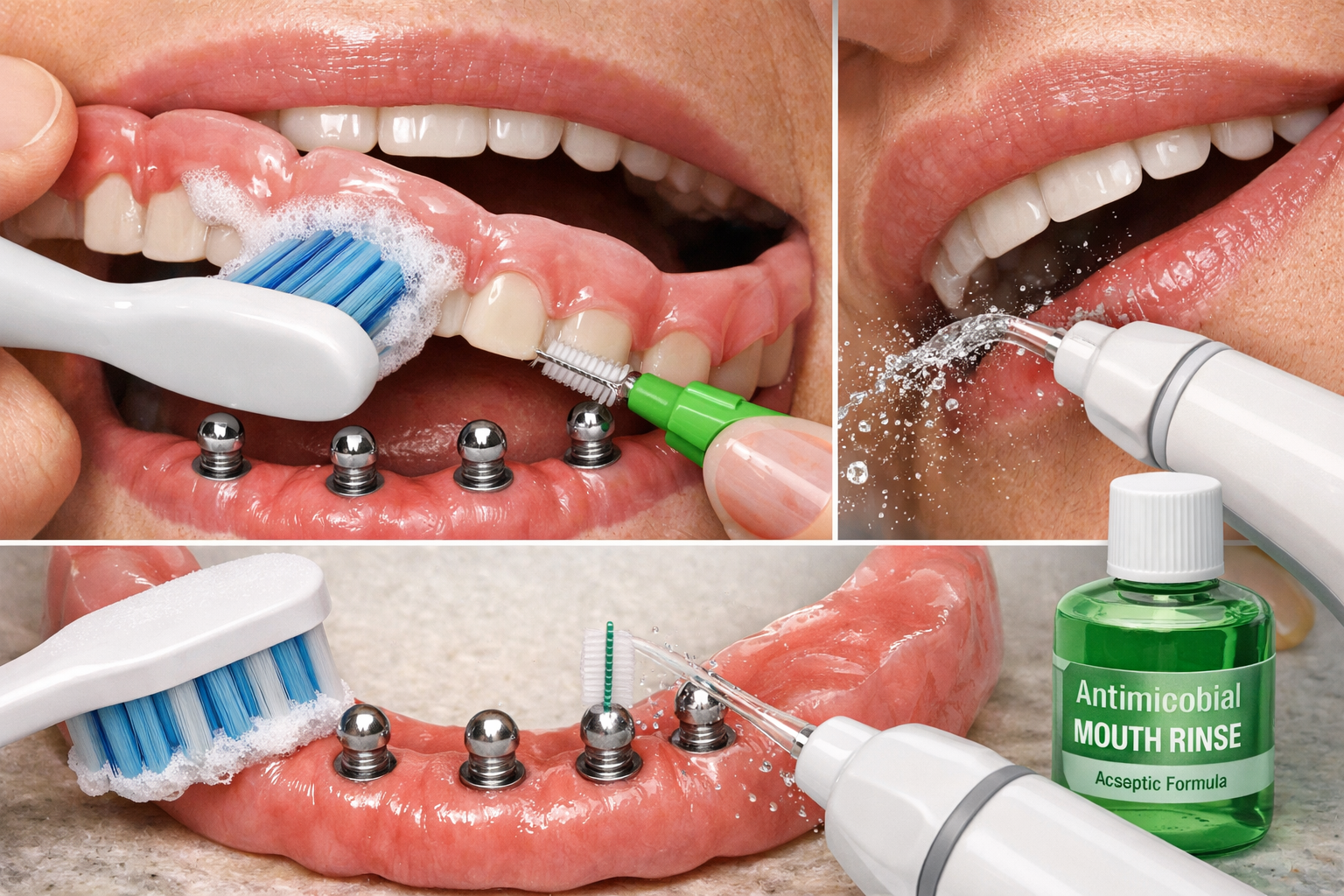
- Soft-Bristle Toothbrush: Use a toothbrush with very soft bristles. Hard bristles can irritate the gums around the implants.
- Angle of Attack: Angle the toothbrush bristles at about 45 degrees towards the gum line where the implant emerges. Use short, gentle, circular motions to clean all surfaces of the implant post and the surrounding gum tissue.
- Frequency: Brush around your implants at least twice a day, ideally after every meal.
- Interdental Brushes or Floss:
- Reach Tight Spaces: Small interdental brushes are excellent for cleaning between the implants and in hard-to-reach areas where plaque can accumulate. Choose a size that fits comfortably without forcing it.
- Floss for Implants (Carefully): While traditional flossing can be tricky with implants, specialized implant floss or tape can be used gently. Your dentist or hygienist can demonstrate the correct technique to avoid damaging the gum tissue or implant components.
- Water Flosser (Oral Irrigator):
- Power Cleaning: A water flosser is a highly effective tool for dislodging food particles and plaque from around the implants and under the denture. Use it on a low to medium setting, directing the stream around each implant post and along the gum line.
- Antimicrobial Rinse: Some patients find it beneficial to use an antimicrobial mouthwash in their water flosser reservoir, as recommended by their dental professional. Learn more about the best mouthwash for dental implants for informed choices.
- Mouthwash:
- Non-Alcoholic Options: Rinse daily with a non-alcoholic, antibacterial mouthwash. Alcohol-based mouthwashes can dry out oral tissues and potentially irritate the gums. Your dentist may recommend a specific therapeutic rinse if you are prone to gum inflammation.
Pull Quote:
“Diligent daily care for your mini implants isn’t just about cleanliness; it’s about safeguarding your oral health and the investment you’ve made in your smile.”
Cleaning Your Mini Implant Dentures
Your removable dentures also need meticulous daily cleaning to prevent the accumulation of food debris, plaque, and bacteria, which can lead to bad breath, gum irritation, and even infections.
- Remove and Rinse:
- Always Remove: Always remove your dentures before cleaning. Attempting to clean them while in your mouth is ineffective.
- Rinse Thoroughly: Hold your dentures over a basin of water or a folded towel to prevent breakage if dropped. Rinse them thoroughly under running water to remove loose food particles.
- Brush Your Dentures:
- Denture Brush or Soft Toothbrush: Use a specialized denture brush or a soft-bristle toothbrush (different from the one you use for your natural teeth/gums) and non-abrasive denture cleaner, mild soap, or even plain water.
- Avoid Abrasives: Never use regular toothpaste, bleach, or harsh household cleaners. These can scratch the denture surface, creating microscopic grooves where bacteria can thrive, or even damage the denture material.
- Clean All Surfaces: Gently brush all surfaces of the denture, including the underside that comes into contact with your gums and implants, paying special attention to the areas around the O-rings or clips that connect to the implants.
- Soak Your Dentures:
- Denture Cleansing Solution: After brushing, soak your dentures in a denture cleansing solution as recommended by your dentist. This helps to kill bacteria, remove stains, and keep the denture fresh. Follow the product instructions carefully regarding soaking time.
- Overnight Soaking (If Applicable): Many dentists recommend removing dentures overnight to allow your gums to rest and to keep the dentures clean. Make sure they are submerged in water or a denture cleansing solution to prevent them from drying out and losing their shape.
- Inspect Your Dentures:
- Look for Damage: Regularly inspect your dentures for any cracks, chips, or signs of wear, especially around the areas that connect to the implants. If you notice any damage, contact your dental office.
- Check O-Rings: The O-rings (or other retention clips) inside your dentures are crucial for their secure fit. These can wear out over time. If your dentures feel less stable, it might be time for an O-ring replacement, which your dentist can easily do.
Table: Daily Mini Implant Denture Maintenance Checklist
| Task | Implants & Gums | Removable Dentures | Frequency | Notes |
|---|---|---|---|---|
| Brushing | Soft-bristle brush, 45° angle | Denture brush / soft toothbrush | 2 times daily (min) | Use non-abrasive cleaner for dentures; avoid toothpaste. |
| Interdental Cleaning | Interdental brushes, implant floss | N/A | 1 time daily | Gentle technique essential. |
| Water Flosser | Around implants and gum line | Underneath denture base | 1 time daily | Low-medium setting; consider antimicrobial rinse. |
| Mouthwash | Non-alcoholic, antibacterial | N/A (for direct oral rinse) | 1-2 times daily | As recommended by your dentist. |
| Denture Rinse & Soak | N/A | Remove, rinse, brush, soak in solution | Daily (often overnight) | Never use hot water, as it can warp dentures. |
| Denture Inspection | N/A | Check for cracks, chips, worn O-rings | Daily | Contact dentist if damage or looseness is detected. |
Beyond Daily Care: Professional Mini Implant Denture Maintenance in 2026
While daily home care is the cornerstone of preserving your mini implants and dentures, it’s only half the equation. Regular professional dental check-ups and cleanings are indispensable for long-term success. These appointments allow your dental team to assess the health of your implants, gums, and dentures, and address any issues before they become serious.
The Importance of Regular Dental Visits
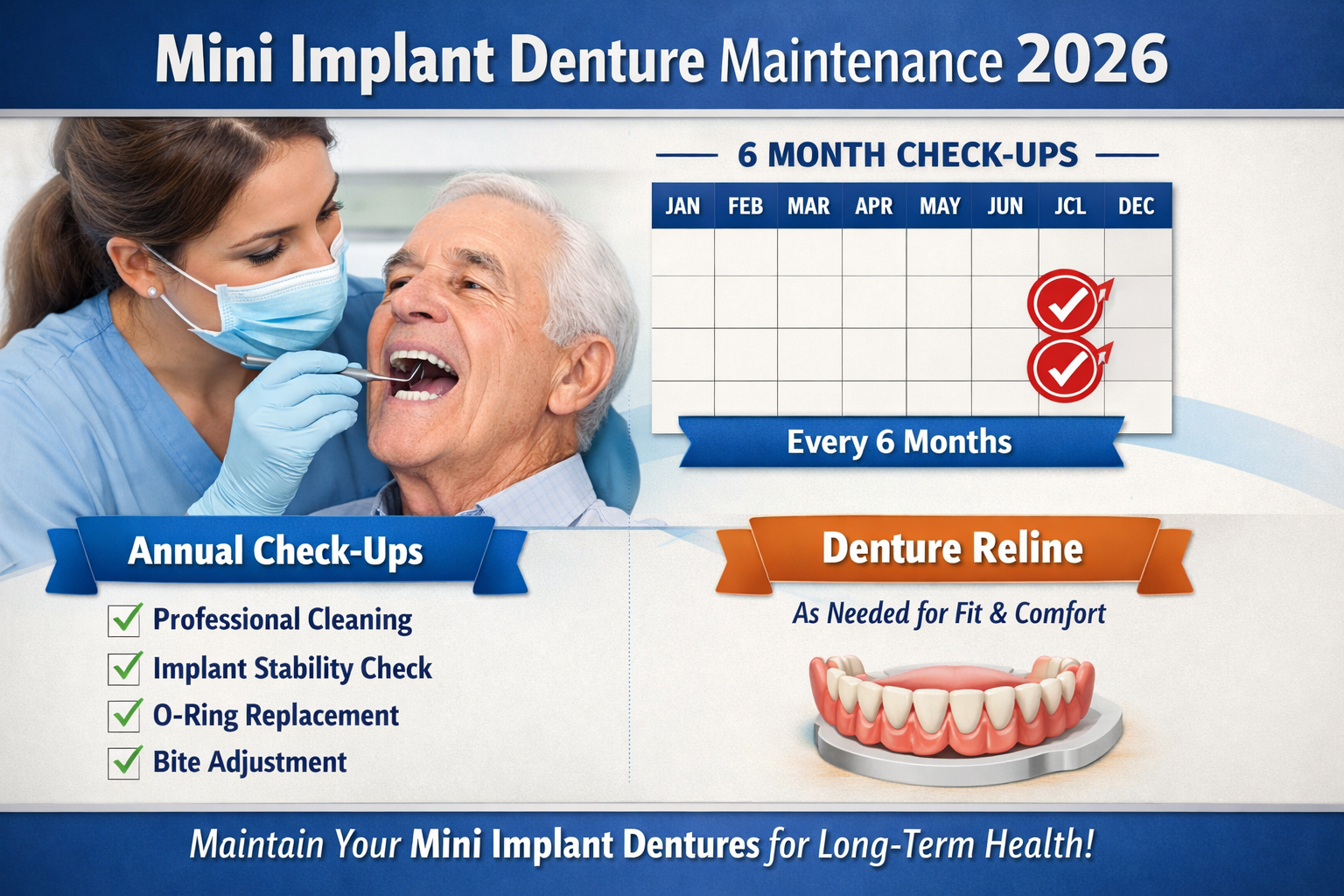
Visiting your dentist or periodontist for routine check-ups, typically every six months, is vital for several reasons:
- Professional Cleaning: Even with the best home care, plaque and calculus (hardened plaque) can build up, especially in areas difficult to reach. Dental hygienists use specialized tools to thoroughly clean around your implants and under your dentures, removing deposits that can lead to inflammation. This is different from the extensive cleaning for traditional dental implants.
- Implant Health Assessment: Your dentist will carefully examine each mini implant for signs of peri-implantitis (gum disease around implants), bone loss, or any other complications. Early detection is key to successful treatment.
- Denture Fit and Integrity Check: Over time, your jawbone can change shape, especially after tooth loss, which can affect the fit of your dentures. Your dentist will check for pressure points, wear, and overall stability. If needed, they might recommend a denture reline to improve comfort and fit.
- O-Ring/Retention Clip Replacement: The small O-rings or other retention components within your dentures that secure them to the mini implants will wear out with use. Your dentist will replace these routinely, usually during your check-up, to maintain the secure fit of your dentures.
- Oral Cancer Screening: Regular dental visits also include an oral cancer screening, which is a crucial part of your overall health care.
- Guidance and Education: Your dental team can provide personalized advice, demonstrate proper cleaning techniques, and recommend specific products tailored to your needs for optimal mini implant denture maintenance. For a general overview of our services, you can visit our about us page.
What to Expect During Your Professional Appointment
A typical professional mini implant denture maintenance appointment in 2026 will include:
- Comprehensive Examination: The dentist will thoroughly examine your mouth, gums, and mini implants. They’ll check for redness, swelling, bleeding, or any signs of infection.
- Denture Removal and Inspection: Your dentures will be removed and inspected for wear, cracks, chips, and the condition of the O-rings or other attachments.
- Professional Cleaning: A dental hygienist will use specialized instruments, such as ultrasonic scalers and hand instruments designed for implants, to gently clean around each mini implant and the surrounding gum tissue. They will also clean your removable dentures.
- O-Ring Replacement: Worn O-rings or other retention components will be replaced. This simple procedure is quick and significantly improves denture stability.
- Imaging (If Necessary): X-rays might be taken periodically to monitor the bone level around your mini implants and ensure their stability. This helps detect issues like 90 percent bone loss in teeth or other concerns.
- Oral Hygiene Review: Your dental team will review your home care routine, offer tips, and recommend any necessary adjustments or new products, such as the best toothpaste for implants.
- Discussion and Recommendations: Any concerns will be discussed, and a treatment plan will be proposed if any issues are identified. This might include a denture reline or adjustments.
Key Frequency: Aim for a professional mini implant denture maintenance appointment at least every six months, or more frequently if recommended by your dentist due to specific oral health concerns.
Addressing Common Mini Implant Denture Maintenance Challenges
Even with diligent care, you might encounter some challenges. Knowing how to react is key:
- Loose Dentures: If your dentures suddenly feel loose, it’s most likely due to worn O-rings. This is a common and easily fixable issue. Contact your dentist for a replacement. It could also indicate changes in your jawbone structure, which might require a denture reline.
- Sore Spots or Irritation: Sore spots on your gums could mean your dentures aren’t fitting correctly, or there might be a sharp edge. Don’t try to adjust them yourself! See your dentist promptly. Untreated sore spots can lead to ulcers or infections.
- Bleeding Gums Around Implants: Bleeding gums are a warning sign of inflammation or infection, often peri-implantitis. Do not ignore this. Contact your dentist immediately. Early intervention is crucial to save the implant.
- Unusual Odor: A persistent bad odor from your dentures or mouth, even after cleaning, can indicate a bacterial buildup that requires professional attention.
- Difficulty Chewing or Speaking: Any sudden change in your ability to chew or speak comfortably could signal a fit issue with your dentures or a problem with the implants.
“It’s tempting to think that since implants aren’t natural teeth, they don’t need the same attention. This couldn’t be further from the truth. Your mini implants and the surrounding gum tissue need continuous, meticulous care to remain healthy and functional.” [2]. Our team at dentalimplantsdallastx.com is always ready to assist with any concerns you may have regarding your dental health.
Lifestyle Choices Supporting Mini Implant Denture Maintenance
Beyond direct cleaning and professional care, certain lifestyle choices can significantly impact the success and longevity of your mini implant dentures.
- Diet: While mini implant dentures provide excellent chewing ability, it’s wise to avoid excessively hard, sticky, or chewy foods that could put undue stress on the implants or dislodge the dentures. Extremely hard foods like nuts or ice can also potentially chip or crack the denture material. If you’re new to implants, you might find our guide on 50 soft foods after dental implant helpful.
- Smoking: Smoking is detrimental to oral health in general and is a significant risk factor for peri-implantitis and implant failure [3]. It impairs healing, reduces blood flow, and compromises your immune system. If you smoke, consider cessation or at least minimizing its impact on your oral health.
- Alcohol Consumption: Excessive alcohol consumption can affect oral hygiene and overall health. While moderate use is usually fine, be mindful of how it impacts your routine. For more specific advice, review information on alcohol after dental implant surgery.
- Teeth Grinding (Bruxism): If you grind or clench your teeth, especially at night, discuss this with your dentist. The excessive forces can put strain on your mini implants and accelerate wear on your dentures. A nightguard might be recommended to protect your dental investment.
- Protective Sports Gear: If you participate in contact sports, always wear a custom-fitted mouthguard to protect your mini implants and dentures from trauma.
Understanding the difference between mini implants and all-on-4 dental implants can also help in appreciating the specific care requirements. While both offer stability, their design and retention mechanisms differ, leading to slight variations in maintenance protocols.
Conclusion
Mini implant-retained dentures offer a life-changing solution for many individuals, restoring confidence, comfort, and function. However, their long-term success isn’t guaranteed; it’s earned through consistent and correct mini implant denture maintenance. By committing to a thorough daily oral hygiene routine, utilizing the right tools, and attending regular professional dental check-ups in 2026, you can significantly extend the life of your implants and dentures, ensuring your smile remains bright and healthy for years to come. Remember, your dental team is your partner in this journey. Don’t hesitate to reach out to them with any questions or concerns. Proactive care is the best defense against potential problems and the surest path to enjoying the full benefits of your mini implant dentures.
Actionable Next Steps:
- Review Your Routine: Assess your current daily cleaning habits against the guidelines provided in this article. Identify any areas where you can improve.
- Gather Your Tools: Ensure you have a soft-bristle toothbrush, interdental brushes, a water flosser, a denture brush, and appropriate denture cleaning solutions.
- Schedule Your Next Appointment: If you haven’t had a professional check-up within the last six months, contact your dentist to schedule one.
- Stay Vigilant: Pay close attention to any changes in your oral health, denture fit, or comfort, and contact your dentist promptly if concerns arise.
References
[1] American Academy of Periodontology. (2019). Peri-Implantitis. Retrieved from https://www.perio.org/consumer/peri-implant-disease
[2] Misch, C. E. (2008). Contemporary Implant Dentistry (3rd ed.). Mosby Elsevier.
[3] Moy, P. K., Medina, D., Shetty, V., & Aghaloo, T. (2005). Dental implant failure rates and associated risk factors. International Journal of Oral & Maxillofacial Implants, 20(4).
Your 2026 Mini Implant Denture Maintenance Planner 📅
Use this interactive checklist to keep track of your daily and professional mini implant denture maintenance tasks. Staying organized is key to a healthy smile!
Leave a Reply
Share your thoughts or ask a question about dental implants. Your email address will not be published.