

When I first started researching dental implants for my practice, I was shocked to discover that over 35 million Americans are missing all their teeth in one or both jaws. If you’re reading this, you or someone you love might be part of this statistic, searching for answers about full mouth dental implants in Dallas. The good news? You’ve found the right place to get clear, honest information about costs, options, and what to expect in the Dallas area.
Key Takeaways
- Full mouth dental implants in Dallas typically cost between $15,000-$30,000 per arch, with All-on-4 procedures generally being more affordable than traditional implant-supported dentures
- Insurance coverage varies significantly, but many plans cover 10-50% of implant procedures when deemed medically necessary
- Multiple financing options are available in Dallas, including payment plans, dental loans, and CareCredit with 0% interest periods
- The total investment includes initial surgery, abutments, prosthetics, and follow-up care, making it essential to understand all costs upfront
- Choosing an experienced Dallas implant specialist can prevent costly complications and ensure better long-term outcomes
Understanding Full Mouth Dental Implants
Full mouth dental implants represent one of the most significant advances in modern dentistry. Unlike traditional dentures that sit on your gums, these implants are surgically placed into your jawbone, creating a permanent foundation for replacement teeth.
What Are Full Mouth Dental Implants? 🦷
Full mouth dental implants involve replacing all teeth in one or both arches using titanium posts that fuse with your jawbone. This process, called osseointegration, creates a stable base that can last decades with proper care.
The main types include:
- All-on-4 implants: Four strategically placed implants support a full arch
- All-on-6 implants: Six implants provide additional stability
- Traditional implant-supported dentures: Individual implants for each tooth (8-10 per arch)
Why Choose Implants Over Traditional Dentures?
Having worked with hundreds of patients, I’ve seen the life-changing benefits of implants:
“After getting my All-on-4 implants in Dallas, I can eat steak again! It’s been 15 years since I could bite into an apple without worry.” – Sarah M., Dallas patient
Key advantages include:
- Bone preservation: Implants stimulate jawbone, preventing facial collapse
- Superior function: Bite force up to 90% of natural teeth
- Comfort: No slipping or adhesives needed
- Longevity: Can last 25+ years with proper care
Full Mouth Dental Implants Cost Dallas TX: Breaking Down the Numbers
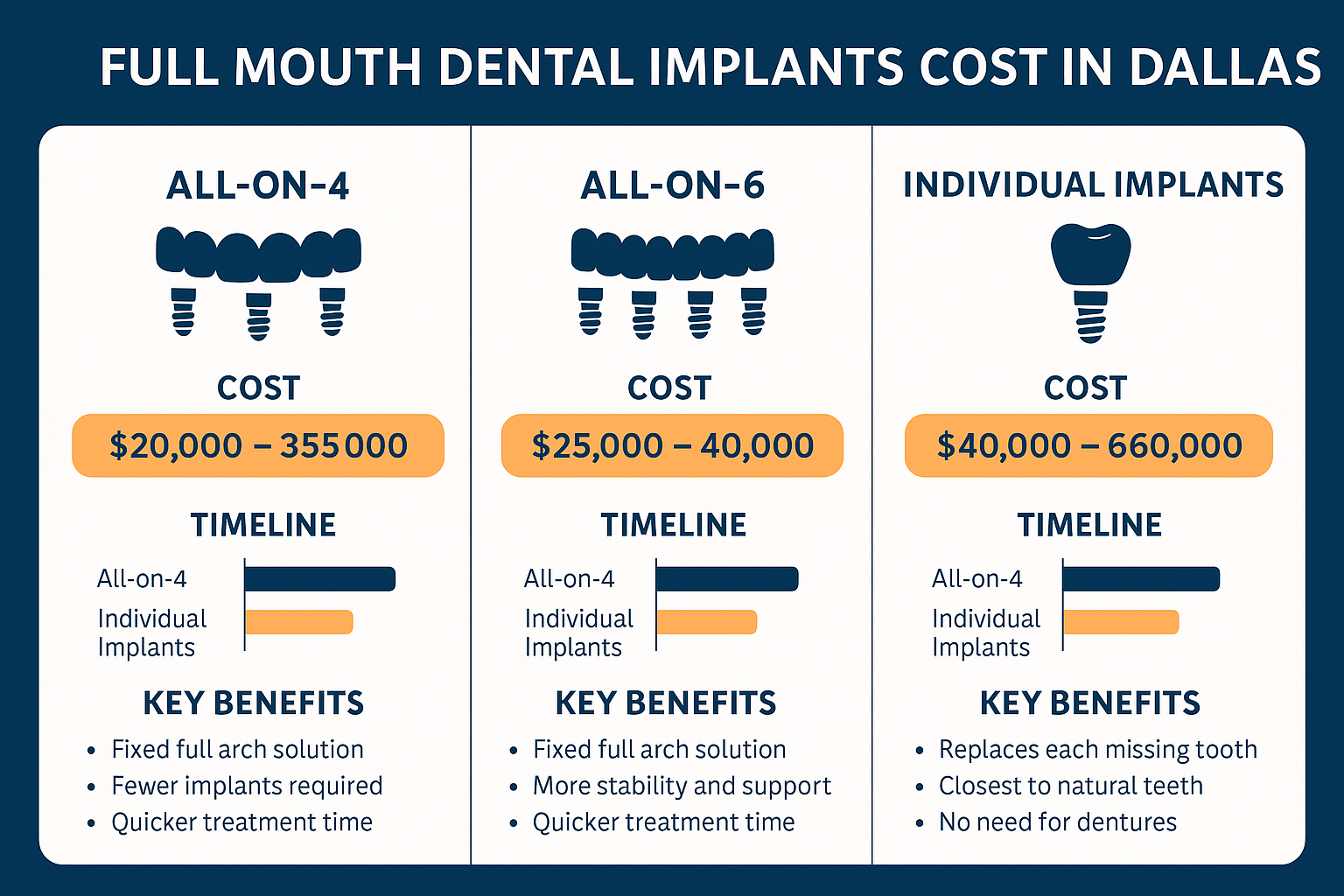
Understanding the full mouth dental implants cost in Dallas TX requires looking at several factors. Let me break down what you can expect to invest in your new smile.
Average Cost Ranges in Dallas
| Procedure Type | Cost Range (Per Arch) | Total Investment (Both Arches) |
|---|---|---|
| All-on-4 Implants | $15,000 – $25,000 | $30,000 – $50,000 |
| All-on-6 Implants | $20,000 – $30,000 | $40,000 – $60,000 |
| Individual Implants | $25,000 – $40,000 | $50,000 – $80,000 |
These ranges reflect the competitive Dallas market, where you’ll find both premium practices and more affordable dental implants options.
What’s Included in the Cost?
When evaluating full mouth dental implants cost Dallas TX, ensure you understand what’s included:
Initial Phase:
- Comprehensive examination and 3D imaging
- Treatment planning and surgical guides
- Implant placement surgery
- Temporary prosthetics
Final Phase:
- Custom permanent prosthetics
- Abutments and hardware
- Follow-up appointments
- Warranty coverage
Factors That Influence Full Mouth Dental Implants Cost in Dallas
Several factors affecting implant cost in Dallas can significantly impact your final investment.
1. Surgeon Experience and Location 🏥
Dallas offers a wide range of practitioners, from general dentists to board-certified oral surgeons. Choosing the right dental implant dentist affects both cost and outcomes.
Premium areas like:
- Uptown Dallas
- Highland Park
- Plano
Typically charge 15-25% more than suburban locations.
2. Implant System Quality
Premium brands include:
- Nobel Biocare
- Straumann
- Zimmer Biomet
Value options:
- Hiossen
- Megagen
- BioHorizons
While premium implants cost more upfront, they often provide better long-term value through superior warranties and proven track records.
3. Additional Procedures Needed
Many patients require preparatory work:
- Bone grafting: $500-$3,000 per site
- Sinus lifts: $1,500-$5,000
- Extractions: $150-$400 per tooth
- Gum disease treatment: $500-$2,000
4. Type of Final Prosthetic
Acrylic prosthetics: More affordable, easier to repair Porcelain prosthetics: More durable, better aesthetics Zirconia prosthetics: Premium option, maximum strength
Insurance and Financing Options for Full Mouth Dental Implants
Understanding your financial options is crucial when planning for full mouth dental implants cost Dallas TX.
Insurance Coverage Reality Check 📋
Most dental insurance plans classify implants as “cosmetic,” but this is changing:
What’s typically covered:
- 10-50% of implant costs when medically necessary
- Pre-surgical procedures (extractions, bone grafts)
- Temporary prosthetics
What’s usually not covered:
- Premium implant materials
- Aesthetic upgrades
- Comfort amenities
Financing Solutions in Dallas
Dallas patients have numerous payment plans for implants available:
CareCredit:
- 0% interest for 6-24 months
- Extended payment plans available
- Instant approval process
Practice Financing:
- In-house payment plans
- Reduced cash-pay pricing
- Flexible terms
Third-Party Lenders:
- LendingClub
- Prosper Healthcare Lending
- Wells Fargo Health Advantage
Pro Tip: Many Dallas practices offer significant discounts for cash payments or same-day treatment decisions.
Finding Affordable Full Mouth Dental Implants in Dallas
You don’t have to compromise quality for affordability. Here’s how to find low-cost dental implants in Dallas without sacrificing safety.
Strategies to Reduce Costs 💰
1. Timing Your Treatment
- End-of-year insurance benefit maximization
- Practice promotional periods
- Dental school training programs
2. Geographic Considerations
- Suburban vs. urban pricing
- Cross-border options (medical tourism)
- Multi-practice consultations
3. Treatment Modifications
- All-on-4 vs. individual implants
- Staged treatment approaches
- Material selection flexibility
Red Flags to Avoid
When searching for affordable implants, watch for these warning signs:
⚠️ Prices significantly below market average ⚠️ Pressure for immediate decisions ⚠️ No clear warranty information ⚠️ Limited follow-up care included ⚠️ Unlicensed or inexperienced providers
The Dallas Advantage: Why Choose Local Care

Dallas offers unique advantages for dental implant patients that can impact both cost and outcomes.
World-Class Medical Infrastructure 🌟
Major medical centers include:
- UT Southwestern Medical Center
- Baylor Scott & White Dallas
- Texas A&M College of Dentistry
This concentration of medical expertise means:
- Advanced technology availability
- Collaborative care options
- Emergency support systems
- Continuing education opportunities
Competitive Market Benefits
Dallas’s large population creates healthy competition among providers, resulting in:
- Competitive pricing
- Innovation adoption
- Service quality improvements
- Patient-focused amenities
Accessibility and Convenience
Transportation advantages:
- DFW International Airport access
- Extensive highway system
- Public transportation options
- Abundant parking availability
Long-Term Value and Return on Investment
While the initial full mouth dental implants cost Dallas TX may seem substantial, consider the long-term financial benefits.
Cost Comparison Over 20 Years
| Option | Initial Cost | Maintenance (20 years) | Total Cost |
|---|---|---|---|
| Dentures | $3,000 | $15,000 (replacements, adhesives) | $18,000 |
| Implants | $25,000 | $3,000 (routine care) | $28,000 |
Quality of Life Benefits
Quantifiable improvements:
- Increased bite force (90% vs. 25% of natural teeth)
- Improved nutrition and health
- Enhanced speech clarity
- Boosted confidence and social interaction
Health cost savings:
- Reduced digestive issues
- Better nutritional absorption
- Decreased risk of jawbone loss
- Lower infection rates
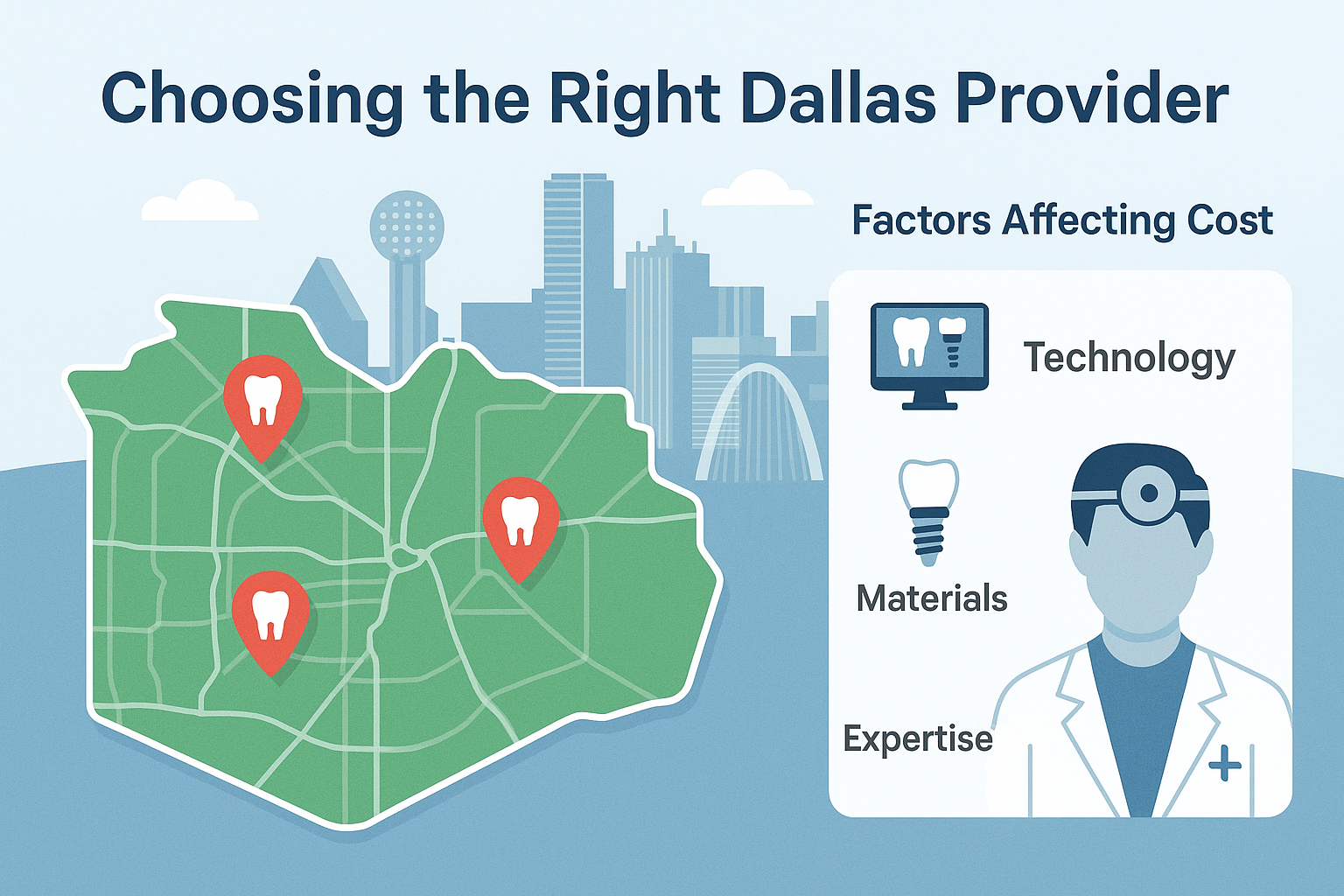
Choosing the Right Dallas Implant Provider
Selecting your dental implant specialist is perhaps the most critical decision affecting both cost and outcomes.
Essential Qualifications to Verify ✅
Education and Training:
- Dental degree from accredited institution
- Specialized implant training
- Continuing education participation
- Board certifications
Experience Markers:
- Years in practice
- Number of implant procedures completed
- Complication rates
- Patient testimonials
Questions to Ask During Consultations
- How many full mouth cases do you complete annually?
- What’s your complication rate, and how do you handle issues?
- Can I speak with recent patients?
- What warranty do you provide?
- What’s included in the quoted price?
Technology and Facility Standards
Modern Dallas practices should offer:
- 3D imaging capabilities (CBCT scans)
- Computer-guided surgery options
- On-site laboratory services
- Sedation options for comfort
- Emergency contact protocols
Recovery and Aftercare Considerations
Understanding the recovery process helps you plan both time and additional costs associated with full mouth dental implants cost Dallas TX.
Timeline Expectations 📅
Immediate Phase (0-2 weeks):
- Initial healing and swelling reduction
- Soft diet requirements
- Pain management
- Follow-up appointments
Integration Phase (2-6 months):
- Osseointegration process
- Temporary prosthetic adjustments
- Gradual diet expansion
- Regular monitoring
Final Phase (6+ months):
- Permanent prosthetic placement
- Full function restoration
- Long-term maintenance planning
Hidden Costs to Consider
Potential additional expenses:
- Time off work (3-7 days typically)
- Soft food groceries
- Pain medications
- Additional cleaning supplies
- Transportation to appointments
Advanced Treatment Options in Dallas
Dallas practices offer cutting-edge techniques that can affect your full mouth dental implants cost Dallas TX while improving outcomes.
Same-Day Implants (Teeth in a Day) ⚡
This revolutionary approach allows:
- Implant placement and temporary teeth in one visit
- Reduced total treatment time
- Fewer appointments required
- Immediate function restoration
Cost implications:
- Higher initial investment
- Reduced time-off-work costs
- Potential complications from accelerated timeline
Computer-Guided Surgery
Benefits include:
- Increased precision
- Reduced surgery time
- Predictable outcomes
- Minimally invasive approach
Cost considerations:
- Additional planning fees ($500-$1,500)
- Surgical guide costs
- Enhanced success rates
- Reduced complication risks
Material Innovations
Zirconia implants:
- Metal-free option
- Superior aesthetics
- Biocompatible material
- Premium pricing
Custom abutments:
- Optimal gum contours
- Enhanced aesthetics
- Improved long-term stability
- Additional laboratory costs
Dallas Dental Implant Cost Calculator
Get an estimated cost for your full mouth dental implant treatment
Your Estimated Treatment Cost
Monthly Payment with CareCredit (24 months, 0% APR): $0
This is an estimate. Actual costs may vary based on your specific needs and chosen provider.
Making Your Decision: Next Steps
Now that you understand the full mouth dental implants cost Dallas TX landscape, it’s time to take action toward your new smile.
Immediate Action Items 📝
Week 1: Research and Initial Consultations
- Schedule consultations with 2-3 Dallas providers
- Gather your dental records and X-rays
- Review insurance benefits and coverage
- Research financing options
Week 2: Detailed Evaluations
- Complete comprehensive examinations
- Review treatment plans and costs
- Ask detailed questions about warranties
- Check references and reviews
Week 3: Decision Making
- Compare all proposals carefully
- Verify credentials and experience
- Understand payment terms
- Schedule your procedure
Questions to Resolve Before Treatment
Financial Planning:
- What’s the total cost breakdown?
- What financing options are available?
- How much will insurance cover?
- Are there any hidden fees?
Treatment Planning:
- What’s the complete timeline?
- What are the risks and alternatives?
- How will complications be handled?
- What warranty is provided?
Understanding Why Dental Implants Cost So Much
Many patients wonder about the factors that contribute to why dental implants cost so much in Dallas. The investment reflects several high-value components:
Technology and Materials Investment
Advanced equipment costs:
- 3D imaging systems ($150,000+)
- Surgical suites and sterilization
- Computer-guided surgery technology
- Laboratory equipment and materials
Premium materials:
- Medical-grade titanium implants
- Custom prosthetics and abutments
- Biocompatible materials
- Precision manufacturing
Expertise and Training
Years of specialized education:
- Dental school (4 years)
- Residency training (2-6 years)
- Continuing education requirements
- Board certification processes
Ongoing skill development:
- Advanced technique training
- Technology updates
- Professional conferences
- Peer collaboration
Maximizing Your Investment
To ensure you get the best value from your full mouth dental implants cost Dallas TX, consider these strategies for saving money on dental implants.
Timing Strategies 🗓️
End-of-year benefits:
- Maximize insurance benefits before renewal
- Use remaining FSA/HSA funds
- Take advantage of practice promotions
Seasonal considerations:
- Winter months often have availability
- Holiday promotions and discounts
- Tax refund timing for payments
Long-term Maintenance Planning
Preventive care investment:
- Regular dental cleanings
- Professional maintenance appointments
- Quality oral hygiene products
- Protective night guards if needed
Lifestyle modifications:
- Smoking cessation programs
- Nutritional counseling
- Stress management
- Exercise and overall health
Conclusion
Investing in full mouth dental implants cost Dallas TX represents one of the most significant decisions you’ll make for your oral health and quality of life. While the initial investment ranges from $15,000 to $30,000 per arch, the long-term benefits far exceed the costs when you consider improved nutrition, confidence, and overall health outcomes.
Dallas offers exceptional advantages for dental implant patients, including world-class medical infrastructure, competitive pricing due to market competition, and access to the latest technologies and techniques. The key to success lies in choosing an experienced provider who offers transparent pricing, comprehensive warranties, and ongoing support.
Remember that the cheapest option isn’t always the best value. Focus on finding a qualified dental implant specialist who offers fair pricing, excellent credentials, and a track record of successful outcomes.
Your next steps should include:
- Schedule consultations with 2-3 qualified Dallas providers
- Review your insurance benefits and explore financing options
- Ask detailed questions about costs, warranties, and aftercare
- Make an informed decision based on value, not just price
The investment you make today in full mouth dental implants will pay dividends in improved health, confidence, and quality of life for decades to come. Don’t let cost concerns prevent you from exploring this life-changing treatment option.
Leave a Reply
Share your thoughts or ask a question about dental implants. Your email address will not be published.