

When Sarah walked into her dentist’s office last month, she had one burning question: “What are my chances of success with dental implants?” Like millions of Americans considering this life-changing procedure, she wanted concrete numbers and real data about dental implant success rate 2025. The good news? Modern dental implant technology has reached unprecedented levels of reliability and predictability.
As we navigate through 2025, dental implant success rates have reached remarkable heights, with studies showing success rates consistently above 95% for most patients. This represents not just a number, but a testament to decades of technological advancement, refined surgical techniques, and improved patient care protocols that have transformed dental implantology into one of the most predictable procedures in dentistry.
Key Takeaways
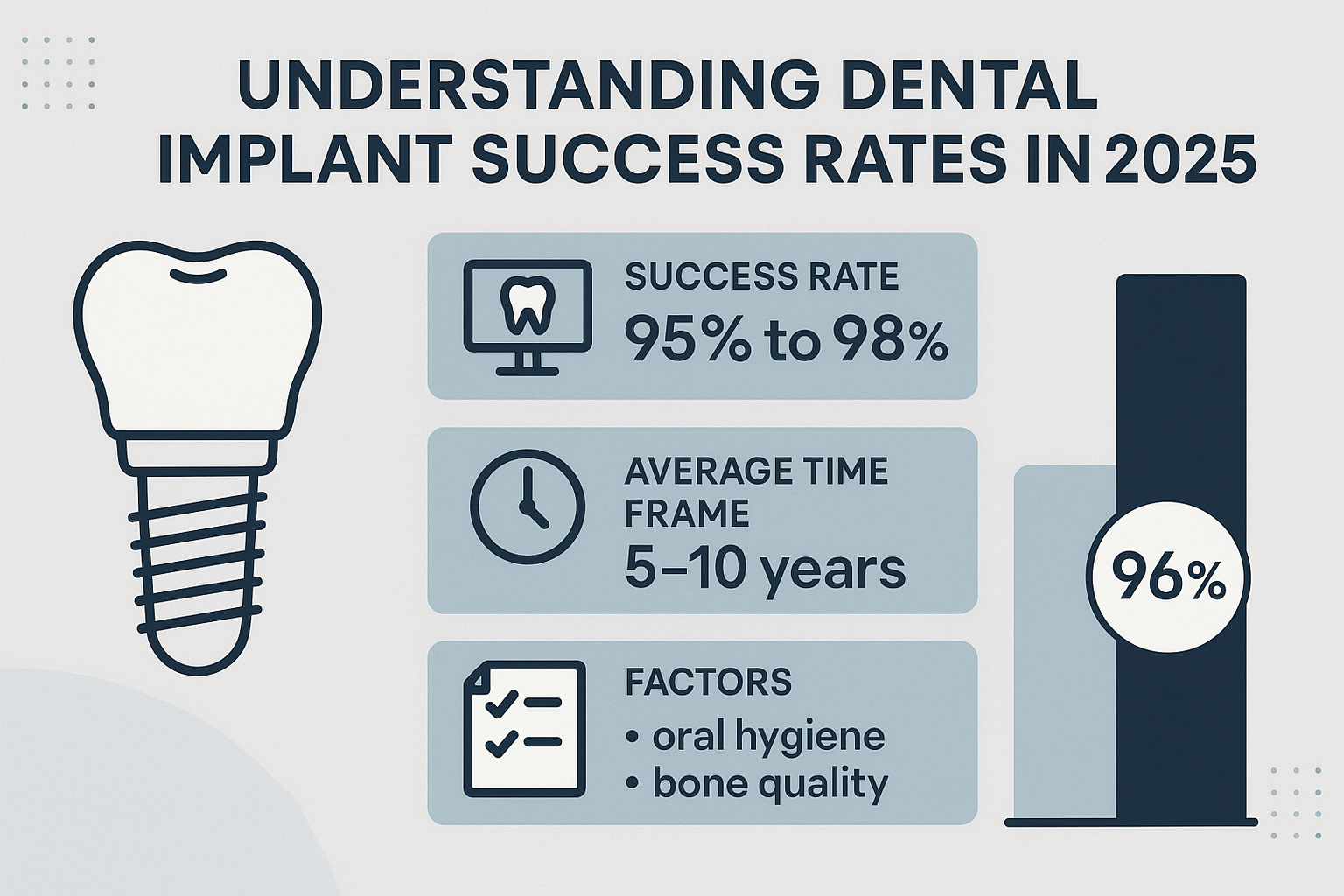
• Dental implant success rates in 2025 average 95-98% for healthy patients with proper aftercare
• Advanced technology and techniques have significantly improved outcomes compared to previous years
• Patient factors like oral hygiene, smoking, and overall health play crucial roles in determining success
• Long-term success depends heavily on proper maintenance and regular dental checkups
• Choosing an experienced implant specialist can dramatically impact your individual success rate
Understanding Dental Implant Success Rates in 2025
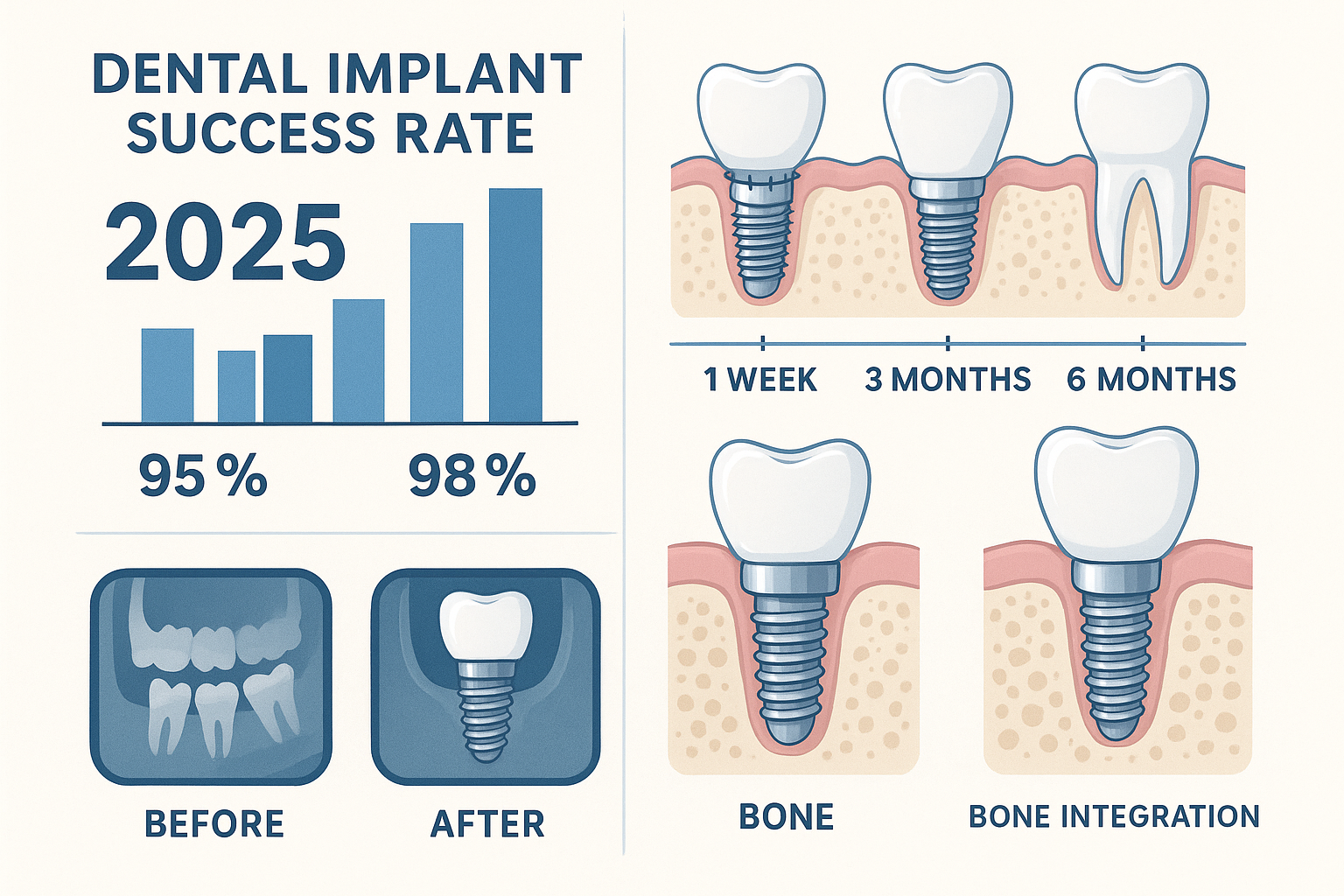
The dental implant success rate 2025 represents a culmination of decades of research, technological innovation, and clinical refinement. When we talk about success rates, we’re referring to implants that successfully integrate with the jawbone (osseointegration) and remain functional for years without complications.
Current Success Rate Statistics 📊
Recent studies and clinical data from 2025 reveal impressive success rates across different scenarios:
Overall Success Rates:
- Single tooth implants: 96-98% success rate
- Multiple implants: 95-97% success rate
- All-on-4 dental implants: 94-96% success rate
- All-on-6 implants: 96-98% success rate
Success Rates by Jaw Location:
- Upper jaw (maxilla): 94-96%
- Lower jaw (mandible): 96-98%
The slight difference between upper and lower jaw success rates relates to bone density differences, with the lower jaw typically having denser bone that promotes better initial stability.
What Defines Implant Success?
Dental professionals measure implant success using several criteria:
✅ Osseointegration: The implant fuses properly with jawbone tissue
✅ Stability: No movement or loosening of the implant
✅ Functionality: Ability to chew and speak normally
✅ Aesthetics: Natural appearance that blends with existing teeth
✅ Longevity: Implant remains functional for 15+ years
✅ Tissue Health: Healthy gums around the implant site
“The success of dental implants isn’t just about the surgery day – it’s about creating a foundation for lifelong oral health.” – Dr. Michael Chen, Implant Specialist
Factors That Impact Dental Implant Success Rate 2025
Understanding what influences your personal success rate empowers you to make informed decisions and take proactive steps to optimize your outcomes. The dental implant success rate 2025 varies significantly based on individual factors and circumstances.
Patient Health Factors
Oral Health Status 🦷
Your existing oral health serves as the foundation for implant success. Patients with healthy gums and adequate bone structure typically experience the highest success rates. Periodontal disease must be treated before implant placement to ensure optimal outcomes.
Bone Quality and Quantity
Adequate bone density and volume are crucial for implant stability. Patients with significant bone loss may require bone grafting procedures to create a suitable foundation for implants.
Smoking and Tobacco Use 🚭
Smoking significantly impacts implant success rates:
- Non-smokers: 96-98% success rate
- Light smokers (1-10 cigarettes/day): 90-94% success rate
- Heavy smokers (20+ cigarettes/day): 85-90% success rate
Smoking impairs blood flow, slows healing, and increases infection risk. Many specialists recommend quitting smoking at least 2 weeks before surgery and throughout the healing period.
Systemic Health Conditions
Certain medical conditions can affect implant success:
| Condition | Impact on Success Rate | Management Strategy |
|---|---|---|
| Diabetes (controlled) | 92-95% | Optimal blood sugar control |
| Diabetes (uncontrolled) | 80-85% | Medical management first |
| Osteoporosis | 90-94% | Medication review, longer healing |
| Heart disease | 94-96% | Antibiotic prophylaxis |
| Autoimmune disorders | 88-92% | Specialist coordination |
Surgical and Technical Factors
Surgeon Experience and Expertise 👨⚕️
The skill and experience of your implant surgeon significantly impacts success rates. Board-certified oral surgeons and periodontists typically achieve higher success rates due to specialized training and experience with complex cases.
Implant Quality and Design
Modern implant systems in 2025 feature advanced surface treatments and designs that promote faster, more reliable osseointegration. Premium implant brands consistently show higher long-term success rates compared to budget alternatives.
Surgical Technique
Advanced techniques used in 2025 include:
- Computer-guided surgery: Improves precision and reduces trauma
- Immediate loading protocols: Allows faster return to function
- Minimally invasive techniques: Reduces healing time and discomfort
Post-Surgical Care Factors
Immediate Post-Op Care 🏥
The first few weeks after surgery are critical for success. Following proper aftercare instructions significantly impacts healing and integration.
Diet and Nutrition
Proper nutrition supports healing and osseointegration. Patients should follow guidelines for soft foods after dental implant surgery during the initial healing period.
Long-term Maintenance
Long-term success depends heavily on:
- Regular dental checkups and cleanings
- Proper home oral hygiene
- Use of appropriate oral care products
- Avoiding harmful habits like teeth grinding
Improving Your Personal Success Rate
While the overall dental implant success rate 2025 statistics are encouraging, you can take specific steps to maximize your individual chances of success.
Pre-Treatment Optimization
Comprehensive Health Assessment 📋
Before proceeding with implants, undergo a thorough evaluation that includes:
- Complete medical history review
- Oral health examination
- 3D imaging and bone assessment
- Blood work if indicated
- Smoking cessation counseling if needed
Oral Health Preparation
Optimize your oral health before surgery:
- Treat any existing gum disease
- Address tooth decay or infections
- Professional dental cleaning
- Establish good oral hygiene habits
Lifestyle Modifications
Make beneficial changes before surgery:
- Quit smoking (ideally 8+ weeks before)
- Optimize nutrition with adequate protein and vitamins
- Manage stress levels
- Ensure adequate sleep for healing
Choosing the Right Provider
Research and Credentials 🔍
Select a qualified implant specialist by evaluating:
- Board certification in oral surgery or periodontics
- Years of implant experience
- Continuing education in latest techniques
- Patient reviews and testimonials
- Technology and equipment available
Consultation Process
A thorough consultation should include:
- Detailed treatment planning
- Discussion of risks and alternatives
- Clear explanation of costs and timeline
- Opportunity to ask questions
- Review of before/after cases
When researching dental implant options, look for providers who offer comprehensive care and have extensive experience with your specific needs.
Optimizing Recovery and Healing
Following Post-Op Instructions 📝
Strict adherence to post-surgical guidelines dramatically improves success rates:
- Take prescribed medications as directed
- Maintain proper oral hygiene without disturbing the surgical site
- Attend all follow-up appointments
- Avoid strenuous activities during initial healing
- Don’t smoke or use tobacco products
Nutrition for Healing
Support your body’s healing process with:
- Adequate protein intake (1.2-1.5g per kg body weight)
- Vitamin C for collagen formation
- Calcium and Vitamin D for bone health
- Anti-inflammatory foods
- Proper hydration
Monitoring Healing Progress 👀
Watch for signs of proper healing:
- Gradual reduction in swelling and discomfort
- No signs of infection (fever, excessive pain, pus)
- Stable implant without movement
- Healthy tissue color around the implant site
If you notice any concerning symptoms, contact your dental provider immediately. Early intervention can often prevent complications and preserve implant success.
Long-Term Success and Maintenance
The dental implant success rate 2025 isn’t just about initial integration – it’s about creating lasting oral health solutions that can serve you for decades. Long-term success requires ongoing commitment to proper care and maintenance.
Maintenance Requirements for Lasting Success
Daily Oral Hygiene 🪥
Proper daily care is essential for long-term implant success:
- Brush twice daily with appropriate toothpaste for implants
- Use interdental brushes or water flossers designed for implants
- Rinse with antimicrobial mouthwash
- Avoid abrasive products that could damage implant surfaces
Professional Maintenance Schedule 📅
Regular professional care includes:
- Cleaning every 3-4 months (more frequent than natural teeth)
- Annual X-rays to monitor bone levels
- Professional assessment of implant stability
- Specialized cleaning techniques for implant surfaces
Lifestyle Factors for Longevity
Protect your investment with smart lifestyle choices:
- Avoid chewing on hard objects (ice, pens, hard candy)
- Wear a nightguard if you grind your teeth
- Don’t use teeth as tools for opening packages
- Maintain overall health through diet and exercise
Potential Complications and Solutions
Early Complications (0-6 months) ⚠️
- Infection: Treated with antibiotics and enhanced hygiene
- Implant failure: May require removal and replacement after healing
- Nerve damage: Usually temporary, managed with medication
Late Complications (6+ months)
- Peri-implantitis: Inflammation around implants, treated with deep cleaning
- Mechanical issues: Crown or abutment problems, easily repaired
- Bone loss: May require additional procedures to maintain support
Prevention Strategies
Most complications are preventable through:
- Excellent oral hygiene
- Regular professional maintenance
- Avoiding risk factors like smoking
- Prompt treatment of any issues
Success Rates Over Time
5-Year Success Rates: 94-96%
10-Year Success Rates: 92-95%
15-Year Success Rates: 90-93%
20+ Year Success Rates: 85-90%
These long-term statistics demonstrate that with proper care, dental implants can truly be a lifetime solution for tooth replacement.
“I tell my patients that getting dental implants is like buying a car – the initial investment is important, but how you maintain it determines how long it will serve you well.” – Dr. Sarah Rodriguez, Prosthodontist
When to Seek Professional Help
Contact your dental provider immediately if you experience:
- Persistent pain or swelling around an implant
- Looseness or movement of the implant or crown
- Changes in bite or difficulty chewing
- Signs of infection (fever, pus, bad taste)
- Any concerns about implant function or appearance
Early intervention often prevents minor issues from becoming major problems, preserving your implant investment and maintaining optimal function.
Conclusion
The dental implant success rate 2025 represents remarkable achievements in modern dentistry, with success rates consistently exceeding 95% for most patients. These impressive statistics reflect decades of technological advancement, refined surgical techniques, and improved understanding of the factors that contribute to long-term implant success.
Your personal success rate depends on multiple factors within your control, including your overall health, oral hygiene habits, lifestyle choices, and commitment to professional maintenance. By choosing an experienced provider, following pre- and post-operative instructions carefully, and maintaining excellent long-term care, you can maximize your chances of joining the vast majority of patients who enjoy successful, long-lasting dental implants.
Your Next Steps 🚀
- Schedule a consultation with a qualified implant specialist to assess your candidacy
- Optimize your oral health before treatment through professional cleaning and home care
- Consider lifestyle modifications such as smoking cessation to improve your success odds
- Research providers thoroughly to find an experienced specialist with excellent outcomes
- Prepare for long-term commitment to maintenance and professional care
Remember, dental implants represent one of the most predictable and successful treatments in modern dentistry. With proper planning, execution, and maintenance, they can provide you with a lifetime of confident smiles and optimal oral function.
If you’re ready to explore how dental implants can transform your oral health and quality of life, contact our experienced team to discuss your options and develop a personalized treatment plan that maximizes your chances of success.
🦷 Personal Dental Implant Success Rate Calculator 2025
Factors Affecting Your Rate:
Leave a Reply
Share your thoughts or ask a question about dental implants. Your email address will not be published.