

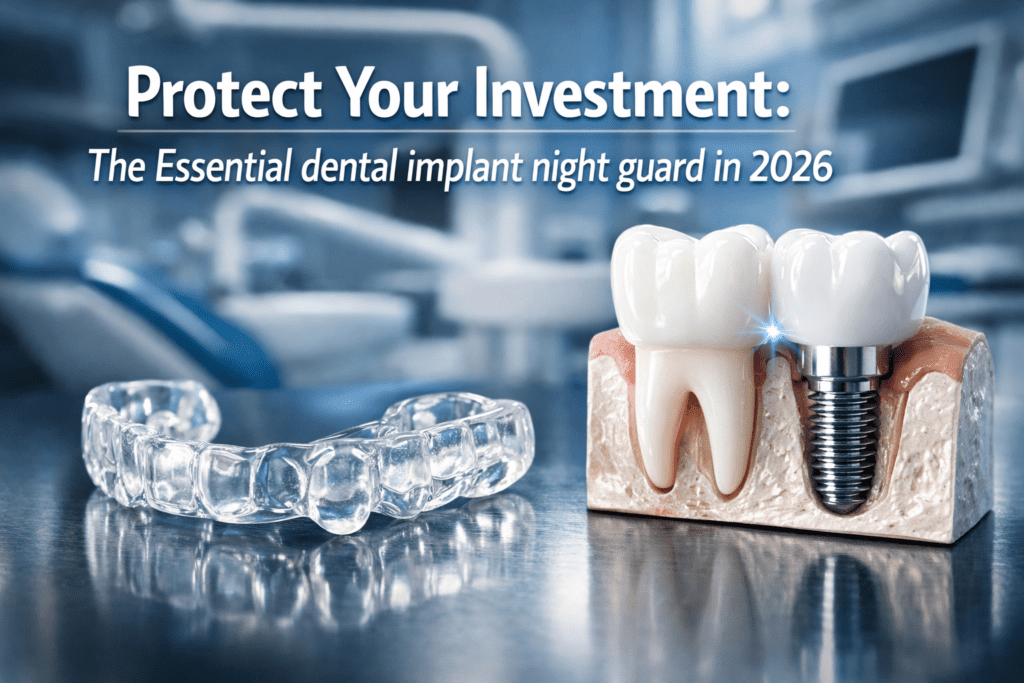
Achieving a healthy, confident smile through dental implants is a significant investment in your oral health and overall well-being. These modern marvels of dentistry offer a durable, long-lasting solution for missing teeth, restoring both function and aesthetics. However, like any valuable investment, dental implants require proper protection, especially for those who unknowingly exert excessive force on their teeth during sleep. This is where the dental implant night guard becomes not just beneficial, but often essential. In 2026, understanding the crucial role of a custom-fit night guard is more important than ever for ensuring the longevity and success of your dental implants.
For individuals who clench or grind their teeth (a condition known as bruxism), the forces generated can be immense, potentially jeopardizing both natural teeth and advanced restorative work like dental implants. A properly designed dental implant night guard acts as a protective barrier, absorbing these harmful forces and safeguarding your investment.
Key Takeaways
- 🦷 A dental implant night guard is crucial for protecting dental implants from the destructive forces of bruxism (teeth grinding or clenching).
- 🛡️ Night guards extend the lifespan of implants, crowns, and surrounding natural teeth by preventing wear, fractures, and loosening.
- 🔬 Custom-made night guards from your dentist offer superior fit, comfort, and protection compared to over-the-counter options.
- 🤔 Early diagnosis of bruxism and consistent use of a night guard are vital for long-term implant success and oral health.
- 📞 If you have dental implants and suspect bruxism, consult your dentist immediately to discuss a suitable protective solution.
Understanding Bruxism and Its Threat to Dental Implants
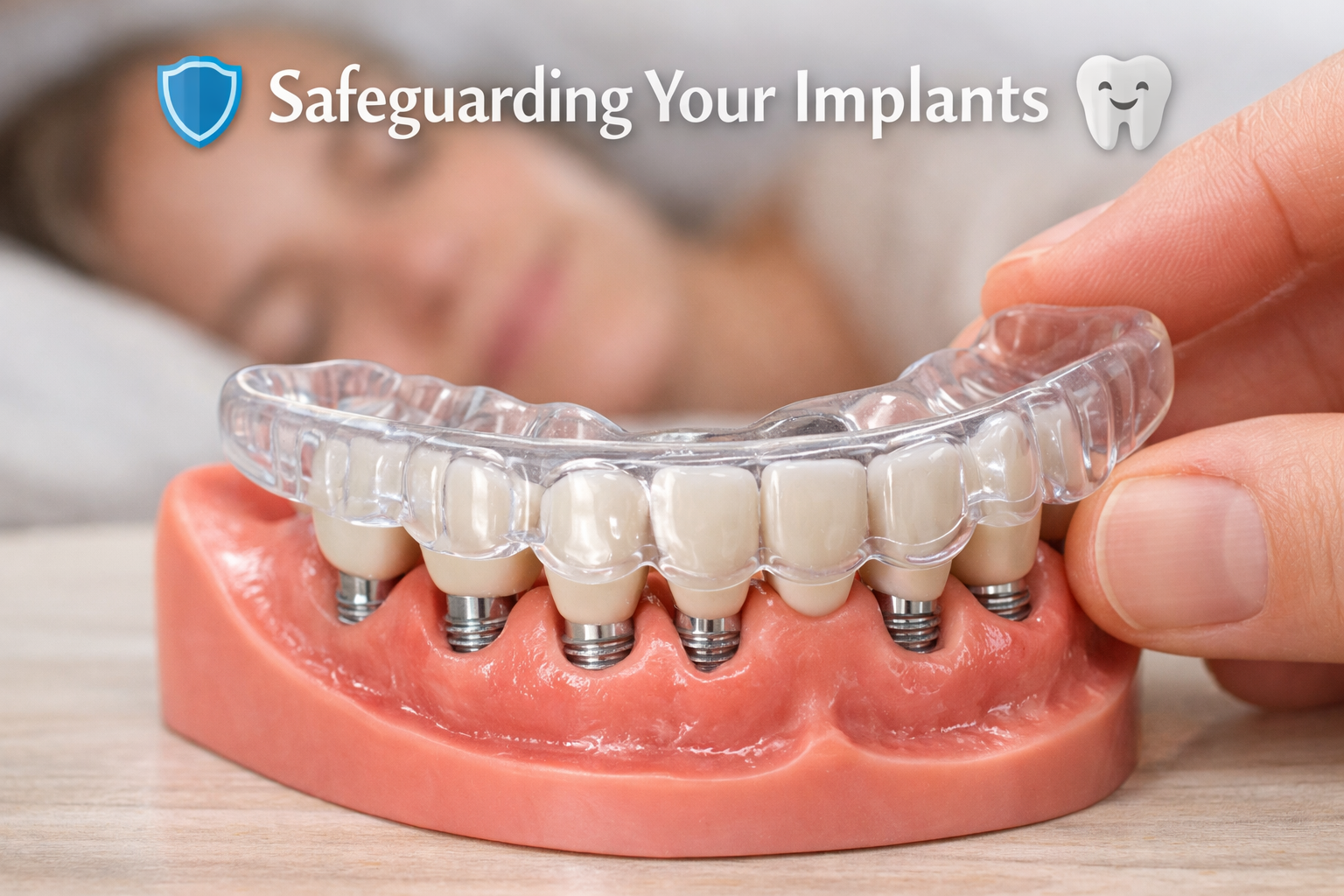
Bruxism, the involuntary clenching or grinding of teeth, affects a significant portion of the population. While some individuals are aware of their habit, many suffer unknowingly, particularly during sleep. The forces generated during bruxism can be up to ten times greater than those used for chewing [1]. This excessive pressure can have devastating consequences for your natural dentition, leading to chipped teeth, worn enamel, jaw pain (TMJ disorders), and headaches. When dental implants are present, the stakes are even higher.
The Unique Vulnerability of Dental Implants
Unlike natural teeth, which have a periodontal ligament that allows for slight movement and shock absorption, dental implants are rigidly anchored directly into the jawbone through a process called osseointegration. While this rigidity is key to their stability and strength, it also means they lack the natural shock-absorbing capabilities of real teeth.
Consider the analogy of a sturdy house foundation. While incredibly strong, it still needs to be protected from external forces like earthquakes or constant tremors. Similarly, while dental implants are built to last, they are not impervious to the relentless, non-axial forces exerted by severe bruxism.
The potential damage to dental implants from bruxism includes:
- Fractured Crowns: The porcelain or zirconia crowns attached to your implants can chip, crack, or completely fracture under sustained grinding forces. This often necessitates costly replacement.
- Abutment Loosening or Fracture: The abutment, which connects the implant post to the crown, can become loose or even fracture. This can compromise the entire implant restoration. Learn more about the complete guide to the dental implant abutment procedure and abutment placement.
- Implant Failure: In severe cases, chronic bruxism can lead to the loosening or even fracture of the implant post itself within the bone. This is a catastrophic outcome, often requiring implant removal, bone grafting (see bone grafts for dental implants), and re-implantation, which is a lengthy and expensive process.
- Peri-implantitis: Excessive force can contribute to inflammation around the implant, known as peri-implantitis. This condition is similar to periodontal disease and can lead to bone loss around the implant, ultimately threatening its stability [2].
- Damage to Opposing Natural Teeth: A night guard not only protects your implants but also prevents wear and tear on your remaining natural teeth that bite against the implant crowns.
“A dental implant is a significant investment in your oral health. Protecting it with a custom-fit night guard is like putting a strong insurance policy on that investment.”
Identifying Bruxism: Are You at Risk?
Many people are unaware they grind or clench their teeth, especially during sleep. Common signs and symptoms of bruxism include:
- Worn-down, flattened, or chipped teeth: This is a classic sign of chronic grinding.
- Increased tooth sensitivity or pain: Especially noticeable in natural teeth.
- Jaw pain, soreness, or tightness: Often worse in the morning.
- Clicking or popping sounds in the jaw joint (TMJ): Indicating potential TMJ dysfunction.
- Headaches: Particularly tension headaches, often starting in the temples.
- Facial muscle fatigue: Your jaw muscles may feel tired.
- Scalloped tongue or indentations on the inside of the cheeks: From pressing the tongue or cheeks against teeth.
- Disrupted sleep: Though you might not remember it, a sleep partner might report grinding noises.
If you recognize any of these symptoms, or if your dentist observes signs of wear during your routine check-ups, discussing a dental implant night guard should be a top priority.
The Role and Benefits of a Dental Implant Night Guard
A dental implant night guard, often referred to as an occlusal splint or bite guard, is a custom-made appliance worn over the teeth, typically on the upper or lower arch, to create a protective barrier. Its primary function is to absorb and distribute the forces of clenching and grinding, preventing direct tooth-on-tooth contact.
How a Night Guard Protects Your Implants
When you wear a night guard, the destructive forces of bruxism are no longer concentrated on individual teeth or implant crowns. Instead, these forces are spread evenly across the surface of the night guard, which is designed to withstand and dissipate them. This reduces the strain on the implant components, the surrounding bone, and your jaw muscles.
Think of it like a shock absorber in a car. It takes the impact from bumps in the road so the rest of the vehicle and its occupants don’t feel the full force. A night guard performs a similar function for your teeth and implants.
Key Benefits of Using a Dental Implant Night Guard
The advantages of incorporating a night guard into your oral care routine, especially with dental implants, are significant:
- Protects Your Investment: Dental implants are a long-term solution. A night guard helps ensure they last for decades by shielding them from undue stress.
- Prevents Fractures and Chipping: It significantly reduces the risk of chipping or fracturing your implant crowns, abutments, and even natural teeth.
- Alleviates Jaw Pain and Headaches: By reducing muscle strain, night guards can dramatically lessen the pain associated with TMJ disorders and tension headaches.
- Preserves Remaining Natural Teeth: Beyond your implants, the night guard protects your existing natural teeth from wear and enamel erosion caused by grinding.
- Reduces Implant Loosening: By minimizing excessive force, it helps maintain the stable integration of the implant with your jawbone.
- Improves Sleep Quality: For some, reducing the physical stress of grinding can lead to more restful sleep.
- Cost Savings in the Long Run: Preventing damage to your implants and natural teeth can save you from extensive and expensive restorative procedures down the line.
Types of Dental Implant Night Guards
Not all night guards are created equal, especially when it comes to protecting sophisticated restorations like dental implants. We generally categorize them by their construction and origin:
1. Custom-Fit Night Guards (Professional Grade) 🏆
These are the gold standard and the only truly recommended option for individuals with dental implants. Your dentist takes precise impressions of your mouth, which are then sent to a dental lab to fabricate a night guard specifically molded to your teeth and implant crowns.
- Material: Often made from high-quality, durable acrylic or a combination of soft and hard materials.
- Advantages:
- Superior Fit: Perfectly conforms to your unique dental anatomy, ensuring maximum comfort and protection.
- Optimal Protection: Distributes forces evenly, reducing stress on implants and natural teeth.
- Durability: Made from robust materials designed to last.
- Comfort: Less bulky and more comfortable than boil-and-bite guards, promoting consistent use.
- Precise Bite: Designed to ensure your bite remains stable and balanced.
- Disadvantages: Higher initial cost.
2. Boil-and-Bite Night Guards (Over-the-Counter) ⚠️
These are available at drugstores and require you to soften them in hot water and then bite into them to create a semi-custom fit.
- Material: Usually made from softer thermoplastic.
- Advantages: Lower cost, readily available.
- Disadvantages:
- Poor Fit: Rarely provides a truly accurate fit, leading to discomfort and inadequate protection.
- Bulky: Can feel cumbersome in the mouth, leading to poor compliance.
- Uneven Force Distribution: May not effectively distribute grinding forces, potentially concentrating pressure on certain implant areas.
- Durability: Less durable and wears out quickly.
- Not Recommended for Implants: Their imprecise fit can actually aggravate issues for implant patients by creating uneven pressure points.
3. Stock Night Guards (Over-the-Counter) ❌
These are pre-formed and ready to wear without any customization.
- Material: Usually soft rubber or plastic.
- Advantages: Very low cost.
- Disadvantages:
- No Fit: One-size-fits-all, which means it doesn’t fit anyone well.
- Extremely Bulky and Uncomfortable: Often causes gagging or difficulty speaking.
- Minimal Protection: Offers very little, if any, effective protection against bruxism.
- Definitely NOT Recommended for Implants: Can cause more harm than good.
Why Custom-Fit is Non-Negotiable for Dental Implants
For patients with dental implants, the choice of night guard is critical. I strongly advocate for custom-fit night guards for several compelling reasons:
- Precision and Stability: Implants require stable, predictable forces. A custom guard ensures a balanced bite and even distribution of pressure across all teeth and implant crowns.
- Long-Term Health: Investing in a custom guard is investing in the long-term health and success of your dental implants. It’s a proactive measure to prevent costly complications.
- Comfort and Compliance: Because they fit perfectly, custom night guards are far more comfortable, encouraging consistent nightly use, which is key to their effectiveness.
For more information on the intricate parts of an implant, check out our guide on abutment-supported porcelain ceramic crown.
The Process of Getting a Custom Dental Implant Night Guard
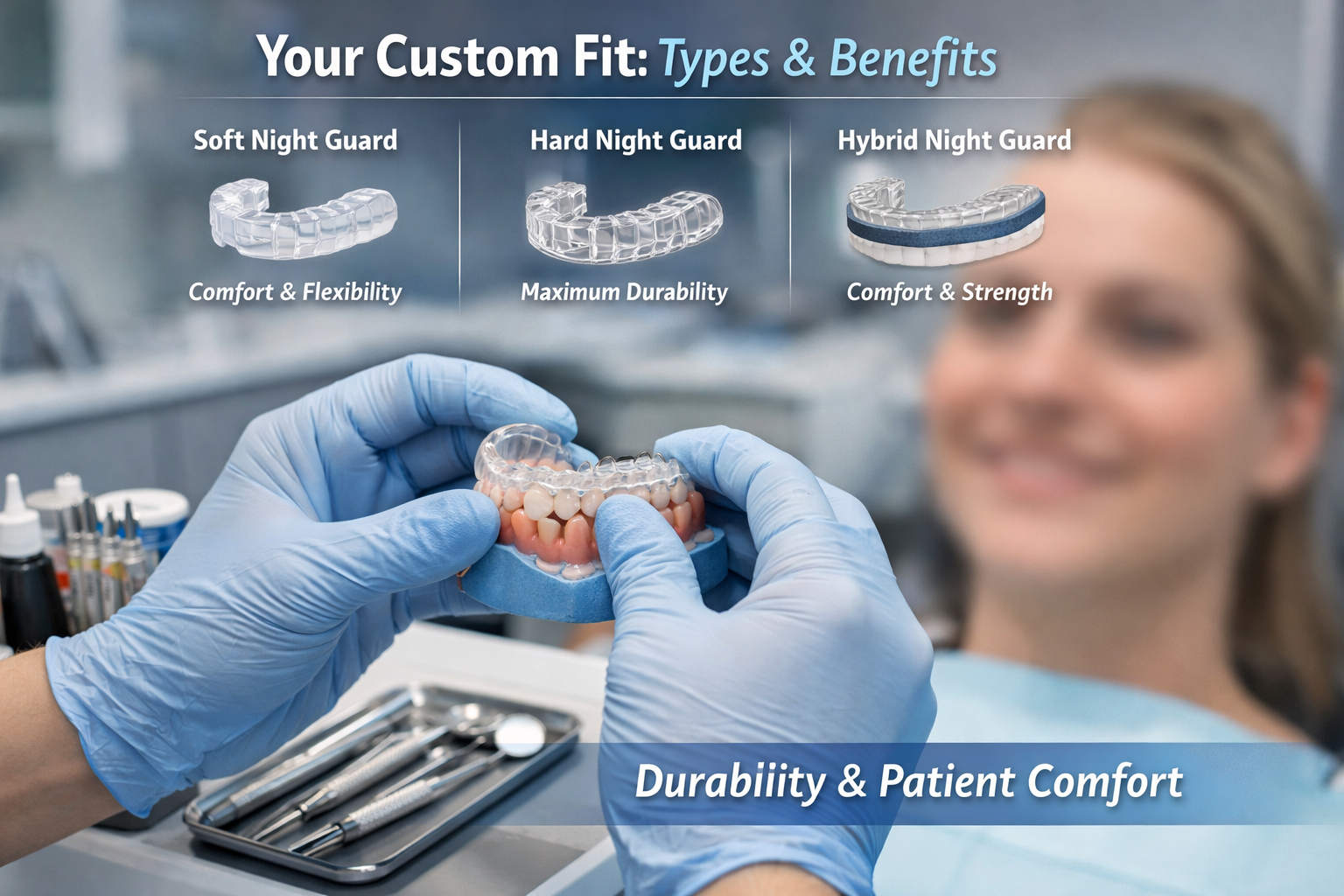
Obtaining a high-quality, custom-fit dental implant night guard is a straightforward process that begins with a consultation with your dental professional.
Step-by-Step Guide
Initial Consultation and Examination:
- Your dentist will examine your mouth, checking for signs of bruxism (tooth wear, jaw muscle tenderness).
- They will discuss your symptoms, lifestyle, and any concerns you have about grinding or clenching, especially concerning your dental implants.
- This is an excellent opportunity to ask any questions about your overall dental implant aftercare instructions.
Impressions and Molds:
- Your dentist will take precise impressions of your upper and/or lower teeth. This might involve traditional putty molds or advanced digital scans, ensuring accurate models of your dental arches and implant crowns.
- These impressions are crucial for creating a night guard that fits your unique bite perfectly.
Lab Fabrication:
- The impressions are sent to a specialized dental laboratory.
- Skilled technicians use these models to craft a custom night guard from durable, biocompatible materials (usually acrylic). The design will specifically account for the presence and position of your dental implants.
Fitting Appointment:
- Once the night guard is ready, you’ll return for a fitting appointment.
- Your dentist will ensure the guard fits comfortably and securely over your teeth and implants. They will check your bite with the guard in place and make any necessary minor adjustments to ensure an even and balanced contact.
- They will also provide detailed instructions on how to insert, remove, clean, and care for your new night guard.
Ongoing Care and Follow-up:
- Regular dental check-ups are essential. Bring your night guard with you to these appointments so your dentist can inspect it for wear and ensure it’s still fitting correctly.
- Over time, your bite can change, or the night guard itself may show signs of wear, necessitating adjustments or replacement.
Proper Care for Your Dental Implant Night Guard
Just like your dental implants, your night guard needs consistent care to remain hygienic and effective.
- Clean After Each Use: After removing your night guard in the morning, gently brush it with a soft-bristled toothbrush and mild, non-abrasive soap or a denture cleaner. Avoid harsh toothpaste, which can scratch the material.
- Rinse Thoroughly: Rinse the night guard thoroughly with cool water to remove any cleaning solution.
- Store Properly: Store your night guard in its protective case when not in use. This prevents damage and keeps it clean. Avoid leaving it exposed on a bathroom counter where it can collect bacteria or dry out and warp.
- Avoid Hot Water: Never clean your night guard with hot water, as this can warp the material and compromise its fit.
- Regular Inspections: Periodically check your night guard for cracks, rough edges, or excessive wear. If you notice any issues, consult your dentist.
Living with a Dental Implant Night Guard in 2026
Incorporating a dental implant night guard into your nightly routine is a small habit change that yields immense long-term benefits for your oral health and the durability of your dental implants. While it may take a few nights to get used to, most patients quickly adapt and find the comfort and protection invaluable.
Common Concerns and Solutions
- Initial Discomfort: Some people experience slight discomfort or an increased saliva flow initially. This is normal and usually subsides within a few nights. If persistent, your dentist can make adjustments.
- Gagging Sensation: If the guard feels too bulky or triggers a gag reflex, it’s often a sign of a poor fit (if it’s an OTC guard) or simply an adjustment period. Custom guards are designed to minimize this.
- Cleaning Routine: Establishing a simple cleaning routine, as outlined above, makes compliance easy.
The Bigger Picture: Holistic Oral Health
A night guard is one piece of the puzzle for optimal dental implant care. It complements other essential practices such as:
- Excellent Oral Hygiene: Brushing twice daily, flossing daily (including around your implants), and using a recommended mouthwash (e.g., best mouthwash for dental implants).
- Regular Dental Check-ups and Cleanings: These appointments allow your dentist to monitor the health of your implants and natural teeth, and to clean areas you might miss. Regular professional cleaning around implants can prevent issues like peri-implantitis. You can learn more about dental implant cleaning cost at our Dallas location.
- Healthy Diet: A balanced diet supports overall oral health. Be mindful of soft foods after dental implant surgery during initial recovery, but long-term, a varied diet is best.
- Avoiding Harmful Habits: Refrain from biting on hard objects (ice, pens) and avoid smoking, which significantly increases the risk of implant failure. If you’re wondering about smoking after dental procedures, check out our article on after root canal can you smoke.
By taking a comprehensive approach to your oral health, you are actively protecting your investment in dental implants and ensuring your beautiful smile lasts for many years to come. If you’re exploring options for implant solutions, consider clinics that specialize in affordable dental implants in Dallas, TX.
Conclusion
The journey to a restored smile with dental implants is a testament to modern dentistry’s capabilities. These remarkable prosthetics offer unparalleled stability, function, and aesthetics, truly transforming lives. However, the forces of everyday life, particularly the often-unconscious habit of bruxism, pose a significant threat to their longevity and integrity.
In 2026, the dental implant night guard stands as a non-negotiable tool for anyone with dental implants who experiences or is at risk of teeth grinding or clenching. It is a simple, yet incredibly effective, device that acts as a shield, protecting your valuable investment from potential damage, costly repairs, and ultimately, implant failure. By absorbing and distributing destructive forces, a custom-fit night guard ensures your implant crowns, abutments, and the implants themselves remain healthy and stable for years.
Actionable Next Steps:
- Self-Assess for Bruxism: Review the signs and symptoms of bruxism mentioned in this article. Do any sound familiar?
- Consult Your Dentist: If you have dental implants and suspect you grind or clench your teeth, or if you haven’t discussed this with your dentist, schedule an appointment immediately. Your dentist can accurately diagnose bruxism and recommend the best course of action. You can find more information about dental implant consultation.
- Invest in a Custom Night Guard: Opt for a professionally made, custom-fit dental implant night guard. This ensures the highest level of protection, comfort, and longevity for your implants.
- Practice Consistent Care: Once you have your night guard, commit to using it every night and following the proper cleaning and storage instructions.
Protecting your dental implants with a custom night guard is not an extravagance; it’s a vital component of responsible long-term care, safeguarding your investment and preserving your radiant smile for the future. Don’t leave your oral health to chance; take proactive steps to ensure your dental implants endure. For general information on our services, visit our About Us page or contact us directly.
References
[1] Macedo, C. R., Silva, A. B., Machado, M. A., Siqueira, J. T., & Santos, C. S. (2009). Occlusal splints for the treatment of bruxism: an updated overview. Journal of Applied Oral Science, 17(Suppl 1), 7-12.
[2] Klinge, B., & Rythén, M. (1999). Peri-implantitis. Periodontology 2000, 19(1), 162-171.
Leave a Reply
Share your thoughts or ask a question about dental implants. Your email address will not be published.