

Imagine waking up one morning to discover that the dental implant you invested thousands of dollars in is causing you pain, swelling, or worse—beginning to fail. While dental implants boast an impressive 95% success rate, understanding dental implant failure symptoms can mean the difference between saving your investment and facing costly replacement procedures.
As someone who has worked closely with dental professionals and patients throughout my career, I’ve witnessed firsthand how early recognition of warning signs can dramatically improve treatment outcomes. The good news? Most implant complications are treatable when caught early, but the key lies in knowing exactly what to look for.
Key Takeaways
• Early detection is crucial: Recognizing dental implant failure symptoms within the first few weeks or months significantly improves treatment success rates
• Pain and swelling are primary warning signs: Persistent discomfort, especially after the initial healing period, often indicates developing complications
• Gum health around implants matters: Changes in gum color, bleeding, or recession around the implant site can signal serious problems
• Professional monitoring prevents major issues: Regular dental checkups and proper oral hygiene are essential for long-term implant success
• Treatment options exist: Most implant complications can be successfully treated when addressed promptly by qualified dental professionals
Understanding Dental Implant Failure: What You Need to Know
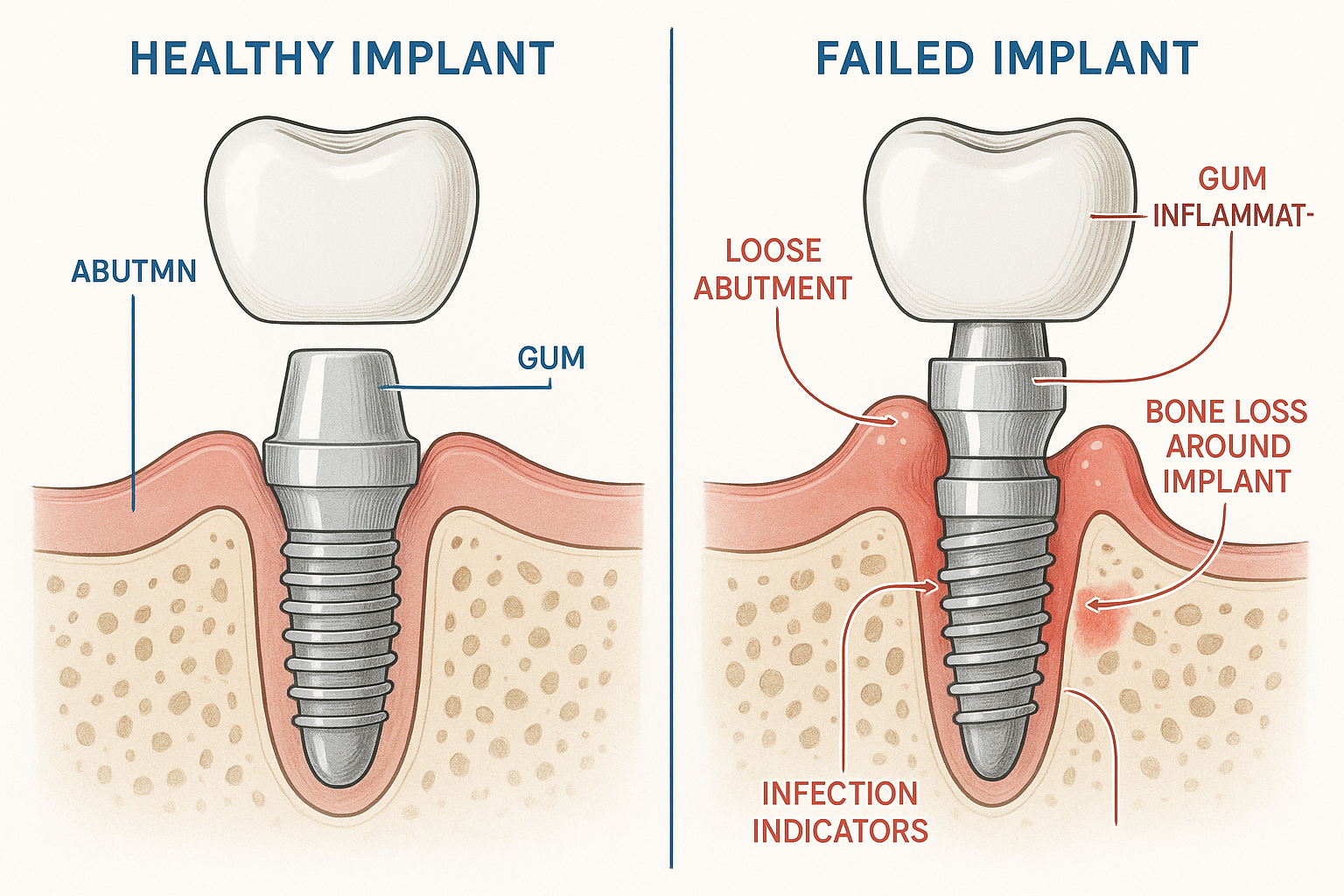
Dental implant failure occurs when the titanium post fails to properly integrate with your jawbone or when complications arise after successful integration. This process, called osseointegration, typically takes 3-6 months and is crucial for long-term implant stability.
Two main types of implant failure exist:
- Early failure – Occurs within the first few months during the healing process
- Late failure – Develops months or years after successful integration
Common Causes of Implant Complications
Understanding why implants fail helps you recognize potential problems early. The most frequent causes include:
- Infection (peri-implantitis)
- Insufficient bone density
- Poor oral hygiene
- Smoking and tobacco use
- Medical conditions affecting healing
- Mechanical stress from grinding or clenching
- Surgical complications
Research shows that proper dental implant recovery process significantly reduces failure rates, making post-operative care absolutely critical.
Early Warning Signs: Recognizing Dental Implant Failure Symptoms
Detecting problems early can save your implant and prevent more serious complications. Here are the most important dental implant failure symptoms to monitor:
Pain and Discomfort Indicators
Normal vs. Abnormal Pain Patterns:
| Normal Recovery Pain | Warning Sign Pain |
|---|---|
| Decreases daily | Increases or persists |
| Responds to medication | Doesn’t improve with painkillers |
| Localized to surgical site | Radiates to jaw, ear, or head |
| Lasts 3-7 days | Continues beyond 2 weeks |
🚨 Important Note: If you experience severe, throbbing pain that worsens over time, contact your dental professional immediately. This could indicate infection or implant rejection.
Swelling and Inflammation Signs
Swelling around your implant site should follow a predictable pattern during healing. Watch for these concerning symptoms:
- Persistent swelling beyond 2 weeks post-surgery
- Increasing inflammation rather than gradual improvement
- Hot, red, tender areas around the implant
- Facial swelling that spreads beyond the immediate surgical site
Understanding the normal dental implant swelling timeline helps you distinguish between expected healing responses and potential complications.
Gum and Tissue Changes
Your gums provide crucial clues about implant health. Monitor for:
Visual Changes:
- Gum recession exposing implant threads
- Color changes from pink to red or purple
- Unusual tissue texture or appearance
- Formation of pockets around the implant
Functional Changes:
- Bleeding during brushing or flossing
- Pus or discharge from the implant site
- Bad taste or odor from the area
- Loose or shifting gum tissue
Advanced Dental Implant Failure Symptoms and Complications
As implant problems progress, symptoms become more severe and obvious. Recognizing these advanced warning signs is crucial for preventing complete implant loss.
Mobility and Mechanical Issues
A properly integrated implant should feel completely stable, just like a natural tooth root. Concerning mobility symptoms include:
- Implant movement when touching or chewing
- Crown looseness or shifting
- Clicking or grinding sounds during jaw movement
- Changes in bite alignment
If you notice your dental implant clicking noise or any unusual sounds, this often indicates mechanical complications that require immediate attention.
Infection and Peri-implantitis Symptoms
Peri-implantitis represents one of the most serious complications affecting dental implants. This inflammatory condition affects the tissues surrounding the implant and can lead to bone loss if untreated.
Key infection indicators:
🔴 Severe Symptoms:
- Persistent bad breath or taste
- Pus discharge from implant site
- Fever or systemic illness
- Rapid bone loss visible on X-rays
🟡 Moderate Symptoms:
- Gum bleeding during cleaning
- Increased pocket depth around implant
- Mild to moderate discomfort
- Gum recession or color changes
For comprehensive information about infection management, review our guide on dental implant infection symptoms and available treatment options.
Bone Loss and Structural Problems
Advanced implant failure often involves loss of supporting bone structure. Warning signs include:
- Visible implant threads through receding gums
- Changes in facial structure around the implant area
- Difficulty chewing or biting on the implant side
- X-ray evidence of bone deterioration
Understanding osseointegration of dental implants helps explain why bone health is so crucial for long-term implant success.
🦷 Dental Implant Failure Symptom Checker
Check the symptoms you’re experiencing to assess your risk level
Pain & Discomfort
Swelling & Inflammation
Gum & Tissue Changes
Mechanical Issues
Infection Signs
When to Seek Professional Help
Knowing when to contact your dental professional can make the difference between saving and losing your implant. Seek immediate attention if you experience:
Emergency Situations
- Severe, uncontrolled pain not responding to prescribed medications
- Signs of serious infection including fever, facial swelling, or difficulty swallowing
- Trauma to the implant area from injury or accident
- Complete implant mobility or crown displacement
Urgent but Non-Emergency Concerns
- Persistent bleeding beyond normal healing timeframes
- Increasing discomfort after initial improvement
- Changes in implant stability or bite alignment
- Visible signs of infection without systemic symptoms
For detailed guidance on post-operative care, consult our comprehensive dental implant aftercare instructions to ensure optimal healing.
Treatment Options for Failed Dental Implants
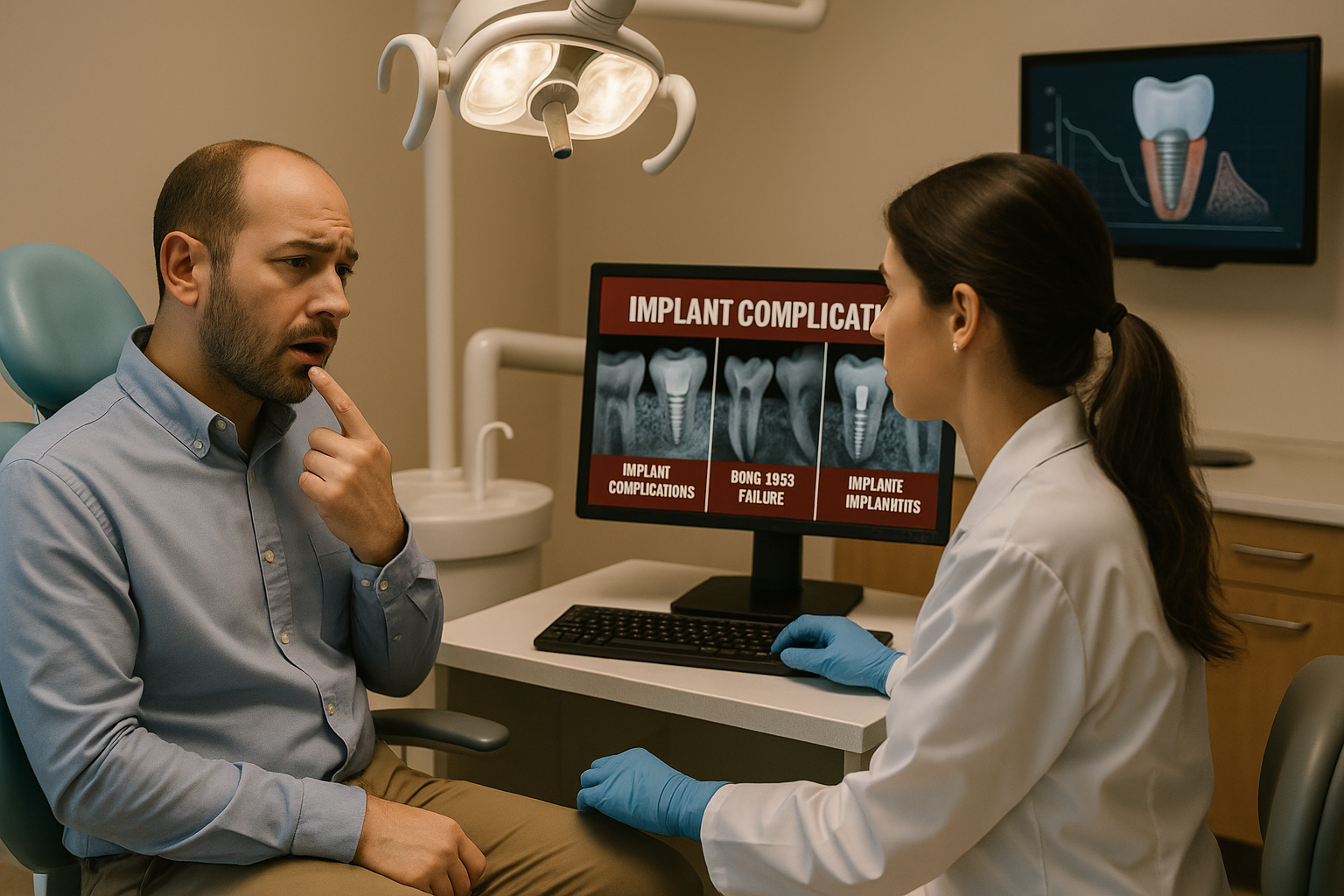
The good news about implant complications is that many can be successfully treated when caught early. Treatment approaches vary depending on the type and severity of the problem.
Non-Surgical Treatments
For early-stage complications:
- Professional cleaning and debridement
- Antibiotic therapy for infections
- Improved oral hygiene protocols
- Lifestyle modifications (smoking cessation, dietary changes)
Learning proper how to clean dental implants techniques is essential for preventing future complications.
Surgical Interventions
For advanced problems:
- Peri-implantitis treatment with tissue regeneration
- Bone grafting to restore lost support structure
- Implant removal and replacement in severe cases
- Soft tissue reconstruction around the implant site
Understanding peri-implantitis treatment dallas options helps you make informed decisions about your care.
Alternative Solutions
If implant salvage isn’t possible, several replacement options exist:
- Immediate implant replacement after healing
- Bridge or partial denture solutions
- Alternative implant techniques like zygomatic implants
- Removable prosthetic options
Prevention: Protecting Your Investment
Preventing implant failure is far more cost-effective and comfortable than treating complications. Key prevention strategies include:
Optimal Oral Hygiene
Daily care routine:
- Gentle brushing with soft-bristled toothbrush
- Daily flossing with implant-specific tools
- Antimicrobial mouthwash use
- Regular professional cleanings
Discover the best mouthwash for dental implants to enhance your daily care routine.
Lifestyle Modifications
Important changes for implant success:
✅ Recommended Actions:
- Quit smoking and tobacco use
- Maintain excellent oral hygiene
- Follow post-operative instructions carefully
- Attend regular dental checkups
- Manage underlying health conditions
❌ Avoid These Behaviors:
- Smoking or using tobacco products
- Excessive alcohol consumption
- Grinding or clenching teeth
- Using teeth as tools
- Neglecting oral hygiene
Regular Professional Monitoring
Recommended checkup schedule:
- First month: Weekly visits during initial healing
- First year: Monthly or bi-monthly evaluations
- Long-term: Every 3-6 months for maintenance
Learn about dental implant follow-up appointments dallas scheduling and what to expect during these visits.
Long-term Success and Maintenance
Successful dental implants can last decades with proper care and maintenance. Understanding long-term expectations helps you protect your investment.
Expected Lifespan and Durability
Factors affecting implant longevity:
| Factor | Impact on Lifespan |
|---|---|
| Oral hygiene quality | High impact – poor hygiene significantly reduces lifespan |
| Smoking status | Major impact – smoking doubles failure risk |
| Overall health | Moderate impact – diabetes, osteoporosis affect success |
| Professional maintenance | High impact – regular care prevents problems |
| Implant location | Moderate impact – posterior implants face more stress |
Research our detailed guide on how long do dental implants last in dallas texas for comprehensive longevity information.
Maintenance Costs and Considerations
Ongoing expenses to budget for:
- Regular cleanings: $150-300 every 3-6 months
- Annual X-rays: $50-150 per year
- Replacement crowns: $1,000-2,500 every 10-15 years
- Specialized cleaning tools: $50-100 annually
Understanding dental implant maintenance cost dallas helps you budget for long-term care.
Quality of Life Benefits
Advantages of successful implant maintenance:
🌟 Functional Benefits:
- Natural chewing and speaking ability
- No dietary restrictions
- Improved facial support and appearance
- Prevention of bone loss
🌟 Psychological Benefits:
- Increased confidence and self-esteem
- Freedom from denture adhesives
- Natural feeling and function
- Long-term oral health stability
Conclusion
Recognizing dental implant failure symptoms early is your first line of defense against serious complications and potential implant loss. From persistent pain and swelling to gum changes and mobility issues, understanding these warning signs empowers you to take prompt action when problems arise.
Remember that most implant complications are treatable when caught early, but the key lies in vigilant monitoring and immediate professional consultation when concerning symptoms develop. Your investment in dental implants represents not just financial commitment, but a commitment to your long-term oral health and quality of life.
Take action today:
- Schedule regular checkups with your dental professional every 3-6 months
- Maintain excellent oral hygiene using implant-specific cleaning techniques
- Monitor your implants daily for any changes or concerning symptoms
- Contact your dentist immediately if you notice any warning signs discussed in this guide
- Invest in proper maintenance tools and follow professional recommendations
If you’re experiencing any concerning symptoms or want to learn more about dental implant care, contact our experienced team for a comprehensive evaluation. Early intervention is always the best strategy for protecting your dental implant investment and maintaining your beautiful, functional smile for decades to come.
Leave a Reply
Share your thoughts or ask a question about dental implants. Your email address will not be published.