

When I first learned I needed a dental bone graft, the uncertainty was overwhelming. Questions flooded my mind: How long would it take to heal? What could I expect during recovery? Would it be painful? If you’re facing a similar situation, you’re not alone. Dental bone graft healing is a crucial process that sets the foundation for successful dental implants and oral health restoration. Understanding what happens during this journey can transform anxiety into confidence and help you achieve the best possible outcome.
Key Takeaways
• Dental bone graft healing typically takes 3-6 months, with initial healing occurring in the first 2-3 weeks
• Success rates exceed 95% when proper aftercare instructions are followed consistently
• Pain and swelling peak within 48-72 hours and gradually subside over the following week
• Avoiding smoking, maintaining oral hygiene, and following dietary restrictions are critical for optimal healing
• Regular follow-up appointments allow your dental team to monitor progress and address any concerns early
Understanding Dental Bone Grafts: The Foundation of Success
A dental bone graft is a surgical procedure that replaces missing or damaged bone in your jaw. This treatment becomes necessary when there isn’t enough healthy bone to support a dental implant or when bone loss has occurred due to tooth extraction, gum disease, or injury.
The procedure involves placing bone material—either from your own body, a donor, or synthetic sources—into the area where bone is needed. Over time, this graft material integrates with your existing bone, creating a strong foundation for future dental work.
Types of Bone Grafts
Autografts use bone from your own body, typically harvested from your chin, jaw, or hip. These grafts have the highest success rate because your body readily accepts its own tissue.
Allografts utilize donor bone that has been processed and sterilized. This option eliminates the need for a second surgical site while maintaining excellent success rates.
Xenografts come from animal sources, usually bovine, and are processed to remove all organic material. They serve as an effective scaffold for new bone growth.
Synthetic grafts use laboratory-created materials like calcium phosphate or hydroxyapatite. These materials mimic natural bone structure and gradually dissolve as new bone forms.
The Dental Bone Graft Healing Timeline: What to Expect
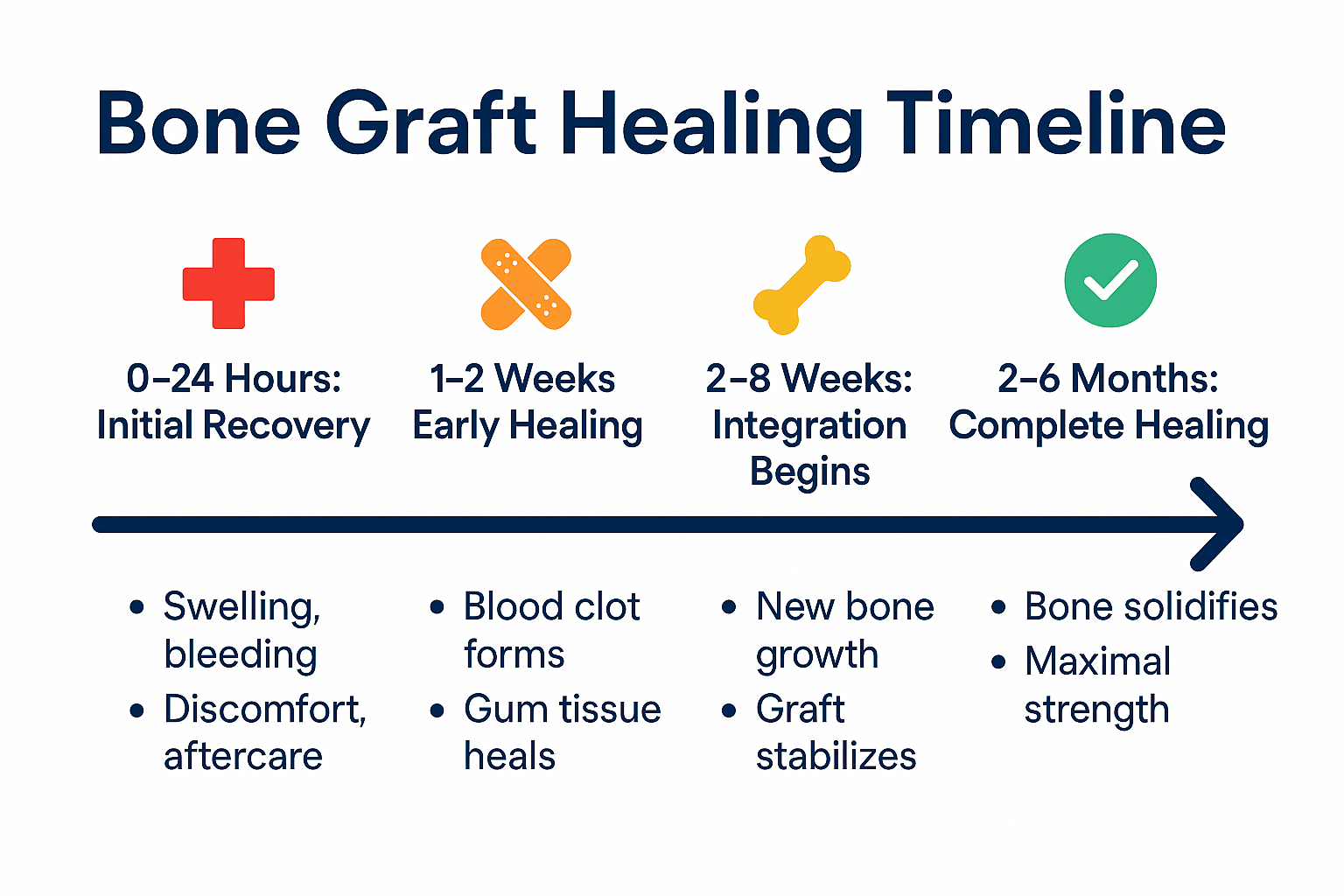
Understanding the dental bone graft healing process helps set realistic expectations and reduces anxiety about recovery. The healing journey occurs in distinct phases, each with specific characteristics and requirements.
Immediate Post-Surgery (0-24 Hours)
The first day after your procedure is crucial for establishing proper healing. You’ll likely experience some bleeding, which is normal and should gradually decrease. Apply gentle pressure with gauze as directed by your dental team.
Swelling typically begins within a few hours and may continue increasing for the first 48-72 hours. Ice packs applied for 15-20 minutes at a time can help minimize swelling and provide comfort.
Pain management is essential during this phase. Your dentist will prescribe appropriate medications, and following the dosing schedule precisely helps maintain comfort levels.
Early Healing Phase (1-2 Weeks)
During this critical period, your body begins forming a blood clot over the graft site. This clot protects the area and provides the foundation for new tissue growth. Protecting this clot is absolutely essential for successful healing.
Swelling usually peaks around day 2-3 and then gradually subsides. Some patients notice bruising around the surgical site, which is normal and will fade over the following week.
Your diet should consist primarily of soft foods to avoid disturbing the healing area. Avoid using straws, as the suction can dislodge the protective blood clot.
Intermediate Healing (2-8 Weeks)
As you enter the intermediate phase, the graft material begins integrating with your existing bone. This process, called osteointegration, is fundamental to long-term success.
Most patients can gradually return to normal activities during this time, though contact sports and strenuous exercise should still be avoided. Your dentist will provide specific guidelines based on your individual case.
Oral hygiene becomes increasingly important, but you’ll need to be gentle around the surgical site. Use a soft-bristled toothbrush and avoid vigorous rinsing.
Advanced Integration (2-6 Months)
The final phase of dental bone graft healing involves complete integration of the graft material with your natural bone. This process creates the strong, stable foundation necessary for dental implant placement.
Regular follow-up appointments during this period allow your dental team to monitor progress through clinical examination and imaging. These visits are crucial for ensuring optimal healing and planning the next steps in your treatment.
Factors That Influence Dental Bone Graft Healing Success
Several factors significantly impact how well your bone graft heals. Understanding these elements empowers you to take an active role in your recovery and maximize your chances of success.
Patient Health and Lifestyle Factors
Age plays a role in healing speed, with younger patients typically experiencing faster recovery. However, age alone doesn’t determine success—many older patients achieve excellent results with proper care.
Overall health status significantly affects healing. Conditions like diabetes, autoimmune disorders, and cardiovascular disease can slow the healing process. Working closely with both your dentist and primary care physician ensures coordinated care.
Smoking is one of the most detrimental factors for bone graft healing. Nicotine restricts blood flow to the surgical site, dramatically increasing the risk of failure. If you smoke, quitting before and after surgery is crucial for success.
Nutrition provides the building blocks for new bone formation. A diet rich in calcium, vitamin D, protein, and vitamin C supports optimal healing. Your dental team may recommend specific supplements to enhance recovery.
Surgical and Technical Factors
The type of bone graft material used influences healing time and success rates. Experienced dental professionals will select the most appropriate material based on your specific needs and circumstances.
Surgical technique and the surgeon’s experience significantly impact outcomes. Proper placement, adequate blood supply, and sterile conditions all contribute to successful healing.
Post-operative care compliance is perhaps the most controllable factor affecting success. Following your dentist’s instructions precisely—including medication schedules, dietary restrictions, and activity limitations—dramatically improves your chances of optimal healing.
Managing Pain and Discomfort During Recovery
Pain management is a primary concern for most patients undergoing bone graft procedures. The good news is that with proper planning and care, discomfort can be effectively controlled throughout the healing process.
Immediate Pain Management
Your dental team will prescribe appropriate pain medications based on the extent of your procedure and your individual needs. Take medications as prescribed, even if you’re not currently experiencing pain. Staying ahead of discomfort is more effective than trying to catch up once pain intensifies.
Over-the-counter options like ibuprofen can be particularly effective for managing inflammation and pain. Always check with your dentist before combining medications or adjusting dosages.
Natural Pain Relief Methods
Ice therapy during the first 48 hours helps reduce both pain and swelling. Apply ice packs for 15-20 minutes, then remove for 15-20 minutes. Avoid applying ice directly to skin.
Elevation while sleeping can help minimize swelling and associated discomfort. Use an extra pillow to keep your head elevated above your heart.
Gentle salt water rinses after the first 24 hours can provide soothing relief and help maintain oral hygiene. Mix 1/2 teaspoon of salt in a cup of warm water and gently swish.
When to Contact Your Dentist
While some discomfort is expected, certain symptoms warrant immediate attention:
- Severe, worsening pain that doesn’t respond to prescribed medications
- Excessive bleeding that doesn’t subside with gentle pressure
- Signs of infection including fever, pus, or foul taste
- Allergic reactions to medications
Having a clear understanding of normal versus concerning symptoms helps ensure prompt treatment if complications arise.
Dietary Guidelines for Optimal Bone Graft Healing
Proper nutrition plays a vital role in dental bone graft healing. The foods you choose can either support or hinder the recovery process, making dietary planning an essential component of your treatment plan.
Foods That Promote Healing
Protein-rich foods provide the amino acids necessary for tissue repair and new bone formation. Excellent options include:
- Soft fish like salmon and cod 🐟
- Scrambled eggs or egg salad
- Greek yogurt and cottage cheese
- Protein smoothies with soft fruits
- Well-cooked beans and lentils
Calcium and vitamin D work together to support bone formation. Incorporate dairy products, leafy greens, and fortified foods into your diet. Your dentist may recommend supplements to ensure adequate intake.
Vitamin C supports collagen production and immune function. Soft fruits like bananas, melons, and cooked vegetables provide this essential nutrient without requiring excessive chewing.
Foods to Avoid
Hard, crunchy foods can damage the surgical site and disrupt healing. Avoid nuts, chips, raw vegetables, and crusty bread during the initial healing period.
Spicy or acidic foods may cause irritation and discomfort. Skip citrus fruits, tomato-based sauces, and heavily seasoned dishes until healing progresses.
Hot foods and beverages can increase bleeding and swelling. Allow foods to cool to room temperature before consuming.
Alcohol can interfere with healing and interact with prescribed medications. Avoid alcoholic beverages throughout the initial recovery period.
Oral Hygiene During Bone Graft Recovery
Maintaining proper oral hygiene during dental bone graft healing requires a delicate balance. You need to keep your mouth clean to prevent infection while being gentle enough to avoid disturbing the healing tissues.
Immediate Post-Surgery Care (First 24 Hours)
Avoid rinsing or spitting for the first 24 hours to protect the initial blood clot formation. This clot is crucial for proper healing and preventing complications.
Gentle dabbing with a clean, damp cloth can help remove any debris from around your mouth without creating suction or pressure.
Brush carefully around the surgical site, focusing on areas away from the graft. Use a soft-bristled toothbrush and avoid the immediate surgical area.
Ongoing Oral Hygiene Protocol
After the first day, you can begin gentle salt water rinses 2-3 times daily. This helps maintain cleanliness and can provide soothing relief.
Gradual return to normal brushing should occur over the following weeks. Start with very gentle motions and gradually increase to your normal routine as healing progresses.
Avoid flossing near the surgical site until your dentist gives approval. You can continue flossing other areas of your mouth carefully.
Consider using an antimicrobial mouthwash specifically recommended by your dental team to support healing and prevent infection.
Signs of Successful Healing vs. Warning Signs
Recognizing the difference between normal healing and potential complications empowers you to seek appropriate care when needed. Understanding what to expect helps reduce anxiety and ensures prompt treatment if issues arise.
Normal Healing Indicators
Gradual pain reduction over the first week is a positive sign. While some discomfort is expected, it should steadily improve rather than worsen.
Decreasing swelling after the first 2-3 days indicates your body is responding well to the procedure. Some residual swelling may persist for several weeks.
Stable surgical site without excessive bleeding or discharge shows proper clot formation and tissue healing.
Improving function as you gradually return to normal activities suggests successful recovery progression.
Warning Signs Requiring Attention
Increasing pain after the first few days may indicate infection or other complications requiring evaluation.
Persistent bleeding beyond the first 24-48 hours, especially if it’s bright red or excessive, needs professional assessment.
Signs of infection including fever, pus, foul taste, or odor require immediate attention to prevent serious complications.
Graft material exposure or movement may indicate healing problems that need prompt intervention.
Understanding when to seek help ensures any issues are addressed quickly, protecting your investment in bone graft treatment and maintaining optimal outcomes.
🦷 Dental Bone Graft Healing Progress Tracker
Follow-Up Care and Monitoring Progress
Regular follow-up appointments are essential for monitoring dental bone graft healing and ensuring optimal outcomes. These visits allow your dental team to assess progress, address concerns, and plan the next steps in your treatment journey.
Scheduled Appointment Timeline
First follow-up typically occurs within 7-10 days after surgery. During this visit, your dentist will examine the surgical site, remove any sutures if necessary, and assess initial healing progress.
Subsequent appointments are usually scheduled at 2-4 week intervals during the first few months. The frequency may vary based on your individual healing progress and any specific concerns.
Imaging studies such as X-rays or CT scans may be performed at specific intervals to evaluate bone integration and graft success. These images provide valuable information that isn’t visible during clinical examination alone.
What to Expect During Follow-Up Visits
Your dental team will assess the surgical site for proper healing, absence of infection, and appropriate tissue response. They’ll also evaluate your comfort level and address any concerns you may have.
Oral hygiene review helps ensure you’re maintaining proper care without compromising healing. Your dentist may provide updated instructions as healing progresses.
Treatment planning for future procedures, such as dental implant placement, begins once adequate healing is confirmed. This planning ensures optimal timing and placement for long-term success.
Questions to Ask During Follow-Up Visits
Come prepared with questions about your healing progress and what to expect next. Some important topics include:
- Timeline for returning to normal activities and dietary restrictions
- Signs of successful healing specific to your case
- When dental implant placement can be scheduled
- Long-term care recommendations for maintaining your results
Long-Term Success and Maintenance
Achieving successful dental bone graft healing is just the beginning of your journey toward restored oral health. Long-term success depends on ongoing care and maintenance strategies that protect your investment and support continued oral health.
Protecting Your Investment
Excellent oral hygiene remains crucial even after complete healing. Regular brushing, flossing, and professional cleanings help prevent complications that could compromise your results.
Regular dental visits allow for ongoing monitoring and early intervention if issues arise. Your dental team can detect potential problems before they become serious complications.
Lifestyle modifications such as avoiding tobacco use and maintaining good nutrition continue to support long-term success. These factors influence not only your graft site but your overall oral health.
Preparing for Future Procedures
Once your bone graft has fully integrated, you’ll be ready for the next phase of treatment. This often involves dental implant placement, which builds upon the strong foundation created by your successful bone graft.
Understanding the connection between procedures helps you appreciate how each step contributes to your final result. The time and effort invested in proper bone graft healing directly impacts the success of subsequent treatments.
Treatment coordination ensures optimal timing between procedures and maximizes the benefits of each intervention. Your dental team will guide you through this process, ensuring each step builds upon the previous success.
Conclusion
Dental bone graft healing is a remarkable process that transforms damaged or insufficient bone into a strong foundation for your future oral health. While the journey requires patience and commitment, understanding what to expect empowers you to take an active role in your recovery and achieve optimal results.
The key to success lies in following your dental team’s instructions, maintaining excellent oral hygiene, and attending all scheduled follow-up appointments. Remember that healing is a gradual process, and each phase brings you closer to your goal of restored oral health and function.
If you’re considering bone graft treatment or are currently in the healing process, don’t hesitate to reach out to experienced dental professionals who can guide you through this journey. With proper care and professional support, you can look forward to a successful outcome and the confidence that comes with a healthy, functional smile.
Your commitment to following the healing guidelines and maintaining good oral health practices will pay dividends for years to come. The foundation you’re building today supports not just your immediate treatment goals but your long-term oral health and quality of life.
Leave a Reply
Share your thoughts or ask a question about dental implants. Your email address will not be published.