

Living with missing teeth can impact your confidence and oral health. Dental implants in Dallas offer a state-of-the-art solution, providing a durable and aesthetically pleasing replacement option. Many patients who opt for this advanced tooth replacement wonder about the long-term appearance of their new smile, specifically: can you whiten dental implant crowns or do they stain? Understanding how dental implant crowns interact with common whitening treatments and stain-causing agents is crucial for maintaining a bright, uniform smile.
Key Takeaways
- Dental implant crowns, typically made from porcelain or ceramic, cannot be whitened using conventional teeth whitening treatments.
- These crowns are highly resistant to staining, maintaining their original shade over many years.
- If you desire whiter teeth, it is essential to undergo professional teeth whitening on your natural teeth before your dental implant crown is fabricated.
- Superficial stains can accumulate on implant crowns, but these are typically removed with regular brushing and professional dental cleanings.
- Maintaining excellent oral hygiene is key to preserving the appearance of both natural teeth and implant crowns.
- If a dental implant crown’s shade no longer matches your natural teeth, the only way to change its color is to replace the crown itself.
- Consultation with a dentist is recommended to discuss aesthetic goals and treatment sequencing for a harmonious smile.
Quick Answer
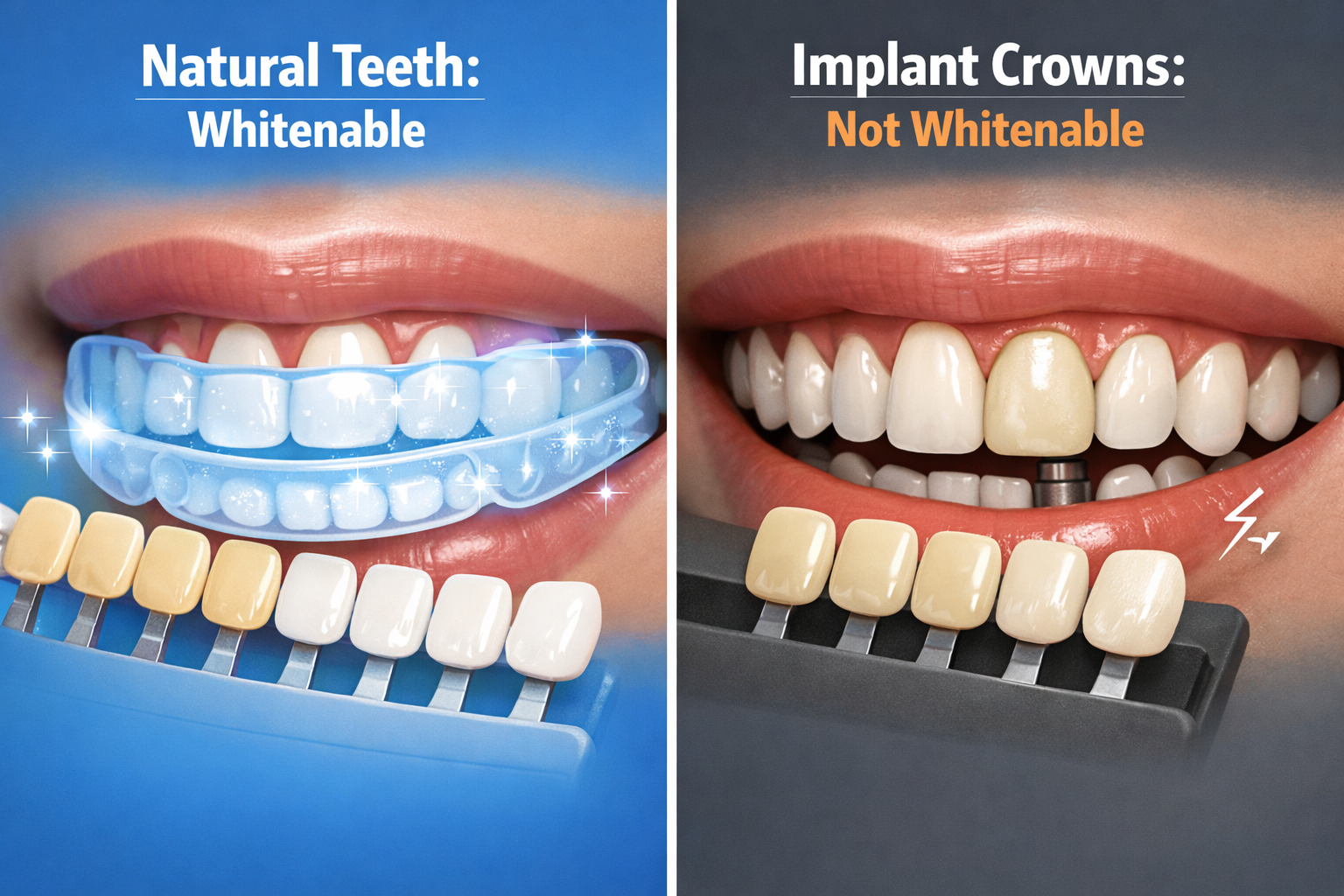
No, you cannot whiten dental implant crowns with traditional teeth whitening methods, as the bleaching agents only affect natural tooth enamel. However, dental implant crowns, typically crafted from highly stain-resistant materials like porcelain or ceramic, also do not stain in the same way natural teeth do, meaning they maintain their original shade for years with proper oral hygiene.
Why Dental Implant Crowns Don’t Whiten
Dental implant crowns, unlike natural teeth, are made from non-porous materials such as porcelain or ceramic, which do not respond to bleaching agents.
Professional teeth whitening solutions are formulated to penetrate the microscopic pores in natural tooth enamel to break down stain molecules. Since porcelain and ceramic crowns lack these pores and are fabricated to a specific, permanent shade, they cannot be lightened by these treatments. Trying to whiten an implant crown would be ineffective and potentially wasteful of resources. This is an important consideration when planning for tooth replacement options and discussing your aesthetic goals with your dentist in Dallas.
The Composition Difference
The primary reason dental implant crowns resist whitening is their material composition. Natural teeth have an outer layer of enamel that, while strong, is porous. This porosity allows staining agents from food and drink, as well as the active ingredients in whitening gels, to penetrate and cause or remove discoloration. Dental implant crowns, on the other hand, are engineered from highly dense, non-porous ceramics or porcelains. These materials are chosen for their durability, biocompatibility, and ability to mimic the appearance of natural teeth. They are fired at high temperatures, creating a surface that is incredibly smooth and resistant to both absorption and chemical alteration by whitening agents.
Permanent Shade Matching
When a dental implant crown is created, a crucial step involves carefully matching its shade to your surrounding natural teeth. This ensures a seamless, natural-looking result. Once this shade is selected and the crown is fabricated, it is permanent. If you decide to whiten your natural teeth after your implant crown has been placed, your natural teeth will lighten, but your crown will not, leading to a noticeable color mismatch. This highlights the importance of discussing your long-term aesthetic goals with your dentist before the final crown is seated.
Do Dental Implant Crowns Stain?
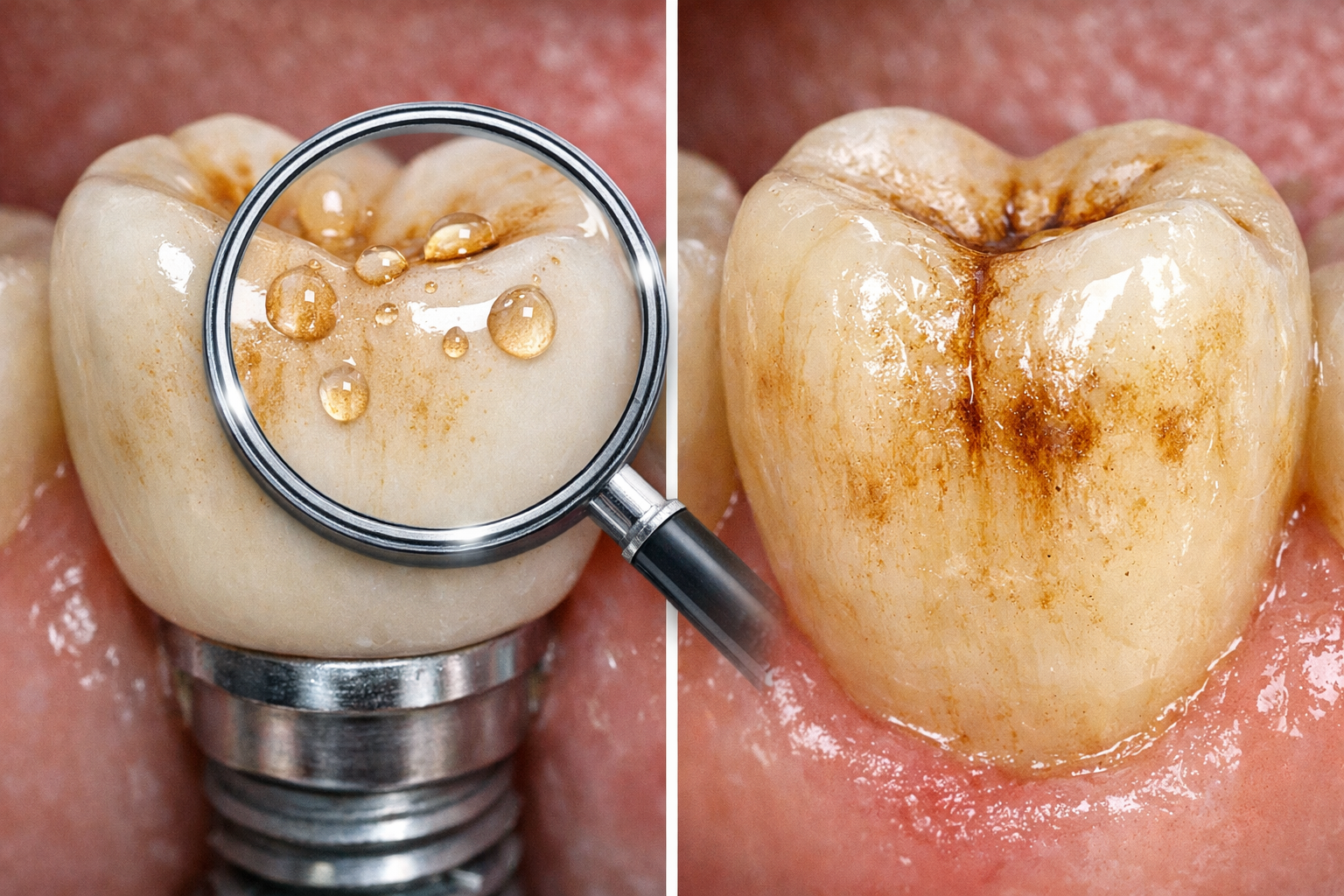
While dental implant crowns cannot be whitened, they are highly resistant to staining and generally do not absorb pigments in the same way natural tooth enamel does. They can, however, accumulate superficial stains over time.
Materials like porcelain and ceramic are celebrated for their intrinsic stain resistance. This means that chromogenic substances found in coffee, tea, red wine, and certain foods are less likely to penetrate and permanently discolor the crown material itself. Unlike natural enamel, which has microscopic pores that can trap these pigments, the smooth, dense surface of an implant crown makes it difficult for stains to set deeply.
Superficial Staining vs. Intrinsic Staining
It is important to differentiate between superficial and intrinsic staining.
- Intrinsic Staining (Deep Stains): This type of staining occurs when color molecules penetrate the tooth structure itself. Natural teeth are susceptible to intrinsic staining due to their porous enamel and dentin. Implant crowns, being non-porous, are generally immune to this.
- Superficial Staining (Extrinsic Stains): These are stains that accumulate on the surface of the crown. Just like a glass plate can get coffee rings, the smooth surface of an implant crown can develop a film of pigment from frequent consumption of dark-colored foods and beverages, tobacco use, or poor oral hygiene. These stains sit on top of the crown material and do not change its inherent color.
Removing Surface Stains from Implant Crowns
The good news is that superficial stains on dental implant crowns are typically easy to manage.
- Regular Brushing: Consistent and thorough brushing with a non-abrasive toothpaste helps remove food particles and stain-causing films before they can accumulate significantly.
- Flossing: Daily flossing, especially around the base of the crown where it meets the gum line, prevents plaque and stain buildup. Our guide on Dental Implant Night Guard: Essential Protection in 2026 also touches on comprehensive care.
- Professional Cleanings: Regular dental check-ups and professional cleanings are vital. Your hygienist can expertly polish away any surface stains using specialized tools and pastes that are safe for your implant crowns, restoring their original luster without damaging the material. For optimal long-term oral health, a consultation with a dentist is key.
The Optimal Approach: Whitening Before Implants
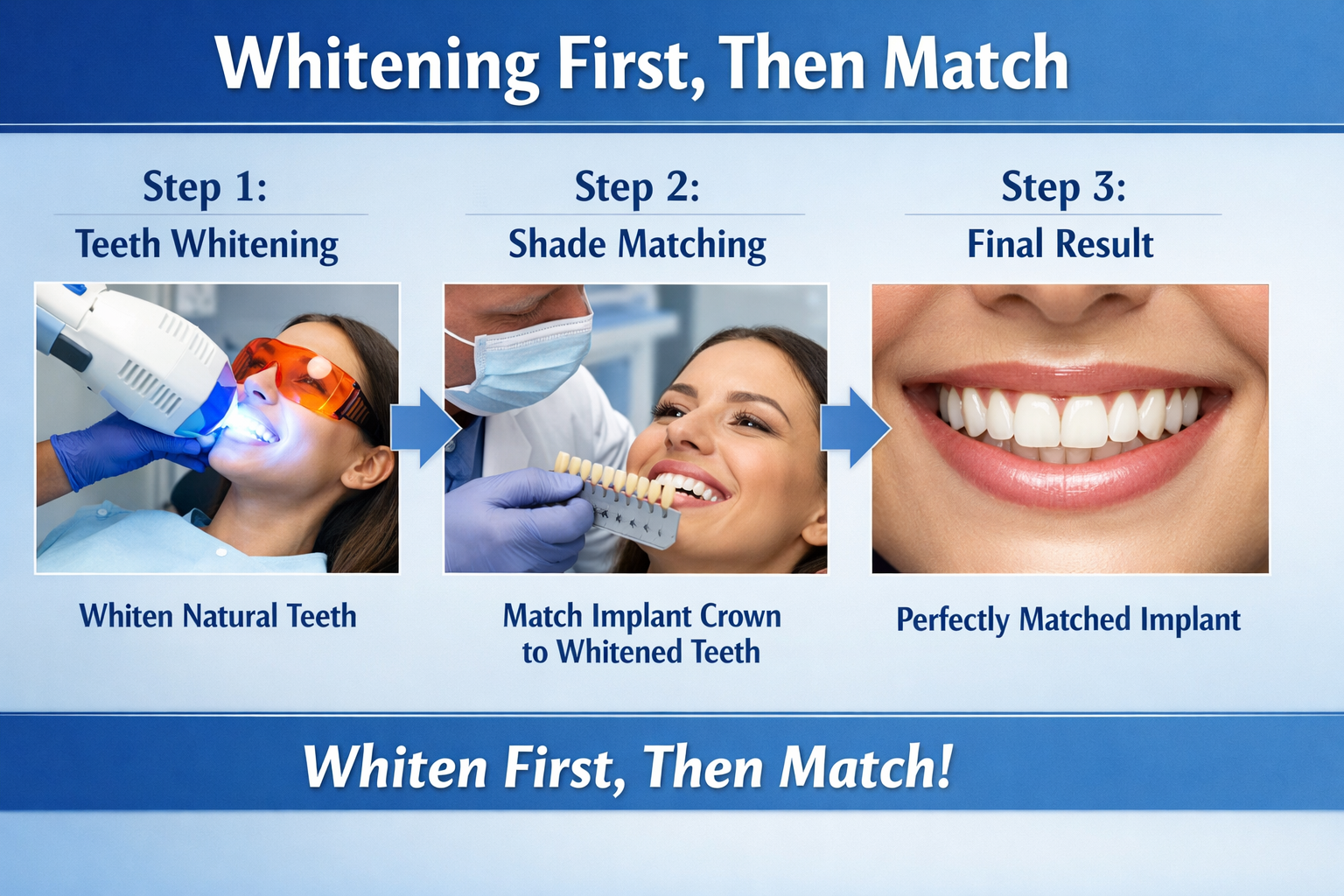
The best strategy for achieving a consistently bright smile with dental implants is to whiten your natural teeth before your dental implant crown is designed and placed.
This sequence ensures that the final restoration matches your desired bright shade from the outset. If you are considering tooth replacement options in Dallas and also wish for a whiter smile, this is a critical discussion to have with your dental professional during your initial consultation.
Steps for a Harmonized Smile
- Initial Consultation: Discuss your overall smile goals, including any desire for whiter teeth, with your dentist. They will assess your oral health and determine if you are a candidate for dental implants and whitening.
- Natural Teeth Whitening: Before any final impressions are taken for your implant crown, undergo professional teeth whitening for your natural teeth. This allows them to reach your desired shade. Professional options include in-office treatments for immediate results or custom-fitted take-home trays for gradual whitening. For more information on professional whitening costs, you can review our article: “Unveiling the Cost: How Much Do Dentists Really Charge for Teeth Whitening in 2025? ✨”.
- Shade Selection: Once your natural teeth have reached their brightest desired shade, your dentist will then accurately match the color for your custom dental implant crown. This ensures a seamless blend with your newly whitened smile.
- Crown Fabrication and Placement: The implant crown will be custom-fabricated in a dental lab to the selected shade and then securely placed onto your dental implant. The dental implant procedure involves several steps, with crown placement being one of the final ones.
Considerations for Existing Crowns
If you already have dental implant crowns that no longer match the shade of your natural teeth due to subsequent whitening, the only way to achieve a uniform color is to replace the existing crown. This is an important consideration for long-term oral health planning and can influence implant cost in Dallas. For insights into replacement costs, see our guide: “Dental Implant Crown Replacement Cost Dallas | 2026 Guide”.
Maintaining Your Bright Smile: Beyond Whitening
Since you cannot whiten dental implant crowns, maintaining a bright smile relies heavily on excellent oral hygiene and regular professional dental care for both your natural teeth and your restorations.
Proper long-term oral health practices are essential for preserving the aesthetic appeal and longevity of your dental implants in Dallas.
Daily Oral Hygiene Practices
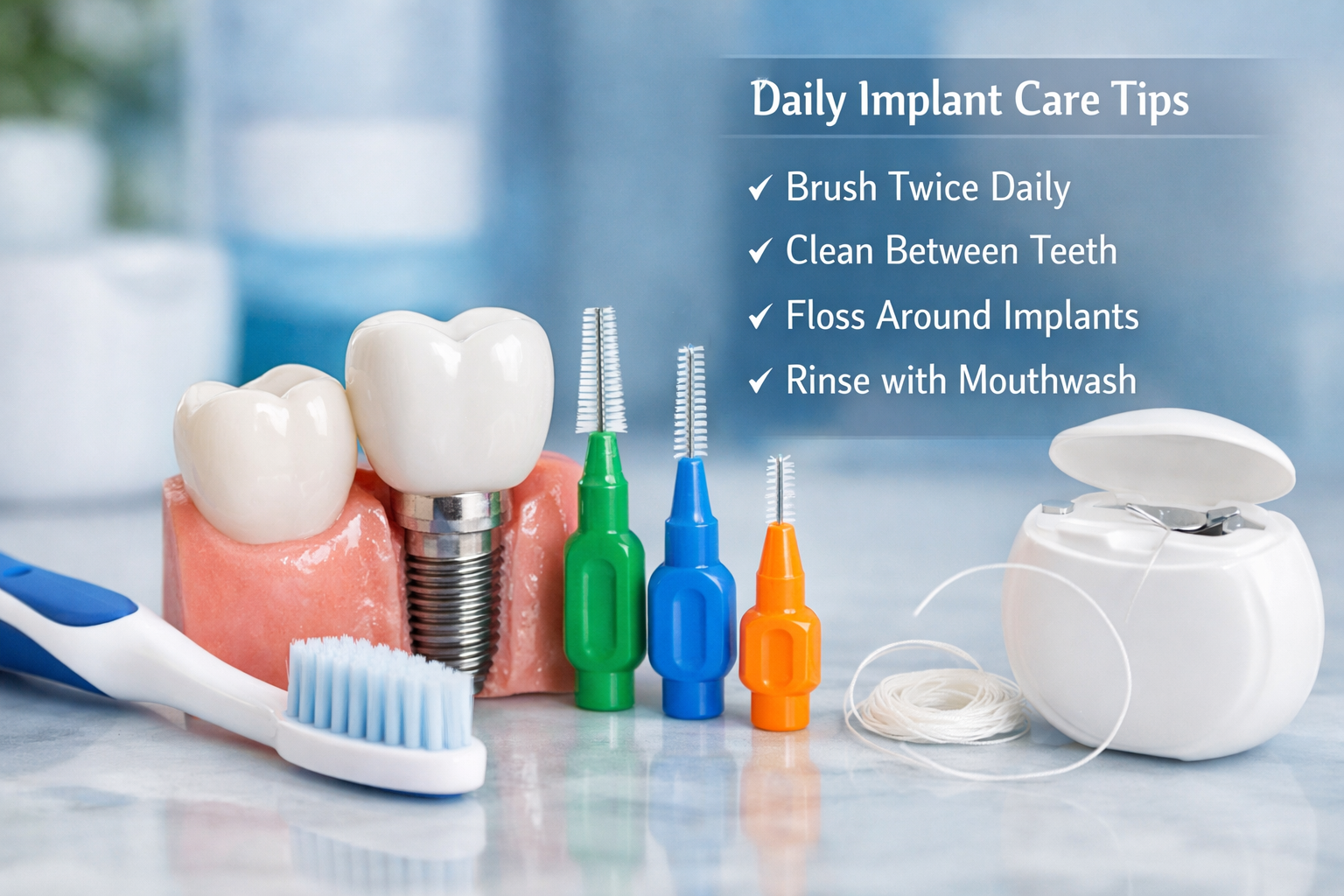
- Brush Twice Daily: Use a soft-bristled toothbrush and a non-abrasive toothpaste to gently clean all tooth surfaces, including your implant crowns. Focus on the gum line where plaque and superficial stains tend to accumulate.
- Floss Daily: Flossing is critical for cleaning between teeth and around the implant. Special implant-specific floss or interdental brushes may be recommended by your dentist to clean effectively around the crown and implant post.
- Rinse with Antimicrobial Mouthwash: Your dentist might recommend an antimicrobial mouthwash to help reduce bacteria and prevent gum inflammation, which is crucial for the health of your implant.
Regular Dental Check-ups and Cleanings
Schedule regular dental check-ups and professional cleanings, typically every six months. During these appointments, your dentist and hygienist will:
- Examine Your Implants: They will check the health of your dental implants and surrounding tissues, looking for any signs of complications or issues. Maintaining optimal dental implant x-ray frequency is part of this monitoring.
- Remove Plaque and Tartar: Professional tools can effectively remove hardened plaque and tartar that regular brushing cannot, preventing gum disease and maintaining the health of your implant.
- Polish Away Superficial Stains: Your hygienist can safely polish away any extrinsic stains that have accumulated on your natural teeth or implant crowns, restoring their initial brightness without affecting the crown’s color.
Lifestyle Choices
Certain lifestyle choices can impact the longevity of your implant and the brightness of your smile:
- Limit Stain-Causing Foods and Drinks: Reducing consumption of coffee, tea, red wine, and highly pigmented foods can minimize superficial staining on both natural teeth and crowns.
- Avoid Tobacco Products: Smoking and chewing tobacco are significant contributors to tooth staining and can also negatively impact the health and longevity of your dental implants.
- Wear a Night Guard if Needed: If you grind or clench your teeth, a custom-fitted dental implant night guard can protect your crowns and natural teeth from excessive wear.
By adhering to these comprehensive care routines, patients with dental implants in Dallas can ensure their smile remains healthy, bright, and aesthetically pleasing for many years.
FAQ
Can an implant crown change color over time?
No, a dental implant crown itself will not change its intrinsic color over time because it is made of stable, non-porous materials like porcelain or ceramic. However, superficial stains from foods, drinks, or tobacco can accumulate on its surface, which can be removed with proper oral hygiene and professional cleanings.
What if my natural teeth get darker after my implant crown is placed?
If your natural teeth darken over time after your implant crown has been placed, and you desire a brighter smile, you can undergo teeth whitening for your natural teeth. However, your implant crown will not lighten, which may result in a color mismatch. The only way to address this mismatch is to replace the implant crown to match your newly whitened natural teeth.
Can old dental crowns be whitened?
No, any existing dental crowns, whether they are implant-supported or on natural teeth, cannot be whitened with traditional bleaching agents. Their color is permanent from the time of fabrication.
How often should I have my teeth professionally cleaned with dental implants?
It is generally recommended to maintain regular dental check-ups and professional cleanings every six months, or as advised by your dentist. This schedule helps ensure the health of your implants, prevents gum disease, and allows for the removal of any superficial stains on your crowns and natural teeth.
Is it expensive to replace a dental implant crown if the color doesn’t match?
Replacing a dental implant crown can incur costs, which vary based on factors such as the type of material, the complexity of the case, and the dental practice’s fees. It’s an investment, similar to the initial crown. For details on dental implant crown replacement cost in Dallas, consulting with your dental provider is recommended.
Do certain foods stain implant crowns more than others?
While implant crowns are highly stain-resistant, highly pigmented foods and beverages like coffee, red wine, dark teas, berries, and curries can contribute to superficial surface staining. Regular brushing and professional cleanings can usually remove these surface stains effectively.
Can a chipped or damaged implant crown be whitened?
No, a chipped or damaged implant crown cannot be whitened. If a crown is chipped or damaged, it typically requires repair or replacement, especially if the damage compromises its integrity or aesthetic appearance.
Conclusion
Understanding how dental implant crowns interact with whitening agents and staining is vital for anyone considering or living with these advanced tooth replacement options in Dallas. While the good news is that these durable restorations are highly resistant to deep staining, the key takeaway is that they cannot be whitened once placed. The most effective strategy for a uniformly bright smile is to complete any desired professional teeth whitening on your natural teeth before your dental implant crown is fabricated.
Maintaining a rigorous oral hygiene routine and attending regular professional dental cleanings are paramount for preserving the appearance and health of both your natural teeth and your dental implants. If you have questions about your specific aesthetic goals or are considering dental implants in Dallas, a consultation with a dentist is the best next step to ensure a personalized treatment plan for your long-term oral health and a confident smile in 2026.
References
- American Academy of Implant Dentistry. (2024). Dental Implants: A Guide for Patients.
- American Dental Association. (2023). Tooth Whitening: What You Should Know.
- Misch, C. E. (2015). Dental Implant Prosthetics. Elsevier Mosby.
- National Institute of Dental and Craniofacial Research. (2022). Dental Implants.
- Rosenstiel, S. F., Land, M. F., & Crispin, B. J. (2006). Contemporary Fixed Prosthodontics. Mosby.
Leave a Reply
Share your thoughts or ask a question about dental implants. Your email address will not be published.