

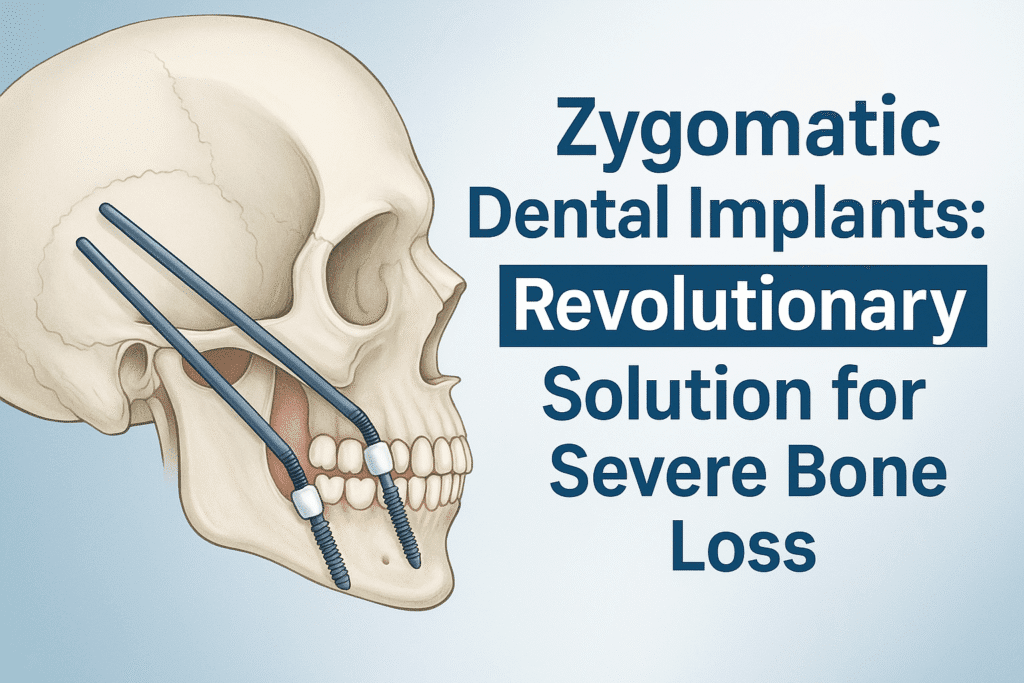
When I first learned about zygomatic dental implants, I was amazed by how this innovative procedure could restore smiles for patients who had been told they weren’t candidates for traditional implants. If you’ve been struggling with severe upper jaw bone loss and thought dental implants were impossible, this breakthrough treatment might be the answer you’ve been searching for.
Key Takeaways
- Zygomatic dental implants are longer implants anchored in the cheekbone (zygoma) rather than the jaw, making them ideal for patients with severe upper jaw bone loss
- No bone grafting required – these implants bypass the need for lengthy bone reconstruction procedures
- Immediate results – patients can often receive temporary teeth on the same day as implant placement
- High success rates – studies show success rates of 95-98% when performed by experienced specialists
- Cost-effective – eliminates the need for expensive bone grafting procedures and reduces overall treatment time
What Are Zygomatic Dental Implants?
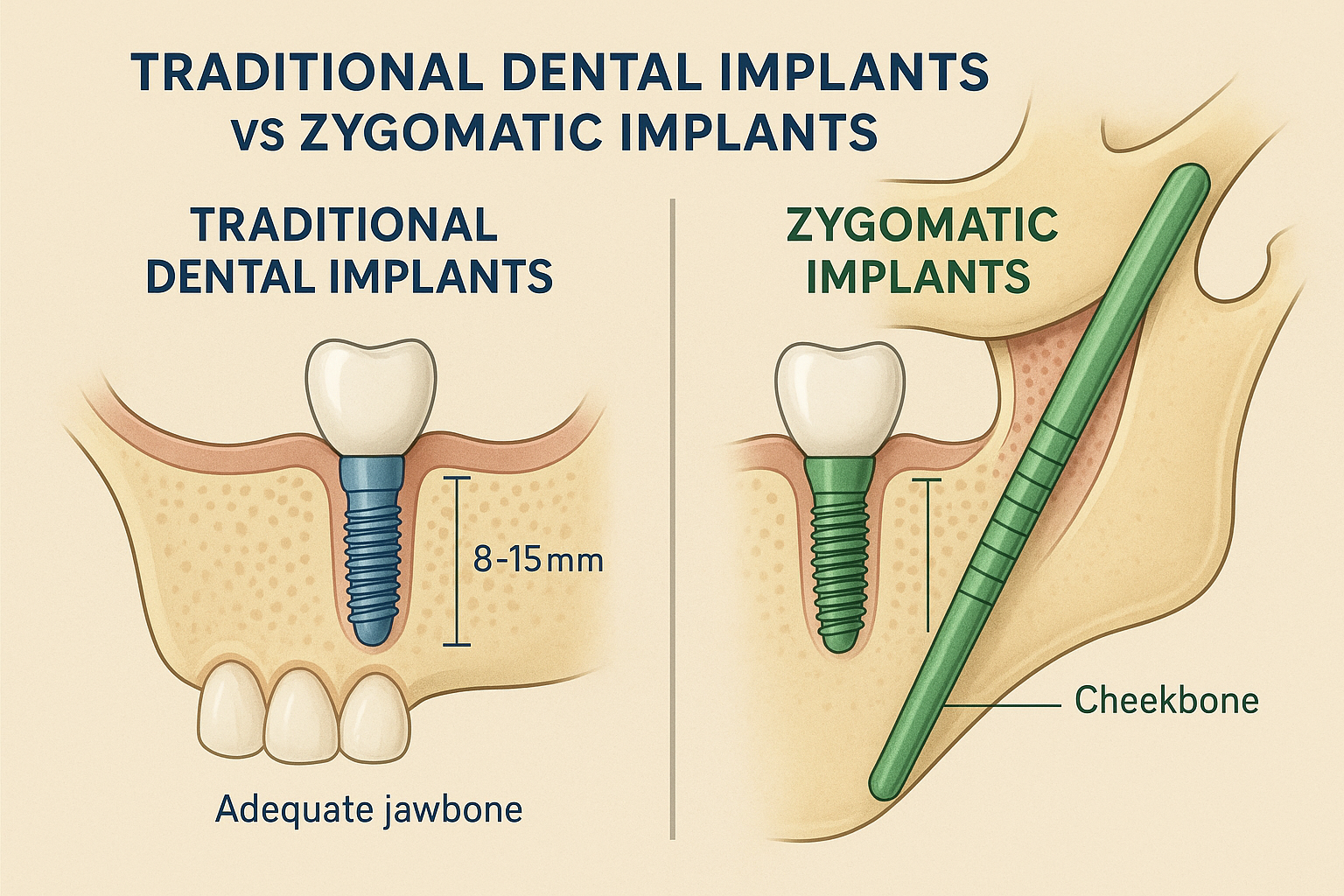
Zygomatic dental implants represent a revolutionary advancement in dental implant technology. Unlike traditional dental implants that are placed directly into the jawbone, zygomatic implants are longer (up to 55mm) and are anchored into the zygomatic bone – commonly known as the cheekbone.
This innovative approach was developed specifically for patients who have experienced significant bone loss in their upper jaw, making traditional implant placement impossible without extensive bone grafting procedures. The zygoma bone is denser and more stable than jaw bone, providing an excellent foundation for implant support.
How Zygomatic Implants Differ from Traditional Implants
Traditional dental implants require adequate bone height and width in the jaw for successful placement. When patients have suffered from:
- Periodontal disease 🦷
- Long-term tooth loss
- Trauma or injury
- Congenital conditions
- Cancer treatment effects
The resulting bone loss often makes conventional implants unfeasible. Zygomatic implants solve this problem by utilizing the strong, stable cheekbone as an anchor point.
Zygomatic vs Traditional Dental Implants
- Length: 8-15mm
- Anchor Point: Jawbone
- Bone Required: Adequate jaw bone
- Surgery Time: 1-2 hours
- Healing Time: 3-6 months
- Success Rate: 95-98%
- Length: 30-55mm
- Anchor Point: Cheekbone (Zygoma)
- Bone Required: Minimal jaw bone
- Surgery Time: 2-4 hours
- Healing Time: 4-6 months
- Success Rate: 95-98%
Who Is a Candidate for Zygomatic Dental Implants?
Zygomatic dental implants are specifically designed for patients who face unique challenges with traditional implant placement. Understanding whether you’re a good candidate is crucial for making informed decisions about your dental treatment.
Ideal Candidates Include:
Patients with Severe Upper Jaw Bone Loss 📉
- Those who have lost significant bone volume due to periodontal disease
- Patients with congenital bone deficiencies
- Individuals who have experienced trauma to the upper jaw
Long-term Denture Wearers
- Patients whose bone has deteriorated from years of denture use
- Those experiencing poor denture retention due to insufficient bone support
Patients Who Want to Avoid Bone Grafting
- Individuals seeking a faster treatment timeline
- Those who have had unsuccessful bone graft procedures
- Patients with medical conditions that complicate healing
Medical Considerations
Before considering zygomatic implants, your dental implant specialist will evaluate several factors:
| Factor | Importance | Considerations |
|---|---|---|
| Overall Health | Critical | Must be able to undergo oral surgery |
| Bone Quality | High | Adequate zygomatic bone density required |
| Oral Hygiene | Essential | Commitment to excellent post-op care |
| Smoking Status | Very Important | Smoking significantly reduces success rates |
| Age | Moderate | Generally 18+ when facial growth is complete |
The Zygomatic Implant Procedure: Step by Step
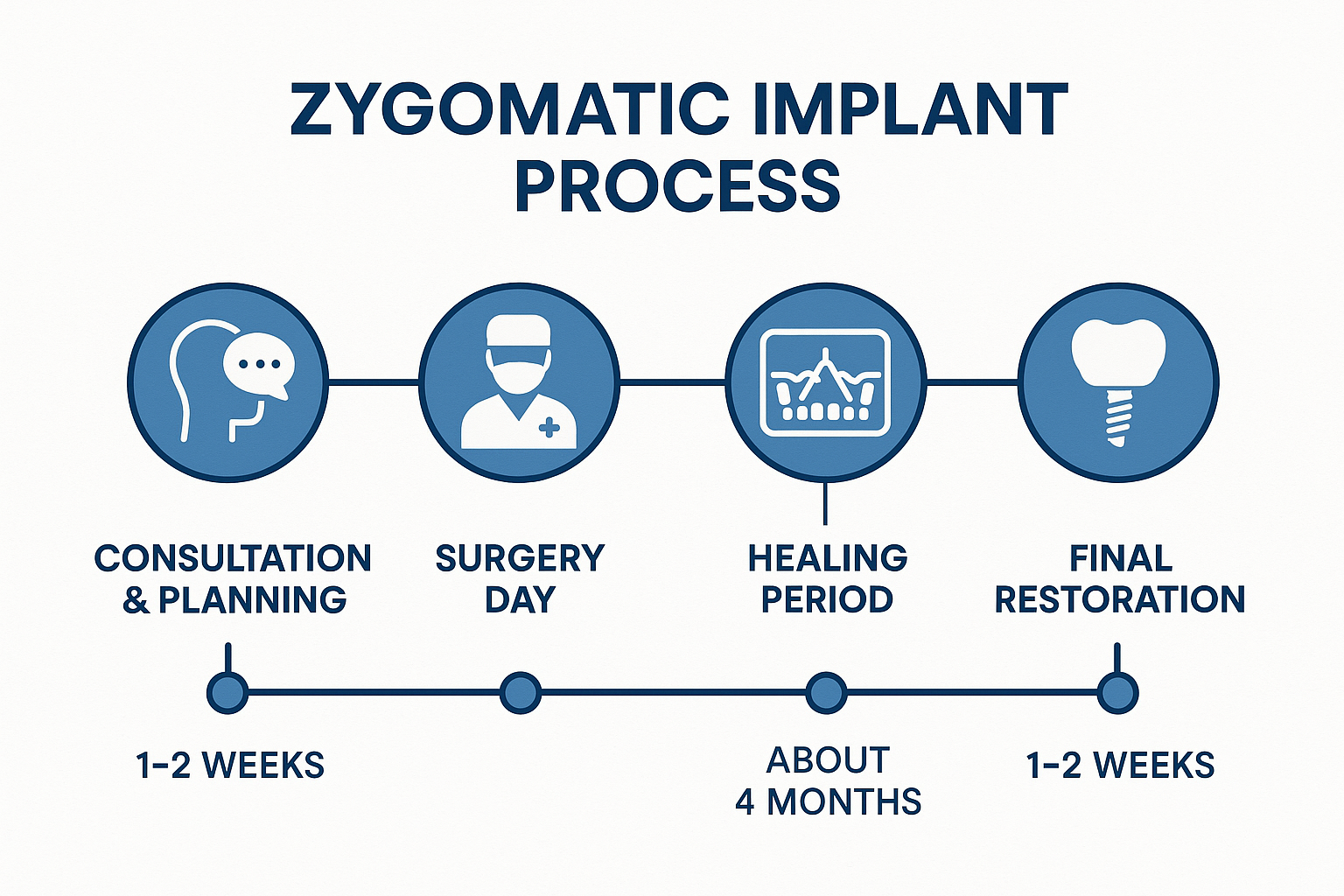
Understanding the zygomatic dental implant procedure helps patients prepare mentally and physically for this life-changing treatment. The process is more complex than traditional implants but offers remarkable results.
Pre-Surgical Planning
Comprehensive Evaluation 🔍 Your journey begins with detailed imaging, including:
- 3D CT scans to map bone structure
- Digital impressions for treatment planning
- Medical history review
- Discussion of expectations and outcomes
Treatment Planning Advanced computer software helps surgeons plan the exact placement of your zygomatic implants, ensuring optimal positioning and avoiding critical anatomical structures.
Surgery Day
Anesthesia and Comfort Most zygomatic implant procedures are performed under:
- IV sedation for comfort
- Local anesthesia for pain control
- Some cases may require general anesthesia
The Surgical Process
- Access Creation: Small incisions are made to access the implant sites
- Implant Placement: The long zygomatic implants are carefully positioned through the upper jaw into the cheekbone
- Immediate Temporization: In many cases, temporary teeth can be attached the same day
- Closure: Surgical sites are carefully closed with sutures
“The beauty of zygomatic implants is that patients can often walk out with teeth the same day, after years of struggling with dentures or no teeth at all.” – Dr. Sarah Mitchell, Oral Surgeon
Recovery and Healing
Immediate Post-Operative Period (First 48 Hours)
- Swelling and discomfort are normal
- Ice packs help reduce swelling
- Soft diet is essential
- Pain medication as prescribed
First Week
- Gradual reduction in swelling
- Suture removal (if non-dissolvable)
- Follow-up appointment with your surgeon
Healing Timeline ⏰
- Weeks 1-2: Initial healing and comfort improvement
- Months 1-3: Soft tissue healing and initial integration
- Months 3-6: Complete osseointegration (bone fusion)
- Month 6+: Final restoration placement
Benefits of Zygomatic Dental Implants
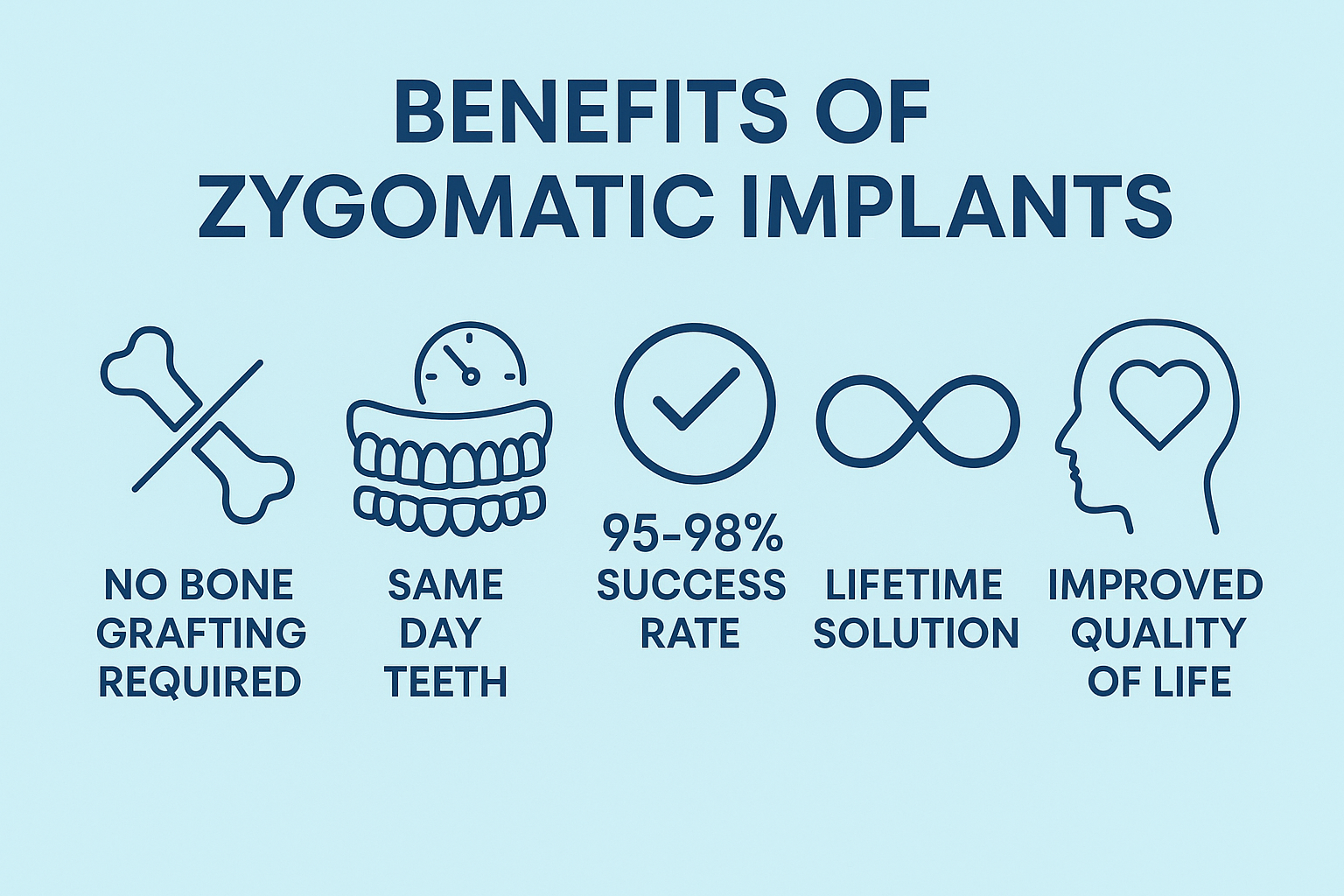
The advantages of zygomatic dental implants extend far beyond simply replacing missing teeth. These innovative implants offer life-changing benefits that traditional treatments often cannot match.
Immediate Functional Benefits
No Bone Grafting Required ✅
- Eliminates 6-12 months of bone graft healing time
- Avoids additional surgical procedures
- Reduces overall treatment complexity and cost
Same-Day Teeth Many patients receive temporary teeth immediately after implant placement, allowing them to:
- Eat soft foods right away
- Speak more clearly
- Smile with confidence
- Return to work sooner
Superior Stability The zygomatic bone provides exceptional support because it:
- Rarely experiences bone loss
- Has dense, cortical bone structure
- Remains stable throughout life
- Provides excellent implant retention
Long-term Advantages
High Success Rates Clinical studies consistently show success rates of 95-98% for zygomatic implants when placed by experienced surgeons. This matches or exceeds traditional implant success rates.
Durability With proper care, zygomatic implants can last a lifetime, making them a cost-effective long-term solution compared to other tooth replacement options.
Improved Quality of Life Patients report significant improvements in:
- Nutrition: Ability to eat a varied, healthy diet
- Confidence: Restored smile and speech
- Social interactions: No worry about denture movement
- Comfort: No sore spots or adhesives needed
Risks and Considerations
While zygomatic dental implants offer excellent outcomes, it’s important to understand potential risks and considerations before proceeding with treatment.
Surgical Risks
Immediate Complications ⚠️
- Bleeding (rare but manageable)
- Infection (prevented with antibiotics)
- Nerve damage (extremely rare with experienced surgeons)
- Sinus complications (minimal due to implant design)
Anesthesia-Related Risks As with any surgical procedure requiring sedation:
- Allergic reactions (very rare)
- Breathing complications (monitored continuously)
- Cardiovascular effects (pre-screened patients)
Long-term Considerations
Maintenance Requirements Zygomatic implants require:
- Excellent daily oral hygiene
- Regular professional cleanings
- Periodic check-ups with your implant team
- Immediate attention to any problems
Lifestyle Factors Certain habits can affect implant success:
- Smoking: Significantly increases failure risk
- Teeth grinding: May require night guard protection
- Poor oral hygiene: Can lead to peri-implantitis
Choosing the Right Surgeon
The complexity of zygomatic implant surgery makes surgeon selection critical. When choosing a dental implant dentist, look for:
Essential Qualifications 🏆
- Board certification in oral surgery or periodontics
- Specific training in zygomatic implant techniques
- Extensive experience with complex implant cases
- Access to advanced 3D imaging technology
Questions to Ask Your Surgeon
- How many zygomatic implant procedures have you performed?
- What is your success rate with these implants?
- Can you provide patient references or before/after photos?
- What technology do you use for treatment planning?
- How do you handle complications if they arise?
Cost Considerations for Zygomatic Implants
Understanding the financial investment required for zygomatic dental implants helps patients make informed decisions about their treatment. While the initial cost may seem significant, the long-term value often exceeds other tooth replacement options.
Factors Affecting Cost
Treatment Complexity 💰
- Number of implants needed (typically 2-4 per arch)
- Need for additional procedures
- Type of final restoration (fixed bridge vs. removable)
- Geographic location and practice overhead
Surgeon Expertise Highly experienced zygomatic implant specialists may charge premium fees, but this investment often results in:
- Better outcomes
- Fewer complications
- Reduced need for revision procedures
- Long-term cost savings
Cost Comparison
| Treatment Option | Initial Cost | Long-term Costs | Lifespan |
|---|---|---|---|
| Zygomatic Implants | $15,000-$30,000 | Minimal maintenance | 20+ years |
| Traditional Implants + Bone Graft | $20,000-$35,000 | Moderate maintenance | 20+ years |
| Upper Dentures | $1,500-$4,000 | Frequent adjustments/replacements | 5-7 years |
Financing Options
Many practices offer payment plans for implants to make treatment more accessible:
Common Financing Solutions 📊
- In-house payment plans
- Third-party healthcare financing (CareCredit, Lending Club)
- Dental insurance coverage (partial)
- Health Savings Account (HSA) funds
- Flexible Spending Account (FSA) funds
For patients seeking more budget-friendly options, exploring affordable dental implants and understanding factors affecting implant cost can help in making financial decisions.
Recovery and Aftercare
Successful recovery from zygomatic dental implant surgery requires following specific guidelines and maintaining excellent oral hygiene throughout the healing process.
Immediate Post-Operative Care (First 48 Hours)
Managing Discomfort 😌
- Take prescribed pain medications as directed
- Apply ice packs for 15 minutes on, 15 minutes off
- Keep head elevated while sleeping
- Avoid strenuous activities
Dietary Guidelines
- Stick to soft, cool foods
- Avoid hot liquids and foods
- No drinking through straws (can disturb healing)
- Stay hydrated with room temperature water
Oral Hygiene
- Gentle rinsing with salt water after 24 hours
- Avoid brushing surgical sites initially
- Use prescribed mouth rinses as directed
Week 1-2 Recovery
Normal Healing Signs ✅
- Gradual reduction in swelling
- Decreased pain and discomfort
- Improved ability to eat soft foods
- Return of normal speech patterns
Warning Signs to Report
- Severe, increasing pain
- Excessive bleeding
- Signs of infection (fever, pus)
- Implant movement or looseness
Long-term Care and Maintenance
Daily Oral Hygiene Routine Maintaining your zygomatic implants requires commitment to:
- Brushing twice daily with soft-bristled toothbrush
- Daily flossing or water flossing around implants
- Using antimicrobial mouth rinse
- Regular professional cleanings every 3-4 months
Lifestyle Modifications
- Quit smoking completely
- Limit alcohol consumption
- Wear night guard if you grind your teeth
- Maintain regular dental check-ups
Zygomatic Implants vs. Alternative Treatments

When considering zygomatic dental implants, it’s important to understand how they compare to other treatment options for patients with significant bone loss.
Bone Grafting + Traditional Implants
Advantages of Bone Grafting
- Uses conventional implant techniques
- May be covered by more insurance plans
- Familiar procedure for most oral surgeons
Disadvantages
- Requires 6-12 months of additional healing time
- Multiple surgical procedures needed
- Higher risk of graft failure
- Significantly longer treatment timeline
- Often more expensive overall
All-on-4 Implants
When All-on-4 Works
- Adequate bone in anterior region
- Patient wants fixed teeth
- Cost is a primary concern
Limitations
- Still requires adequate bone for placement
- May not work with severe bone loss
- Limited to specific anatomical situations
Removable Dentures
Denture Considerations
- Lowest initial cost
- Non-surgical option
- Familiar to many patients
Long-term Drawbacks ❌
- Continued bone loss
- Poor retention and stability
- Dietary restrictions
- Social embarrassment
- Frequent adjustments needed
Understanding these alternatives helps patients appreciate why many choose zygomatic implants despite the higher initial investment. For those exploring various options, learning about low-cost dental implants and how to save money on dental implants can provide valuable insights.
Success Stories and Patient Outcomes
The transformative power of zygomatic dental implants is best illustrated through real patient outcomes and clinical research data.
Clinical Success Rates
Research Findings 📈 Multiple long-term studies demonstrate:
- 95-98% success rates at 5-year follow-up
- Excellent patient satisfaction scores
- Minimal complications when performed by experienced surgeons
- High stability and retention of final restorations
Factors Contributing to Success
- Proper patient selection
- Advanced surgical techniques
- Quality implant materials
- Excellent post-operative care
- Patient compliance with maintenance
Quality of Life Improvements
Functional Benefits Patients consistently report improvements in:
- Chewing efficiency: 80-90% restoration of normal function
- Speech clarity: Significant improvement over dentures
- Comfort: Elimination of sore spots and adhesives
- Confidence: Restored ability to smile and socialize
Nutritional Benefits With stable, functional teeth, patients can:
- Eat a varied, healthy diet
- Enjoy foods previously avoided
- Improve overall health through better nutrition
- Maintain proper digestion
Long-term Satisfaction
Patient Surveys Show
- 95% of patients would choose zygomatic implants again
- 90% report being “very satisfied” with their decision
- 85% say the treatment exceeded their expectations
- 98% would recommend the procedure to others
Future of Zygomatic Implant Technology
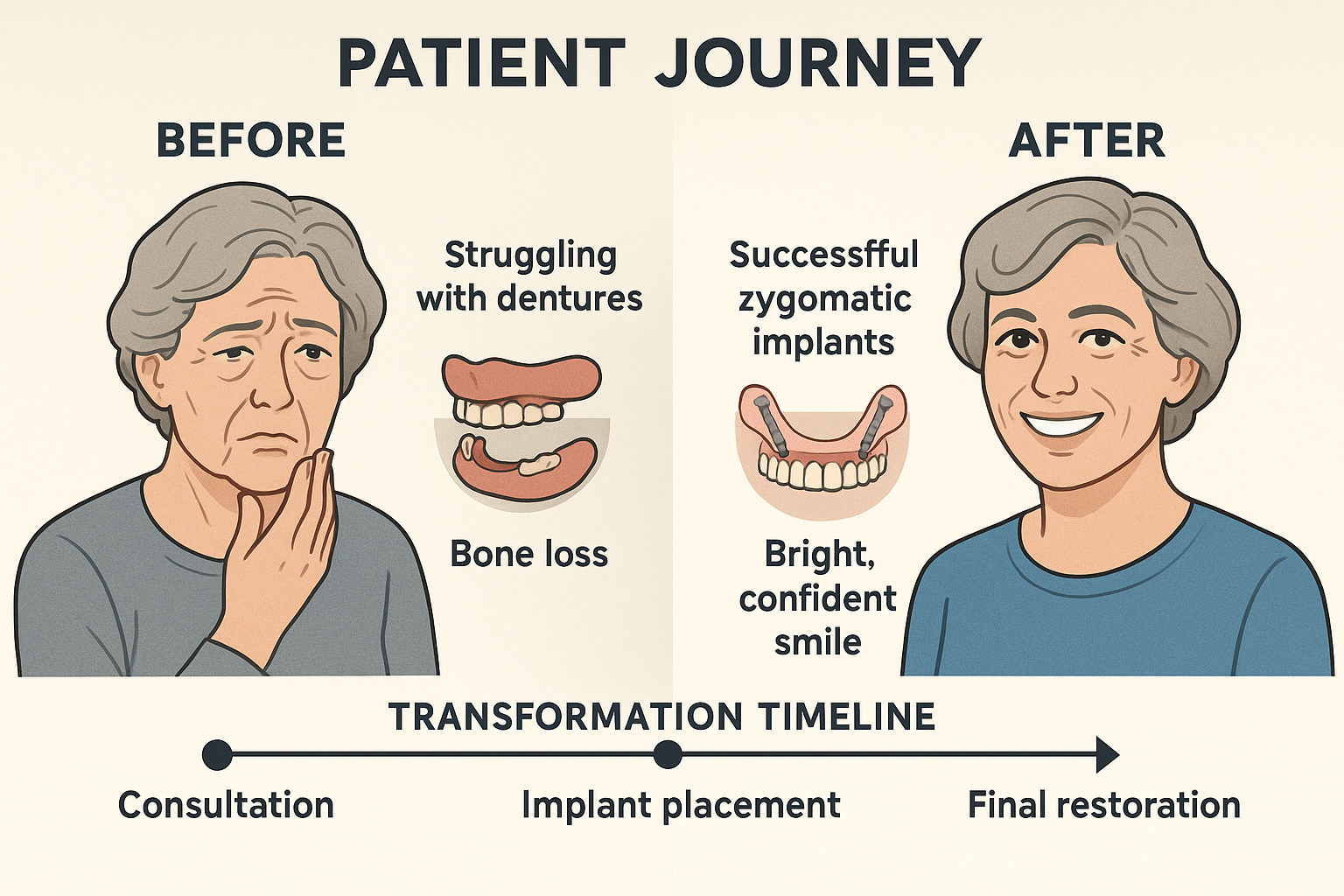
The field of zygomatic dental implants continues to evolve with advancing technology and improved techniques.
Current Innovations
Digital Planning Technology 💻
- 3D surgical guides for precise placement
- Virtual reality surgical training
- AI-assisted treatment planning
- Real-time navigation during surgery
Implant Design Improvements
- Enhanced surface treatments for faster integration
- Improved thread designs for better initial stability
- Bioactive coatings to promote healing
- Customizable implant lengths and angles
Emerging Trends
Minimally Invasive Techniques
- Smaller incisions and reduced trauma
- Faster healing times
- Reduced post-operative discomfort
- Same-day treatment protocols
Material Advances
- New titanium alloys with improved properties
- Ceramic implant options
- Bioactive surface modifications
- Smart materials that promote healing
Making the Decision: Is Zygomatic Right for You?
Choosing zygomatic dental implants is a significant decision that requires careful consideration of multiple factors.
Self-Assessment Questions
Medical Readiness 🏥
- Are you healthy enough for oral surgery?
- Do you have realistic expectations about outcomes?
- Are you committed to excellent oral hygiene?
- Can you follow post-operative instructions carefully?
Financial Preparedness
- Have you explored all financing options?
- Do you understand the total investment required?
- Have you considered long-term value vs. initial cost?
- Are you prepared for potential additional expenses?
Next Steps
Consultation Process
- Initial evaluation with a qualified surgeon
- Comprehensive imaging and treatment planning
- Discussion of alternatives and their pros/cons
- Financial consultation and payment planning
- Second opinion if desired
Questions to Prepare
- What is my specific prognosis for success?
- How long will the entire treatment take?
- What are the payment options available?
- What happens if complications arise?
- Can I see examples of similar cases?
For those ready to explore their options, consulting with experienced dental implant specialists and understanding why dental implants cost so much can provide valuable insights for decision-making.
Conclusion
Zygomatic dental implants represent a revolutionary solution for patients who have been told they’re not candidates for traditional dental implants due to severe bone loss. This advanced treatment offers hope and restored function for those who thought permanent tooth replacement was impossible.
The key advantages – no bone grafting, immediate teeth, high success rates, and long-term durability – make zygomatic implants an excellent investment in your oral health and quality of life. While the procedure requires an experienced surgeon and careful patient selection, the outcomes consistently demonstrate life-changing results.
Your next steps should include:
- Schedule a consultation with a qualified zygomatic implant specialist
- Gather information about costs and financing options
- Prepare questions about your specific case and prognosis
- Consider your timeline and treatment goals
- Explore affordable implant options that fit your budget
Remember, the investment in zygomatic implants is an investment in your future – your ability to eat, speak, smile, and live confidently. Don’t let bone loss prevent you from enjoying the benefits of permanent, stable teeth.
Take the first step today by scheduling a consultation with a qualified implant specialist who can evaluate your specific situation and help you understand if zygomatic dental implants are the right solution for restoring your smile and your life.
Leave a Reply
Share your thoughts or ask a question about dental implants. Your email address will not be published.