

Considering dental implants in Dallas to replace missing teeth can be a significant step toward restoring your smile and oral health. To ensure you make the most informed decision, preparing thoroughly for your initial consultation is crucial. This comprehensive guide provides a detailed dental implant consultation checklist to help you gather necessary information, ask the right questions, and understand every aspect of the dental implant procedure in 2026.
Key Takeaways
- Thorough preparation, including reviewing your medical history and gathering relevant dental records, is essential for a productive dental implant consultation.
- The consultation involves a comprehensive oral examination and advanced imaging to assess your candidacy and determine preparatory procedures.
- Understanding the different tooth replacement options, including single implants, bridges, and full-arch solutions like All-on-4, allows for personalized treatment planning.
- Discussing the implant cost in Dallas, insurance coverage, and financing plans is vital for financial planning.
- A clear understanding of the treatment timeline, recovery expectations, and long-term maintenance is key to managing expectations and ensuring successful outcomes.
What Should You Prepare for Your Dental Implant Consultation?
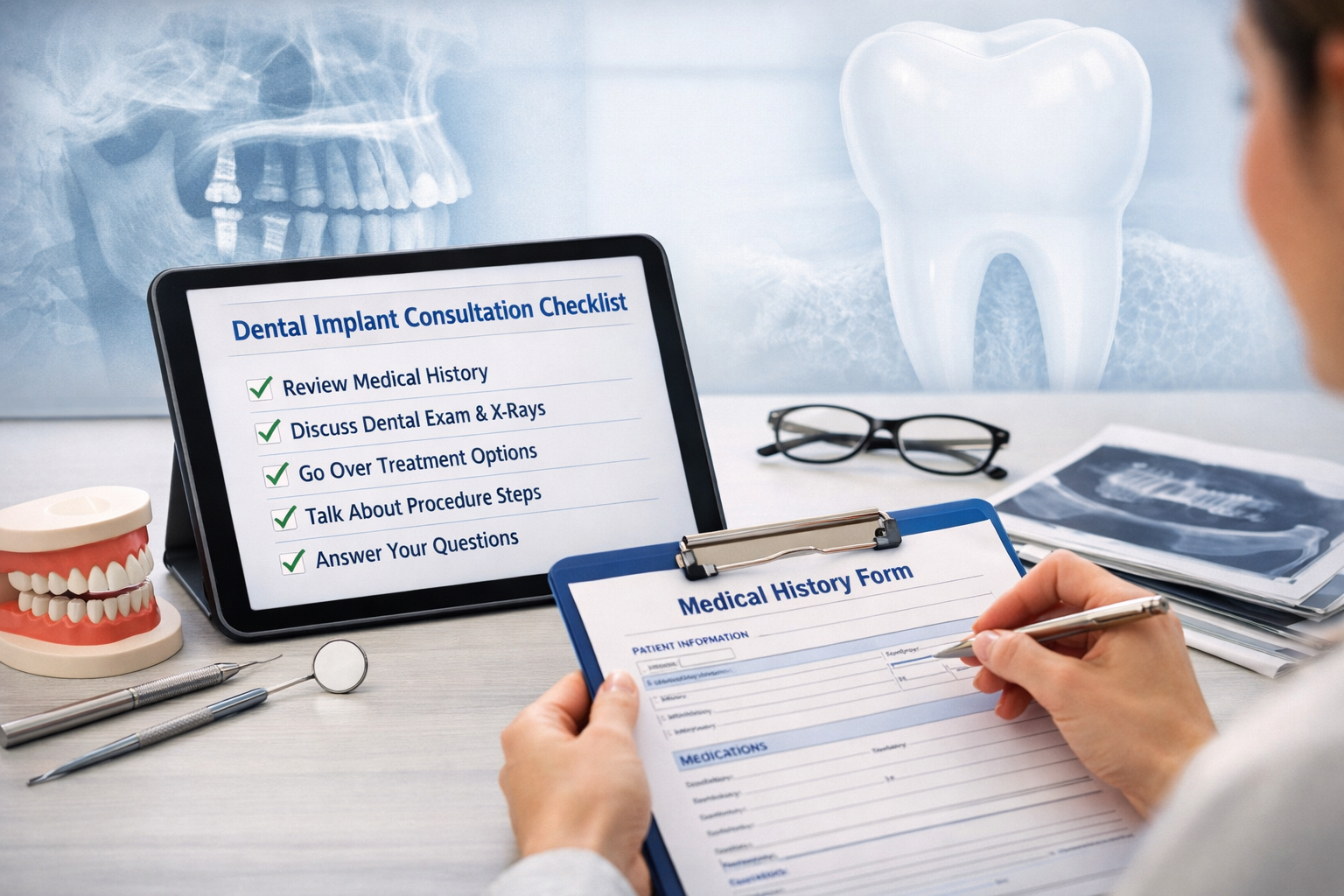
Preparing for your dental implant consultation involves gathering personal health information, understanding your current dental concerns, and formulating questions to ensure all your needs are addressed. A well-prepared patient contributes to a more efficient and effective consultation, helping the dentist develop the most suitable treatment plan for your missing teeth solutions [1].
Before your appointment, focus on collecting information about your health history, current medications, and any previous dental treatments. This preparation streamlines the diagnostic process and ensures your dentist has a complete picture of your overall health, which can significantly impact the success of dental implant surgery [1]. You should also consider what you hope to achieve with dental implants, whether it’s replacing a single tooth, multiple teeth, or exploring full-arch restorations.
Essential Items for Your Dental Implant Consultation Checklist:
Medical History & Current Medications:
- List all current medications: Include prescription drugs, over-the-counter medications, vitamins, and herbal supplements [1]. This is critical as some medications, particularly blood thinners or those affecting bone metabolism, can influence the implant procedure and healing [3].
- Document chronic health conditions: Provide details on any medical conditions such as diabetes, heart disease, osteoporosis, autoimmune disorders, or allergies [1]. These conditions can affect healing, bone integration, and overall implant success. For example, uncontrolled diabetes can increase the risk of infection and slow healing [3].
- Bring contact information for your primary care physician: Your dental implant specialist may need to consult with your doctor to coordinate care, especially if you have complex medical needs.
Dental History & Previous Records:
- Details of past dental procedures: Include extractions, root canals, crowns, bridges, or orthodontic treatments [1]. Knowing your dental history helps the dentist understand the context of your current oral health.
- Copies of recent X-rays (if available): If you’ve had dental X-rays within the last year, bringing them can be helpful, though your implant specialist will likely take new, more advanced images like CBCT scans [1].
- Information on any current dental problems: Such as gum disease, loose teeth, or discomfort [3]. These issues may need to be addressed before implant placement.
Insurance Information & Financial Details:
- Dental insurance card and policy details: Understanding your coverage for dental implant costs is essential. Bring your insurance information, and be prepared to discuss whether your plan covers any portion of the treatment [1]. Many insurance plans have limitations on implant coverage.
- Questions about financing options: If you are concerned about the implant cost in Dallas, ask about payment plans, third-party financing, or in-office discount programs. It’s helpful to explore various options to make treatment affordable. You can learn more about dental implant payment plans no credit check.
A List of Your Questions and Concerns:
- Write down all your questions in advance: This ensures you don’t forget anything important during the consultation. Common questions include details about the procedure, recovery, pain management, and long-term care [1].
- Concerns about fear or anxiety: If you are “terrified of getting dental implants,” discussing this can help the dentist offer sedation options to make the experience more comfortable. For insights on managing fear, read our article: Terrified of Getting Dental Implant? Overcome Your Fear in 2025.
Taking the time to organize this information allows your dentist to provide the most accurate assessment and personalized recommendations for your tooth replacement options, ensuring a strong foundation for your journey to long-term oral health.
What Happens During a Dental Implant Consultation in 2026?
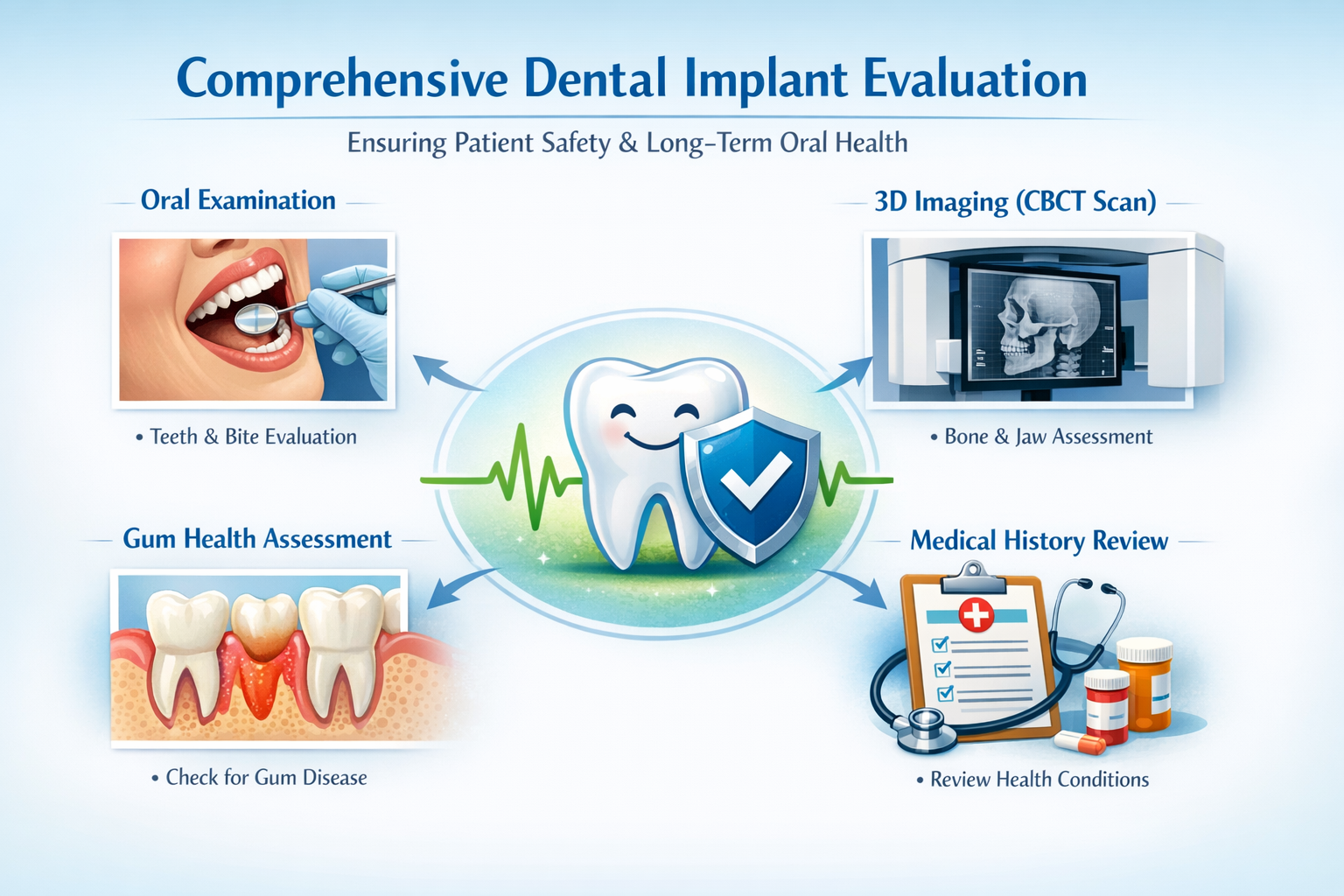
A dental implant consultation in 2026 is a comprehensive diagnostic appointment designed to evaluate your oral health, discuss your treatment goals, and determine if you are a suitable candidate for dental implants. This involves a detailed examination, advanced imaging, and a thorough discussion of potential treatment plans [1]. The goal is to provide you with a clear understanding of the dental implant procedure and what to expect every step of the way.
During the consultation, your implant specialist will assess the condition of your teeth, gums, and jawbone, as these factors are crucial for successful implant placement [3]. They will also take into account your overall health and lifestyle to ensure the proposed treatment aligns with your needs and promotes long-term success.
Key Components of Your Dental Implant Consultation:
Comprehensive Oral Examination:
- Visual assessment: The dentist will carefully examine your mouth, including existing teeth, gums, and the areas where teeth are missing [1]. They will look for signs of tooth decay, gum disease, or other oral health issues that need to be addressed before implant surgery [3].
- Gum health assessment: A crucial part of candidacy involves checking for signs of periodontitis (gum disease), such as bleeding gums, receding gum lines, or pockets between teeth and gums [3]. Healthy gums are vital for implant success, and any active gum disease must be treated first.
- Bite and jaw assessment: The dentist will evaluate your bite alignment and jaw joint function to ensure there are no underlying issues that could affect the stability or longevity of the implants.
Advanced Imaging Analysis:
- Digital X-rays: Standard dental X-rays provide an initial view of your bone structure and tooth roots.
- 3D Cone Beam Computed Tomography (CBCT) scan: This advanced imaging technology provides highly detailed, three-dimensional images of your jawbone, nerves, and sinus cavities [1]. CBCT scans are essential for:
- Assessing bone density and volume: To determine if there is sufficient bone to support the dental implant [2, 3].
- Identifying anatomical structures: Such as nerves, blood vessels, and sinus cavities, which must be avoided during implant placement for patient safety.
- Precise implant planning: Allowing the dentist to digitally plan the exact placement, angle, and depth of each implant for optimal results.
Medical History Review:
- Your dentist will review the medical history information you provided, discussing any conditions or medications that could impact your suitability for surgery or healing [1]. This ensures medically responsible decision-making. Certain conditions, like severe osteoporosis or active cancer treatment, might require careful consideration or alternative approaches.
Discussion of Treatment Options:
- Personalized treatment plan: Based on the examination and imaging, your dentist will present a customized treatment plan tailored to your specific needs [1]. This may include various tooth replacement options, such as:
- Single-tooth implants: For individual missing teeth.
- Implant-supported bridges: For multiple missing teeth in a row.
- Full-arch restorations: Like All-on-4 dental implants, for replacing an entire arch of teeth. You can explore the true cost of All-on-4 dental implants in 2025.
- Identification of preparatory needs: The consultation will clarify if any preliminary procedures are necessary before implant placement, such as bone grafting to increase bone volume, sinus lifts for upper jaw implants, or tooth extractions [1, 3].
- Explanation of the dental implant procedure: Your dentist will walk you through each step of the implant surgery process, from placement to final restoration, ensuring you understand what to expect. For a deeper dive, read our guide on Dental Implant Consultation: What to Expect in 2026.
- Personalized treatment plan: Based on the examination and imaging, your dentist will present a customized treatment plan tailored to your specific needs [1]. This may include various tooth replacement options, such as:
The consultation duration typically ranges from 45-60 minutes, providing ample time for a thorough assessment and discussion of all aspects related to your dental implant journey [1].
What Questions Should You Ask During Your Dental Implant Consultation?
Asking the right questions during your dental implant consultation is paramount to understanding your treatment thoroughly, ensuring patient safety, and making an informed decision about your long-term oral health. This helps clarify the dental implant procedure, potential costs, and expected outcomes [1]. By being proactive, you empower yourself with the knowledge needed to proceed confidently.
It’s essential to cover aspects related to the procedure itself, the qualifications of your dental team, financial considerations, and what to expect during recovery and long-term care. Don’t hesitate to ask for explanations of any dental or medical terms you don’t understand, as clear communication is vital for your peace of mind.
Key Questions for Your Dental Implant Consultation Checklist:
Questions about Candidacy and Preparatory Procedures:
- Am I a good candidate for dental implants, specifically for dental implants in Dallas? What factors determine my suitability [3]?
- Do I need any preliminary procedures, such as bone grafting, a sinus lift, or tooth extractions, before implant placement [1, 3]?
- Are there any specific health conditions or lifestyle factors that might affect the success of my dental implants [1, 3]?
- What are my alternative tooth replacement options if implants are not suitable for me?
Questions about the Dental Implant Procedure:
- Please describe the entire dental implant procedure, from start to finish. What are the different stages, and what does each involve [1]?
- What type of implant will be used (e.g., brand, material), and why is it recommended for me?
- What type of anesthesia or sedation options are available for the implant surgery process [1]? (For more information, see: Dental Implant with Sedation Twilight Sleep Guide 2025)
- How long will the implant placement surgery take?
- How many implants will be placed, and what kind of restoration (crown, bridge, denture) will they support?
Questions about the Dental Team and Experience:
- What is your experience and training specifically with dental implant procedures?
- How many dental implants do you place annually?
- Will a team of specialists (e.g., oral surgeon, periodontist, prosthodontist) be involved in my treatment? If so, what are their roles?
Questions about Cost and Financing:
- What is the total estimated implant cost in Dallas for my specific treatment plan, including all components (implant, abutment, crown, preparatory procedures, follow-up appointments) [1, 2]?
- What portion of the cost, if any, is covered by my dental insurance [1, 2]? Can you help me understand my dental implant insurance Dallas: Complete Coverage Guide 2025?
- What payment plans or financing options are available, or what dental discount plans can help with dental implants in Dallas [1, 2]? (Consider reviewing our guide on Dallas Dental Implant Cost Guide 2025).
- Are there any potential hidden costs or fees I should be aware of?
Questions about Timeline, Recovery, and Longevity:
- What is the overall treatment timeline, including healing periods between stages [1, 2]?
- What should I expect during the recovery period after each stage of the implant surgery process (e.g., pain, swelling, diet restrictions) [1]? (Our post dental implant instructions: essential recovery guide 2026 offers detailed insights.)
- What are the potential risks and complications associated with dental implants [1]?
- What is the expected long-term oral health and longevity of dental implants, and how do I care for them [1]? (Learn more about long-term success and proper dental implant maintenance [7].)
- What is the follow-up schedule after the implant is placed and restored [1]? (Explore our dental implant specialist follow up Dallas 2026 guide.)
By diligently asking these questions, you will gain a comprehensive understanding of your personalized treatment plan, helping you feel confident and prepared for your journey to a restored smile and improved long-term oral health.
Understanding Your Dental Implant Treatment Plan
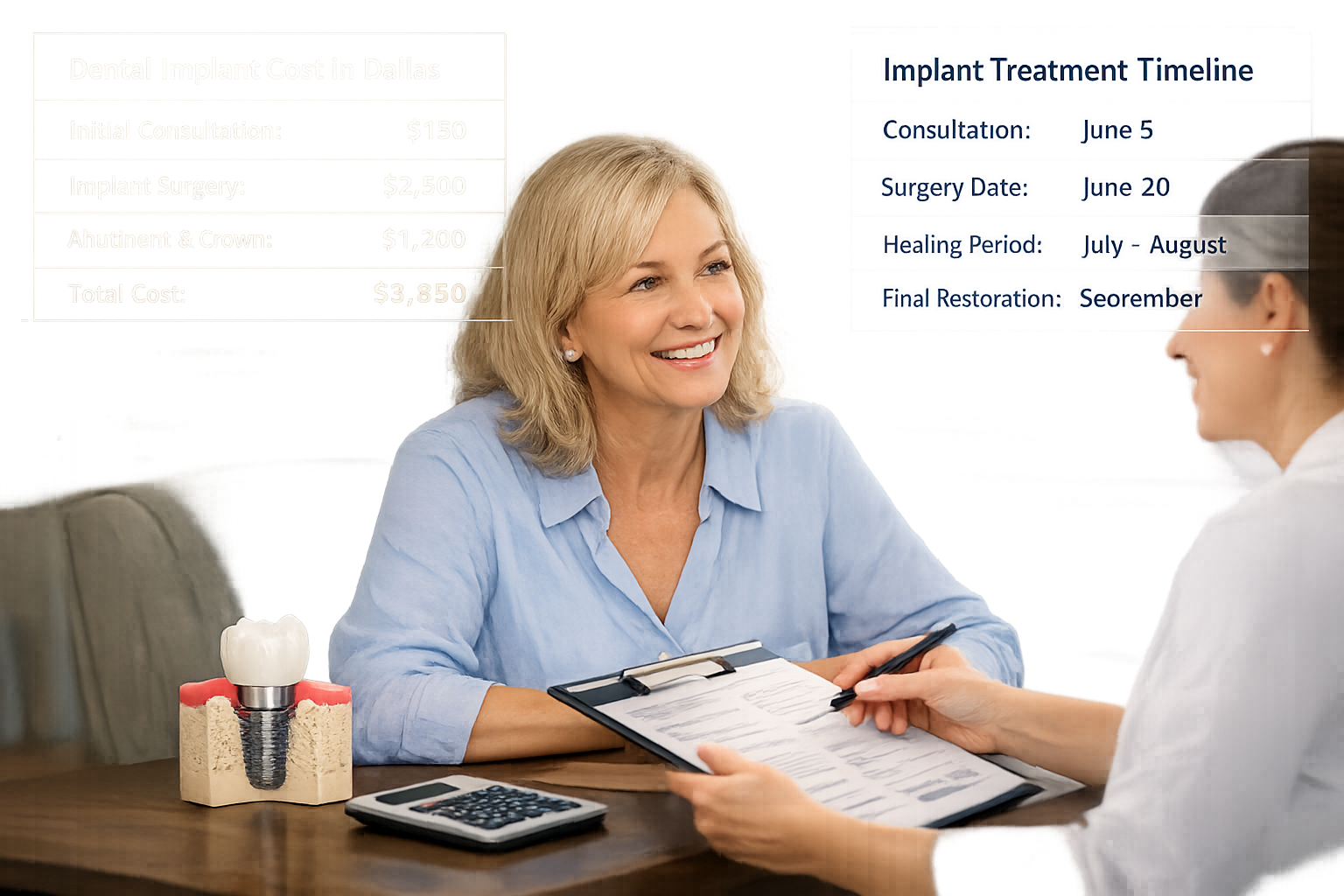
Once your dental implant consultation is complete, your dentist will present a personalized treatment plan outlining the steps necessary to restore your missing teeth. This plan is derived from the comprehensive oral examination, advanced imaging, and discussion of your specific needs and goals [1]. It is crucial to review this plan carefully and ensure you understand every aspect, from preparatory procedures to the final restoration.
A clear, detailed treatment plan acts as a roadmap for your journey to a new smile. It should clearly define the scope of work, the types of materials used, and the expected outcomes, giving you full transparency into the dental implant procedure.
Key Elements to Review in Your Treatment Plan:
Diagnosis and Rationale:
- Clear explanation of why dental implants are recommended: Your dentist should explain how implants address your specific missing teeth solutions and how they will benefit your oral health.
- Assessment of bone quality and quantity: Based on the CBCT scans, you should understand if your existing jawbone is sufficient or if bone grafting or other bone augmentation procedures are needed [3].
- Identification of any existing oral health issues: Such as gum disease or cavities, that must be resolved before implant placement.
Proposed Treatment Stages:
- Pre-implant procedures: If necessary, clarify details about any bone grafts, sinus lifts, or tooth extractions, including their purpose and expected healing time [1, 3].
- Implant placement surgery: Understand the surgical process, number of implants, and the expected duration of this stage.
- Osseointegration period: This is the time during which the implant fuses with your jawbone. Your dentist should explain how long this typically takes (often 3-6 months) and any temporary solutions you might use during this phase [4].
- Abutment placement: The abutment is the connector piece between the implant and the final crown or restoration. Understand when and how this will be placed.
- Final restoration: Details about the type of crown, bridge, or denture, the material, and the aesthetic considerations.
Types of Dental Implants and Restorations:
- Single dental implants: For replacing one tooth.
- Implant-supported bridges: For multiple adjacent missing teeth.
- Full-arch solutions: Such as All-on-4 or All-on-6 implants, designed to replace an entire arch of teeth with fewer implants [4].
- Materials used: Inquire about the materials for the implants (usually titanium or zirconia) and the crowns (porcelain, zirconia, etc.), and how these choices affect durability and aesthetics.
Potential Risks and Benefits:
- Benefits: Acknowledge the advantages of dental implants, such as improved chewing function, speech, aesthetics, bone preservation, and long-term durability [4].
- Risks: Understand potential complications, though rare, such as infection, nerve damage, or implant failure [1]. Discuss how these risks are mitigated. For information on potential issues, see our article: Can Dental Implants Get Infected Years Later? Your 2026 Guide.
Post-Operative Care and Maintenance:
- Instructions for recovery: Clear guidance on managing pain, swelling, diet restrictions, and oral hygiene immediately after surgery [1]. (Refer to: Dental Implant Post-Op Instructions 2026 | Full Recovery Guide).
- Long-term care: Understanding the importance of regular dental check-ups, professional cleanings, and diligent home care for the longevity of your implants [7].
- Signs of complications: Knowing what symptoms to look out for and when to contact your dentist.
Ensure you feel comfortable with the proposed treatment plan, the estimated timeline, and all associated costs before moving forward. A reputable dental practice will always encourage questions and provide thorough explanations, emphasizing patient-first care and medically responsible advice.
Dental Implant Costs in Dallas: What to Expect in 2026
Understanding the implant cost in Dallas is a significant part of your dental implant consultation checklist. The total cost of dental implants can vary widely based on several factors, including the number of implants, the need for preparatory procedures, the type of restoration, and the specific dental practice [1, 2]. During your consultation, you should receive a detailed, transparent breakdown of all anticipated expenses.
It’s important to remember that dental implants are a long-term investment in your oral health and quality of life, offering benefits that often outweigh the initial cost compared to other tooth replacement options. While the upfront cost may seem substantial, the durability and natural feel of implants can make them a more cost-effective solution over time [4].
Factors Influencing Dental Implant Cost in Dallas:
Number of Implants:
- Single implant: Replacing one missing tooth with an implant, abutment, and crown.
- Multiple implants: Costs increase with each additional implant needed for multiple missing teeth or for an implant-supported bridge.
- Full-arch solutions: Procedures like All-on-4 or All-on-6 involve multiple implants to support a full set of fixed dentures, which will have a different cost structure. For specific pricing, see our guide on how much do dental implants cost in 2025.
Preparatory Procedures:
- Tooth extraction: If teeth need to be removed before implant placement, this is an additional cost.
- Bone grafting: If insufficient jawbone exists to support the implant, a bone graft is necessary to build up the bone volume [1, 3]. This is a common additional expense.
- Sinus lift: For upper jaw implants where the sinus cavity is too close to the implant site, a sinus lift creates more space.
- Gum disease treatment: Any active gum disease must be treated prior to surgery, adding to the overall cost.
Type of Restoration:
- Crowns: Made from materials like porcelain, zirconia, or porcelain-fused-to-metal, impacting cost based on material and aesthetic requirements.
- Bridges: Implant-supported bridges involve multiple crowns fused together.
- Denture types: Fixed vs. removable implant-supported dentures.
Diagnostic Fees:
- Initial consultation fees, digital X-rays, and 3D CBCT scans are often included in the overall treatment estimate but should be clarified [1].
Financing and Insurance for Dental Implants in Dallas:
Dental Insurance:
- Most dental insurance plans do not fully cover dental implants, as they often categorize them as cosmetic or major restorative procedures rather than essential [2]. However, some plans may cover a portion of the diagnostic work, extractions, or even a percentage of the crown [1, 2].
- It’s vital to inquire about your specific plan’s coverage and limitations. Your dental office staff can often help you navigate insurance claims. Discover more with our Best Dental Insurance for Implants 2025 | Expert Guide.
Payment Plans and Financing:
- Many dental offices in Dallas offer in-house payment plans or partner with third-party financing companies (e.g., CareCredit) to help make dental implant costs more manageable [1, 2]. These options often allow patients to pay for treatment in installments over time, sometimes with low or no interest.
- Ask about discount plans or loyalty programs that might reduce overall expenses.
- For a detailed look at financial planning, consider using a dental implant cost calculator.
Navigating the Dental Implant Timeline and Recovery
Understanding the dental implant timeline and what to expect during recovery is an integral part of your dental implant consultation checklist. The entire process, from initial consultation to the placement of the final restoration, typically spans several months, largely due to the essential healing phases [1, 2]. A clear understanding of this timeline helps manage expectations and ensures you are prepared for each stage of the dental implant procedure.
Your dentist will provide a personalized timeline during your consultation, taking into account your specific oral health condition, the number of implants, and any necessary preparatory procedures. Knowing this schedule in advance allows you to plan accordingly and commit to the process for optimal long-term oral health.
Typical Dental Implant Timeline:
Initial Consultation and Planning (1-2 appointments):
- This includes your comprehensive oral examination, medical history review, and advanced imaging (X-rays, CBCT scans) to assess your candidacy [1, 2].
- Treatment plan discussion, including any necessary preparatory procedures, cost estimates, and scheduling.
Preparatory Procedures (if needed):
- Tooth Extractions: If a damaged tooth needs to be removed before implant placement, the extraction site will need to heal, which can take several weeks to a few months.
- Bone Grafting/Sinus Lift: These procedures aim to augment bone volume [1, 3]. The healing period for a bone graft can range from 3 to 9 months, as new bone needs time to integrate and become strong enough to support an implant [4]. It’s crucial not to rush this stage.
Dental Implant Placement Surgery (1 appointment):
- The dental implant, a small titanium post, is surgically placed into the jawbone [1, 2]. This is typically a single outpatient procedure.
- Local anesthesia is commonly used, with sedation options available for patient comfort.
Osseointegration (3-6 months):
- After implant placement, a critical healing period begins during which the implant fuses directly with the jawbone [1, 2]. This process, called osseointegration, provides a stable and strong foundation for the final restoration.
- During this time, temporary tooth replacement options may be used to maintain aesthetics and function.
Abutment Placement (1 appointment, or sometimes placed with implant):
- Once osseointegration is complete, a small connector piece called an abutment is attached to the implant [1]. This might be done in a separate minor procedure or, in some cases, the abutment is placed at the same time as the implant.
- The gums are then allowed to heal around the abutment for a few weeks.
Restoration Placement (1-2 appointments):
- Impressions are taken of your mouth and the abutment to custom-fabricate your permanent crown, bridge, or denture [1].
- Once the restoration is ready, it is securely attached to the abutment, completing your new smile.
Recovery Expectations After Dental Implant Surgery:
Immediate Post-Op (First 24-72 hours):
- Discomfort and swelling: Expect some mild to moderate pain, swelling, and possibly bruising [1]. This can usually be managed with prescribed pain medication and over-the-counter pain relievers. Applying ice packs can help reduce swelling.
- Bleeding: Slight bleeding or oozing is normal initially.
- Diet: Stick to soft foods and liquids, avoiding hot beverages or crunchy/chewy foods that could irritate the surgical site [1].
- Oral hygiene: Gentle rinsing with salt water is often recommended, but avoid vigorous brushing directly around the implant site.
First Few Weeks:
- Swelling and discomfort should gradually subside.
- You can slowly reintroduce more solid foods as comfort allows.
- Follow specific post-operative instructions provided by your dentist regarding oral hygiene and activity levels.
- Avoid strenuous activity.
Long-Term Recovery and Maintenance:
- The most crucial aspect of long-term recovery is consistent oral hygiene, including brushing, flossing, and potentially using specific brushes for implants [7].
- Regular dental check-ups and professional cleanings are essential to monitor the implant’s health and prevent complications [7]. For more on maintenance, check out Optimal Dental Implant X-Ray Frequency: Your 2026 Guide.
- Address any issues like bad breath from dental implants promptly.
The healing process is individual, and adhering to your dentist’s instructions is critical for a smooth recovery and successful outcome. Being well-informed about the timeline and recovery process ensures you can anticipate and prepare for each phase of your dental implant journey, ultimately supporting your long-term oral health goals.
The Importance of Follow-Up and Long-Term Care for Your Dental Implants
After your dental implant procedure is complete, the journey to a lasting, healthy smile continues with diligent follow-up appointments and a commitment to long-term oral care. These steps are crucial for ensuring the longevity of your dental implants and protecting your overall oral health [7]. Regular monitoring allows your dental team to address any potential issues early and reinforce proper maintenance habits.
Neglecting follow-up care can compromise the success of your implants, potentially leading to complications down the line. A proactive approach to care is a fundamental part of the patient safety commitment and ensures that your investment in missing teeth solutions truly stands the test of time.
Why Follow-Up Appointments Are Essential:
- Monitoring Healing and Osseointegration: Early follow-up visits allow your dentist to check on the healing of the surgical sites and confirm that the implant is successfully fusing with the jawbone [7]. This is vital during the initial months after implant placement.
- Assessing Gum Health: The health of the surrounding gum tissue is paramount. Your dentist will check for signs of peri-implantitis (gum disease around implants), which, if left untreated, can lead to implant failure [3, 7].
- Checking the Restoration: Once the permanent crown, bridge, or denture is in place, follow-up appointments ensure it fits correctly, functions optimally, and isn’t causing any bite issues [7]. They will also inspect for wear or damage.
- Preventing Complications: Regular check-ups help detect and prevent potential problems such as infection, bone loss around the implant, or issues with the abutment or crown [1]. For more, read about dental implant complications Dallas | Recovery & Prevention.
- Professional Cleaning: Specialized cleaning tools and techniques are used to clean around dental implants effectively, removing plaque and calculus without damaging the implant surface [7].
Long-Term Care for Dental Implants:
Diligent Home Oral Hygiene:
- Brushing: Brush at least twice a day with a soft-bristled toothbrush, paying close attention to the areas around your implants and natural teeth [7].
- Flossing: Use dental floss, specialized implant floss, or interdental brushes (like a sulcus brush for implants) daily to clean between implants and under bridges [7]. These tools are designed to reach areas traditional floss might miss.
- Mouthwash: An antimicrobial mouthwash may be recommended by your dentist.
Regular Dental Check-ups (Every 6-12 Months):
- Schedule routine appointments with your general dentist and, if recommended, your implant specialist [7]. These visits include professional cleanings, oral examinations, and sometimes X-rays to monitor the bone level around the implants [1].
- Your dentist may take optimal dental implant X-ray frequency to ensure the long-term health of your implants.
Address Issues Promptly:
- If you experience any pain, swelling, redness, bleeding, or unusual sensations around your implant, contact your dentist immediately [1]. Early intervention can prevent minor issues from becoming major complications.
- Be aware of any changes in your bite or if your implant “feels weird” – these should also be reported.
Lifestyle Considerations:
- Avoid chewing on hard objects: This can damage your implant crown or even the implant itself.
- Quit smoking: Smoking significantly increases the risk of implant failure and peri-implantitis [3].
- Manage bruxism (teeth grinding): If you grind your teeth, a nightguard may be recommended to protect your implants from excessive forces [7]. Learn more about bruxism & dental implants: prevent damage in 2026.
By adhering to these follow-up and long-term care guidelines, you are actively investing in the longevity and success of your dental implants, ensuring a healthy, confident smile for many years to come. This commitment reinforces the principles of patient safety and optimal long-term oral health that Dental Implant Education – Dallas TX champions.
Conclusion
Embarking on the journey to restore your smile with dental implants in Dallas is a thoughtful decision that begins with a well-prepared and informative consultation. Utilizing a comprehensive dental implant consultation checklist ensures that you gather all necessary information, address your concerns, and fully understand the process, costs, and long-term commitment involved. From reviewing your medical history to discussing financing options and understanding the recovery timeline, each step empowers you to make medically responsible choices for your oral health.
We encourage every patient considering dental implants to approach their consultation with an inquisitive mind and a clear list of questions. The more informed you are about the dental implant procedure, the more confident and comfortable you will feel throughout your treatment journey. By prioritizing patient safety, transparency, and education, Dental Implant Education – Dallas TX is dedicated to helping you achieve lasting oral health and a beautiful, confident smile.
Key Takeaways
- Preparation is paramount: Gather your medical and dental history, medication lists, and insurance details before your consultation.
- Comprehensive evaluation: Expect a thorough oral examination, advanced 3D imaging (CBCT scans), and a review of your general health to determine candidacy.
- Understand your treatment plan: Discuss all tooth replacement options, preparatory procedures (like bone grafts or sinus lifts), and the stages of the implant surgery process.
- Clarify costs and financing: Obtain a detailed cost estimate for your implant cost in Dallas, explore insurance coverage, and inquire about available payment plans.
- Know the timeline and recovery: Understand the expected duration of treatment, healing periods, and what to anticipate during recovery, including post-operative care.
- Prioritize long-term care: Commit to regular follow-up appointments and diligent home oral hygiene to ensure the longevity and success of your dental implants.
- Ask every question: Don’t hesitate to voice all your concerns about the procedure, risks, benefits, and long-term maintenance. Your confidence and understanding are key.
Actionable Next Steps:
- Download and complete a dental implant consultation checklist (using this article as a guide).
- Gather all relevant medical and dental records.
- Schedule your initial dental implant consultation with a qualified dental implant specialist in Dallas, Texas.
- Prepare a list of specific questions to ask during your appointment.
- Be open and honest with your dentist about your health history and expectations.
FAQ
What should I bring to my first dental implant consultation?
You should bring a list of all current medications, a detailed medical history, information about any chronic health conditions, your dental insurance card, and a list of questions or concerns you have about dental implants [1, 2].
How long does a typical dental implant consultation last?
A standard dental implant consultation typically lasts approximately 45–60 minutes, allowing for a comprehensive examination, imaging, and discussion of your treatment options [1].
Will dental insurance cover the cost of my dental implants in 2026?
Many dental insurance plans have limitations on covering dental implants, often categorizing them as cosmetic. However, some plans may cover a portion of diagnostic services or preparatory procedures. It is essential to verify your specific coverage with your provider and discuss it with your dental office [1, 2].
What kind of imaging is done during a dental implant consultation?
During a dental implant consultation, digital X-rays and often a 3D Cone Beam Computed Tomography (CBCT) scan are performed. These images help assess bone density, jaw structure, and identify vital anatomical structures for precise implant planning [1, 2].
What if I need bone grafting before dental implant placement?
If your consultation reveals insufficient bone for implant support, your dentist will discuss the need for a bone grafting procedure. This process adds bone to the jaw and requires a healing period (typically 3-9 months) before implant placement can proceed [1, 3].
What questions should I ask about the recovery period?
You should ask about expected discomfort, swelling, dietary restrictions, activity limitations, and specific post-operative instructions for oral hygiene. Also, inquire about managing pain and potential complications [1].
Can I get dental implants if I have gum disease?
Active gum disease (periodontitis) must be treated and brought under control before dental implant placement. Healthy gum tissue is crucial for the success and longevity of dental implants [3].
What are the long-term success rates of dental implants?
Dental implants generally have a very high success rate, often exceeding 95% over 10 years, especially with proper oral hygiene and regular professional maintenance [7].
How will I know if the dentist is experienced in dental implant procedures?
During your consultation, ask about the dentist’s experience, training, and how many implant procedures they perform annually. A reputable practice will readily provide this information [1].
What if I’m nervous about the dental implant procedure?
Discuss any fears or anxieties with your dentist during the consultation. They can explain sedation options, such as local anesthesia, oral sedation, or IV sedation, to help you feel more comfortable during the procedure [1].
References
[1] Dental Implant Consultation – https://www.drimplantexpert.com/blog/dental-implant-consultation/
[2] How To Prepare For Your Dental Implant Consultation – https://www.crestwooddental.com/how-to-prepare-for-your-dental-implant-consultation/
[3] Dental Implant Candidacy Criteria – https://www.northwestoralsurgeons.com/blog/dental-implant-candidacy-criteria/
[4] Dental Implants Complete Guide – https://www.magrabihealth.com/blog/dental-implants-complete-guide
[7] The Guide To Long Term Success Proper Dental Implant Maintenance – https://www.stillwaterfamilydental.com/the-guide-to-long-term-success-proper-dental-implant-maintenance
Leave a Reply
Share your thoughts or ask a question about dental implants. Your email address will not be published.