

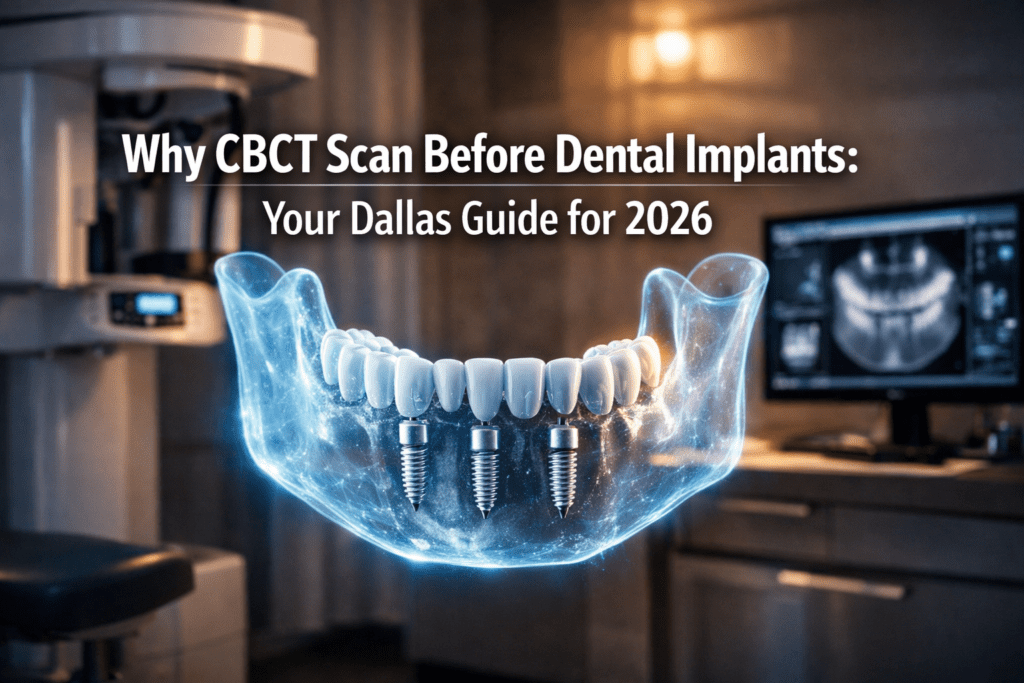
Considering dental implants in Dallas, Texas, is a significant step towards restoring your smile and improving your oral health. As you explore tooth replacement options, you’ll encounter various preparatory steps, one of the most crucial being a Cone Beam Computed Tomography (CBCT) scan. Understanding why a CBCT scan before implants is essential can empower you to make informed decisions about your dental implant procedure and ensure long-term oral health. This advanced imaging technique isn’t just an extra step; it’s a foundational element of modern implant dentistry, providing your dental team with an unparalleled view of your unique oral anatomy.
Key Takeaways
- CBCT scans provide high-resolution 3D images of your jawbone, teeth, and surrounding structures, offering far more detail than traditional X-rays.
- They are critical for precise planning of dental implant placement, minimizing risks to nerves, sinuses, and adjacent teeth.
- CBCT technology assesses bone quality, density, and volume, which is vital for determining if bone grafting is necessary for successful implant integration.
- The scan contributes significantly to patient safety by allowing dentists to identify and avoid potential complications before implant surgery.
- For individuals in Dallas researching dental implants, a CBCT scan is a standard and indispensable part of a thorough pre-surgical evaluation in 2026.
Quick Answer
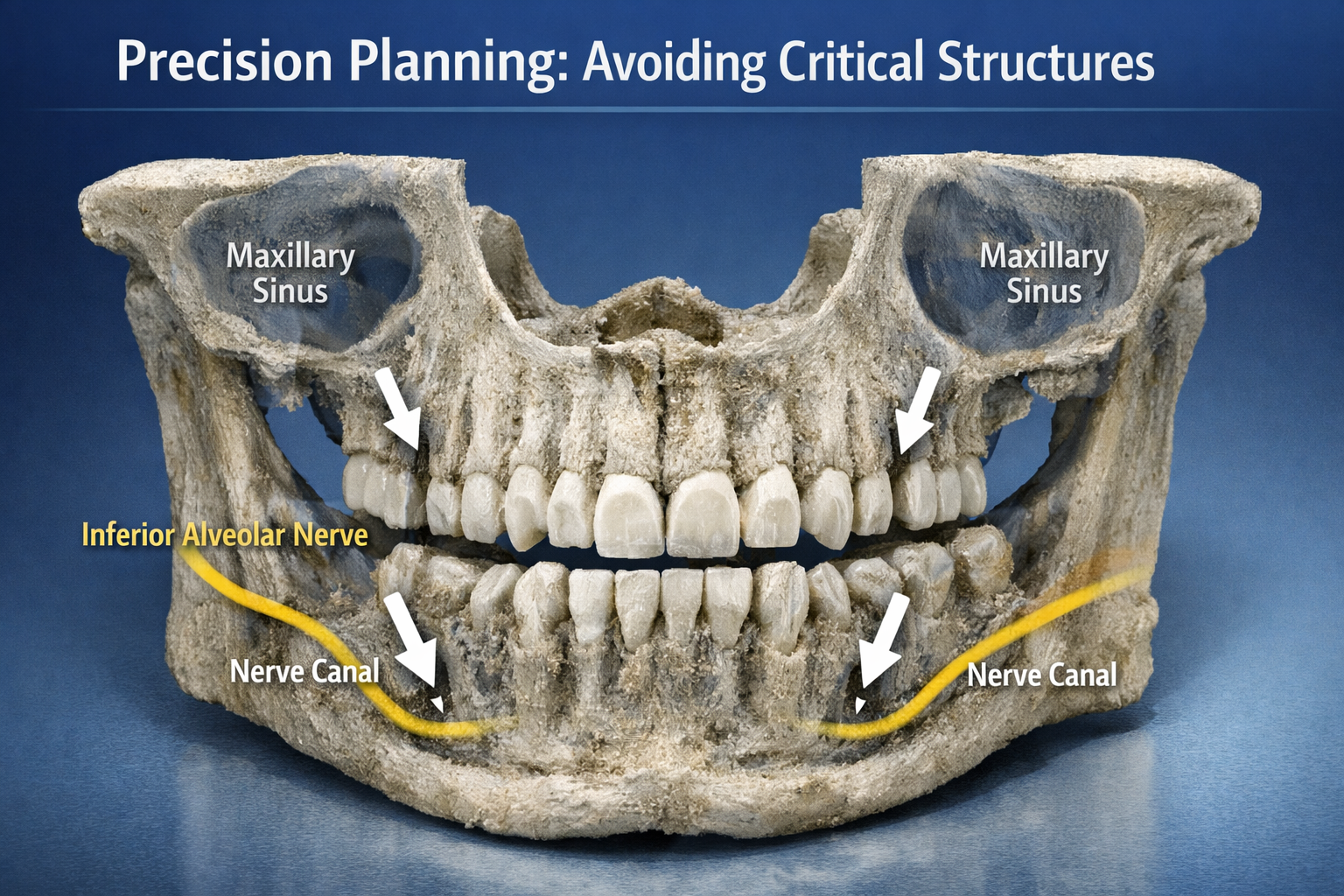
A CBCT (Cone Beam Computed Tomography) scan is an indispensable diagnostic tool performed before dental implant surgery to provide dentists with a detailed, three-dimensional view of a patient’s jawbone, teeth, nerves, and sinus cavities. This comprehensive imaging allows for highly accurate implant planning, ensuring precise placement, minimizing surgical risks, and optimizing the long-term success and stability of dental implants.
Why CBCT Scan Before Implants: The Foundation of Precision Planning
A CBCT scan before dental implants is fundamental because it provides an incredibly detailed 3D map of your oral structures, which is impossible with traditional 2D X-rays. This precise information is vital for your dental implant team to plan the exact placement of each implant, considering your unique bone structure and anatomy [3, 4]. For anyone considering dental implants in Dallas, this initial scan sets the stage for a safe and successful outcome.
The planning phase is arguably the most critical part of the entire dental implant procedure. Without a detailed understanding of the patient’s anatomy, a dentist would be operating with incomplete information, potentially leading to unforeseen complications. The CBCT scan addresses this directly by providing comprehensive data on:
- Bone Quantity and Quality: It accurately measures bone density and volume, crucial factors for the implant to integrate successfully [2, 3]. If there isn’t enough bone, your dentist can plan for bone grafting procedures.
- Anatomical Structures: The scan clearly shows the location of vital structures like the inferior alveolar nerve (which provides sensation to your lower lip and chin) and the maxillary sinuses. This allows the surgeon to avoid these areas, preventing nerve damage or sinus complications [3].
- Optimal Placement: With fractional millimeter accuracy, the CBCT scan allows the dentist to determine the ideal length, width, and angle for each implant, maximizing stability and ensuring proper function [3].
When evaluating tooth replacement options, remember that the initial diagnostic steps, particularly the CBCT scan, are an investment in the long-term success and safety of your dental implants. Choosing a practice that utilizes this technology reflects a commitment to patient-first care and medically responsible procedures.
How Does CBCT Imaging Surpass Traditional X-Rays for Implants?
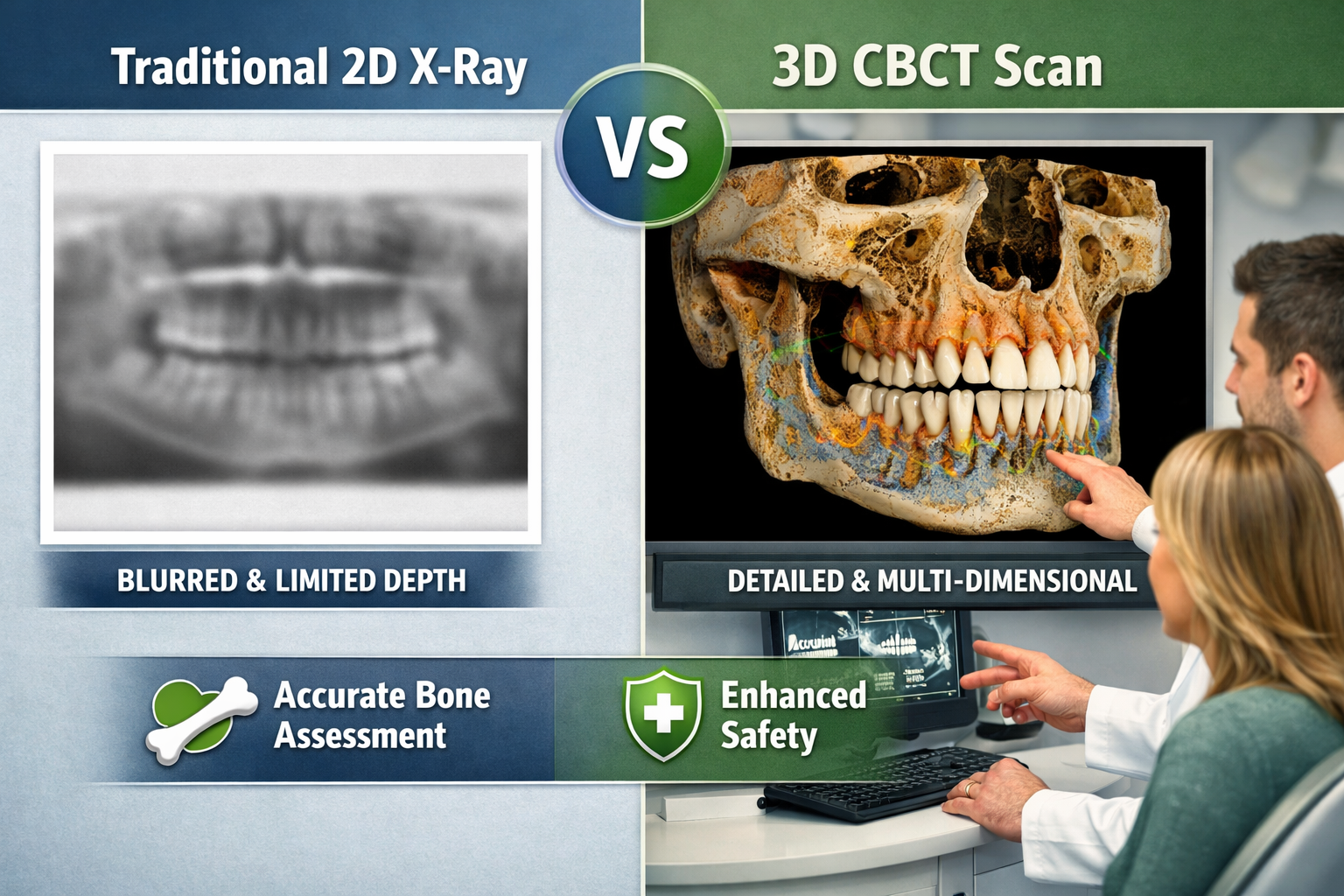
CBCT imaging significantly surpasses traditional 2D X-rays for dental implant planning by providing a three-dimensional perspective that reveals crucial details otherwise hidden or distorted. Unlike flat, two-dimensional X-rays, CBCT scans offer a comprehensive, volumetric view of your jawbone and surrounding structures [8]. This allows your dental team to “see” inside your jaw with unprecedented clarity, making it an indispensable tool for advanced procedures like implant surgery.
Traditional X-rays, while useful for general diagnostics, have limitations for complex procedures such as dental implants:
- 2D vs. 3D: Traditional X-rays flatten 3D structures into a 2D image, which can obscure critical anatomical details and create superimpositions. CBCT provides true 3D images, allowing dentists to rotate and view the jaw from any angle, gaining a complete understanding of the bone and soft tissues [8].
- Measurement Accuracy: With traditional X-rays, measurements can be distorted due to magnification. CBCT offers highly accurate, true-to-life measurements, enabling precise selection of implant size and exact planning of its depth and angle [3]. A PubMed study highlighted CBCT’s ability to predict implant width within 1.5 mm accuracy in 100% of cases and implant length within 1.5 mm in over 95% of cases [3].
- Identification of Critical Structures: While traditional X-rays might indicate the general location of nerves or sinus cavities, CBCT clearly delineates their precise boundaries and proximity to potential implant sites. This is vital for avoiding complications [3, 7].
- Bone Quality Assessment: CBCT scans provide detailed information about bone density, which is crucial for determining the likelihood of successful osseointegration (the fusion of the implant with the bone) [2]. This information is not readily available from standard X-rays.
For individuals seeking dental implants in Dallas, understanding the distinction between these imaging technologies helps underscore the value of a CBCT scan. It’s a leap forward in diagnostic capability, transforming guesswork into precise, evidence-based planning.
CBCT vs. Traditional X-Ray Comparison
| Feature | Traditional X-Ray (2D) | CBCT Scan (3D) |
|---|---|---|
| View | Flat, two-dimensional image | Volumetric, three-dimensional image |
| Detail Level | Limited, superimposition can obscure structures | High-resolution, detailed view of bone, soft tissues, nerves, sinuses |
| Measurement Accuracy | Prone to magnification distortion | Fractional millimeter accuracy for precise planning [3] |
| Bone Assessment | General idea of bone level, limited density information | Accurate assessment of bone density, volume, and quality [2, 3] |
| Risk Identification | General indication of nerve/sinus location | Precise mapping of vital anatomical structures [3, 7] |
| Surgical Planning | Basic guidance | Comprehensive, guided surgical planning |
| Radiation Exposure | Low, but can require multiple images | Low dose, often less than medical CT scans [1, 5] |
Minimizing Risks and Preventing Complications with CBCT
The fundamental reason why a CBCT scan before implants is critical for patient safety is its unparalleled ability to minimize risks and prevent complications during and after implant surgery. By providing a virtual “roadmap” of your oral anatomy, the scan allows your dental implant team to anticipate and strategize around potential obstacles before making any incisions [3]. This proactive approach significantly enhances the safety profile of the dental implant procedure.
Dental implant surgery, while generally safe, involves placing a foreign object into the jawbone, in close proximity to sensitive structures. Without precise imaging, surgeons rely on more generalized knowledge, increasing the potential for complications. Here’s how CBCT mitigates these risks:
- Avoiding Nerve Damage: The inferior alveolar nerve, running through the lower jaw, can be injured if an implant is placed too close. CBCT clearly maps the exact path of this nerve, allowing the surgeon to select an implant length and position that safely avoids it, preventing numbness or altered sensation [3, 7].
- Preventing Sinus Perforations: In the upper jaw, the maxillary sinuses are located above the back teeth. Implants placed too far upwards can perforate the sinus membrane, leading to infections or chronic sinus issues. CBCT identifies the exact floor of the sinus, enabling appropriate implant placement or a sinus lift procedure if needed [3, 7].
- Preserving Adjacent Teeth: The 3D view ensures that implants are placed at an optimal distance from existing teeth, preventing damage to their roots or the surrounding periodontal ligaments [3].
- Detecting Hidden Pathologies: CBCT scans can uncover underlying issues not visible on 2D X-rays, such as cysts, tumors, or impacted teeth, allowing these to be addressed before implant surgery. Early detection can prevent significant setbacks to your treatment [7].
The commitment to patient safety is paramount at Dental Implant Education – Dallas TX. Utilizing CBCT scans is a prime example of how medically responsible practices prioritize your well-being, ensuring a smoother recovery and a more successful long-term outcome. For those who are worried about the procedure, understanding these safety measures can help Terrified of Dental Implants? Conquer Your Fear in 2026.
Assessing Bone Health and the Need for Bone Grafting
A primary reason why a CBCT scan before implants is indispensable is its ability to thoroughly assess bone health, density, and volume, directly informing whether bone grafting is necessary for successful implant integration. Dental implants require a sufficient amount of healthy bone to securely fuse with the jawbone, a process known as osseointegration [1, 3]. Without adequate bone, the implant may not be stable or could fail over time.
Bone loss can occur for several reasons, including prolonged absence of teeth, gum disease, trauma, or certain medical conditions. When considering dental implants, your dentist needs a clear picture of your current bone status:
- Determining Bone Volume: The CBCT scan provides precise measurements of the width, height, and density of the bone at the proposed implant site. This allows the dentist to determine if there is enough bone to house the implant securely [2, 3].
- Identifying Bone Quality: Beyond just volume, bone density matters. A CBCT can differentiate between dense, cortical bone and softer, cancellous bone, helping the surgeon understand how well the implant will integrate and choose the appropriate implant type and surgical technique [3].
- Planning Bone Grafting: If the scan reveals insufficient bone, the dentist can accurately plan for a bone graft. This procedure adds bone material to the jaw, creating a strong foundation for the implant. The CBCT guides the exact location and amount of grafting material needed, optimizing the success of this preparatory step. You can learn more about this process in our guide on Bone Graft Healing for Dental Implants: Your 2026 Timeline.
- Locating Specific Anomalies: The scan can also reveal any bone defects or anatomical variations that might complicate implant placement, allowing the dental team to adapt the treatment plan accordingly.
Without this detailed bone assessment, there’s a higher risk of implant failure due to inadequate support. For patients in Dallas comparing implant cost in Dallas, it’s important to understand that foundational procedures like bone grafting, if needed, contribute to the overall implant cost but are vital for long-term success.
Expediting Treatment and Enhancing Implant Longevity
One significant advantage of understanding why a CBCT scan before implants is important is recognizing its role in both expediting the overall treatment timeline and significantly enhancing the long-term longevity of your dental implants. By front-loading the diagnostic process with comprehensive 3D imaging, your dental team can move through the treatment phases more efficiently and with greater confidence.
Here’s how CBCT scans contribute to a streamlined and successful implant journey:
- Faster, More Accurate Diagnoses: A single CBCT scan provides all the necessary diagnostic information, reducing the need for multiple X-rays or follow-up imaging appointments [5]. This allows for a quicker, more definitive diagnosis and treatment plan.
- Reduced Chair Time: With a precise surgical plan derived from the CBCT scan, the actual implant surgery can be more efficient and often shorter. The surgeon knows exactly where and how to place the implant, minimizing surprises and adjustments during the procedure itself.
- Personalized Treatment Planning: Every patient’s oral anatomy is unique. CBCT allows for customization of implant plans specifically to individual bone structure and anatomical variations, ensuring a perfect fit and optimal outcome [3, 4]. This level of personalization is a cornerstone of modern dental care.
- Improved Osseointegration and Stability: When an implant is placed in the ideal location with sufficient, healthy bone, it has the best chance to properly integrate with the jawbone. This strong, stable foundation is directly linked to the implant’s long-term success and ability to withstand chewing forces [1, 3].
- Reduced Risk of Revision Surgery: By proactively identifying and avoiding potential complications, CBCT significantly lowers the likelihood of needing costly and time-consuming revision dental implant surgery in Dallas down the line. A properly placed implant is less likely to become infected or loose.
- Optimized Functional Outcomes: CBCT-guided placement ensures better alignment with surrounding teeth and improved load distribution during chewing. This not only contributes to the longevity of the implant but also enhances overall oral function and comfort, allowing you to enjoy your new teeth as naturally as possible [4].
For anyone considering dental implants in Dallas, these benefits translate into a more predictable, comfortable, and durable solution for missing teeth. It’s a proactive step that safeguards your investment in a healthy, confident smile for years to come.
What to Expect During a CBCT Scan
Undergoing a CBCT scan is a quick, painless, and non-invasive process, making it a comfortable experience for patients. Understanding what to expect can alleviate any apprehension and highlights its simplicity as a diagnostic tool.
When you arrive for your CBCT scan:
- Preparation: You will typically be asked to remove any metal objects such as jewelry, eyeglasses, or hearing aids, as these can interfere with the imaging.
- Positioning: You will sit or stand in the center of the CBCT machine. The dental technician will position your head carefully using chin rests and head supports to ensure stability during the scan.
- The Scan Itself: The scanner arm will rotate 360 degrees around your head, capturing a complete series of images in a single sweep. This usually takes less than a minute. During this time, you’ll be asked to remain very still.
- Low Radiation Dose: While CBCT uses X-ray technology, it employs a cone-shaped X-ray beam, which significantly reduces the radiation dose compared to conventional medical CT scans, while still providing highly detailed images [1, 5]. Your dental team follows strict safety protocols to ensure minimal exposure.
- Immediate Results: The images are immediately available digitally, allowing your dentist to review them quickly and begin planning your dental implant procedure.
The convenience and efficiency of a CBCT scan underscore why a CBCT scan before implants is a routine part of modern dental care. It’s a testament to how advanced technology can streamline the diagnostic process, making your journey toward a restored smile smoother and more predictable.
The Cost Factor: Is a CBCT Scan Included in Dental Implant Cost in Dallas?
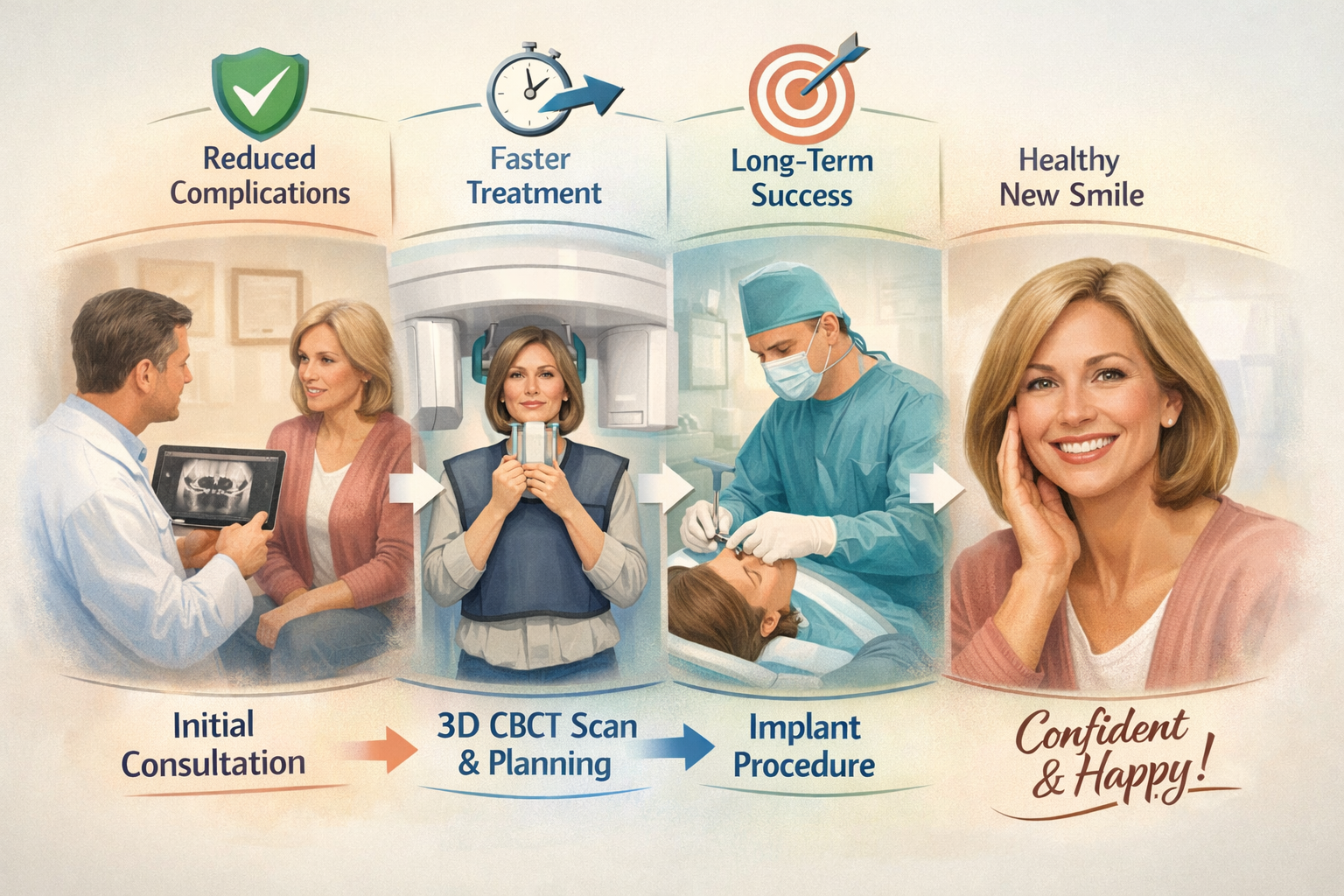
When considering dental implants, prospective patients in Dallas often inquire about the overall cost, and this naturally extends to diagnostic procedures like the CBCT scan. While the CBCT scan is an integral part of the pre-surgical planning, its inclusion in the “dental implant cost in Dallas” can vary depending on the dental practice and your individual treatment plan.
Typically, the cost of a CBCT scan is either:
- Included in the Initial Consultation/Treatment Plan: Many dental practices in Dallas incorporate the CBCT scan fee into the comprehensive diagnostic phase, especially if you’re committed to pursuing dental implants with them. It’s seen as a necessary part of the patient safety and precision planning protocol.
- Billed Separately: In some cases, especially if you are only having an initial consultation to explore options, the CBCT scan might be billed as a separate diagnostic service. This allows for a thorough evaluation before committing to the full implant procedure.
- Insurance Coverage: Dental insurance plans vary widely. Some plans may cover a portion of diagnostic imaging, including CBCT scans, particularly if deemed medically necessary for a complex procedure. It’s always advisable to check with your insurance provider and the dental office’s billing department for specifics.
Given the importance of the CBCT scan for surgical precision and complication prevention, it’s a worthwhile investment in the success of your dental implants. When comparing how much do dental implants cost in 2025, always clarify what diagnostic fees are included. A transparent breakdown of costs from your dental implant education provider in Dallas is essential for informed decision-making. Don’t let the potential separate cost deter you from this crucial diagnostic step, as it directly impacts the safety and success of your investment in a new smile.
FAQ
Is a CBCT scan truly necessary for every dental implant case?
Yes, a CBCT scan is considered truly necessary for virtually every dental implant case in 2026. It provides critical 3D information about bone volume, quality, and proximity to vital anatomical structures, which cannot be obtained from traditional 2D X-rays, ensuring precise and safe implant placement [3, 4].
How long does a CBCT scan take?
A CBCT scan is very quick, typically taking less than a minute to capture the full series of images. The entire appointment, including preparation and positioning, is usually brief [5].
Is the radiation from a CBCT scan safe?
Yes, CBCT scans are considered safe. They use a significantly lower radiation dose than traditional medical CT scans while providing detailed diagnostic information. Dental professionals follow strict protocols to minimize patient exposure [1, 5].
Can a CBCT scan detect other dental problems?
Absolutely. Beyond implant planning, CBCT scans can detect various underlying dental pathologies such as cysts, tumors, impacted teeth, and jaw deformities that might affect overall oral health or implant success [7].
Will my dental insurance cover the cost of a CBCT scan?
Coverage for CBCT scans by dental insurance varies. Some plans may cover a portion of diagnostic imaging, especially when it’s deemed necessary for complex procedures like dental implants. It’s best to check with your specific insurance provider and your dental office.
What if the CBCT scan shows I don’t have enough bone for an implant?
If the CBCT scan reveals insufficient bone, your dentist will discuss options such as bone grafting procedures to augment the bone volume and create a stable foundation for the implant. This preparatory step is common and often crucial for long-term implant success [3].
Can I get dental implants without a CBCT scan?
While theoretically possible, proceeding with dental implants without a CBCT scan significantly increases the risk of complications such as nerve damage, sinus perforation, and implant failure due to improper placement or insufficient bone. It is not considered the standard of care for medically responsible dental implant procedures in 2026 [3, 4].
Conclusion
Understanding why a CBCT scan before implants is a non-negotiable step in 2026 is crucial for anyone considering dental implants in Dallas, Texas. This advanced imaging technology goes beyond what traditional X-rays can offer, providing your dental implant team with a detailed, three-dimensional blueprint of your unique oral anatomy. From precisely mapping bone density and volume to identifying and safeguarding vital nerves and sinus cavities, the CBCT scan forms the bedrock of a safe, successful, and long-lasting dental implant procedure.
At Dental Implant Education – Dallas TX, our commitment to patient safety and exceptional long-term oral health means embracing the most advanced diagnostic tools available. The information gleaned from a CBCT scan empowers us to develop a personalized treatment plan that minimizes risks, optimizes implant placement, and ultimately, helps you achieve a confident, functional smile. When exploring tooth replacement options, ensure your chosen provider prioritizes this critical diagnostic step.
If you are considering dental implants, a consultation with a dentist utilizing CBCT technology is your first step towards an informed decision and a successful outcome. Don’t compromise on the diagnostic precision that ensures the health and longevity of your investment in a new smile.
References
[1] What Are The Benefits Of Cbct Scans In Dentistry – https://coastdentalcoquitlam.com/blog/what-are-the-benefits-of-cbct-scans-in-dentistry/ [2] Cbct Scan Dental – https://int.livhospital.com/cbct-scan-dental/ [3] Is Cbct Scan Necessary For Dental Implants – https://www.valleyhillsdentistry.com/blog/2025/06/is-cbct-scan-necessary-for-dental-implants [4] How Cbct Scans Improve Dental Implant Success In 2026 – https://smylexl.com/how-cbct-scans-improve-dental-implant-success-in-2026/ [5] Cbct Scan In Dentistry Why It Will Become Essential In 2026 – https://smylexl.com/cbct-scan-in-dentistry-why-it-will-become-essential-in-2026/ [6] 3 Benefits Of Having A Cbct Scan – https://www.kstreetdental.com/blog/3-benefits-of-having-a-cbct-scan [7] Why To Conduct A Cone Beam Ct Scan Before Dental Implants – https://gums-houston.com/why-to-conduct-a-cone-beam-ct-scan-before-dental-implants/ [8] Advantages Of 3d Cbct Scans Over Traditional X Rays – https://www.regent-dental.co.uk/blog/advantages-of-3d-cbct-scans-over-traditional-x-rays [9] Cone Beam Technology Providers – https://www1.deltadentalins.com/dentists/fyi-online/2023/cone-beam-technology-providers.html
Leave a Reply
Share your thoughts or ask a question about dental implants. Your email address will not be published.