

Experiencing a dental implant issue, especially years after initial placement, can be concerning. It’s natural to wonder, “What happens if a dental implant falls out or fails years later?” While dental implants boast an impressive long-term success rate, occasional complications can arise. Understanding the reasons behind late failures and the steps involved in addressing them is crucial for patients in Dallas and beyond. This article aims to provide a clear, professional, and reassuring guide on this important aspect of long-term oral health.
Key Takeaways
- Dental implants have high long-term success rates, with about 80% remaining functional after 20 years [1].
- Most implant failures occur early; if an implant survives the first year, long-term success is more likely [2].
- Late implant failures, though less common, can occur due to peri-implantitis, excessive bite force, or systemic health issues.
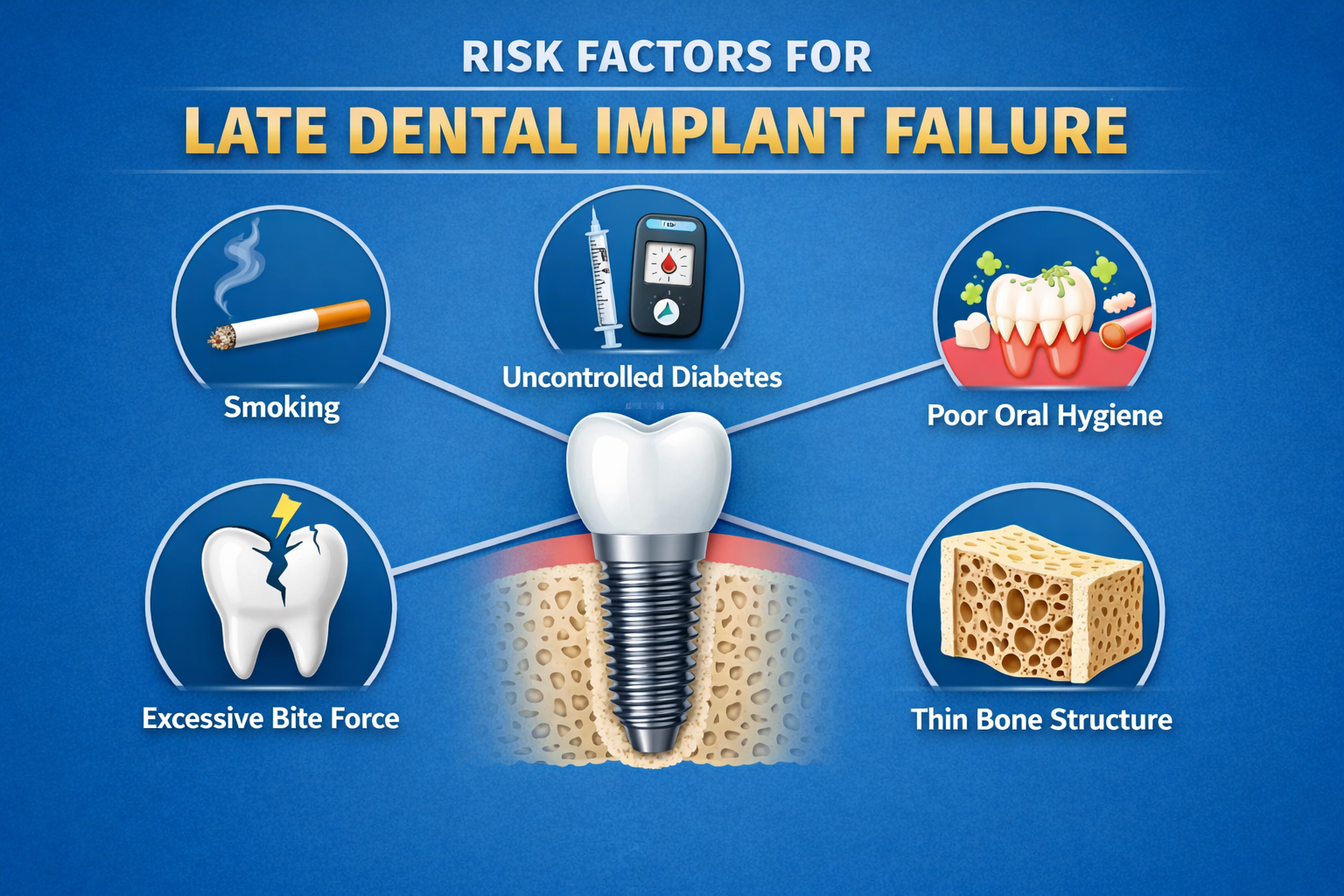
- Smoking and uncontrolled diabetes are significant risk factors for late implant failure [2].
- If an implant fails, a dentist will assess the cause, remove the implant, and discuss options like bone grafting and re-implantation.
- Early detection of symptoms like pain, swelling, or mobility is key to effective treatment.
- Maintaining excellent oral hygiene and regular dental check-ups are vital for the longevity of dental implants.
- Revision dental implant surgery is a viable option for many patients.
Quick Answer
If a dental implant falls out or fails years later, it typically indicates a late-stage complication, often due to peri-implantitis, biomechanical overload, or systemic health changes. The immediate steps involve consulting with your dentist for a comprehensive evaluation, which will likely include X-rays and a clinical examination to determine the underlying cause and guide subsequent treatment, which may range from infection management to implant removal and potential re-implantation.
What Constitutes a Dental Implant Failure Years Later?
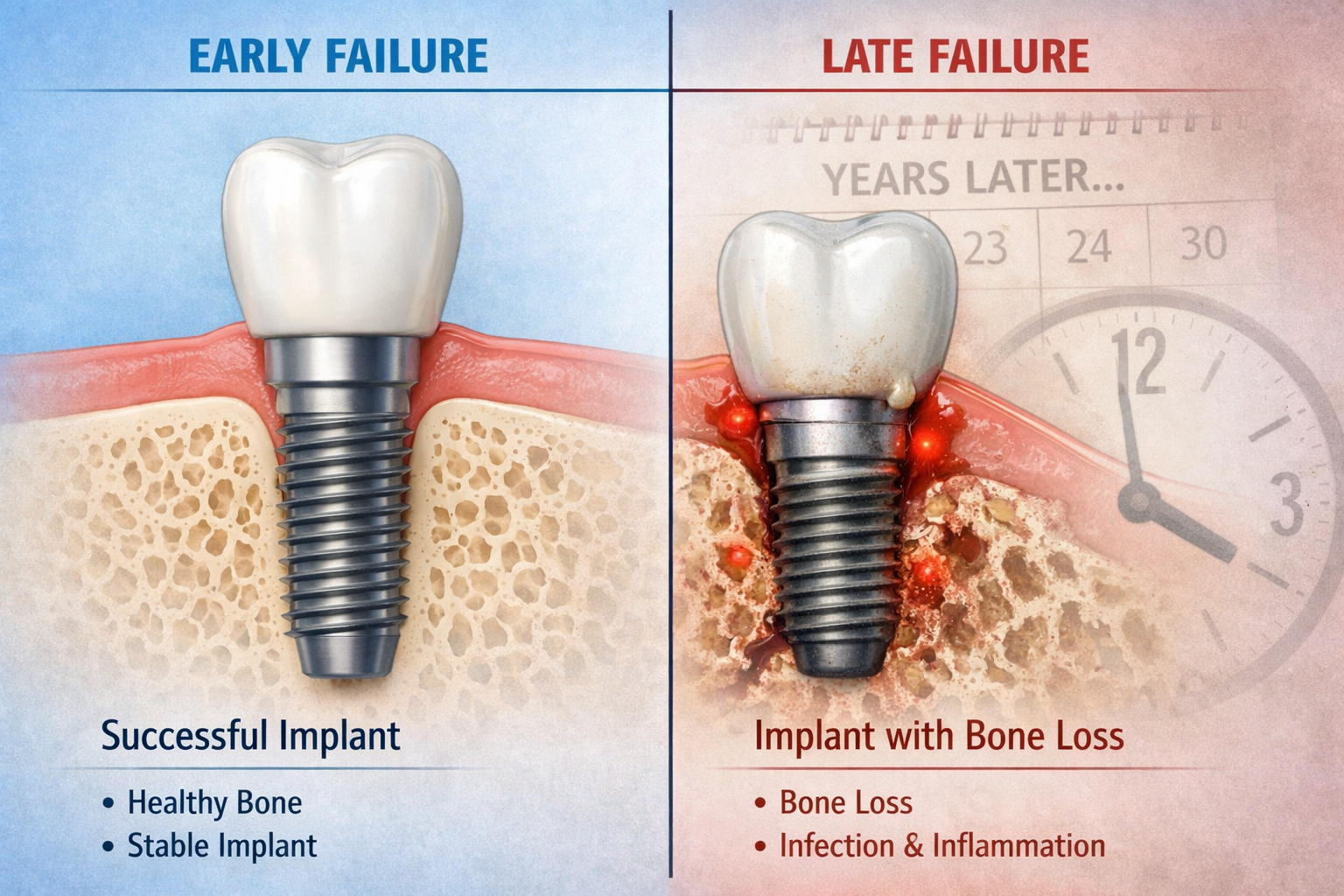
A dental implant failure years later, often termed a “late failure,” refers to the loss or dysfunction of an implant that has successfully integrated with the bone and been in service for an extended period. While overall dental implant success rates are remarkably high, exceeding 95-98% in the U.S. [3, 4], a small percentage can experience issues after years of successful function. A 2024 meta-analysis indicated that approximately 80% of implants remain functional after 20 years, though the initial success rate observed at earlier follow-ups is closer to 92% [1].
Late failures differ from early failures, which usually happen within the first few months post-surgery due to insufficient osseointegration. Late failures are often characterized by:
- Peri-implantitis: This is an inflammatory condition affecting the tissues around a dental implant, leading to progressive bone loss. It’s similar to gum disease around natural teeth and is a leading cause of late implant failure.
- Mechanical Complications: These can include fracture of the implant, abutment, or crown due to excessive biting forces, design flaws, or material fatigue over time.
- Lack of Osseointegration Breakdown: Although the implant initially integrated, factors such as bone loss around the implant due to disease or trauma can lead to the breakdown of this bond.
- Systemic Health Changes: New or worsening systemic conditions, like uncontrolled diabetes, can impact bone metabolism and the body’s ability to maintain the implant’s stability.
It’s important to understand that while early failures typically point to issues with the initial surgical procedure or healing, late failures often relate to long-term maintenance, patient habits, or evolving health conditions.
What Causes a Dental Implant to Fail Years After Placement?
Several factors can contribute to a dental implant failing years after its initial successful placement, ranging from biological responses to lifestyle choices. A primary cause is peri-implantitis, an inflammatory condition that results in bone loss around the implant, often triggered by bacterial infection.
Common causes of late implant failure include:
- Peri-Implantitis: As mentioned, this is the most frequent biological complication. It begins as peri-implant mucositis (inflammation of the soft tissues around the implant) and can progress to peri-implantitis if untreated, causing bone loss. Poor oral hygiene is a major contributor, allowing plaque and bacteria to accumulate around the implant.
- Excessive Occlusal (Biting) Forces: If the implant-supported crown is not properly aligned or if a patient habitually grinds or clenches their teeth (bruxism), the excessive force can overload the implant, leading to bone loss, implant fracture, or component loosening over time. This can compromise the long-term stability of the implant.
- Poor Bone Quality or Quantity: While initial placement accounts for bone quality, changes over time due to disease or inadequate bone support initially can lead to long-term failure. Implants placed in less dense bone (Type IV) have shown higher failure rates [2].
- Smoking: Smoking is a dominant controllable risk factor. A 10-year retrospective study found smoking associated with 37% of implant failures, primarily due to reduced blood flow and increased risk of infection, which hinders healing and maintenance of healthy tissues around the implant [2].
- Uncontrolled Systemic Diseases: Conditions like uncontrolled diabetes can significantly increase the risk of implant failure by impairing healing, bone metabolism, and immune response. While well-controlled diabetes does not necessarily preclude implant success, poorly managed cases pose a higher risk [2]. For more on this, see our guide on Diabetic Dental Implant Recovery: Guide & Timeline (2026).
- Inadequate Oral Hygiene: Consistent and thorough oral hygiene is critical. Neglecting to properly clean around dental implants allows plaque to accumulate, increasing the risk of peri-implantitis.
- Lack of Regular Dental Check-ups: Regular visits to a dentist for professional cleanings and examinations allow for early detection and intervention of potential issues, preventing progression to full failure.
- Implant Design and Size: In some cases, factors like implant diameter or length can influence longevity. Implants with a diameter less than 3.75mm and length less than 10mm have sometimes shown higher failure rates [2].
- Previous Periodontal Disease: Patients with a history of gum disease are at a higher risk of developing peri-implantitis if not properly managed.
Understanding these risk factors is crucial for prevention and for patients in Dallas to make informed decisions about their long-term oral health.
What Happens if a Dental Implant Falls Out or Fails Years Later: Recognizing the Signs
Recognizing the signs of a failing dental implant early is vital for successful intervention and potentially saving the implant or planning effective revision. A failing implant often presents with noticeable symptoms, which should prompt an immediate consultation with your dentist.
Key indicators that your dental implant may be failing include:
- Pain or Discomfort: While some minor discomfort can occur after initial placement, persistent or increasing pain, especially years later, around the implant site is a significant red flag. This pain might be dull, aching, or sharp, particularly when chewing or applying pressure.
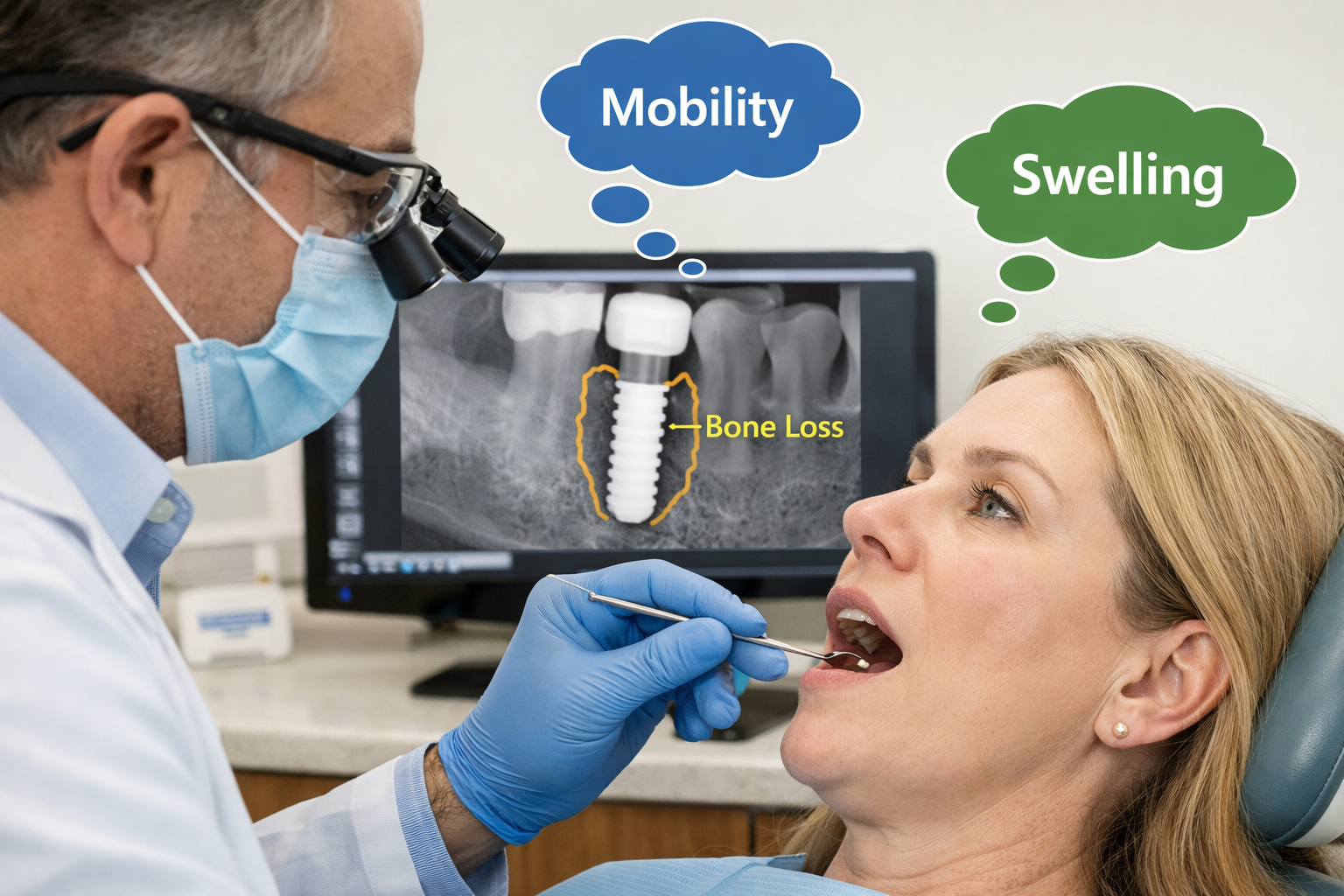
- Swelling or Redness of the Gums: Inflammation around the implant, characterized by red, swollen, or tender gum tissue, is a classic sign of peri-implantitis or infection. This can often be accompanied by bleeding when brushing or flossing.
- Implant Mobility: A healthy dental implant should be as stable as a natural tooth. Any noticeable movement, wiggling, or looseness of the implant itself, the abutment, or the crown is a critical sign of failure. This can range from slight movement to the implant completely detaching.
- Difficulty Chewing: If it becomes painful or uncomfortable to chew on the implant side, or if you feel a strange sensation when biting, it could indicate an issue with the implant’s stability or the integrity of the restoration.
- Gum Recession: The gum tissue around the implant may recede, exposing parts of the implant post or abutment that were previously covered. This can make the implant appear longer and increase susceptibility to bacterial accumulation.
- Pus or Discharge: The presence of pus or a foul taste in your mouth emanating from the implant area is a clear sign of infection and requires immediate professional attention.
- Radiographic Bone Loss: This can only be detected via X-rays during a dental examination. A dentist will look for evidence of bone loss around the implant, which indicates that the osseointegration is compromised. Regular dental check-ups, even if you feel no pain, are essential for detecting such issues early.
If you experience any of these symptoms related to your dental implants in Dallas, it is crucial to schedule an appointment with your dentist promptly. Early diagnosis and treatment can significantly improve the outcome. For more on potential complications, refer to our guide on Dental Implant Complications Dallas | Recovery & Prevention.
What Happens If a Dental Implant Falls Out or Fails Years Later: Treatment and Resolution
When a dental implant falls out or is identified as failing years later, the primary goal of treatment is to address the underlying cause, resolve any infection, and ultimately restore oral health and function. The specific course of action will depend heavily on the reason for the failure, the extent of damage, and the overall health of the patient.
The typical steps for treatment and resolution include:
Comprehensive Assessment:
- Your dentist will conduct a thorough clinical examination, assessing the soft tissues around the implant, checking for mobility, and evaluating the bite.
- Dental X-rays, and potentially 3D cone-beam computed tomography (CBCT), will be taken to evaluate the bone level around the implant and identify any fractures or infections.
- The dentist will review your medical history, current medications, and lifestyle factors (e.g., smoking, diabetes control) that might contribute to the failure.
Addressing the Cause:
- Infection (Peri-implantitis): If peri-implantitis is present, treatment may involve deep cleaning (debridement) of the implant surface, antibiotic therapy (local or systemic), and potentially surgical procedures to remove infected tissue and regenerate bone. In some cases, if the infection is advanced and bone loss severe, removal of the implant may be necessary to completely eliminate the infection.
- Mechanical Issues: If a component is loose or fractured, it might be possible to repair or replace it. However, if the implant body itself is fractured or severely compromised, removal is typically required.
- Occlusal Overload: Adjustments to the crown or a custom nightguard may be prescribed to alleviate excessive biting forces.
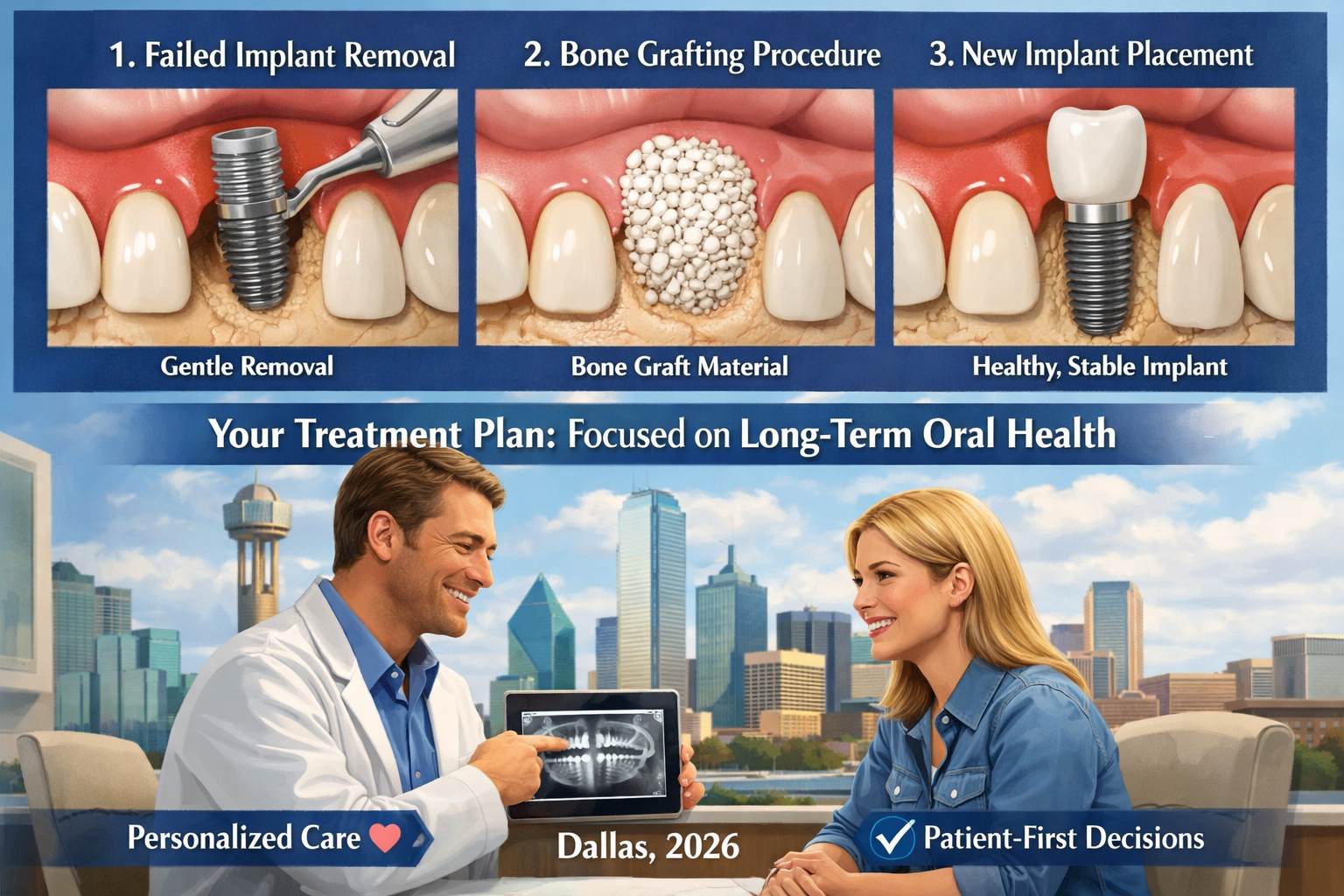
Implant Removal (Explantation):
- If the implant is mobile, infected beyond repair, or fractured, it will likely need to be surgically removed. This procedure is generally straightforward and performed under local anesthesia.
- After removal, the site is carefully cleaned to eliminate any remaining infection.
Bone Grafting and Healing:
- Following implant removal, there is often a defect in the bone where the implant used to be. To prepare the site for a potential new implant, a bone grafting procedure may be necessary to rebuild the bone structure. This allows sufficient bone volume and density for future implant stability. Learn more about Bone Graft Costs for Dental Implants in Dallas TX.
- A healing period, often several months, is required after bone grafting before a new implant can be considered.
Re-implantation or Alternative Solutions:
- Once the site has healed and sufficient bone is present, a new dental implant can often be placed. This is considered a revision dental implant surgery.
- If re-implantation isn’t feasible due to extensive bone loss or other patient factors, alternative tooth replacement options such as a dental bridge or a removable partial denture may be considered. For a cost comparison, see our article on Dental Implant Versus Bridge Cost: What’s the Smart Choice in 2025?
A consultation with a dentist experienced in dental implants in Dallas is crucial to determine the best course of action for your specific situation. The focus will always be on achieving long-term oral health and function with patient safety as the top priority.
Preventing Dental Implant Failure in the Long Term
While no medical procedure is entirely risk-free, there are several proactive steps you can take to significantly reduce the likelihood of a dental implant failing years later. Prevention hinges on consistent oral hygiene, regular professional care, and managing systemic health conditions.
Here’s how to safeguard your dental implants for the long term:
- Maintain Excellent Oral Hygiene: This is perhaps the most critical factor. Treat your dental implants just like natural teeth.
- Brush at least twice a day with a soft-bristled toothbrush, paying special attention to the areas around your implants.
- Floss daily, using specialized dental implant floss or interdental brushes recommended by your dentist, to clean between implants and around the gum line.
- Consider using an oral irrigator (water flosser) to remove food particles and plaque from hard-to-reach areas.
- Regular Dental Check-ups and Professional Cleanings: Schedule and attend routine dental appointments, typically every six months, or more frequently if recommended by your dentist.
- Your dentist or hygienist will perform specialized cleanings designed for implants, using tools that won’t scratch the implant surface.
- They will monitor the health of your gums and bone around the implants, take X-rays as needed to check bone levels, and identify any early signs of peri-implantitis or other issues.
- Manage Systemic Health Conditions: If you have conditions like diabetes, ensure they are well-managed with your physician. Controlled systemic health directly impacts your oral health and the longevity of your implants.
- Quit Smoking: Smoking significantly compromises blood flow to the gums and bone, hindering healing and increasing the risk of infection and implant failure. Quitting smoking is one of the most impactful steps you can take for your overall health and implant success.
- Address Bruxism (Teeth Grinding/Clenching): If you grind or clench your teeth, discuss this with your dentist. They may recommend a custom nightguard to protect your implants and natural teeth from excessive forces.
- Follow Post-Operative Instructions: Adhere strictly to all post-operative instructions provided by your implant surgeon, especially during the initial healing phase, to ensure proper osseointegration.
- Choose a Qualified and Experienced Dentist: Selecting a highly experienced dental implant surgeon for your initial procedure is fundamental to long-term success. Look for a dentist in Dallas with a proven track record in successful implant placement and comprehensive follow-up care. See our guide on How to Choose a Dental Implant Dentist Near You.
- Avoid Chewing Hard Objects: Be mindful of not chewing on extremely hard foods (like ice, hard candies) or using your teeth as tools, as this can place undue stress on implants and natural teeth.
By committing to these preventive measures, you are investing in the long-term success and durability of your dental implants, ensuring they continue to provide stable, functional, and aesthetic tooth replacement options for many years to come.
Dental Implant Education – Dallas TX: Your Resource for Long-Term Oral Health
At Dental Implant Education – Dallas TX, we are committed to providing comprehensive, patient-focused information about dental implants. Understanding what happens if a dental implant falls out or fails years later is part of a complete oral health education. Our goal is to empower you with the knowledge needed to make informed decisions about your missing teeth solutions and ensure the long-term success of your tooth replacement options.
We believe in a patient-first approach, offering transparent and medically responsible content without pressure or exaggerated claims. Whether you’re researching the initial dental implant procedure, curious about implant cost in Dallas, or seeking guidance on maintaining your existing implants, our resources are designed to be educational and trustworthy. We emphasize the importance of a consultation with a dentist for personalized advice and treatment plans. For information on costs, you can explore resources like Single Tooth Implant Costs in Dallas 2026 and Full Mouth Dental Implants Dallas 2026: Cost Comparison vs National Averages.
Remember, your long-term oral health is our priority.
Frequently Asked Questions
Can a dental implant really last a lifetime?
While dental implants are designed for long-term durability and can last many decades, “lifetime” is not a guarantee. With proper care and maintenance, many implants can last 20 years or more, with some studies showing success rates of 80% after 20 years [1]. However, factors like oral hygiene, systemic health, and lifestyle choices can affect their longevity.
Is it common for a dental implant to fail years later?
Late dental implant failures are relatively uncommon. Most implant failures, if they occur, happen within the first year of placement due to integration issues. If an implant successfully integrates and functions for several years, its long-term prognosis is generally very good [2].
What are the first signs of a failing dental implant?
Early signs of a failing dental implant years later can include persistent pain or discomfort around the implant, swelling or redness of the surrounding gums, bleeding when brushing, or any noticeable mobility of the implant or its crown.
Can a failed dental implant be replaced?
Yes, in most cases, a failed dental implant can be replaced. The process typically involves removing the failed implant, addressing any underlying infection or bone loss (often with bone grafting), allowing a healing period, and then placing a new implant. This is known as revision dental implant surgery.
Does insurance cover dental implant failure?
Coverage for dental implant failure depends on your specific dental insurance plan. Some plans may cover parts of the treatment, especially if it’s considered a necessary restorative procedure. It’s crucial to review your policy or speak directly with your insurance provider in Dallas for detailed information on what they cover for dental implants. Also, consider exploring Dental Implant Financing Dallas TX options.
How painful is a failed dental implant?
The pain level of a failed dental implant can vary. Some patients may experience a dull ache, while others might feel sharp pain, especially if there’s an active infection or significant mobility. Your dentist can discuss pain management options during treatment.
Can bone loss around an implant be reversed?
Early stages of peri-implantitis (inflammation around the implant) can sometimes be managed and progression of bone loss halted. However, significant bone loss is usually not fully reversible, though bone grafting procedures can rebuild bone volume to allow for future implant placement.
What is the recovery process like after removing a failed implant?
Recovery after removing a failed implant is similar to a tooth extraction. You can expect some swelling and discomfort for a few days, managed with pain medication. If bone grafting is performed, the healing time will be longer, typically several months, to allow the bone to regenerate before a new implant can be placed.
Can I get a dental implant if I have diabetes?
Yes, patients with well-controlled diabetes can often receive dental implants successfully. However, uncontrolled diabetes is a risk factor for complications and failure [2]. It is crucial to have your diabetes under good management and to discuss your medical history thoroughly with your dentist and physician.
Conclusion
Understanding “what happens if a dental implant falls out or fails years later?” is an important aspect of patient education for anyone considering or living with dental implants. While dental implants offer a durable and effective solution for missing teeth with high long-term success rates, complications can arise. Late failures, though less common than early ones, are typically linked to factors like peri-implantitis, excessive bite forces, and systemic health conditions.
The key to managing a failing implant lies in early detection and prompt professional intervention. If you experience any pain, swelling, mobility, or other concerning symptoms around your implant, it is crucial to consult a dentist immediately. Treatment options range from addressing infections and managing forces to implant removal, bone grafting, and potential re-implantation. By maintaining excellent oral hygiene, attending regular dental check-ups, and managing overall health, you can significantly enhance the longevity and success of your dental implants. At Dental Implant Education – Dallas TX, we are dedicated to providing clear, reassuring, and factual information to support your long-term oral health journey.
References
[1] Pmc11416373 – https://pmc.ncbi.nlm.nih.gov/articles/PMC11416373/
[2] Dental Implant Failure Rates What The Research Actually Says And What It Means For You – https://biteclubchi.com/dental-implant-failure-rates-what-the-research-actually-says-and-what-it-means-for-you/
[3] Dental Implant Demand Statistics – https://www.imagineyoursmile.com/blog/dental-implant-demand-statistics/
[4] Dental Implant Statistics 2025 – https://drjohnpatterson.com/dental-implant-statistics-2025/
Leave a Reply
Share your thoughts or ask a question about dental implants. Your email address will not be published.