

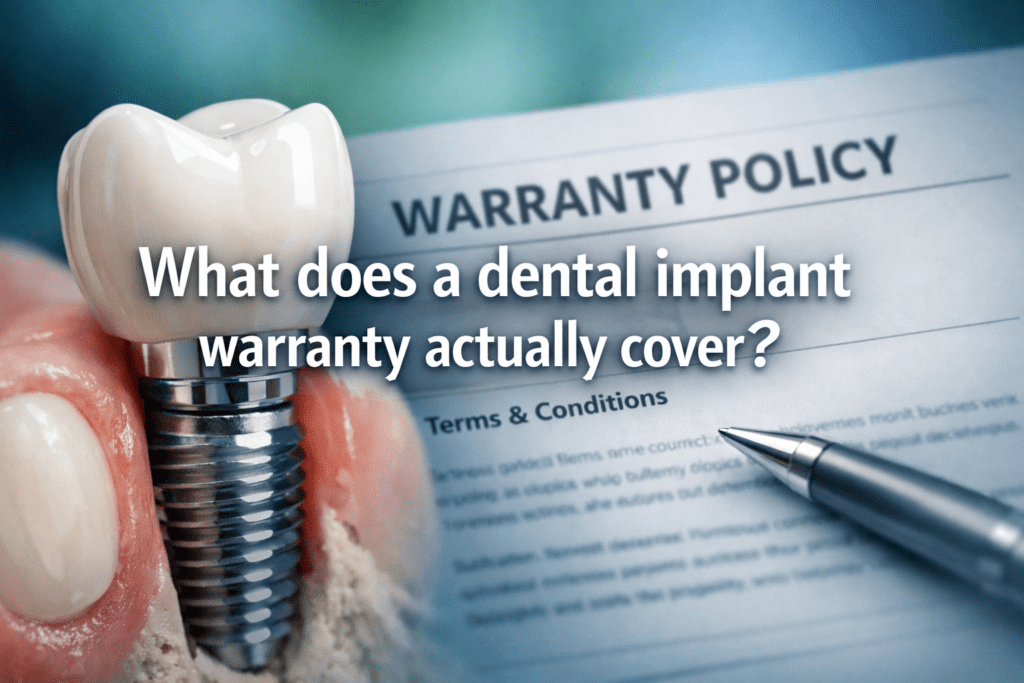
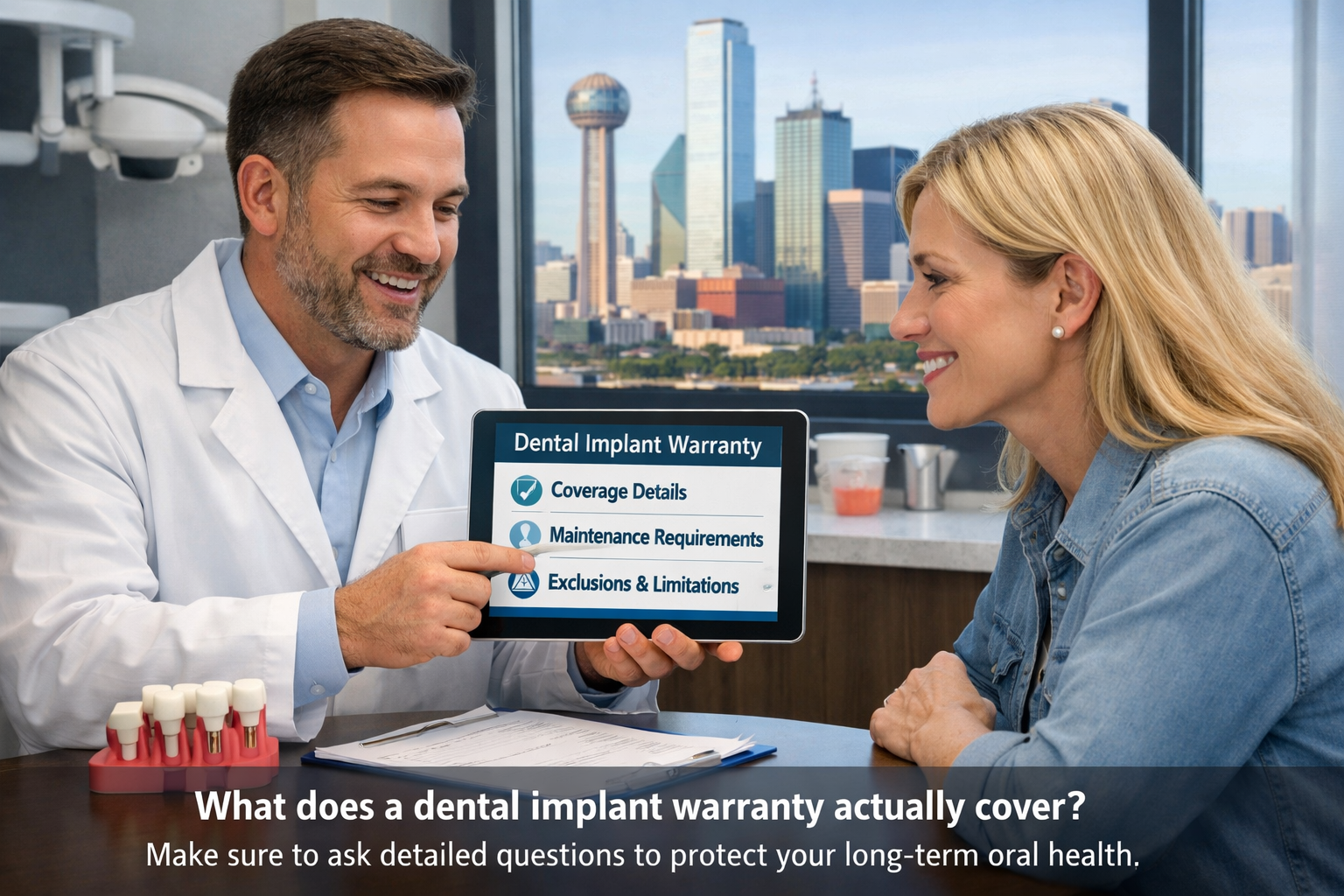
Considering dental implants in Dallas, TX, is a significant step towards restoring your oral health and smile. As you explore this tooth replacement option, a crucial aspect to understand is the warranty that comes with your investment. Many patients wonder, “What does a dental implant warranty actually cover?” In essence, dental implant warranties typically include a manufacturer’s warranty for the implant components themselves and a separate clinic or provider warranty for the professional services rendered, such as the surgical placement and restoration. The specifics can vary widely, making it essential to understand the fine print before committing to treatment.
Key Takeaways
- Dental implant warranties generally involve two components: a manufacturer’s warranty for the implant parts and a clinic’s warranty for the professional services.
- Manufacturer warranties typically cover only the titanium implant post and abutment against defects, often for 5-10 years or even a lifetime [1].
- Clinic-issued warranties usually cover the surgical placement, crown fitting, and initial healing complications for a shorter period, commonly 1-5 years [1].
- “Lifetime warranty” claims often have limitations, frequently excluding the actual dental crown or requiring strict maintenance to remain valid [2, 4].
- Maintaining warranty coverage often requires regular dental check-ups, cleanings, and adherence to post-operative instructions.
- Dental insurance typically does not affect warranty terms but can help cover costs if a claim is denied or if the warranty period has expired [1].
- Always clarify all warranty details, including exclusions and maintenance requirements, with your Dallas dentist before proceeding with your dental implant procedure.
Quick Answer
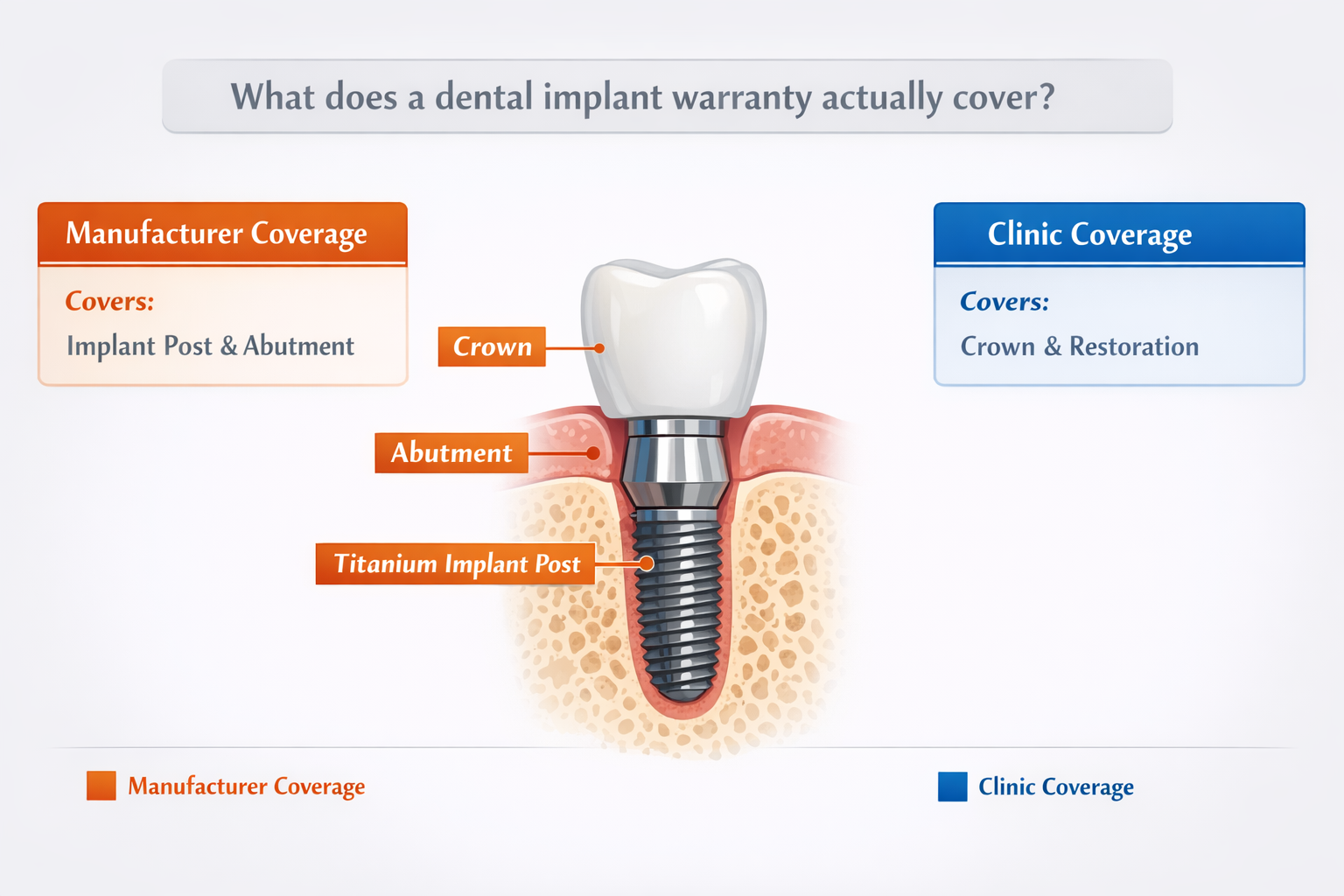
A dental implant warranty generally covers either the physical implant components (like the titanium post) from defects, provided by the manufacturer, or the clinical services and materials (such as surgical placement and the dental crown) provided by your dentist. Manufacturer warranties often last 5-10 years or a lifetime for the implant fixture, while clinic warranties for services or crowns are typically shorter, ranging from 1 to 5 years. It’s crucial to understand these distinctions as “lifetime” claims often have specific exclusions for the visible crown or require strict patient compliance [1, 2, 4].
What Does a Dental Implant Manufacturer Warranty Cover?
A dental implant manufacturer warranty primarily covers the implant fixture itself—specifically the titanium post and the abutment—against defects in materials or manufacturing. This warranty typically ensures that if the implant component fails due to a flaw in its design or production, the manufacturer will replace that specific part.
Manufacturer warranties for dental implants commonly offer coverage durations ranging from 5 to 10 years, with some even extending to a lifetime warranty for the implant fixture itself [1]. It is important to note that these warranties generally cover the integrity of the implant component only and do not typically include the cost of the surgical procedure, the dental crown, or any associated clinical fees for replacement or re-installation [4]. For example, if a titanium post breaks due to a manufacturing defect within the warranty period, the manufacturer might provide a new post, but your dentist in Dallas would still charge for the surgery to place it. Patients considering dental implants in Dallas should always inquire about the specific terms and exclusions of the manufacturer’s warranty provided by their dental professional.
How Do Clinic or Provider Warranties Differ?
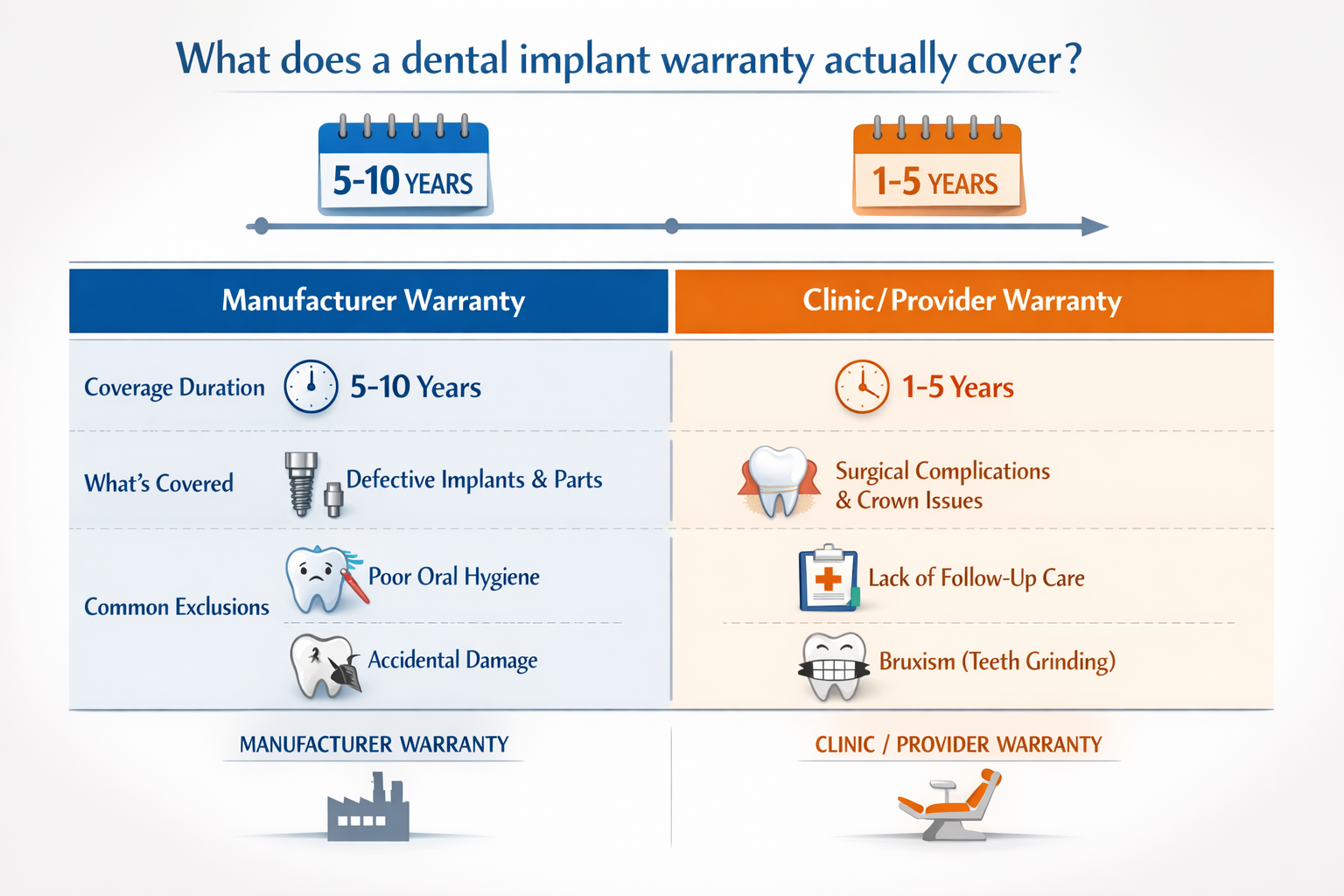
Clinic or provider warranties for dental implants cover the professional services performed by your dental team, distinct from the manufacturer’s warranty on the implant parts. These warranties typically include the surgical placement of the implant, the fitting of the crown, and address complications that might arise from the procedure itself, such as improper implant placement, issues with osseointegration (the implant fusing with the bone), or problems with the dental crown loosening [1].
Unlike manufacturer warranties which focus on the physical implant component, clinic warranties are designed to ensure the quality of the treatment and often last for a shorter period, usually between 1 to 5 years [1]. For instance, if a dental implant in Dallas fails to integrate with the bone within the initial healing period due to factors related to the surgical technique, a clinic warranty might cover the costs of removing the implant and attempting a new placement, provided certain conditions are met. These conditions often include regular follow-up appointments and adherence to post-operative care instructions to maintain long-term oral health. This is particularly relevant when considering the overall dental implant procedure and potential complications.
Manufacturer vs. Clinic Warranties: A Comparison
To help clarify the differences, here’s a comparison of what each type of warranty generally covers:
| Feature | Manufacturer Warranty | Clinic/Provider Warranty |
|---|---|---|
| What’s Covered | Defective implant fixture (titanium post, abutment) | Surgical placement, crown fitting, healing complications |
| Typical Duration | 5-10 years, sometimes lifetime for fixture [1] | 1-5 years for services and crown [1] |
| Cost Covered | Replacement of defective implant part | Cost of professional services for repair/replacement |
| Common Exclusions | Surgical costs, crowns, patient-caused damage [4] | Patient non-compliance, poor oral hygiene, accident |
| Key Focus | Quality of manufactured component | Quality of professional treatment and restoration |
What Are Common Exclusions from Dental Implant Warranties?
Dental implant warranties, whether from manufacturers or dental clinics, often come with specific exclusions that limit their coverage. Understanding these exclusions is crucial to managing expectations and protecting your investment in tooth replacement options.
Common exclusions include:
- Patient Negligence or Poor Oral Hygiene: Warranties typically require patients to maintain good oral hygiene through regular brushing, flossing, and professional dental check-ups. Failure to do so, which can lead to complications like peri-implantitis (gum disease around the implant), usually voids the warranty [1].
- Accidental Damage: Fractures or damage to the dental implant or crown resulting from accidents, trauma, or misuse (e.g., chewing on ice, using teeth as tools) are generally not covered.
- Parafunctional Habits: Conditions like bruxism (teeth grinding) or clenching, if not managed (e.g., with a night guard), can damage implants and may be excluded from warranty coverage [1]. Our guide on bruxism & dental implants offers more details.
- Lack of Follow-Up Care: Many clinic warranties stipulate that regular dental visits, often twice a year, are necessary to keep the warranty valid. Missing these appointments can lead to a voided warranty [1].
- External Factors: Some warranties may exclude damage caused by systemic diseases, certain medications, or medical treatments (like radiation therapy) that can impact implant success.
- Crowns and Restorations: While the implant fixture may have a long warranty, the dental crown or other restoration placed on top is frequently excluded from manufacturer warranties and may only be covered by a shorter clinic warranty [4].
- “Lifetime Warranty” Limitations: Be wary of broad “lifetime warranty” claims, as they often have fine print. For example, some might only cover the implant fixture for a lifetime but limit coverage for the actual teeth (crowns) to just 2-5 years or require specific conditions that are hard to meet [2]. A transparent approach, like that offered by New Teeth Now, might cover implants for 2 years and zirconia teeth for 5 years, with a high success rate [2].
It’s essential to have a thorough consultation with a dentist in Dallas to review all warranty documentation before your implant surgery process begins.
How Does Dental Insurance Affect Dental Implant Warranties?
Dental insurance does not typically directly affect the terms or validity of a dental implant warranty; warranties and insurance are distinct agreements. A warranty is a guarantee from the manufacturer or the dental practice regarding the product or service itself, whereas dental insurance helps cover the initial or partial cost of treatment.
However, dental insurance can play a role in the financial implications if a warranty claim is denied or if the warranty period has expired. For instance, if an implant fails outside the warranty period or for a reason not covered by the warranty (e.g., due to patient-caused damage), your dental insurance may still help offset the costs of repair or replacement, depending on your plan’s coverage for major restorative procedures [1].
It’s important to remember that dental insurance plans vary widely in their coverage for dental implants. Many plans may only cover a portion, if any, of the implant cost. For 2026, some insurance providers, like Kaiser Permanente, may require patients to have maintained 5 or more years of continuous dental coverage before repairs for dental implants are covered, often at a 50% coinsurance up to a plan maximum [3]. Patients in Dallas should clarify their specific dental insurance benefits, as well as the terms of any dental implant warranty, during their initial consultation. Learn more about dental implant insurance in Dallas to understand your options.
What Steps Should You Take to Maximize Your Warranty Coverage?
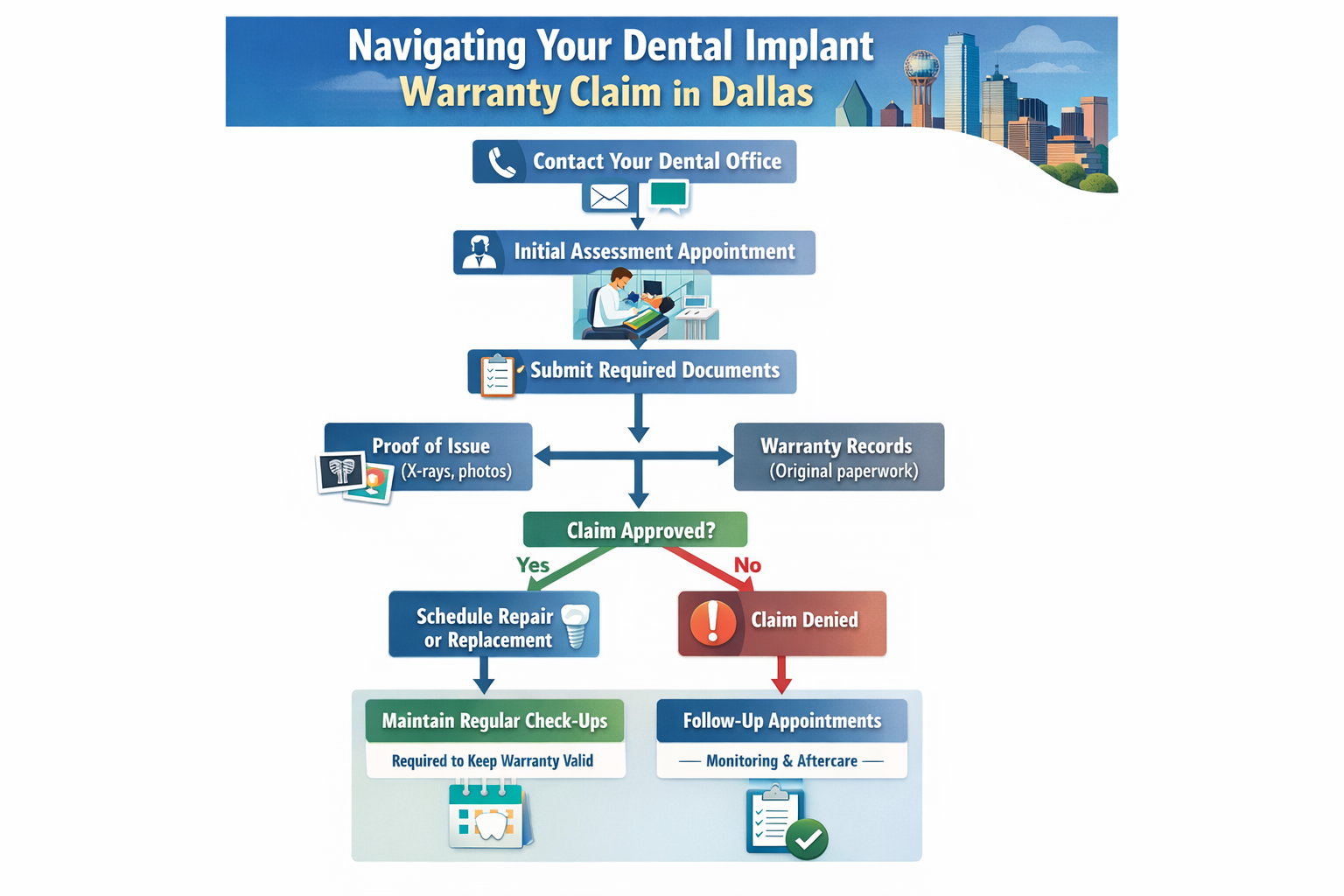
To maximize your dental implant warranty coverage, it is essential to be proactive and diligent in your post-treatment care and communication with your dental provider. Warranties are often conditional, and failing to meet specific requirements can void your coverage.
Here are key steps to ensure you maintain your warranty:
- Understand All Warranty Terms: Before your dental implant procedure, thoroughly read and understand all manufacturer and clinic warranty documents. Ask your Dallas dentist about durations, specific coverages, and, most importantly, all exclusions. Don’t hesitate to ask, “What does a dental implant warranty actually cover under these specific circumstances?”
- Maintain Excellent Oral Hygiene: This is paramount. Consistently practice good oral hygiene, including brushing twice daily, flossing, and using any prescribed mouth rinses. Poor oral hygiene is a leading cause of implant complications like peri-implantitis, which can void most warranties [1].
- Adhere to Follow-Up Schedule: Attend all recommended follow-up appointments and regular professional cleanings. Many clinic warranties explicitly require these visits to remain valid [1]. Your dentist needs to monitor your implant’s integration and overall oral health.
- Avoid Harmful Habits: Refrain from chewing on hard objects (ice, pens), using your teeth to open packages, or engaging in other habits that can damage your implants. If you grind or clench your teeth (bruxism), discuss this with your dentist and use a prescribed night guard to protect your implants [1].
- Report Issues Promptly: If you experience any pain, discomfort, swelling, or notice any changes around your dental implant, contact your dental office immediately. Addressing potential issues early can prevent more significant complications and ensure your warranty remains applicable.
- Keep Records: Maintain records of your treatment, warranty documents, and attendance at follow-up appointments. This documentation can be vital if you need to make a claim.
- Consult Your Dentist for Repairs: Do not attempt to fix or adjust your dental implant or crown yourself. Any unauthorized alterations or repairs can void your warranty. Always consult your implant specialist in Dallas for any concerns.
By diligently following these steps, you significantly increase the likelihood that your dental implant warranty will provide the protection you expect for your long-term oral health.
FAQ
What is the typical duration of a dental implant warranty?
Manufacturer warranties for the implant fixture (the titanium post) can range from 5-10 years to a lifetime. Clinic warranties, which cover the surgical services and the crown, are typically shorter, lasting 1-5 years [1].
Do dental implant warranties cover the dental crown?
Manufacturer warranties generally do not cover the dental crown or restoration. Some clinic warranties may cover the crown for a shorter period, often 1-5 years, but this varies by provider [4, 1].
What happens if I move to a different city or state after getting a dental implant?
If you move, your clinic-specific warranty may no longer be valid unless the clinic has a network of providers. However, manufacturer warranties on the implant components are typically honored by other dentists who use the same implant system. Always clarify this with your dentist during your consultation.
Is a “lifetime warranty” for dental implants truly for life?
Often, “lifetime warranty” refers to the implant fixture itself, not the crown, and may have strict conditions or exclusions. Realistic coverage for the visible tooth (crown) is often 2-5 years, even with a “lifetime” claim on the implant post [2, 4].
Does my dental insurance cover warranty-related repairs?
Dental insurance typically doesn’t directly interact with warranty terms. However, if a warranty claim is denied or expired, your insurance might help cover the cost of repairs or replacement, depending on your plan’s major restorative coverage and benefit maximums [1]. For instance, Kaiser Permanente’s 2026 plans require 5+ years of continuous coverage for repair at 50% coinsurance [3].
Can poor oral hygiene void my dental implant warranty?
Yes, most dental implant warranties require patients to maintain excellent oral hygiene and attend regular dental check-ups. Neglecting these can lead to complications that void the warranty [1].
What should I do if my dental implant fails during the warranty period?
Contact your dental provider immediately. They will assess the situation and determine if the failure falls under the warranty terms. You may need to provide records of your appointments and oral hygiene.
Conclusion
Understanding what a dental implant warranty actually covers is a critical part of making an informed decision about your oral health investment. While dental implants offer a durable and long-lasting solution for missing teeth, the protection they come with is often dual-layered: a manufacturer’s warranty for the implant components and a clinic’s warranty for the professional services. These warranties have distinct coverages, durations, and, importantly, exclusions.
As you explore your tooth replacement options in Dallas, take the time to have a detailed consultation with your dentist. Ask specific questions about the warranty for your dental implants, including what parts are covered, the length of coverage for each component (implant fixture vs. crown), the conditions for maintaining the warranty (like regular follow-up care), and any common exclusions. By being proactive and diligent in your understanding and post-operative care, you can maximize your warranty coverage and ensure the long-term success of your dental implants, contributing positively to your overall oral health education.
References
[1] Dental Implant Warranties What You Need To Know – https://g-p-dental.com/dental-implant-warranties-what-you-need-to-know/
[2] Dental Implant Lifetime Warranties – https://www.newteethnow.com/dental-implant-lifetime-warranties/
[3] Lbg Dental Trad And Copay Plans Implants Rider Sell Sheet Nw En – https://business.kaiserpermanente.org/business/shared/nw/plans/2026/lbg-dental-trad-and-copay-plans-implants-rider-sell-sheet-nw-en.pdf
[4] Hidden Details Behind Dental Implant Lifetime Guarantees – https://www.firsthilldentalcenter.com/dental-implant/hidden-details-behind-dental-implant-lifetime-guarantees/
[5] Insurance Benefits Reset Reminder – https://dcperio.com/blog/insurance-benefits-reset-reminder/
Leave a Reply
Share your thoughts or ask a question about dental implants. Your email address will not be published.