

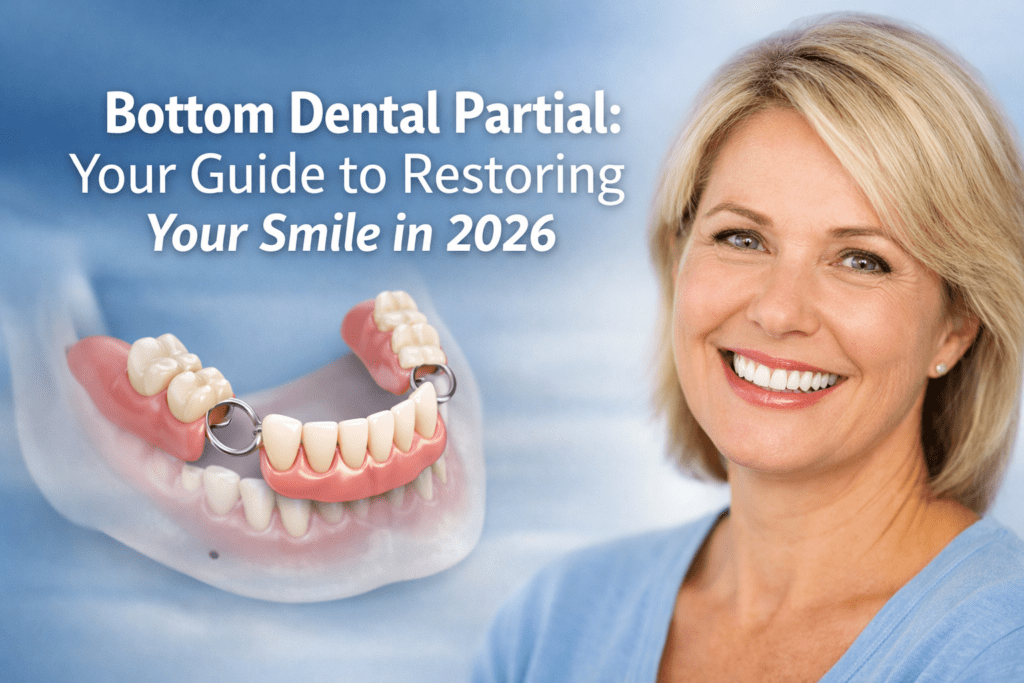
Losing one or more teeth can significantly impact not only your smile’s appearance but also your ability to chew, speak clearly, and maintain overall oral health. If you’re missing several teeth in your lower jaw but still have some healthy natural teeth remaining, a bottom dental partial might be a suitable and effective solution. In 2026, advances in dental technology have made these tooth replacement options more comfortable, durable, and aesthetically pleasing than ever before, helping countless individuals regain confidence in their smiles and improve their quality of life.
At Dental Implant Education – Dallas TX, we believe in empowering our patients with comprehensive, trustworthy information about all available tooth replacement options. Understanding the specifics of a bottom dental partial can help you make an informed decision about your oral health journey.
Key Takeaways
- Bottom dental partials are removable appliances used to replace missing teeth in the lower jaw when some natural teeth still exist.
- Modern advancements, including digital workflows and new materials, have significantly improved their comfort, fit, and aesthetics in 2026.
- There are three main types: acrylic, metal framework (chrome cobalt), and flexible partials, each with distinct benefits and considerations.
- Proper care and regular dental check-ups are crucial for the longevity and effectiveness of your partial denture.
- While effective, it’s important to compare bottom dental partials with other solutions like dental implants to determine the best long-term option for your oral health.
What is a Bottom Dental Partial? Exploring Your Options
A bottom dental partial, often referred to simply as a lower partial denture, is a removable appliance designed to replace one or more missing teeth in the lower arch of your mouth. Unlike a full denture, which replaces all teeth in a jaw, a partial denture relies on your remaining natural teeth for support and retention. This makes them a viable option for patients who still have several healthy teeth, providing a way to restore function and appearance without needing to replace every tooth [3].
The primary goal of a bottom dental partial is to fill the gaps created by missing teeth, preventing the remaining teeth from shifting, improving chewing efficiency, and restoring the natural contour of your face. For residents seeking effective missing teeth solutions in Dallas, understanding the various types of partial dentures available in 2026 is the first step toward a renewed smile.
Types of Bottom Dental Partials
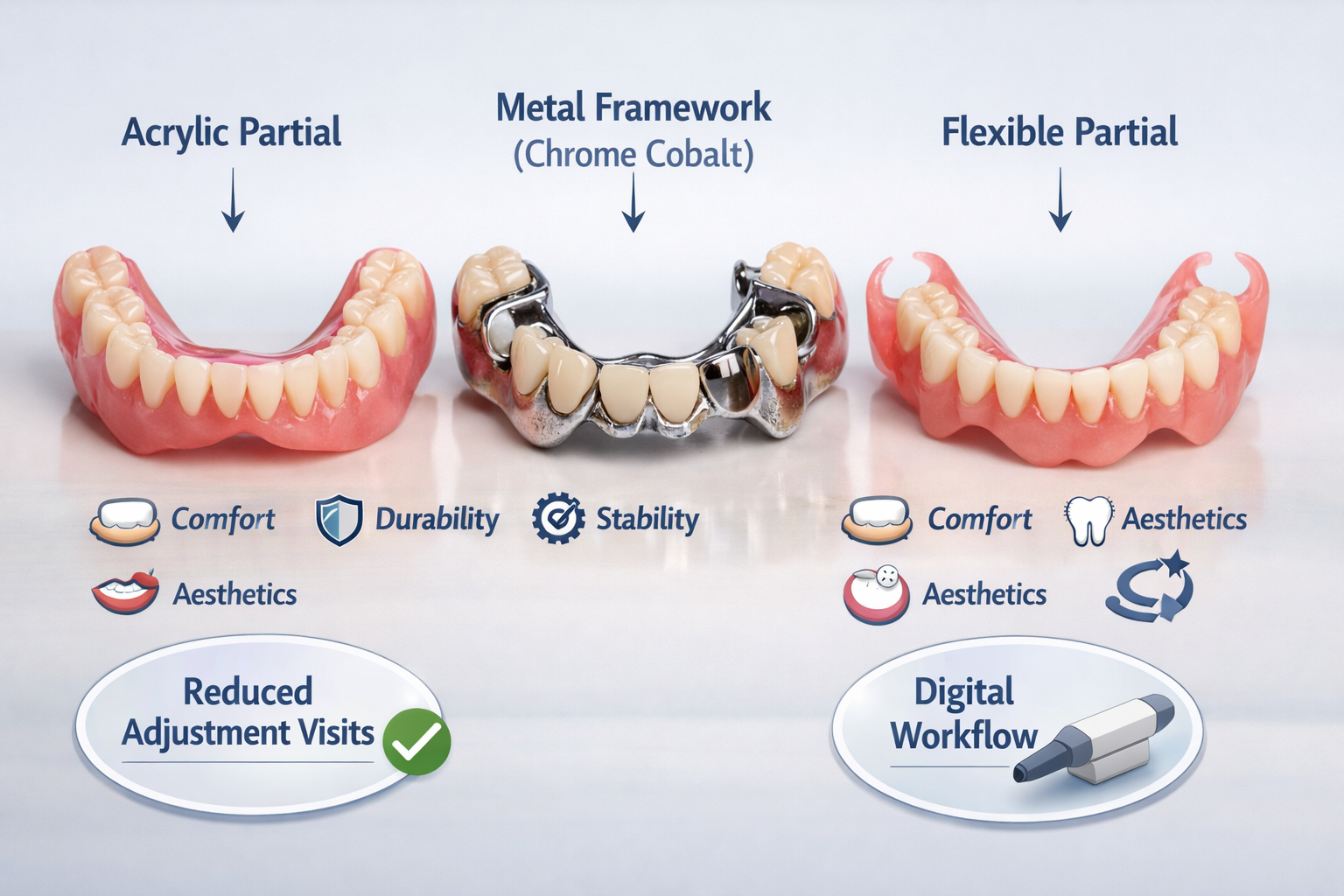
In 2026, patients have access to several types of partial dentures, each offering distinct advantages based on material, design, and cost. The three primary types include acrylic partials, metal framework partials, and flexible partial dentures [5].
Acrylic Partial Dentures (Flippers):
- Description: These are typically the most economical and often serve as a temporary solution while awaiting a more permanent restoration like dental implants or a more robust partial. They consist of acrylic teeth attached to an acrylic base, sometimes with small wire clasps for retention.
- Pros: Less expensive, easy to repair or modify, quick to fabricate.
- Cons: Generally less durable and comfortable than other types, can be bulky, and clasps may be visible. They might not offer the same level of stability or biting force as metal framework options.
Cast Metal Framework Partial Dentures:
- Description: Considered the gold standard for removable partials, these feature a thin, strong metal framework (usually chrome cobalt) that supports acrylic teeth and gum-colored plastic. The metal framework uses clasps that grip onto your natural teeth and rests that sit on specific tooth surfaces for stability.
- Pros: Highly durable, provide excellent stability and chewing efficiency, offer a better fit and comfort due to their thinner design, and the clasps are often less noticeable. They typically last a decade or more [6].
- Modern Advancements (2026): Thanks to Selective Laser Melting (SLM) technology and digital workflows, these frameworks are now more precise than ever. SLM fuses powdered metal layer by layer, creating frameworks that are stronger and more consistent, leading to better first-fit accuracy and fewer chairside adjustments [2]. Digital impressions and CAD/CAM design further enhance precision [1].
Flexible Partial Dentures:
- Description: These are made from a thermoplastic material, such as nylon, which makes them very thin, lightweight, and pliable. They often use gum-colored clasps that blend seamlessly with your natural tissues.
- Pros: Excellent aesthetics, as the clasps are nearly invisible. They are metal-free, comfortable for patients with sensitive gums or metal allergies, and offer enhanced comfort [6]. They are also a non-invasive solution, ideal for those not suitable for dental implants [6].
- Cons: Less rigid than metal framework partials, which can sometimes impact chewing efficiency. They tend to have a shorter longevity, typically lasting 5-8 years [6]. They are also more challenging to repair or reline compared to acrylic or metal partials.
- Who they are for: Flexible partials are ideal for cost-conscious patients and those seeking a non-invasive solution [6].
Choosing the right type of bottom dental partial involves considering your specific dental needs, budget, aesthetic preferences, and long-term oral health goals. A consultation with a dentist in Dallas is essential to discuss these factors and determine the best option for you. You can learn more about various tooth replacement options, including how they compare to bridges and dentures, by reviewing our guide on Dental Implant vs Bridge vs Denture: 2026 Guide.
The Process of Getting a Bottom Dental Partial
The journey to receiving your new bottom dental partial in 2026 is streamlined and patient-focused, thanks to advancements in dental technology.
- Initial Consultation and Examination: Your dentist will conduct a thorough examination of your remaining natural teeth, gums, and overall oral health. X-rays and possibly 3D scans will be taken to assess bone structure and identify suitable anchor teeth. This is also the time to discuss your goals and concerns.
- Impressions and Digital Scans: Traditional gooey impressions are increasingly being replaced by digital intraoral scanning, which is quicker, more comfortable, and highly accurate [1]. This digital data is then used to design your partial denture using sophisticated CAD (Computer-Aided Design) software.
- Design and Fabrication: The digital design allows for precise customization of your partial. For metal framework partials, SLM technology precisely fabricates the metal base [2]. For flexible or acrylic partials, the design is sent to a 3D printer or milling machine. This digital workflow integration significantly reduces chairside adjustments and remakes [2].
- Try-In and Adjustments: Once fabricated, you’ll have a try-in appointment. Your dentist will ensure the partial fits comfortably and securely, checking your bite and making any necessary adjustments to ensure optimal fit and function. Modern techniques have led to better first-fit accuracy, resulting in fewer sore spots and reduced adjustment appointments [1]. Clinical studies even show a 40% reduction in adjustment visits compared to traditional methods [3].
- Final Placement and Instructions: After any final adjustments, your new bottom dental partial will be placed. You’ll receive detailed instructions on how to care for it, including cleaning routines and wear schedules.
This modernized process emphasizes patient comfort and efficiency, ultimately leading to a more satisfactory outcome.
Living with Your Bottom Dental Partial: Care, Longevity, and Alternatives
Once you receive your bottom dental partial, proper care and understanding its role in your long-term oral health are paramount. While a partial denture is an excellent solution for missing teeth, it’s also important to be aware of how it fits into the broader spectrum of tooth replacement options, especially in comparison to more permanent solutions like dental implants.
Daily Care and Maintenance
Maintaining excellent oral hygiene is crucial when you have a bottom dental partial. This not only ensures the longevity of your partial but also protects your remaining natural teeth and gums from decay and disease.
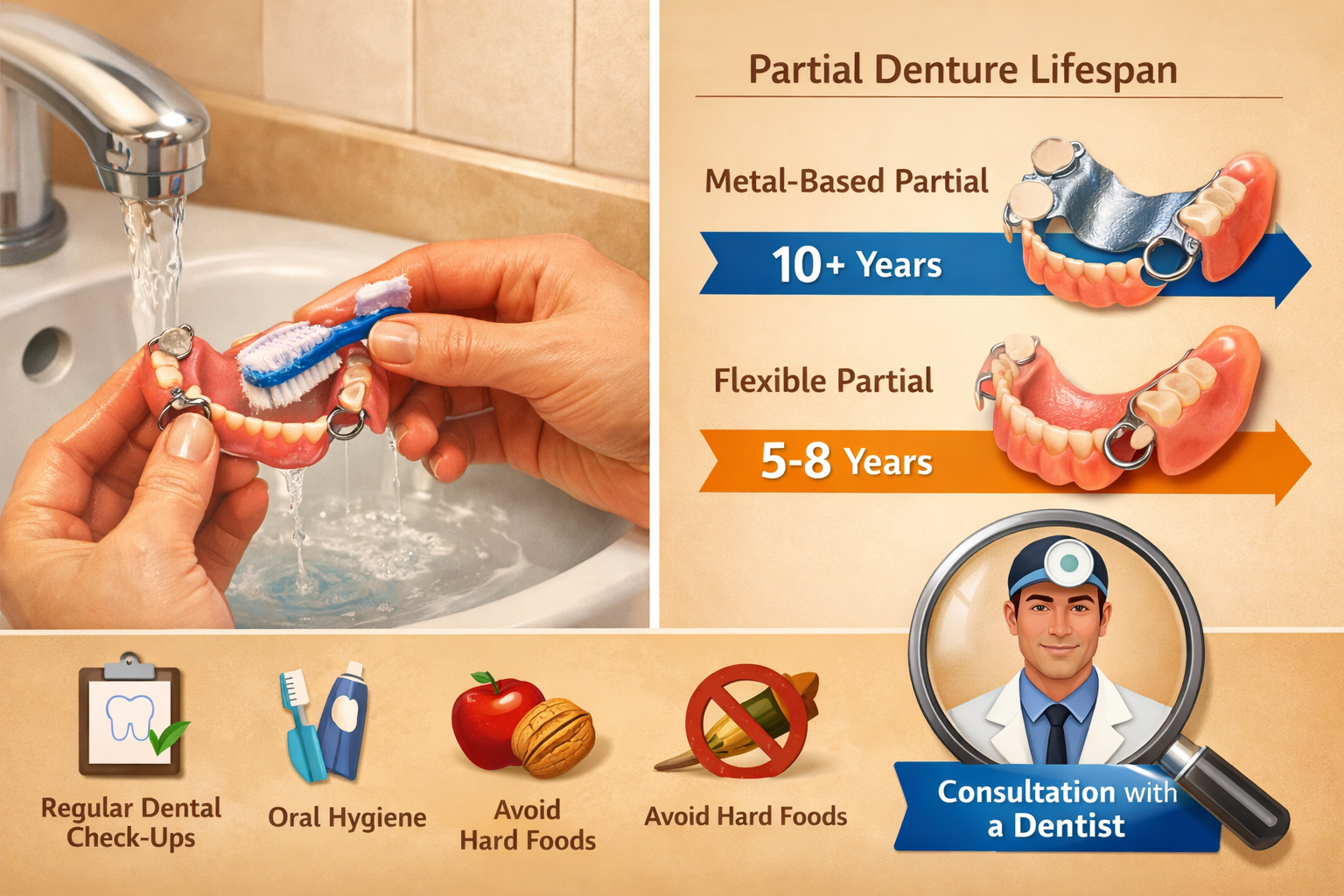
- Remove and Clean Daily: You should remove your partial denture daily to clean it thoroughly. Brush it with a special denture brush and a non-abrasive denture cleaner (not regular toothpaste, which can be too harsh and scratch the surface).
- Clean Your Natural Teeth and Gums: Remember to brush your remaining natural teeth twice a day and floss regularly. Pay special attention to the areas around the clasps, as food particles and plaque can easily accumulate there. Gently massage your gums and tongue with a soft toothbrush to remove bacteria and improve circulation.
- Soak Overnight: Most partial dentures should be soaked overnight in a denture cleaning solution. Always follow your dentist’s recommendations regarding soaking solutions and duration.
- Handle with Care: Partial dentures can break if dropped. Always clean your partial over a basin of water or a folded towel to cushion any accidental falls.
- Regular Dental Check-ups: Continue to visit your dentist regularly, typically every six months. Your dentist will check the fit of your partial, examine your remaining natural teeth and gums, and screen for any oral health issues. These appointments are vital for long-term oral health.
Longevity of a Bottom Dental Partial
The lifespan of your bottom dental partial depends heavily on its type, how well you care for it, and your individual oral health.
- Metal-Based Partials: As noted earlier, cast metal framework partial dentures are very durable and often last a decade or more with proper care [6].
- Flexible Partials: These are known for their comfort and aesthetics but typically have a shorter lifespan of 5-8 years [6].
- Acrylic Partials: Often considered temporary, acrylic partials may need replacement or significant adjustments within a few years.
Over time, your mouth naturally changes. Bone and gum tissue can shrink, affecting the fit of your partial denture. When this happens, your partial may become loose, leading to discomfort or difficulty chewing. Your dentist may be able to reline or rebase your partial to improve the fit, or recommend a replacement.
Comparing with Dental Implants: A Long-Term Perspective
While a bottom dental partial is an effective and often more affordable tooth replacement option, it’s important for patients in Dallas to understand its differences from dental implants, especially for long-term oral health.
| Feature | Bottom Dental Partial (Removable) | Dental Implants (Permanent) |
|---|---|---|
| Stability | Removable, relies on clasps and natural teeth | Surgically placed, fuses with jawbone, highly stable |
| Jawbone Health | Does not stimulate jawbone; bone loss can occur | Stimulates jawbone, preventing bone loss |
| Comfort | Can feel bulky, may require adjustments | Feels like natural teeth once healed |
| Chewing Power | Good, but less efficient than natural teeth/implants | Excellent, comparable to natural teeth |
| Durability | 5-10+ years (depending on type and care) | 20+ years, often lifetime with proper care |
| Maintenance | Removed for cleaning, daily care of natural teeth | Brushed and flossed like natural teeth |
| Cost | Generally lower upfront cost | Higher upfront cost, but a long-term investment |
| Invasiveness | Non-invasive | Requires minor oral surgery |
| Impact on Adjacent Teeth | Can put stress on anchor teeth, potential for decay | Does not affect adjacent teeth |
For many, dental implants offer a superior long-term solution due to their ability to preserve jawbone health, provide unmatched stability, and feel like natural teeth. If you’re exploring missing teeth solutions in Dallas, it’s highly recommended to have a consultation with a dentist to discuss whether dental implants might be a more suitable long-term investment. Learn more about the dental implant procedure and what makes them such a popular choice.
Dental Appliance Decision Helper
Use this interactive tool to explore different factors when choosing between a bottom dental partial and a dental implant.
Lower Upfront Cost Long-term Durability Maximum Stability & Comfort Non-Invasive Solution
Some healthy natural teeth Very few natural teeth No natural teeth in the lower jaw
Good (sufficient bone density) Moderate (some bone loss) Poor (significant bone loss)
Based on your selections, we recommend considering both options during a consultation. A detailed examination will determine the best solution for your unique needs.
Bottom Dental Partial
Dental Implants
For those considering dental implants in Dallas, we have extensive resources covering everything from the dental implant procedure and implant cost in Dallas to how long the dental implant process takes.
When is a Bottom Dental Partial Recommended?
A bottom dental partial is generally recommended when:
- You are missing multiple teeth in your lower jaw.
- You have several healthy natural teeth remaining to support the partial.
- You are looking for a less invasive and often more affordable tooth replacement option compared to dental implants.
- You are unable or unwilling to undergo surgical procedures required for dental implants.
- It serves as a temporary solution before a more permanent treatment.
Modern partial dentures are a highly effective way to restore your smile and chewing function, particularly when natural teeth can still be preserved [3]. The choice between a bottom dental partial and other options is a personal one, best made after a thorough oral health education session and consultation with a dentist.
Conclusion
Understanding the benefits, types, and care requirements of a bottom dental partial is an important step in making informed decisions about your oral health. In 2026, advances in materials and digital fabrication have made these removable appliances more comfortable, aesthetically pleasing, and effective than ever before. Whether you opt for an acrylic, cast metal framework, or flexible partial, daily care and regular dental visits are essential for its longevity and for protecting your remaining natural teeth.
At Dental Implant Education – Dallas TX, we are committed to providing you with medically responsible and patient-first guidance. While a bottom dental partial offers a valuable solution for missing teeth, we encourage you to explore all your options, including the long-term benefits of dental implants. A consultation with a dentist in Dallas can help you weigh the pros and cons of each choice, considering your unique dental needs, health status, and personal preferences. Your journey to a confident, healthy smile begins with knowledge and expert advice.
Actionable Next Steps
- Schedule a Consultation: Contact a reputable dental professional in Dallas to discuss your missing teeth solutions. They can assess your specific situation and recommend the most suitable option.
- Discuss All Options: Be prepared to talk about bottom dental partials, dental implants, and other tooth replacement options. Ask about the advantages, disadvantages, costs, and expected longevity of each.
- Prioritize Oral Health Education: Take the opportunity to learn more about how to maintain good oral hygiene, regardless of your chosen solution.
- Consider Long-Term Benefits: Think about how your decision will impact your oral health, jawbone integrity, and quality of life years down the road.
References
[1] New Advances In Dentures Milton Patients Are Choosing In 2026 – https://tremainedentalca.wordpress.com/2026/01/15/new-advances-in-dentures-milton-patients-are-choosing-in-2026/
[2] Revolutionizing Removables Slm Printed Metal Partial Dentures – https://glidewelldental.com/company/blog/Revolutionizing-Removables–SLM-Printed-Metal-Partial-Dentures
[3] Alternatives Dentures Partials Implant Supported Prostheses – https://www.barriesmilecentre.com/knowledge-centre/post/alternatives-dentures-partials-implant-supported-prostheses/
[5] What Are The Most Natural Looking Dentures – https://nationsdentalstudio.com/blog/what-are-the-most-natural-looking-dentures/
[6] Flexible Partial Dentures – https://vitrinclinic.com/flexible-partial-dentures/
Leave a Reply
Share your thoughts or ask a question about dental implants. Your email address will not be published.