

Missing teeth can significantly impact not just your smile, but also your ability to chew, speak clearly, and maintain overall oral health. If you’re considering tooth replacement options, you’ve likely encountered the term “partial bottom dentures.” These removable dental appliances are designed specifically to replace one or more missing teeth in the lower jaw, offering a practical and often more affordable solution compared to other alternatives. This comprehensive guide will explore what partial bottom dentures are, their benefits, various types, and what to expect in 2026, helping you make an informed decision for your long-term oral health.
Key Takeaways
- Partial bottom dentures replace missing teeth in the lower jaw, restoring chewing function and aesthetics.
- Modern advancements, including digital scanning and 3D printing, have significantly improved their fit, comfort, and production time [1, 2].
- There are four main types: acrylic, cast metal, flexible, and implant-supported partial dentures, each with distinct advantages [3].
- Compared to full dental implants, partial dentures are generally more affordable and less invasive [3].
- Proper care and regular dental check-ups are crucial for the longevity and hygiene of your partial bottom dentures.
What Are Partial Bottom Dentures?
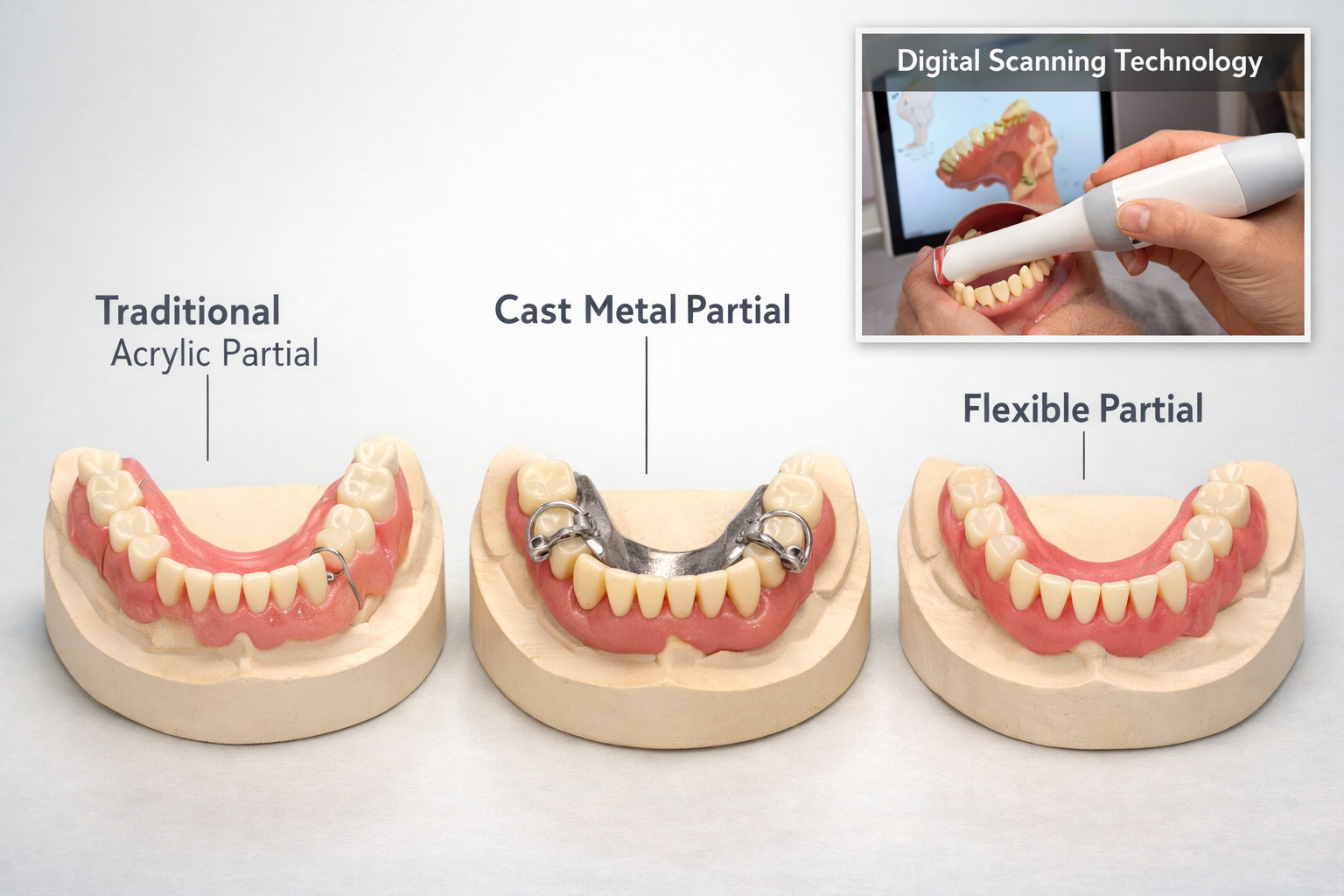
Partial bottom dentures are removable dental appliances specifically crafted to replace one or more missing teeth in the lower arch (mandible) when some natural teeth still remain. These appliances consist of replacement teeth attached to a gum-colored acrylic base, which is often connected by a metal or flexible framework that clasps onto your existing natural teeth for support and stability [6]. Their purpose is to restore chewing efficiency, improve speech, prevent remaining natural teeth from shifting, and enhance the overall appearance of your smile [3]. For patients in Dallas, TX, exploring tooth replacement options, understanding partial bottom dentures is a vital step toward a healthier smile.
In 2026, advancements in dental technology have made partial bottom dentures more comfortable and natural-looking than ever before. Digital scanning replaces traditional messy molds, creating highly accurate digital models that lead to a more precise fit with fewer sore spots and improved bite balance [1]. This personalized treatment planning ensures that each partial denture is custom-designed to suit an individual’s unique oral anatomy.
What Are the Different Types of Partial Bottom Dentures Available in 2026?
In 2026, patients have several advanced options for partial bottom dentures, each designed to meet specific needs, budgets, and comfort levels. Understanding these types is crucial when considering missing teeth solutions.
The four main types of partial bottom dentures are: acrylic, cast metal, flexible, and implant-supported partial dentures [3].
Acrylic (Temporary) Partial Dentures: These are typically the most affordable option, made entirely of acrylic resin with metal clasps to hold them in place [3].
- Pros: Relatively inexpensive, can be made quickly, and are often used as a temporary solution while awaiting a more permanent restoration or during the healing phase after tooth extraction.
- Cons: Generally less durable and bulkier than other types, which can affect comfort and speech. They may also exert more pressure on the remaining natural teeth.
- Ideal for: Patients needing an immediate, temporary solution or those on a very limited budget.
Cast Metal Partial Dentures (Removable Partial Denture – RPD): These feature a strong, custom-made metal framework (often chrome-cobalt alloy) that provides superior strength and stability, allowing for a thinner and less bulky design than acrylic versions [5]. The replacement teeth are then attached to this framework.
- Pros: Highly durable, offering excellent chewing efficiency and lasting up to a decade or more with proper care [3]. The thin metal framework improves patient comfort and provides better thermal conductivity than acrylic, meaning you can better sense the temperature of food and drinks [5]. Selective Laser Melting (SLM) technology is now used to produce metal frameworks that are “incredibly precise,” “stronger and more consistent than traditionally fabricated alternatives,” and offer improved turnaround times [2].
- Cons: Metal clasps can sometimes be visible, which may be a cosmetic concern for some individuals. The initial cost is higher than acrylic.
- Ideal for: Patients seeking a durable, long-term removable solution that offers excellent stability and functionality.
Flexible Partial Dentures: These are made from a thermoplastic material, typically a nylon-based resin, which makes them very flexible and lightweight. They don’t require metal clasps, instead using gum-colored clasps that blend naturally with your gum tissue [7].
- Pros: Esthetically pleasing due to the absence of visible metal, very comfortable due to their flexibility, and less prone to breaking compared to acrylic. They are also a good option for patients with allergies to certain metals or acrylics.
- Cons: Can be more difficult to adjust or repair if they become damaged, and their flexibility might lead to less stability over time compared to cast metal frameworks.
- Ideal for: Patients prioritizing aesthetics and comfort, especially those with sensitivities to metal.
Implant-Supported Partial Dentures (Removable Overdentures): This advanced option combines the removability of a partial denture with the superior stability and health benefits of dental implants. A few dental implants are strategically placed in the jawbone, and the partial denture then snaps onto these implants [3].
- Pros: Offers significantly enhanced stability and retention compared to traditional partials, which greatly improves chewing ability and confidence. The implants help preserve jawbone density, preventing the bone loss that often occurs with missing teeth [3]. They provide a natural look and feel.
- Cons: More invasive and expensive than other partial denture types due to the surgical placement of dental implants. The process also involves a longer treatment timeline. For those interested in the investment, understanding implant cost in Dallas is a valuable step.
- Ideal for: Patients seeking the highest level of stability and comfort from a removable partial denture, who are also good candidates for dental implant surgery. This option effectively addresses long-term oral health and facial structure support.
Choosing the right type of partial bottom denture involves a consultation with a dentist to assess your oral health, discuss your preferences, and review your budget. We encourage informed decision-making and professional consultation to determine the best missing teeth solution for your individual needs.
The Advantages of Choosing Partial Bottom Dentures
Opting for partial bottom dentures offers a range of significant benefits for individuals with missing lower teeth, extending beyond just aesthetics. These advantages make them a valuable tooth replacement option for many patients in Dallas, TX.
- Restored Chewing Ability and Speech Clarity: One of the primary benefits of partial bottom dentures is the restoration of proper chewing function. By filling in the gaps, they allow you to eat a wider variety of foods, improving your nutrition and overall quality of life. They also help correct speech impediments that can arise from missing teeth, enabling clearer communication [3].
- Enhanced Aesthetics and Confidence: Replacing missing teeth can dramatically improve the appearance of your smile, boosting self-confidence. Modern partial dentures are designed to look natural, blending seamlessly with your existing teeth and gums [7].
- Prevention of Tooth Shifting: When a tooth is lost, the neighboring teeth often begin to drift into the empty space. Partial bottom dentures act as a space maintainer, preventing your remaining natural teeth from shifting out of alignment, which can lead to bite problems and further dental issues [8].
- Support for Facial Structure: Missing teeth, especially multiple teeth, can lead to a sunken facial appearance over time due to bone loss in the jaw. Partial dentures help maintain the natural contours of your face and lips, supporting your facial structure and preventing premature aging of the facial features [3].
- Affordability and Non-Invasiveness: Compared to more extensive procedures like dental implants, partial dentures are generally a more affordable and less invasive option for tooth replacement [3]. They do not require surgery, making them a suitable choice for patients who may not be candidates for implants due to health conditions or bone density issues. This makes them an accessible option for many seeking solutions for missing teeth.
- Improved Fit and Comfort: Thanks to innovations like digital scanning and design software, the fit accuracy of partial dentures has significantly improved in 2026 [1]. This leads to fewer sore spots, better bite balance, and a more comfortable experience for the wearer. Digital dentures created using CAD/CAM technology and 3D printing reduce the number of adjustment visits by nearly 40% compared to traditional methods [4].
- Advanced Materials: New biocompatible resins and lighter alloys are now used, offering improved durability and resistance to staining and wear compared to older acrylics [4]. Chrome-cobalt alloy remains a material of choice for frameworks, providing strength for thinner designs that enhance comfort [5].
For many, partial bottom dentures represent a practical, effective, and accessible solution for restoring their smile and oral function without the need for complex surgical procedures.
Potential Challenges and Considerations for Partial Bottom Dentures
While partial bottom dentures offer numerous benefits, it’s important to be aware of potential challenges and considerations to ensure they are the right choice for your long-term oral health.
- Adjustment Period: Initially, wearing partial bottom dentures requires an adjustment period. You might experience some discomfort, increased saliva flow, or difficulty with speaking and eating. Your tongue and cheeks will need time to adapt to the new appliance in your mouth. Regular practice speaking and eating soft foods will help speed up this process.
- Stability and Retention: Traditional partial dentures rely on clasps for retention, which may not always provide the same level of stability as natural teeth or dental implants. This can sometimes lead to slight movement, especially during eating or speaking. Implant-supported partial dentures can significantly overcome this challenge by offering superior stability [3], but they come with a higher cost and surgical procedure.
- Oral Hygiene and Maintenance: Maintaining excellent oral hygiene is paramount with partial dentures. Food particles can get trapped under or around the denture and your remaining natural teeth, leading to plaque buildup, gum disease, and cavities. Both your partial denture and your natural teeth need to be cleaned daily. Failing to do so can compromise your remaining teeth and gum health.
- Wear and Tear: Over time, partial dentures can experience wear and tear. The acrylic base may stain or absorb odors, and the clasps might lose their grip. Regular dental check-ups are essential to monitor the condition of your denture and make necessary adjustments or repairs. On average, partial dentures may need to be relined, rebased, or replaced every 5-10 years, depending on the material and care [3].
- Impact on Remaining Teeth: While partial dentures help prevent adjacent teeth from shifting, the clasps that hold them in place can sometimes put stress on the natural teeth, potentially leading to wear or weakening over time if not designed and fitted properly. A well-designed cast metal framework minimizes this risk due to its precise fit and even distribution of biting forces [2].
- Bone Loss (for traditional partials): Unlike dental implants, traditional partial dentures do not stimulate the jawbone in the areas where teeth are missing. Over time, this lack of stimulation can lead to gradual bone resorption (loss) in these areas, which can change the fit of the denture and alter facial structure [3]. Implant-supported partial dentures are an excellent alternative to mitigate this issue.
- Cost Over Time: While the initial cost of traditional partial dentures is lower than dental implants, there can be ongoing costs for adjustments, relines, repairs, and eventual replacement. Patients should factor these potential long-term expenses into their decision-making process.
A thorough consultation with a qualified dentist in Dallas, TX, is crucial to discuss these considerations and determine if partial bottom dentures are the most appropriate solution for your specific needs and oral health goals.
The Process of Getting Partial Bottom Dentures in 2026
Obtaining partial bottom dentures in 2026 involves a streamlined and patient-focused process, thanks to modern dental technology. If you’re considering this tooth replacement option, understanding the steps involved can help you prepare.
Initial Consultation and Examination: The process begins with a comprehensive oral health examination by your dentist. This involves assessing the health of your remaining natural teeth, gums, and jawbone structure. Digital X-rays and possibly 3D imaging will be taken to evaluate the bone density and identify any underlying issues. During this visit, your dentist will discuss your medical history, oral health goals, and explore all available missing teeth solutions, including partial dentures and alternatives like dental implants in Dallas [3]. This is also an excellent opportunity to ask essential questions about implants.
Digital Impressions and Design: Gone are the days of messy, uncomfortable traditional molds. In 2026, many dental practices utilize advanced intraoral scanners to create highly accurate digital impressions of your mouth [1]. This digital data is then used with CAD (Computer-Aided Design) software to meticulously design your partial bottom denture framework and replacement teeth. This technology ensures a precise fit, reducing the need for numerous adjustment visits later [4].
Framework Fabrication: For cast metal partial dentures, the digital design is sent to a dental lab where the framework is fabricated using advanced techniques like Selective Laser Melting (SLM). SLM technology builds the metal framework layer by layer from metal powder, resulting in an “incredibly precise” and strong appliance [2]. For acrylic or flexible dentures, the process involves different fabrication methods based on the digital blueprint.
Try-In and Adjustments: Once the framework is fabricated, you will have a try-in appointment. Your dentist will check the fit, bite, and aesthetics of the partial denture. At this stage, adjustments can be made to ensure optimal comfort and function before the final teeth are securely attached. Digital workflows often lead to more accurate initial fits, minimizing the number of adjustments needed [1].
Final Placement: After any necessary adjustments, the partial bottom denture is completed and delivered. Your dentist will meticulously place the denture, ensuring it fits snugly and comfortably. You will receive detailed instructions on how to insert and remove your denture, as well as comprehensive guidance on cleaning and maintenance to ensure its longevity and your ongoing oral health.
Follow-Up Appointments: Initial follow-up appointments are scheduled to monitor your adaptation to the new partial denture and to make any minor adjustments that may be needed after you’ve worn it for a short period. This patient-first approach ensures your comfort and satisfaction with your new smile. For those with implant-supported options, regular follow-up is also key for the health of the implants.
The entire process is carefully managed by your dental team, prioritizing your comfort, satisfaction, and long-term oral health.
Caring for Your Partial Bottom Dentures
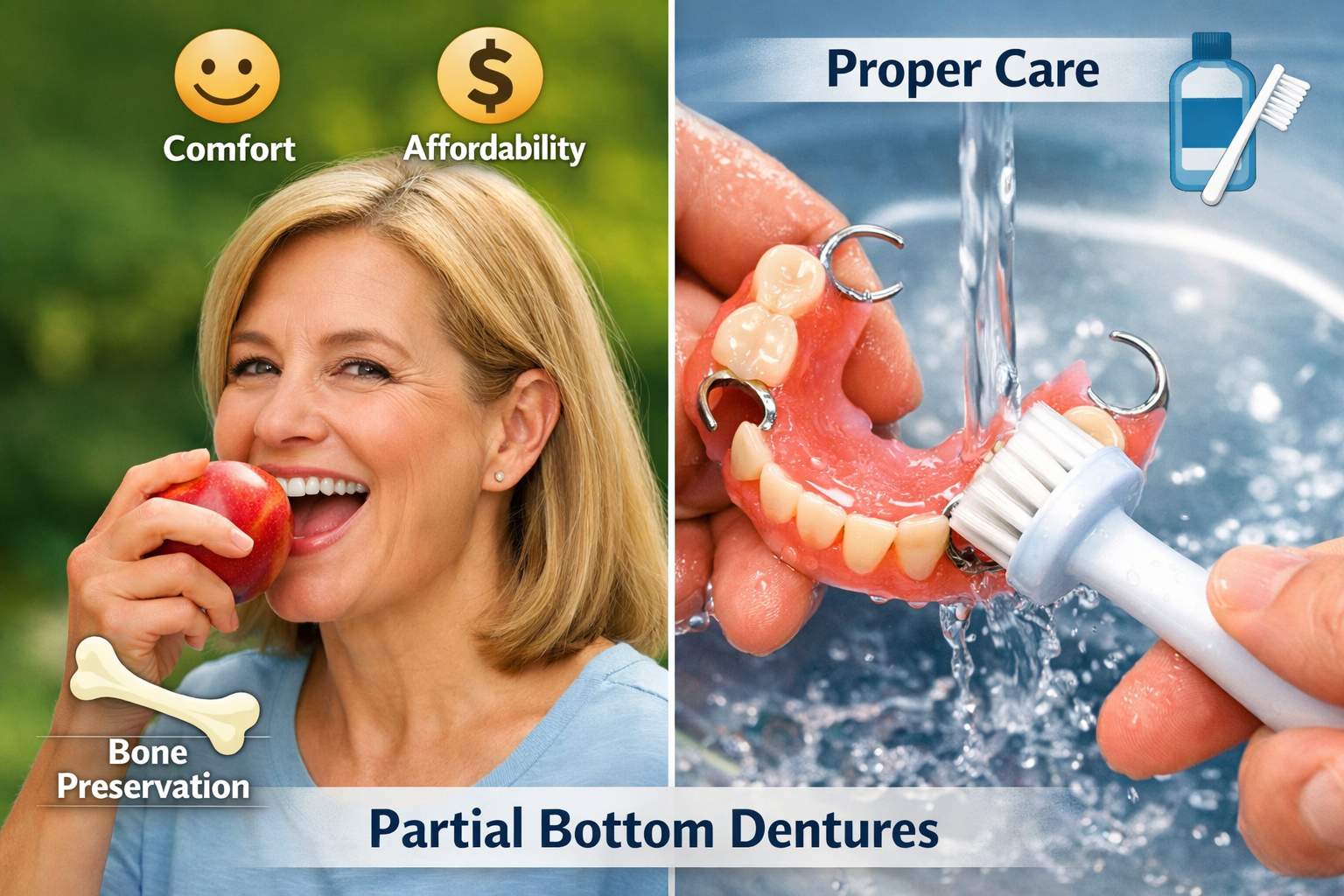
Proper care and maintenance are crucial for extending the life of your partial bottom dentures, maintaining oral hygiene, and protecting your remaining natural teeth. Following these guidelines will help ensure your dentures remain comfortable and functional for years to come.
Daily Cleaning:
- Remove and Rinse: Always remove your partial denture after eating and rinse it thoroughly under cool (not hot) running water to remove food particles and loose debris. Hot water can distort the denture material.
- Brush Gently: Use a soft-bristled denture brush and a non-abrasive denture cleanser (or mild soap) to clean all surfaces of the denture. Avoid regular toothpaste, as it can be too abrasive and scratch the denture surface, creating microscopic spaces where bacteria can grow.
- Clean Remaining Natural Teeth: Remember to brush your natural teeth, gums, tongue, and the roof of your mouth every morning and before bed. This is vital for preventing gum disease and tooth decay in your remaining teeth.
- Overnight Soaking: Most partial dentures need to stay moist to retain their shape. Place your denture in water or a mild denture-cleaning solution overnight as recommended by your dentist. Always rinse thoroughly before reinserting.
Handling with Care:
- Avoid Dropping: When handling your partial denture, do so over a folded towel or a basin of water to prevent breakage if accidentally dropped.
- Gentle Placement: Never force your partial denture into place. If it doesn’t fit properly, consult your dentist. Forcing it can damage the clasps or your natural teeth.
Regular Dental Check-ups:
- Professional Cleaning and Examination: Even with partial dentures, regular dental visits are essential. Your dentist will check the fit of your denture, examine your remaining natural teeth for any signs of decay or gum disease, and screen for oral cancer.
- Denture Relining or Rebasing: Over time, your jawbone and gum ridges can change shape, leading to a loose-fitting denture. Your dentist may recommend relining or rebasing your partial denture to restore a snug fit. Digital dentures, designed for precision, often reduce the frequency of such adjustments [4].
What to Avoid:
- Abrasive Cleaners: Steer clear of harsh or abrasive cleaning materials, including stiff brushes or strong household cleaners, as they can damage your denture.
- Bleaching Products: Do not use bleaching products, as they can weaken dentures and change their color.
- Hot Water: As mentioned, hot water can cause distortion.
- Self-Adjustments: Never attempt to adjust or repair your partial denture yourself. This can cause irreparable damage and may void any warranty. Always consult your dentist for adjustments.
By following these care instructions diligently, you can maintain the appearance, function, and hygiene of your partial bottom dentures, contributing significantly to your overall oral health and comfort.
Comparing Partial Bottom Dentures to Other Missing Teeth Solutions
When facing the need to replace missing teeth, patients in Dallas have several options beyond just partial bottom dentures. Understanding how partial bottom dentures compare to alternatives like dental implants and fixed bridges is crucial for making an informed decision about long-term oral health.
Partial Bottom Dentures vs. Dental Implants
- Partial Bottom Dentures:
- Pros: Generally more affordable and non-invasive, as they do not require surgery [3]. The process is typically quicker from start to finish. They are a good solution for replacing multiple teeth in the lower arch when some natural teeth remain.
- Cons: Removable, which some patients find less convenient. Traditional partials do not stimulate the jawbone, potentially leading to bone loss over time. They may offer less chewing efficiency and stability compared to implants, though implant-supported partial dentures significantly improve stability [3].
- Best For: Patients seeking a more economical or less invasive option, or those who are not candidates for surgery.
- Dental Implants:
- Pros: Considered the gold standard for tooth replacement due to their superior stability, comfort, and natural feel. They fuse with the jawbone, preventing bone loss and maintaining facial structure. Implants are permanent, durable, and don’t rely on adjacent teeth for support. For those considering dental implants in Dallas, they offer a long-term solution.
- Cons: More expensive and invasive, requiring surgical procedures and a longer healing time. Not all patients are candidates for implants, especially those with insufficient bone density or certain health conditions.
- Best For: Patients seeking the most natural-feeling, stable, and durable tooth replacement option, who are good surgical candidates and have the budget for the investment. Learn more about the Dental Implant vs Bridge vs Denture: 2026 Guide.
Partial Bottom Dentures vs. Fixed Dental Bridges
- Partial Bottom Dentures:
- Pros: Can replace multiple missing teeth without involving the adjacent teeth in a permanent way (except for clasps). They are removable for cleaning. More cost-effective than bridges if multiple teeth are missing.
- Cons: Removable, may affect speech, and can be less stable than a fixed bridge. Do not prevent bone loss in the missing tooth area.
- Best For: Replacing multiple missing teeth in a row or in different areas of the arch, especially when adjacent teeth are not strong enough to support a bridge, or when a non-fixed option is preferred.
- Fixed Dental Bridges:
- Pros: A non-removable solution that feels more like natural teeth. They offer good stability and function. They can be a good option when adjacent teeth already have large fillings or require crowns.
- Cons: Requires grinding down healthy adjacent teeth to serve as anchors for the bridge, which can weaken them over time. Does not stimulate the jawbone, leading to potential bone loss under the bridge. If the anchor teeth fail, the entire bridge fails.
- Best For: Replacing one or two missing teeth when the adjacent natural teeth are strong and healthy enough to support crowns, and a non-removable option is desired. For a detailed comparison, see our guide on Dental Implant vs Bridge vs Denture: Which Is Better? 2025 Guide.
| Feature | Partial Bottom Dentures (Traditional) | Dental Implants (Single/Multiple) | Fixed Dental Bridges |
|---|---|---|---|
| Removability | Removable | Permanent | Permanent |
| Jawbone Preservation | No (unless implant-supported) | Yes (stimulates bone) | No (bone loss can occur under bridge) |
| Impact on Adjacent Teeth | Clasps may exert pressure | No impact on adjacent teeth | Requires modification (grinding) of adjacent teeth |
| Cost (Initial) | Lower | Higher | Medium to High |
| Procedure | Non-invasive impressions/fittings | Surgical placement, healing period | Non-surgical, involves tooth preparation |
| Comfort/Stability | Good, but can have movement | Excellent, very natural feel | Good, feels natural |
| Longevity | 5-10 years (with maintenance/relines) | 15+ years, often lifelong | 5-15 years |
Ultimately, the best choice depends on your individual oral health needs, lifestyle, budget, and long-term goals. A consultation with a qualified dental professional in Dallas, TX, is essential to evaluate your specific situation and recommend the most suitable tooth replacement options.
Frequently Asked Questions About Partial Bottom Dentures
Q1: How long does it take to get used to partial bottom dentures?
A1: The adjustment period for partial bottom dentures typically ranges from a few weeks to a few months. During this time, you might experience increased saliva, minor discomfort, and initial difficulties with speech and eating. Regular practice and patience are key.
Q2: Can I eat normally with partial bottom dentures?
A2: Most people can eat a wide variety of foods with partial bottom dentures. However, it’s advisable to start with soft foods and gradually reintroduce harder or stickier items. Foods that are extremely hard, chewy, or sticky should be approached with caution or avoided to prevent damage to the denture or discomfort.
Q3: How often do partial bottom dentures need to be replaced?
A3: With proper care, partial bottom dentures can last 5 to 10 years, though the acrylic base may need relining or rebasing every few years due to changes in your jawbone structure. The durability also depends on the type of material, with cast metal frameworks often lasting longer than acrylic.
Q4: Are partial bottom dentures comfortable?
A4: Modern partial bottom dentures, especially those made with digital scanning and advanced materials, are designed for optimal comfort and fit. While an initial adjustment period is normal, a well-made and properly fitted partial denture should feel comfortable and secure in your mouth.
Q5: Will partial bottom dentures affect my speech?
A5: Initially, partial bottom dentures may cause a temporary change in your speech as your tongue and lips adapt to the new appliance. Practicing speaking aloud, reading, and repeating difficult words can help you adjust quickly and regain clear speech.
Q6: Can partial bottom dentures be repaired if they break?
A6: Minor cracks or breaks in partial bottom dentures can often be repaired by your dentist or a dental lab. However, significant damage may require a replacement. It’s crucial not to attempt repairs yourself, as this can worsen the damage and make professional repair impossible.
Q7: Are implant-supported partial dentures better than traditional ones?
A7: Implant-supported partial dentures generally offer superior stability, retention, and chewing efficiency compared to traditional removable partials [3]. They also help prevent jawbone loss, which is a significant long-term benefit. However, they are more invasive and costly due to the surgical placement of dental implants.
Q8: Does dental insurance cover partial bottom dentures?
A8: Many dental insurance plans offer some coverage for partial bottom dentures, as they are considered a restorative treatment. The extent of coverage varies depending on your specific plan. It’s always best to check with your insurance provider and your dental office in Dallas, TX, for detailed cost estimates and coverage information.
Conclusion
Partial bottom dentures offer a valuable and effective solution for individuals with missing teeth in their lower jaw, helping to restore function, aesthetics, and confidence. With advancements in dental technology, including digital scanning and high-precision fabrication methods, today’s partial bottom dentures are more comfortable, durable, and natural-looking than ever before. Whether you opt for a traditional acrylic, durable cast metal, flexible, or a highly stable implant-supported option, a well-fitted partial denture can significantly improve your quality of life.
Making an informed decision about tooth replacement is a personal journey that should always begin with a professional consultation. We encourage you to schedule a consultation with a dentist in Dallas, TX, to discuss your specific needs, explore all available tooth replacement options, and determine if partial bottom dentures are the right choice for your long-term oral health. Your dental professional can guide you through the process, explain the implant cost in Dallas if you’re considering that route, and help you achieve a healthy, confident smile in 2026 and beyond.
Key Takeaways
- Partial bottom dentures replace missing lower teeth, restoring chewing, speech, and appearance.
- Modern digital technology ensures a precise fit and reduces adjustment visits for partial dentures.
- Options range from affordable acrylic to highly stable implant-supported partial dentures, catering to diverse needs and budgets.
- Partial dentures are a less invasive and generally more affordable alternative to dental implants for missing teeth solutions.
- Proper daily cleaning and regular dental check-ups are vital for the longevity and hygiene of your partial bottom dentures.
- Implant-supported partial dentures offer superior stability and help prevent jawbone loss, merging removability with implant benefits.
- Consulting with a qualified dentist is crucial to determine the best missing teeth solution for your individual oral health goals.
References
[1] New Advances In Dentures Milton Patients Are Choosing In 2026 – https://tremainedentalca.wordpress.com/2026/01/15/new-advances-in-dentures-milton-patients-are-choosing-in-2026/ [2] Revolutionizing Removables Slm Printed Metal Partial Dentures – https://glidewelldental.com/company/blog/Revolutionizing-Removables–SLM-Printed-Metal-Partial-Dentures [3] 5 Game Changing Reasons To Choose Full And Partial Dentures In 2026 – https://www.davidmmayerdmd.com/blog/5-game-changing-reasons-to-choose-full-and-partial-dentures-in-2026 [4] Alternatives Dentures Partials Implant Supported Prostheses – https://www.barriesmilecentre.com/knowledge-centre/post/alternatives-dentures-partials-implant-supported-prostheses/ [5] High Tech Dentures Tips – https://www.avadent.com/high-tech-dentures-tips/ [6] Bottom Partial Denture – https://vitrinclinic.com/bottom-partial-denture/ [7] What Are The Most Natural Looking Dentures – https://nationsdentalstudio.com/blog/what-are-the-most-natural-looking-dentures/ [8] Bridges And Partial Dentures – https://www.dentalhealth.org/bridges-and-partial-dentures
Leave a Reply
Share your thoughts or ask a question about dental implants. Your email address will not be published.