

Have you ever found yourself unconsciously biting your lip while concentrating, feeling anxious, or simply lost in thought? While seemingly a minor habit, frequent or severe lip bites can lead to discomfort, pain, and even significant oral health issues. In 2026, understanding the underlying causes and potential consequences of lip biting is crucial for maintaining good oral health, especially for those considering advanced tooth replacement options like dental implants in Dallas. This comprehensive guide will explore the spectrum of lip bites, from common nervous habits to clinical conditions, and discuss effective strategies for management and prevention.
Key Takeaways
- Lip bites can range from innocent habits to a clinical condition called cavitadaxia, often linked to stress or dental issues.
- Common causes include malocclusion (misaligned bite), temporomandibular joint (TMJ) disorders, and psychological factors like anxiety or stress.
- Physical consequences can involve painful sores, infections, and long-term tissue damage.
- Effective treatments span from cognitive behavioral therapy (CBT) for psychological triggers to dental interventions like splints or orthodontic corrections for structural problems.
- Consultation with a dentist is vital for proper diagnosis and personalized treatment, particularly if chronic lip biting impacts overall oral health or the integrity of existing dental work.
What Are Lip Bites and Why Do They Occur?
Lip bites refer to the act of biting one’s own lips, either accidentally or as a repetitive habit. While many people occasionally bite their lips without incident, particularly when eating or speaking quickly, persistent or unconscious lip biting can indicate a deeper issue. This behavior can be classified medically as cavitadaxia, a term that also encompasses cheek biting. It’s often categorized under body-focused repetitive behaviors (BFRBs), which are grouped within “other specified obsessive-compulsive and related disorders” according to the DSM-5 [1].
Approximately one-third of the general population occasionally engages in lip or cheek biting [1]. However, about 3.2% meet the criteria for a clinical disorder, suggesting that for a significant number of individuals, it’s more than just a passing habit. The mean age of onset for such repetitive behaviors, including lip bites, is around 15 years old, often coinciding with puberty [1, 3].
The Spectrum of Lip Biting: From Habit to Disorder
It’s important to distinguish between occasional, accidental lip biting and chronic, compulsive behavior.
- Accidental Lip Bites: These usually occur during activities like eating, chewing, or talking, often due to a momentary lapse in coordination or an uneven bite. They are typically infrequent and heal quickly.
- Habitual Lip Biting: This often serves as a coping mechanism for stress, anxiety, or boredom. It might be unconscious, occurring when someone is concentrating, feeling nervous, or deep in thought [5, 6]. While not always damaging, consistent pressure can lead to irritation.
- Compulsive Lip Biting (Cavitadaxia): This is a more severe form where the individual feels compelled to bite their lip, often to smooth out rough patches or relieve tension. This can lead to significant tissue damage and difficulty stopping the behavior, even when it causes pain [1]. Close to 8% of the population experiences severe damage from BFRBs at least once in their lifetime [1].
Underlying Causes of Lip Bites
Understanding why lip bites occur is the first step toward effective management. Causes can be broadly categorized into dental/anatomical and psychological factors.
Dental and Anatomical Factors
The most common dental issues contributing to accidental lip and cheek biting are related to how your teeth align and how your jaw functions [2, 3].
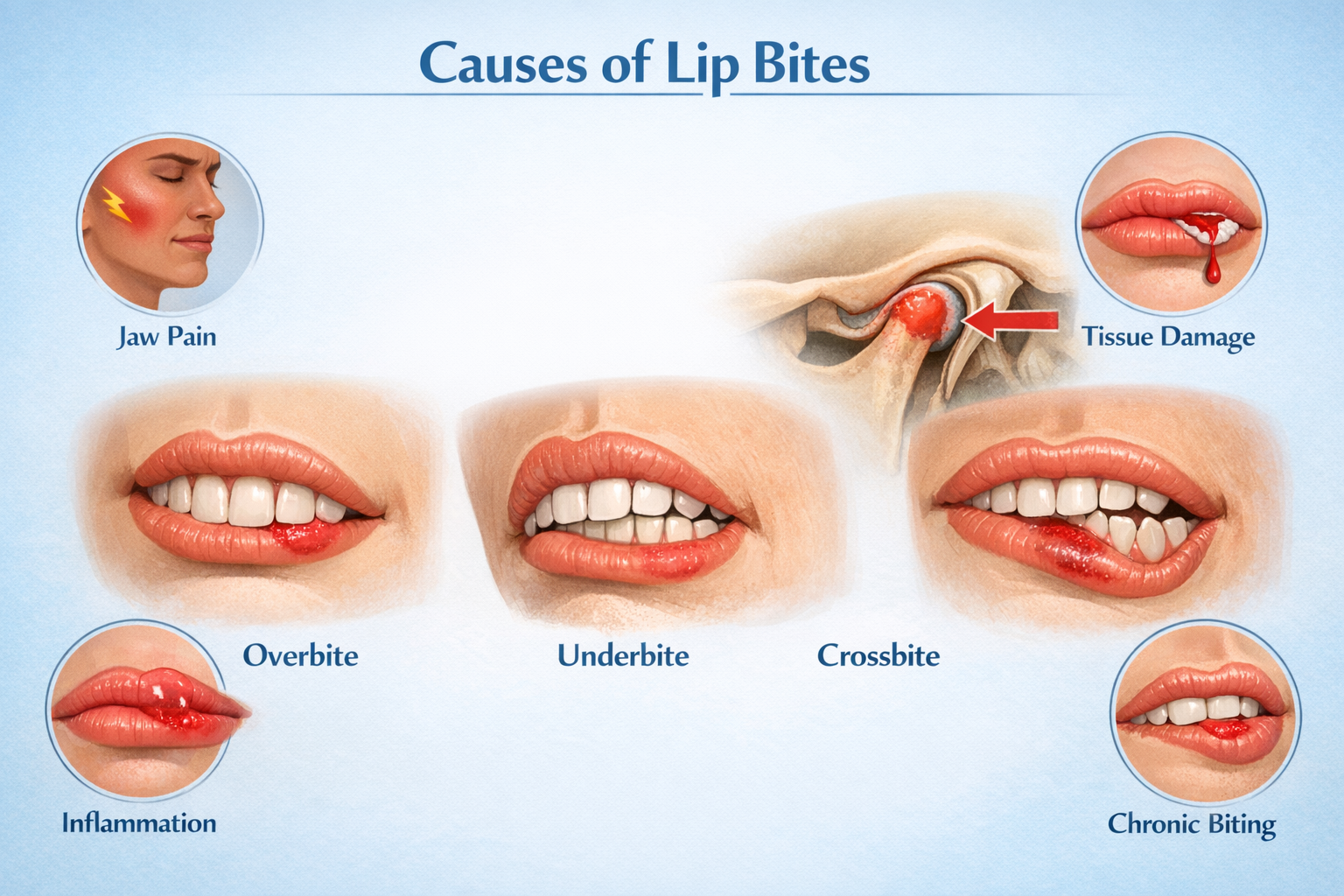
- Malocclusion (Misaligned Bite): If your upper and lower teeth don’t fit together properly when you close your mouth, it can create areas where your lip or cheek tissue is easily caught between your teeth.
- Overbites, underbites, or crossbites can all increase the risk of accidental lip bites [4].
- Even minor shifts in tooth position, perhaps after orthodontic treatment or due to missing teeth, can alter the bite [4].
- For individuals with missing teeth, the lack of support can allow lip tissue to fall into gaps, making it more prone to biting. This is why exploring tooth replacement options like dental implants in Dallas is crucial not only for aesthetics but also for restoring proper bite function and preventing such issues.
- Temporomandibular Joint (TMJ) Disorder: Problems with the TMJ, which connects your jawbone to your skull, can affect jaw movement and bite alignment.
- Symptoms like jaw pain, clicking sounds, or limited jaw movement can indirectly lead to lip biting by disrupting the natural motion of the mouth [2, 4].
- An improper jaw position can make it easier for soft tissues to get in the way during chewing or speaking.
- Sharp or Broken Teeth/Restorations: A chipped tooth, a rough filling, or a poorly fitted crown can create a sharp edge that irritates the lip or acts as a “hook” that draws the lip into a biting position [4].
- Ill-fitting Dental Appliances: Dentures or retainers that don’t fit well can also increase the likelihood of accidental lip bites.
Psychological and Behavioral Factors
Beyond structural issues, the mind plays a significant role in many cases of lip biting.
- Stress and Anxiety: Lip biting is often a subconscious response to feelings of stress, anxiety, or nervousness [5, 6]. It can be a way to self-soothe or release tension.
- Periods of high stress, such as work deadlines or personal challenges, can exacerbate the habit.
- Individuals with generalized anxiety disorder may find themselves biting their lips more frequently without realizing it [7].
- Concentration or Deep Thought: Many people bite their lips when deeply focused on a task or thinking intensely, often without conscious awareness [5].
- Boredom: Similar to nail-biting, lip biting can be a way to occupy oneself when bored or restless.
- Obsessive-Compulsive Tendencies: In its more severe form (cavitadaxia), lip biting can be a compulsive behavior, where the individual feels a strong urge to bite to achieve a certain sensation or “fix” perceived irregularities on the lip surface [1]. This can create a cycle of biting, leading to irritation, and then biting again to smooth the irritated area.
<code>"Understanding the root cause of persistent lip bites – whether it's a structural dental issue or a psychological response to stress – is paramount for effective treatment and achieving long-term oral health."
</code>
Consequences and Management of Chronic Lip Bites
While occasional lip bites might be harmless, chronic lip biting can lead to a range of uncomfortable and potentially serious consequences for your oral health. Recognizing these issues and seeking appropriate intervention is key, especially if you have undergone or are considering significant procedures like a dental implant procedure.
Physical Consequences of Chronic Lip Bites
Constant irritation and trauma from lip bites can manifest in several ways:
- Redness and Inflammation: The bitten area often becomes red, swollen, and tender [1].
- Painful Sores and Ulcers: Repeated biting can break the skin, leading to open sores or ulcers on the lips or inside the cheeks. These can be quite painful and interfere with eating, speaking, and even sleeping [1].
- Cracked and Chapped Lips: Chronic biting can compromise the natural protective barrier of the lips, leading to persistent dryness and cracking [1].
- Infection: Open sores are susceptible to bacterial or fungal infections, which can worsen pain and delay healing [1].
- Keratosis: Over time, the repeated trauma can cause the skin layers (mucosa) on the inside of the lips or cheeks to thicken and become rough or irregular. This is known as keratosis and is a protective response, but it can also make the area more prone to further biting [1].
- Long-term Skin Damage: In severe cases, chronic lip biting can lead to permanent changes in the texture or appearance of the lip tissue [1].
- Impact on Dental Work: For patients with existing dental work, especially those with dental implants, chronic lip biting can be problematic. While titanium vs zirconia implant maintenance focuses on the implant itself, excessive biting can damage crowns, bridges, or even irritate the surrounding gum tissue, potentially impacting the longevity and comfort of your implant. Similarly, if you experience a dental implant clicking noise, a careful dental evaluation is warranted, as this could indicate an issue that, combined with lip biting, exacerbates oral discomfort.
When to Seek Professional Help
If your lip biting is frequent, painful, causing visible damage, or affecting your quality of life, it’s time to consult a healthcare professional. This could involve your general dentist, an orthodontist, or even a therapist specializing in BFRBs. Early intervention can prevent more severe complications and improve your overall oral health and well-being.
Evidence-Based Treatments and Management Strategies
Addressing lip bites effectively often requires a multi-faceted approach that considers both dental and psychological factors.
Dental Interventions
If malocclusion, TMJ issues, or sharp dental surfaces are contributing to lip bites, a dentist can provide solutions:
- Orthodontic Treatment: For significant bite misalignment, braces or clear aligners can correct the position of teeth, creating a more harmonious bite where soft tissues are less likely to be caught. This is a crucial step in preventing accidental lip and cheek biting due to structural issues.
- Dental Reshaping or Restoration: A dentist can smooth out sharp edges on teeth, replace faulty fillings or crowns, or build up worn areas to improve the bite and reduce irritation [4].
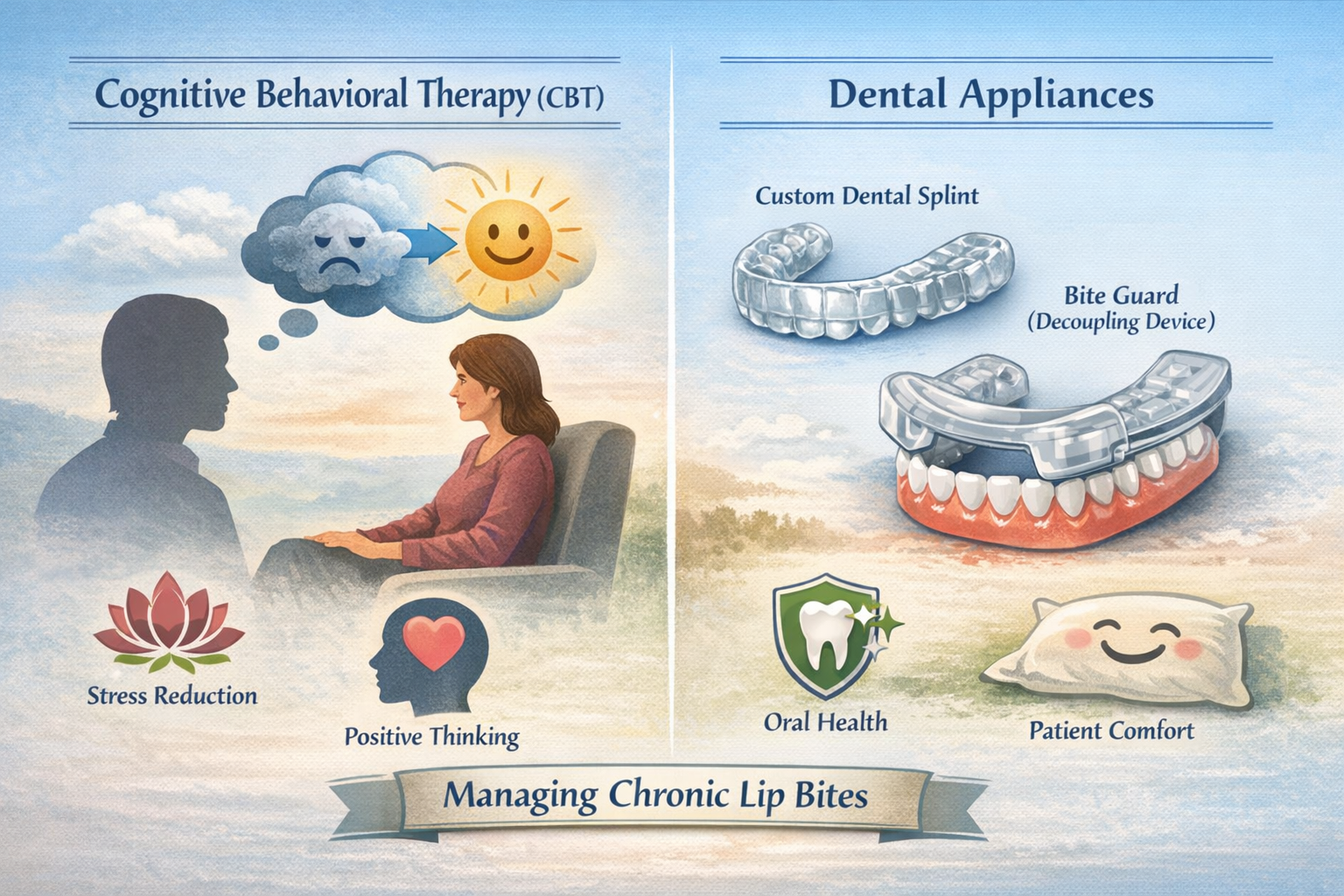
- Dental Splints or Nightguards: For patients with TMJ disorders or those who unconsciously clench or grind their teeth, a custom-fitted dental splint or nightguard can help reposition the jaw, protect teeth, and create a barrier between the teeth and soft tissues. This can be especially effective for nocturnal lip bites or those linked to jaw tension [1, 3]. For those concerned about protecting your implants: stop teeth grinding damage 2026 provides further insights into protective measures.
- Replacing Missing Teeth: If gaps from missing teeth are causing the lip to collapse inward and be bitten, tooth replacement options like dental implants in Dallas can restore proper dental structure. A dental implant procedure involves surgically placing a titanium post into the jawbone, which then supports a crown, bridge, or even implant-supported dentures. This restores not just function but also facial aesthetics and bite integrity, significantly reducing the likelihood of accidental lip biting due to tooth loss. If you are waiting for an implant after an extraction, a temporary tooth while waiting for implant can help prevent biting the area.
Behavioral and Psychological Therapies
For lip bites that stem from habitual or compulsive tendencies, psychological approaches are highly recommended:
- Cognitive Behavioral Therapy (CBT): The TLC Foundation for BFRBs specifically recommends CBT as an evidence-based treatment for body-focused repetitive behaviors, including lip-cheek biting [1, 3].
- Habit Reversal Training (HRT): A core component of CBT, HRT teaches individuals to become more aware of their lip biting, identify triggers, and replace the unwanted behavior with a competing response (e.g., clenching fists, pressing lips together gently) that is incompatible with biting.
- Stimulus Control: This involves modifying the environment or internal cues that trigger biting. For example, if stress triggers biting, learning stress reduction techniques can be beneficial [6].
- Mindfulness and Relaxation Techniques: Practices like deep breathing, meditation, or yoga can help reduce overall stress and anxiety levels, which are common triggers for lip biting [6].
- Awareness and Self-Monitoring: Simply becoming more aware of when and why you bite your lips can be a powerful first step. Keeping a journal can help identify patterns and triggers.
- Barrier Methods: In some cases, a physical barrier like a dental splint (even if not for malocclusion) or even a specially designed lip guard can help interrupt the biting cycle [1]. This is part of what is known as the “decoupling method,” where the physical act of biting is separated from the emotional or psychological trigger [1].
Prevention and Long-Term Oral Health Education
Preventing lip bites, especially those tied to dental issues, is a critical component of long-term oral health.
- Regular Dental Check-ups: Routine visits to your dentist are essential for identifying and addressing issues like malocclusion, sharp teeth, or the need for missing teeth solutions before they lead to chronic lip biting.
- Stress Management: Incorporating stress-reducing activities into your daily routine can help minimize anxiety-induced lip biting.
- Mindful Eating: Paying attention while eating can prevent accidental bites. Chew slowly and deliberately.
- Prompt Treatment for TMJ Issues: If you suspect you have a TMJ disorder, seeking treatment from a qualified professional can alleviate symptoms that contribute to lip biting.
- Consider Dental Implants: If you have missing teeth, discussing tooth replacement options with your dentist, particularly dental implants in Dallas, can help restore a complete and stable bite, reducing the risk of lip or cheek tissue getting caught. Understanding the dental implant success rate 2025 can provide confidence in this long-term solution.
<code>"For those with missing teeth, choosing dental implants in Dallas can significantly improve bite alignment, preventing painful lip bites and safeguarding overall oral health for years to come."
</code>
By addressing both the physical and psychological aspects of lip biting, individuals can find effective solutions and enjoy healthier, more comfortable smiles. A consultation with a dentist is always recommended to receive a personalized diagnosis and treatment plan.
FAQs About Lip Bites
Q1: Is lip biting a sign of anxiety?
Yes, lip biting often correlates with anxiety, stress, or being deep in thought [5, 6]. For many, it’s a subconscious coping mechanism to deal with nervousness or tension. While the exact neurological cause isn’t fully understood, the link between psychological states and this behavior is well-documented [5, 7].
Q2: Can lip biting cause permanent damage?
Chronic and severe lip biting can indeed cause permanent damage. This includes the development of painful sores, ulcers, and potentially infections. Over time, it can lead to keratosis (thickening of the skin layers) and irreversible changes in the texture or appearance of the lip tissue [1].
Q3: What should I do if my child frequently bites their lip?
If your child frequently bites their lip, observe when and why it occurs. If it seems related to stress or anxiety, talk to them about their feelings. If it’s causing sores or pain, or if you suspect a dental issue like misaligned teeth, a visit to a pediatric dentist or orthodontist is recommended for an evaluation. Early intervention can prevent the habit from becoming entrenched or causing significant dental problems.
Q4: Can dental implants help with lip biting?
Yes, in cases where missing teeth contribute to lip biting by allowing lip tissue to fall into gaps, dental implants can be a highly effective solution. By replacing missing teeth, dental implants restore proper bite alignment and provide structural support, reducing the likelihood of the lip getting caught and bitten. A consultation with a dentist specializing in dental implants in Dallas can determine if this is a suitable option for your specific situation.
Q5: Are there any home remedies for irritated lips from biting?
For minor irritation, you can apply a soothing lip balm, petroleum jelly, or aloe vera to help with healing and provide a protective barrier. Avoid spicy or acidic foods that might further irritate the area. If a sore develops, consider an over-the-counter oral numbing gel for temporary relief. However, if the irritation persists, worsens, or shows signs of infection, seek professional dental advice.
Q6: What’s the difference between accidental lip biting and a body-focused repetitive behavior (BFRB)?
Accidental lip biting typically occurs sporadically, often during eating or speaking, due to a momentary misstep. It’s usually not intentional. A body-focused repetitive behavior (BFRB), like cavitadaxia, is a recurrent, often compulsive act of biting, picking, or pulling at one’s own body tissue (in this case, the lips or cheeks). It’s often done to relieve tension or “fix” perceived imperfections, and individuals often struggle to stop, even when it causes damage [1].
Conclusion
Lip bites, while seemingly minor, can range from a common, harmless habit to a significant oral health concern with physical and psychological roots. In 2026, understanding the various causes, from dental misalignments and TMJ disorders to stress and anxiety, is key to finding effective relief. Chronic lip biting can lead to painful sores, infections, and long-term tissue damage, potentially impacting overall oral health, especially for those with or considering advanced dental work.
Fortunately, a range of solutions exists. Dental interventions, such as correcting malocclusion, replacing missing teeth with dental implants in Dallas, or providing protective splints, can address structural issues. For habitual or compulsive lip biting, behavioral therapies like Cognitive Behavioral Therapy (CBT) and stress management techniques offer proven strategies to break the cycle.
If you find yourself struggling with persistent lip bites or are concerned about their impact on your dental health, particularly if you’re exploring missing teeth solutions or have existing dental implants, we strongly encourage you to schedule a consultation with a dentist. A professional evaluation can accurately diagnose the underlying cause and provide a personalized treatment plan, guiding you toward a healthier, more comfortable smile and improved long-term oral health. At Dental Implant Education – Dallas TX, we are committed to providing factual, patient-first oral health education to help you make informed decisions about your care.
References
[1] Lip Cheek Biting – https://www.free-from-bfrb.org/lip-cheek-biting/
[2] Lip Biting – https://www.healthline.com/health/lip-biting
[3] medicalnewstoday – https://www.medicalnewstoday.com/articles/322093
[4] Why Do I Accidentally Bite 215136 – https://www.goochdental.com/blog/2023/11/01/why-do-i-accidentally-bite-215136/
[5] Why Do I Keep Biting My Lip – https://www.caloosadental.com/why-do-i-keep-biting-my-lip/
[6] Understanding Stress Related Cheek And Lip Biting – https://dockiefferortho.com/understanding-stress-related-cheek-and-lip-biting/
[7] Lip Biting – https://www.calmclinic.com/anxiety/symptoms/lip-biting
Leave a Reply
Share your thoughts or ask a question about dental implants. Your email address will not be published.