


Losing one or several teeth can significantly impact not only your smile’s appearance but also your ability to chew, speak, and maintain overall oral health. For many years, traditional removable partial dentures were a common solution. However, advancements in dental technology have introduced a superior, more stable option: dental implants partial restorations. These innovative solutions offer a durable and aesthetically pleasing way to replace missing teeth, providing a foundation that mimics natural tooth roots.
At Dental Implant Education – Dallas TX, we believe in empowering our community with accurate, professional information about tooth replacement options. This article will delve into what dental implants partial are, how they differ from other solutions, the procedure involved, and why they might be the ideal choice for improving your long-term oral health. As we navigate the various considerations, including the implant cost in Dallas, our goal is to help you make an informed decision about your smile in 2026.
Key Takeaways
- Dental implants partial offer a stable, long-lasting, and aesthetically superior alternative to traditional removable partial dentures for replacing one or several missing teeth.
- Unlike traditional dentures, implant-supported partials preserve jawbone health and prevent shifting of remaining natural teeth, contributing to better long-term oral health.
- The dental implant procedure involves surgically placing titanium posts into the jawbone, which then fuse with the bone, providing a strong foundation for prosthetic teeth.
- Benefits include improved chewing function, enhanced speech, a natural appearance, and increased confidence, making them a premium choice among missing teeth solutions.
- Considering dental implants in Dallas requires a thorough consultation with a qualified dentist to assess suitability, discuss the process, and understand the associated investment.
What Are Dental Implants Partial? Redefining Tooth Replacement
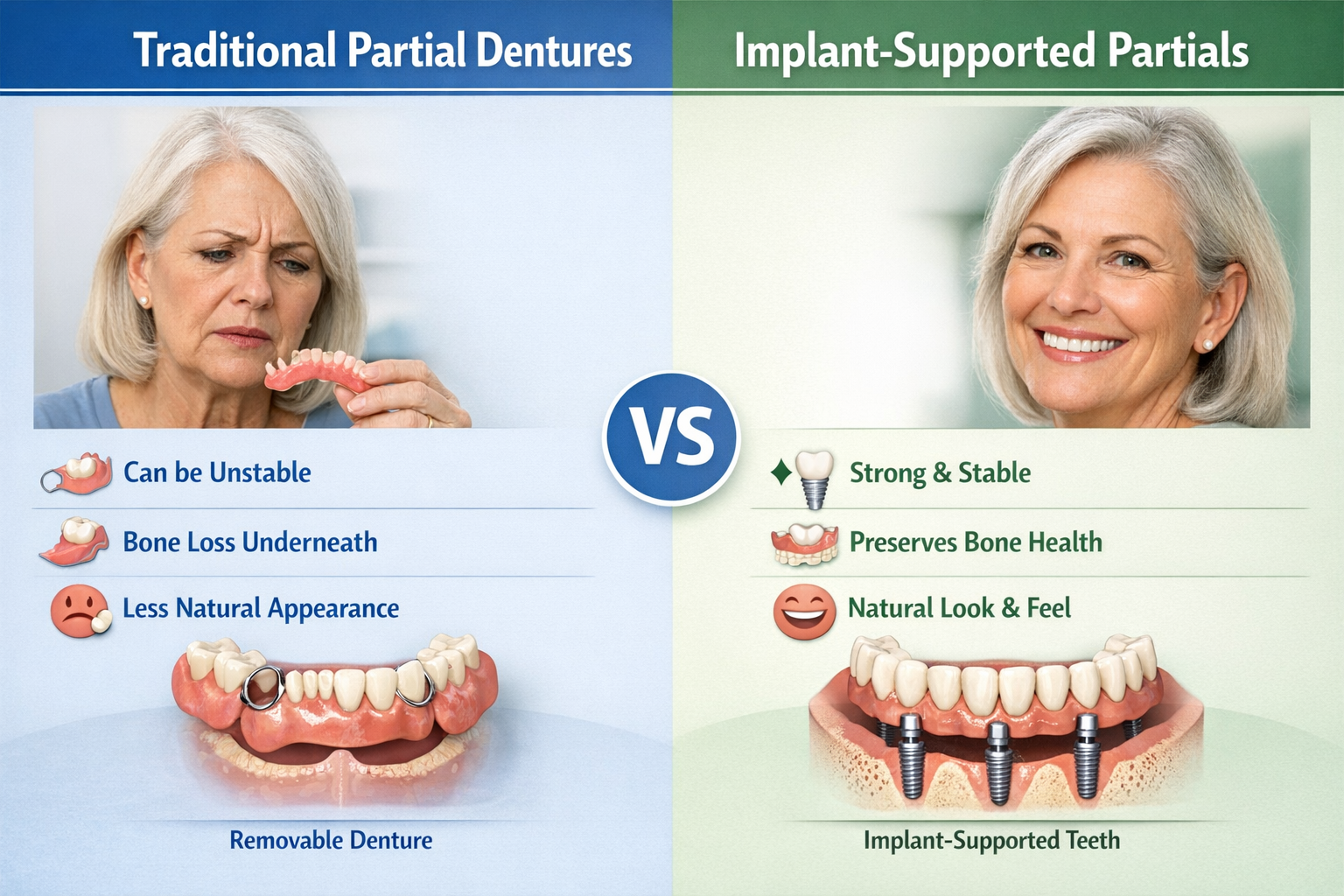
When you hear “dental implants,” you might envision replacing a single tooth or an entire arch. However, dental implants partial refer to the use of one or more dental implants to support a fixed or removable prosthetic that replaces multiple missing teeth within a specific section of the mouth. This approach provides a significant upgrade from traditional removable partial dentures, offering enhanced stability, comfort, and a more natural feel.
Instead of relying on clasps to attach to adjacent natural teeth, which can sometimes put strain on them, an implant-supported partial denture or bridge is anchored directly into your jawbone. This creates a remarkably strong and secure foundation, much like natural tooth roots [3]. This method not only restores your smile but also helps preserve the integrity of your remaining natural teeth and jawbone.
The Evolution from Traditional Partial Dentures
For decades, traditional removable partial dentures have been a common choice for replacing multiple missing teeth. These prosthetics typically consist of replacement teeth attached to a gum-colored base, held in place by metal clasps that grip surrounding natural teeth. While they serve the purpose of filling gaps, they often come with limitations:
- Stability Issues: They can shift, slip, or cause discomfort, especially during eating or speaking.
- Bone Loss: They do not stimulate the jawbone, which can lead to bone deterioration over time where teeth are missing.
- Impact on Adjacent Teeth: The clasps can sometimes cause wear or strain on the natural teeth they attach to.
- Maintenance: They require removal for cleaning and can accumulate food particles, leading to hygiene challenges.
In contrast, dental implants partial solutions address these concerns directly:
- Superior Stability: The implants are fused directly with the jawbone, providing a secure anchor for the prosthetic, eliminating movement and improving chewing efficiency.
- Bone Preservation: Dental implants stimulate the jawbone, helping to prevent the bone loss that often occurs after tooth extraction [8]. This preserves facial structure and prevents a sunken appearance.
- Protection of Natural Teeth: Since the partial is supported by implants, there is no need to modify or place undue stress on adjacent healthy teeth.
- Enhanced Comfort and Aesthetics: Implant-supported partials feel more like natural teeth and are often indistinguishable from them, contributing to a confident smile.
This shift represents a significant advancement in tooth replacement options, prioritizing not just the restoration of function and aesthetics but also the long-term health and preservation of the oral structure.
Who is a Candidate for Dental Implants Partial?
Determining if dental implants partial are the right solution for you requires a thorough evaluation by a qualified dental professional. Generally, ideal candidates possess:
- Good Overall Health: Candidates should be healthy enough to undergo minor surgical procedures.
- Sufficient Jawbone Density: Adequate bone volume is crucial for the successful integration of the dental implant. If bone density is insufficient, bone grafting may be recommended to build up the jawbone, ensuring a stable foundation.
- Healthy Gums: Free from periodontal disease, as gum health is vital for implant success.
- Commitment to Oral Hygiene: A dedication to maintaining excellent oral hygiene practices is essential for the longevity of dental implants.
During your initial dental implant consultation in Dallas, your dentist will perform a comprehensive examination, including X-rays and possibly 3D imaging, to assess your oral health, bone structure, and discuss your medical history. This detailed assessment helps determine the best course of action and ensures patient safety throughout the dental implant procedure.
The Dental Implant Procedure for Partial Tooth Replacement
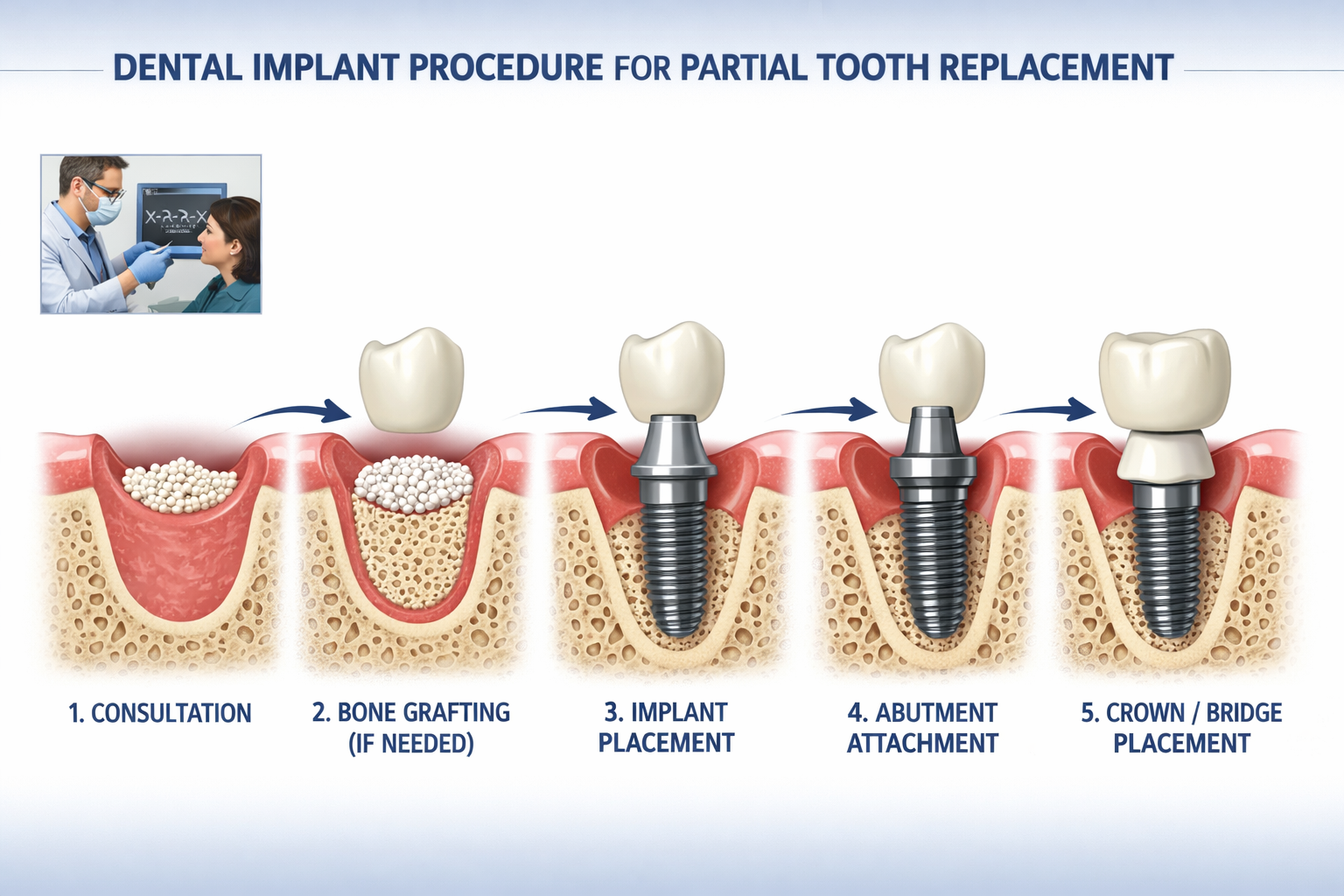
The dental implant procedure for replacing partial missing teeth is a well-established and highly successful process that typically occurs in several stages. Understanding each step can help alleviate any concerns and prepare you for the journey toward a restored smile. The process begins with a detailed treatment plan tailored to your specific needs.
1. Initial Consultation and Planning
Every successful implant journey begins with a thorough consultation with a dentist. In Dallas, this involves a comprehensive oral examination, reviewing your medical history, taking detailed X-rays, and often 3D scans (CBCT). This imaging provides a clear picture of your jawbone density, nerve locations, and sinus cavities, which is crucial for precise implant placement. During this stage, your dentist will discuss your goals, assess your suitability for dental implants partial, and outline the personalized treatment plan, including estimated implant cost in Dallas.
If insufficient bone is present, a bone grafting procedure might be necessary to create a strong foundation for the implants. This step is vital for long-term oral health and implant success.
2. Dental Implant Placement
Once the treatment plan is finalized and any preparatory procedures (like bone grafting or extractions) have healed, the surgical placement of the dental implants takes place. This is performed under local anesthesia, sometimes with sedation for patient comfort.
- Surgical Placement: The dentist or oral surgeon will make a small incision in the gum to expose the jawbone. A small hole is precisely drilled into the bone, and the titanium implant post is carefully inserted.
- Osseointegration: After placement, the implant is typically covered by gum tissue, and a healing period begins. This crucial phase, called osseointegration, involves the titanium implant fusing directly with the jawbone. This process can take several months (typically 3-6 months), creating a remarkably strong and stable anchor [5]. During this time, a temporary prosthetic can often be worn for aesthetic purposes.
The precision of modern implant surgery, often guided by 3D planning software, enhances patient safety and predictability. For more details on recovery, you can refer to our Post-Op Dental Implant Instructions: 2026 Recovery Guide.
3. Abutment Placement
Once osseointegration is complete and the implant is firmly integrated with the jawbone, a second, minor surgical procedure may be performed. This involves making a small incision in the gum to uncover the top of the implant. An abutment – a small connector post – is then attached to the implant. This abutment will protrude through the gum line and serve as the anchor for your new partial restoration. In some cases, the abutment can be placed at the same time as the implant.
4. Placement of the Partial Restoration
After the gum tissue around the abutment has healed (usually 1-2 weeks), impressions of your mouth are taken. These impressions are sent to a dental lab where your custom-made partial restoration (either a dental bridge or a partial denture) is crafted. The restoration is designed to precisely match the color, shape, and size of your natural teeth, ensuring a seamless and aesthetic result.
- Implant-Supported Bridge: If you are missing several teeth in a row, a dental bridge can be fabricated and cemented onto two or more dental implants.
- Implant-Supported Partial Denture: For larger gaps or multiple missing teeth across an arch, a partial denture can be designed to snap onto the abutments or a bar connected to the implants, providing superior retention compared to traditional removable partials.
Your dentist will meticulously fit the restoration, checking your bite and making any necessary adjustments to ensure comfort and proper function. The goal is a natural-looking and feeling result that integrates perfectly with your existing smile. For information on costs associated with this component, you might find our article on the cost of a dental implant bridge helpful.
Advantages and Benefits of Choosing Dental Implants Partial
Choosing dental implants partial goes beyond merely filling gaps in your smile. It’s an investment in your oral health, overall well-being, and quality of life. The benefits extend far beyond aesthetics, offering practical advantages that make them a preferred choice for many patients in Dallas seeking missing teeth solutions.
Enhanced Stability and Comfort
One of the most significant advantages of implant-supported partials is their unparalleled stability. Because the implants are surgically fused with your jawbone, the restoration does not move or slip. This eliminates the discomfort and insecurity often associated with traditional removable partial dentures, allowing you to:
- Eat Your Favorite Foods: Enjoy a wider variety of foods without worry, restoring your ability to chew efficiently and confidently.
- Speak Clearly: Eliminate the concern of a shifting denture affecting your speech, allowing for clear and natural communication.
- Live Without Fear of Movement: The secure fit means you can laugh, yawn, and engage in daily activities without the fear of your prosthetic dislodging.
Preservation of Jawbone and Facial Structure
When teeth are lost, the jawbone in that area no longer receives the necessary stimulation from chewing, leading to a process called bone resorption (bone loss). This can cause the jawbone to shrink over time, altering facial features and giving a sunken appearance. Dental implants are unique among tooth replacement options because they act as artificial tooth roots, providing the stimulation needed to preserve jawbone density.
- Prevents Bone Loss: The integration of the implant with the bone helps to maintain the bone structure, preventing its deterioration [8].
- Maintains Facial Aesthetics: By preserving the jawbone, implants help support your facial muscles and prevent the changes in facial structure that can occur with tooth loss, contributing to a more youthful appearance.
Protection of Remaining Natural Teeth
Unlike traditional partial dentures that rely on clasps attached to adjacent natural teeth, dental implants partial are self-supporting. This means:
- No Strain on Healthy Teeth: Your remaining natural teeth are not subjected to the stress or wear that clasps can cause.
- Prevention of Shifting: Implants fill the gaps created by missing teeth, preventing adjacent teeth from shifting into these spaces, which can lead to misalignment and bite problems.
- Reduced Risk of Decay: There’s no need to grind down healthy adjacent teeth to support a bridge, preserving more of your natural tooth structure.
Improved Oral Health and Hygiene
Maintaining good oral hygiene is crucial for the longevity of any dental restoration. Implant-supported partials are often easier to clean than traditional removable options.
- Simpler Maintenance: While specific cleaning instructions will be provided, many implant-supported partials can be brushed and flossed much like natural teeth, reducing areas where food particles and bacteria can accumulate.
- Reduced Risk of Periodontal Disease: By maintaining bone health and preventing food traps, implants contribute to overall healthier gums and a reduced risk of gum disease around the restoration.
- For tips on maintaining your implants, check out our guide on the Sulcus Brush for Implants: Essential 2026 Guide.
Long-Term Durability and Success Rate
Dental implants boast a high success rate, often exceeding 95% when placed by experienced professionals and maintained properly [6]. With appropriate care, dental implants can last for many decades, often a lifetime, making them a highly durable and cost-effective long-term oral health solution despite the initial investment.
- Longevity: Unlike other restorations that may need frequent repair or replacement, implants are designed for lasting results.
- High Success Rate: Modern implant technology and techniques contribute to their impressive longevity and reliability.
Choosing dental implants partial is a decision that impacts not only your smile today but also your oral health for years to come. It’s a comprehensive solution that offers stability, aesthetic appeal, and significant health benefits, solidifying their position as a leading choice for tooth replacement options in 2026.
Cost Considerations for Dental Implants Partial in Dallas, TX
Understanding the implant cost in Dallas for dental implants partial is a crucial part of the decision-making process. It’s important to view this as an investment in your health and quality of life, recognizing that the long-term benefits often outweigh the initial expense. The cost of dental implants can vary widely based on several factors unique to each patient’s situation and treatment plan.
Factors Influencing Cost
Several key elements contribute to the overall cost of dental implants partial:
- Number of Implants Needed: Replacing multiple teeth with an implant-supported partial may require more than one implant, directly affecting the cost. For instance, an implant-supported bridge might require two implants to support three or four prosthetic teeth.
- Type of Restoration: The type of prosthetic teeth used (e.g., individual crowns on implants, an implant-supported bridge, or an implant-retained partial denture) will influence the price. Materials like porcelain or zirconia can also affect cost.
- Preparatory Procedures: If you require procedures like bone grafting to enhance jawbone density or tooth extractions before implant placement, these will add to the overall expense.
- Diagnostic Imaging: Comprehensive diagnostics, including 3D CBCT scans, are essential for precise planning and patient safety but are included in the total cost.
- Experience of the Dental Team: Highly skilled and experienced implant specialists in Dallas may have fees reflecting their expertise and success rates.
- Geographic Location: While this article focuses on Dallas, dental costs can vary significantly by region. For a broader perspective on costs, you can explore resources like our guide to average dental implant costs.
- Dental Insurance Coverage: While most dental insurance plans do not fully cover dental implants, some may offer partial coverage for certain components, like diagnostic services or the prosthetic crown. It’s essential to check with your provider. For more information, see [Demystifying the Cost of Dental Implants with Insurance in 2025](https://dallasdentalimplantcost.com/cost-of-dental-implant s-with-insurance/).
Understanding the Investment
While the upfront cost of dental implants partial may seem higher than traditional removable partial dentures, it’s vital to consider the long-term value:
- Durability and Longevity: Implants are designed to last for many years, often a lifetime, which can make them more cost-effective over time compared to restorations that need frequent replacement or repair.
- Bone Preservation: Preventing jawbone loss saves potential future costs associated with extensive reconstructive procedures.
- Improved Quality of Life: The ability to eat, speak, and smile with confidence provides intangible benefits that are often priceless.
- Reduced Impact on Natural Teeth: By protecting adjacent healthy teeth, implants help avoid future dental issues that could lead to additional expenses.
For a detailed understanding of the investment, our article on Affordable Dental Implant Costs in 2025 provides valuable insights into budgeting for your new smile.
Financing Options in Dallas
We understand that the cost of dental implants in Dallas is a significant consideration. Many dental practices offer various financing options to make this life-changing treatment more accessible:
- Payment Plans: Many offices provide in-house payment plans, allowing you to spread the cost over several months.
- Third-Party Financing: Companies like CareCredit or LendingClub offer specialized healthcare financing with various interest rates and repayment terms.
- Dental Discount Plans: These plans can provide a percentage off dental procedures, including implants. You can learn more about Dental Discount Plans Dallas Implants: Save 20-60% in 2025.
During your dental implant consultation, the dental team will provide a detailed cost breakdown and discuss all available financing options tailored to your budget. Our goal is to ensure you have all the information needed to make an informed decision about your long-term oral health without financial surprises.
Maintaining Your Dental Implants Partial for Lasting Health
Once your dental implants partial are in place and fully restored, proper maintenance is crucial to ensure their longevity and the health of your surrounding natural teeth and gums. Just like natural teeth, implants require diligent care to prevent complications and ensure your investment in a healthier smile lasts for decades.
Daily Oral Hygiene Practices
Maintaining excellent daily oral hygiene is the cornerstone of implant success. This includes:
- Brushing: Brush your teeth and implant-supported restoration at least twice a day using a soft-bristled toothbrush. Pay close attention to the gum line around your implants, as plaque can accumulate there.
- Flossing: Regular flossing is essential to remove food particles and plaque from between your teeth and around your implant restoration. Specialized dental floss designed for implants or water flossers can be particularly effective.
- Interdental Brushes: For hard-to-reach areas, especially around partial dentures or bridges supported by implants, interdental brushes can help clean effectively.
- Antiseptic Mouthwash: Your dentist may recommend an antimicrobial mouthwash to help control bacteria and maintain gum health.
Neglecting oral hygiene can lead to peri-implantitis, a condition similar to gum disease that can affect the tissues around the implant and potentially lead to implant failure. For more information on preventing issues, you can refer to our article: Can Dental Implants Get Infected Years Later? Your 2026 Gui.
Regular Dental Check-ups and Professional Cleanings
Even with diligent home care, professional attention is indispensable. Regular visits to your dentist in Dallas are vital for monitoring your dental implants partial and overall oral health.
- Routine Examinations: Your dentist will assess the health of your implants, gums, and remaining natural teeth, checking for any signs of complications or issues.
- Professional Cleanings: Dental hygienists are trained to clean around dental implants effectively. They use specialized tools that won’t scratch the implant surface, removing plaque and tartar that regular brushing might miss.
- X-rays: Periodic X-rays help your dentist monitor the bone level around your implants and detect any changes early.
These professional follow-ups are a critical component of long-term oral health for implant patients. Our guide on Dental Implant Specialist Follow Up Dallas 2026 provides more details on what to expect.
Lifestyle Factors to Consider
Certain lifestyle choices can impact the success and longevity of your dental implants partial:
- Avoid Smoking: Smoking is a significant risk factor for implant failure, as it impairs healing and blood flow, making the implants more susceptible to infection.
- Manage Bruxism (Teeth Grinding): If you grind or clench your teeth, especially at night, your dentist may recommend a nightguard to protect your implants and natural teeth from excessive force. Learn more about Bruxism & Dental Implants: Prevent Damage in 2026.
- Healthy Diet: A balanced diet supports overall health, including oral health.
- Avoid Hard Foods: While implants are strong, biting down on extremely hard items like ice, hard candy, or unpopped popcorn kernels can potentially damage your restoration.
By adhering to these maintenance guidelines, you are actively contributing to the success and durability of your dental implants partial. This dedication to care ensures that your investment continues to provide you with a functional, beautiful smile and excellent oral health education for many years to come.
Conclusion: Embracing a Confident Future with Dental Implants Partial
The decision to choose dental implants partial represents a significant step towards restoring not only your smile but also your confidence and quality of life. For residents of Dallas, Texas, struggling with missing teeth, these advanced tooth replacement options offer a stable, durable, and aesthetically superior alternative to traditional methods. By mimicking the natural tooth root structure, dental implants provide unparalleled stability, preserve jawbone health, and protect your remaining natural teeth, making them a truly comprehensive solution for long-term oral health.
We understand that the dental implant procedure involves a commitment of time and resources, and questions about implant cost in Dallas are natural. However, the lasting benefits of improved chewing function, clear speech, enhanced appearance, and the peace of mind that comes with a secure smile are invaluable. As we move through 2026, the ongoing advancements in dental technology continue to make implant procedures safer, more efficient, and more predictable than ever before [1], [2], [4], [7].
At Dental Implant Education – Dallas TX, our mission is to provide you with clear, factual, and reassuring information. We encourage you to seek a professional consultation with a dentist to explore if dental implants partial are the right missing teeth solutions for you. An experienced dental professional can conduct a thorough evaluation, discuss your individual needs, present a personalized treatment plan, and provide a transparent breakdown of the costs involved, including available financing options.
Don’t let missing teeth hold you back from living your life to the fullest. Take the first step towards reclaiming your smile and your oral health today. Your journey to a confident, healthy future starts with informed decision-making and expert care.
References
[1] The Future Of Dental Implants Advancements Available – https://www.northsaltlakedental.com/the-future-of-dental-implants-advancements-available/
[2] The Latest Innovations In Dental Implant Technology – https://www.blankdental.com/the-latest-innovations-in-dental-implant-technology/
[3] Are Dental Implants The Best Solution For Missing Teeth In 2026 – https://seminoleshoresdental.com/are-dental-implant s-the-best-solution-for-missing-teeth-in-2026/
[4] Dental Trends 2026 – https://www.brightsmiledesign.com/post/dental-trends-2026
[5] The Future Of Dental Implants Trends Technologies And Patient – https://www.straumann.com/en/discover/youtooth/article/education/2025/the-future-of-dental-implants-trends-technologies-and-patient.html
[6] 6 Trends Making All On 4 Dental Implants Easier And Safer In 2026 – https://trinitydentalcares.com/6-trends-making-all-on-4-dental-implants-easier-and-safer-in-2026/
[7] 7 Latest Dental Technologies 2026 – https://mainstreetdentalnewark.com/7-latest-dental-technologies-2026/
[8] Future Of Dental Implants Advanced Techniques For Lasting Results – https://prosmilesoc.com/articles/15486/future-of-dental-implants-advanced-techniques-for-lasting-results/
Leave a Reply
Share your thoughts or ask a question about dental implants. Your email address will not be published.