

Have you ever wondered why your dentist mentioned a bone graft before your dental implant procedure? The truth is, nearly 50% of dental implant patients require some form of bone grafting to ensure successful implant placement. Understanding the dental bone graft healing stages can transform your anxiety into confidence as you navigate this crucial step toward restoring your smile.
When I first learned about bone grafting, I was amazed by the body’s incredible ability to regenerate bone tissue. This natural healing process follows a predictable timeline that, when understood properly, can help you prepare for each phase of recovery and achieve the best possible outcomes for your dental implant treatment.
Key Takeaways
• Dental bone graft healing stages typically span 3-6 months, with initial healing occurring in the first 2 weeks
• The four main phases include inflammation, soft callus formation, hard callus development, and bone remodeling
• Proper aftercare during each healing stage significantly impacts the success of your future dental implant
• Most patients can return to normal activities within 7-10 days, though complete bone integration takes several months
• Following your dentist’s post-operative instructions is crucial for optimal healing and avoiding complications
What Is a Dental Bone Graft?
A dental bone graft is a surgical procedure that replaces missing or damaged bone in your jaw to create a stable foundation for dental implants. Think of it as laying a strong foundation before building a house – without adequate bone density and volume, dental implants simply cannot succeed.
During the procedure, your oral surgeon places bone grafting material into the area where bone has been lost due to:
- Tooth extraction 🦷
- Periodontal disease
- Trauma or injury
- Natural bone resorption over time
The grafting material can come from several sources, including your own bone (autograft), donor bone (allograft), or synthetic materials. Each type has its own healing characteristics, but all follow similar bone graft recovery patterns.
The Four Primary Dental Bone Graft Healing Stages
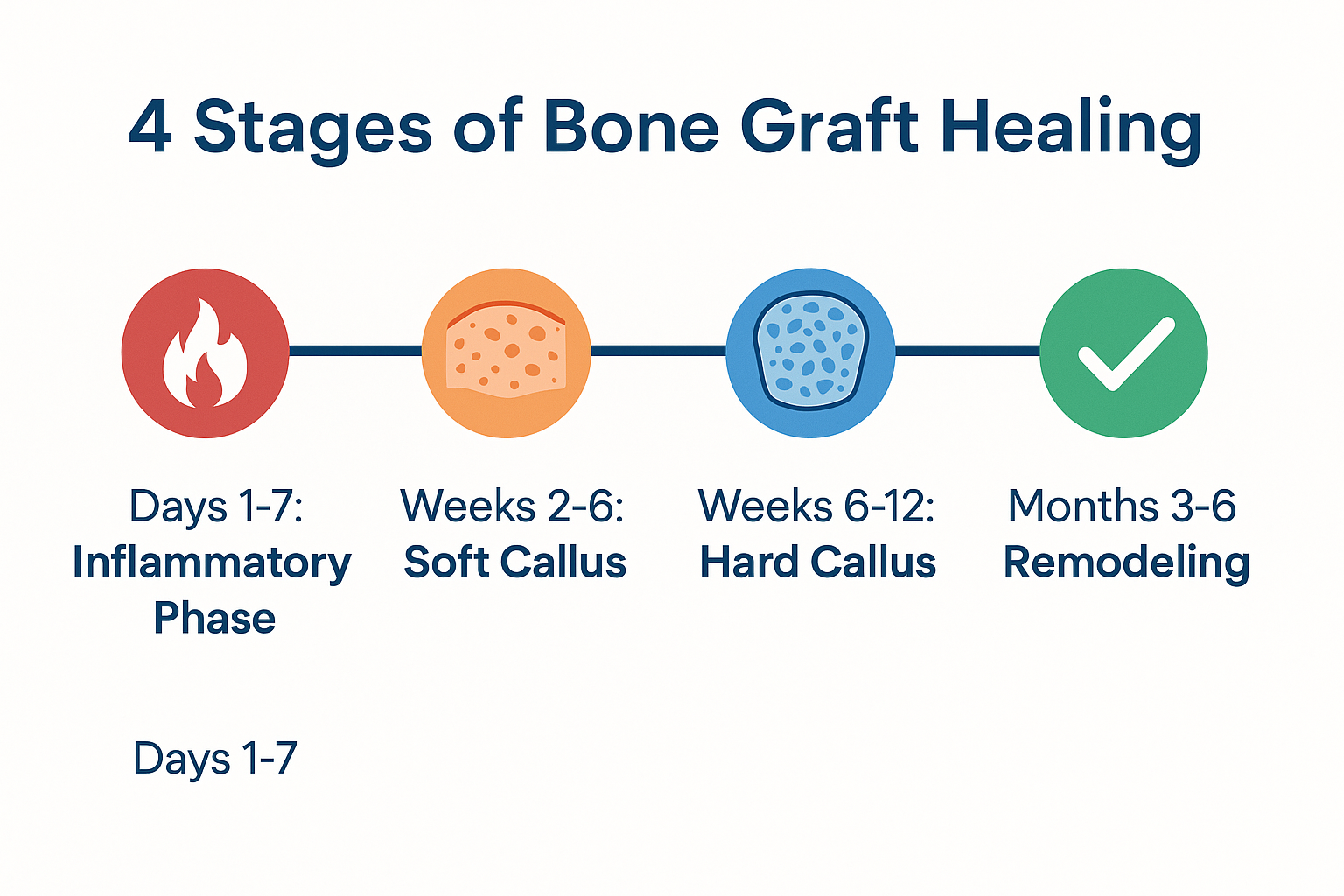
Understanding each phase of the dental bone graft healing stages helps you know what to expect and how to support your body’s natural healing process.
Stage 1: Inflammatory Phase (Days 1-7)
The first stage begins immediately after your bone graft procedure. Your body recognizes the surgical site as an area requiring healing and responds with controlled inflammation.
What happens during this stage:
- Blood clot formation at the graft site
- Increased blood flow to deliver healing nutrients
- White blood cells arrive to prevent infection
- Initial swelling and discomfort peak around day 2-3
Your experience:
- Moderate swelling and bruising
- Mild to moderate pain manageable with prescribed medications
- Possible slight bleeding for 24-48 hours
- Fatigue as your body focuses energy on healing
Critical care tips:
- Take prescribed antibiotics exactly as directed
- Apply ice packs for 15 minutes on, 15 minutes off during the first 48 hours
- Stick to soft foods after dental implant surgery to avoid disturbing the graft
- Avoid smoking and alcohol completely
Stage 2: Soft Callus Formation (Weeks 2-6)
During this crucial phase of the dental bone graft healing stages, your body begins building the framework for new bone growth. This is when the magic of bone regeneration truly begins.
Biological processes:
- Fibroblasts create a soft, fibrous tissue matrix
- New blood vessels form (angiogenesis) to supply the healing area
- Cartilage cells begin forming the template for future bone
- The graft material starts integrating with your existing bone
What you’ll notice:
- Swelling significantly decreases
- Pain becomes minimal or completely resolves
- The surgical site feels firmer but not yet solid
- You can gradually return to normal activities
Important considerations:
- Continue avoiding hard or crunchy foods
- Maintain excellent oral hygiene while being gentle around the graft site
- Attend all follow-up appointments for progress monitoring
- Avoid strenuous exercise that could increase blood pressure
Stage 3: Hard Callus Development (Weeks 6-12)
This stage marks the transformation from soft tissue to actual bone formation. The dental bone graft healing stages become more evident as your jaw regains structural integrity.
Key developments:
- Cartilage tissue converts to hard bone (ossification)
- Calcium and phosphate deposits strengthen the area
- The graft material becomes fully incorporated
- Blood supply to the area stabilizes and matures
Patient experience:
- The graft site feels solid when gently touched
- Normal eating can typically resume (with some cautions)
- Energy levels return to normal
- Most patients feel confident about the healing progress
Ongoing care requirements:
- Regular dental checkups to monitor healing
- Continued excellent oral hygiene
- Proper nutrition to support bone development
- Patience as the final healing phase approaches
Stage 4: Bone Remodeling (Months 3-6)
The final phase of dental bone graft healing stages involves your body fine-tuning the new bone structure. This remodeling process ensures the grafted area can handle the forces of chewing and support a dental implant.
Remodeling activities:
- Excess bone material is removed
- Bone density optimizes for functional needs
- The trabecular (spongy) bone structure develops
- Integration with surrounding natural bone completes
Clinical significance:
- Your dentist can now evaluate implant readiness
- X-rays show mature, integrated bone tissue
- The site can support normal chewing forces
- Dental implant placement can be scheduled
Factors Affecting Healing Timeline
Several factors influence how quickly and completely you progress through the dental bone graft healing stages:
Patient-Related Factors
- Age: Younger patients typically heal faster due to more active bone metabolism
- Overall health: Conditions like diabetes or autoimmune disorders can slow healing
- Smoking status: Tobacco use significantly impairs bone healing and graft success
- Nutrition: Adequate protein, calcium, and vitamin D are essential
- Medication use: Some medications can interfere with bone formation
Procedure-Related Factors
- Graft size and location: Larger grafts in areas with poor blood supply take longer
- Graft material type: Autografts often heal fastest, followed by allografts and synthetic materials
- Surgical technique: Minimally invasive approaches may heal more quickly
- Concurrent procedures: Multiple procedures can extend overall healing time
Environmental Factors
- Oral hygiene: Poor hygiene increases infection risk and delays healing
- Diet compliance: Following dietary restrictions supports optimal healing
- Activity level: Appropriate rest followed by gradual activity resumption
- Stress management: High stress can negatively impact immune function and healing
🦴 Bone Graft Healing Timeline Tracker
Track your progress through the healing stages
Signs of Proper Healing vs. Complications
Recognizing normal healing versus potential complications during the dental bone graft healing stages is essential for optimal outcomes.
Normal Healing Indicators ✅
Week 1-2:
- Gradual reduction in swelling and discomfort
- Slight bruising that fades from purple to yellow
- Minimal bleeding that stops within 48 hours
- Ability to eat soft foods comfortably
Week 3-6:
- Continued improvement in comfort levels
- Surgical site feels stable when gently touched
- No signs of infection (fever, excessive swelling, pus)
- Gradual return to normal activities
Month 2-6:
- Complete comfort during normal activities
- Firm, stable feeling at the graft site
- Normal oral function returns
- X-rays show progressive bone integration
Warning Signs Requiring Immediate Attention ⚠️
Contact your oral surgeon immediately if you experience:
- Severe or worsening pain after the first week
- Excessive bleeding that doesn’t respond to pressure
- Signs of infection including fever, pus, or foul odor
- Graft material exposure or loss of covering tissue
- Numbness or tingling that persists beyond expected timeframes
- Allergic reactions to medications or materials
Early intervention can often resolve complications and keep your healing on track. Don’t hesitate to reach out to your dental implant specialist with any concerns.
Optimizing Your Recovery Through Each Healing Stage
Success during the dental bone graft healing stages depends heavily on your active participation in the healing process. Here’s how to optimize each phase:
Immediate Post-Operative Care (Days 1-7)
Pain Management:
- Take prescribed medications exactly as directed
- Use over-the-counter pain relievers as recommended
- Apply ice packs during the first 48 hours
- Keep your head elevated while sleeping
Dietary Considerations:
- Stick to cool, soft foods for the first week
- Avoid hot beverages that could dissolve blood clots
- Stay hydrated but avoid using straws
- Consider nutritional supplements if eating is difficult
Activity Modifications:
- Rest for the first 24-48 hours
- Avoid strenuous exercise for at least one week
- No smoking or tobacco products (this is crucial!)
- Limit talking and facial movements initially
Early Healing Phase (Weeks 2-6)
Oral Hygiene Protocol:
- Gentle brushing, avoiding the surgical site
- Prescribed mouth rinses as directed
- Warm salt water rinses (1/2 teaspoon salt in 8 oz warm water)
- Professional cleanings as recommended
Nutritional Support:
- Gradually introduce more solid foods
- Focus on protein-rich foods for tissue repair
- Ensure adequate calcium and vitamin D intake
- Consider anti-inflammatory foods like leafy greens and fish
Lifestyle Factors:
- Maintain regular sleep schedule for optimal healing
- Manage stress through relaxation techniques
- Continue avoiding tobacco and excessive alcohol
- Attend all scheduled follow-up appointments
Maturation Phase (Months 2-6)
Monitoring Progress:
- Regular dental X-rays to assess bone integration
- Professional evaluation of healing quality
- Discussion of implant placement timing
- Address any concerns promptly
Preparing for Next Steps:
- Understanding dental implant healing stages for future procedures
- Financial planning for implant placement
- Scheduling coordination with other dental work
- Maintaining optimal oral health
When Can You Get Your Dental Implant?
The timing of implant placement after bone grafting depends on several factors related to the dental bone graft healing stages:
Standard Timeline Expectations
Small Grafts (Single Tooth):
- Typical waiting period: 3-4 months
- Faster healing due to better blood supply
- May proceed sooner with autografts
- X-ray confirmation of adequate bone density
Medium Grafts (2-3 Teeth):
- Standard waiting period: 4-5 months
- Requires more extensive integration
- May need additional bone volume assessment
- Possible staged implant placement
Large Grafts (Sinus Lifts, Major Reconstruction):
- Extended waiting period: 5-6 months or longer
- Complex healing requires patience
- Multiple imaging studies to confirm readiness
- May require additional grafting procedures
Factors Influencing Implant Timing
Your oral surgeon will consider multiple factors when determining implant readiness:
- Bone density measurements from CT scans
- Clinical examination of tissue health
- Patient healing factors like age and health status
- Graft material integration visible on X-rays
- Overall oral health and hygiene status
Understanding that this timeline protects your investment in both the graft and future implant helps maintain realistic expectations during the dental bone graft healing stages.
Frequently Asked Questions About Bone Graft Healing
How painful is the healing process?
Most patients experience moderate discomfort for 3-5 days, followed by gradual improvement. Pain levels are typically manageable with prescribed medications and rarely interfere with daily activities beyond the first week.
Can I work after bone graft surgery?
Many patients return to desk work within 2-3 days, while those with physical jobs may need 5-7 days off. The key is avoiding activities that could increase blood pressure and disrupt healing during the critical first week.
What foods should I avoid during healing?
Avoid hard, crunchy, spicy, or very hot foods for the first 2-3 weeks. Focus on soft foods that support healing and provide necessary nutrients for bone regeneration.
How do I know if my graft is healing properly?
Proper healing includes gradually decreasing pain and swelling, stable graft material, and absence of infection signs. Regular follow-up appointments allow your surgeon to monitor progress and address any concerns.
Can I exercise during the healing period?
Light walking is generally acceptable after the first few days, but avoid strenuous exercise, weightlifting, or activities that could increase blood pressure for at least 2 weeks. Your surgeon will provide specific guidelines based on your procedure.
The Connection Between Bone Grafts and Implant Success
Understanding the relationship between successful dental bone graft healing stages and long-term implant outcomes helps appreciate why this process requires patience and careful attention.
How Bone Quality Affects Implant Stability
Primary Stability:
- Initial mechanical retention of the implant
- Depends on bone density and volume achieved through grafting
- Critical for immediate implant survival
- Assessed during implant placement surgery
Secondary Stability:
- Biological integration (osseointegration) over time
- Enhanced by well-healed, mature grafted bone
- Provides long-term implant success
- Develops over 3-6 months after implant placement
Long-Term Benefits of Proper Bone Grafting
Patients who complete the full dental bone graft healing stages before implant placement typically experience:
- Higher success rates (95-98% vs. 85-90% without adequate bone)
- Better aesthetic outcomes due to proper tissue support
- Improved function with stable, well-integrated implants
- Longer implant lifespan with reduced risk of complications
- Enhanced oral health through restored chewing function
The investment in proper bone grafting and healing pays dividends in the form of reliable, long-lasting dental implants that function like natural teeth.
Advanced Considerations and Special Situations
Simultaneous Implant and Bone Graft Procedures
In some cases, implants can be placed simultaneously with bone grafting, which modifies the typical dental bone graft healing stages:
Immediate Implant Placement:
- Suitable for patients with adequate initial bone volume
- Requires careful case selection and surgical expertise
- May reduce overall treatment time by 2-3 months
- Demands strict adherence to post-operative protocols
Staged Approach Benefits:
- Allows complete bone maturation before implant stress
- Provides opportunity to address any healing complications
- Enables optimal implant positioning
- Reduces risk of implant failure
Managing Multiple Graft Sites
Patients requiring extensive bone reconstruction may have multiple graft sites healing simultaneously:
Coordinated Healing Timeline:
- All sites must reach adequate maturity before implant placement
- May require staged surgical approaches
- Demands enhanced nutritional support
- Benefits from specialized monitoring protocols
Treatment Planning Considerations:
- Sequencing of procedures for optimal outcomes
- Managing patient comfort during extended healing
- Coordinating with other dental treatments
- Financial planning for comprehensive care
Cost Considerations and Insurance Coverage
Understanding the financial aspects of bone grafting helps you plan for the complete treatment journey through all dental bone graft healing stages.
Typical Cost Ranges
Bone Graft Procedures:
- Simple socket preservation: $300-$800
- Standard bone graft: $600-$1,200
- Sinus lift procedures: $1,500-$3,000
- Major reconstruction: $2,000-$5,000+
Factors Affecting Cost:
- Geographic location and practice overhead
- Surgeon experience and specialization
- Type and amount of grafting material
- Complexity of the procedure
- Need for additional procedures
Insurance and Financing Options
Insurance Coverage:
- Many plans cover medically necessary bone grafting
- Coverage varies significantly between providers
- Pre-authorization often required
- Documentation of medical necessity important
Financing Solutions:
- Payment plans through dental practices
- Healthcare credit cards with promotional rates
- Personal loans for dental treatment
- Health savings accounts (HSA) eligibility
Investing in proper bone grafting and allowing complete healing through all stages typically results in better long-term outcomes and potentially lower overall costs due to reduced complications.
Conclusion
Understanding the dental bone graft healing stages empowers you to actively participate in your recovery and achieve optimal results for your future dental implant. The journey from initial surgery through complete bone integration requires patience, but the reward is a strong foundation for teeth that function and feel natural.
Remember that each person’s healing timeline is unique, influenced by factors ranging from age and health status to the specific type and size of bone graft performed. While the general stages remain consistent – inflammation, soft callus formation, hard callus development, and bone remodeling – your experience may vary within these timeframes.
Your next steps:
- Follow all post-operative instructions provided by your oral surgeon
- Maintain excellent oral hygiene while being gentle around healing sites
- Attend all scheduled follow-up appointments for progress monitoring
- Communicate any concerns promptly with your dental team
- Plan for your implant placement once healing is complete
The investment you make in proper healing during these crucial months will pay dividends in the form of successful, long-lasting dental implants. If you’re considering bone grafting or have questions about your current healing progress, consult with experienced dental professionals who can guide you through each stage of your journey to restored oral health.
Your patience during the dental bone graft healing stages is an investment in your future smile, confidence, and quality of life. Trust the process, follow your care instructions, and look forward to the day when you can enjoy all your favorite foods again with complete confidence.
Leave a Reply
Share your thoughts or ask a question about dental implants. Your email address will not be published.