

Imagine walking into a dental office after years of hiding your smile, only to discover that traditional dental implants won’t work for you due to severe bone loss. This devastating news affects thousands of people worldwide, but there’s hope: zygomatic implants offer a revolutionary solution. However, understanding the cost of zygomatic implants is crucial before embarking on this life-changing journey.
Zygomatic implants represent one of the most advanced solutions in modern dentistry, providing hope for patients who have been told they’re not candidates for conventional implants. While the investment is significant, the transformation these implants can provide often makes them invaluable for those seeking to restore their quality of life.
Key Takeaways
• Zygomatic implants typically cost between $3,000-$6,000 per implant, with total treatment ranging from $15,000-$50,000 depending on complexity
• Geographic location significantly impacts pricing, with major metropolitan areas commanding higher fees than rural locations
• Insurance coverage varies widely, but some plans may cover portions of the procedure when deemed medically necessary
• Additional costs include consultations, imaging, anesthesia, and follow-up care, which can add $2,000-$5,000 to the total investment
• Financing options and payment plans make zygomatic implants accessible to more patients than ever before
What Are Zygomatic Implants? 🦷
Zygomatic implants are specialized dental implants that anchor into the zygomatic bone (cheekbone) rather than the jawbone. This innovative approach was developed for patients who lack sufficient bone density in their upper jaw to support traditional implants.
Unlike conventional implants that are typically 10-15mm long, zygomatic implants can extend 35-55mm in length, reaching from the mouth into the dense zygomatic bone. This unique design allows patients with severe bone loss to receive fixed teeth without the need for extensive bone grafting procedures.
Key Benefits of Zygomatic Implants
- Immediate function – Often loaded with teeth the same day
- No bone grafting required – Bypasses insufficient jawbone
- High success rates – Studies show 95-98% success rates
- Faster treatment time – Completed in weeks rather than months
- Permanent solution – Designed to last a lifetime with proper care
Understanding the Cost of Zygomatic Implants: Base Pricing 💰
The cost of zygomatic implants varies significantly based on multiple factors, but understanding the baseline pricing helps patients prepare financially for this investment.
Individual Implant Costs
| Implant Type | Cost Range | Duration |
|---|---|---|
| Single Zygomatic Implant | $3,000 – $6,000 | 2-3 hours |
| Conventional Implant | $1,500 – $3,000 | 1-2 hours |
| All-on-4 with Zygomatic | $15,000 – $35,000 | 4-6 hours |
| Full Arch Restoration | $25,000 – $50,000 | 6-8 hours |
What’s Included in Base Pricing
The base cost typically includes:
- Surgical placement of the zygomatic implant
- Implant hardware and abutments
- Basic sedation (local anesthesia)
- Immediate post-operative care
- Standard follow-up visits for the first month
“Zygomatic implants represent a paradigm shift in implant dentistry, offering hope to patients who previously had limited options. While the initial investment is higher than conventional implants, the long-term value often exceeds expectations.” – Dr. Sarah Mitchell, Oral and Maxillofacial Surgeon
Factors Affecting the Cost of Zygomatic Implants 📊
Several critical factors influence the final price you’ll pay for zygomatic implants. Understanding these variables helps you budget accurately and avoid unexpected expenses.
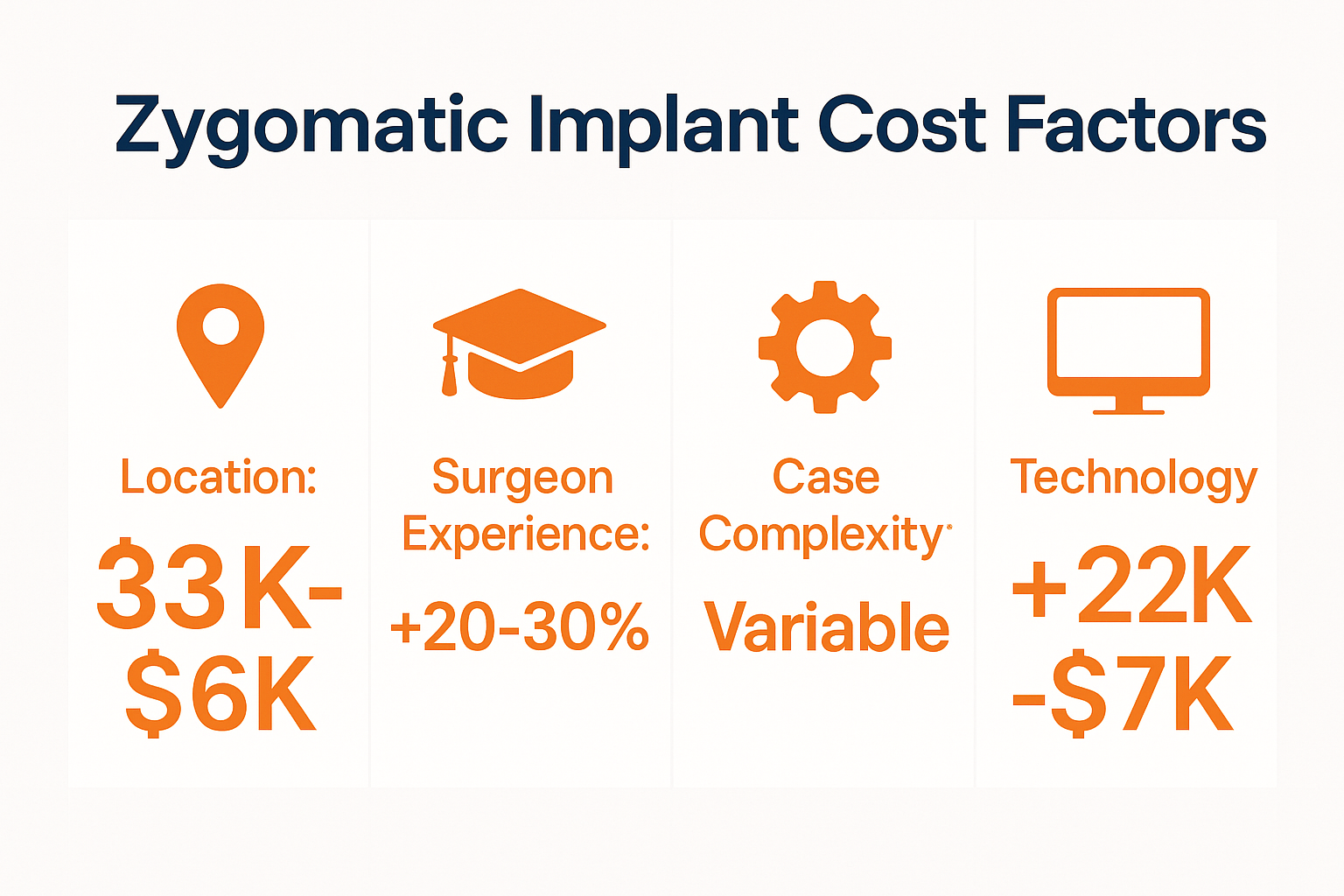
1. Geographic Location 🗺️
Location plays a massive role in pricing:
- Major Metropolitan Areas: $4,000-$6,000 per implant
- Suburban Locations: $3,500-$5,000 per implant
- Rural Areas: $3,000-$4,500 per implant
- International Options: $2,000-$4,000 per implant
2. Surgeon Experience and Credentials
The expertise of your surgeon significantly impacts costs:
- Board-certified oral surgeons: Premium pricing (20-30% higher)
- Specialized training in zygomatic procedures: Added value
- High-volume practices: Often more competitive pricing
- Academic affiliations: May offer research-based discounts
3. Case Complexity
Your specific situation affects the final cost:
- Number of implants needed (2-6 typically required)
- Bone density and anatomy
- Previous failed treatments
- Medical complications or risk factors
- Simultaneous procedures (extractions, sinus lifts)
4. Technology and Equipment
Advanced technology increases precision but adds cost:
- 3D imaging and planning: $500-$1,500
- Computer-guided surgery: $1,000-$3,000
- Advanced anesthesia options: $500-$2,000
- Immediate loading protocols: $1,000-$2,500
Hidden Costs and Additional Expenses 🔍
When budgeting for zygomatic implants, it’s essential to account for expenses beyond the basic implant cost. These additional fees can add $2,000-$8,000 to your total investment.
Pre-Treatment Costs
- Initial consultation: $200-$500
- 3D CT scans: $300-$800
- Digital impressions: $150-$400
- Medical clearance: $100-$300
- Specialist referrals: $250-$600
Surgical Day Expenses
- Anesthesia fees: $500-$2,000
- Operating room charges: $800-$2,500
- Medical supplies: $300-$800
- Emergency medications: $100-$300
Post-Treatment Requirements
- Temporary prosthetics: $1,000-$3,000
- Final crown/bridge work: $2,000-$8,000
- Follow-up appointments: $150-$300 each
- Maintenance supplies: $50-$150 monthly
- Professional cleanings: $200-$400 quarterly
Potential Complication Costs
While rare, complications can occur:
- Revision surgery: $2,000-$10,000
- Additional imaging: $300-$800
- Extended recovery care: $500-$2,000
- Prosthetic adjustments: $300-$1,500
Insurance Coverage for Zygomatic Implants 🏥
Navigating insurance coverage for zygomatic implants can be complex, but understanding your options helps maximize your benefits and minimize out-of-pocket expenses.
Medical vs. Dental Insurance
Medical Insurance Coverage:
- May cover when deemed medically necessary
- Trauma or cancer-related bone loss often covered
- Requires pre-authorization and documentation
- Coverage typically 50-80% of surgical costs
Dental Insurance Coverage:
- Limited coverage for implant procedures
- Annual maximums typically $1,000-$2,500
- May cover diagnostic imaging and consultations
- Prosthetic portions sometimes partially covered
Maximizing Insurance Benefits
To optimize your coverage:
- Obtain pre-authorization before treatment
- Document medical necessity with your surgeon
- Submit claims strategically across benefit years
- Appeal denials with additional documentation
- Consider supplemental policies for major procedures
HSA and FSA Options
Health Savings Accounts and Flexible Spending Accounts offer tax advantages:
- Pre-tax dollars reduce effective treatment cost
- Annual contribution limits vary by account type
- Eligible expenses include most implant-related costs
- Planning ahead maximizes available funds
Financing Options and Payment Plans 💳
The significant investment required for zygomatic implants has led to numerous financing solutions, making treatment accessible to more patients than ever before.
In-Office Financing
Many practices offer internal financing:
- 0% interest for 6-24 months
- Extended payment plans up to 84 months
- No credit check options available
- Automatic payment discounts
Third-Party Financing Companies
Popular healthcare financing options include:
CareCredit:
- 6-24 months 0% interest (with approval)
- Extended plans with competitive rates
- Widely accepted by dental practices
- Online application and instant approval
LendingClub:
- Personal loans for medical expenses
- Fixed rates and terms
- No prepayment penalties
- Loan amounts up to $40,000
Prosper Healthcare Lending:
- Specialized medical financing
- Terms up to 84 months
- Competitive interest rates
- Quick approval process
Alternative Financing Strategies
Creative approaches to funding treatment:
- Medical credit cards with promotional rates
- Personal loans from banks or credit unions
- Home equity lines of credit for lower rates
- Payment plans with family or friends
- Dental tourism combined with vacation savings
Comparing Costs: Zygomatic vs. Traditional Implants 🔄
Understanding how zygomatic implants compare financially to alternative treatments helps justify the investment and make informed decisions.
Treatment Comparison Table
| Treatment Option | Initial Cost | Timeline | Success Rate | Longevity |
|---|---|---|---|---|
| Zygomatic Implants | $15,000-$50,000 | 1-3 months | 95-98% | 20+ years |
| Bone Graft + Implants | $20,000-$60,000 | 12-18 months | 85-92% | 15-20 years |
| All-on-4 Traditional | $12,000-$35,000 | 3-6 months | 90-95% | 15-20 years |
| Removable Dentures | $2,000-$8,000 | 2-4 weeks | Variable | 5-10 years |
Long-Term Value Analysis
When considering lifetime costs:
Zygomatic Implants:
- Higher initial investment
- Minimal ongoing maintenance
- No replacement needed typically
- Total 20-year cost: $18,000-$55,000
Traditional Alternatives:
- Lower initial cost often
- Regular adjustments and replacements
- Multiple procedures over time
- Total 20-year cost: $25,000-$75,000
Quality of Life Considerations
Beyond financial factors, consider:
- Immediate function vs. extended healing
- Dietary restrictions and comfort
- Confidence and social impact
- Professional and personal benefits
- Long-term oral health outcomes
Getting the Best Value for Your Investment 🎯
Maximizing the value of your zygomatic implant investment requires strategic planning and careful provider selection.
Research and Selection Criteria
Surgeon Qualifications:
- Board certification in oral surgery
- Specific zygomatic implant training
- High-volume experience (50+ cases annually)
- Patient testimonials and before/after photos
- Hospital affiliations and credentials
Practice Evaluation:
- Modern equipment and technology
- Comprehensive treatment planning
- Clear pricing and financing options
- Emergency care availability
- Long-term follow-up protocols
Questions to Ask Potential Providers
- How many zygomatic implant procedures do you perform annually?
- What is your success rate with these specific implants?
- What technology do you use for planning and placement?
- What happens if complications arise during or after treatment?
- What warranty or guarantee do you provide on your work?
- Can you provide patient references from similar cases?
Red Flags to Avoid
Be cautious of:
- Prices significantly below market rates
- Pressure to decide immediately
- Lack of proper credentials or training
- No clear treatment plan or timeline
- Unwillingness to discuss risks or alternatives
- No emergency contact or follow-up care
Regional Cost Variations Across Different Markets 🌍
The cost of zygomatic implants varies dramatically based on geographic location, local market conditions, and regional economic factors.
United States Regional Breakdown
West Coast (CA, WA, OR):
- Average cost: $4,500-$6,000 per implant
- High cost of living and practice overhead
- Advanced technology adoption
- Competitive specialist market
East Coast (NY, MA, FL):
- Average cost: $4,000-$5,800 per implant
- Major metropolitan premiums
- High concentration of specialists
- Insurance coverage variations
Midwest (IL, OH, MI):
- Average cost: $3,200-$4,800 per implant
- Lower overhead costs
- Growing specialist availability
- Competitive pricing pressure
South (TX, GA, NC):
- Average cost: $3,000-$4,500 per implant
- Emerging markets with growth
- Variable specialist density
- Cost-conscious patient populations
International Options
Medical Tourism Destinations:
Mexico:
- Cost: $2,000-$3,500 per implant
- Quality varies significantly
- Language and communication considerations
- Follow-up care challenges
Costa Rica:
- Cost: $2,500-$4,000 per implant
- Established medical tourism infrastructure
- English-speaking practitioners common
- Good quality control standards
Thailand:
- Cost: $2,200-$3,800 per implant
- Advanced dental facilities
- Significant travel costs and time
- Cultural and language barriers
Factors Driving Regional Differences
- Cost of living and practice overhead
- Specialist availability and competition
- Insurance coverage patterns
- Patient demographics and demand
- Regulatory environment and standards
🦷 Zygomatic Implant Cost Calculator
Estimated Total Investment for Zygomatic Implant Treatment
Base Implant Cost
$0Complexity Adjustment
$0Surgeon Premium
$0Additional Services
$0Conclusion: Making an Informed Investment Decision
The cost of zygomatic implants represents a significant financial commitment, typically ranging from $15,000 to $50,000 for complete treatment. However, when you consider the life-changing benefits, long-term value, and improved quality of life these implants provide, many patients find the investment worthwhile.
Throughout this comprehensive guide, we’ve explored the various factors that influence pricing, from geographic location and surgeon expertise to case complexity and additional services. We’ve also examined financing options, insurance considerations, and strategies for maximizing value.
Your Next Steps:
- Schedule consultations with 2-3 qualified oral surgeons specializing in zygomatic implants
- Obtain detailed treatment plans and cost breakdowns from each provider
- Verify insurance coverage and explore pre-authorization options
- Research financing alternatives that fit your budget and timeline
- Ask for patient references and review before/after cases similar to yours
- Plan for additional expenses beyond the base implant costs
Remember, the cheapest option isn’t always the best value. Focus on finding an experienced surgeon who uses advanced technology, offers comprehensive care, and provides clear communication throughout your treatment journey.
The investment in zygomatic implants often pays dividends in restored confidence, improved nutrition, enhanced social interactions, and overall life satisfaction. With proper planning and the right provider, this advanced dental solution can transform not just your smile, but your entire quality of life.
Leave a Reply
Share your thoughts or ask a question about dental implants. Your email address will not be published.