

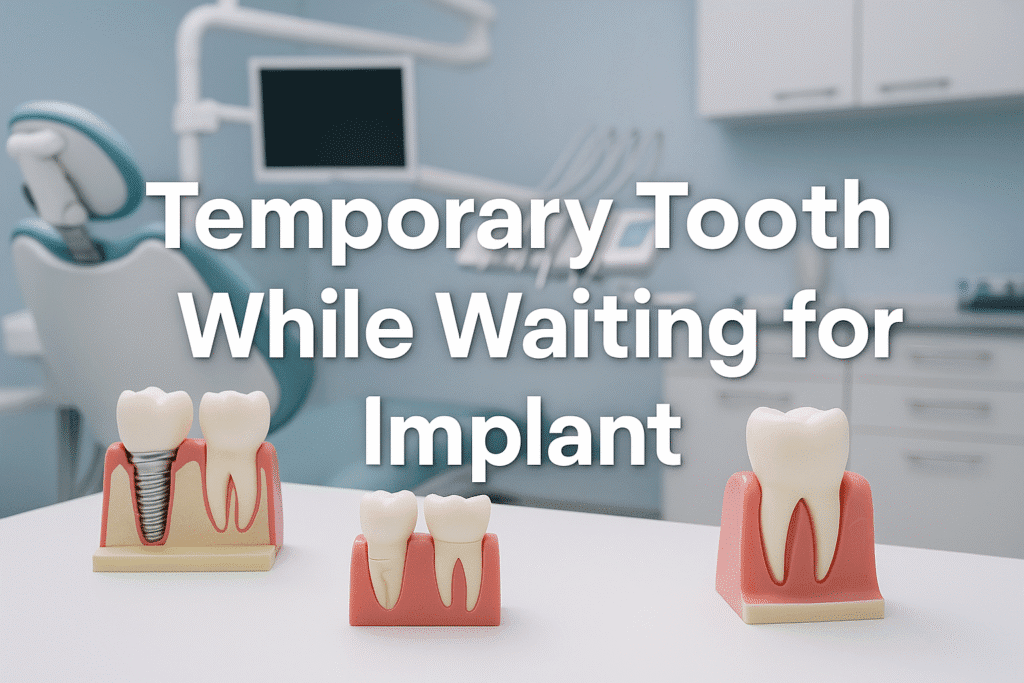
Imagine losing a tooth and facing months without a replacement while waiting for your dental implant to heal. The thought of gaps in your smile, difficulty eating, or feeling self-conscious in social situations can be overwhelming. Fortunately, getting a temporary tooth while waiting for implant placement has become a seamless part of modern dental care, ensuring you never have to compromise your confidence or quality of life during the healing process.
A temporary tooth while waiting for implant serves as your smile’s placeholder, maintaining both function and aesthetics during the crucial osseointegration period when your implant fuses with your jawbone. This interim solution has revolutionized the dental implant experience, allowing patients to continue their daily lives without interruption while their permanent restoration develops.
Key Takeaways
• Multiple temporary options available: Flipper dentures, temporary bridges, and removable partial dentures can replace missing teeth during implant healing
• Healing time varies: Most patients need temporary teeth for 3-6 months while the implant integrates with the jawbone
• Functionality matters: Temporary teeth restore basic chewing ability and speech clarity while protecting the implant site
• Proper care is essential: Following specific cleaning and maintenance routines ensures successful implant healing
• Cost-effective investment: Temporary teeth prevent bone loss and maintain facial structure during the waiting period
Understanding Your Temporary Tooth While Waiting for Implant Options
When you’re getting a dental implant, the journey typically involves multiple phases. After the initial implant placement surgery, your jawbone needs time to heal and integrate with the titanium post through a process called osseointegration. During this critical period, which usually lasts 3-6 months, you’ll need a temporary tooth while waiting for implant completion.
Types of Temporary Teeth Solutions
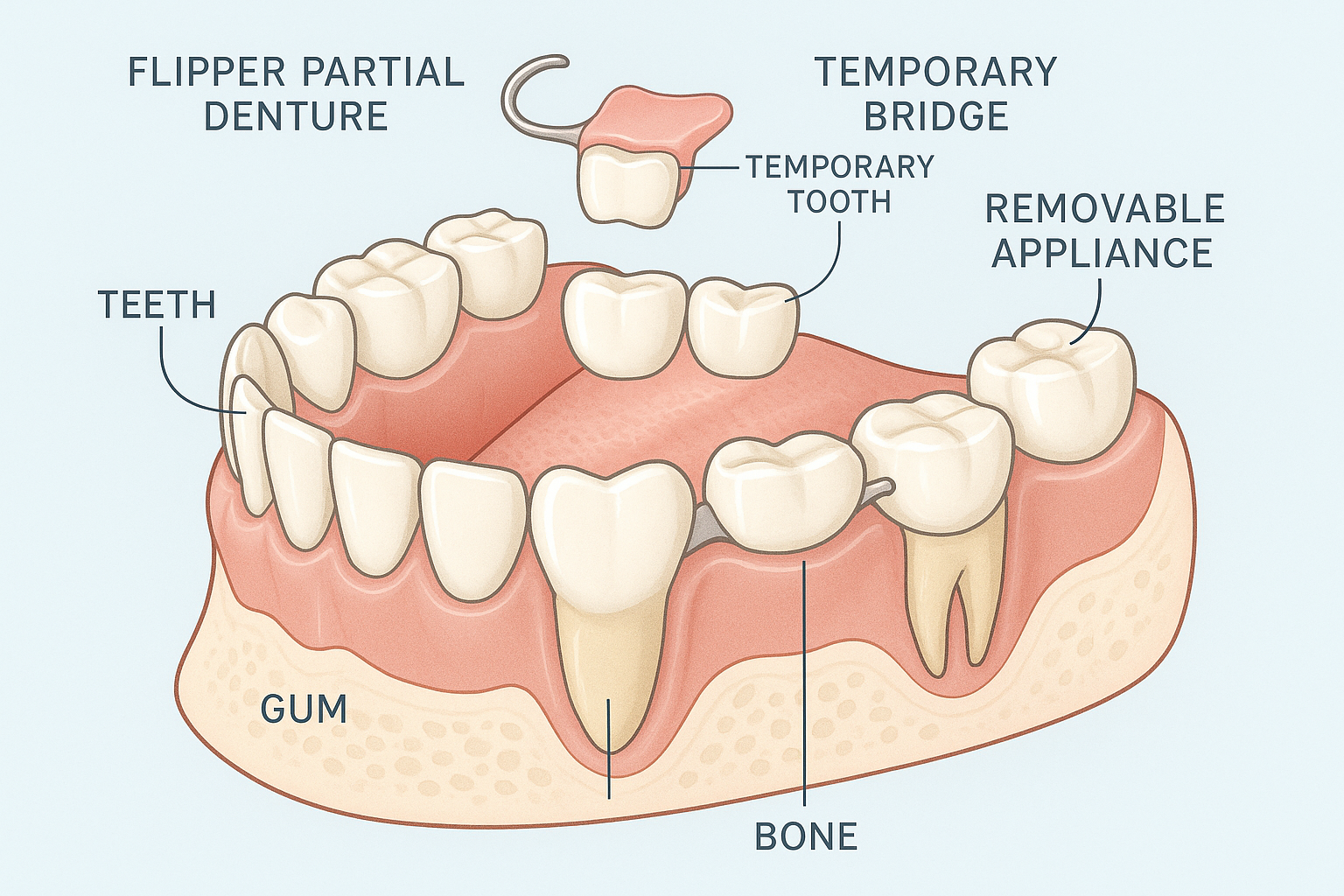
Flipper Dentures represent the most common temporary solution. These lightweight, removable appliances snap into place and provide immediate aesthetic improvement. Made from acrylic resin, flippers are cost-effective and can be fabricated quickly, often within days of your tooth extraction.
Temporary Bridges offer a more stable option for patients missing multiple adjacent teeth. These fixed appliances attach to neighboring teeth and provide superior chewing function compared to removable options. However, they require preparation of adjacent healthy teeth, which some patients prefer to avoid.
Removable Partial Dentures work well when multiple non-adjacent teeth need replacement. These appliances use clasps or precision attachments to secure to remaining teeth, offering excellent stability and comfort during the healing period.
Immediate Load Implants allow for same-day temporary crowns in select cases. When bone quality and quantity permit, your dentist can place a temporary crown immediately after implant surgery, though eating restrictions apply during healing.
The choice of temporary tooth while waiting for implant depends on factors including your bone density, gum health, lifestyle needs, and budget considerations. Your dental team will evaluate these factors to recommend the most appropriate solution for your specific situation.
Benefits Beyond Aesthetics
While maintaining your smile’s appearance is important, temporary teeth serve crucial functional purposes. They help maintain proper speech patterns, prevent tongue habits that could interfere with healing, and allow for basic nutrition during recovery. Additionally, temporary teeth help preserve facial support and prevent the sunken appearance that can occur with missing teeth.
For patients considering affordable dental implants in Dallas, understanding temporary options helps in planning both timeline and budget for the complete treatment process.
Caring for Your Temporary Tooth While Waiting for Implant Healing
Proper maintenance of your temporary tooth while waiting for implant integration is crucial for successful treatment outcomes. Your temporary restoration requires specific care protocols that differ from natural tooth maintenance, and following these guidelines ensures optimal healing of your implant site.
Daily Cleaning Protocols
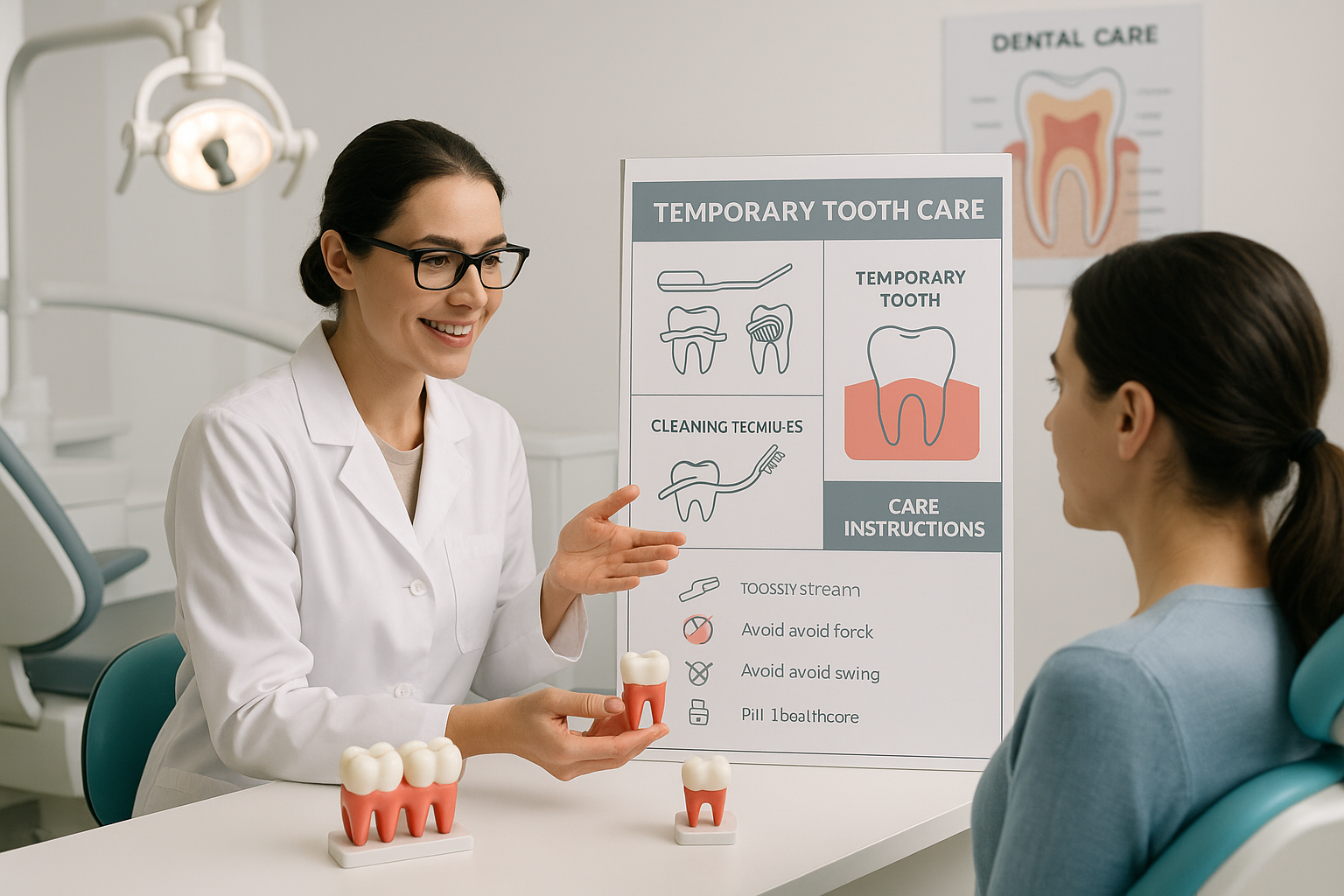
Gentle Brushing Techniques form the foundation of temporary tooth care. Use a soft-bristled toothbrush and gentle circular motions around the temporary restoration. Avoid aggressive brushing that could dislodge the temporary tooth or irritate healing tissues. Focus on keeping the gum line clean while being mindful of the implant site.
Specialized Flossing Methods require extra attention around temporary teeth. Use unwaxed dental floss or specialized implant floss threaders to clean around the temporary restoration. Pull the floss through horizontally rather than snapping it up and down, which could disturb healing tissues or dislodge the temporary tooth.
Antimicrobial Rinses help maintain oral hygiene during the healing period. Your dentist may recommend specific mouth rinses that promote healing while preventing bacterial buildup around the implant site. Avoid alcohol-based rinses that could irritate healing tissues.
Eating Guidelines and Restrictions
During the healing period, your diet plays a crucial role in successful implant integration. Soft foods should comprise the majority of your meals, especially during the first few weeks after implant placement. Consider incorporating nutritious soft foods that support healing while being gentle on your temporary restoration.
Foods to Avoid include anything hard, sticky, or chewy that could damage your temporary tooth or disturb the healing implant. Nuts, hard candies, ice, and sticky caramels pose particular risks. Additionally, avoid extremely hot or cold foods that could cause discomfort around the healing site.
Chewing Strategies help protect both your temporary tooth and healing implant. Chew primarily on the opposite side of your mouth from the implant site. When eating, cut food into smaller pieces and avoid biting directly into items with your temporary tooth.
Monitoring Healing Progress
Signs of Normal Healing include gradual reduction in swelling, minimal discomfort that responds to over-the-counter pain medication, and healthy pink gum tissue around the implant site. Your temporary tooth should feel secure and comfortable during normal activities.
Warning Signs requiring immediate dental attention include persistent pain, significant swelling, bleeding that doesn’t stop, or loosening of your temporary restoration. Any signs of infection, such as fever or pus discharge, warrant urgent dental care.
Follow-up Appointments are essential for monitoring your progress. Your dental team will schedule regular check-ups to assess healing, adjust your temporary tooth if needed, and plan for the final restoration placement. These appointments also provide opportunities to address any concerns about your temporary tooth while waiting for implant completion.
Understanding the healing stages of dental implants helps you know what to expect during each phase of recovery and when your temporary tooth can be replaced with the final restoration.
🦷 Temporary Tooth Care Timeline Calculator
Get your personalized timeline for temporary tooth care while waiting for implant completion
Your Personalized Treatment Timeline
Timeline and Expectations for Temporary Tooth While Waiting for Implant
Understanding the timeline for your temporary tooth while waiting for implant completion helps you plan effectively and set realistic expectations for your treatment journey. The duration and specific milestones vary based on individual factors, but following a general timeline helps you prepare for each phase of the process.
Immediate Post-Surgery Period (Days 1-14)
First 24-48 Hours represent the most critical period for both your implant and temporary tooth. During this time, you’ll experience normal post-surgical symptoms including mild swelling, discomfort, and possible minor bleeding. Your temporary tooth may feel unusual as you adjust to its presence, but it should not cause significant pain or interfere with basic function.
Week One Focus centers on managing discomfort and establishing proper care routines. Your temporary tooth requires gentle handling during this period, as surrounding tissues are still healing. Stick to soft foods, avoid smoking or alcohol, and follow all post-operative instructions carefully. Most patients find their temporary tooth becomes more comfortable as initial swelling subsides.
Week Two Assessment typically involves your first follow-up appointment. Your dental team will evaluate healing progress, check the fit and comfort of your temporary tooth, and make any necessary adjustments. This appointment is crucial for ensuring optimal healing conditions and addressing any concerns about your temporary restoration.
Osseointegration Phase (Weeks 3-16)
Early Integration (Weeks 3-8) marks the beginning of the osseointegration process, where your jawbone begins growing around the implant surface. During this phase, your temporary tooth while waiting for implant serves as a protective barrier while maintaining aesthetics and basic function. You may gradually expand your diet to include slightly firmer foods, but continue avoiding hard or sticky items.
Mid-Phase Monitoring (Weeks 9-12) involves continued bone integration and tissue maturation. Your temporary tooth should feel completely comfortable by this point, and you may notice improved stability and function. Regular check-ups during this period help ensure proper healing progression and allow for any necessary adjustments to your temporary restoration.
Final Integration (Weeks 13-16) completes the osseointegration process for most patients. However, some cases requiring bone grafts for dental implants may need additional healing time. Your dentist will use X-rays and clinical examination to confirm successful integration before proceeding to final restoration placement.
Transition to Permanent Restoration
Final Impressions mark the beginning of your transition from temporary to permanent restoration. Once osseointegration is confirmed, your dentist will take detailed impressions or digital scans to create your final crown. Your temporary tooth while waiting for implant continues protecting the site during this fabrication period, which typically takes 2-3 weeks.
Crown Delivery Appointment represents the culmination of your implant journey. Your temporary tooth is carefully removed, and the abutment and crown are placed. This appointment may require minor adjustments to ensure perfect fit, bite alignment, and aesthetics that match your natural teeth.
Post-Delivery Care involves adapting to your new permanent restoration. While the adjustment period is typically minimal, you may notice differences in sensation and function compared to your temporary tooth. Your dental team will provide specific care instructions for maintaining your new implant crown and schedule follow-up appointments to monitor long-term success.
For patients interested in comprehensive solutions, learning about All-on-4 dental implants can provide insights into full-arch restoration options that may include immediate temporary teeth.
Cost Considerations and Insurance Coverage
Understanding the financial aspects of getting a temporary tooth while waiting for implant placement helps you plan your treatment budget effectively. The costs associated with temporary restorations vary significantly based on the type of temporary tooth, your geographic location, and your specific treatment needs.
Breakdown of Temporary Tooth Costs
Flipper Denture Costs typically range from $300 to $800, making them the most economical temporary option. These removable appliances offer excellent value for patients needing basic aesthetic restoration during healing. The relatively low cost makes flippers accessible for most patients, though they may require periodic adjustments during the healing period.
Temporary Bridge Expenses generally cost between $800 and $2,000, depending on the number of teeth involved and materials used. While more expensive than flippers, temporary bridges provide superior stability and function, making them worthwhile for patients who need to maintain demanding professional or social schedules during healing.
Removable Partial Denture Pricing varies from $600 to $1,500, offering a middle-ground option between flippers and fixed bridges. These appliances work well for patients missing multiple teeth and provide good stability while remaining more affordable than fixed alternatives.
Immediate Temporary Crown Costs range from $500 to $1,200, not including the additional fees for immediate loading procedures. While convenient, immediate temporary crowns require specific conditions and may not be suitable for all patients.
Insurance Coverage Patterns
Medical vs. Dental Insurance coverage for temporary teeth varies significantly. Most dental insurance plans provide partial coverage for temporary restorations, typically covering 50-80% of basic temporary appliances like flippers. However, coverage for more sophisticated temporary solutions may be limited.
Pre-Authorization Requirements are common for temporary tooth procedures, especially when combined with implant treatment. Contact your insurance provider before beginning treatment to understand your specific coverage levels and any required documentation. Many offices can help with pre-authorization submissions to maximize your benefits.
Flexible Spending Accounts (FSAs) and Health Savings Accounts (HSAs) can be used for temporary tooth expenses, providing tax advantages for your treatment costs. These accounts often cover the full cost of temporary restorations, making them valuable tools for managing treatment expenses.
Value-Added Considerations
Long-term Benefits of investing in quality temporary teeth extend beyond immediate comfort and aesthetics. Proper temporary restorations help maintain bone structure, prevent adjacent teeth from shifting, and preserve facial support during healing. These benefits can prevent more expensive corrective treatments later.
Treatment Package Pricing offered by many dental practices can provide significant savings when temporary teeth are included with implant treatment. These comprehensive packages often cost less than paying for each service separately and may include additional benefits like extended warranties or follow-up care.
For patients seeking affordable implant options, many practices offer financing plans that spread treatment costs over manageable monthly payments, making quality temporary teeth accessible regardless of immediate budget constraints.
Conclusion
Getting a temporary tooth while waiting for implant completion doesn’t have to be a source of anxiety or inconvenience. With proper planning, care, and realistic expectations, your temporary restoration can seamlessly bridge the gap between tooth loss and your beautiful, permanent implant crown.
The key to success lies in choosing the right temporary option for your specific needs, following proper care protocols, and maintaining regular communication with your dental team throughout the healing process. Whether you opt for a simple flipper denture or a more sophisticated temporary bridge, your interim restoration plays a crucial role in protecting your investment and ensuring optimal final results.
Your Next Steps
Schedule a consultation with a qualified implant dentist to discuss your specific temporary tooth needs and treatment timeline. Every patient’s situation is unique, and professional guidance ensures you receive the most appropriate temporary solution for your circumstances.
Research your insurance benefits and explore financing options to make your treatment more affordable. Many practices offer payment plans and work with multiple insurance providers to maximize your coverage.
Prepare for success by understanding the timeline, care requirements, and expectations for your temporary tooth while waiting for implant completion. With proper preparation and care, your temporary restoration will serve you well until your permanent crown is ready.
Ready to begin your implant journey? Contact our experienced dental implant team to learn more about temporary tooth options and create your personalized treatment plan. Your perfect smile is just a phone call away! 🦷✨
Leave a Reply
Share your thoughts or ask a question about dental implants. Your email address will not be published.