

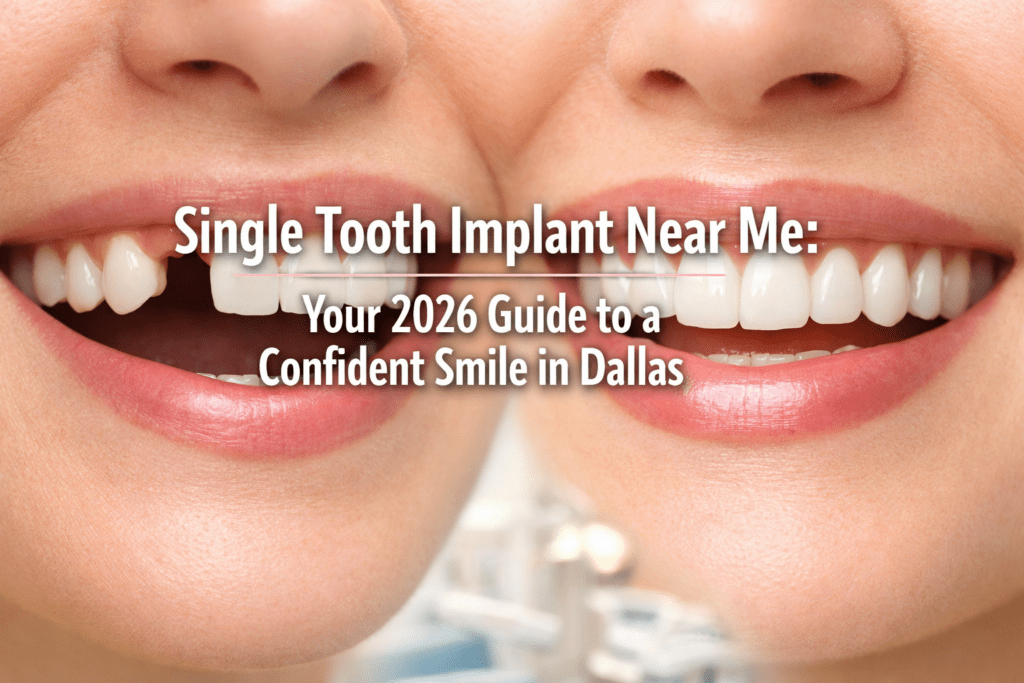
When you’re searching for a “single tooth implant near me,” you’re likely looking for a long-term, natural-feeling solution for a missing tooth. In 2026, single tooth implants offer a highly effective and durable way to restore your smile and chewing function, blending seamlessly with your natural teeth. This guide will provide comprehensive insights into the process, benefits, costs, and what to expect when considering dental implants in Dallas, TX.
Key Takeaways
- A single tooth implant replaces one missing tooth, consisting of a titanium post, an abutment, and a custom crown, designed to look and function like a natural tooth.
- The dental implant procedure typically involves several stages, including initial consultation, implant placement, a healing period for osseointegration, and finally, abutment and crown placement.
- Advanced technology, including 3D printing and AI, enhances the precision, speed, and customization of single tooth implant treatments in 2026.
- While an investment, dental implants in Dallas offer significant long-term benefits in terms of durability, bone health preservation, and aesthetic appeal compared to traditional tooth replacement options.
- Choosing an experienced dental professional in Dallas is crucial for a successful outcome, requiring careful consideration of their expertise, technology, and patient care approach.
What Exactly is a Single Tooth Implant?
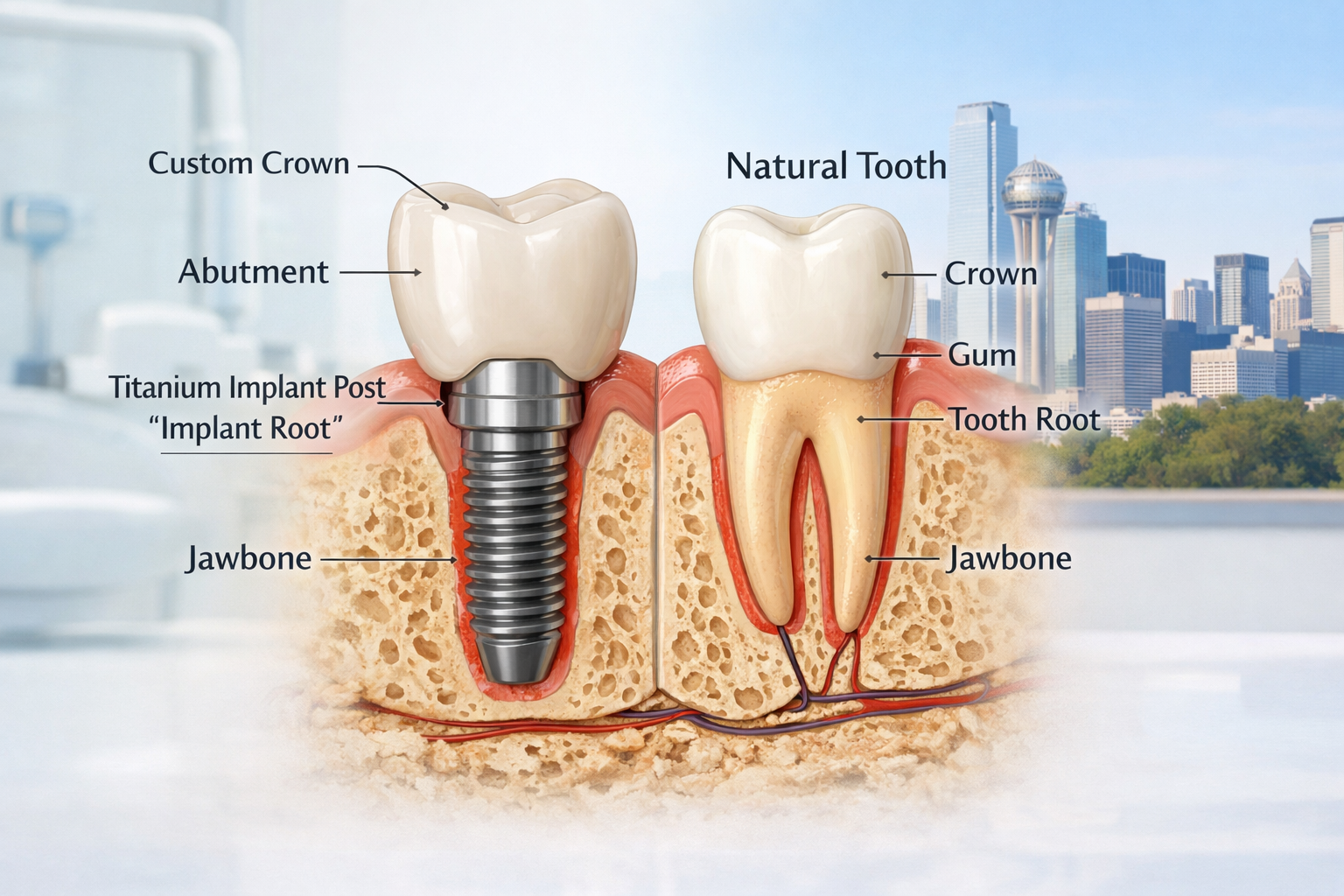
A single tooth implant is a modern dental solution designed to replace a single missing tooth without affecting the adjacent teeth. It functions as a complete, independent tooth replacement, anchored directly into your jawbone. This approach mimics the natural tooth structure, providing both aesthetic and functional restoration [2].
A single tooth implant system typically consists of three main components:
- The Implant Post (Fixture): This is a small, screw-shaped titanium post surgically placed into the jawbone. Titanium is biocompatible, meaning it can fuse directly with the bone in a process called osseointegration, creating a strong and stable foundation for the replacement tooth. This acts as the new tooth root.
- The Abutment: Once the implant post has integrated with the jawbone, a small connector piece called an abutment is attached to it. The abutment extends above the gum line and serves as the support for the final dental crown.
- The Custom Crown: This is the visible part of the implant, meticulously crafted to match the color, shape, and size of your natural teeth. It is custom-made to fit perfectly onto the abutment, providing a natural-looking and functional tooth replacement [2].
Unlike dental bridges, which require altering healthy adjacent teeth to support the replacement, a single tooth implant stands alone, preserving the integrity of your remaining natural teeth. This makes it a preferred option for many individuals looking for comprehensive missing teeth solutions.
The Single Tooth Implant Procedure: What to Expect in 2026
The process for receiving a single tooth implant involves several carefully planned stages, ensuring optimal integration and a successful, lasting result. The timeline can vary for each individual, but generally follows a predictable sequence.
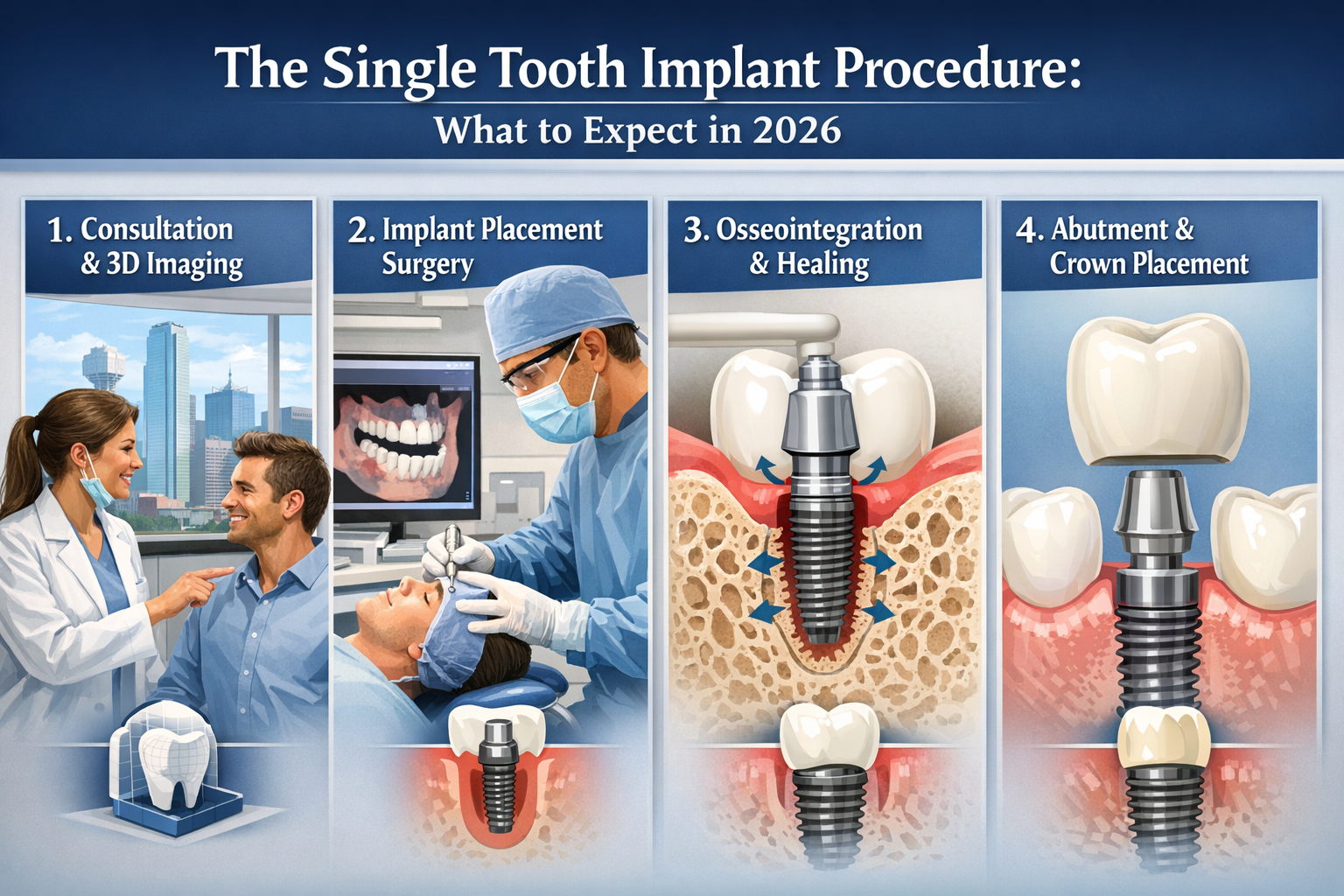
Here’s a breakdown of the typical single tooth implant procedure:
- Initial Consultation and Planning: Your journey begins with a thorough examination, including digital X-rays and 3D imaging (like CBCT scans). This allows your dentist to assess your oral health, jawbone density, and determine if you are a suitable candidate for dental implants. Modern AI-powered software can analyze X-rays for early signs of decay and enhance treatment planning accuracy, supporting more precise implant placement decisions [1]. This crucial step ensures a personalized and effective treatment plan.
- Implant Placement Surgery: During this stage, the titanium implant post is surgically placed into your jawbone beneath the gum line. This is typically an outpatient procedure performed under local anesthesia, often with sedation options available for comfort. Your dentist will ensure the implant is securely positioned to facilitate successful osseointegration.
- Osseointegration (Healing Period): After the implant is placed, a critical healing period begins, usually lasting a few months. During this time, the titanium post gradually fuses with your jawbone. This process is essential for creating a strong, stable foundation for your new tooth. For more information on what to expect during this period, refer to our guide on temporary tooth while waiting for implant.
- Abutment Placement: Once osseointegration is complete and the implant is firmly integrated with the bone, a second minor surgical procedure may be performed to attach the abutment to the implant post. In some cases, the abutment may be attached during the initial implant placement.
- Crown Fabrication and Placement: Impressions of your mouth are taken to create a custom dental crown that perfectly matches your natural teeth in color, shape, and size. Thanks to advancements in 3D printing technology, same-day restorations are sometimes possible, allowing for fewer appointments and faster treatment completion with better-fitting restorations [1]. Once fabricated, the crown is securely cemented or screwed onto the abutment, completing your new, functional tooth.
The entire process, from initial consultation to final crown placement, can span several months, depending on individual healing rates and the complexity of the case. Patient safety is a paramount concern throughout every stage of the implant surgery process.
Finding a Single Tooth Implant Near Me in Dallas, TX
Locating a qualified and experienced dental professional for a single tooth implant near you in Dallas, TX, is a critical step towards a successful outcome. Dallas boasts a wide array of dental practices offering cutting-edge dental implant solutions.
To find the right dental implants in Dallas, consider the following:
- Specialization and Experience: Look for dentists or oral surgeons with extensive experience in implant dentistry. Board certification or specialized training in prosthodontics or oral and maxillofacial surgery indicates a high level of expertise. You can also review our guide on how to choose a dental implant dentist near you.
- Technology and Facilities: Modern dental practices utilize advanced technology, such as 3D imaging (CBCT scans), digital impression systems, and sometimes even in-house milling machines for crowns. These technologies contribute to more precise diagnostics, treatment planning, and predictable results [6].
- Patient Reviews and Testimonials: Online reviews and testimonials offer insights into other patients’ experiences regarding the quality of care, comfort, and overall satisfaction.
- Consultation: Schedule initial consultations with a few different practices. This allows you to meet the dental team, discuss your specific needs, understand the proposed treatment plan, and ask questions about the procedure, cost, and financing options.
- Location and Accessibility: For convenient follow-up appointments and emergencies, consider a practice that is easily accessible from your home or workplace in Dallas.
By thoroughly researching and evaluating your options, you can make an informed decision and choose a dental professional in Dallas who instills confidence and provides exceptional care for your single tooth implant journey.
Cost of a Single Tooth Implant in Dallas in 2026
Understanding the financial aspect is a significant part of considering a single tooth implant. The cost of a single tooth implant in Dallas in 2026 can vary based on several factors, including the complexity of the case, the specific components used, the need for preparatory procedures, and the dental practice’s fees.
Here’s what typically influences the total implant cost in Dallas:
- Consultation and Diagnostics: Initial exams, X-rays, and 3D scans are necessary for accurate planning and contribute to the overall cost.
- Preparatory Procedures: Some patients may require additional procedures before implant placement, such as tooth extraction, bone grafting (if there’s insufficient jawbone density), or a sinus lift. These add to the overall expense. For more details, explore bone grafting costs for dental implants.
- Implant Post: The cost of the titanium implant itself can vary based on the manufacturer and specific type.
- Abutment: The connector piece between the implant and the crown is a separate component with its own cost.
- Dental Crown: The custom-made crown, often crafted from porcelain or ceramic, is designed to match your natural teeth and represents a significant portion of the total cost. Front tooth implants may differ in cost from molar implants due to aesthetic demands and structural considerations. You can learn more about this in our article on front tooth vs molar implant cost.
- Surgical Fees: These cover the dentist or oral surgeon’s expertise and the use of their facility and equipment.
While a single tooth implant represents an investment, it’s often considered a cost-effective long-term solution due to its durability and potential to last a lifetime with proper care. Compared to options like dental bridges, which may need replacement every 5-15 years, implants typically offer greater longevity. For a detailed breakdown, please see our guide to single tooth implant cost Dallas 2025. You can also compare dental implant cost per tooth for broader context.
Financial Considerations and Payment Options
Many dental practices in Dallas offer various payment plans and financing options to make dental implants more accessible.
- Dental Insurance: While many insurance plans do not fully cover dental implants, some may cover portions of diagnostic procedures, extractions, or the crown. It’s crucial to check with your insurance provider about your specific coverage. Read more about dental implant insurance Dallas.
- Financing and Payment Plans: Many clinics partner with third-party financing companies that offer low or no-interest payment plans.
- Dental Discount Plans: These plans can provide a percentage off the cost of various dental procedures, including implants.
It’s highly recommended to have a clear understanding of all costs involved and explore available financial assistance during your initial consultation.
Benefits of Choosing a Single Tooth Implant
Choosing a single tooth implant over other tooth replacement options offers a multitude of advantages that contribute to long-term oral health and overall well-being. Modern implant technology has made implants more reliable and accessible, providing a durable solution that functions like natural teeth [5].
Here are the key benefits:
- Natural Appearance and Feel: Single tooth implants are custom-designed to match the color, shape, and size of your natural teeth, making them virtually indistinguishable from your own teeth. They integrate directly with your jawbone, providing a stable foundation that feels like a natural tooth when chewing and speaking. Cosmetic enhancements now include conservative contouring, digital smile design, and natural shade-matched crowns with non-prep options [1].
- Preservation of Jawbone and Facial Structure: When a tooth is lost, the jawbone beneath it can start to resorb or shrink due to lack of stimulation. Dental implants stimulate the jawbone, much like natural tooth roots, which helps preserve bone density and maintain your facial structure, preventing a sunken appearance that can occur with tooth loss over time. This is a crucial aspect of long-term oral health.
- Protection of Adjacent Teeth: Unlike dental bridges, which require the grinding down of healthy adjacent teeth to serve as anchors, a single tooth implant is an independent restoration. This means your surrounding natural teeth remain untouched and healthy.
- Durability and Longevity: With proper care and oral hygiene, dental implants can last for many decades, often a lifetime. They are made from strong, biocompatible materials like titanium, which are resistant to decay. This makes them a highly durable solution compared to other tooth replacement options that may require more frequent replacement.
- Improved Chewing Function and Speech: Because implants are firmly anchored in the jawbone, they provide excellent stability, allowing you to chew all types of food confidently and speak clearly without worrying about movement or discomfort.
- Enhanced Comfort: Dental implants eliminate the discomfort and inconvenience associated with removable dentures, such as slipping, clicking, or the need for adhesives. They become a permanent part of your mouth.
- Better Oral Hygiene: Implants are cared for much like natural teeth, requiring regular brushing, flossing, and dental check-ups. This ease of maintenance contributes to better overall oral hygiene.
For many individuals, the decision to get a dental implant is an investment in their health, confidence, and quality of life.
Potential Risks and Considerations for Single Tooth Implants
While single tooth implants are a highly successful and safe procedure, it’s important to be aware of potential risks and considerations, just as with any surgical intervention. Understanding these factors will help you make an informed decision and engage in a comprehensive consultation with a dentist.
Here are some potential risks and considerations:
- Infection: As with any surgery, there is a small risk of infection at the implant site. This can typically be managed with antibiotics and proper post-operative care. Maintaining excellent oral hygiene before and after the procedure is crucial.
- Nerve Damage: In rare cases, the implant placement can affect nerves, potentially leading to pain, numbness, or tingling in the natural teeth, gums, lips, or chin. Experienced dental professionals use detailed imaging to avoid such complications.
- Sinus Problems: If a dental implant is placed in the upper jaw and protrudes into the sinus cavity, it can lead to sinus issues. A sinus lift procedure can often mitigate this risk by adding bone to the upper jaw.
- Implant Failure: Although rare (success rates are typically over 95%), an implant might not properly fuse with the jawbone (osseointegration failure). Factors that can contribute to failure include poor oral hygiene, smoking, certain medical conditions (like uncontrolled diabetes), or insufficient bone quality. If an implant fails, it may need to be removed, and another attempt can often be made after a healing period.
- Perii-implantitis: This is an inflammatory condition affecting the tissues surrounding a dental implant, similar to gum disease around a natural tooth. It can lead to bone loss around the implant if not treated. Good oral hygiene and regular dental check-ups are essential for prevention.
- Healing Time: The full implant process, particularly the osseointegration period, requires patience. Waiting for the bone to fuse with the implant is crucial for long-term stability. This means the overall treatment can take several months.
- Cost: As discussed, dental implants represent a significant financial investment. While their longevity often makes them cost-effective in the long run, the initial outlay can be a consideration.
- Suitability: Not everyone is an ideal candidate for dental implants. Factors such as sufficient bone density, good general health, absence of severe gum disease, and non-smoking status are generally required for successful outcomes. A thorough consultation with a dentist will determine your eligibility.
Your dentist will discuss all potential risks and benefits specific to your individual case during your consultation, ensuring you have all the necessary information to make a confident decision about your oral health education journey.
Comparing Single Tooth Implants to Other Options
When facing a missing tooth, several tooth replacement options are available, each with its own set of advantages and disadvantages. Understanding these differences is key to making an informed decision about your missing teeth solutions. Here’s a comparison of single tooth implants with common alternatives:
Dental Bridge
A traditional dental bridge consists of one or more artificial teeth (pontics) held in place by dental crowns cemented onto the natural teeth adjacent to the gap.
- Pros:
- Faster treatment time than implants.
- Initially less expensive than a single implant.
- Can be a good option if adjacent teeth already require crowns.
- Cons:
- Requires grinding down healthy adjacent teeth, making them more susceptible to decay or nerve damage in the future.
- Does not prevent bone loss in the area of the missing tooth.
- Typically lasts 5-15 years and may need replacement.
- Can be harder to clean, potentially leading to hygiene issues.
Removable Partial Denture
A removable partial denture consists of replacement teeth attached to a pink or gum-colored plastic base, which connects to your existing natural teeth with metal clasps or other connectors.
- Pros:
- Least expensive initial option.
- Non-invasive procedure.
- Can be removed for cleaning.
- Cons:
- Less stable than implants or bridges, may shift or click during eating or speaking.
- Can affect speech and taste.
- Does not prevent bone loss.
- Requires daily removal and cleaning.
- May put stress on remaining natural teeth.
- Needs periodic adjustments or replacement.
Single Tooth Implant (Review)
A single tooth implant replaces the entire tooth structure, from root to crown, integrating directly with your jawbone.
- Pros:
- Longevity: Can last a lifetime with proper care.
- Bone Preservation: Prevents jawbone deterioration.
- Preserves Healthy Teeth: Does not affect adjacent natural teeth.
- Natural Feel and Appearance: Functions and looks like a natural tooth.
- Easy Maintenance: Cared for like natural teeth.
- Cons:
- Higher initial cost.
- Requires surgical procedure.
- Longer treatment time due to healing (osseointegration).
- Not suitable for all patients, depending on bone health and general health.
| Feature | Single Tooth Implant | Dental Bridge | Removable Partial Denture |
|---|---|---|---|
| Durability | Very High (often lifetime) | Medium (5-15 years) | Low (5-7 years, needs adjustments) |
| Bone Preservation | Yes | No | No |
| Adjacent Teeth | Preserves healthy teeth | Requires modification of healthy adjacent teeth | May put stress on adjacent teeth |
| Feel/Function | Most natural | Good, but may feel less stable | Less stable, can shift |
| Maintenance | Like natural teeth | More difficult to clean under bridge | Daily removal and cleaning |
| Cost (Initial) | Higher | Medium | Lower |
| Treatment Time | Longer (several months) | Shorter (weeks) | Shortest (weeks) |
The choice depends on your individual oral health needs, budget, and long-term goals. A consultation with a dentist will help determine which tooth replacement option is best suited for you. For more comparative insights, explore dental bridge vs. implant cost in 2025.
Preparing for Your Single Tooth Implant Consultation
A comprehensive consultation with a dentist is the crucial first step toward getting a single tooth implant. Being well-prepared for this appointment will help you get the most out of your discussion and ensure all your questions are addressed, empowering you for informed decision-making.
Here’s how to prepare:
- Gather Your Dental History: Bring any relevant dental records, including previous X-rays, treatment plans, or a list of past dental procedures. This helps the dentist understand your oral health background.
- List Your Medical History and Medications: Be ready to discuss your general health, any existing medical conditions (such as diabetes or heart conditions), allergies, and all medications you are currently taking, including over-the-counter drugs, supplements, and vitamins. This information is vital for assessing your suitability for implant surgery and patient safety.
- Note Down Your Questions: It’s easy to forget questions during an appointment. Write down everything you want to ask, such as:
- What are the success rates for dental implants in your practice?
- What specific technologies do you use for diagnosis and placement?
- What is the estimated total cost, including all components and potential additional procedures?
- What are the payment options and financing plans available?
- What is the typical timeline for the entire procedure?
- What are the potential risks and how are they managed?
- What kind of aftercare and maintenance will be required?
- What are my alternatives to a single tooth implant?
- Understand Your Goals: Reflect on what you hope to achieve with a dental implant. Are you primarily concerned with aesthetics, function, or both? Clearly communicating your expectations will help the dentist tailor a treatment plan to your needs.
- Consider Your Budget: Have an idea of your financial comfort zone. While cost shouldn’t be the only factor, being open about your budget concerns can help the dentist discuss suitable options and financial solutions. Learn more about dental implant costs near me.
- Bring a Companion (Optional): If you feel overwhelmed by medical information, consider bringing a trusted friend or family member who can help take notes, ask questions, or simply offer support.
By arriving prepared, you can engage in a productive discussion with your dental professional, gaining clarity and confidence in your decision to pursue a single tooth implant.
Latest Innovations in Single Tooth Implants for 2026
The field of dental implantology is continually advancing, with exciting innovations emerging in 2026 that enhance precision, efficiency, and patient comfort. These technological advancements make the prospect of getting a single tooth implant even more appealing and accessible [7], [8].
Here are some of the latest trends and innovations you can expect:
- 3D Printing for Same-Day Restorations: Advances in 3D printing technology mean that custom crowns can often be fabricated on-site in a single appointment [1]. This significantly reduces treatment time, allowing patients to receive their permanent crown much faster after implant placement (in cases where immediate loading is appropriate). This technology ensures better-fitting restorations with fewer appointments [1].
- Artificial Intelligence (AI) in Diagnostics and Treatment Planning: AI-powered software is revolutionizing how dentists plan implant procedures. By analyzing X-rays and CBCT scans, AI can identify potential issues like bone density deficiencies or nerve locations with greater accuracy. It also assists in optimizing implant placement decisions, leading to more precise and predictable outcomes [1]. This enhances treatment planning accuracy and supports patient safety.
- Minimally Invasive Surgical Techniques: The trend towards less invasive procedures continues. Techniques like guided implant surgery, which uses 3D-printed surgical guides, allow for extremely precise implant placement with smaller incisions, leading to less post-operative pain, swelling, and faster healing times [9].
- Enhanced Implant Materials and Surface Technologies: While titanium remains the gold standard, ongoing research is improving implant surface textures and coatings to promote even faster and stronger osseointegration. Zirconia implants are also gaining popularity as a metal-free alternative for patients with specific aesthetic concerns or allergies, offering comparable strength and biocompatibility [9]. You can explore Titanium vs Zirconia Implant Maintenance.
- Digital Smile Design (DSD): For single front tooth implants, DSD software allows dentists to collaboratively design the ideal aesthetic outcome with patients before treatment even begins. Patients can visualize their new smile, ensuring the final crown perfectly complements their facial features and other teeth [1].
- Teledentistry for Pre- and Post-Consultations: While direct physical examinations are still necessary, teledentistry is increasingly used for initial screenings, follow-up appointments, and answering patient questions, improving convenience and accessibility.
These innovations are making single tooth implants a more streamlined, predictable, and comfortable experience for patients in Dallas and beyond, further solidifying their role as a leading solution for missing teeth.
Conclusion
A single tooth implant is an exceptional solution for replacing a missing tooth, offering unparalleled benefits in terms of aesthetics, function, and long-term oral health. In 2026, advancements in dental technology, including 3D printing, AI-powered diagnostics, and minimally invasive techniques, make the procedure more precise, efficient, and comfortable than ever before. Choosing a single tooth implant means investing in a durable solution that can last a lifetime, preserving your jawbone and protecting your remaining natural teeth.
If you are missing a tooth and searching for a “single tooth implant near me” in Dallas, TX, we encourage you to take the next step towards restoring your smile and confidence. A thorough consultation with an experienced dental professional will provide you with a personalized treatment plan, address any concerns about dental implant costs in Dallas, and guide you through every stage of the process. Prioritize your long-term oral health by exploring this state-of-the-art tooth replacement option.
Key Takeaways
- Single tooth implants provide a durable, natural-looking replacement for a missing tooth, comprising an implant post, abutment, and custom crown.
- The procedure involves comprehensive planning, surgical placement of the implant, a healing period for bone integration, and final crown placement.
- Modern dental technology, including 3D imaging and AI, significantly enhances the accuracy and efficiency of implant treatment in 2026.
- While the initial investment can be higher, single tooth implants offer superior long-term benefits like bone preservation and adjacent tooth protection compared to bridges or dentures.
- Selecting a skilled dental professional in Dallas, TX, is crucial; look for experience, advanced technology, and patient-focused care.
- Thorough preparation for your consultation, including medical history and questions, ensures a productive discussion and informed decision-making.
- Recent innovations are continually improving the single tooth implant experience, making it a more accessible and effective missing teeth solution.
FAQ
How long does a single tooth implant procedure take from start to finish?
The entire single tooth implant procedure, from initial consultation to final crown placement, typically takes several months, usually ranging from 3 to 9 months. This timeline includes a crucial healing period for the implant to fuse with the jawbone (osseointegration).
Is getting a single tooth implant painful?
The implant placement surgery is usually performed under local anesthesia, so you shouldn’t feel pain during the procedure. Post-operative discomfort is common but can be managed with prescribed pain medication and typically subsides within a few days. Learn more about dental implant pain relief.
What is the success rate of single tooth implants?
Single tooth implants have a very high success rate, generally over 95%, when performed by experienced professionals and with proper patient care. Factors like good oral hygiene and general health contribute to successful outcomes.
Can anyone get a single tooth implant?
While many people are good candidates, suitability depends on factors such as sufficient jawbone density, good general health, and the absence of certain medical conditions or habits like heavy smoking. A thorough dental examination and consultation are necessary to determine eligibility.
How do I care for my single tooth implant?
Caring for a single tooth implant is similar to caring for your natural teeth. This includes regular brushing twice a day, daily flossing (special floss or interdental brushes may be recommended), and routine dental check-ups and cleanings.
How much does a single tooth implant cost in Dallas?
The cost of a single tooth implant in Dallas can range significantly, typically between $3,000 and $6,000 or more, depending on factors like preparatory procedures (e.g., bone graft), the type of materials used, and the dental clinic’s fees. It’s best to get a personalized quote during a consultation. For more information, read about how much for one tooth implant in 2025.
Is dental insurance accepted for single tooth implants?
While many dental insurance plans do not fully cover the cost of dental implants, some may cover portions of the diagnostic procedures, tooth extraction, or the crown. It is essential to check with your specific insurance provider for details on your coverage.
What happens if I wait too long to get a dental implant after losing a tooth?
Waiting too long after losing a tooth can lead to bone loss in the jaw, which might complicate future implant placement and potentially require bone grafting. It can also lead to adjacent teeth shifting. Consult what happens if you wait too long for dental implants? for more details.
References
[1] Dental Trends 2026 – https://www.brightsmiledesign.com/post/dental-trends-2026
[2] Implant Prostheses – https://implanttrainingcourses.com/blog/implant-prostheses/
[4] Tooth Loss And Implant Demand Trends – https://www.bonitadelrey.com/blog/tooth-loss-and-implant-demand-trends/
[5] Are Dental Implants The Best Solution For Missing Teeth In 2026 – https://seminoleshoresdental.com/are-dental-implants-the-best-solution-for-missing-teeth-in-2026/
[6] 7 Latest Dental Technologies 2026 – https://mainstreetdentalnewark.com/7-latest-dental-technologies-2026
[7] New Dental Implants In 2026 – https://www.nuviasmiles.com/blog/new-dental-implants-in-2026
[8] Transforming Dental Care Evolution Modern Implant Technology – https://redforddentalcare.com/blog/our-office/2026/15865/transforming-dental-care-evolution-modern-implant-technology/
[9] Evolving Dental Implant Solutions Journey From Traditional To Modern – https://clarahyundmd.com/blog/our-office/2026/14834/evolving-dental-implant-solutions-journey-from-traditional-to-modern/
Leave a Reply
Share your thoughts or ask a question about dental implants. Your email address will not be published.