

It’s 2026, and dental implants continue to be a revolutionary solution for missing teeth, offering unparalleled stability and a natural look. However, like any advanced prosthetic, they aren’t entirely immune to issues. One concern that can arise is a loose dental implant screw. Recognizing the signs your dental implant screw is loose early on is crucial for preventing complications and ensuring the long-term success of your implant. Ignoring these signs can lead to discomfort, damage, and potentially more extensive repairs.
In this comprehensive guide, we’ll delve deep into the common indicators of a loose dental implant screw, explore the reasons behind this issue, and outline the necessary steps to take if you suspect something is amiss. My goal is to equip you with the knowledge needed to identify problems early and seek timely professional care.
Key Takeaways
- Early Detection is Key: Recognizing the initial signs of a loose implant screw, such as clicking, wobbling, or discomfort, can prevent serious complications.
- Multiple Components Can Loosen: It’s important to distinguish between a loose crown, abutment, or the implant screw itself, as each requires a specific approach.
- Causes Vary Widely: Factors like occlusal forces, poor bone integration, or even manufacturing defects can contribute to a loose screw.
- Immediate Dental Consultation: If you suspect a loose screw, contact your dental professional without delay to prevent further damage or implant failure.
- Professional Intervention is Essential: Do not attempt to fix a loose implant screw yourself; only a trained dentist or oral surgeon can properly diagnose and address the issue.
Understanding the Anatomy of a Dental Implant and Why Screws Loosen
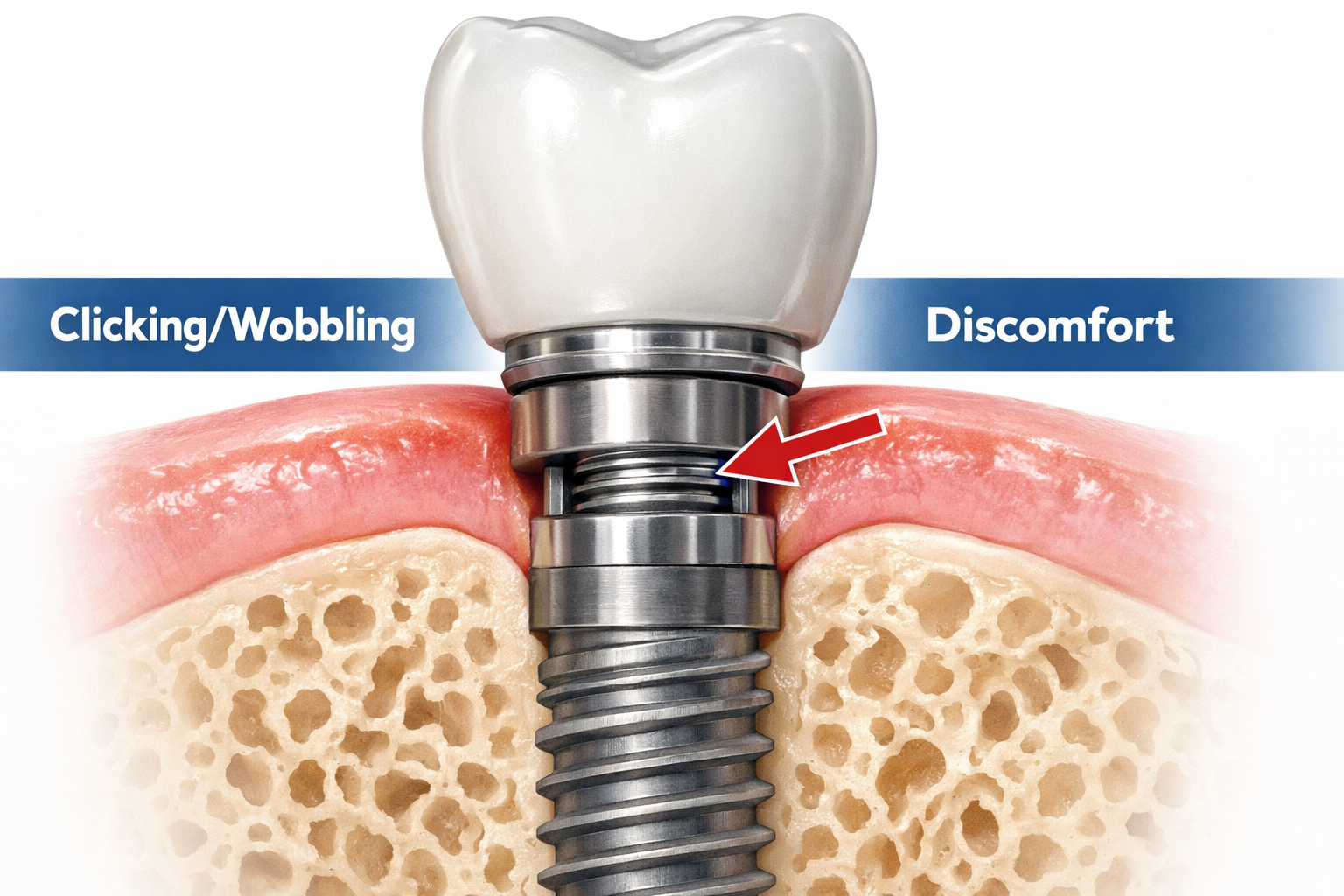
To truly grasp the implications of a loose dental implant screw, it’s helpful to understand the basic structure of a dental implant itself. A typical dental implant system consists of three main parts:
- The Implant Post (Fixture): This is a small, screw-shaped post, usually made of titanium, that is surgically placed into your jawbone. Over time, the bone integrates with this post in a process called osseointegration, providing a stable foundation.
- The Abutment: This component attaches to the implant post and extends above the gum line. It acts as a connector between the implant post and the final restoration. You can learn more about the abutment placement process here.
- The Crown (Prosthetic Tooth): This is the visible, artificial tooth that is cemented or screwed onto the abutment. Crowns can be made from various materials, often porcelain or ceramic. Discover more about abutment-supported porcelain ceramic crowns for detailed information.
The connection between the implant post and the abutment, and sometimes between the abutment and the crown, is secured by a small screw. When we talk about “signs your dental implant screw is loose,” we are often referring to the abutment screw or the screw securing the crown to the abutment, rather than the implant post itself becoming loose from the bone (which is a more severe complication).
Common Reasons for a Loose Dental Implant Screw
Several factors can contribute to the loosening of a dental implant screw. Understanding these can help in prevention and prompt diagnosis:
- Excessive Chewing Forces (Occlusal Overload): Just like any mechanical connection, constant or strong forces can cause a screw to gradually loosen. This is particularly true if the implant is subjected to heavy biting forces, such as from grinding teeth (bruxism) or a misaligned bite.
- Improper Torque During Placement: If the screw wasn’t tightened to the manufacturer’s specified torque during the initial placement, it might be more prone to loosening over time.
- Poor Bone Integration (Osseointegration): While less common for the screw itself, if the implant post isn’t fully integrated with the bone, the entire system can become unstable, indirectly affecting screw integrity.
- Material Fatigue: Over years of use, the screw material can experience fatigue, leading to microscopic changes that reduce its ability to maintain tightness. This is rare but possible.
- Manufacturing Defects: Although highly uncommon with reputable manufacturers, a defect in the screw or abutment itself could lead to loosening.
- Trauma or Injury: A direct impact to the mouth or face could potentially loosen implant components.
- Peri-implantitis: This is an inflammatory condition affecting the tissues around a dental implant, similar to periodontal disease around natural teeth. While it primarily affects the bone and gums, severe peri-implantitis can compromise the stability of the implant and, indirectly, its components. Regular dental implant cleaning is vital to prevent this.
“A loose dental implant screw isn’t always a catastrophic failure, but it’s a clear signal that attention is needed. Early intervention can often save the implant.”
Identifying the Signs Your Dental Implant Screw Is Loose
Recognizing the early indicators is paramount. The sooner you identify a problem, the simpler and more effective the solution is likely to be. Here are the definitive signs your dental implant screw is loose:
1. A Clicking or Rattling Sensation 👂
One of the most telling signs is an audible or palpable clicking, rattling, or squeaking sound when you bite down, chew, or even speak. This sound often indicates that there’s a slight movement between the implant components that shouldn’t be there.
- How it feels: You might feel a subtle click or shift in the tooth or a slight vibration.
- When it happens: Most noticeable during chewing, especially harder foods, or when moving your jaw.
- What it means: The screw connecting the crown to the abutment, or the abutment to the implant, has lost its tight fit, allowing for minor movement.
2. The Implanted Tooth Feels Wobbly or Loose 🦷
This is arguably the most direct and concerning sign. If the crown or the entire implant structure feels unstable or moves when touched, it’s a strong indicator of a loose component.
- Check by gently wiggling: Carefully and very gently try to move the crown with your finger or tongue. If there’s any noticeable play or movement, it’s a red flag.
- Contrast with natural teeth: Your natural teeth have a tiny degree of physiologic mobility, but a well-integrated dental implant should feel rigidly stable.
- Important distinction: It’s vital to differentiate between a loose crown on a stable abutment and a loose abutment or implant post. A loose crown is often the easiest to fix.
3. Persistent Discomfort or Pain Around the Implant Site 😖
While dental implants are generally comfortable once healed, persistent pain or discomfort around the implant site can be a symptom of a problem.
- Type of pain: This might not be sharp, excruciating pain but rather a dull ache, pressure, or a feeling of something “not quite right.”
- Pain during chewing: Discomfort often worsens when biting down on the affected side.
- Swelling or redness: While pain can stem from various issues, if accompanied by swelling or redness, it could indicate inflammation or infection related to the implant instability. You can review common dental implant bleeding causes for more context.
4. Difficulty Chewing or Biting 🍎
If your implant feels unstable, you might unconsciously or consciously avoid chewing on that side. This difficulty is a functional consequence of the implant’s compromised stability.
- Reduced chewing efficiency: You may notice it takes more effort to chew certain foods, or you might find yourself instinctively shifting food to the other side of your mouth.
- Changes in bite: A loose component can slightly alter your bite, leading to uncomfortable contact points with opposing teeth.
5. Visible Gap or Change in Position 👁️
In some cases, you might even be able to visually detect a problem.
- Gap around the crown: Look closely at the base of the crown where it meets the gum line. Is there a visible space or dark line that wasn’t there before?
- Crown misalignment: Does the crown appear to be tilted, rotated, or sitting higher or lower than adjacent teeth? Even subtle changes can indicate a loose connection.
6. Food Trapping Around the Implant 🍝
A loose abutment or crown can create tiny spaces where food particles can get trapped. This not only causes discomfort but also increases the risk of gum inflammation and infection.
- Increased food impaction: If you suddenly find food consistently getting stuck around your implant, it could be a sign of component movement.
- Bad breath: Food trapping, coupled with bacterial growth, can contribute to localized bad breath.
Summary Table: Signs of a Loose Dental Implant Screw
| Sign | Description | Severity | Immediate Action Needed? |
|---|---|---|---|
| Clicking/Rattling Noise | Audible sounds during chewing or jaw movement. | Moderate | Yes |
| Wobbling/Looseness | Crown or implant feels unstable to touch or move. | High | Absolutely! |
| Persistent Discomfort/Pain | Dull ache, pressure, or soreness around the implant. | Moderate | Yes |
| Difficulty Chewing | Avoiding chewing on the implant side, reduced efficiency. | Moderate | Yes |
| Visible Gap/Misalignment | Observable space at gum line or altered crown position. | Moderate | Yes |
| Food Trapping | Frequent impaction of food particles around the implant. | Low-Moderate | Yes |
What to Do If You Suspect Your Dental Implant Screw Is Loose
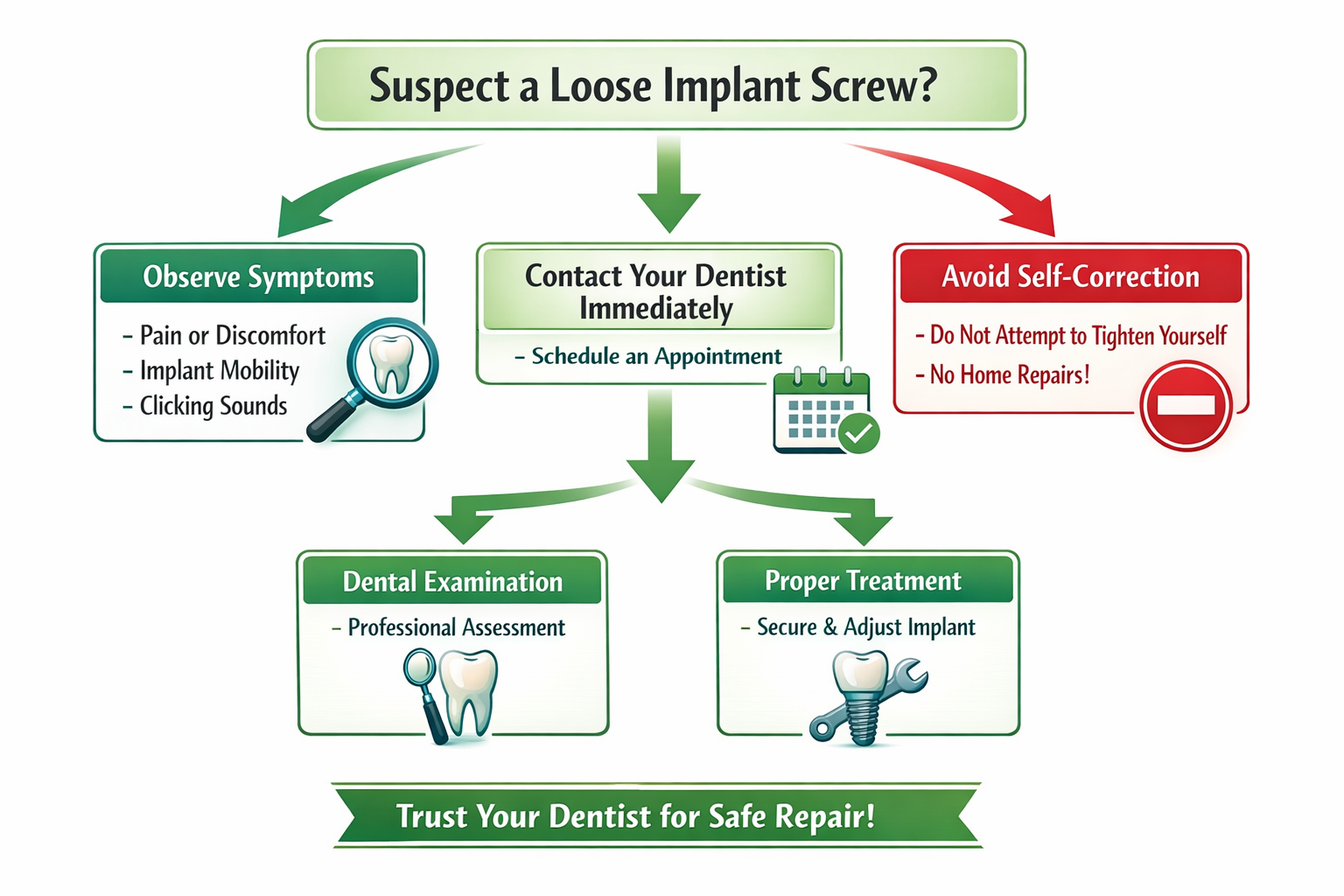
If you’ve identified any of the signs your dental implant screw is loose, it’s crucial to act promptly and correctly. Delaying action can escalate a minor issue into a more significant and costly problem.
1. Contact Your Dentist Immediately 📞
This is the most important step. As soon as you suspect a problem, call your dental professional. Explain your symptoms clearly and request an urgent appointment. Do not wait for your next routine check-up.
- Why urgency matters: A loose screw allows for micro-movement, which can wear down the implant components, strip the screw threads, or even damage the implant post or surrounding bone. Early intervention can prevent irreversible damage.
- Who to contact: Your general dentist, prosthodontist, or the oral surgeon who placed your implant will be the best point of contact. If you’re in the Dallas area, consider reaching out to a reputable clinic for an implant consultation.
2. Avoid Self-Correction or DIY Fixes 🚫
Under no circumstances should you attempt to tighten, remove, or manipulate your dental implant or its components yourself.
- Risk of damage: You could inadvertently strip the screw head, damage the implant post, or introduce bacteria, leading to infection.
- Sterility: Dental procedures require a sterile environment and specialized tools that you do not have at home.
3. Be Gentle with Your Bite 🍽️
While awaiting your dental appointment, try to minimize stress on the affected implant.
- Eat soft foods: Stick to a diet of soft foods that require minimal chewing. Foods like yogurt, smoothies, mashed potatoes, and scrambled eggs are ideal. You can find more options on our list of 50 soft foods after dental implant surgery.
- Chew on the opposite side: If possible, try to chew predominantly on the side of your mouth opposite the compromised implant.
- Avoid sticky or hard foods: Steer clear of nuts, candy, ice, sticky caramels, or anything that could exacerbate the movement or pull on the implant.
4. Maintain Excellent Oral Hygiene (Carefully!) 🧼
Even with a loose component, it’s vital to keep the area clean to prevent infection.
- Gentle brushing: Continue to brush around the implant very gently, using a soft-bristled toothbrush.
- Rinsing: Use an antimicrobial mouthwash or a warm saltwater rinse to help keep the area clean and reduce inflammation.
- Avoid forceful flossing: Do not aggressively floss around a loose implant, as this could worsen the situation.
What to Expect at the Dentist’s Office
When you visit your dentist, they will perform a thorough examination to determine the exact cause and location of the looseness.
- Visual and Physical Examination: The dentist will visually inspect the implant and gently test for movement.
- X-rays: Radiographs (X-rays) will be taken to assess the implant post’s integration with the bone and to check for any issues with the abutment or screw connection.
- Diagnosis: The dentist will determine if it’s the crown, the abutment, or the implant screw that is loose, or if there’s a more significant issue like implant failure.
- Treatment:
- Loose Crown: Often, the crown can be re-cemented or the screw holding it to the abutment can be tightened or replaced.
- Loose Abutment or Abutment Screw: The dentist will access the screw, clean the area, and carefully tighten or replace the screw. Sometimes, the abutment itself might need replacement if damaged.
- Loose Implant Post (from bone): This is a more serious issue, indicating a failure of osseointegration. It may require removal of the implant and, after a healing period, potentially a new implant placement or other restorative options. Addressing 90 percent bone loss in teeth can be complex.
- Occlusal Adjustment: If excessive biting forces are the cause, the dentist might adjust your bite to reduce pressure on the implant or recommend a nightguard if you grind your teeth.
Remember, dental implants are a significant investment in your oral health and quality of life. Being vigilant about the signs your dental implant screw is loose and seeking professional help immediately will ensure your implant continues to serve you well for many years to come. For more information on dental implants and their care, explore resources like our main page at dentalimplantsdallastx.com.
Conclusion
Dental implants are an incredible advancement in restorative dentistry, offering a durable and aesthetically pleasing solution for tooth loss. However, maintaining their longevity requires diligence and prompt action when issues arise. Recognizing the signs your dental implant screw is loose is a critical aspect of responsible implant care. From subtle clicking noises to visible wobbling or persistent discomfort, these indicators should never be ignored.
If you observe any of the symptoms discussed in this article, remember that time is of the essence. Contacting your dental professional immediately is the most crucial step you can take. They possess the expertise and specialized tools to accurately diagnose the problem and provide the appropriate treatment, whether it’s a simple tightening of a screw or a more involved repair.
Don’t attempt to troubleshoot or fix the issue yourself, as this could lead to further damage. Instead, be gentle with your bite, maintain good oral hygiene, and trust your dental team to restore the stability and function of your dental implant. Your proactive approach ensures the best possible outcome for your oral health in 2026 and beyond.
References
[1] Al-Khabbaz, A. K., & Al-Shammari, M. A. (2018). Clinical assessment of screw-loosening of implant-supported restorations. Journal of Clinical and Experimental Dentistry, 10(3), e239-e244.
[2] Misch, C. E. (2008). Contemporary Implant Dentistry. Elsevier Health Sciences.
Leave a Reply
Share your thoughts or ask a question about dental implants. Your email address will not be published.