

Are you considering tooth replacement options and wondering if dental implants are the right choice for you? Dental implants offer a durable and aesthetically pleasing solution for missing teeth, closely mimicking the look and function of natural teeth. Understanding the signs you are a good candidate for dental implants is crucial for determining if this advanced procedure aligns with your oral health needs and lifestyle. In Dallas, TX, many individuals explore dental implants as a long-term investment in their smile and overall well-being. This comprehensive guide will walk you through the key factors that dentists evaluate to ensure a successful implant outcome.
Key Takeaways
- Healthy Gums and Sufficient Bone: Ideal candidates possess healthy gum tissue, free from active disease, and adequate jawbone density to support the implant.
- Good Overall Health: Systemic health, including controlled chronic conditions like diabetes, is vital for proper healing and long-term success.
- Commitment to Oral Hygiene: A dedication to daily oral care and regular dental check-ups is essential for preventing complications and ensuring implant longevity.
- Non-Smoker Status: Smoking significantly impairs healing and can reduce implant success rates; willingness to quit is often a key factor.
- Missing Teeth: Candidates have one or more missing teeth and seek a fixed, permanent tooth replacement solution.
Quick Answer
You are generally a good candidate for dental implants if you have one or more missing teeth, possess healthy gums and sufficient jawbone, maintain good overall health, and are committed to diligent oral hygiene. These factors collectively contribute to the success of the dental implant procedure and its long-term stability [2, 3, 4]. A thorough consultation with a qualified dentist in Dallas, TX, is always the first step to assess your individual suitability.
What Are the Key Oral Health Signs You Are a Good Candidate for Dental Implants?
The most critical signs you are a good candidate for dental implants often lie within your oral health, specifically the condition of your gums and jawbone. A healthy foundation is paramount for the success and longevity of any dental implant.
Healthy Gums and Sufficient Jawbone Density
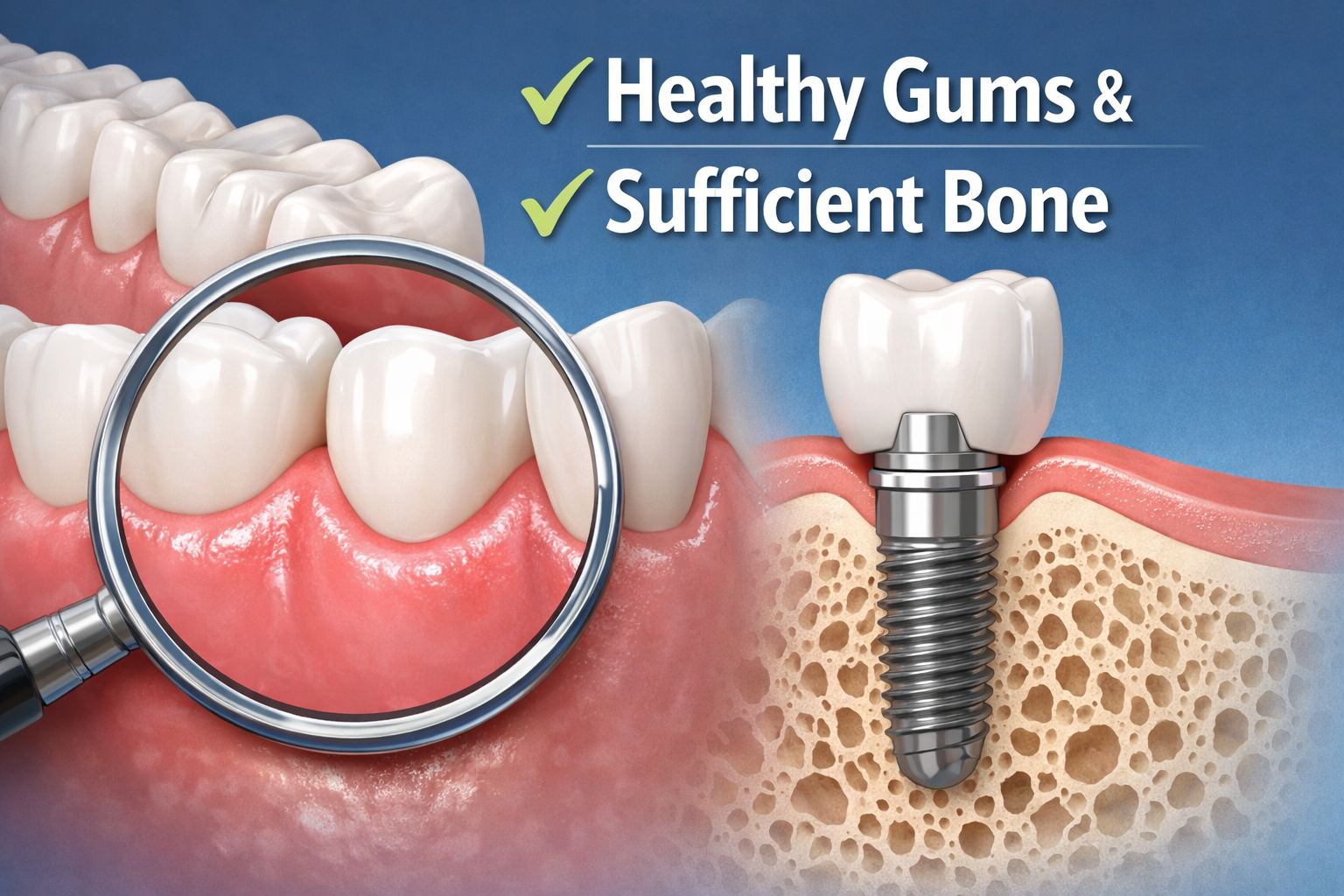
For a dental implant to successfully integrate with your jawbone (a process called osseointegration), your gums must be healthy, and your jawbone must have sufficient density and volume [2].
Healthy Gums: Your gums should be pink, firm, and free of active inflammation or infection. Probing depths, which measure the space between the tooth and gum, should ideally be less than 3mm, with no bleeding when examined [2]. Active gum disease (periodontitis) is a significant contraindication for dental implants because it increases the risk of implant failure by up to 30% [2]. Any existing gum disease must be treated and resolved before considering the implant surgery process.
Sufficient Jawbone Density: The titanium implant post needs enough bone to securely fuse with. Generally, a minimum bone width of 5-7mm and height of 7-10mm is required for standard implant posts in the jaw [2]. If you have been missing teeth for a while, bone loss can occur, which might necessitate a bone grafting procedure to rebuild the necessary bone volume. This is a common step, and a skilled dentist can assess if you need bone grafting for dental implants. You can learn more about decoding bone grafting costs for dental implants.
Decision Rule: Choose dental implants if you have healthy gums and sufficient jawbone. If you have gum disease or bone loss, consider treating these conditions first, as they are often manageable, making you eligible for implants afterward.
How Does Your Overall Health Affect Dental Implant Candidacy?
Beyond oral health, your general physical health plays a significant role in determining if you are a good candidate for dental implants. The ability of your body to heal and respond to surgery is crucial for a successful outcome.
Good Overall Health and Stable Medical Management
Your overall health directly impacts your ability to undergo minor oral surgery and heal effectively [1]. Certain chronic conditions and medications need careful consideration.
Chronic Conditions: While conditions like diabetes or heart disease do not automatically disqualify you, they must be well-controlled [1, 2]. For instance, uncontrolled diabetes can impair healing and increase the risk of infection, potentially leading to implant failure. Patients with diabetes considering implants should discuss their current management plan with their dentist and physician. You can find more information on diabetic dental implant recovery.
Medications: Some medications, such as certain bisphosphonates used to treat osteoporosis, can affect bone metabolism and healing, requiring careful evaluation before implant placement [3]. It’s essential to provide your dentist with a complete medical history, including all medications and supplements you are currently taking.
Age: While dental implants are generally for adults, there isn’t an upper age limit as long as you are in good general health [1]. However, individuals under 18 are typically not candidates because their jawbones are still developing [1].
Immune System: A compromised immune system, due to conditions or treatments like chemotherapy, can affect your body’s ability to heal and fight off infection, making implant placement riskier [3].
Common Mistake: Failing to disclose your full medical history and current medications can lead to complications. Always be transparent with your dentist about your health status.
What Lifestyle Factors and Commitments Signal You Are a Good Candidate for Dental Implants?
Your daily habits and commitment to long-term oral care are just as important as your physical health when assessing candidacy for dental implants. These factors significantly influence the long-term success and health of your new teeth.
Non-Smoker Status and Commitment to Oral Hygiene
Two key lifestyle indicators that signal you are a good candidate for dental implants are your smoking habits and your dedication to maintaining excellent oral hygiene.
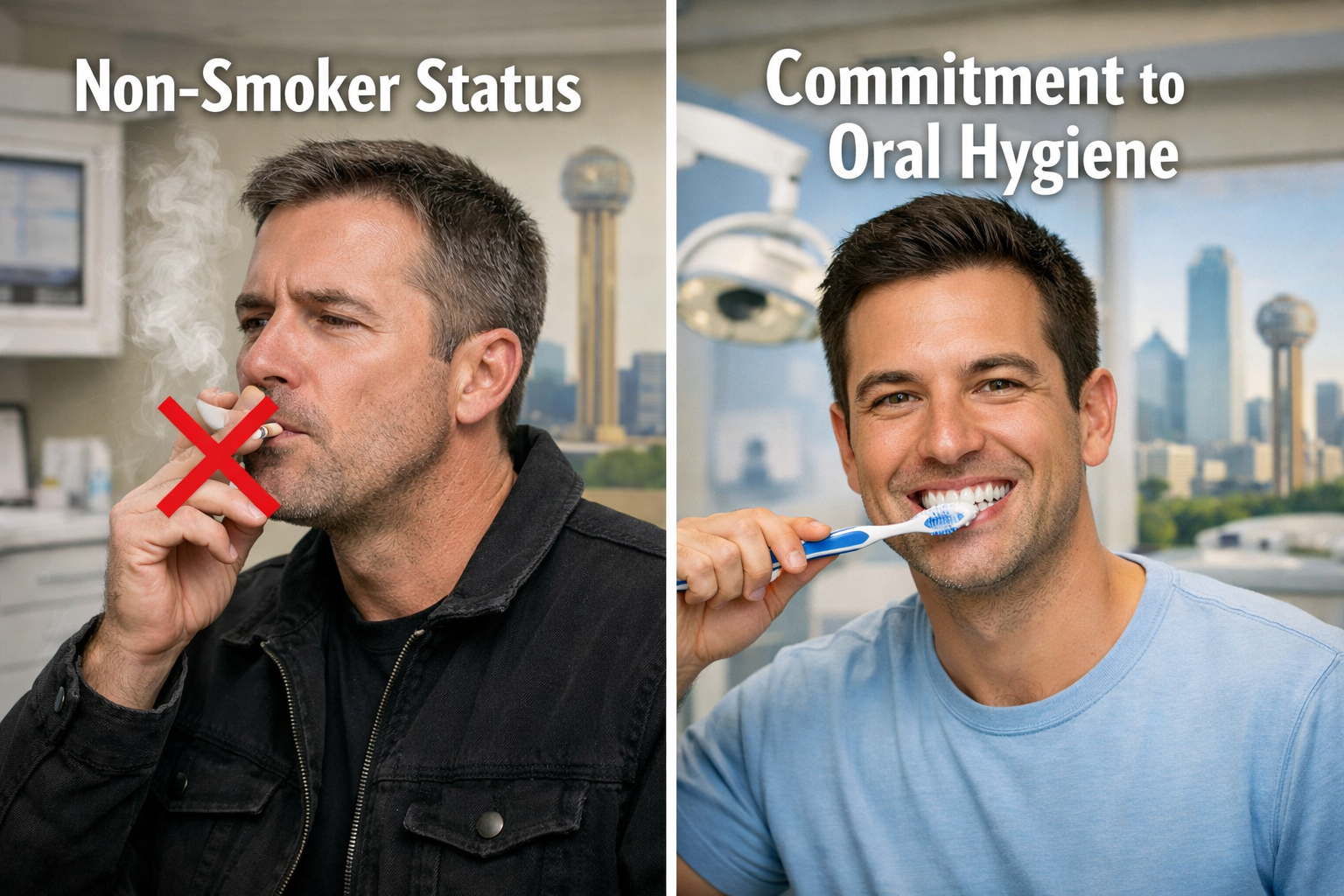
Non-Smoker Status: Smoking is a major risk factor for dental implant failure. It constricts blood vessels, reducing blood flow to the gums and bone, which interferes with healing and osseointegration (the process where the implant fuses with the bone) [1, 2]. Patients who smoke face a significantly higher risk of complications and implant loss. If you are a smoker but are willing to quit, especially around the time of surgery and during the healing phase, you may still qualify [1]. Your dentist can discuss strategies to help you quit.
Commitment to Oral Hygiene: Dental implants, like natural teeth, require diligent daily care. This includes regular brushing, flossing, and routine dental check-ups and cleanings [3]. Neglecting oral hygiene can lead to peri-implantitis, an inflammatory condition similar to gum disease that affects the tissues around the implant, potentially leading to bone loss and implant failure. A good candidate understands and is committed to this long-term maintenance. For specialized care, understanding the role of a sulcus brush for implants is also beneficial.
Quick Example: A patient who has quit smoking for several months and regularly brushes twice a day, flosses daily, and schedules bi-annual dental visits demonstrates a strong commitment to the long-term success of their dental implants.
[[IMAGE HERE]]
Do You Have Missing Teeth and Seek a Permanent Solution?
One of the most straightforward signs you are a good candidate for dental implants is the presence of one or more missing teeth combined with a desire for a fixed, long-lasting tooth replacement.
Dental implants are specifically designed to replace missing teeth, whether it’s a single tooth, multiple teeth, or even a full arch [4]. Unlike removable dentures or traditional bridges, implants offer a permanent solution that integrates into your jawbone, providing unparalleled stability and a natural feel. If you are struggling with the aesthetics, functionality, or discomfort of gaps in your smile, dental implants in Dallas could be an excellent solution.
- Ideal Scenario: You are missing one or more teeth and prefer a non-removable solution that feels like your natural teeth. This often means you’re looking for stability that traditional dentures can’t provide, or you want to avoid altering adjacent healthy teeth, which is required for a dental bridge. When considering dental bridge vs. implant cost in 2025, the long-term benefits of implants often outweigh the initial cost difference for many patients.
Untreated Oral Infections: A Red Flag for Implant Candidacy
Active oral infections are a significant barrier to receiving dental implants and must be addressed before any implant procedure can proceed.
The presence of untreated oral infections, such as abscesses, severe cavities, or uncontrolled gum disease, can compromise the healing process and increase the risk of implant failure [2]. The bacteria from these infections can easily spread to the surgical site, leading to complications like peri-implantitis or systemic infections. Your dentist will conduct a thorough examination and recommend treating any existing infections to ensure a sterile and healthy environment for your dental implant. This may involve root canals, fillings, or periodontal therapy.
- What Changes the Outcome: If you have active infections, the outcome changes from immediate implant consideration to a phased approach: first, treating the infection, and then reassessing implant candidacy once the oral environment is healthy and stable.
How Do Dentists Assess Your Candidacy for Dental Implants in Dallas?
Assessing your candidacy for dental implants in Dallas involves a comprehensive evaluation by a qualified dental professional. This typically includes a detailed examination, imaging, and a review of your medical history.
When you consult a dentist for tooth replacement options, they will perform several steps to determine if you are a good candidate for dental implants:
- Comprehensive Oral Examination: The dentist will carefully inspect your gums, remaining teeth, and the area where the implant is being considered. They will look for signs of gum disease, tooth decay, and other oral health issues [5].
- Advanced Imaging: X-rays, including 3D cone-beam computed tomography (CBCT) scans, are often used to assess your jawbone density, width, and height, as well as the proximity of vital structures like nerves and sinuses [6]. This imaging helps the dentist plan the precise placement of the implant.
- Medical History Review: You will be asked about your general health, any chronic conditions, medications you are taking, and lifestyle habits like smoking. This information is crucial for identifying potential risks or necessary precautions [3].
- Discussion of Treatment Plan: If you are deemed a good candidate, your dentist will discuss the proposed dental implant procedure, including the timeline, costs (such as the average cost of 1 dental implant), and any preparatory treatments like bone grafting. This is also an opportunity to ask essential questions to ask your dentist about implants.
- Patient-first approach: A reputable dentist in Dallas will prioritize patient safety and long-term oral health, ensuring you are fully informed and comfortable with the decision. They will never pressure you into a procedure you’re not suitable for or fully understand.
What If You Don’t Meet All the Ideal Candidacy Criteria?
Even if you don’t initially meet all the ideal signs you are a good candidate for dental implants, there are often solutions and preparatory treatments that can make them a viable option. Modern dentistry offers various ways to address common challenges.
Many patients who are initially told they are not ideal candidates can become eligible after specific interventions:
Bone Grafting: If you have insufficient jawbone density due to long-term tooth loss or periodontal disease, a bone graft can augment the bone, providing a strong foundation for the implant [2]. This procedure rebuilds the bone over several months, making implant placement possible.
Sinus Lift: For implants in the upper jaw, especially toward the back, there might not be enough bone due to the proximity of the maxillary sinuses. A sinus lift procedure adds bone to the upper jaw, creating space for implant placement.
Treatment of Gum Disease: Active gum disease (periodontitis) must be treated before implant surgery. Once your gums are healthy and stable, you can often proceed with dental implants [2].
Smoking Cessation: While difficult, quitting smoking significantly improves your chances of implant success. Many dentists will require patients to quit for a period before and after surgery [1].
Management of Chronic Conditions: Working with your physician to better control chronic conditions like diabetes can improve your body’s ability to heal and make you a more suitable candidate [1].
Choose X if…: Choose preparatory procedures like bone grafting or gum disease treatment if your primary barrier to dental implants is insufficient bone or active infection. These interventions can transform your candidacy.
Exploring Missing Teeth Solutions: Why Consider Implants?

If you have missing teeth, dental implants represent a gold standard among tooth replacement options, offering unique benefits that set them apart from alternatives.
For individuals with missing teeth, the decision to choose dental implants goes beyond simply filling a gap. Implants offer superior advantages in terms of function, aesthetics, and long-term oral health:
Natural Look and Feel: Implants are designed to look, feel, and function like your natural teeth. They are permanently fused to your jawbone, providing a stable foundation for artificial teeth [4].
Preservation of Jawbone: When a tooth is lost, the jawbone in that area can begin to resorb (deteriorate) due to lack of stimulation. Dental implants stimulate the bone, preventing this loss and helping to maintain facial structure [8].
Durability and Longevity: With proper care, dental implants can last a lifetime, making them a highly cost-effective long-term oral health solution compared to other options that may need replacement every 5-10 years [3].
Improved Chewing and Speech: Unlike dentures that can slip, implants allow you to eat your favorite foods with confidence and speak clearly without worry.
Protection of Adjacent Teeth: Unlike dental bridges, which require the grinding down of healthy adjacent teeth for support, implants stand alone, preserving your natural tooth structure.
Comparison Table: Tooth Replacement Options
| Feature | Dental Implants | Dental Bridges | Partial Dentures |
|---|---|---|---|
| Stability | Excellent (fused to bone) | Good (anchored to adjacent teeth) | Fair (removable, can shift) |
| Bone Preservation | Yes (stimulates jawbone) | No (bone loss can continue under bridge) | No (bone loss continues) |
| Natural Feel | Very High | High | Moderate |
| Impact on Other Teeth | None (stand-alone) | Requires reshaping of adjacent healthy teeth | Clasps onto natural teeth, can put stress on them |
| Longevity | Can last a lifetime with proper care | 5-15 years | 5-10 years |
| Maintenance | Regular brushing, flossing, dental check-ups | Careful cleaning under bridge, regular dental check-ups | Daily removal, cleaning, regular dental check-ups |
| Cost | Higher initial implant cost in Dallas, long-term value | Moderate initial cost, potential replacement costs | Lower initial cost, ongoing maintenance and replacement |
FAQ
Can I get dental implants if I have gum disease?
No, active gum disease (periodontitis) must be treated and fully resolved before you can undergo dental implant surgery. Uncontrolled gum disease significantly increases the risk of implant failure and complications [2].
Is there an age limit for dental implants?
There is no upper age limit for dental implants as long as you are in good general health and your jawbone is fully developed [1]. However, individuals under 18 typically cannot get implants due to ongoing jawbone growth.
What if I don’t have enough jawbone for dental implants?
If you don’t have sufficient jawbone, procedures like bone grafting or a sinus lift can be performed to rebuild the bone, creating a suitable foundation for dental implants [2].
Can smokers get dental implants?
Smoking significantly impairs healing and can lead to implant failure [1]. While some smokers may still qualify, it is highly recommended to quit, especially during the healing period, to improve the success rate.
How important is good oral hygiene for dental implants?
Excellent oral hygiene, including daily brushing, flossing, and regular dental check-ups, is crucial for the long-term success of dental implants. It prevents peri-implantitis, an infection that can lead to implant failure [3].
How long does the dental implant procedure take?
The entire dental implant process, from initial surgery to final crown placement, can take several months. This includes healing time for the implant to fuse with the bone (osseointegration), which typically takes 3-6 months [8].
Are dental implants painful?
The dental implant surgery itself is performed under local anesthesia, so you shouldn’t feel pain during the procedure. Post-operative discomfort can be managed with pain medication, similar to other dental surgeries. You can explore more about demystifying dental implant pain.
What is the average cost of dental implants in Dallas?
The average cost of a dental implant in Dallas can vary based on factors like the number of implants, need for preparatory procedures (e.g., bone graft), and type of crown. For more detailed information, see our guide on the average cost of 1 dental implant.
Key Takeaways
- Healthy Foundation: Strong, healthy gums and adequate jawbone density are non-negotiable for successful dental implant placement and integration.
- Systemic Health Matters: Good overall health, with well-managed chronic conditions, is vital for proper healing and to prevent complications after implant surgery.
- Lifestyle Choices: Being a non-smoker or willing to quit, coupled with a commitment to meticulous oral hygiene, significantly increases the longevity of your dental implants.
- Missing Teeth Solution: If you have missing teeth and desire a stable, permanent tooth replacement option that feels natural, dental implants are an excellent choice.
- Comprehensive Assessment: A detailed consultation with a qualified dentist, including oral examination, medical history review, and advanced imaging, is essential to determine individual candidacy.
- Preparatory Treatments: Many common barriers to implant candidacy, such as bone loss or gum disease, can be overcome with preparatory treatments like bone grafting or periodontal therapy.
- Long-Term Investment: Choosing dental implants in Dallas is an investment in long-term oral health, function, and aesthetics, requiring patient commitment to care.
Conclusion
Determining if you are a good candidate for dental implants involves a careful assessment of various factors, including your oral health, overall medical history, and lifestyle habits. While ideal candidates have healthy gums, sufficient jawbone, good general health, and are non-smokers committed to oral hygiene, many individuals who initially don’t meet all criteria can become eligible through preparatory treatments.
Dental implants in Dallas, TX, offer a robust and highly effective solution for missing teeth, restoring not just your smile but also your chewing function and confidence. If you are considering this advanced tooth replacement option, the most crucial next step is to schedule a consultation with a knowledgeable and experienced dental professional. They can provide a thorough evaluation, discuss your specific needs, and guide you through the process, ensuring patient safety and promoting long-term oral health. This personalized assessment is the best way to determine if dental implants are the right path for your unique situation in 2026.
References
[1] Who Is Candidate For Dental Implants Cip219 – https://www.lifetimedental.com/who-is-candidate-for-dental-implants-cip219/ [2] Dental Implant Candidacy Criteria – https://www.northwestoralsurgeons.com/blog/dental-implant-candidacy-criteria/ [3] Are You A Candidate For Dental Implants Key Factors To Consider – https://medicalartsdentistry.com/are-you-a-candidate-for-dental-implants-key-factors-to-consider/ [4] Are Dental Implants Right For Everyone – https://carrolltondentalgroup.com/are-dental-implants-right-for-everyone/ [5] Am I A Candidate For Dental Implants – https://www.cambridgefamilydentists.com/dentist-wichita/am-i-a-candidate-for-dental-implants/ [6] Am I A Good Candidate For Dental Implants Find Out – http://www.gurudentistry.com/am-i-a-good-candidate-for-dental-implants-find-out [7] Candidate Of Dental Implants – https://www.andresendds.com/candidate-of-dental-implants/ [8] Dental Implants Complete Guide – https://www.magrabihealth.com/blog/dental-implants-complete-guide [9] Dental Implants Candidacy – https://smileprodentist.com/blog/dental-implants-candidacy/
Leave a Reply
Share your thoughts or ask a question about dental implants. Your email address will not be published.