

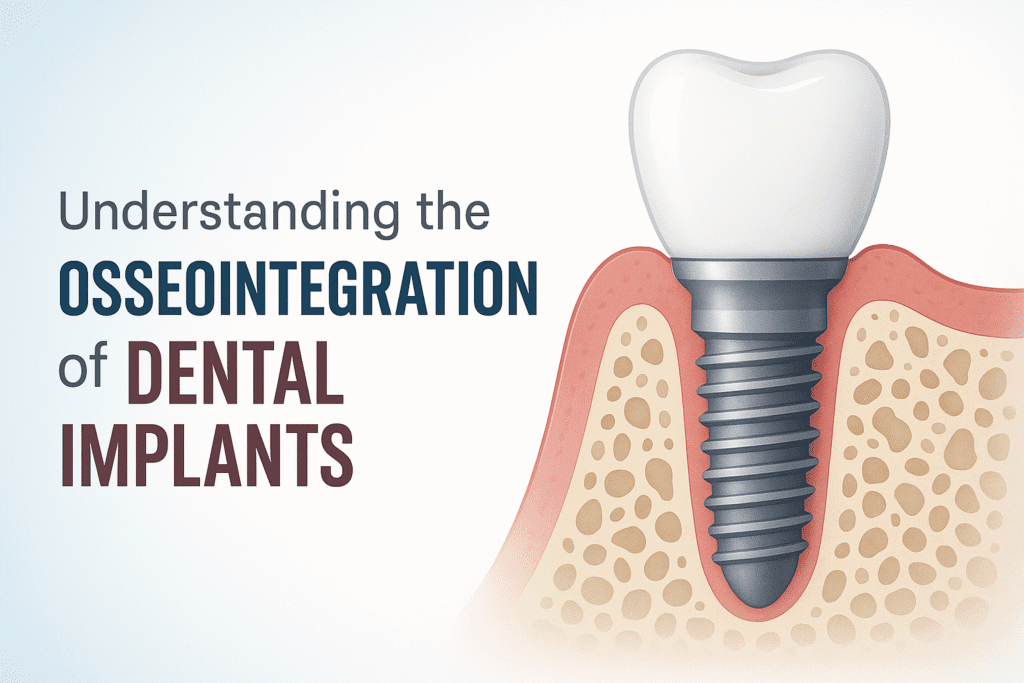
Imagine biting into your favorite apple without pain, worry, or the fear of your tooth falling out. For millions of people who’ve lost teeth, this dream becomes reality through a remarkable biological process called osseointegration. This fascinating phenomenon is what makes modern dental implants so successful—and understanding it can help you make confident decisions about your oral health journey.
The science behind osseointegration might sound complex, but it’s actually nature’s incredible ability to accept and bond with carefully designed titanium implants. When you understand how your bone tissue naturally grows around and fuses with a dental implant, you’ll appreciate why this treatment has revolutionized dentistry and restored countless smiles across Dallas and beyond.
Key Takeaways
- Osseointegration is the direct structural and functional connection between living bone and the surface of a load-carrying implant, making dental implants incredibly stable and long-lasting
- The dental implant osseointegration timeline typically takes 3-6 months, during which your bone tissue gradually grows around and bonds with the titanium implant surface
- Success rates for osseointegrated implants exceed 95% when proper surgical techniques and patient care are followed
- Factors affecting osseointegration include implant surface design, bone quality, patient health, and post-surgical care
- Understanding this process helps patients feel more confident about their dental implant journey and know what to expect during healing
What Is Osseointegration and Why Does It Matter?
Osseointegration represents one of the most significant breakthroughs in modern dentistry. The term, coined by Swedish researcher Per-Ingvar Brånemark in the 1960s, describes the direct contact between ordered, living bone and the surface of a load-carrying implant. Simply put, it’s your body’s remarkable ability to accept a titanium implant as part of itself.
When you lose a tooth, the surrounding bone tissue begins to deteriorate—a process called remodeling. However, when a dental surgeon places a titanium implant into your jawbone, something extraordinary happens. Your bone cells recognize the biocompatible titanium surface and begin to grow directly onto it, creating a bond stronger than the original tooth root.
This direct structural and functional connection between your living bone and the implant surface is what makes modern tooth replacement so successful. Unlike dentures that simply rest on your gums, or bridges that rely on adjacent teeth, osseointegrated implants become anchored in bone—providing the stability and function of natural teeth.
The Science Behind Dental Implant Osseointegration
Understanding the osseointegration process helps demystify what happens inside your mouth after implant surgery. When your dental surgeon inserts the implant into the prepared implant site, your body immediately begins a carefully orchestrated healing response.
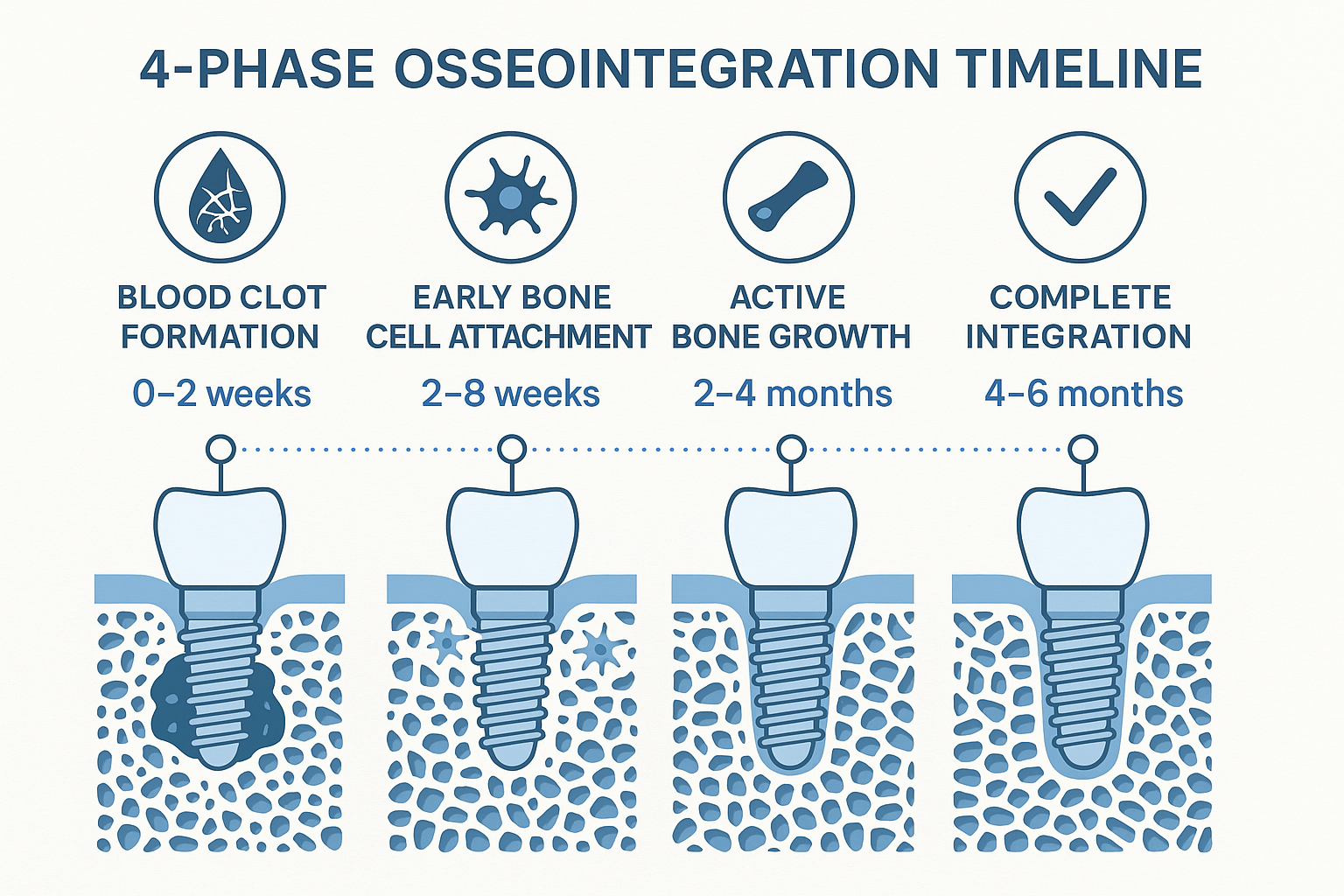
Initially, a blood clot forms around the implant, just like any healing wound. This clot contains stem cells and growth factors that kick-start the bone healing process. Over the following days and weeks, new bone cells migrate to the implant surface and begin forming new bone tissue directly on the titanium.
The implant surface plays a crucial role in this process. Modern implants feature specially designed textures and coatings that enhance osseointegration. These biomaterial innovations help bone cells attach themselves directly to the implant, creating the strong functional connection between ordered bone tissue and the artificial root.
Research published in journals like Clin Oral Implants Res and Int J Oral studies consistently shows that this biological process creates a bond that can last decades with proper care. The Academy of Osseointegration continues to advance our understanding of how to optimize this remarkable healing response.
Dental Implant Osseointegration Timeline: What to Expect
The dental implant osseointegration timeline varies from person to person, but generally follows a predictable pattern that helps you plan your journey to a restored smile.
Immediate Phase (0-2 weeks)
Right after implant placement, your body begins the initial healing process. The surgery site may feel tender, and you’ll need to follow specific care instructions to protect the developing blood clot. During this time, the implant achieves primary stability through mechanical fit in the bone.
Early Integration (2-8 weeks)
Bone healing accelerates as new cells begin forming around the implant interface. You might start feeling more comfortable, but the implant isn’t ready for chewing forces yet. This is when the foundation for long-term success is being built at the cellular level.
Active Osseointegration (2-4 months)
The most critical phases of osseointegration occur during this period. Bone tissue actively grows onto the implant surface, creating the strong bond that will support your future crown. Patients often report feeling like the implant is becoming “part of them” during this time.
Maturation Phase (4-6 months)
Successful osseointegration is typically complete by this point. Your dental surgeon may perform tests to confirm the implant is ready for the next step: abutment placement and crown attachment.
🦷 Osseointegration Timeline Calculator
Discover your personalized dental implant healing timeline
Factors That Influence Successful Dental Implant Osseointegration
Several key factors affecting the osseointegration process can impact your implant success. Understanding these helps you and your dental surgeon optimize conditions for the best possible outcome.
Patient-Related Factors
Your overall health plays a significant role in bone healing. Systemic factors like diabetes, osteoporosis, or autoimmune conditions can slow the osseointegration process. However, this doesn’t mean you can’t have successful implants—it just means your treatment plan may need adjustments.
Age affects healing speed, but healthy patients in their 70s and 80s regularly achieve successful osseointegration. What matters more is bone quality and quantity at the implant site. Your surgeon will evaluate these factors during your consultation to ensure the best possible foundation for your new tooth.
Lifestyle choices significantly impact healing. Smoking dramatically reduces success rates by limiting blood flow to the surgery site. However, patients who quit smoking before surgery often see dramatic improvements in their healing response.
Implant Design and Surface Technology
Modern implant systems feature sophisticated surface treatments that enhance osseointegration. Implant surface microtopography—the microscopic texture of the titanium—provides more surface area for bone cells to attach and grow.
Some implants include hydroxyapatite coatings or other biomaterial enhancements that encourage faster bone growth. The shape, size, and thread design of the implant also influence how well it integrates with your bone tissue.
Surgical Technique and Experience
The skill of your dental surgeon significantly impacts implant stability and long-term success. Proper surgical technique ensures the implant is placed with primary stability while minimizing trauma to surrounding soft tissue and bone.
Experienced surgeons understand how to work with different bone densities and can adapt their approach based on your unique anatomy. This expertise is particularly important in complex cases or when additional procedures like bone grafting are needed.
Common Concerns About Implant Failure and How to Prevent Them
While osseointegrated implants have high success rates, understanding potential complications helps you protect your investment in your smile. Implant failure can occur, but it’s often preventable with proper care and regular monitoring.
Early Failure vs. Late Failure
Dental implant failure typically falls into two categories. Early failure occurs during the first few months when osseointegration should be happening. This might result from infection, poor bone healing, or insufficient primary stability.
Late failure can happen years after successful integration, often due to peri-implantitis (infection around the implant) or mechanical problems. The good news is that both types are relatively rare when proper protocols are followed.
Warning Signs to Watch For
Pay attention to persistent pain, swelling, or mobility in your implant. While some discomfort is normal during healing, symptoms that worsen or don’t improve may indicate problems with the osseointegration process.
If you notice any clicking noise from your dental implant or if an implant becomes loose after years of successful function, contact your dental team immediately for evaluation.
Protecting Your Investment
Proper oral hygiene is crucial for long-term success. Use the best toothpaste for implants and consider interdental brushes designed for implants to keep the area around your implant clean.
Regular check-ups allow your dental team to monitor the health of your osseointegrated implants and catch any issues early. Professional cleanings and examinations are essential for maintaining the functional connection between ordered bone tissue and your implant.
The Role of Modern Technology in Enhancing Osseointegration
Advances in implant dentistry continue to improve outcomes for patients. Resonance frequency analysis allows dentists to measure implant stability without invasive procedures, helping determine when an implant is ready for loading.
3D imaging and computer-guided surgery help surgeons place implants in optimal positions for both function and aesthetics. These technologies reduce surgical time and improve precision, leading to better clinical success rates.
Surface modifications and new biomaterial coatings continue to evolve, with some showing promise for faster integration times. Research into growth factors and stem cell therapies may further enhance the osseointegration process in the future.
Nutrition and Supplements That Support Bone Healing
Your body needs specific nutrients to build strong bone tissue around your implant. Vitamin supplements can support the osseointegration process, particularly if your diet is lacking in key nutrients.
Calcium and vitamin D are essential for bone repair and remodeling. Protein provides the building blocks for collagen and other tissues involved in healing. Some patients benefit from specific vitamin supplements designed to support oral health and bone healing.
Omega-3 fatty acids may help reduce inflammation and support healthy healing. However, always consult with your healthcare team before starting new supplements, as some can interfere with healing or interact with medications.
What Makes Osseointegration Different from Other Tooth Replacement Options
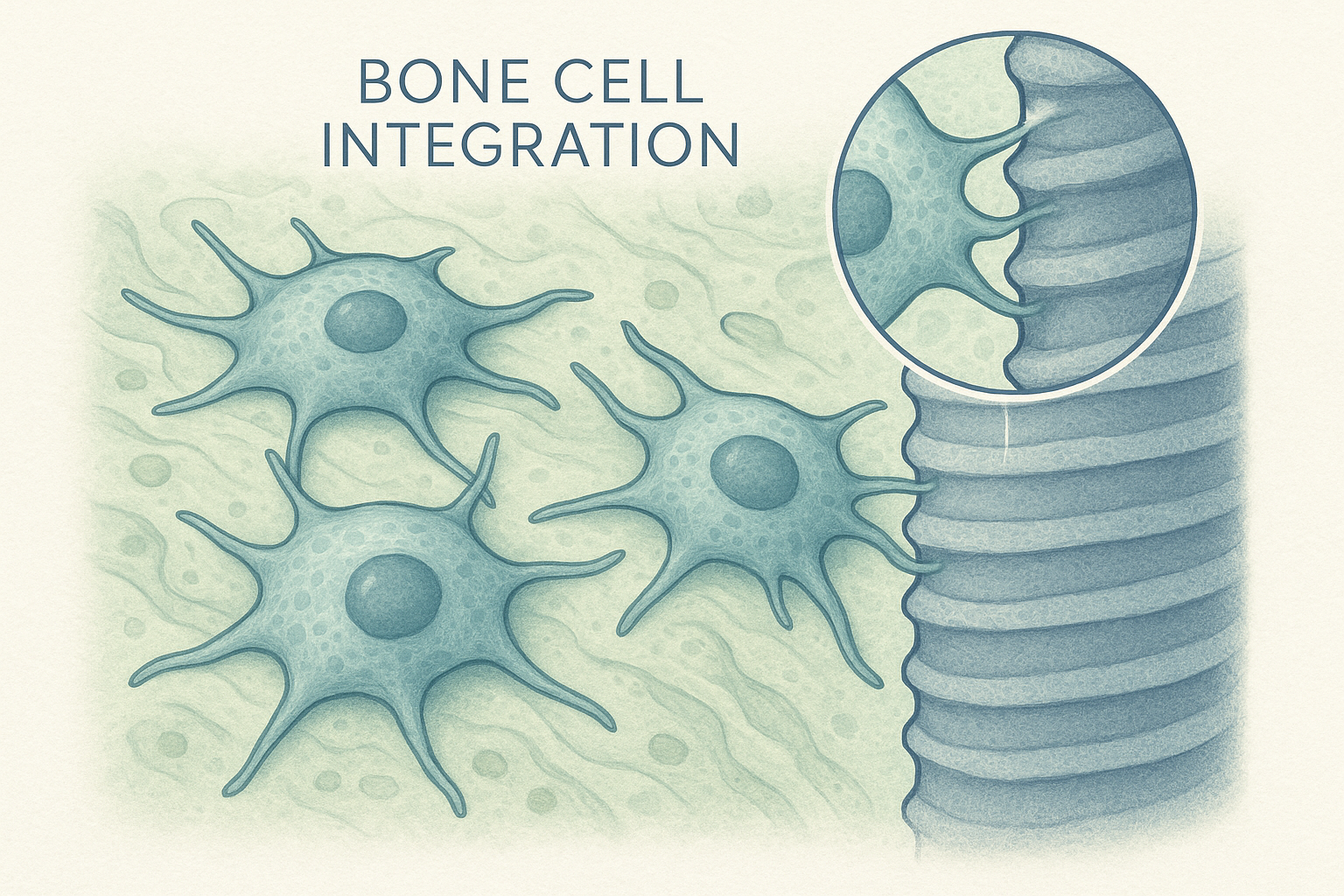
Understanding why osseointegrated implants are superior to other tooth replacement options helps you appreciate this remarkable technology. Unlike dentures that rest on your gums or bridges that depend on adjacent teeth, implants become anchored in bone through the osseointegration process.
This direct bone-to-implant anchorage provides several advantages:
- Stability that matches or exceeds natural teeth
- Preservation of surrounding bone tissue
- Independence from adjacent teeth
- Longevity that can last decades with proper care
The functional connection between ordered living bone and your implant creates a foundation that can handle normal chewing forces without shifting or discomfort. This is why many patients report that their implants feel more natural than their original teeth.
Long-Term Success: What to Expect from Your Osseointegrated Implants
Successful dental implant treatment provides benefits that extend far beyond just replacing missing teeth. The osseointegration process creates a stable foundation that can support abutment-supported porcelain ceramic crowns or even full-arch restorations.
Patients often report improved confidence, better nutrition, and enhanced quality of life after completing their implant treatment. The ability to eat your favorite foods without worry and smile with confidence can be truly life-changing.
Many patients are amazed by their progress even 2 months after All-on-4 implants, experiencing dramatic improvements in function and comfort as osseointegration progresses.
Cost Considerations and Making Implants Accessible
While dental implants represent a significant investment, understanding the long-term value helps put costs in perspective. Osseointegrated implants can last decades with proper care, making them cost-effective compared to repeatedly replacing bridges or dentures.
Many practices offer affordable implant options and financing plans to make treatment accessible. When you consider the improved quality of life and potential health benefits, implants often provide excellent value.
The key is finding a qualified team that can provide quality care at fair prices. Look for practices that are transparent about costs and offer comprehensive treatment plans that address your specific needs.
Conclusion: Your Journey to a Restored Smile Through Osseointegration
The osseointegration of dental implants represents one of dentistry’s greatest achievements—a reliable way to replace missing teeth with artificial roots that your body accepts as its own. This remarkable biological process transforms titanium implants into stable, long-lasting foundations for your new smile.
Understanding how osseointegration works empowers you to make informed decisions about your oral health. From the initial blood clot formation to the final bone-to-implant bond, each step in this process brings you closer to restored confidence and function.
Your next steps are simple but important:
🔹 Schedule a consultation with a qualified implant dentist to evaluate your candidacy for treatment
🔹 Discuss your timeline and expectations based on your unique health and lifestyle factors
🔹 Learn about financing options that can make your dream smile affordable and accessible
🔹 Prepare for success by optimizing your health and following pre-surgical guidelines
The team at Dental Implants Dallas TX understands that choosing dental implants is a significant decision. We’re here to guide you through every step of the osseointegration process with the expertise, compassion, and transparency you deserve.
Your journey to a restored smile begins with understanding—and now you have the knowledge to move forward with confidence. The remarkable science of osseointegration can give you back not just your missing teeth, but your quality of life, your confidence, and your ability to smile without reservation.
Don’t let missing teeth hold you back any longer. The proven science of osseointegration, combined with expert care and modern technology, can restore your smile and transform your life. Contact us today to begin your personalized treatment plan and discover how osseointegrated implants can give you the strong, beautiful smile you deserve.
Leave a Reply
Share your thoughts or ask a question about dental implants. Your email address will not be published.