

Getting a good night’s sleep is essential for healing, but after dental implant surgery, your usual slumber routine might actually hinder your recovery. Many patients underestimate the critical role that proper sleeping positions after dental implant surgery play in minimizing swelling, preventing complications, and ensuring the success of their new smile. Imagine enduring the procedure only to accidentally compromise the healing process by sleeping incorrectly. This article will guide you through the best practices for sleeping post-surgery in 2026, offering clear, actionable advice to support a smooth and swift recovery.
Key Takeaways
- Elevate Your Head: Always sleep with your head elevated, especially for the first 72 hours, to reduce swelling and bleeding.
- Back is Best: The optimal position is on your back, preventing pressure on the surgical site.
- Avoid Pressure: Steer clear of sleeping on your side or stomach, which can increase discomfort and complications.
- Pillow Power: Utilize wedge pillows or multiple regular pillows for consistent elevation and support.
- Listen to Your Body: While general guidelines apply, always follow your surgeon’s specific post-operative instructions for personalized care.
Mastering Optimal Sleeping Positions After Dental Implant Surgery
The initial days following your dental implant procedure are crucial for proper healing and integration of the implant with your jawbone, a process known as osseointegration. One of the most overlooked, yet vital, aspects of this recovery is how you position yourself while sleeping. Incorrect sleeping positions after dental implant surgery can lead to increased swelling, discomfort, and even compromise the surgical site. Let’s delve into the best strategies for a restful and recovery-friendly sleep.
Why Your Sleeping Position Matters for Healing
After dental implant surgery, your body kicks into high gear to repair the surgical site. Blood vessels dilate, and fluid rushes to the area, leading to swelling. This is a normal part of the healing process, but excessive swelling can be uncomfortable and delay recovery.
“Lying completely flat causes fluid to pool around surgical areas, increasing post-operative swelling.” [1]
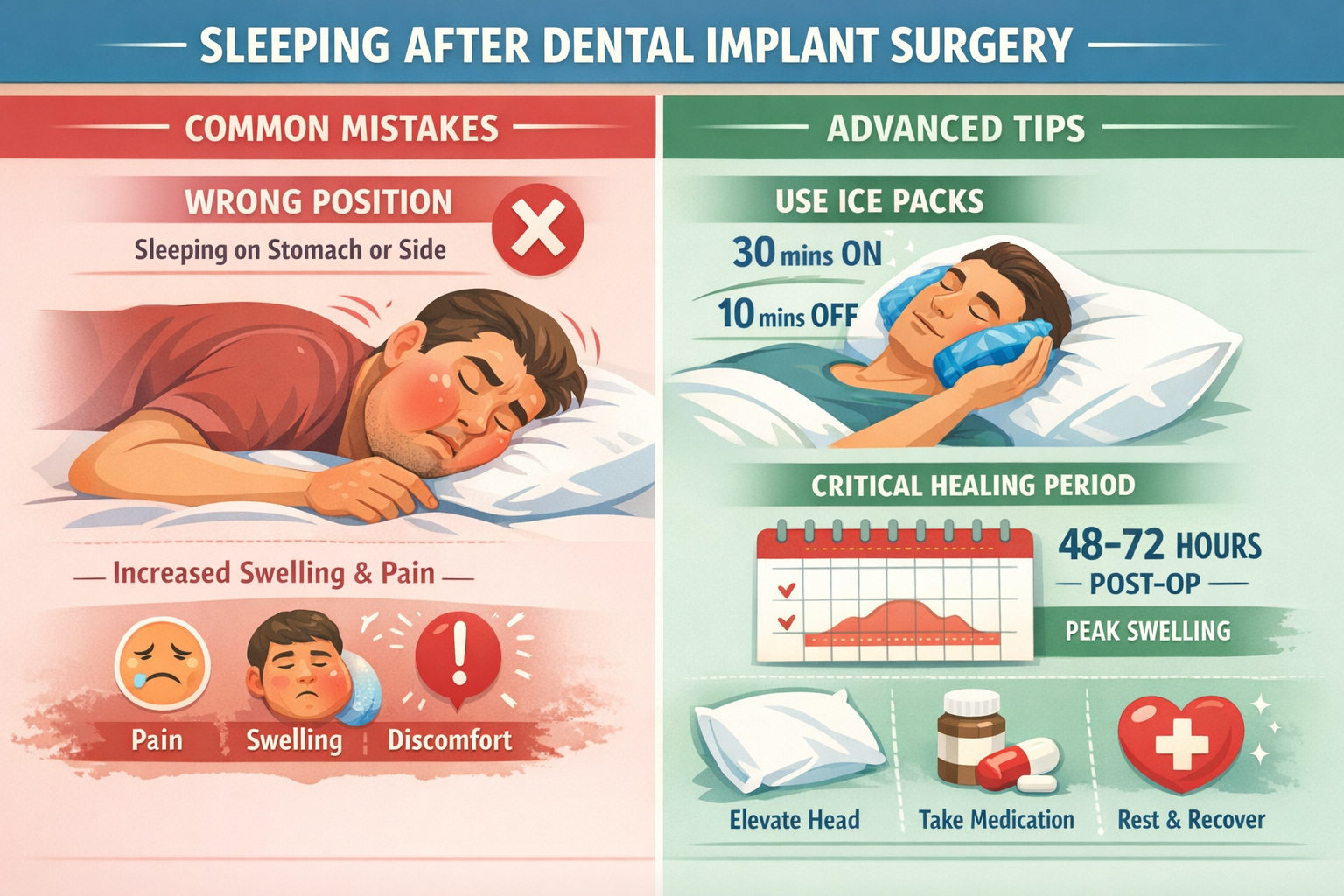
When you lie flat, gravity allows fluid to accumulate around your head and neck, exacerbating swelling. Elevating your head, however, helps gravity work in your favor, drawing fluid away from the surgical area and reducing both swelling and the risk of bleeding [1, 4]. This is particularly important because swelling is often predicted to peak around 48-72 hours post-surgery [2]. Managing this peak is key to a comfortable recovery.
The Gold Standard: Sleeping on Your Back with Head Elevated
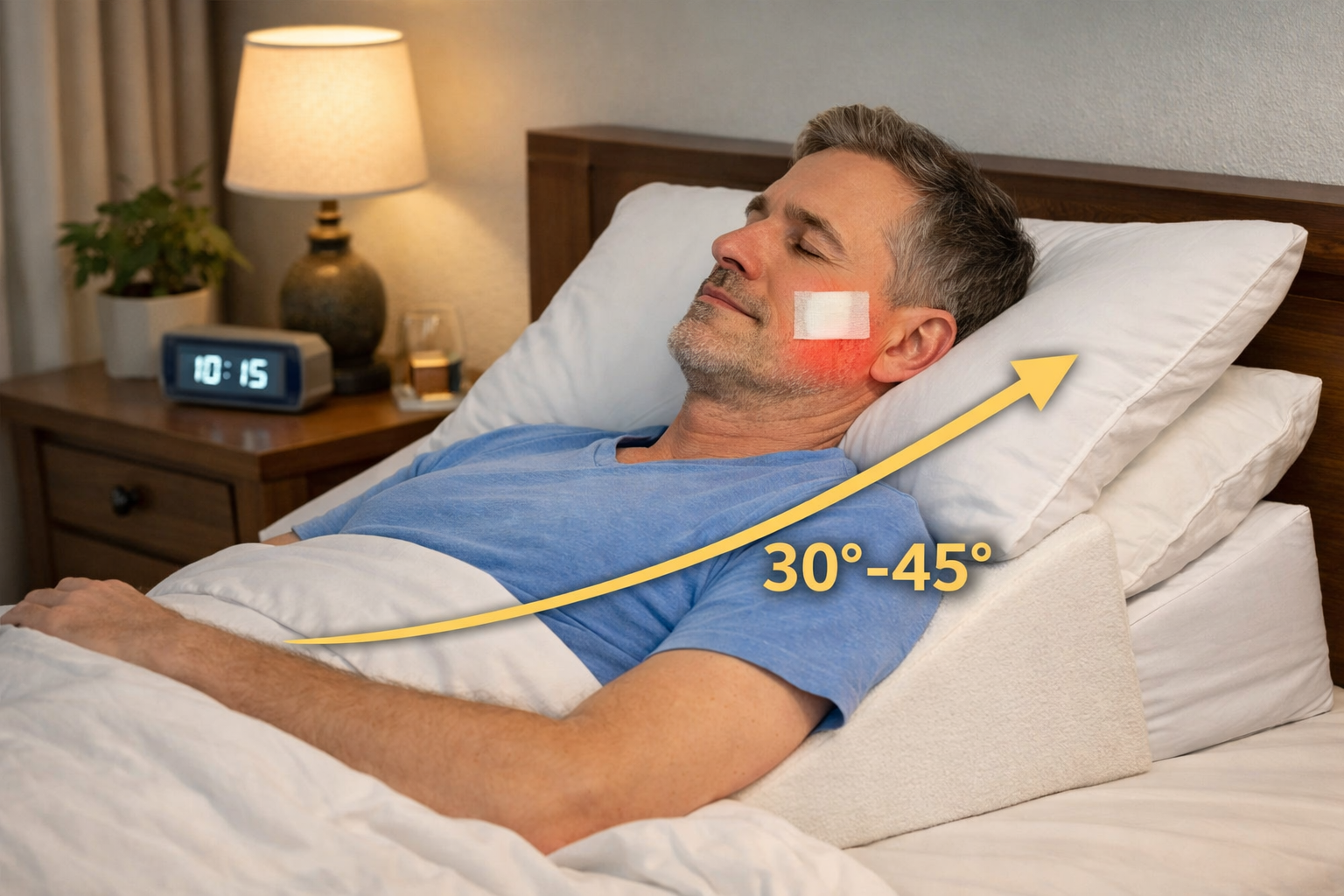
Without a doubt, the best way to sleep after dental implant surgery is on your back with your head elevated. Think of it like a gentle incline.
How to achieve optimal elevation:
- Wedge Pillow: A firm wedge pillow is an excellent investment. It provides consistent, comfortable elevation for your head and upper body [1, 3].
- Multiple Pillows: If a wedge pillow isn’t available, stack 2-3 regular pillows to create a ramp-like effect, ensuring your shoulders are above heart level [1, 4].
- Recliner Chair: Some patients find sleeping in a recliner chair to be the most comfortable option, as it naturally keeps your head elevated and provides built-in support [1, 3].
Your goal is to maintain this elevated position for at least the first 72 hours following surgery, with the first 24 hours being the most critical [2, 4]. For more complex procedures, such as zygomatic implants, full arch restorations, or All-on-4/6 implants, your dental surgeon might recommend a longer period of elevated sleep, potentially 3-5 nights or even more [1]. Patients who diligently follow these sleep and recovery guidelines often experience faster healing and fewer complications [1].
Remember, consistency is key. Even if you wake up briefly, gently adjust yourself back into the elevated, on-your-back position. This dedicated effort during the initial recovery phase significantly contributes to the long-term success of your dental implants. For additional post-operative instructions, you can refer to our essential recovery guide.
Common Mistakes and Advanced Tips for Sleeping After Dental Implant Surgery
While the “back and elevated” method is the primary rule, understanding common pitfalls and incorporating additional strategies can further optimize your post-surgery sleep and recovery. Navigating the healing process for dental implants requires attention to detail, and a well-rested body is a powerful ally.
Sleeping Positions to Strictly Avoid
Just as there are optimal positions, there are also positions that can actively hinder your healing. Avoiding these is just as important as adopting the correct ones.
🚫 Sleeping on Your Side: Lying on your side, especially the side where the implant was placed, can exert direct pressure on the surgical site [1, 3]. This pressure can increase pain, swelling, and even bleeding. It can also dislodge the protective blood clot, leading to a dry socket-like complication, although less common with implants.
🚫 Sleeping on Your Stomach: This is perhaps the worst position for dental implant recovery. Sleeping on your stomach not only puts direct pressure on your face and potentially the implant site but also allows fluids to pool around your head, maximizing swelling [1, 3]. It can also twist your neck uncomfortably, adding unnecessary strain.
Duration of Elevated Sleep and Gradual Transition
The recommended duration for elevated sleep can vary slightly based on the complexity of your procedure and your individual healing rate.
- First 24 Hours: Absolutely critical for strict elevation [2, 4].
- First 72 Hours: Continue rigorous elevation as swelling is expected to peak during this period [2].
- Beyond 72 Hours: For simple cases, you might be able to gradually reduce elevation after 3-5 nights if discomfort and swelling have significantly decreased. For complex cases (e.g., multiple implants, bone grafting), your surgeon might advise maintaining elevation for a longer period [1]. Always consult your dental professional for personalized guidance.
Advanced Tips for a Better Night’s Rest
Beyond just positioning, several other factors can influence the quality of your sleep and overall healing.
- Ice Application: In the first 24 hours, apply an ice pack (wrapped in a towel) to the outside of your cheek, near the surgical site. Use it for 30 minutes on, then 10 minutes off. This helps reduce initial swelling and numbs the area, which can aid in comfort, even while attempting to sleep [2].
- Pain Management: Take prescribed pain medication as directed by your surgeon, ideally about 30-60 minutes before bedtime, to ensure its effects are active when you’re trying to fall asleep. For a comprehensive guide to managing discomfort, check out our dental implant pain relief guide.
- Create a Conducive Sleep Environment: Keep your bedroom dark, quiet, and cool. Avoid screens (phones, tablets) before bed. A calm environment promotes deeper, more restorative sleep.
- Stay Hydrated: Drinking plenty of water is essential for overall healing. However, avoid excessive fluids right before bed to minimize trips to the bathroom.
- Avoid Strenuous Activity: Strenuous activities can increase blood pressure and the risk of bleeding. Keep your physical activity to a minimum, especially in the first few days, to ensure a calm recovery environment conducive to sleep [6].
- Dietary Considerations: Stick to soft foods as recommended by your surgeon. Avoiding crunchy or hard foods will prevent irritation to the surgical site and allow you to sleep more comfortably. While specific instructions might vary, generally avoiding dairy products for the first few days can also be beneficial as they can sometimes promote mucus production and irritate the surgical site; you can learn more about this in our article Why No Dairy After Dental Implant?.
- Sedation Effects: If you received dental implant with sedation, you might feel drowsy and sleep more heavily initially. Ensure you have someone to assist you if needed during this period.
By being mindful of these considerations, you not only protect your dental implants but also enhance your body’s natural ability to heal efficiently. Successful recovery is a marathon, not a sprint, and proper care during sleep is a significant stride towards the finish line. If you experience unusual bleeding or persistent discomfort, remember to seek emergency dental implant care Dallas 2026 promptly.
Conclusion
Navigating the recovery period after dental implant surgery can feel daunting, but paying close attention to your sleeping positions after dental implant surgery is a straightforward yet profoundly impactful step you can take to ensure a smooth and successful healing process. By consistently sleeping on your back with your head elevated, especially during the critical first 72 hours, you actively minimize swelling, reduce the risk of bleeding, and create an optimal environment for your new implants to integrate seamlessly with your jawbone.
Remember to avoid sleeping on your side or stomach, as these positions can introduce unnecessary pressure and complications. Equip yourself with wedge pillows or stack several regular pillows to maintain the necessary elevation, or consider the comfort of a recliner. Incorporate ice therapy, manage pain effectively, and cultivate a serene sleep environment to further support your recovery.
The success of your dental implants, which boasts rates above 95% for advanced procedures when guidelines are followed, is a testament to the importance of meticulous post-operative care [1]. Your commitment to these seemingly small details contributes significantly to the longevity and comfort of your restored smile.
Actionable Next Steps:
- Prepare Your Sleep Space: Before your surgery, acquire a wedge pillow or plan to use multiple regular pillows.
- Discuss with Your Surgeon: Confirm specific sleeping position recommendations tailored to your procedure type and individual health.
- Set Reminders: In the first few nights, you might consider setting a gentle alarm to check your position if you’re prone to moving in your sleep.
- Stay Vigilant: Continue elevated sleeping for the recommended duration, even if you feel significantly better.
- Don’t Hesitate to Ask: If you have any concerns about your recovery or experience unusual symptoms, contact your dental surgeon immediately.
Your diligence in these matters will pave the way for a beautiful, healthy, and lasting smile.
References
[1] The Best Sleeping Position After Dental Implants Why It Matters More Than You Think – https://mexicodentalimplants.com/blog/the-best-sleeping-position-after-dental-implants-why-it-matters-more-than-you-think/
[2] Sleeping Tips After Dental Implant Surgery – https://newteethchicagodentalimplants.com/sleeping-tips-after-dental-implant-surgery/
[3] How Do I Sleep After Oral Surgery – https://nevadaoralandfacialsurgery.com/blog/how-do-i-sleep-after-oral-surgery/
[4] Blog 67498 2019.12.15 Can Sleeping On An Incline After Oral Surgery Help With Healing P – https://progressiveoralsurgery.com/p/BLOG-67498-2019.12.15-Can-Sleeping-on-an-Incline-After-Oral-Surgery-Help-With-Healing-p.asp
[5] Blog 117979 2024.11.1 After Oral Surgery You Need To Sleep Sitting Up P – https://cooleysmileseverett.com/p/BLOG-117979-2022.11.1-After-Oral-Surgery-You-Need-to-Sleep-Sitting-Up-p.asp
[6] Post Op Instructions For Dental Implant Surgery – https://www.adchutto.com/post-op-instructions-for-dental-implant-surgery/
Leave a Reply
Share your thoughts or ask a question about dental implants. Your email address will not be published.