

Regaining the ability to chew, speak, and smile with confidence can be life-changing, and for many, mini implant dentures offer an accessible and effective solution. These innovative prosthetic devices provide a stable, comfortable alternative to traditional dentures, significantly improving quality of life. However, like any advanced dental solution, ensuring their longevity and continued functionality hinges entirely on diligent mini implant denture maintenance. Without proper care, even the most expertly placed mini implants and custom-fitted dentures can face complications, leading to discomfort, expense, and potential failure. This comprehensive guide, tailored for 2026, delves into every facet of maintaining your mini implant dentures, empowering you with the knowledge to protect your investment and preserve your oral health for years to come.
Key Takeaways
- Daily Oral Hygiene is Crucial: Consistent and thorough cleaning of both the dentures and the mini implants prevents plaque buildup, gum inflammation, and peri-implantitis.
- Specialized Tools and Techniques: Traditional brushing methods are insufficient; specific brushes and cleaning solutions are necessary for effective mini implant denture maintenance.
- Dietary Awareness is Important: While mini implant dentures offer improved chewing, avoiding extremely hard or sticky foods can extend their lifespan and prevent damage.
- Regular Professional Care: Scheduled dental check-ups and cleanings with your dentist are indispensable for monitoring implant health, denture fit, and addressing potential issues early.
- Early Detection of Problems: Being vigilant for signs like pain, swelling, loose components, or changes in denture fit can prevent minor issues from escalating into major complications.
Understanding Your Mini Implant Dentures: A Foundation for Maintenance
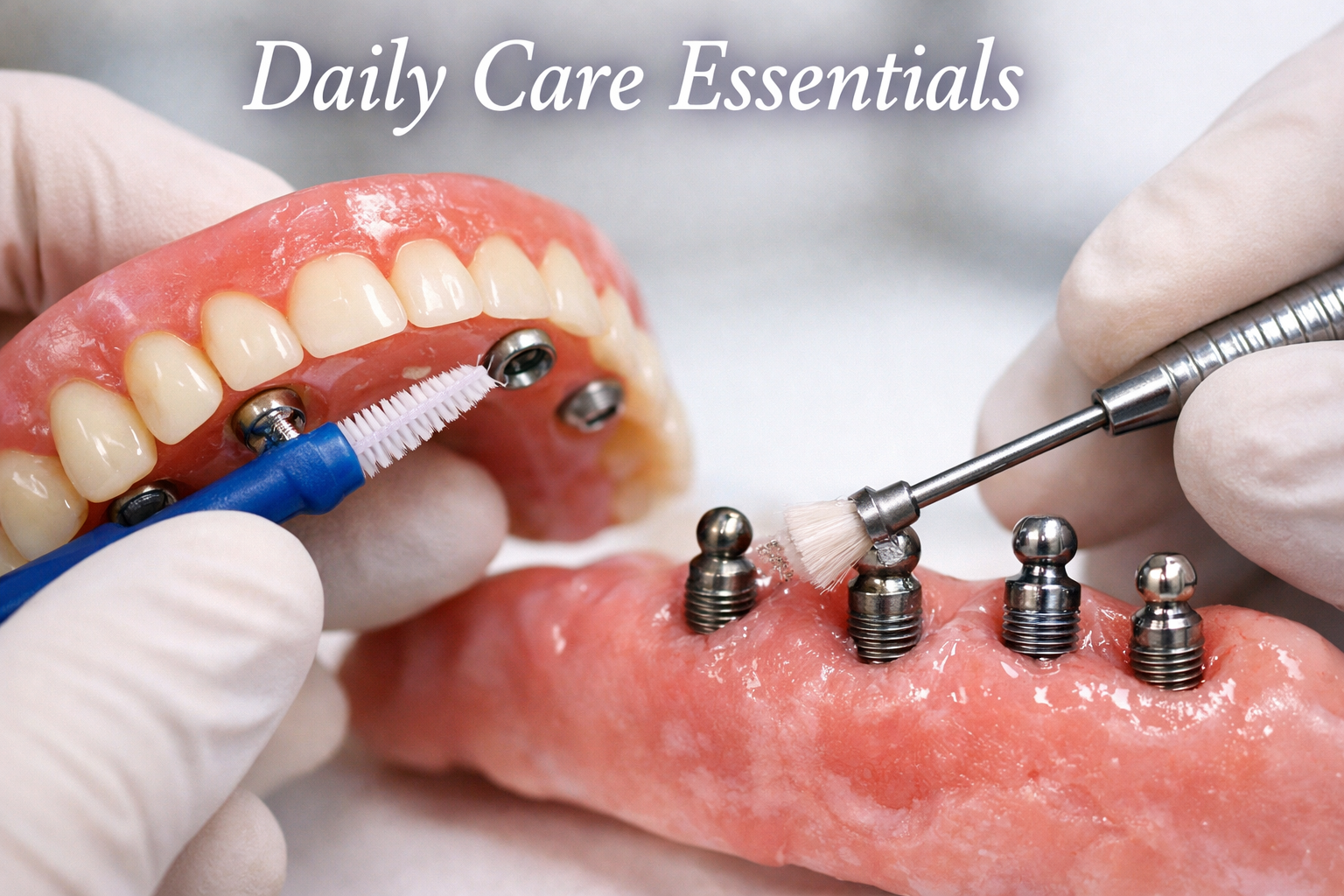
Before diving into the specifics of mini implant denture maintenance, it’s essential to understand what these devices are and how they differ from conventional dentures or full-sized dental implants. Mini dental implants are significantly smaller in diameter than traditional implants, typically less than 3mm [1]. Their slender design often allows for less invasive placement, requiring less bone density and sometimes eliminating the need for bone grafting procedures, making them an appealing option for many individuals, especially those with some degree of 90 percent bone loss in teeth.
These mini implants typically feature a ball-shaped head, over which a specialized O-ring or other retention mechanism within the denture snaps into place. This “snap-on” or “snap-in” feature is what provides the remarkable stability, preventing the slipping and wobbling often associated with conventional dentures. The denture itself is usually an acrylic base with prosthetic teeth, custom-designed to fit your mouth.
Understanding this design is critical because it dictates the specific cleaning techniques required. Unlike full-arch solutions like All-on-4 dental implants where the prosthesis is permanently fixed, mini implant dentures are typically removable by the patient. This removability is key to proper mini implant denture maintenance, as it allows access to both the denture’s underside and the mini implants themselves.
The benefits of mini implant dentures include:
- Enhanced Stability: Eliminates denture movement, improving chewing efficiency and speech.
- Increased Comfort: Reduces irritation from rubbing, often allowing for a smaller denture base.
- Improved Confidence: No fear of dentures slipping or falling out in public.
- Less Invasive Procedure: Often quicker and with a faster recovery time compared to traditional implants.
- Potentially Lower Cost: Generally more affordable than full-sized implant solutions.
- Preservation of Jawbone: Like traditional implants, they help stimulate the jawbone, preventing further bone loss.
Despite these advantages, proper care is non-negotiable. Neglecting mini implant denture maintenance can lead to peri-implantitis (an inflammatory disease affecting the soft and hard tissues surrounding dental implants) [2], gum disease, odor, and premature wear of the denture components.
Daily Cleaning Regimen for Your Mini Implant Dentures
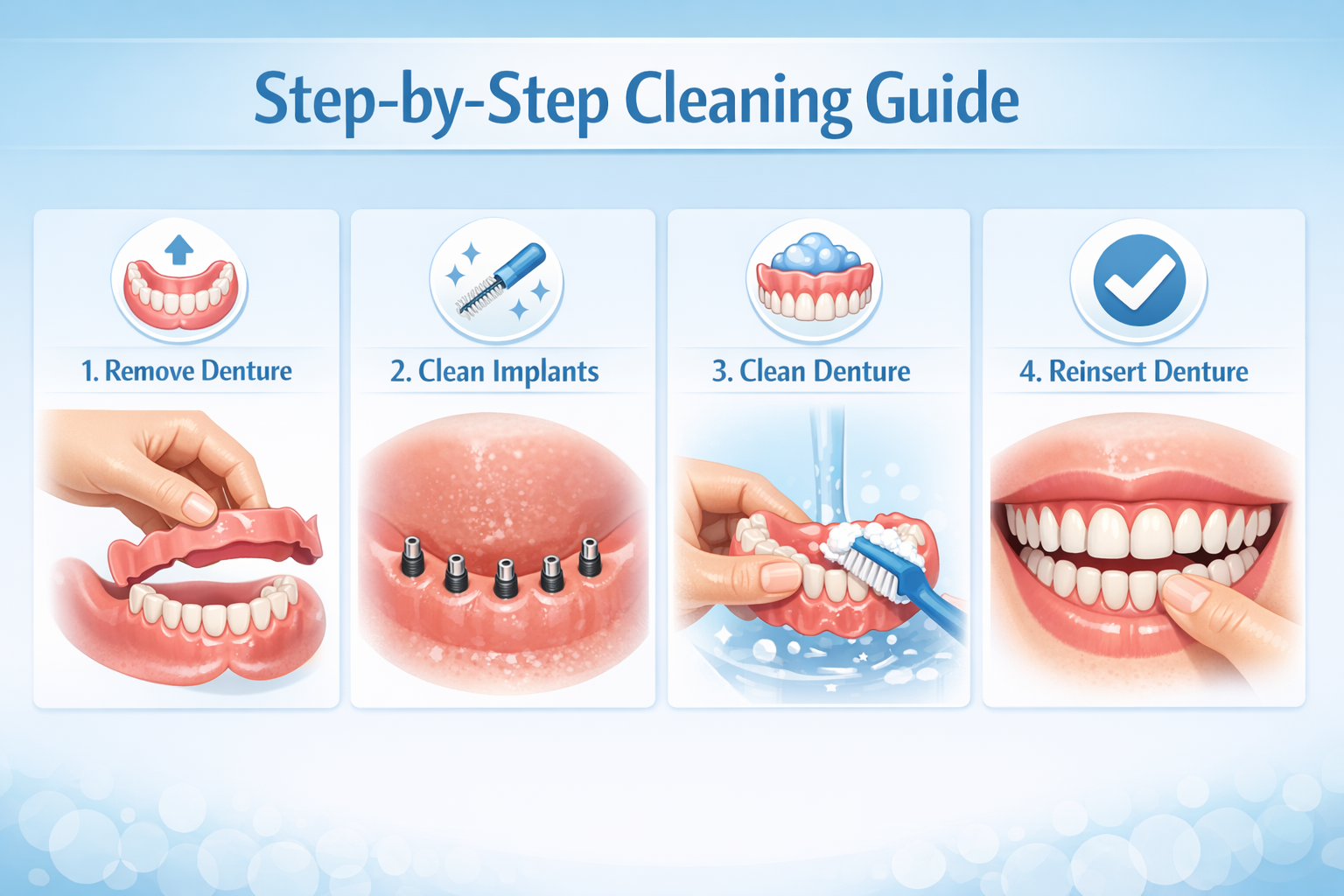
The cornerstone of long-term success for any dental prosthetic is consistent, thorough daily cleaning. For mini implant dentures, this involves two distinct but equally important steps: cleaning the dentures themselves and cleaning the mini implants in your mouth.
Step-by-Step Denture Cleaning
- Remove Your Dentures: Always remove your dentures before cleaning. Do this carefully, following your dentist’s instructions. Often, this involves applying gentle upward pressure to disengage the O-rings from the implant abutments.
- Rinse Thoroughly: Hold your dentures over a basin filled with water or a soft towel to prevent breakage if accidentally dropped. Rinse them under cool, running water to remove loose food particles. Never use hot water, as it can warp the acrylic base.
- Brush the Dentures:
- Use a soft-bristled denture brush or a specific implant denture brush. Regular toothbrushes may be too abrasive.
- Apply a non-abrasive denture cleaner or a mild soap (like hand soap). Never use regular toothpaste on your dentures, as it contains abrasive particles that can scratch the acrylic, creating microscopic crevices where bacteria can harbor.
- Brush all surfaces of the denture, paying special attention to the underside (the part that sits against your gums) and around the O-rings or attachment points. Gently clean the O-rings themselves to remove any debris.
- Soak (Optional but Recommended): Most mini implant dentures can be soaked in a specialized denture cleaning solution overnight. This helps to loosen plaque, kill bacteria, and remove stains. Always follow the product instructions carefully. Ensure the solution is specifically formulated for dentures and, if applicable, compatible with your denture’s components.
- Rinse Again: After brushing and/or soaking, rinse your dentures thoroughly under cool running water to remove any remaining cleaning solution before reinserting them.
Step-by-Step Mini Implant Cleaning
While your dentures are out, it’s time to clean the mini implants themselves, which are still anchored in your jawbone. This is a critical part of mini implant denture maintenance as it directly impacts the health of the surrounding gum and bone tissue.
- Brush the Implants:
- Use a soft-bristled toothbrush or an interdental brush specifically designed for cleaning around implants. Some dentists recommend a Waterpik with a low-pressure setting and a non-abrasive solution for effective cleaning around the implants. Learn more about the best water flosser for dental implants for optimal results.
- Gently brush around the base of each mini implant, where it emerges from the gum line. Ensure you clean all surfaces of the implant head, including the ball-shaped attachment.
- Use a circular motion, cleaning softly but thoroughly to remove plaque and food debris.
- Flossing (if applicable): If there are any exposed areas between implants or if your dentist recommends it, use a specialized dental floss or an interdental cleaner specifically designed for implants. Your dentist can demonstrate the correct technique.
- Rinse: Rinse your mouth with an antiseptic or non-alcoholic mouthwash, or simply warm salt water, to further reduce bacteria. This contributes to overall oral hygiene and can help with dental implant aftercare instructions.
“Consistent daily care is the single most important factor in the longevity and success of your mini implant dentures. Treat them with the same diligence as you would your natural teeth.”
Advanced Maintenance and Troubleshooting Common Issues
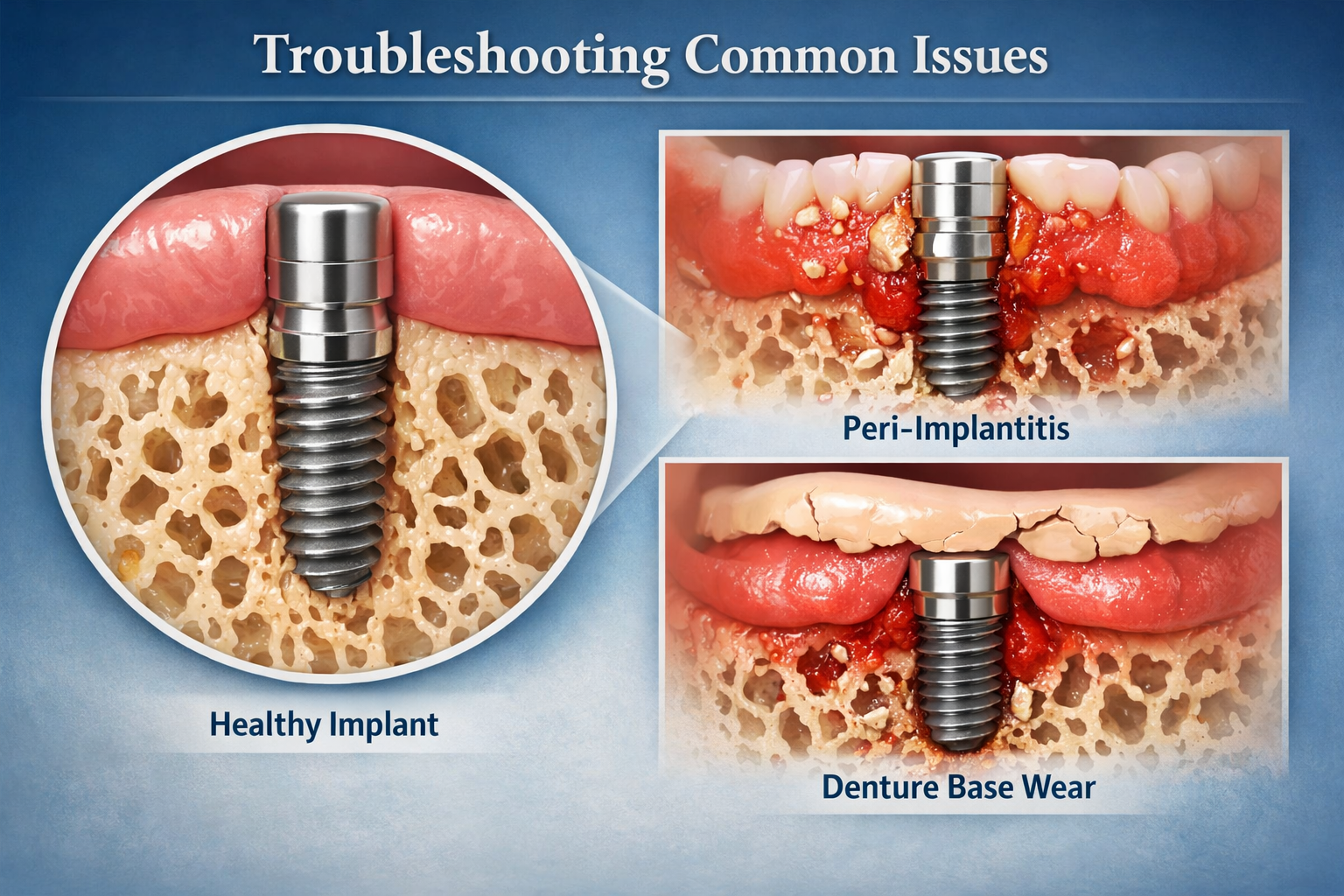
Even with meticulous daily care, certain situations require more advanced attention. Understanding potential issues and how to troubleshoot them is a key aspect of comprehensive mini implant denture maintenance.
Addressing Loose Dentures or Worn O-Rings
Over time, the O-rings (or other retention components) within your denture that snap onto the mini implants can wear out. This is a normal part of their lifespan and is often the first indication that your dentures feel less stable.
- Symptoms: Your dentures might feel looser, wobble more, or not snap into place as firmly as they once did. You might also notice a clicking noise when chewing.
- Solution: This is usually an easy fix for your dentist. The O-rings are replaceable components. During a routine check-up, your dentist can quickly replace them, restoring the snug fit of your dentures. Do not attempt to replace them yourself or use adhesives as a temporary fix, as this can damage the denture or implants.
Dealing with Food Trapped Under Dentures
Despite the improved seal of implant-supported dentures, it’s still possible for food particles to get trapped underneath, leading to discomfort and potential bacterial buildup.
- Symptoms: A feeling of pressure, irritation, or soreness under the denture base.
- Solution: Immediately remove your dentures, rinse your mouth thoroughly, and clean both the denture and the implant sites as described in the daily regimen. If this is a recurring problem, it might indicate a slight change in your gum line or denture fit, requiring an adjustment by your dentist. Avoiding extremely small, seedy foods can also help. For guidance on appropriate nutrition, consider reviewing lists like 50 soft foods after dental implant.
Preventing and Recognizing Peri-Implantitis
Peri-implantitis is an inflammatory condition affecting the tissues surrounding an osseointegrated dental implant, resulting in progressive bone loss [2]. It’s the most significant threat to the long-term success of dental implants, including mini implants.
- Symptoms: Redness, swelling, or tenderness of the gums around the implants; bleeding when brushing; pus formation; persistent bad breath; a dull ache; or even the implant feeling loose.
- Prevention: This is where diligent mini implant denture maintenance shines. Thorough daily cleaning to remove plaque and bacteria is paramount. Regular professional cleanings are also essential, as dentists can reach areas you might miss. Avoiding smoking is another critical preventive measure, as smoking significantly increases the risk of peri-implantitis.
- Action: If you notice any of these symptoms, contact your dentist immediately. Early detection and treatment are crucial to saving the implant. Treatment can range from enhanced hygiene protocols and antibiotics to surgical intervention in advanced cases.
| Issue | Symptoms | Action Plan |
|---|---|---|
| Loose Dentures | Dentures wobble, feel unstable, don’t snap firmly. | Schedule an appointment with your dentist for O-ring replacement. |
| Food Trapping | Discomfort, irritation under denture; frequent need for removal/rinsing. | Remove, clean immediately. If persistent, consult dentist for denture adjustment. |
| Peri-Implantitis | Red, swollen, bleeding gums; pus; pain; bad breath. | CONTACT DENTIST IMMEDIATELY. Do not delay. |
| Denture Cracks/Chips | Visible damage to the acrylic base or teeth. | Do not attempt DIY repairs. See your dentist for professional repair or replacement. |
| Persistent Odor | Bad breath or denture odor despite regular cleaning. | Could indicate bacterial buildup, infection, or worn denture. Consult dentist for diagnosis and advice. |
The Indispensable Role of Professional Dental Care in 2026
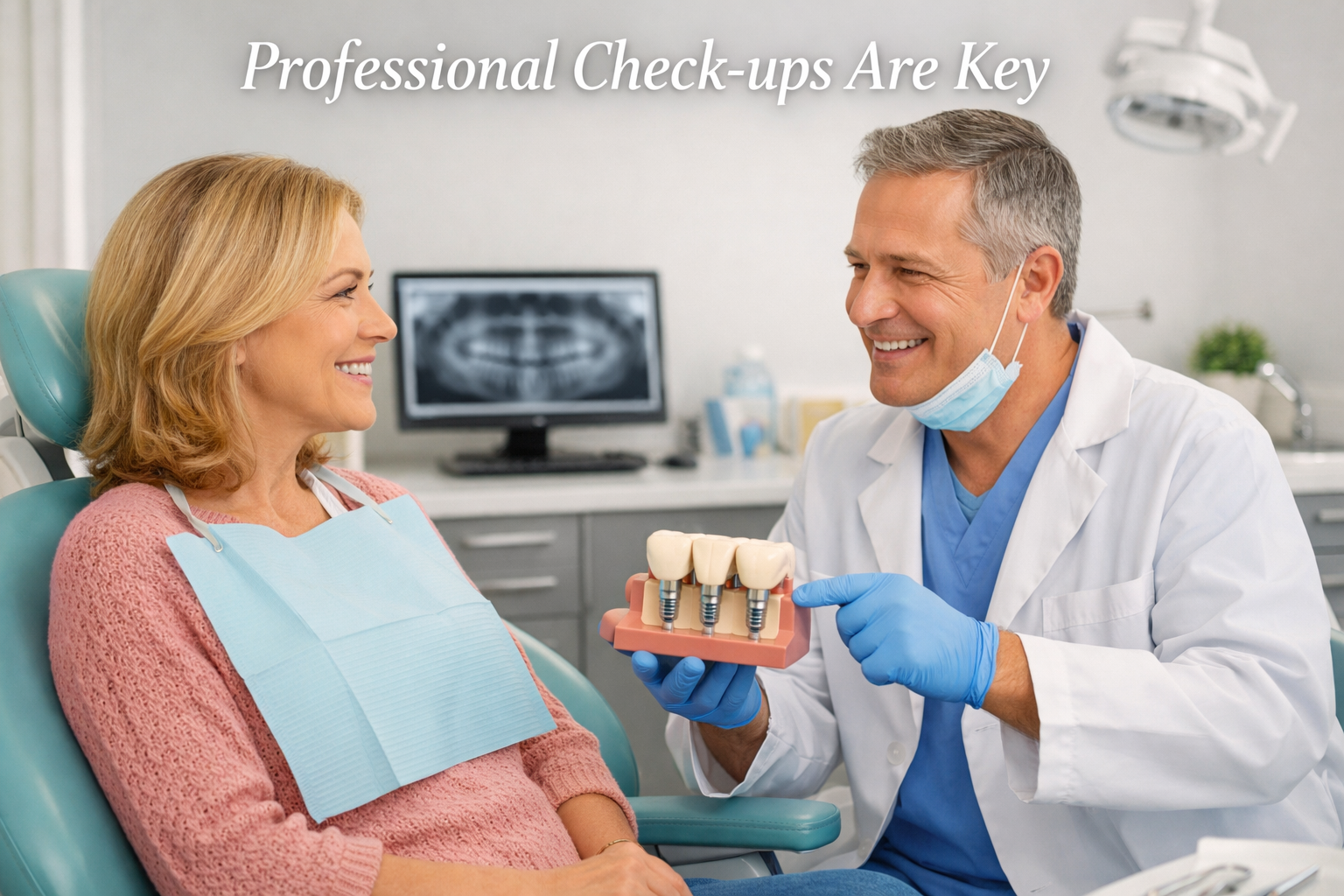
While your daily cleaning regimen is the foundation, regular professional dental check-ups and cleanings are the pillars supporting the long-term success of your mini implant dentures. In 2026, advances in dental technology make these appointments more crucial and effective than ever.
How Often Should You Visit Your Dentist?
For most individuals with mini implant dentures, a visit every six months is recommended. However, your dentist may suggest more frequent appointments (e.g., every three or four months) if you have specific risk factors, such as a history of gum disease, compromised immune system, or if you smoke. This personalized schedule is part of comprehensive care for complete dental implants Dallas and other implant solutions.
What Happens During a Professional Check-up?
These appointments are far more than just quick cleanings. They involve a thorough assessment of your oral health, focusing specifically on your mini implants and dentures.
- Comprehensive Oral Examination:
- The dentist will examine your gums, tongue, and other soft tissues for any signs of inflammation, infection, or other abnormalities.
- They will assess the health of the bone and gum tissue surrounding each mini implant.
- Implant Health Assessment:
- Your dentist will check for signs of peri-implantitis, including probing the gum pockets around the implants.
- They will visually inspect the implant heads and the surrounding tissue for any redness, swelling, or recession.
- X-rays may be taken periodically to monitor the bone levels around your implants and detect any changes that aren’t visible to the naked eye.
- Denture Assessment and Maintenance:
- The fit of your denture will be evaluated. Over time, your jawbone naturally changes, and the denture may require relining or rebasing to maintain a snug, comfortable fit.
- The O-rings or other retention components will be inspected for wear and replaced as needed. This is a common part of dental implant cleaning cost Dallas, as replacement parts are factored into the overall service.
- The denture material itself will be checked for cracks, chips, or excessive wear on the prosthetic teeth.
- Professional Cleaning:
- Specialized instruments are used to carefully clean around the mini implants, removing any hardened plaque (calculus) that cannot be removed with regular brushing. Traditional dental scalers can damage the implant surface, so plastic or titanium instruments are often used.
- The denture will also be professionally cleaned and polished, removing stains and bacteria.
- Oral Hygiene Review and Education:
- Your dental team will review your current home care routine and offer personalized advice or demonstrations on techniques and products that can improve your mini implant denture maintenance.
- This is an excellent opportunity to ask any questions you have about your dentures or oral health.
“Your dentist isn’t just treating your teeth; they’re your partner in maintaining the long-term health and function of your mini implant dentures. Don’t underestimate the power of professional oversight.”
Lifestyle Choices for Optimal Mini Implant Denture Longevity
Beyond daily cleaning and professional check-ups, certain lifestyle choices play a significant role in the longevity and success of your mini implant dentures. Making conscious decisions about what you eat, whether you smoke, and how you manage stress can profoundly impact your oral health.
Dietary Considerations
While mini implant dentures significantly enhance your ability to chew compared to conventional dentures, adopting a mindful diet can still be beneficial.
- Avoid Extremely Hard Foods: While apples might be manageable, try to avoid excessively hard foods like unpopped popcorn kernels, hard candy, or chewing on ice. These can potentially damage the denture teeth or even put undue stress on the implants.
- Limit Sticky Foods: Foods like taffy, caramel, or gum can cling to dentures, making them harder to clean and potentially dislodging the denture if the adhesive bond isn’t strong.
- Balanced Nutrition: A diet rich in vitamins and minerals, especially calcium and Vitamin D, supports overall bone health, which is crucial for the stability of your implants.
- Chew Evenly: Try to distribute chewing forces across both sides of your mouth to prevent undue stress on one area of the denture or implants.
- Hydration: Drinking plenty of water helps wash away food particles and maintains saliva flow, which is important for oral health.
The Impact of Smoking and Alcohol
Smoking and excessive alcohol consumption are detrimental to oral health in general, and their negative effects are amplified when you have dental implants.
- Smoking: Smoking is a major risk factor for implant failure and peri-implantitis [3]. It constricts blood vessels, reducing blood flow to the gums and bone, impairing healing, and weakening the immune response. It also introduces harmful chemicals that irritate tissues. If you currently smoke, discussing cessation strategies with your dental professional or doctor is highly recommended. Learn more about the general impact of smoking after procedures like after root canal can you smoke.
- Alcohol: Excessive alcohol intake can contribute to dry mouth, which increases the risk of gum disease and decay (if you have natural teeth). While moderate consumption is generally fine, always follow your dentist’s specific advice, especially after any surgical procedures like alcohol after dental implant surgery.
Managing Bruxism (Teeth Grinding)
Bruxism, or habitual clenching and grinding of teeth, can exert excessive forces on your mini implant dentures and implants, leading to:
- Denture Wear: Accelerated wear of denture teeth and base material.
- O-Ring Damage: Increased stress on the retention components, leading to faster wear.
- Implant Stress: Potentially excessive forces on the mini implants, which, while robust, are designed for certain load limits.
- Jaw Pain: Discomfort in the jaw joint and surrounding muscles.
If you grind your teeth, your dentist may recommend a custom-fitted nightguard. This appliance acts as a protective barrier, absorbing the forces of grinding and protecting your dentures and implants.
Sports and Protection
If you participate in contact sports or activities where there’s a risk of impact to your face, wearing a custom-fitted mouthguard is essential. A mouthguard will protect your dentures, implants, and natural oral structures from potential trauma, ensuring your mini implant denture maintenance efforts are not undone by an accident.
By integrating these lifestyle considerations into your routine, you further safeguard your investment in mini implant dentures, promoting their longevity and your continued comfort.
Conclusion

Embracing mini implant dentures is a decision that can dramatically enhance your quality of life, offering stability, comfort, and confidence that traditional dentures often cannot. However, the transformative benefits are directly proportional to your commitment to their care. Diligent mini implant denture maintenance is not merely a recommendation; it is a fundamental requirement for protecting your investment and ensuring the long-term health of your oral cavity.
From the daily ritual of meticulous cleaning of both the denture and the implants to the indispensable role of regular professional check-ups and mindful lifestyle choices, every step contributes to the success and longevity of your prosthetic solution. Understanding the unique design of mini implants and their removable denture attachments empowers you to apply the correct cleaning techniques and identify potential issues early.
In 2026, with continuing advancements in dental materials and care protocols, maintaining your mini implant dentures has never been more straightforward or effective. By adhering to the guidelines outlined in this comprehensive guide, you are actively choosing a future filled with confident smiles, comfortable eating, and clear speech.
Actionable Next Steps:
- Review Your Routine: Re-evaluate your current daily cleaning regimen based on the detailed steps provided. Consider purchasing specialized denture brushes, interdental brushes, and appropriate cleaning solutions.
- Schedule Your Next Check-up: If you haven’t seen your dentist recently, book an appointment to have your mini implants and dentures professionally evaluated and cleaned. Discuss your personalized maintenance schedule.
- Discuss Any Concerns: Don’t hesitate to reach out to your dental professional if you experience any discomfort, looseness, or notice any changes in your gums or around your implants. Early intervention is always best. You can always contact a reputable clinic for a dental implant consultation for expert advice.
- Educate Yourself Further: Stay informed about best practices and new products. Websites like Dental Implants Dallas TX offer a wealth of information on various dental topics.
Your mini implant dentures are an investment in your health and well-being. By prioritizing their maintenance, you ensure they continue to serve you effectively, allowing you to live life to the fullest.
References
[1] Shrestha, S. (2020). Mini dental implants. Journal of Dental Science.
[2] American Academy of Periodontology. (n.d.). Peri-Implant Diseases. Retrieved from https://www.perio.org/consumer/peri-implant-diseases
[3] Strietzel, F. P., et al. (2007). Influence of smoking on dental implants: a systematic review and meta-analysis. Clinical Oral Implants Research, 18(6), 661-667.
Mini Implant Denture Maintenance Tracker 🗓️
Use this interactive checklist to track your daily and periodic mini implant denture maintenance tasks for 2026. Stay on top of your oral health!
Leave a Reply
Share your thoughts or ask a question about dental implants. Your email address will not be published.