

Losing a tooth can be a distressing experience, impacting not just your smile but also your ability to eat and speak comfortably. While dental implants offer a permanent, natural-looking solution, the process isn’t always instant. There’s often a crucial waiting period as your jawbone heals and integrates with the implant. During this time, many patients wonder: “What do I do about the gap in my smile?” The answer lies in a temporary tooth while waiting for implant, a vital component of modern dental care that ensures your comfort, aesthetics, and oral health are maintained throughout your treatment journey. This comprehensive guide will explore the various options available, their benefits, and what you can expect when you need a temporary tooth while waiting for implant in 2026.
Key Takeaways
- Temporary Solutions are Essential: A temporary tooth while waiting for implant maintains aesthetics, function, and prevents teeth from shifting during the healing process.
- Multiple Options Exist: Choices range from removable flippers and Essix retainers to fixed bonded bridges, each with unique benefits and considerations.
- Healing Time Varies: The waiting period for implant integration (osseointegration) can be several months, making temporary solutions crucial for daily life.
- Care is Paramount: Proper hygiene and careful chewing are necessary to protect your temporary restoration and the surgical site.
- Consult Your Dentist: Your dental professional will recommend the best temporary solution based on your specific situation, location of the missing tooth, and overall oral health.
Understanding the Need for a Temporary Tooth While Waiting for Implant
The journey to a successful dental implant involves several stages, and often, a significant waiting period. After a tooth extraction, or even after the dental implant itself is placed, your body needs time to heal. This healing period, known as osseointegration, is when the titanium implant fuses with your jawbone, providing a stable foundation for your new permanent tooth. This process can take anywhere from a few weeks to several months, depending on individual healing capabilities, the quality of bone, and whether bone grafting was necessary [1].
During this waiting period, leaving a visible gap in your smile can be more than just an aesthetic concern. It can lead to:
- Aesthetic Compromise: A missing tooth, especially in the front of your mouth, can make you feel self-conscious and reluctant to smile or speak openly.
- Functional Difficulties: Chewing and speaking can become challenging, leading to changes in diet and potential speech impediments.
- Shifting Teeth: Adjacent teeth may begin to drift into the empty space, altering your bite and potentially complicating the eventual placement of the permanent implant crown.
- Gum Recession: The gum tissue around the missing tooth can start to recede, which might affect the final aesthetic outcome of your implant.
- Psychological Impact: The emotional toll of a missing tooth can be significant, affecting self-esteem and social interactions.
This is precisely why a temporary tooth while waiting for implant is not merely an option, but often a crucial part of the treatment plan. It bridges the gap, both physically and emotionally, allowing you to maintain normalcy in your daily life until your permanent restoration is ready. When considering dental implants, especially for full mouth solutions, understanding the entire timeline and the role of temporary restorations is vital. You can learn more about comprehensive solutions like All-on-4 dental implants in Dallas by consulting with an expert.
Types of Temporary Teeth While Waiting for Implant
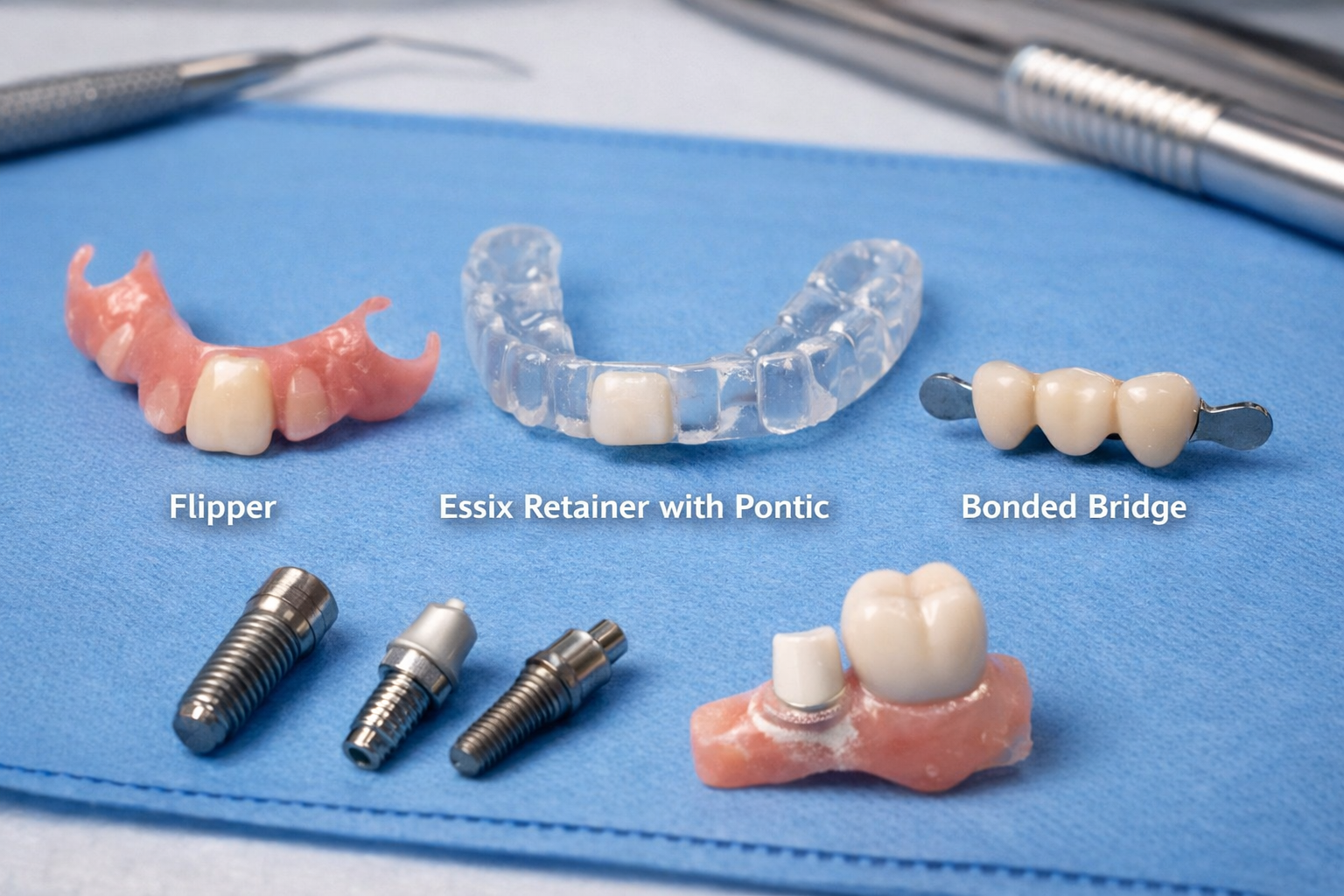
When it comes to getting a temporary tooth while waiting for implant, you have several options, each with its own advantages and disadvantages. Your dentist will help you choose the best solution based on the location of the missing tooth, your budget, aesthetic needs, and the duration of your healing period.
Removable Temporary Solutions
These options are generally less invasive, more affordable, and allow for easy cleaning of the surgical site.
1. Flipper Denture (Acrylic Partial Denture)
- What it is: A flipper is a removable acrylic partial denture that typically replaces one or two missing teeth. It gets its name because it can be “flipped” in and out of the mouth. It usually has small clasps that fit around existing teeth to hold it in place.
- Pros:
- Cost-effective: Generally the most affordable temporary option.
- Quick to fabricate: Can often be made relatively quickly.
- Non-invasive: Does not involve altering adjacent teeth.
- Aesthetic: Effectively fills the gap, restoring your smile.
- Cons:
- Can be bulky: Some patients find them uncomfortable or bulky.
- Less stable: Can move slightly during chewing or speaking, especially if not well-fitted.
- Fragile: Prone to breaking if dropped or handled roughly.
- Removable: Must be taken out for cleaning and sometimes while eating.
- May cause gum irritation: If not cleaned properly, can trap food and irritate gums.
- Best for: Patients needing a quick, affordable, and aesthetic temporary tooth while waiting for implant, particularly for front teeth, and those comfortable with a removable appliance.
2. Essix Retainer with a Pontic
- What it is: Similar to clear aligners, an Essix retainer is a clear, thin plastic tray that fits snugly over your teeth. For a temporary tooth, a false tooth (pontic) is integrated into the tray at the site of the missing tooth.
- Pros:
- Highly aesthetic: Virtually invisible, making it an excellent choice for front teeth.
- Comfortable: Thin and lightweight, generally well-tolerated.
- Non-invasive: No alteration of adjacent teeth.
- Maintains space: Prevents surrounding teeth from shifting.
- Cons:
- Durability: Less durable than some other options, can crack or break.
- Removable: Needs to be taken out for eating and cleaning.
- Chewing limitations: Not designed for heavy chewing on the pontic.
- Cost: Slightly more expensive than a flipper.
- Best for: Patients prioritizing aesthetics and comfort, especially if the missing tooth is in a highly visible area, and those who require a less conspicuous temporary tooth while waiting for implant.
Fixed Temporary Solutions
These options are cemented or bonded in place, offering greater stability and a feeling closer to natural teeth.
1. Bonded Bridge (Maryland Bridge)
- What it is: A bonded bridge consists of a false tooth (pontic) with small “wings” on either side. These wings are bonded to the back surfaces of the adjacent natural teeth with dental resin.
- Pros:
- More stable: Fixed in place, offering better chewing function than removable options.
- Aesthetic: Looks very natural.
- Less bulky: Does not cover the palate or gums as much as a flipper.
- Minimally invasive: Requires minimal to no preparation of adjacent teeth.
- Cons:
- Durability: Can sometimes debond or break, requiring re-cementation or repair.
- Not suitable for all cases: Requires healthy adjacent teeth for bonding.
- Cost: More expensive than removable options.
- Cleaning: Can be slightly more challenging to clean underneath the pontic.
- Best for: Patients seeking a stable, aesthetic, non-removable temporary tooth while waiting for implant where adjacent teeth are healthy and suitable for bonding. This can be a great option for short to medium-term temporization.
2. Provisional Crown (Immediate Crown on an Implant)
- What it is: In some cases, particularly for front teeth where immediate aesthetics are crucial, a temporary crown can be placed directly onto the newly placed implant post on the same day as surgery. This is only possible if the implant has achieved sufficient primary stability in the bone.
- Pros:
- Immediate aesthetics: You leave the office with a tooth.
- Fixed: Non-removable and very stable.
- Natural feel: Closest to a permanent tooth in terms of comfort and function.
- Maintains gum contour: Helps shape the gum tissue for the final crown.
- Cons:
- Not always possible: Requires excellent bone quality and implant stability.
- Risk of failure: Putting immediate chewing forces on the implant can jeopardize osseointegration if not done carefully.
- Cost: More expensive due to the immediate placement and precision required.
- Strict diet: Requires a very soft diet during the initial healing phase to avoid disturbing the implant.
- Best for: Select cases where immediate aesthetic demands are high, and the implant has achieved excellent initial stability, making it possible to have an immediate temporary tooth while waiting for implant.
Each of these options serves the purpose of providing a temporary tooth while waiting for implant, but your dental professional will guide you to the most appropriate choice for your unique situation. When exploring the best treatment paths, consider consulting specialists in your area, such as those providing affordable dental implants in Dallas, TX.
| Temporary Tooth Option | Type | Aesthetics | Stability | Cost (Relative) | Invasiveness | Key Consideration |
|---|---|---|---|---|---|---|
| Flipper Denture | Removable | Good | Fair | Low | None | Bulky, removable, less durable |
| Essix Retainer with Pontic | Removable | Excellent (clear) | Fair | Medium | None | Removable, not for heavy chewing, aesthetic priority |
| Bonded Bridge (Maryland) | Fixed | Excellent | Good | High | Minimal (etching) | Can debond, requires healthy adjacent teeth |
| Provisional Crown (Immediate) | Fixed | Excellent (instant) | Excellent | Highest | Requires implant stability | Not always possible, strict diet post-op |
Note: Costs are relative and can vary significantly based on location, materials, and complexity.
The Dental Implant Timeline and the Role of Your Temporary Tooth
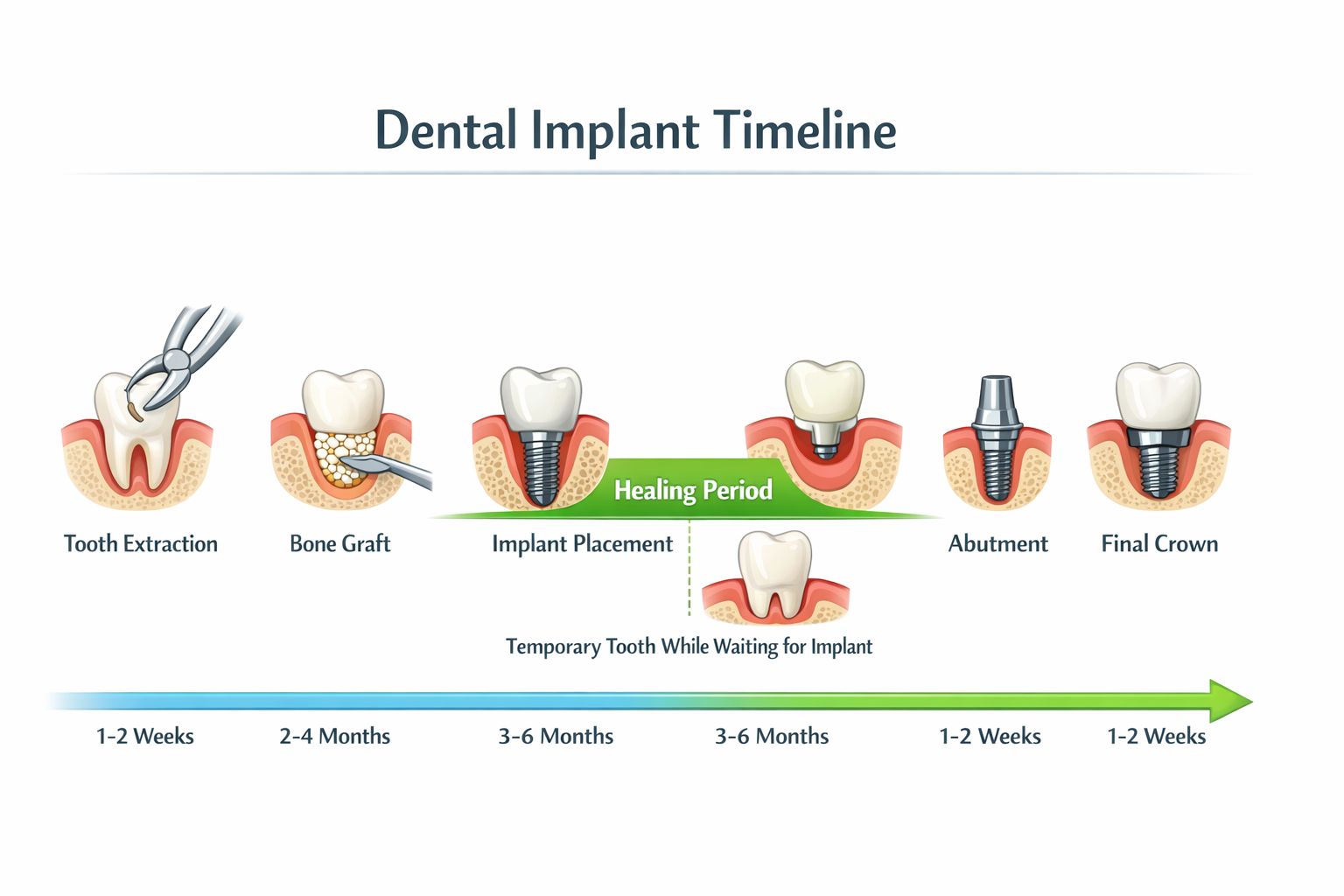
Understanding the timeline of dental implant placement is key to appreciating the importance of a temporary tooth while waiting for implant. The entire process, from initial consultation to the final crown, can span several months. In 2026, advancements continue to streamline these processes, but the biological healing still takes time.
Here’s a typical timeline, highlighting where your temporary tooth fits in:
Initial Consultation and Treatment Planning:
- This first step involves a thorough examination, X-rays, and possibly 3D scans to assess your bone density and overall oral health. Your dentist will discuss your options, including whether you’ll need a temporary tooth.
- No temporary tooth needed at this stage.
Tooth Extraction (if necessary) and Bone Grafting:
- If the damaged tooth is still present, it will be extracted. If there isn’t enough bone to support an implant, a bone graft may be performed. This adds bone material to the jaw, which then needs time to heal and integrate.
- Role of Temporary Tooth: If the extracted tooth is in a visible area, a temporary tooth while waiting for implant (like a flipper or Essix retainer) is often placed immediately after extraction to maintain aesthetics and function during the 3-6 month bone graft healing period. Learning about bone graft recovery after dental implant is crucial for this stage.
Dental Implant Placement Surgery:
- Once your jawbone is ready, the titanium implant post is surgically placed into the bone. This procedure is typically done under local anesthesia.
- Role of Temporary Tooth: After implant placement, the implant needs to heal and fuse with the bone (osseointegration). This phase usually takes 3-6 months. During this time, the temporary tooth you received after extraction can often be modified or continued. If no temporary was placed before, one will be provided now. In very specific cases, an immediate provisional crown might be placed on the implant, as discussed earlier. For a deeper dive into what to expect post-surgery, you can refer to the complete dental implant recovery timeline.
Osseointegration (Healing Period):
- This is the critical phase where the implant fuses with your jawbone. It’s usually the longest part of the process.
- Role of Temporary Tooth: Your temporary tooth while waiting for implant remains in place, allowing you to eat, speak, and smile confidently without revealing the underlying healing process. It protects the surgical site and maintains the space for the final crown.
Abutment Placement:
- Once osseointegration is complete, a small connector piece called an abutment is attached to the implant. This piece will eventually hold the permanent crown.
- Role of Temporary Tooth: Depending on the type of abutment and the healing required, your temporary tooth might be removed, adjusted, or temporarily set aside during this appointment. The healing after abutment placement is typically shorter.
Permanent Crown Placement:
- After the gums have healed around the abutment, impressions are taken, and your custom-made permanent crown is fabricated. This crown is then attached to the abutment, completing your new tooth.
- The temporary tooth is no longer needed at this stage.
Throughout this entire process, your temporary tooth acts as a placeholder, a shield, and a confidence booster. It ensures that while your body is performing the intricate biological work of fusing bone to titanium, your daily life can continue with minimal disruption.
Living with Your Temporary Tooth While Waiting for Implant
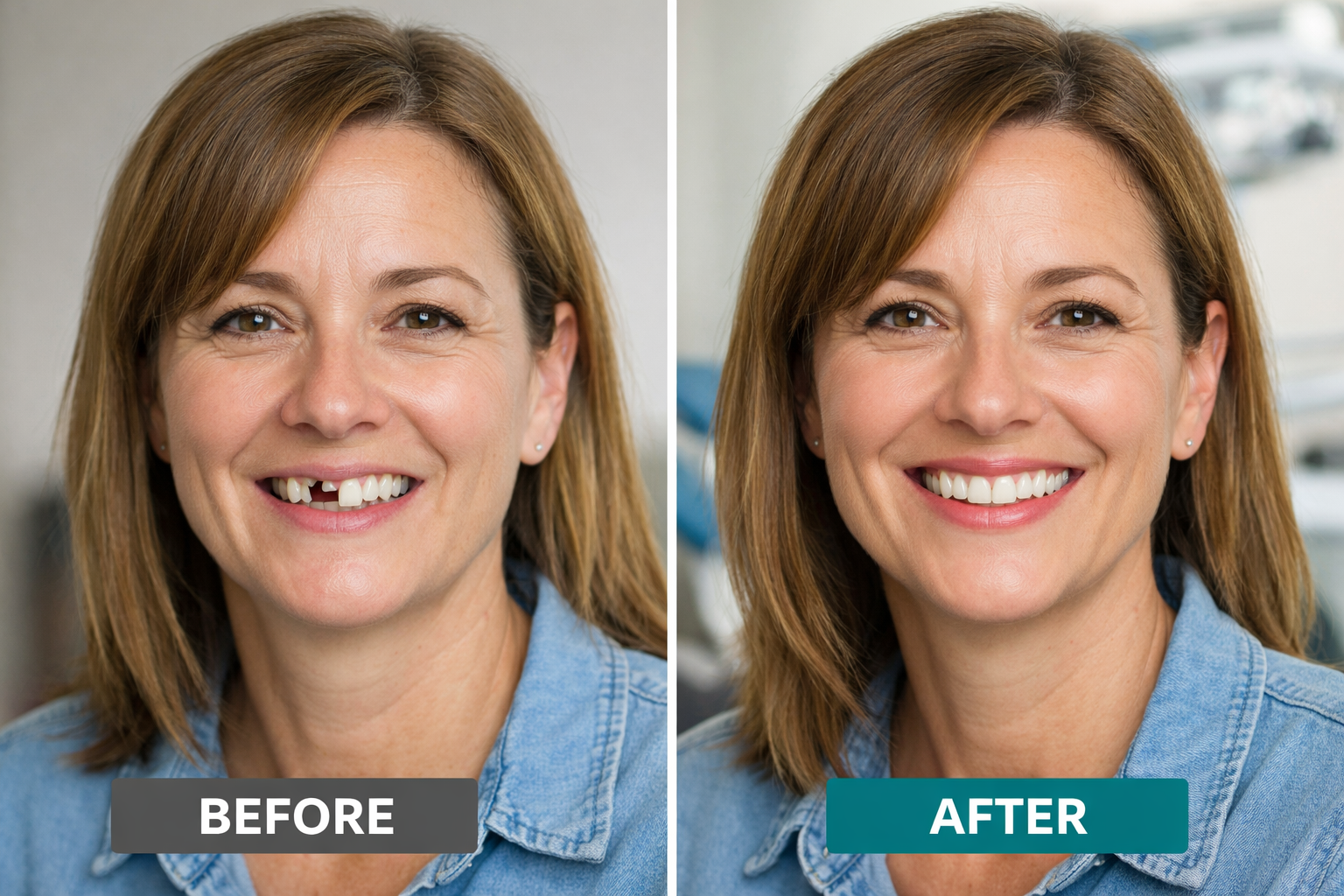
Adjusting to a temporary tooth while waiting for implant is generally straightforward, but it requires a bit of care and attention. Understanding how to properly manage and care for your temporary restoration will ensure its longevity and contribute to the overall success of your implant treatment.
Eating and Chewing with a Temporary Tooth
Most temporary teeth are not designed to withstand the same chewing forces as your natural teeth or a permanent implant crown.
- Soft Diet: For the initial period, especially if you’ve just had an extraction or implant placed, stick to soft foods. This protects the surgical site and prevents damage to your temporary restoration. You can find helpful ideas for 50 soft foods after dental implant.
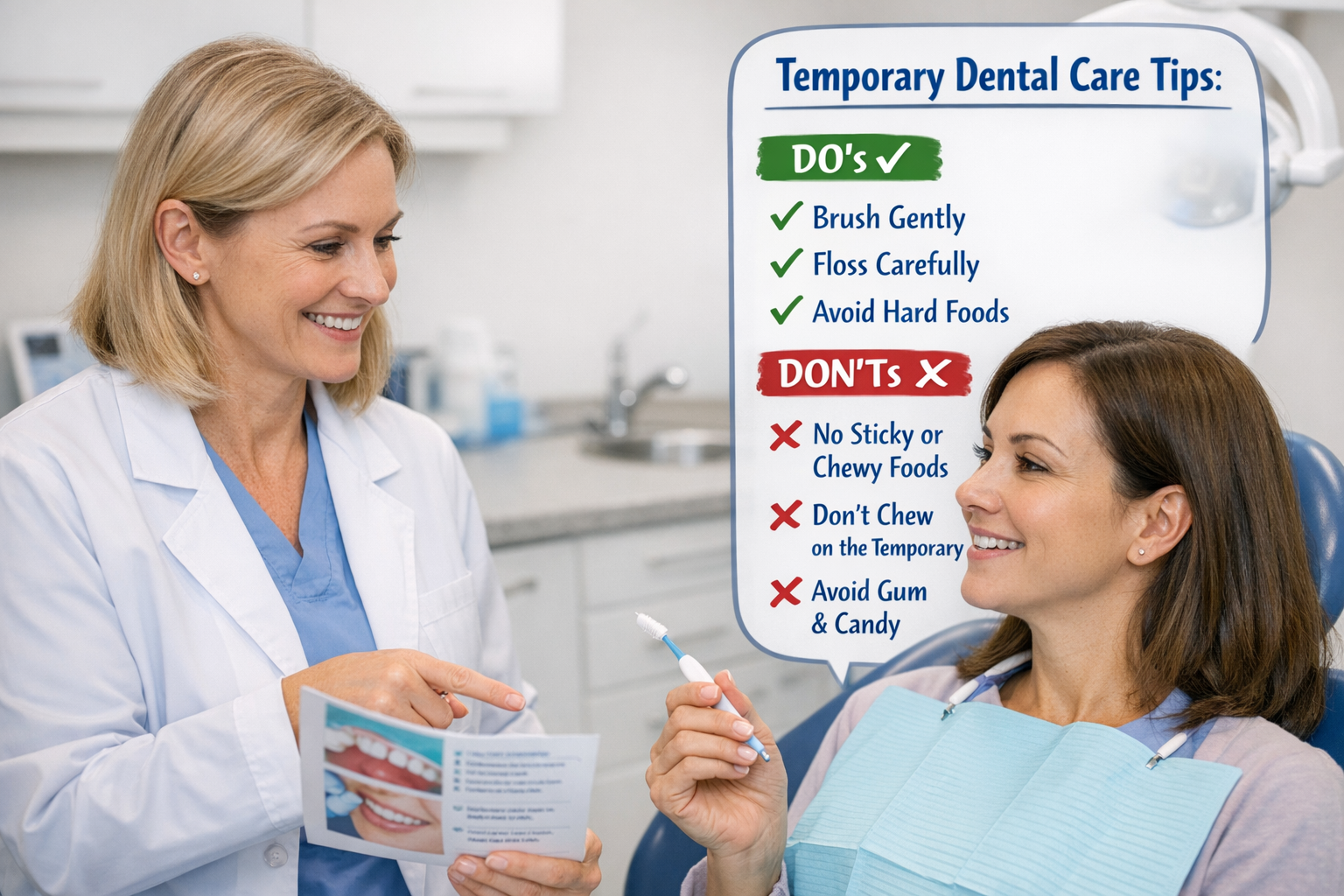
- Avoid Hard, Sticky, and Crunchy Foods: These types of foods can easily dislodge, break, or damage your temporary tooth. Examples include nuts, hard candies, caramel, crusty bread, and popcorn.
- Chew Carefully: Try to chew on the opposite side of your mouth from where the temporary tooth is located. If you have multiple temporaries, distribute chewing evenly and gently.
- Cut Food into Small Pieces: This reduces the amount of force needed for chewing.
- Be Mindful of Temperature: Extreme hot or cold foods can sometimes cause discomfort, especially if the underlying gums are still sensitive.
Oral Hygiene and Care
Maintaining excellent oral hygiene is critical to prevent infection and ensure proper healing around the implant site, as well as to keep your temporary tooth clean.
- Gentle Brushing: Brush your temporary tooth and the surrounding areas gently, using a soft-bristled toothbrush. Be careful not to dislodge removable temporaries.
- Flossing (if applicable): If your temporary tooth allows, continue to floss around your other natural teeth. Your dentist will advise you on how to clean around the temporary itself. For bonded bridges, a floss threader may be necessary.
- Rinsing: Your dentist might recommend a special antimicrobial mouthwash or a warm saltwater rinse, especially after surgery, to keep the area clean and reduce bacteria.
- Remove for Cleaning (for removable temporaries): If you have a flipper or Essix retainer, remove it to clean both the appliance and your natural teeth thoroughly. Use a denture brush and a non-abrasive cleaner for the temporary.
- Avoid Harsh Products: Do not use abrasive toothpastes or harsh cleaning agents on your temporary tooth, as they can scratch or damage the material.
Potential Issues and When to Contact Your Dentist
While temporary teeth are designed to be durable for their intended use, issues can arise.
- Dislodged or Broken Temporary: If your temporary tooth comes out or breaks, contact your dentist immediately. Do not try to re-cement it yourself, as this could damage the implant site or surrounding teeth. Keep the temporary tooth safe and bring it to your appointment.
- Pain or Discomfort: Minor discomfort is normal after dental procedures, but persistent or worsening pain, swelling, or redness should be reported to your dentist.
- Sharp Edges or Irritation: If your temporary tooth develops a sharp edge or is irritating your gums or tongue, contact your dentist for an adjustment.
- Difficulty Chewing or Speaking: While some adjustment is normal, significant difficulty could indicate a poor fit, and your dentist should be notified.
Remember, your temporary tooth is a placeholder. Treat it with care, follow your dentist’s instructions diligently, and communicate any concerns promptly. By doing so, you’ll protect your healing implant and ensure a smoother transition to your permanent restoration.
Advantages and Disadvantages of a Temporary Tooth While Waiting for Implant
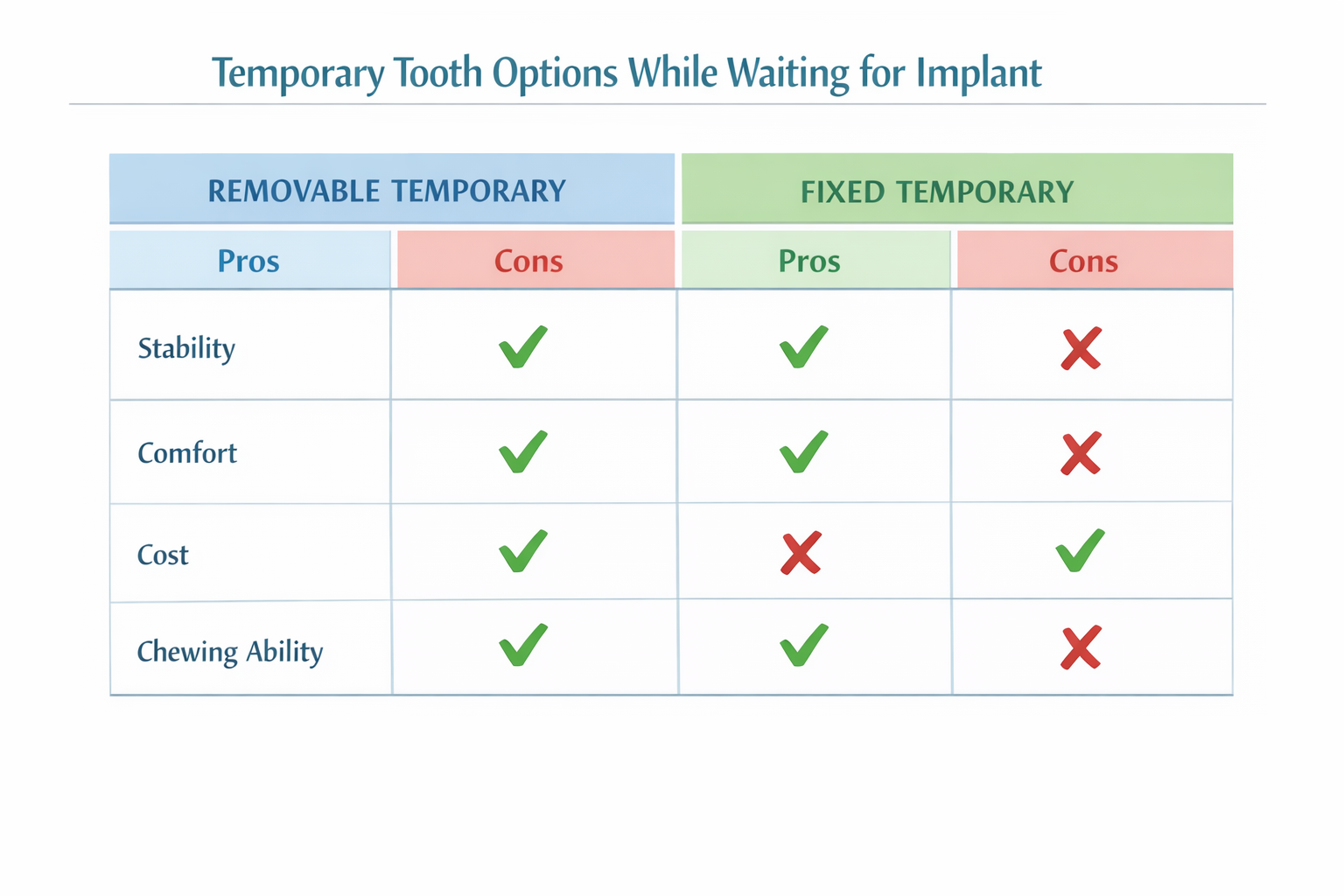
Deciding on the right temporary solution, or even whether to get one at all, involves weighing several factors. While having a temporary tooth while waiting for implant offers significant benefits, it’s also important to be aware of potential drawbacks.
Advantages
- Restored Aesthetics: This is often the primary motivator for patients. A temporary tooth fills the visible gap, allowing you to smile, speak, and interact socially with confidence. This is especially important for front teeth where the absence of a tooth can be very noticeable.
- Improved Functionality: While not as strong as natural teeth, a temporary tooth helps restore some chewing ability, preventing you from having to restrict your diet entirely to liquids or purees. It also aids in proper speech, as a missing front tooth can affect pronunciation.
- Prevention of Tooth Shifting: Without a tooth in place, adjacent teeth can drift into the empty space, and opposing teeth can supra-erupt (grow longer). A temporary tooth acts as a space maintainer, preserving the correct alignment of your bite and ensuring there’s enough room for the permanent implant crown.
- Gum Tissue Support and Shaping: A temporary restoration can help maintain the natural contour of your gum line around the implant site. This is crucial for the aesthetic outcome of your final crown, especially in the “esthetic zone” (front teeth), ensuring the gum tissue frames the new tooth naturally.
- Psychological Comfort: The emotional impact of losing a tooth can be profound. A temporary tooth can significantly alleviate feelings of self-consciousness, embarrassment, and anxiety, allowing you to maintain your quality of life during the waiting period.
- Protection of the Surgical Site: A temporary appliance can offer some protection to the healing gum tissue and implant site from accidental trauma or food impaction.
Disadvantages and Considerations
- Cost: Adding a temporary restoration to your treatment plan will increase the overall cost of your dental implant procedure. While some options are more affordable than others, it’s an extra expense to consider.
- Maintenance and Care: Temporary teeth require specific care, including dietary restrictions and meticulous cleaning, to prevent damage and maintain hygiene. This can be an added responsibility for patients.
- Durability: Temporary materials are not designed for long-term use or heavy chewing forces. They can break, chip, or debond, requiring repairs or replacements, which can be inconvenient and incur additional costs.
- Comfort and Fit: While generally comfortable, some patients might find certain temporary options (like flippers) to be bulky or slightly irritating to the gums or tongue. Adjustments may be needed.
- Risk to Implant (for immediate temporaries): In cases where a provisional crown is placed directly on the implant, there’s a small risk that premature or excessive chewing forces could disturb the osseointegration process, potentially leading to implant failure. This is why strict dietary guidelines are enforced.
- Temporary Nature: Ultimately, a temporary tooth is just that – temporary. It’s a placeholder until your permanent implant crown is ready, and it doesn’t offer the same strength, stability, or longevity.
For many patients, the benefits of maintaining aesthetics, function, and oral health far outweigh the disadvantages, making a temporary tooth while waiting for implant an indispensable part of their dental journey. Discussing these pros and cons thoroughly with your dental implant specialist will help you make an informed decision tailored to your specific needs and expectations. If you’re looking for comprehensive care, exploring options from reputable providers, such as those listed on dentalimplantsdallastx.com, is highly recommended.
Choosing the Right Temporary Tooth Option for You
Selecting the ideal temporary tooth while waiting for implant is a decision best made in close consultation with your dental professional. They will consider various factors specific to your case to recommend the most appropriate solution. Here’s what goes into that decision-making process in 2026:
Factors Your Dentist Will Consider:
Location of the Missing Tooth:
- Front Teeth (Esthetic Zone): For highly visible teeth, aesthetics are paramount. Options like Essix retainers with pontics or bonded bridges are often preferred due to their natural appearance. If primary implant stability is excellent, an immediate provisional crown might be considered.
- Back Teeth (Posterior Zone): While aesthetics are less critical, chewing function is important. Removable flippers or even no temporary might be an option if the gap isn’t bothersome and you can comfortably chew on the other side. Stability might lean towards bonded bridges if possible.
Number of Missing Teeth:
- If only one tooth is missing, a flipper, Essix, or bonded bridge are all viable.
- If multiple adjacent teeth are missing, a larger flipper or more complex Essix might be needed. For full arch solutions, sometimes a modified conventional denture can serve as a temporary.
Duration of the Waiting Period:
- Short Term (a few weeks to 2-3 months): Simpler, less expensive options like flippers or Essix retainers are often sufficient.
- Long Term (4-6+ months, especially with bone grafting): Durability becomes more important. A well-fitted flipper or a bonded bridge might be preferred for extended use. The investment in a more robust temporary might be justified.
Overall Oral Health and Bone Quality:
- If adjacent teeth are healthy and strong, a bonded bridge is a good candidate.
- If there’s significant bone loss requiring extensive bone grafts for dental implants, a non-invasive removable option might be better to avoid disturbing the grafting site.
Patient Preferences and Lifestyle:
- Aesthetics: How important is it for you that the temporary tooth looks perfectly natural?
- Comfort: Are you sensitive to bulky appliances, or do you prefer something fixed?
- Convenience: Are you comfortable removing an appliance for cleaning, or do you prefer a fixed solution?
- Chewing Needs: Do you need to maintain significant chewing function, or are you okay with a softer diet?
Budget:
- Temporary solutions vary in cost. Flippers are generally the most economical, while immediate provisional crowns are the most expensive. Your dentist will discuss these costs as part of your overall cost of full dental implants treatment plan.
Surgical Site Condition:
- Immediately after surgery, the area will be tender. The chosen temporary must not exert undue pressure on the healing tissues or the newly placed implant.
The Consultation Process
During your consultation, your dentist will:
- Explain all viable temporary options for your specific situation.
- Show you examples or models of each type.
- Discuss the pros, cons, and costs of each option.
- Answer any questions you have about care, eating, and what to expect.
They might even recommend a specific solution based on their clinical judgment and experience, especially concerning the stability of the implant and the health of surrounding structures. Remember, the goal is to provide you with a functional and aesthetic solution that protects your implant and ensures your comfort while you await your permanent crown. Choosing the right temporary tooth is a collaborative decision that sets the stage for a successful long-term outcome. For specific inquiries about your dental health and implant options, consider reaching out to a dental professional via their contact us page.
Temporary Tooth Solution Selector
Conclusion
The journey to a fully restored smile with dental implants is a significant and rewarding one. While the permanent solution offers unmatched stability, aesthetics, and function, the interim period, often spanning several months in 2026, necessitates thoughtful planning for a temporary tooth while waiting for implant. These temporary solutions are far more than just aesthetic placeholders; they are critical components that safeguard your oral health, prevent unwanted tooth movement, maintain chewing function, and most importantly, preserve your confidence and quality of life.
From the cost-effective and quickly fabricated flipper denture to the highly aesthetic and stable bonded bridge, and in select cases, an immediate provisional crown, the options for a temporary tooth are diverse. Each carries its own set of advantages and considerations regarding cost, comfort, aesthetics, and durability. Your dental professional, considering the unique contours of your mouth, the location of the missing tooth, the estimated healing time, and your personal preferences, will be your best guide in navigating these choices.
Remember that proper care, including meticulous oral hygiene and mindful eating habits, is paramount to the success of your temporary restoration and the healing of your implant site. By understanding your options and adhering to your dentist’s instructions, you can ensure a smooth, comfortable, and aesthetically pleasing transition throughout your dental implant journey. The investment in a temporary tooth while waiting for implant is an investment in your comfort, your confidence, and ultimately, the long-term success of your beautiful new smile.
Actionable Next Steps:
- Schedule a Consultation: If you are considering dental implants, the first step is to consult with an experienced dental implant specialist. Discuss the entire process, including the need for and types of temporary teeth.
- Ask Questions: Don’t hesitate to ask your dentist about all available temporary options, their costs, maintenance requirements, and what to expect during the healing phase.
- Plan Your Budget: Factor in the cost of a temporary tooth when planning your overall dental implant expenses.
- Commit to Care: Once you have a temporary tooth, commit to following all care instructions diligently to protect your oral health and the implant site.
By taking these steps, you can confidently bridge the gap, knowing that your smile and oral health are well-maintained while you await the lasting benefits of your permanent dental implant.
References
[1] Al-Khayer, E. A. (2019). Osseointegration Process: A Review. Journal of Clinical Dental Education, 2(1), 1-5.
[2] Misch, C. E. (2015). Contemporary Implant Dentistry. Elsevier Health Sciences.
Leave a Reply
Share your thoughts or ask a question about dental implants. Your email address will not be published.