

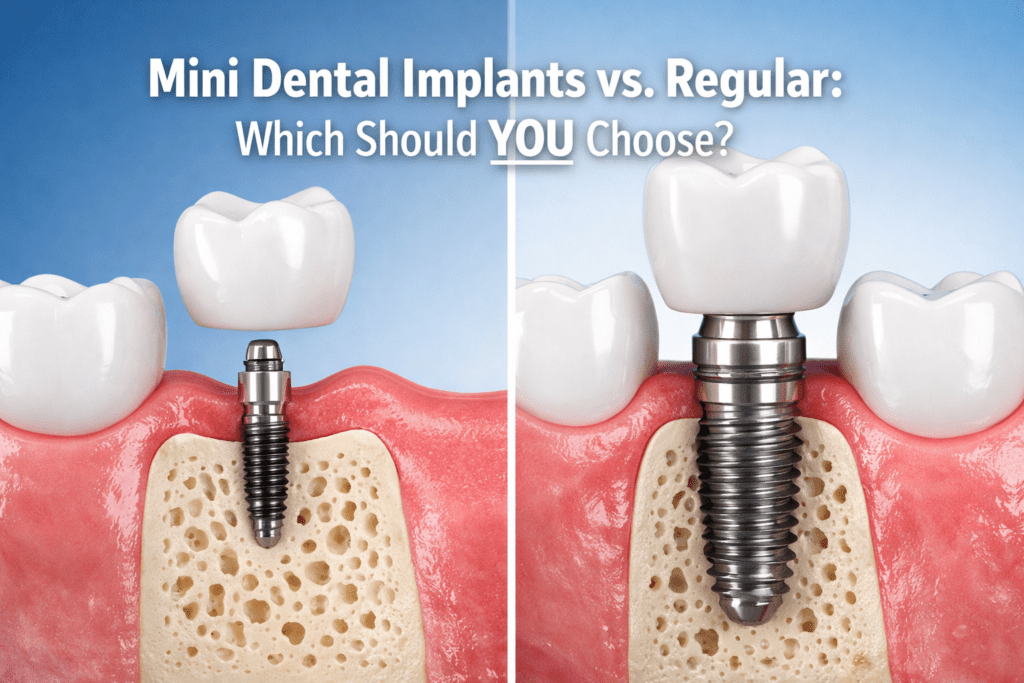
When considering tooth replacement options, it’s common to encounter various solutions, each with unique benefits. A frequent question patients in Dallas, TX, ask is, “Mini dental implants vs regular implants: which should I choose?” The choice between mini and regular dental implants largely depends on your specific oral health needs, bone density, the location of the missing tooth, and your overall treatment goals. Regular implants are often considered the gold standard for long-term, durable tooth replacement, while mini implants offer a less invasive and often more affordable option primarily for stabilizing dentures or replacing smaller teeth.
Key Takeaways
- Size Difference: Mini implants are significantly smaller in diameter (under 3mm) than regular implants (3.5-6mm).
- Design: Mini implants are typically a one-piece system, while regular implants are two-piece with a separate abutment.
- Invasiveness: Mini implant placement is generally less invasive, often avoiding surgical flaps and bone grafting.
- Healing Time: Mini implants offer faster healing and quicker restoration, sometimes allowing same-day tooth attachment.
- Primary Use: Mini implants are primarily for denture stabilization and smaller tooth replacement; regular implants are suitable for all single or multiple tooth replacements, including molars.
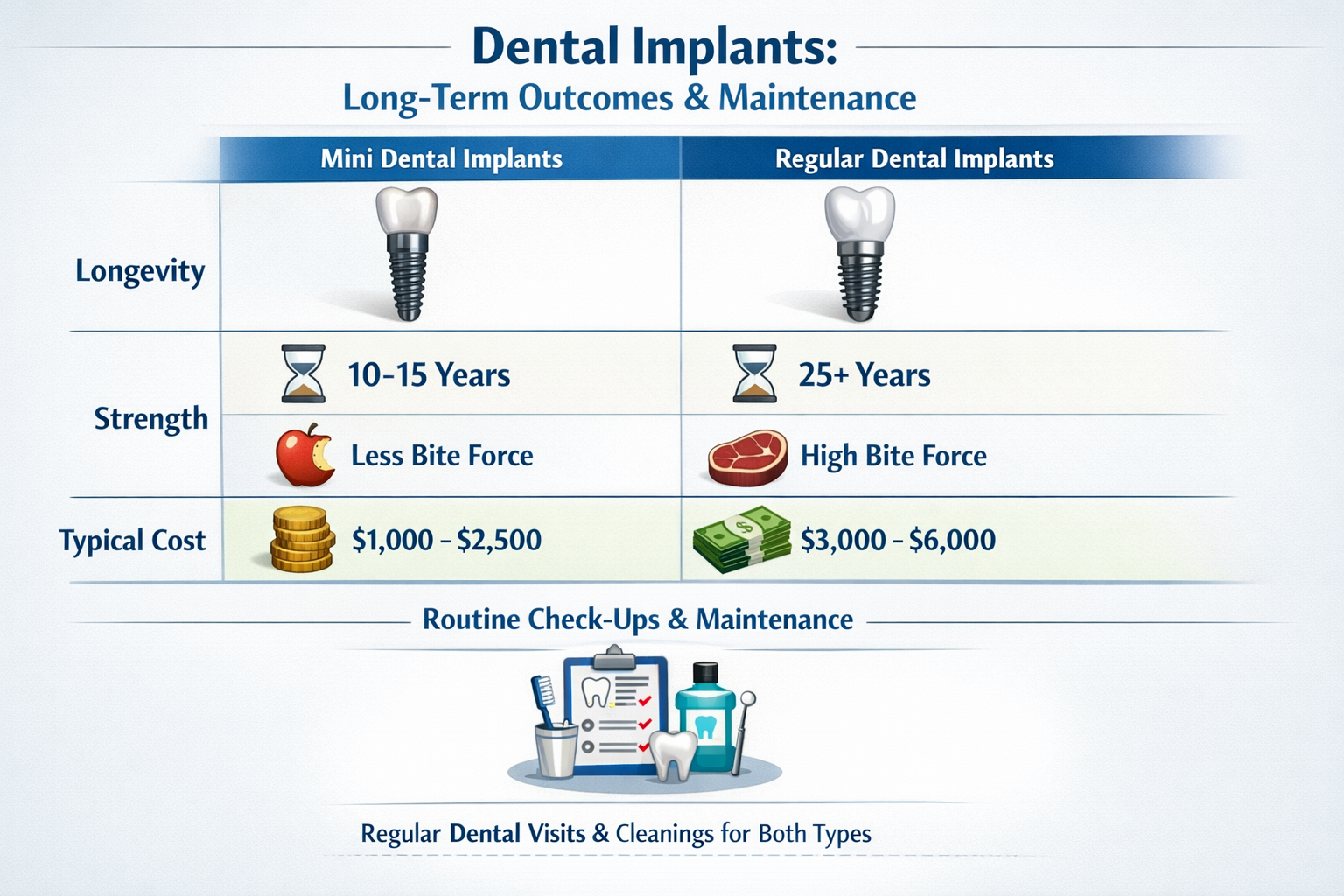
- Longevity: Regular implants typically last 25+ years, while mini implants generally last 10-15 years.
- Strength & Stability: Regular implants provide superior long-term strength and stability for higher bite forces.
- Cost: Mini implants usually have lower upfront costs but may offer less lifetime value due to shorter longevity.
- Bone Density: Mini implants are often a viable option for patients with insufficient bone density, potentially avoiding bone grafting.
- Consultation is Key: A thorough consultation with a qualified dentist in Dallas is essential to determine the best choice for your individual case.
Quick Answer
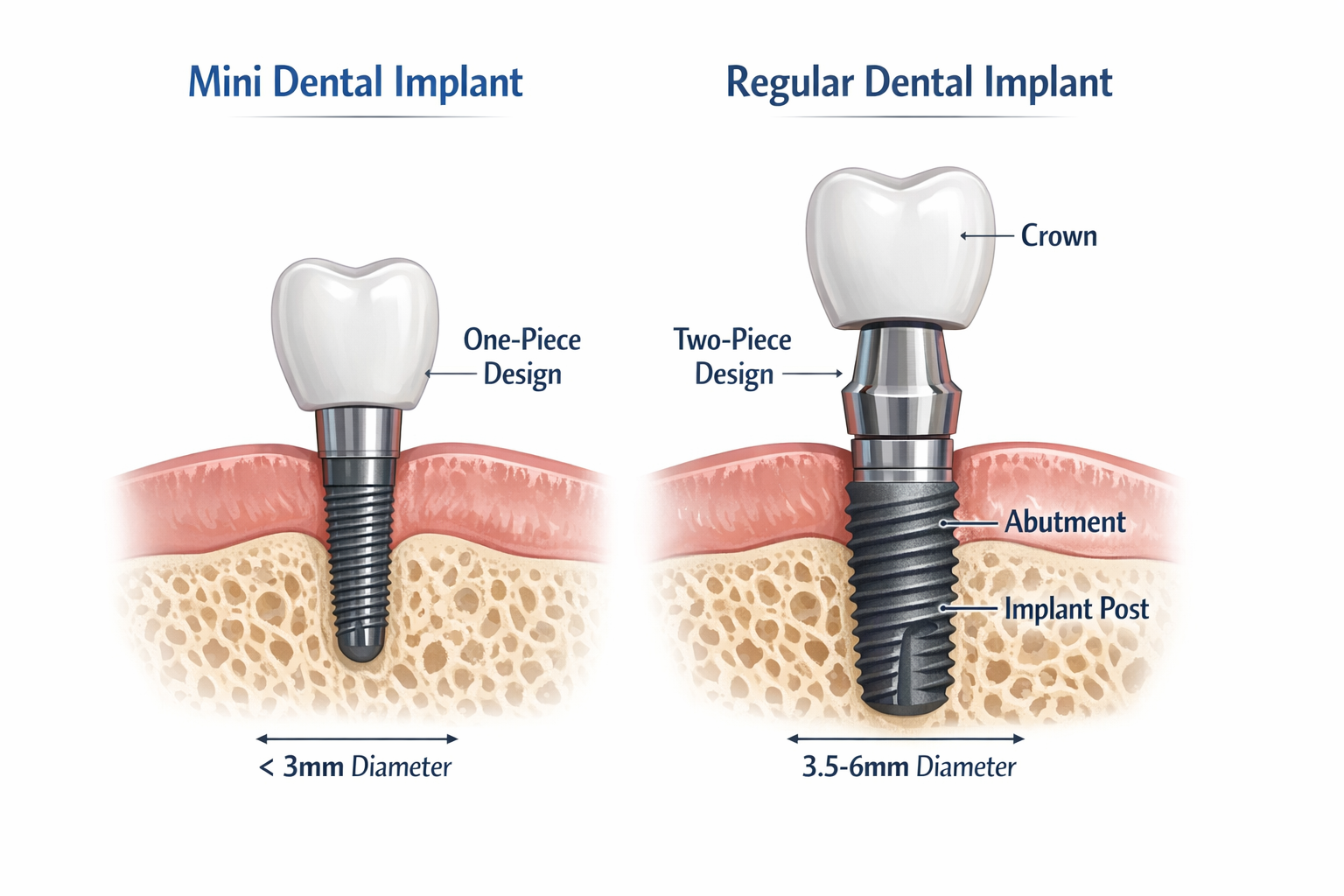
Choosing between mini dental implants and regular dental implants depends on several factors: regular implants are generally the superior choice for long-term, high-strength tooth replacement, especially for single teeth and molars, due to their robust design and greater stability. Mini implants, however, are an excellent alternative for stabilizing dentures, replacing smaller teeth, or for patients with limited bone density who seek a less invasive, quicker, and more affordable solution, though they have a shorter lifespan and less bite strength.
What Are Dental Implants? Understanding the Basics
Dental implants are a popular and effective solution for missing teeth, providing a stable foundation for artificial teeth that look, feel, and function like natural ones. At their core, a dental implant is a small, screw-shaped post, typically made of titanium, that is surgically placed into the jawbone to serve as an artificial tooth root. This post then fuses with the bone through a process called osseointegration, creating a strong anchor for a crown, bridge, or denture. Understanding the basic dental implant procedure is crucial for anyone considering tooth replacement options.
Dental implants are designed to replace missing teeth, improving oral health, aesthetics, and chewing function. They are surgically placed into the jawbone, where they fuse with the bone over several months. Once integrated, a connector piece (abutment) is attached, followed by a custom-made crown, bridge, or denture. This process provides a stable, long-lasting solution, preventing bone loss that often occurs with missing teeth.
Components of a Dental Implant
- Implant Post: The titanium screw placed into the jawbone.
- Abutment: A connector piece that attaches to the implant post.
- Restoration: The crown, bridge, or denture that fits over the abutment.
Both mini and regular implants share this fundamental concept of replacing a tooth root, but they differ significantly in size, design, and ideal applications.
Mini Dental Implants vs Regular Implants: Key Distinctions
The primary difference between mini dental implants and regular dental implants lies in their size, design, and how they are used. Mini implants are notably smaller and are often a single-piece system, offering a less invasive alternative, while regular implants are larger, two-piece systems known for their superior long-term stability and strength.
Mini dental implants measure under 3mm in diameter, while standard implants typically range from 3.5mm to 6mm, with most traditional implants falling between 4mm and 6mm. This size difference is the most fundamental distinguishing characteristic. Furthermore, mini implants are usually one-piece systems, meaning the implant post and the abutment are integrated into a single unit. In contrast, regular implants are two-piece systems, consisting of a separate implant post and an abutment that is attached after osseointegration. These differences affect everything from the surgical procedure to their functional capabilities and longevity.
| Feature | Mini Dental Implants | Regular Dental Implants |
|---|---|---|
| Diameter | Under 3mm | 3.5mm – 6mm (most common 4-6mm) |
| Design | One-piece (implant + abutment) | Two-piece (separate implant & abutment) |
| Invasiveness | Less invasive, often no surgical flap | More invasive, typically requires surgical flap |
| Bone Grafting | Often avoids need for bone grafting | May require bone grafting for sufficient bone density |
| Healing Time | Faster, potential same-day loading | Longer healing, staged placement for osseointegration |
| Primary Use | Denture stabilization, small tooth replacement | Single/multiple tooth replacement, bridges, full arches |
| Longevity | 10-15 years | 25+ years, often lifetime |
| Strength | Lower bite force capacity | Superior strength, higher bite force capacity |
| Cost | Generally lower upfront cost | Generally higher upfront cost |
| Ideal Candidate | Insufficient bone, budget-conscious, denture wearers | Good bone density, seeking long-term, durable solution |
Dental Implant Procedure: Comparing Mini vs. Regular Implants
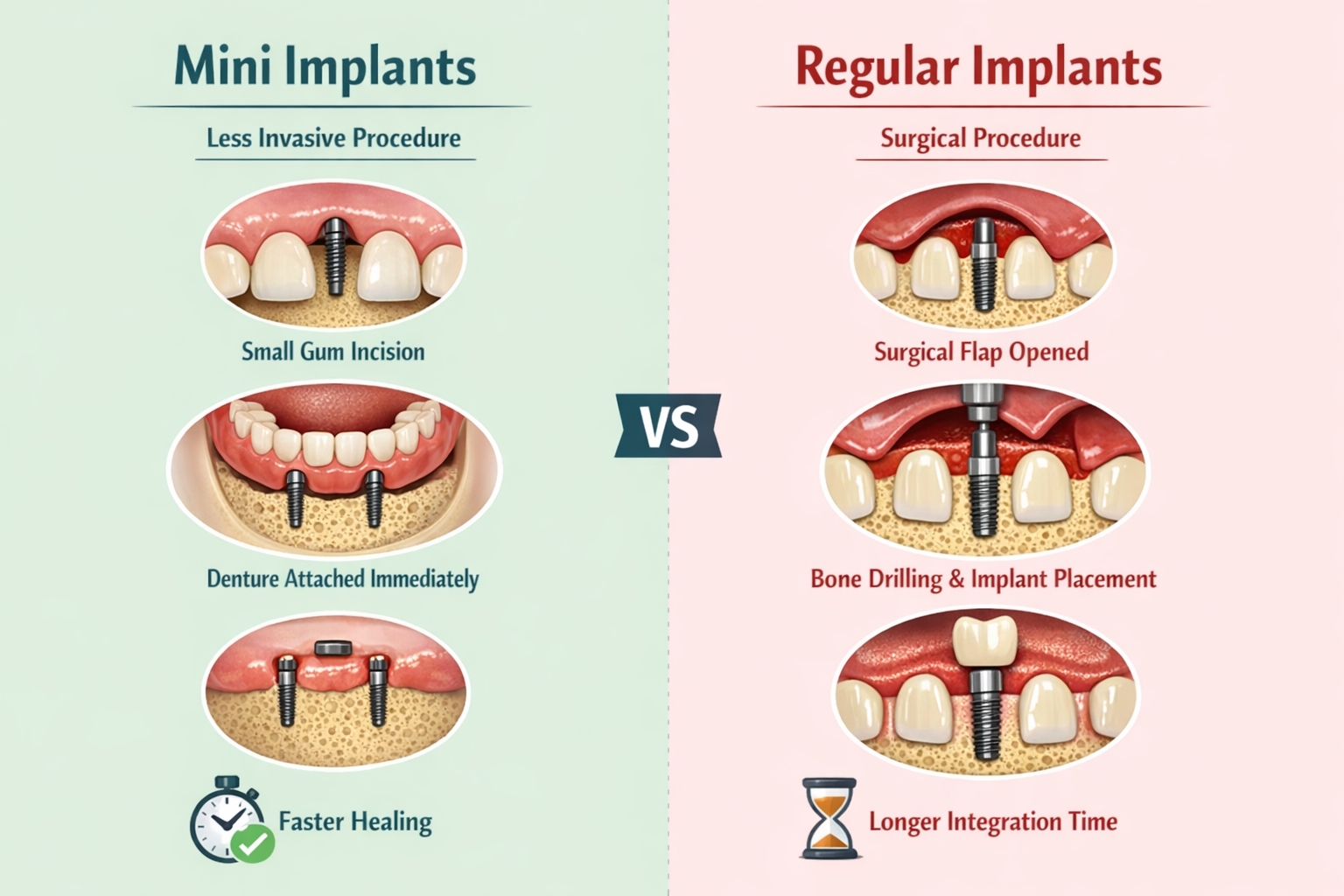
The dental implant procedure for mini and regular implants differs primarily in its invasiveness, the need for bone grafting, and the overall recovery timeline. Mini implants offer a less extensive surgical experience with faster healing, while regular implants, though more involved, lay the groundwork for superior long-term stability.
Mini implant placement is considerably less invasive than regular implants. Often, it requires minimal gum cutting and, in many cases, does not necessitate surgical flaps. This streamlined approach means that patients frequently experience faster healing times and, for some applications like denture stabilization, can even have their prosthetic attached on the same day as the implant placement. Regular implants, on the other hand, typically involve a more traditional surgical procedure, including making a surgical flap to expose the bone, drilling a wider and deeper pilot hole, and a longer healing period to allow for complete osseointegration before the final restoration is attached. This difference impacts not only the patient’s immediate comfort but also the overall treatment duration.
Mini Implant Procedure Highlights
- Minimally Invasive: Smaller pilot hole, often no incision or stitches.
- Bone Grafting Rarely Needed: Suitable for patients with some bone loss, avoiding additional procedures.
- Faster Recovery: Many patients return to normal activities within 1-2 days.
- Immediate Loading Potential: Especially for denture stabilization, new teeth or dentures can sometimes be attached immediately.
- For more specific details on the process, consider exploring resources on dental implants process pictures.
Regular Implant Procedure Highlights
- Surgical Incision: Typically involves creating a small incision in the gum to expose the jawbone.
- Bone Grafting: May be required if the patient has insufficient bone density, adding to the treatment timeline and cost.
- Healing Period: Requires a healing period of several months (osseointegration) before the final restoration.
- Staged Process: The abutment and crown are usually placed in separate appointments after the implant has fully fused with the bone.
- If you’re concerned about potential discomfort, resources like our guide on demystifying dental implant pain can provide reassurance.
When to Choose Which: Applications and Ideal Candidates
Deciding between mini dental implants and regular implants hinges on your specific dental needs, bone health, and desired outcomes. Regular implants are the gold standard for robust, long-lasting tooth replacement in most situations, while mini implants serve as an excellent solution for denture stabilization or replacing smaller teeth, especially for patients who may not be candidates for traditional implants.
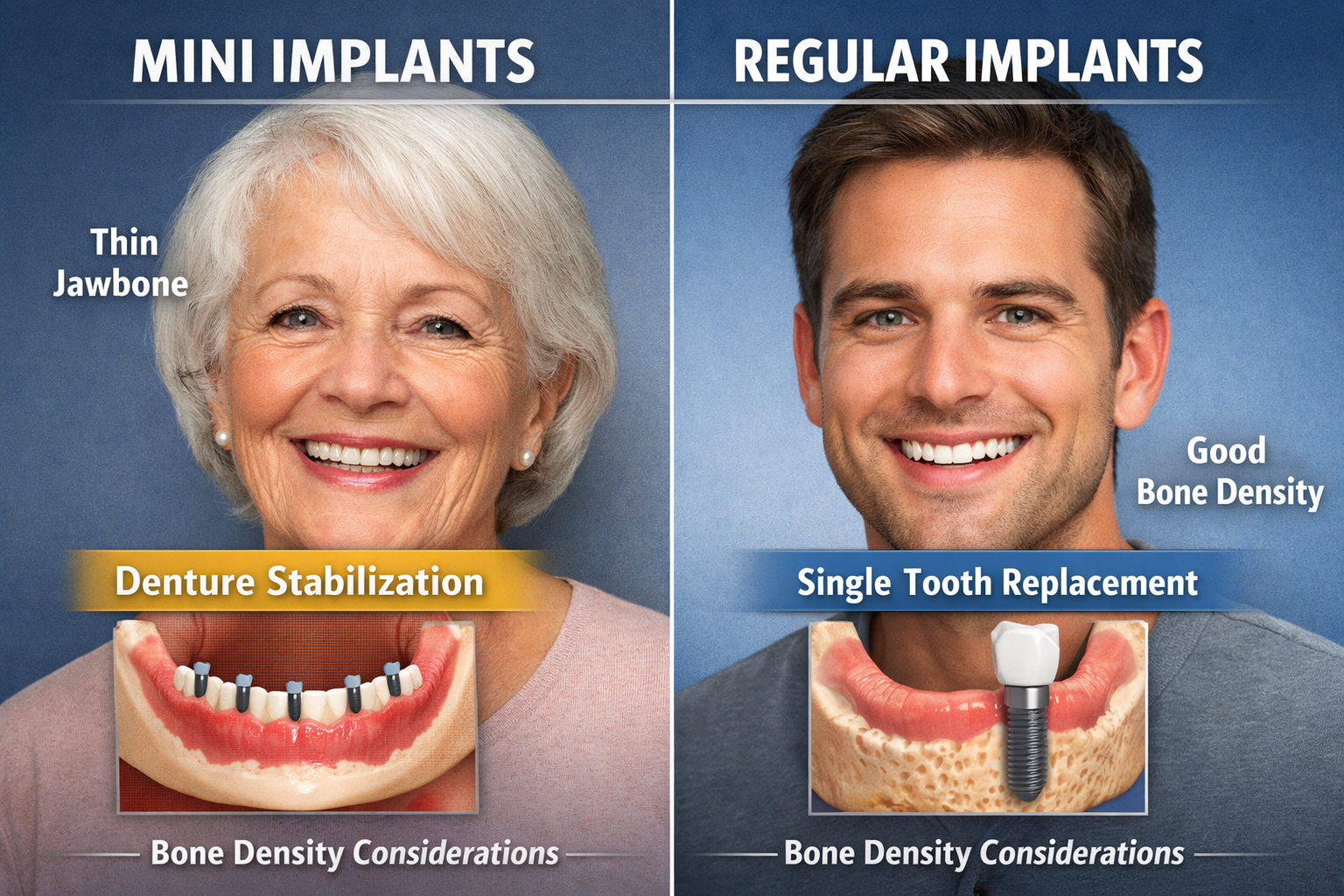
Regular dental implants are widely recognized as the most effective solution for replacing single missing teeth, supporting multi-tooth bridges, and securing full-arch prosthetics (like All-on-4). Their larger diameter and two-piece design provide superior stability and can withstand the significant bite forces required for chewing, especially in the molar regions. They are ideal for patients with adequate bone density and those seeking the most durable, long-term oral health solution. Conversely, mini dental implants are primarily designed for denture stabilization, particularly for securing loose lower dentures, which significantly improves chewing ability and comfort. They are also effective for replacing smaller teeth like incisors or premolars where bite forces are lower. Mini implants become a viable option for individuals with limited bone density, older patients, or those with certain medical conditions that might complicate traditional implant surgery, as they often eliminate the need for complex bone grafting procedures.
Choose Regular Dental Implants If:
- You need to replace a single tooth, particularly in areas with high chewing forces like molars.
- You require a bridge supported by implants for multiple missing teeth.
- You have sufficient bone density to support a larger implant.
- You are seeking the most durable and long-lasting tooth replacement option (25+ years).
- Your goal is maximum stability and strength for all chewing functions.
- Explore options for full mouth dental implants in Dallas 2026 if you need comprehensive solutions.
Choose Mini Dental Implants If:
- Your primary need is to stabilize a loose upper or lower denture, transforming it into a snap-in denture.
- You have limited bone density or anatomical constraints (e.g., proximity to nerves or sinuses) that make regular implant placement difficult or necessitate extensive bone grafting.
- You need to replace smaller teeth, such as lower incisors, where bite forces are lower.
- You prefer a less invasive surgical procedure with a faster recovery time.
- Budget is a significant concern, as mini implants generally have lower upfront costs.
- You have certain medical conditions (e.g., uncontrolled diabetes) where a less involved surgery is safer.
- Learn more about mini implant denture maintenance to ensure their longevity.
Cost Considerations: Mini Dental Implants vs Regular Implants
When comparing “mini dental implants vs regular implants: which should I choose?”, the cost is often a significant factor for patients in Dallas, TX. Mini implants generally present a lower upfront cost, making them a more accessible option for some, while regular implants, despite a higher initial investment, often provide greater long-term value due to their durability and longevity.
The lower upfront cost of mini dental implants is largely due to the less invasive surgical procedure, shorter treatment time, and the smaller components used. This can make them an attractive option for patients on a tighter budget or those seeking an immediate solution for denture stabilization. However, it’s crucial to consider the long-term value. While mini implants typically last 10-15 years, regular implants can last 25 years or even a lifetime with proper care. This means that while the initial expense for regular implants is higher, their extended lifespan can result in a lower cost per year over time, potentially offering better lifetime value. Patients should weigh the immediate savings against the potential need for future replacement.
Mini Dental Implant Costs
- Lower Initial Investment: Fewer appointments, less complex surgery.
- Cost-Effective for Denture Stabilization: A popular choice for anchoring existing dentures.
- Consider Shorter Lifespan: While cheaper upfront, replacement may be needed sooner.
- For specific pricing details, you might explore resources like Dallas dental implant cost updates for 2026.
Regular Dental Implant Costs
- Higher Initial Investment: Due to more complex surgery, multiple components, and longer treatment time.
- Superior Long-Term Value: Designed for decades of use, reducing the likelihood of future replacements.
- May Include Additional Procedures: Such as bone grafting, which adds to the overall cost.
- It’s important to understand why dental implants cost so much in Dallas to appreciate the value.
Consultation and Informed Decision-Making
Making an informed decision between mini dental implants and regular implants requires a comprehensive evaluation by a qualified dental professional. A thorough consultation will assess your specific oral health condition, bone density, and overall treatment goals to recommend the most appropriate solution.
During your consultation, your dentist will conduct a detailed examination, including X-rays and possibly 3D scans, to evaluate your bone structure, gum tissue health, and the precise location for implant placement. They will discuss your medical history, any existing conditions, and your expectations for the outcome. This personalized assessment is crucial because what works best for one patient may not be ideal for another. For example, patients with significant bone loss might find mini implants a more straightforward path to a stable smile without extensive preparatory procedures. Conversely, those seeking to replace a molar with maximum chewing efficiency would likely benefit more from a regular implant. The goal is to choose a solution that not only restores your smile but also supports your long-term oral health.
What to Expect During a Consultation
- Comprehensive Oral Examination: Including visual inspection and digital imaging (X-rays, CT scans).
- Medical and Dental History Review: To identify any contraindications or specific needs.
- Discussion of Goals: What you hope to achieve with tooth replacement.
- Treatment Plan Presentation: Detailed explanation of recommended options, including mini dental implants vs regular implants, their pros and cons, timeline, and estimated cost.
- Opportunity for Questions: Don’t hesitate to ask anything that concerns you about the dental implant procedure.
- Finding the right specialist is critical; consider reviewing our guide on how to choose a dental implant dentist near you.
Ultimately, the best choice for you will come from an open discussion with your dentist, weighing the benefits, risks, and implications of each type of implant tailored to your unique circumstances.
Conclusion
Navigating the options between mini dental implants and regular implants can seem complex, but understanding their fundamental differences in size, design, application, and longevity is key to making an informed decision. While regular implants stand as the robust, long-term solution for comprehensive tooth replacement and maximum bite strength, mini implants offer a less invasive, faster, and often more affordable path, particularly for stabilizing dentures or replacing smaller teeth where bone density might be a challenge.
For residents in Dallas, TX, the most crucial next step is to schedule a consultation with an experienced dental implant specialist. During this personalized assessment, your oral health needs, bone structure, and aesthetic goals will be thoroughly evaluated. This expert guidance will help you determine whether the superior strength and longevity of regular dental implants or the less invasive, quicker recovery of mini dental implants is the best fit for your unique situation, ensuring you receive a tooth replacement option that truly enhances your oral health and quality of life.
FAQ
What are the main differences between mini and regular dental implants?
The main differences are size, design, and primary use. Mini implants are smaller (under 3mm) and one-piece, primarily for denture stabilization or small tooth replacement. Regular implants are larger (3.5-6mm) and two-piece, suitable for all types of tooth replacement with greater strength and longevity.
Is the mini dental implant procedure less painful than regular implants?
The mini dental implant procedure is generally less invasive, often requiring less gum manipulation and no surgical flaps, which typically results in less post-operative discomfort and a faster recovery compared to regular implants.
How long do mini dental implants last compared to regular implants?
Mini dental implants typically last 10-15 years. Regular dental implants, with proper care and oral hygiene, are designed to last 25 years or even a lifetime.
Can mini dental implants be used for single tooth replacement?
Mini dental implants can be used for single tooth replacement, particularly for smaller teeth like incisors or premolars where bite forces are not as high. However, regular implants are generally recommended for single tooth replacement in areas requiring higher chewing strength, such as molars.
Are mini dental implants cheaper than regular dental implants?
Yes, mini dental implants generally have a lower upfront cost than regular dental implants. This is due to the less invasive procedure, fewer components, and often quicker treatment time. However, consider their shorter lifespan when evaluating long-term value.
What if I have insufficient bone for regular dental implants?
If you have insufficient bone density, mini dental implants may be a viable option as they often do not require bone grafting. For regular implants, a bone grafting procedure might be necessary to build up enough bone to support the implant.
Which type of implant is better for denture stabilization?
Mini dental implants are an excellent and very popular choice for denture stabilization, especially for lower dentures. Their smaller size and simpler placement make them ideal for securing loose dentures, significantly improving comfort and function.
How do I choose between mini and regular dental implants?
The best way to choose is through a comprehensive consultation with a qualified dentist. They will evaluate your oral health, bone density, and specific needs to recommend whether mini dental implants or regular implants are the most suitable solution for you.
References
- American Academy of Implant Dentistry
- Journal of Oral Implantology
- Dental Implant Education and Research Center
- ITI Consensus Conference 6
- Academy of General Dentistry
Leave a Reply
Share your thoughts or ask a question about dental implants. Your email address will not be published.