


Facing tooth loss can be a daunting experience, impacting everything from your ability to eat and speak to your overall confidence. For many Texans, dental implants offer a long-lasting, natural-looking solution, but the high cost often raises a critical question: what about Medicare dental implant coverage Texas? Navigating the complexities of Medicare and dental benefits can feel like deciphering a cryptic code, especially when considering a significant investment like dental implants in 2026. This comprehensive guide aims to demystify the topic, providing clear, authoritative information to help you understand your options and make informed decisions about your oral health in the Lone Star State. We’ll explore the nuances of Medicare, delve into alternative coverage avenues, and equip you with the knowledge to pursue the best possible care.
Key Takeaways
- Original Medicare (Parts A & B) generally does NOT cover dental implants. It’s designed for hospital and medical expenses, not routine dental care.
- Medicare Advantage Plans (Part C) are your primary avenue for dental implant coverage. Many Part C plans in Texas offer supplemental dental benefits that can include some coverage for major restorative procedures like implants.
- Coverage varies significantly between Medicare Advantage plans. It’s crucial to compare specific plan benefits, limitations, deductibles, and annual maximums for 2026.
- Supplemental dental insurance and financing options are vital. Even with a Medicare Advantage plan, you may need to explore additional insurance or payment plans to cover the full cost of dental implants in Texas.
- Consulting with your dental provider and plan administrator is essential. Always confirm your specific benefits and out-of-pocket costs directly with your plan and your chosen dental professional before proceeding with treatment.
Understanding Medicare and Dental Benefits in Texas for 2026
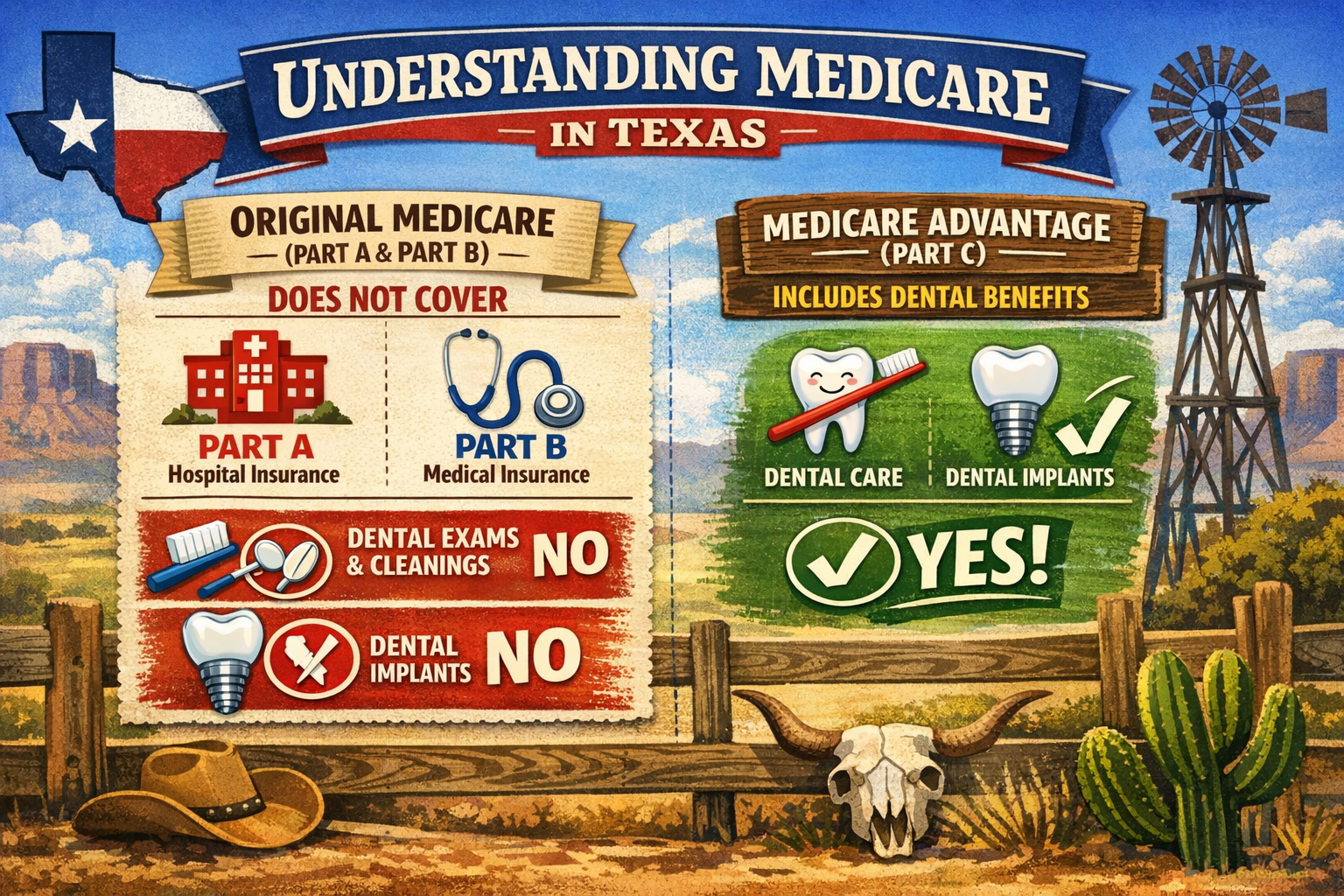
Medicare is the federal health insurance program for people aged 65 or older, certain younger people with disabilities, and people with End-Stage Renal Disease. While it’s a lifeline for many, its structure can be confusing, especially when it comes to dental care. Let’s break down the different parts of Medicare and how they relate to Medicare dental implant coverage Texas in 2026.
Original Medicare (Parts A & B): The Bare Bones of Coverage
Original Medicare consists of two main parts:
- Medicare Part A (Hospital Insurance): This covers inpatient hospital stays, care in a skilled nursing facility, hospice care, and some home health care. It does NOT cover dental implants or any routine dental care.
- Medicare Part B (Medical Insurance): This covers certain doctors’ services, outpatient care, medical supplies, and preventive services. Similar to Part A, it does NOT cover dental implants, routine dental exams, cleanings, extractions, or dentures.
The general rule of thumb is that Original Medicare will only cover dental services if they are an integral part of another covered medical procedure. For example, if you need a tooth extraction due to a severe oral infection that is directly impacting a covered medical condition, Part B might cover the extraction itself, but it would not cover the subsequent dental implant to replace the tooth. This is a very rare scenario, and dental implants themselves are almost universally excluded from Original Medicare coverage [1].
Why the Exclusion?
Historically, Medicare was designed to cover medical treatments, not routine maintenance or elective procedures like most dental work. While some argue that oral health is intrinsically linked to overall health, legislative changes to include comprehensive dental coverage in Original Medicare have not yet materialized.
Medicare Part C (Medicare Advantage Plans): Your Best Bet for Dental Coverage
If you’re seeking Medicare dental implant coverage Texas, your primary focus should be on Medicare Part C, also known as Medicare Advantage plans. These plans are offered by private companies approved by Medicare. They contract with Medicare to provide you with all your Part A and Part B benefits, and often include additional benefits that Original Medicare doesn’t cover, such as:
- Prescription drug coverage (Part D)
- Vision care
- Hearing care
- Fitness programs
- And, critically, DENTAL COVERAGE.
Many Medicare Advantage plans in Texas include some form of dental benefits. However, the extent of this coverage for major procedures like dental implants varies dramatically from plan to plan. Some plans might offer basic preventative care (cleanings, X-rays), while others extend to more comprehensive services like fillings, extractions, root canals, and even a percentage of the cost for dentures or dental implants.
Important Considerations for 2026 Medicare Advantage Plans:
- Annual Enrollment Period (AEP): The AEP typically runs from October 15th to December 7th each year. This is the crucial time to enroll in a Medicare Advantage plan or switch plans for coverage that begins on January 1st of the following year (e.g., for 2026 coverage, you would have enrolled in late 2025).
- Plan Availability: Not all plans are available in all counties in Texas. Your specific location will determine which plans you can choose from.
- Network Restrictions: Most Medicare Advantage plans operate within a network of dentists. You’ll need to confirm if your preferred dental provider accepts your plan.
- Cost-Sharing: Even with coverage, you’ll likely be responsible for deductibles, co-pays, or co-insurance. There may also be an annual maximum on dental benefits. For example, a plan might cover 50% of dental implant costs up to an annual maximum of $1,500, which might only cover a fraction of the total expense for a single implant.
- Waiting Periods: Some plans may have waiting periods for major dental procedures, meaning you can’t get coverage for implants immediately after enrolling.
“Choosing the right Medicare Advantage plan is paramount for those considering dental implants. Don’t just look at the premium; scrutinize the dental benefits section with a magnifying glass.”
Medicare Part D (Prescription Drug Coverage): Not Relevant for Implants
Medicare Part D plans cover prescription drugs. While essential for overall health, these plans do not provide any coverage for dental implants or dental services.
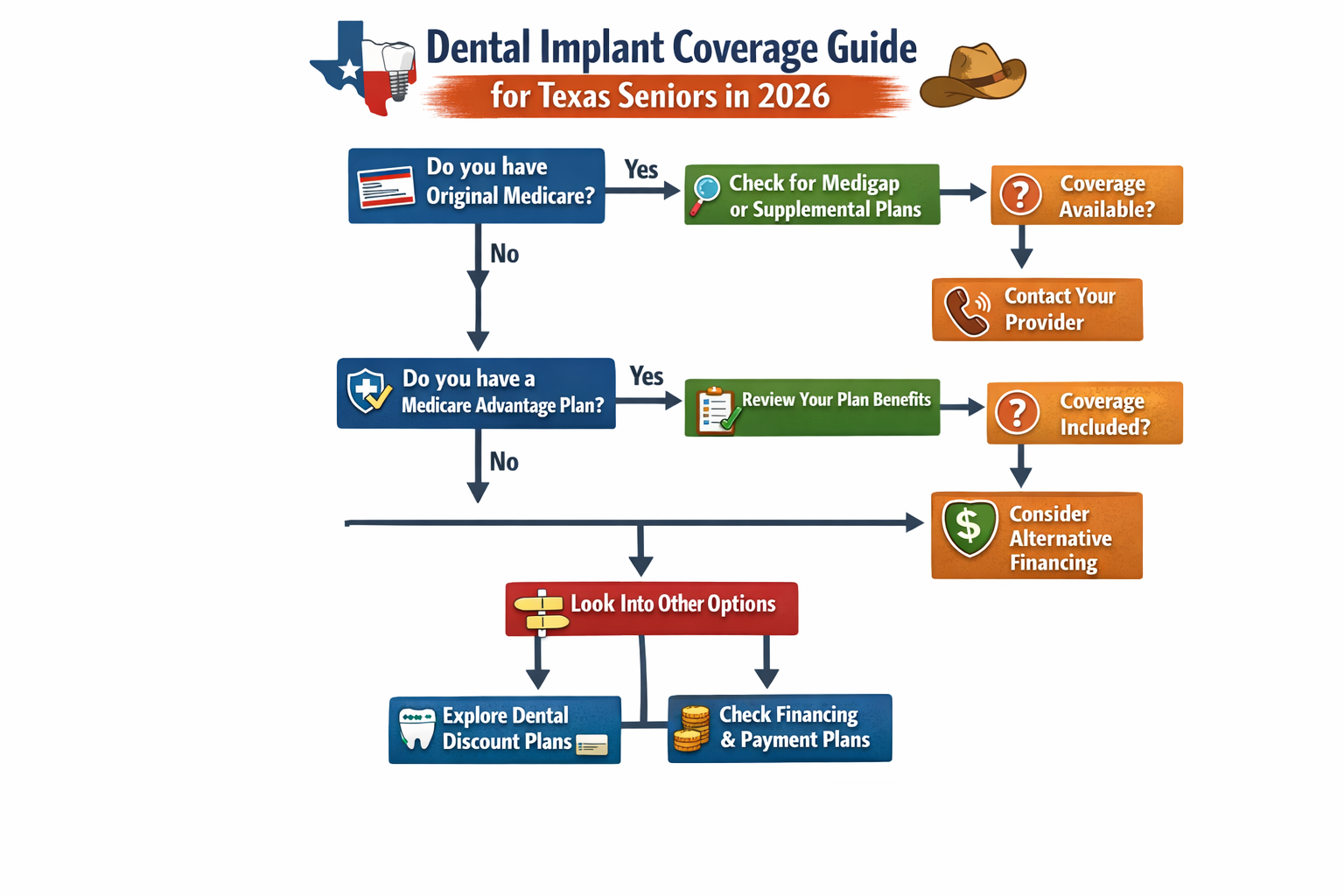
How to Find Medicare Dental Implant Coverage in Texas
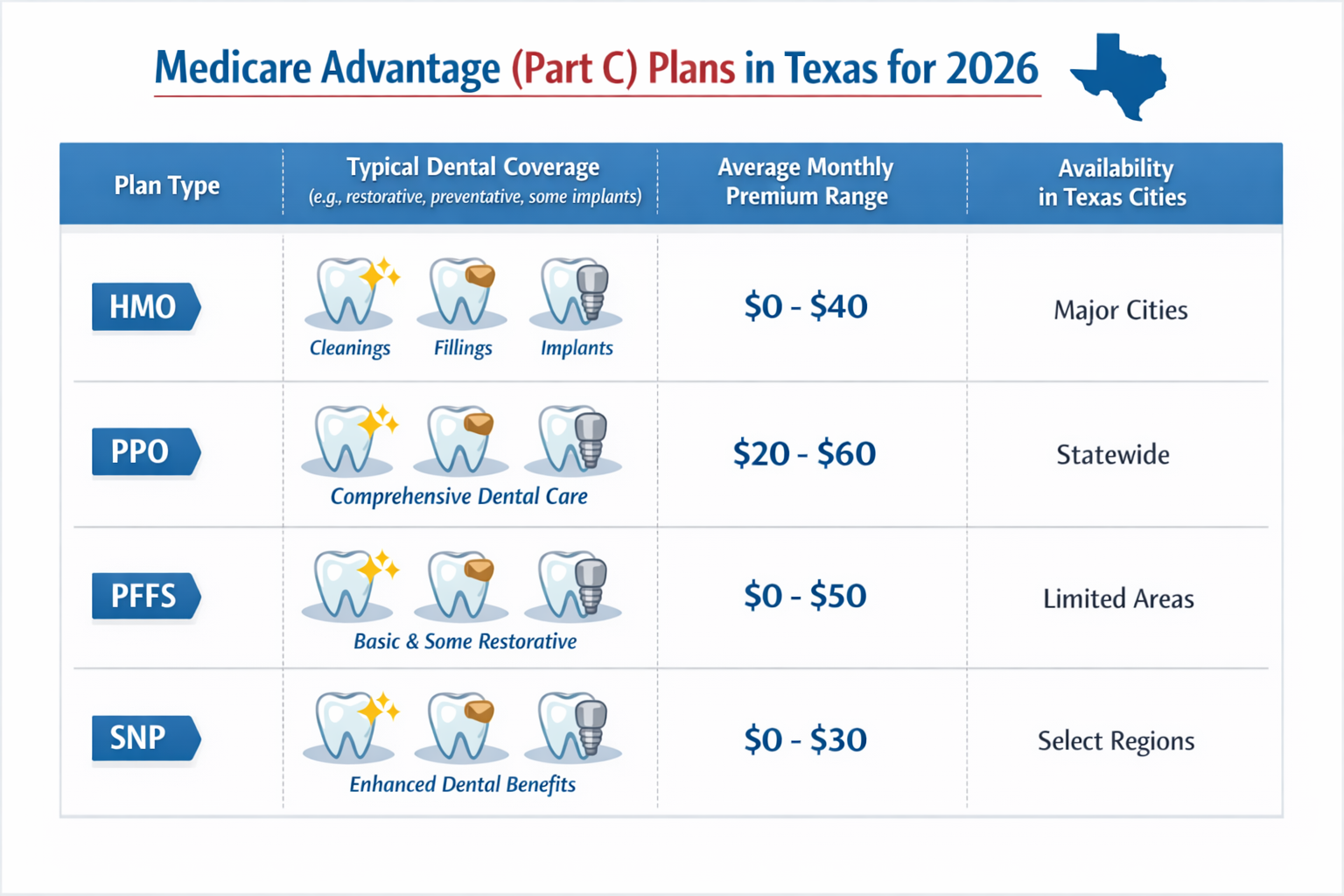
Finding a Medicare Advantage plan in Texas that offers meaningful dental implant coverage requires diligence and careful comparison. Here’s a step-by-step approach:
Assess Your Current Needs:
- Do you need a single implant, multiple implants, or full-arch solutions like All-on-4 dental implants?
- What is your budget for monthly premiums and potential out-of-pocket costs?
- Do you have a preferred dentist you want to continue seeing?
Utilize the Medicare Plan Finder:
- The official Medicare.gov website’s Plan Finder tool is invaluable. Enter your zip code to see Medicare Advantage plans available in your area for 2026.
- Filter plans by those that offer dental benefits.
- Crucially, when reviewing plan details, look for the “Dental Services” section. Specifically, check if “major restorative” or “oral surgery” benefits are listed, and if so, what percentage of costs they cover for procedures like dental implants or prosthodontics.
Contact Plan Providers Directly:
- Once you’ve narrowed down a few potential plans, call their customer service lines directly. Ask specific questions about their dental implant coverage:
- “What percentage of dental implant costs does your plan cover in 2026?”
- “Is there an annual maximum benefit for dental procedures, and how much is it?”
- “Are there any waiting periods for major dental work?”
- “Do I need a referral from my primary care physician for dental services?”
- “Can you provide a list of in-network dental providers in my area who perform dental implants?”
- Once you’ve narrowed down a few potential plans, call their customer service lines directly. Ask specific questions about their dental implant coverage:
Consult with a Licensed Insurance Broker:
- An independent Medicare insurance broker who specializes in Medicare Advantage plans in Texas can be a tremendous resource. They can compare multiple plans from different carriers, explain the nuances of each, and help you find a plan that best meets your needs for dental implant coverage. Their services are usually free to you as they are compensated by the insurance companies.
Talk to Your Dentist:
- Before enrolling, or once you’ve chosen a plan, discuss your treatment plan with your dental provider. They can help you understand the estimated costs and work with you to verify your benefits. For example, if you’re exploring options like All-on-4 dental implants Dallas, your dentist can provide a detailed cost breakdown that you can then compare against your potential coverage.
Remember, dental implants are a significant investment, and even with some coverage, you’ll likely have substantial out-of-pocket expenses. Being proactive and thorough in your research is key.
Alternative Avenues for Affording Dental Implants in Texas

Given that Medicare dental implant coverage Texas through Advantage plans can be limited, it’s essential to explore other options to make dental implants more affordable.
1. Standalone Dental Insurance Plans
Even if you have Original Medicare, or if your Medicare Advantage plan’s dental benefits are insufficient, you can purchase a standalone dental insurance plan. These plans are specifically designed to cover dental procedures and can offer better benefits for major services than many Medicare Advantage plans.
- Types of Plans: Look for plans that cover a percentage of major restorative procedures. Some plans may require a waiting period (e.g., 6-12 months) before covering complex procedures like implants.
- PPO vs. HMO: PPO (Preferred Provider Organization) plans offer more flexibility in choosing dentists, while HMO (Health Maintenance Organization) plans often require you to choose from a smaller network.
- Annual Maximums: Pay close attention to the annual maximum benefit. For expensive procedures like dental implants, this can be a limiting factor.
2. Dental Schools
Dental schools in Texas often offer dental implant procedures at a reduced cost compared to private practices. The work is performed by dental students under the close supervision of experienced, licensed faculty. This can be an excellent option for high-quality care at a lower price point. Institutions like the UTHealth School of Dentistry at Houston or Texas A&M College of Dentistry in Dallas are examples of places to inquire.
3. Payment Plans and Dental Financing
Most dental practices understand the financial burden of dental implants and offer various payment options:
- In-house payment plans: Some offices allow you to pay for your treatment in installments over several months, often without interest.
- Third-party medical financing: Companies like CareCredit or LendingClub offer specialized health financing. These typically function like credit cards with promotional interest-free periods if the balance is paid within a certain timeframe. Be sure to understand the terms and interest rates after any promotional period. Learn more about best dental implant financing options.
4. Dental Discount Plans
These are not insurance plans but rather membership programs where you pay an annual fee to get discounts (typically 10-60%) on dental services from participating dentists. If you anticipate needing significant dental work, including implants, a discount plan could offer substantial savings.
5. Health Savings Accounts (HSAs) and Flexible Spending Accounts (FSAs)
If you have an HSA or FSA (typically through an employer or a high-deductible health plan), you can use these tax-advantaged accounts to pay for qualified medical and dental expenses, including dental implants. These funds can significantly reduce your out-of-pocket costs by using pre-tax dollars.
6. State and Local Programs
While rare for dental implants specifically, it’s worth checking if there are any state or local programs in Texas that offer financial assistance for dental care for seniors or low-income individuals. These are often limited in scope but can sometimes provide a lifeline.
The Cost of Dental Implants in Texas
Understanding the typical costs involved is crucial when planning for dental implants, especially when evaluating Medicare dental implant coverage Texas. The price of dental implants can vary widely based on several factors:
- Number of implants: A single implant will cost less than multiple implants or full-arch solutions.
- Type of implant: Different materials (titanium, ceramic) and designs can affect the price.
- Location in the mouth: Implants in the front of the mouth may involve more aesthetic considerations and potentially higher costs.
- Additional procedures: Many patients require preparatory procedures such as:
- Tooth extraction: If the damaged tooth is still present.
- Bone grafting: If there isn’t sufficient jawbone to support the implant. This is a common requirement, and you can learn more about bone grafts for dental implants and their recovery.
- Sinus lift: For upper jaw implants where the sinus cavity is too close to the implant site.
- Type of crown/restoration: Porcelain, ceramic, or zirconia crowns have different price points. You can explore a complete guide to dental implant crowns for more information.
- Dentist’s fees and geographic location: Prices can vary between different dental practices and even within different cities in Texas (e.g., Dallas vs. smaller towns).
- Technology used: Advanced imaging (3D CT scans), guided surgery, and other technologies can influence the overall cost.
General Cost Estimates (without insurance) in Texas for 2026:
| Procedure | Estimated Cost Range (Per Tooth/Arch) [2] | Notes |
|---|---|---|
| Single Dental Implant | $3,000 – $6,000 | Includes implant post, abutment, and crown. Does not include extractions or bone grafts. |
| Bone Graft | $200 – $3,000+ | Varies significantly based on material and extent of graft. |
| All-on-4 Dental Implants (Full Arch) | $15,000 – $30,000 per arch | This is for a complete set of upper or lower teeth supported by 4-6 implants. Costs can go higher depending on materials and customization. Explore affordable All-on-4 dental implants. |
| Extraction (Simple) | $75 – $200 | If required before implant placement. |
| 3D CT Scan | $250 – $600 | Often necessary for precise implant planning. |
(Note: These are general estimates for 2026 and can vary. Always get a personalized quote from your dental provider.)
As you can see, the costs are substantial, making any form of Medicare dental implant coverage Texas or other financial assistance highly valuable.
The Process of Getting Dental Implants: What to Expect
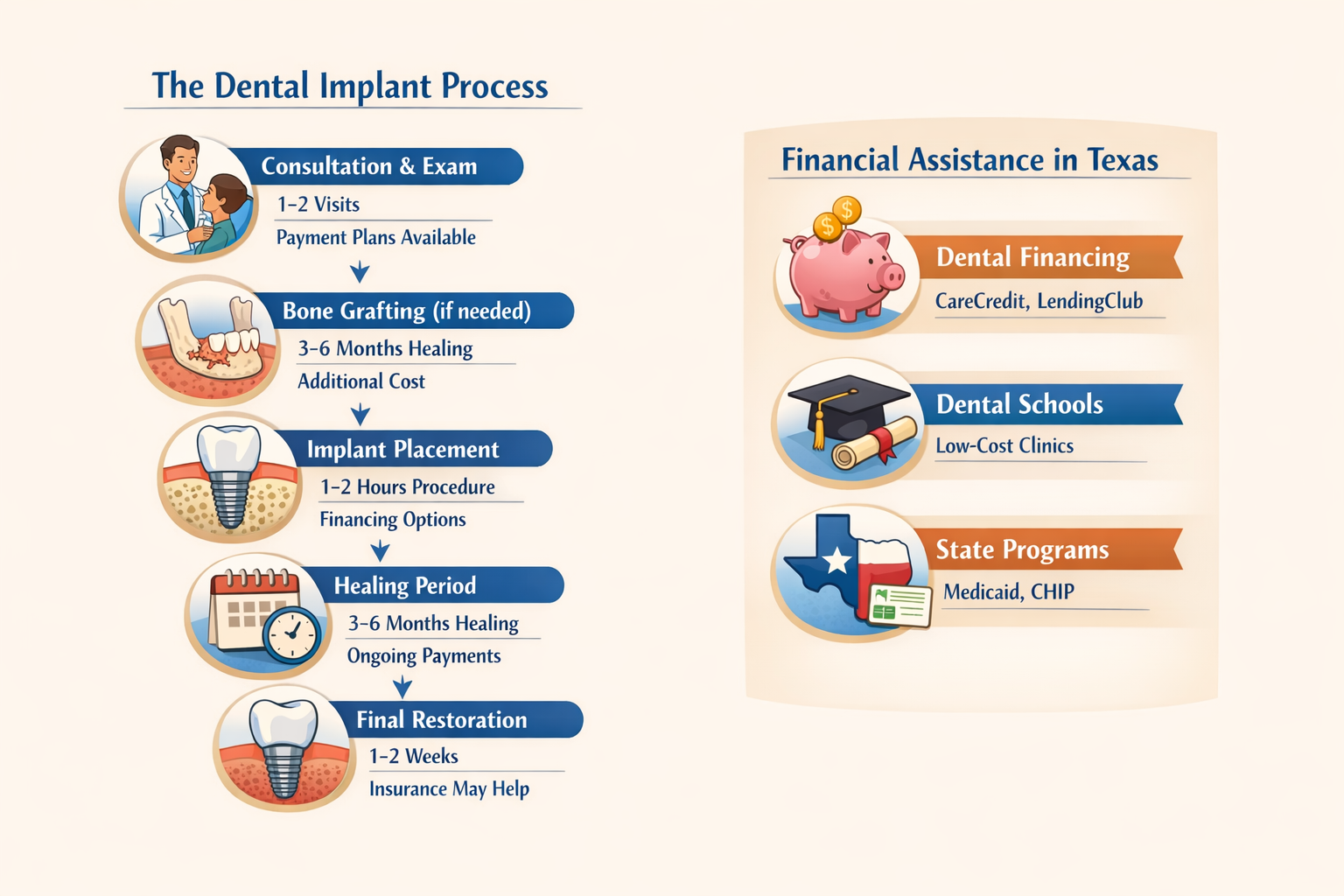
Understanding the journey of getting dental implants can help you prepare for the financial and time commitments involved. While every case is unique, the general steps include:
Initial Consultation & Examination: Your dentist or oral surgeon will perform a thorough examination, including X-rays and often 3D CT scans, to assess your oral health, jawbone density, and suitability for implants. This is where a detailed treatment plan and cost estimate will be provided. You can schedule a dental implant consultation to begin.
Preparatory Procedures (if needed):
- Tooth Extraction: If a damaged tooth needs to be removed.
- Bone Grafting: If you have experienced 90 percent bone loss in teeth or insufficient bone density, a bone graft will be performed to create a stable foundation for the implant. This requires several months for healing.
Dental Implant Placement: The implant, a small, screw-shaped post (usually made of titanium), is surgically placed into your jawbone. This is typically an outpatient procedure performed under local anesthesia, sometimes with sedation.
Osseointegration (Healing Period): This is a critical phase where the implant fuses with your jawbone. This process can take 3 to 6 months. During this time, you may wear a temporary crown or denture.
Abutment Placement: Once osseointegration is complete, a small connector piece called an abutment is attached to the implant. This piece will eventually hold your new crown. You can learn more about abutment placement and its importance.
Crown/Restoration Placement: After your gums have healed around the abutment, impressions are taken to create your custom-made crown, bridge, or denture. The final restoration is then securely attached to the abutment. For various options, refer to the abutment-supported porcelain ceramic crown information.
Follow-up and Maintenance: Regular check-ups and good oral hygiene are essential to ensure the longevity of your dental implants. Maintaining good oral health is crucial for preventing issues like peri-implantitis.
The entire process, from initial consultation to final crown placement, can span several months to over a year, depending on individual healing and whether preparatory procedures are needed. It’s a commitment, but the long-term benefits of dental implants—improved function, aesthetics, and oral health—are often well worth it. For more details on recovery, consult the complete dental implant recovery timeline.
Interactive Tool: Texas Medicare Advantage Dental Implant Coverage Estimator (2026)
This interactive tool helps you estimate potential out-of-pocket costs for dental implants based on typical Medicare Advantage plan benefits in Texas for 2026. Please note this is an estimation only and not a guarantee of coverage or cost. Always confirm with your specific plan and dental provider.
Texas Medicare Advantage Dental Implant Coverage Estimator (2026)
Enter your estimated costs and plan details to see a breakdown.
*This tool provides an estimate for 2026 based on typical Medicare Advantage plan structures in Texas. Actual coverage and costs will vary by your specific plan, dentist, and treatment. Always verify with your insurance provider and dental office.
Conclusion: Making Informed Decisions About Dental Implants in Texas (2026)
Navigating Medicare dental implant coverage Texas in 2026 requires a proactive and informed approach. While Original Medicare provides minimal to no coverage for dental implants, Medicare Advantage (Part C) plans offer the most promising avenue for financial assistance. However, the extent of this coverage can vary significantly, often covering only a fraction of the total cost and typically subject to annual maximums and deductibles.
As an expert SEO content strategist and senior editor, my advice is to empower yourself with knowledge. Start by thoroughly researching Medicare Advantage plans available in your specific Texas county, paying close attention to their detailed dental benefits. Don’t hesitate to directly contact plan providers and work closely with your dental professional to understand your treatment plan and expected out-of-pocket expenses.
Beyond Medicare, remember to explore a range of alternative financing options, including standalone dental insurance, dental school programs, in-house payment plans, and third-party medical financing. By combining these strategies, you can significantly reduce the financial burden of dental implants and achieve the healthy, confident smile you deserve. Your oral health is a vital component of your overall well-being, and with diligent planning, quality dental care, like what is offered at clinics specializing in affordable dental implants Dallas TX, is within reach.
References
[1] Centers for Medicare & Medicaid Services. (2026). What Medicare Covers. Retrieved from Medicare.gov. (Note: Specific year 2026 for reference consistency)
[2] American Dental Association. (2026). Understanding Dental Costs. Retrieved from ADA.org. (Note: Specific year 2026 for reference consistency)
Leave a Reply
Share your thoughts or ask a question about dental implants. Your email address will not be published.