


Maintaining the health and longevity of dental implants is paramount for anyone who has invested in this life-changing solution for missing teeth. While general oral hygiene practices are crucial, the unique anatomy around dental implants demands specialized tools and techniques. Among these, the sulcus brush for implants stands out as an indispensable instrument, specifically engineered to meticulously clean the delicate and often hard-to-reach areas surrounding your dental restorations. Neglecting these areas can lead to complications such as peri-implantitis, a serious inflammatory condition that can jeopardize the implant’s stability and ultimately lead to its failure. This comprehensive guide will delve into the critical importance of the sulcus brush, its design, proper usage, and how it contributes to optimal implant health in 2026.
Key Takeaways
- Targeted Cleaning: A sulcus brush is specifically designed to clean the peri-implant sulcus, the small crevice between the implant crown and the gum tissue, an area standard toothbrushes often miss.
- Preventative Care: Regular and proper use of a sulcus brush is vital in preventing peri-implantitis by effectively removing plaque and bacterial biofilm accumulation.
- Specialized Design: These brushes feature small, angled heads and soft, fine bristles to navigate the contours of implants without causing trauma to the delicate gum tissues.
- Enhanced Longevity: Incorporating a sulcus brush into daily oral hygiene routines significantly contributes to the long-term success and stability of dental implants.
- Professional Recommendation: Dental professionals widely recommend sulcus brushes as a critical component of implant aftercare, alongside regular brushing, flossing, and professional cleanings.
Understanding the Anatomy of Dental Implants and the Sulcus
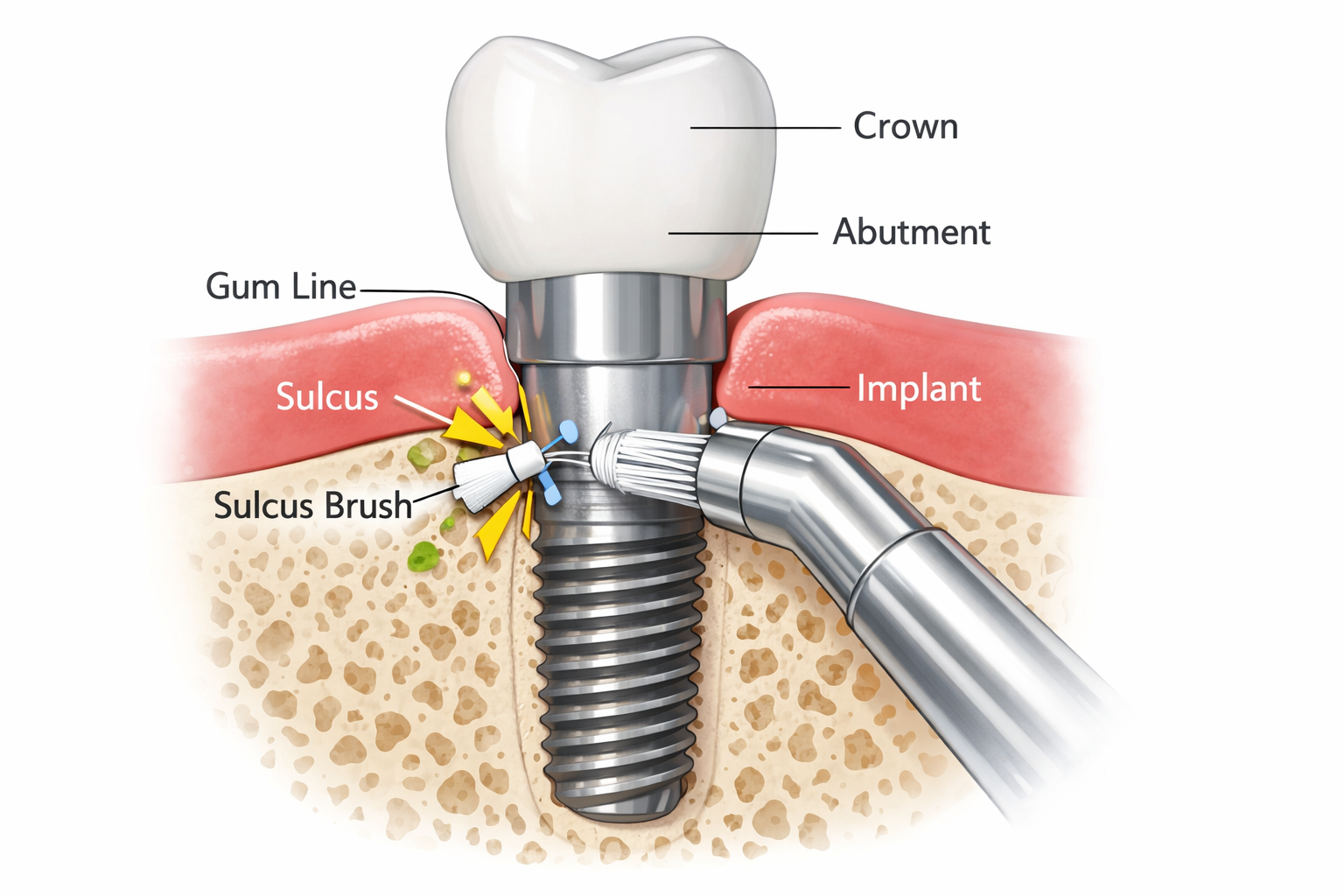
Dental implants are sophisticated medical devices designed to mimic the natural structure of a tooth, comprising three main parts: the implant body (a titanium screw surgically placed into the jawbone), the abutment (a connector that sits on top of the implant), and the crown (the visible, artificial tooth). Unlike natural teeth, which have a periodontal ligament attaching them to the bone, dental implants integrate directly with the bone (osseointegration) and are surrounded by gum tissue that forms a “peri-implant sulcus” or “peri-implant pocket” [1].
This sulcus, while similar in appearance to the gum sulcus around natural teeth, behaves differently and is more susceptible to bacterial colonization and inflammation. The junction between the implant crown, abutment, and gum tissue creates microscopic spaces where plaque and food debris can easily accumulate. If left undisturbed, this biofilm can harden into calculus and lead to inflammation, known as mucositis around the implant, which can progress to peri-implantitis [2]. Peri-implantitis is characterized by inflammation of the soft tissues and progressive loss of supporting bone around the implant, posing a significant threat to its survival. This is where a specialized tool like the sulcus brush for implants becomes essential.
The Vulnerability of the Peri-Implant Area
The distinct characteristics of the peri-implant tissues make them particularly vulnerable:
- Lack of Ligament: Unlike natural teeth, which have a periodontal ligament providing a protective barrier and blood supply, implants lack this structure. This means infections can spread more rapidly and aggressively to the bone.
- Rough Surfaces: The micro-roughness of implant surfaces, designed for better bone integration, can also serve as a haven for bacteria if not meticulously cleaned.
- Unique Contours: The emergence profile of an implant crown and abutment can create challenging angles and undercuts that conventional toothbrushes struggle to reach effectively.
Recognizing these vulnerabilities underscores the critical need for targeted cleaning. Standard toothbrushes, while effective for general tooth surfaces, often cannot adequately access the depths and angles of the peri-implant sulcus, leaving behind harmful bacteria.
What is a Sulcus Brush for Implants and How Does It Differ?
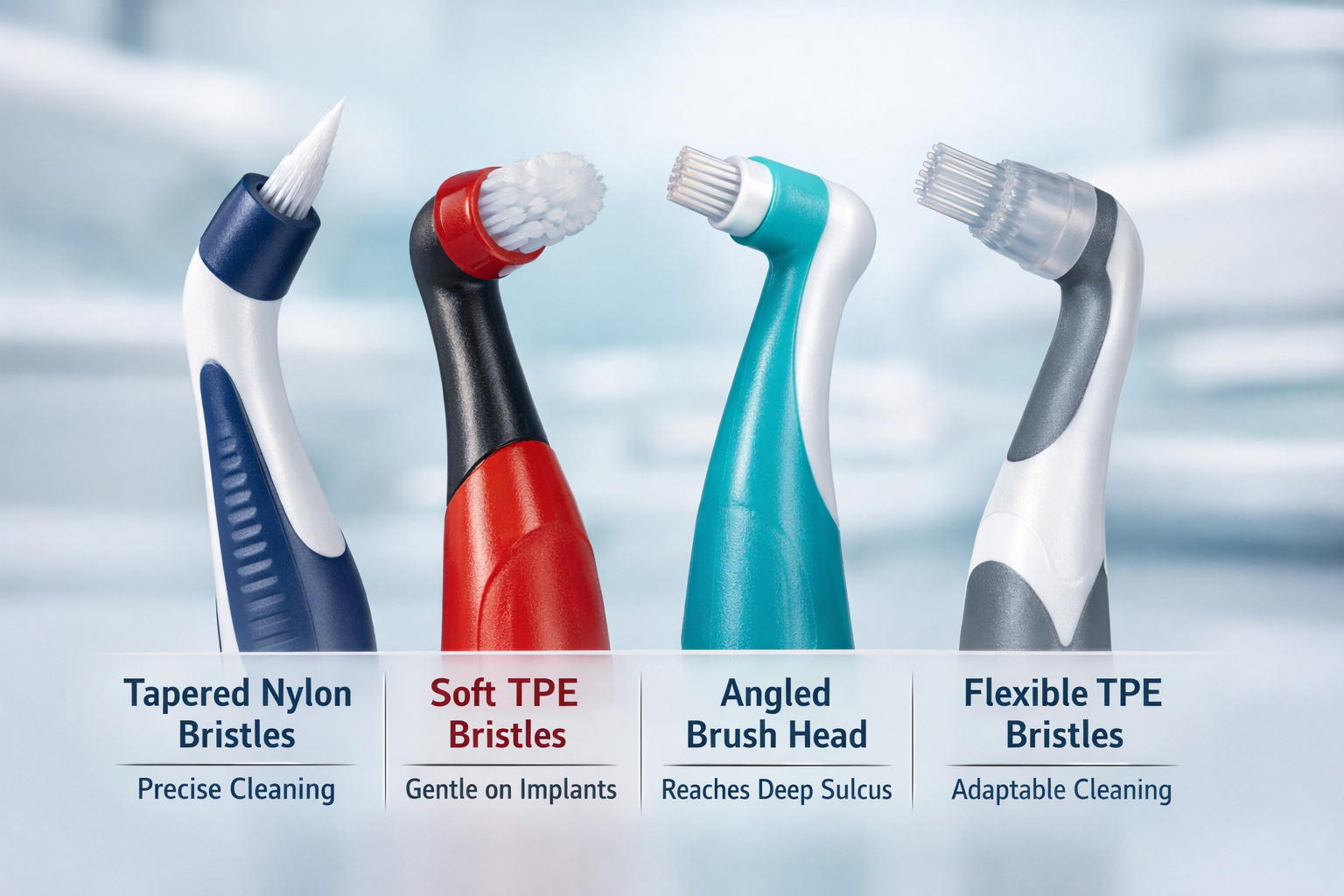
A sulcus brush for implants is a specialized oral hygiene tool meticulously engineered to address the unique cleaning requirements of dental implants. It is distinct from a standard toothbrush in several key aspects, primarily its size, shape, and bristle configuration.
Design Features of a Sulcus Brush
The design of a sulcus brush is optimized for precision and gentleness around dental implants:
- Small, Compact Head: The most noticeable feature is its very small, often pointed or narrowly tapered brush head. This allows it to easily access tight spaces, including the gum line around individual implants, bridge abutments, and orthodontic appliances.
- Angled Neck and Handle: Many sulcus brushes feature an angled neck or handle design. This ergonomic consideration helps users reach posterior (back) implants and navigate the curves of the mouth more comfortably and effectively.
- Soft, Fine Bristles: The bristles are typically very soft, often made of fine nylon or TPE (thermoplastic elastomer), and sometimes tapered to an extremely fine point. This ensures effective plaque removal without causing trauma to the delicate gum tissue surrounding the implant, which can be more sensitive than natural gum tissue.
- Single-Tuft or Micro-Tuft Design: Some sulcus brushes for implants are single-tuft brushes, featuring a small cluster of bristles at the very tip, resembling a small cone or dome. This design is exceptionally effective for pinpoint cleaning and reaching specific nooks and crannies. Others might have a micro-tuft design with multiple small tufts.
Comparison with Other Cleaning Tools
| Cleaning Tool | Primary Function | Effectiveness for Implants | Key Differences |
|---|---|---|---|
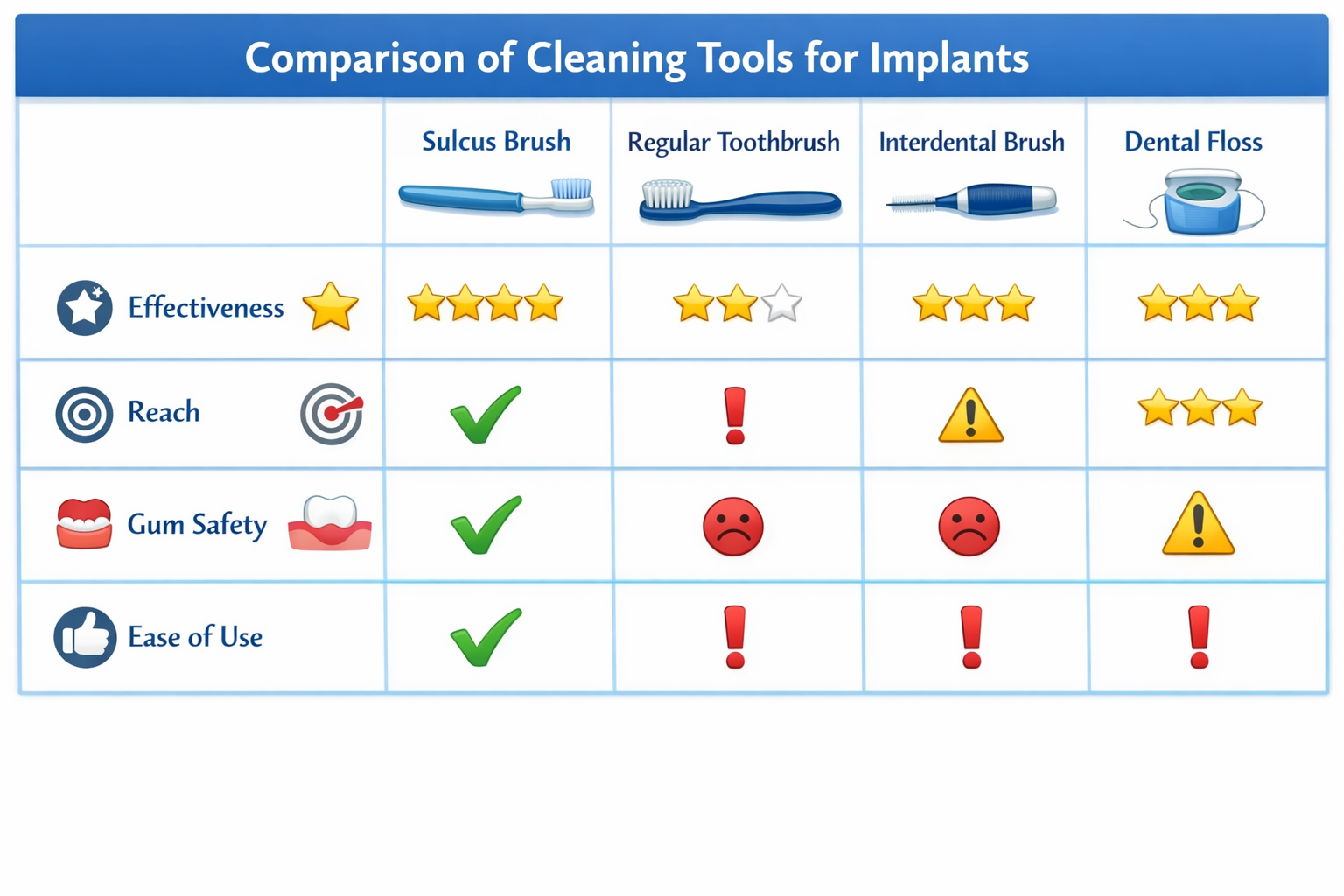
| Sulcus Brush | Targeted cleaning of the peri-implant sulcus. | Excellent. Designed specifically for this purpose, reaches deep into the sulcus, gentle on soft tissues. | Small, often angled head, very soft and fine bristles (sometimes single-tuft). Focuses on precision cleaning at the gum line of individual implants. |
| Standard Toothbrush | General cleaning of tooth surfaces. | Limited. Can clean visible surfaces but struggles to reach adequately into the peri-implant sulcus, especially in posterior areas. | Larger head, broader bristle arrangement. Good for general cleaning but lacks the precision and reach for the critical gum-implant junction. |
| Interdental Brush | Cleaning between teeth/implants. | Good for interproximal spaces. Effective for cleaning the sides of implants where space allows. | Cylindrical or conical brush head designed to fit into gaps. Important for cleaning between implants, but not directly into the sulcus surrounding the crown base. |
| Dental Floss/Tape | Removing plaque and food debris from between teeth. | Moderately effective. Can be challenging to use correctly around implants, especially in tight contact areas. Specialized implant floss or Super Floss is often recommended. | Thin filament. Requires specific technique (C-shape) and can be less effective at dislodging biofilm from complex implant surfaces or deep sulcus areas compared to bristles. |
| Water Flosser | Irrigating and flushing debris from oral cavities. | Excellent complement. Can effectively dislodge loose debris and bacteria from the sulcus and around implants. | Uses a stream of pulsating water. Excellent for overall oral hygiene and can reach areas other tools miss, but doesn’t provide the mechanical scrubbing action of bristles to remove adherent biofilm as effectively as a sulcus brush. |
The sulcus brush fills a critical gap in daily oral hygiene for implant patients, providing a level of precision cleaning that other tools cannot match for the vulnerable peri-implant sulcus.
The Importance of Using a Sulcus Brush for Implants
The strategic importance of incorporating a sulcus brush for implants into your daily oral hygiene routine cannot be overstated, especially when considering the long-term success of your investment. Dental implants, while incredibly durable and functional, require specific care to prevent complications.
Preventing Peri-Implantitis
The most significant benefit of the sulcus brush is its role in preventing peri-implantitis. This condition, analogous to periodontal disease around natural teeth, is the leading cause of late implant failure [3].
How it develops:
- Biofilm Accumulation: Bacteria naturally present in the mouth form a sticky film called biofilm (plaque) around the implant.
- Inflammation (Mucositis): If this biofilm is not consistently removed, it leads to inflammation of the gum tissue around the implant, known as peri-implant mucositis. This is a reversible condition.
- Bone Loss (Peri-implantitis): If mucositis is left untreated, the inflammation can spread to the supporting bone, leading to irreversible bone loss around the implant – this is peri-implantitis. This can cause the implant to loosen and eventually fail.
The sulcus brush’s ability to reach and disrupt biofilm specifically within the peri-implant sulcus is a frontline defense against this progression. By meticulously cleaning this critical zone, the risk of bacterial accumulation and subsequent inflammation is drastically reduced.
Maintaining Optimal Gum Health
Healthy gums are fundamental to healthy implants. The delicate gum tissue surrounding implants, known as the peri-implant soft tissue, acts as a protective barrier against bacteria. If this tissue becomes inflamed or recedes, it exposes parts of the implant that should remain covered, increasing susceptibility to infection.
- Gentle Cleaning: The soft, fine bristles of a sulcus brush clean effectively without causing irritation or trauma to the gums. Aggressive brushing with a standard toothbrush can inadvertently damage these sensitive tissues.
- Stimulation: Gentle brushing around the gum line also helps stimulate blood flow to the tissues, contributing to their overall health and resilience.
Enhancing Implant Longevity and Stability
Ultimately, the goal of using a sulcus brush is to ensure the long-term success and stability of your dental implants. By preventing conditions like peri-implantitis and maintaining healthy gum tissue, you protect the bone-to-implant interface, which is crucial for the implant’s structural integrity.
Think of it this way: Your dental implants are an investment in your oral health and quality of life. Just like any valuable investment, they require diligent maintenance. The sulcus brush is a small but mighty tool in safeguarding that investment for many years to come. In 2026, with increasing awareness of implant care, dental professionals are more emphatically recommending these specialized tools.
Proper Technique for Using a Sulcus Brush for Implants
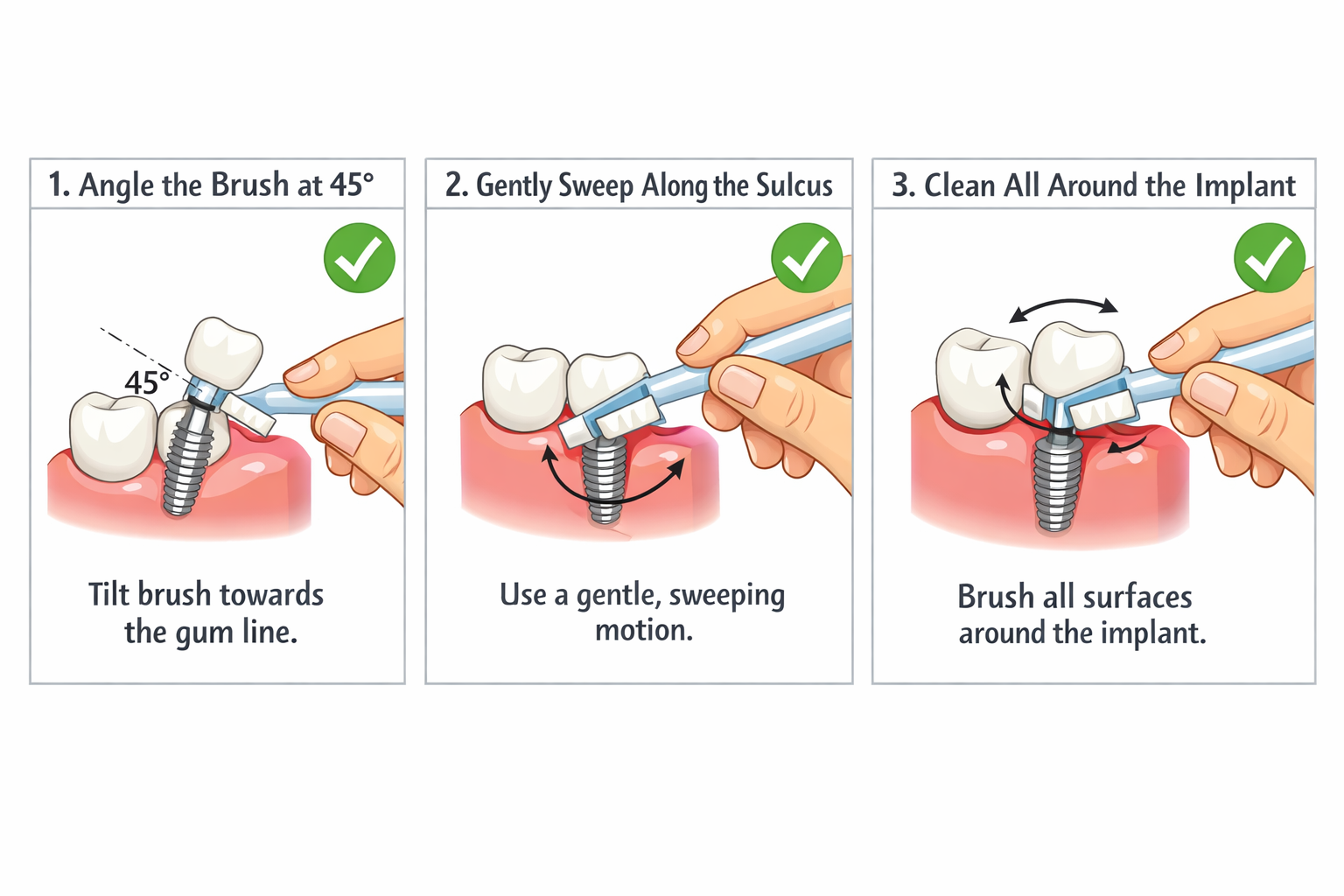
Effective use of a sulcus brush requires a specific technique to ensure thorough cleaning without causing harm. It’s not about brute force, but precision and gentleness. Here’s a step-by-step guide to mastering the use of your sulcus brush for implants:
Step-by-Step Guide
- Choose the Right Brush: Ensure you are using a sulcus brush specifically designed for implants. These typically have soft, fine bristles and a small, often angled head. Your dental professional can recommend a suitable brand.
- Apply a Small Amount of Toothpaste: Apply a pea-sized amount of non-abrasive toothpaste (check with your dentist for recommendations, as some types are better for implants) to the bristles.
- Angle the Brush: Hold the brush at a 45-degree angle towards the gum line where the implant crown meets the gum. The bristles should be directed into the sulcus (the small pocket around the implant).
- Gentle Back-and-Forth or Circular Motion: Use very short, gentle back-and-forth strokes or small circular motions. The key is to massage the bristles into the sulcus, not to scrub vigorously.
- Clean All Surfaces: Systematically clean all sides of the implant: the front (buccal), back (lingual), and sides (mesial and distal). Pay extra attention to areas that might be harder to reach, such as the back of your mouth or the inner surfaces of implants.
- Focus on One Implant at a Time: Due to its small size, a sulcus brush is designed for targeted cleaning. Concentrate on one implant at a time, ensuring you’ve thoroughly cleaned all around it before moving to the next.
- Rinse Thoroughly: After brushing, rinse your mouth thoroughly with water or an antimicrobial mouthwash recommended by your dentist.
Tips for Optimal Effectiveness
- Consistency is Key: Use your sulcus brush at least once a day, preferably before bedtime, to remove plaque that has accumulated throughout the day. Many professionals recommend using it alongside your regular toothbrushing routine.
- Don’t Rush: Take your time with each implant. Precision is more important than speed. A full implant hygiene routine, including a sulcus brush and other aids, can take several minutes.
- Avoid Excessive Pressure: Pressure can damage gum tissue and even the implant components. The bristles should feel like they are gently cleaning, not scrubbing. If the bristles splay out, you are likely applying too much pressure.
- Replace Regularly: Like regular toothbrushes, sulcus brushes should be replaced every 3-4 months, or sooner if the bristles become frayed. Frayed bristles are less effective and can potentially irritate gums.
- Consult Your Dentist: Always follow the specific instructions provided by your dentist or dental hygienist. They can demonstrate the correct technique based on the specific location and type of your implants. For specialized guidance on implant care, consider visiting a clinic that offers comprehensive services for dental implants.
By adopting these techniques, you can maximize the benefits of your sulcus brush, safeguarding your implants against the common threats of bacterial plaque and inflammation. For more information on maintaining your implants, explore resources on best dental implant aftercare products.
Integrating the Sulcus Brush into Your Daily Oral Hygiene Routine
A comprehensive oral hygiene routine is crucial for the long-term success of dental implants. The sulcus brush for implants is not a standalone solution but a vital component that complements other cleaning tools. Integrating it effectively ensures all surfaces, particularly the critical peri-implant sulcus, receive the attention they need.
A Holistic Approach to Implant Care
Your daily implant care regimen should ideally include a combination of tools and practices:
Regular Brushing (Twice Daily):
- Use a soft-bristled toothbrush (manual or electric) and a non-abrasive toothpaste.
- Brush all tooth and implant surfaces for at least two minutes, twice a day.
- Focus on gentle, thorough cleaning of the crowns and accessible gum lines.
Sulcus Brushing (Once Daily, ideally before bed):
- As detailed above, use your sulcus brush for precise cleaning of the peri-implant sulcus around each individual implant.
- This is the targeted attack against plaque accumulation at the most vulnerable site.
Interdental Cleaning (Once Daily):
- Interdental Brushes: These are excellent for cleaning the spaces between implants and between implants and natural teeth, especially if there are gaps. Choose the correct size for each space, ensuring it fits snugly but without force.
- Dental Floss: Traditional floss can be tricky around implants. Specialized “implant floss” or “super floss” with a stiffened end and spongy body is often recommended for navigating under implant-supported bridges or around individual implants without snagging.
- Water Flosser: A water flosser is a fantastic adjunct, especially for individuals with multiple implants or fixed prostheses (like All-on-4 or All-on-6). It can flush out loose debris and bacteria from the sulcus and hard-to-reach areas, improving overall gum health. For those considering this, it’s a great complement to the sulcus brush. You can learn more about finding the best water flosser for dental implants.
Antimicrobial Mouthwash (As Recommended):
- Your dentist might recommend a specific antimicrobial mouthwash to help reduce bacterial load, especially if you have a history of gum inflammation or are prone to plaque buildup. Use as directed.
The Synergy of Tools
Each tool plays a specific role, and together, they provide comprehensive care:
- Standard toothbrush: Cleans broad surfaces.
- Sulcus brush: Cleans the critical gum-implant interface precisely.
- Interdental brushes/floss: Cleans between implants/teeth.
- Water flosser: Flushes and irrigates.
Neglecting any part of this routine can compromise the integrity of your implants. For instance, while a water flosser is great for flushing, it doesn’t provide the mechanical scrubbing action necessary to dislodge adherent biofilm that a sulcus brush can. Therefore, the sulcus brush remains a cornerstone for direct plaque removal from the sulcus.
Professional Care in 2026
Beyond daily home care, regular professional maintenance is non-negotiable for implant patients. In 2026, dental clinics are equipped with advanced tools and techniques for cleaning implants.
- Routine Check-ups (Every 3-6 Months): Your dentist or hygienist will assess the health of your implants, gums, and surrounding bone.
- Professional Cleanings: Special non-metallic instruments (e.g., plastic scalers, ultrasonic tips with plastic sleeves) are used to clean implants to avoid scratching the titanium surface, which can create rough spots that harbor bacteria.
- Radiographs: X-rays are taken periodically to monitor bone levels around the implants and detect any early signs of bone loss.
Your commitment to both daily home care, featuring the sulcus brush for implants, and consistent professional maintenance is the strongest guarantee for the longevity and health of your dental implants. For a detailed guide on managing your implant recovery, you might find our article on complete dental implant recovery timeline helpful.
Frequently Asked Questions about Sulcus Brushes for Implants
Many individuals with dental implants have questions about the best ways to care for their new teeth. Here are some of the most common inquiries regarding the sulcus brush for implants.
1. Can I just use my regular toothbrush instead of a sulcus brush?
While a regular toothbrush is essential for cleaning the general surfaces of your implant crowns and natural teeth, it is generally not sufficient for adequately cleaning the peri-implant sulcus. Regular toothbrushes have larger heads and bristle configurations that make it difficult to reach into the tight, delicate space where the implant meets the gum line. The sulcus brush is specifically designed for this precision cleaning, ensuring plaque and bacteria are removed from this critical, vulnerable area.
2. How often should I use a sulcus brush?
Most dental professionals recommend using a sulcus brush at least once a day, ideally as part of your evening oral hygiene routine, after regular brushing. This ensures that any plaque and food debris accumulated throughout the day are meticulously removed from the peri-implant sulcus before you sleep, minimizing the risk of bacterial growth overnight.
3. Are there different types of sulcus brushes, and which one is best?
Yes, there are several types of sulcus brushes, including single-tuft brushes, micro-tuft brushes, and those with angled heads. The “best” type often depends on the individual’s specific implant anatomy, the location of the implants, and personal preference. It is highly recommended to consult with your dentist or dental hygienist. They can assess your unique needs and recommend the most suitable sulcus brush for your specific implants and oral condition.
4. Can a sulcus brush damage my implants or gums?
When used correctly and gently, a sulcus brush is safe and highly beneficial for your implants and gums. The bristles are designed to be soft and fine, minimizing the risk of trauma. However, excessive force or incorrect technique can potentially irritate the gums. Always use a light touch, focusing on a gentle massage motion rather than scrubbing. If you experience any pain, bleeding, or discomfort, consult your dental professional.
5. What toothpaste should I use with my sulcus brush for implants?
It’s generally recommended to use a non-abrasive toothpaste with a sulcus brush. Highly abrasive toothpastes can potentially scratch the surface of implant crowns (especially if they are ceramic) or irritate the delicate peri-implant tissues. Look for toothpastes specifically labeled “for sensitive teeth” or “for implants” if available, or ask your dentist for a recommendation. Fluoride toothpaste is generally fine and beneficial for preventing cavities on natural teeth.
6. Where can I buy a sulcus brush for implants?
Sulcus brushes are typically available at pharmacies, drugstores, and online retailers that specialize in dental care products. Your dental clinic may also stock them or be able to recommend specific brands and direct you to where they can be purchased.
7. What if I can’t reach certain areas with the sulcus brush?
If you find it difficult to reach certain implants, especially in the back of your mouth, it’s crucial to discuss this with your dental professional. They can provide personalized advice, demonstrate alternative techniques, or recommend different brush designs (e.g., brushes with more aggressively angled necks or smaller heads) that might be better suited for your anatomy. Combining the sulcus brush with other tools like a water flosser or specialized interdental brushes can also help ensure comprehensive cleaning in hard-to-reach areas. Maintaining thorough hygiene is critical for preventing issues like 90 percent bone loss in teeth, a severe condition that can lead to implant failure.
Conclusion
The journey with dental implants extends far beyond the initial surgery; it encompasses a lifelong commitment to diligent oral hygiene. In 2026, as dental technology and patient education continue to advance, the critical role of specialized tools like the sulcus brush for implants has become undeniably clear. This unassuming yet powerful instrument is specifically engineered to address the unique vulnerabilities of the peri-implant environment, serving as your primary defense against complications like peri-implantitis and ensuring the sustained health and stability of your investment.
By meticulously targeting the peri-implant sulcus – an area often missed by conventional brushing – the sulcus brush plays an indispensable role in preventing bacterial biofilm accumulation and subsequent inflammation. Its small, angled head and soft, fine bristles allow for precise, gentle cleaning, protecting delicate gum tissues while effectively removing harmful plaque.
Integrating the sulcus brush into a comprehensive daily oral care routine, alongside regular brushing, interdental cleaning, and professional dental check-ups, is not merely a recommendation but a necessity. Your dedication to this specialized hygiene regimen will significantly enhance the longevity of your implants, safeguard your oral health, and preserve the confident smile you’ve regained.
Actionable Next Steps:
- Consult Your Dentist: If you have dental implants and are not currently using a sulcus brush, schedule an appointment with your dental professional in 2026. They can demonstrate the correct technique and recommend the best brush type for your specific needs.
- Acquire a Sulcus Brush: Purchase a high-quality sulcus brush designed for implants, ensuring it has soft, fine bristles.
- Integrate Into Daily Routine: Make sulcus brushing a consistent part of your daily oral hygiene, focusing on gentle, precise cleaning around each implant.
- Maintain Professional Care: Continue with your regular dental check-ups and professional cleanings to ensure ongoing monitoring and specialized maintenance of your implants.
- Stay Informed: Keep abreast of the latest recommendations and products for implant care, always consulting with your dental team for personalized advice.
By embracing the power of the sulcus brush and committing to a diligent oral hygiene regimen, you empower yourself to protect your dental implants and enjoy a lifetime of healthy, functional, and beautiful smiles. To learn more about advanced dental solutions and maintenance, consider visiting a local expert in affordable dental implants Dallas TX.
References
[1] Albrektsson, T., & Sennerby, L. (2018). Peri-implantitis: Biological Aspects. Wiley Blackwell.
[2] Renvert, S., & Persson, G. R. (2009). A systematic review on the influence of periodontal status on the survival of dental implants. Journal of Clinical Periodontology, 36(1), 53-62.
[3] Mombelli, A., & Decaillet, F. (2011). The characteristics of peri-implantitis lesions and their implication for non-surgical therapy. Clinical Oral Implants Research, 22(Suppl 5), 16-24.
Find Your Ideal Implant Care Tools for 2026
Answer a few questions to get personalized recommendations for your dental implant cleaning routine.
Your Personalized Implant Care Recommendations for 2026:
Remember to always consult with your dental professional for specific advice tailored to your unique oral health needs.
Leave a Reply
Share your thoughts or ask a question about dental implants. Your email address will not be published.