


Losing a tooth, or several teeth, can be a daunting experience. It affects not only your ability to chew and speak but also your self-confidence and overall quality of life. In 2026, navigating the various tooth replacement options can feel overwhelming, but understanding solutions like a lower partial denture is a crucial first step toward restoring your smile and oral health. For residents in Dallas, Texas, knowing your choices—from traditional removable lower partials to advanced dental implant solutions—is essential for making an informed decision about long-term oral health.
This article aims to provide a clear, patient-focused guide to lower partial dentures, explaining what they are, their benefits and drawbacks, and how they compare to modern alternatives like dental implants. We believe in empowering our readers with knowledge, helping you understand the medically responsible choices available without any pressure or exaggerated claims. Our goal is to serve as your go-to resource for oral health education, encouraging you to consult with a dentist to find the best solution for your unique needs.
Key Takeaways
- A lower partial denture is a removable appliance used to replace one or more missing teeth in the lower jaw.
- They are a cost-effective solution but may come with challenges like stability, comfort, and potential impact on surrounding teeth.
- Modern dental implants offer a stable, long-lasting alternative to lower partials, closely mimicking natural teeth in function and appearance.
- Choosing between a lower partial and dental implants involves considering factors such as cost, oral health, bone density, and lifestyle.
- A consultation with a dentist in Dallas is crucial to assess your specific situation and recommend the most suitable tooth replacement option for your long-term oral health.
What Exactly is a Lower Partial Denture?
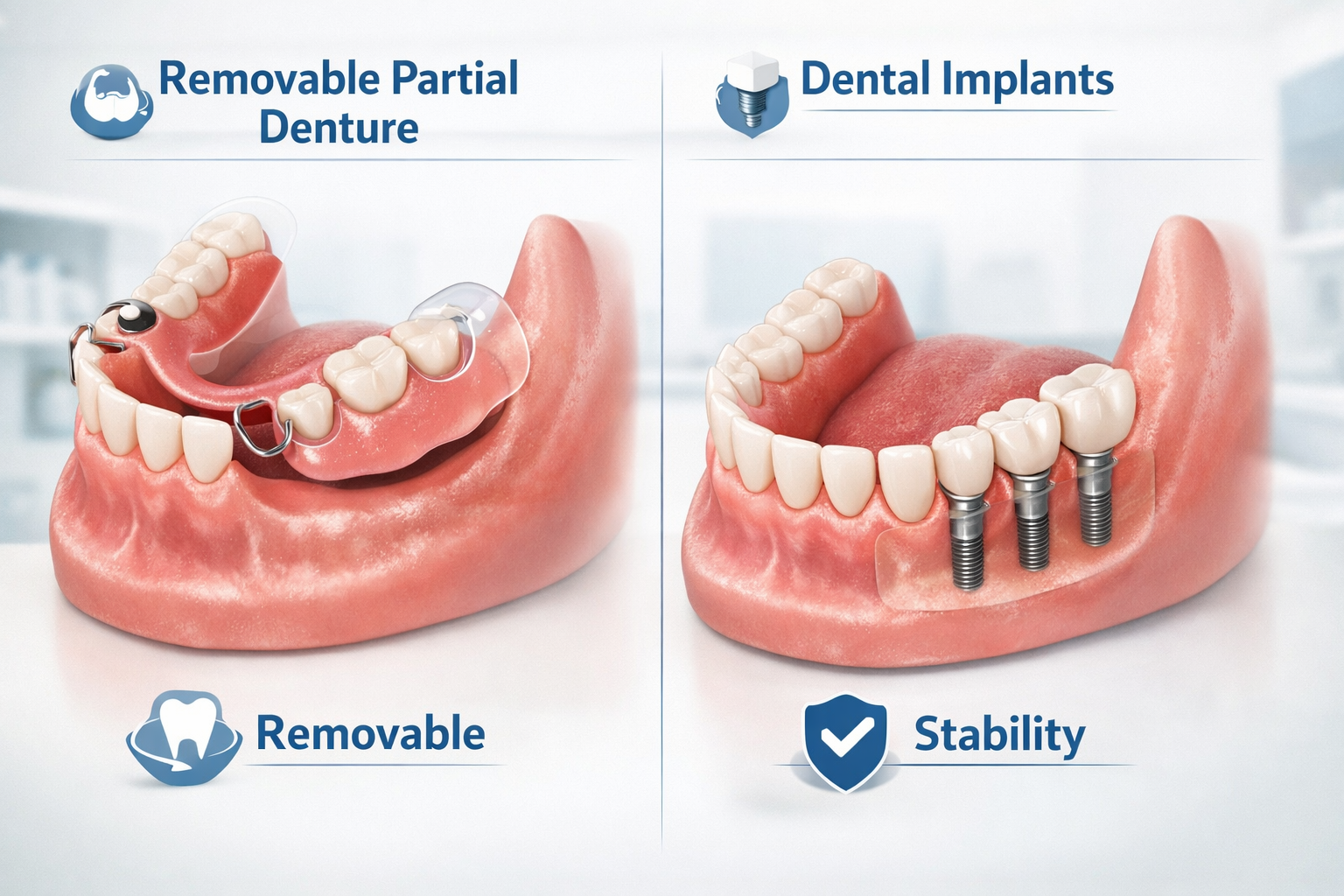
A lower partial denture, often simply called a partial, is a removable dental appliance designed to replace one or more missing teeth in the lower jaw. It’s an option for individuals who still have some natural teeth remaining. Unlike a complete denture, which replaces all teeth in an arch, a partial denture fills the gaps created by missing teeth, relying on your existing natural teeth and gums for support.
Components of a Lower Partial Denture
Understanding the components can help you grasp how a lower partial works:
- Denture Base: This is the pink, gum-colored acrylic part that rests on your gum tissue and supports the artificial teeth.
- Artificial Teeth: These are the prosthetic teeth, typically made of plastic or porcelain, that replace your missing natural teeth.
- Framework (for cast metal partials): Many lower partials feature a thin metal framework, usually made of a cobalt-chromium alloy, which provides strength and rigidity. This framework is custom-fabricated to fit your mouth precisely.
- Clasps: These are small metal (or sometimes tooth-colored) arms that extend from the framework and gently grasp onto your natural teeth, holding the partial in place.
- Rests: These are small projections on the framework that sit on specific surfaces of your natural teeth, preventing the partial from sinking into the gum tissue and distributing chewing forces.
Types of Lower Partial Dentures
There are primarily two types of lower partial dentures:
- Cast Metal Framework Partials: These are the most common and durable type. They feature a rigid metal framework with acrylic bases and artificial teeth. The metal framework is strong, lightweight, and offers a good fit, distributing chewing forces more effectively to your remaining natural teeth.
- Acrylic (Flippers) Partials: These are typically less expensive and often used as a temporary solution while awaiting a more permanent tooth replacement option. They are entirely made of acrylic, are bulkier, and tend to be less stable than cast metal partials. They are rarely recommended for long-term use due to their potential to put excessive stress on supporting teeth and gum tissue.
- Flexible Partials: Made from a thermoplastic material, these partials are more flexible than traditional acrylic partials and do not require metal clasps, which some patients find more aesthetically pleasing. However, they can be more challenging to adjust and repair, and their flexibility may lead to less stable chewing.
Benefits and Drawbacks of a Lower Partial Denture
Choosing a lower partial denture involves weighing its advantages against its potential disadvantages. Our patient-first approach at Dental Implant Education – Dallas TX emphasizes a balanced understanding of all tooth replacement options.
Advantages of Lower Partial Dentures
- Cost-Effective: Compared to dental implants in Dallas, partial dentures generally have a lower initial cost, making them an accessible option for many individuals [1].
- Non-Invasive: The procedure for getting a partial denture does not involve surgery, making it a suitable choice for patients who may not be candidates for surgical procedures or prefer a less invasive approach.
- Quick Solution: The process of fabricating and fitting a lower partial can often be completed more quickly than the multi-stage dental implant procedure.
- Easy to Repair/Modify: If a natural tooth is lost, it is sometimes possible to add another artificial tooth to an existing partial denture, avoiding the need for a completely new appliance.
- Restores Function and Aesthetics: A partial denture can effectively fill gaps, restoring your ability to chew, speak clearly, and improve the appearance of your smile.
Disadvantages of Lower Partial Dentures
- Removable Nature: Being removable means they can sometimes feel less secure, especially during eating or speaking. They must also be removed nightly for cleaning, which can be inconvenient for some [1].
- Potential for Instability and Discomfort: While custom-fitted, some patients report that lower partials can feel bulky or move slightly, leading to discomfort or irritation of the gums and surrounding teeth.
- Impact on Natural Teeth: The clasps on a partial denture place pressure on the natural teeth they attach to. Over time, this can sometimes lead to wear, loosening, or even decay of the supporting teeth if oral hygiene is not meticulous.
- Bone Loss: Unlike dental implants, which stimulate the jawbone, a partial denture does not prevent bone resorption in the areas where teeth are missing. Over time, this bone loss can change the shape of your jaw, requiring the partial denture to be relined or replaced to maintain a proper fit.
- Maintenance: Proper cleaning is essential to prevent plaque buildup on the denture and on the natural teeth that support it. Neglecting hygiene can lead to gum disease and further tooth loss.
- Dietary Restrictions: Some foods may need to be avoided or cut into smaller pieces to prevent damage to the partial or discomfort during chewing.
Comparing Lower Partials with Dental Implants: A Modern Perspective
When considering missing teeth solutions, it’s crucial to understand how a lower partial denture stacks up against dental implants, especially for patients researching dental implants in Dallas. While partials have their place, dental implants often offer a superior long-term solution.
Dental Implants: The Gold Standard for Tooth Replacement
Dental implants are titanium posts surgically placed into the jawbone beneath the gum line. Once integrated with the bone, they serve as stable anchors for artificial teeth, crowns, bridges, or even full dentures.
Key Benefits of Dental Implants:
- Superior Stability and Comfort: Implants are permanently anchored in the jawbone, providing a level of stability and comfort unmatched by removable partials. They feel and function much like natural teeth.
- Preservation of Jawbone: The implant post fuses with the jawbone, preventing the bone loss that typically occurs after tooth extraction. This helps maintain facial structure and oral health.
- No Impact on Adjacent Teeth: Unlike partial dentures that rely on neighboring teeth for support, dental implants are self-supporting. This means no grinding down of healthy adjacent teeth, as might be required for a traditional bridge, or stress from clasps.
- Durability and Longevity: With proper care, dental implants can last a lifetime, making them a highly durable long-term investment in your oral health. You can learn more about the dental implant process and what to expect.
- Natural Appearance and Function: Implants look and feel like your own teeth, allowing you to eat, speak, and smile with confidence without worrying about your teeth shifting or falling out.
- Improved Oral Health: Because they don’t require altering other teeth, implants contribute to better long-term oral health and easier access between teeth for cleaning.
Considerations for Dental Implants:
- Higher Initial Cost: The implant cost in Dallas can be higher upfront compared to a lower partial. However, considering their longevity and benefits, they often prove more cost-effective over a lifetime. For specific costs, refer to our guide on how much dental implants cost in 2025.
- Surgical Procedure: Dental implant placement is a surgical procedure, requiring good general and oral health. The implant surgery process is typically performed under local anesthesia, sometimes with sedation.
- Healing Time: The process involves a healing period (osseointegration) where the implant fuses with the bone, which can take several months.
| Feature | Lower Partial Denture | Dental Implant |
|---|---|---|
| Stability | Removable, can shift | Permanent, highly stable |
| Comfort | Can feel bulky, may cause irritation | Feels like natural tooth |
| Bone Health | Does not prevent bone loss | Prevents bone loss, preserves jaw structure |
| Adjacent Teeth | Clasps can stress or wear down natural teeth | Independent, does not affect adjacent teeth |
| Longevity | Typically 5-10 years, may need relining/replacement | Can last a lifetime with proper care |
| Maintenance | Removed daily for cleaning | Brushed and flossed like natural teeth |
| Initial Cost | Lower | Higher |
| Procedure | Non-surgical, impressions only | Surgical placement, healing period |
| Aesthetics | Can look good, but clasps may be visible | Blends seamlessly with natural teeth |
Who is a Candidate for a Lower Partial?
Determining if a lower partial is the right choice involves a thorough assessment by a dental professional. While often a viable option for many, certain factors make someone a good candidate.
Generally, you might be a candidate for a lower partial if:
- You are missing one or several teeth in your lower jaw, but still have a sufficient number of healthy natural teeth remaining to support the partial.
- You are looking for a more affordable or less invasive tooth replacement option compared to dental implants.
- You have good overall oral hygiene habits, as diligent cleaning is crucial for the success and longevity of the partial and the health of your remaining teeth.
- Your jawbone structure may not be suitable for dental implants without extensive bone grafting, or you prefer to avoid surgery.
- You understand the limitations of a removable appliance and are comfortable with its maintenance requirements.
Factors Influencing Candidacy
- Oral Health: Healthy gums and remaining teeth are essential. Any active gum disease or decay must be addressed before a partial can be made.
- Bone Density: While less critical than for implants, adequate bone support is still important for the overall stability and comfort of the partial.
- Patient Compliance: The success of a partial heavily relies on the patient’s commitment to daily cleaning and maintenance.
- Allergies: In rare cases, patients may have allergies to materials used in partial dentures, such as certain metals or acrylics.
For individuals exploring options in Dallas, a consultation with a dentist is the best way to assess if a lower partial or another solution, like dental implants for your entire mouth, aligns with your specific needs and oral health goals.
The Process of Getting a Lower Partial Denture
Getting a lower partial involves several appointments with your dentist. Here’s a general overview of the steps involved:
- Initial Consultation and Examination: Your dentist will conduct a comprehensive oral examination, take X-rays, and discuss your medical history and tooth replacement goals. They will assess the health of your remaining natural teeth, gums, and jawbone to determine if a partial denture is the most appropriate solution.
- Treatment Planning: If a lower partial is deemed suitable, your dentist will develop a detailed treatment plan, explaining the type of partial, the process, timeline, and associated costs. This is an excellent opportunity to ask any questions to ask dentist about implants or partials.
- Preparation of Abutment Teeth: If necessary, your natural teeth that will support the partial (abutment teeth) may need minor reshaping or preparation to ensure a proper fit for the clasps and rests. Any existing decay or gum disease will also be treated at this stage.
- Impressions: Accurate impressions (molds) of your mouth are taken. These impressions are sent to a dental laboratory, where skilled technicians custom-fabricate your partial denture to precisely fit your mouth.
- Wax Try-In (Optional): Sometimes, a wax model of the partial is created for you to try on. This allows your dentist to check the fit, bite, and appearance of the artificial teeth, and make any necessary adjustments before the final denture is processed.
- Final Fitting: Once the lower partial is ready, you’ll return for a final fitting. Your dentist will ensure it fits comfortably and securely. They will make any minor adjustments to achieve an optimal bite and comfort. You’ll receive detailed instructions on how to insert, remove, and care for your new partial denture.
- Adjustment Appointments: It’s common to need a few adjustment appointments after receiving your partial. Your mouth will adapt, and slight pressure points may develop. These adjustments are vital to ensure long-term comfort and function.
Living with a Lower Partial: Care and Maintenance
Proper care and maintenance are paramount to the longevity of your lower partial and the health of your remaining natural teeth. Following these guidelines will help ensure your partial functions well and your oral health is preserved.
Daily Care for Your Lower Partial
- Clean After Every Meal: Remove your partial denture and rinse it thoroughly under running water to remove loose food particles.
- Brush Your Partial Daily: Use a soft-bristled brush specifically designed for dentures (or a regular soft toothbrush) and a non-abrasive denture cleaner. Regular toothpaste can be too abrasive and scratch the denture surface, creating microscopic grooves where bacteria can accumulate. Brush all surfaces gently, including the artificial teeth and the pink base.
- Clean Your Mouth: Don’t forget to brush your remaining natural teeth, gums, tongue, and the roof of your mouth with a soft-bristled toothbrush and fluoride toothpaste. This helps remove plaque and stimulates circulation in your gum tissues.
- Soak Overnight: Most partial dentures need to stay moist to retain their shape. Place your partial in a denture-cleaning solution or plain water overnight. Always follow the manufacturer’s instructions for any specific cleaning products.
- Handle with Care: Always handle your partial over a soft towel or a basin of water to prevent breakage if it accidentally drops.
Regular Dental Check-ups
Even with a partial denture, regular visits to your dentist are crucial. Your dentist will:
- Check the fit of your partial denture.
- Examine your remaining natural teeth for any signs of decay or gum disease.
- Screen for oral cancer.
- Assess the health of your gum tissue and jawbone beneath the partial.
These check-ups, typically every six months, are vital for maintaining both your partial and your overall oral health.
Addressing Common Issues
- Sore Spots: It’s common to experience some sore spots or irritation initially. Contact your dentist for adjustments. Do not attempt to adjust your partial yourself.
- Looseness: If your partial feels loose, it may need to be relined or adjusted by your dentist. Bone changes over time can affect the fit.
- Breakage: If your partial denture breaks or a clasp bends, avoid trying to repair it yourself. Contact your dentist immediately.
By diligently following these care instructions and maintaining regular dental visits, you can ensure your lower partial denture provides comfort, function, and aesthetics for years to come.
Choosing the Right Option for You in Dallas
Deciding between a lower partial denture and other tooth replacement options, such as dental implants, is a highly personal choice that should be made in consultation with a qualified dental professional. For those living in Dallas, Texas, our practice is dedicated to providing comprehensive oral health education and guiding you through the available solutions.
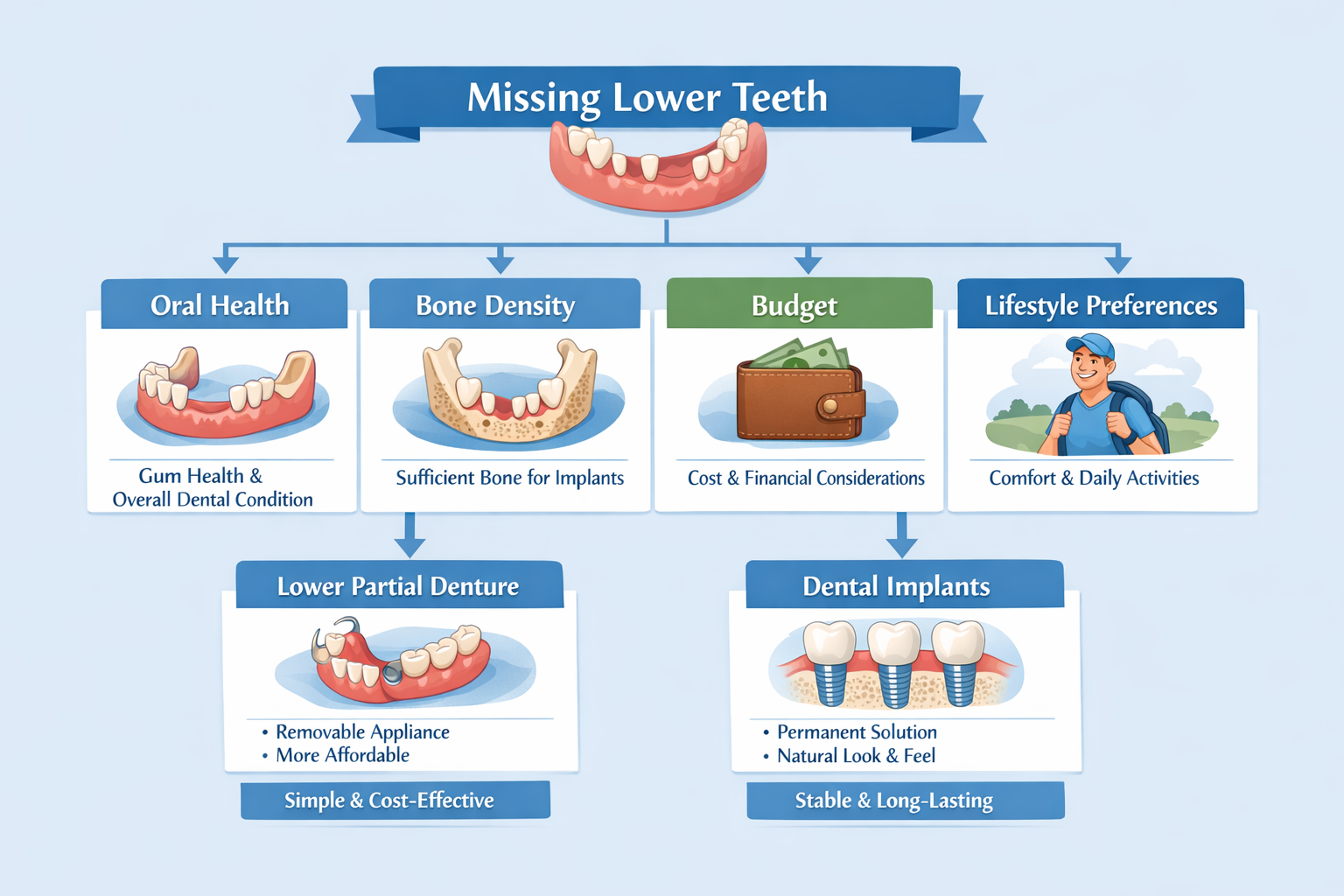
When making your decision, consider the following factors:
- Your Oral Health: The condition of your remaining teeth, gums, and jawbone plays a significant role. If your remaining teeth are strong and healthy, a partial might be a good fit. If you have significant bone loss, implants might require bone grafting costs for dental implants or other preparatory procedures.
- Your Budget: While the initial cost of a lower partial is generally lower, consider the long-term value. Dental implants, despite a higher upfront investment, often prove more cost-effective due to their durability and minimal maintenance needs over decades. Explore options for cheap dental implants in Dallas or dental implant financing bad credit approved.
- Your Lifestyle and Preferences: Do you prefer a removable appliance you clean nightly, or would you prefer a permanent solution that feels like your natural teeth? Your comfort with daily maintenance and your desire for stability should influence your choice.
- Long-Term Goals: Are you looking for a temporary fix or a permanent solution that supports long-term oral health and prevents future bone loss? Dental implants offer benefits that extend beyond simply replacing missing teeth, contributing to overall long-term oral health.
We encourage you to schedule a consultation with a dentist specializing in tooth replacement options. During this consultation, your dentist will conduct a thorough examination, discuss all available missing teeth solutions, and provide personalized recommendations tailored to your unique situation. This patient safety and patient-first approach ensures you make an informed decision for your smile and health.
Conclusion
Understanding your options for replacing missing teeth, particularly concerning a lower partial denture, is a crucial step towards reclaiming your smile and confidence. While lower partials offer a viable, cost-effective, and less invasive solution for many, it’s important to weigh their benefits against the long-term advantages offered by modern dental implants.
In 2026, the landscape of tooth replacement is more advanced than ever. Whether you’re considering the affordability and ease of a lower partial or the stability and bone-preserving benefits of dental implants, making an informed decision about your oral health education is paramount.
For residents in Dallas, Texas, we at Dental Implant Education – Dallas TX are committed to providing trustworthy, medically responsible guidance. We urge you not to settle for a solution without fully understanding its implications for your long-term oral health. A professional consultation with a dentist is the best actionable next step. During this visit, you can discuss your specific needs, explore all tooth replacement options, and determine the most suitable path to a healthy, confident smile. Your journey to restored oral health begins with knowledge and a dedicated dental partner.
References
[1] Bottom Partial Denture – https://vitrinclinic.com/bottom-partial-denture/
Leave a Reply
Share your thoughts or ask a question about dental implants. Your email address will not be published.