

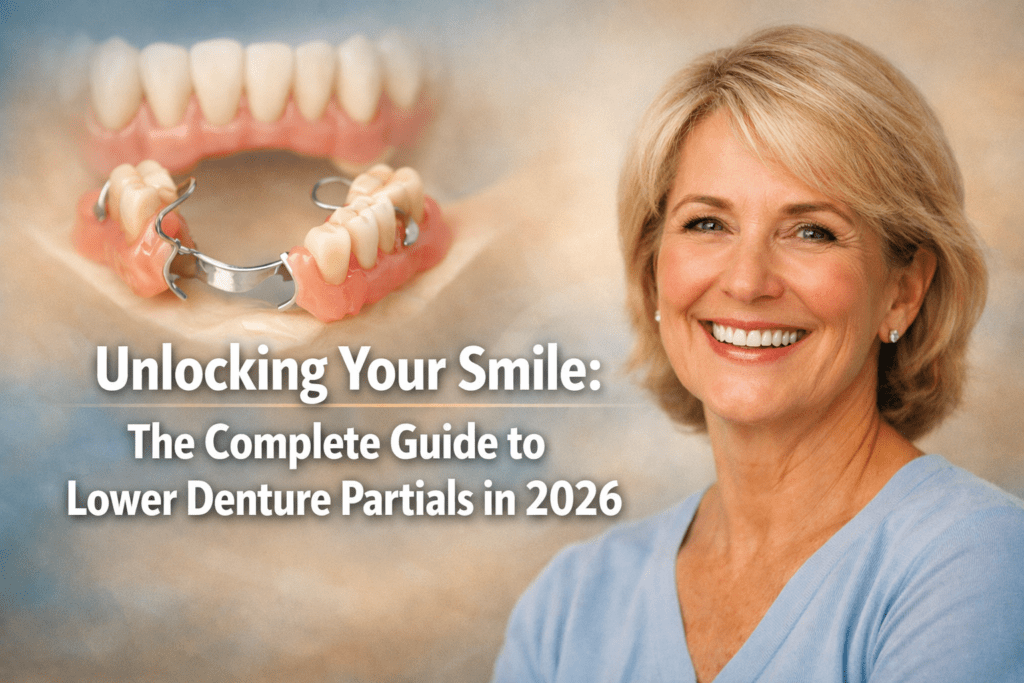
Missing teeth can significantly impact not only your smile but also your ability to speak clearly, chew comfortably, and maintain overall oral health. If you’re missing several teeth in your lower jaw but still have some natural teeth remaining, a lower denture partial might be a suitable solution for you. In 2026, advances in dental technology have made partial dentures more comfortable, functional, and aesthetically pleasing than ever before. This comprehensive guide will explore everything you need to know about lower denture partials, helping you understand your options and make an informed decision for your long-term oral health.
Key Takeaways
- Lower denture partials replace missing teeth while utilizing existing natural teeth for support, offering a removable solution for partial tooth loss.
- Modern partial dentures come in various types, including metal framework, flexible, and acrylic options, each with distinct benefits in terms of durability, aesthetics, and comfort.
- Advanced technologies like digital design, CAD/CAM, and Selective Laser Melting (SLM) are enhancing the precision, fit, and overall quality of lower denture partials.
- Proper care and regular dental check-ups are crucial for the longevity and effectiveness of your partial denture and the health of your remaining natural teeth.
- Consultation with a dentist specializing in tooth replacement options, especially dental implants in Dallas, is essential to determine the best solution for your unique needs.
Understanding the Lower Denture Partial: Types and Materials
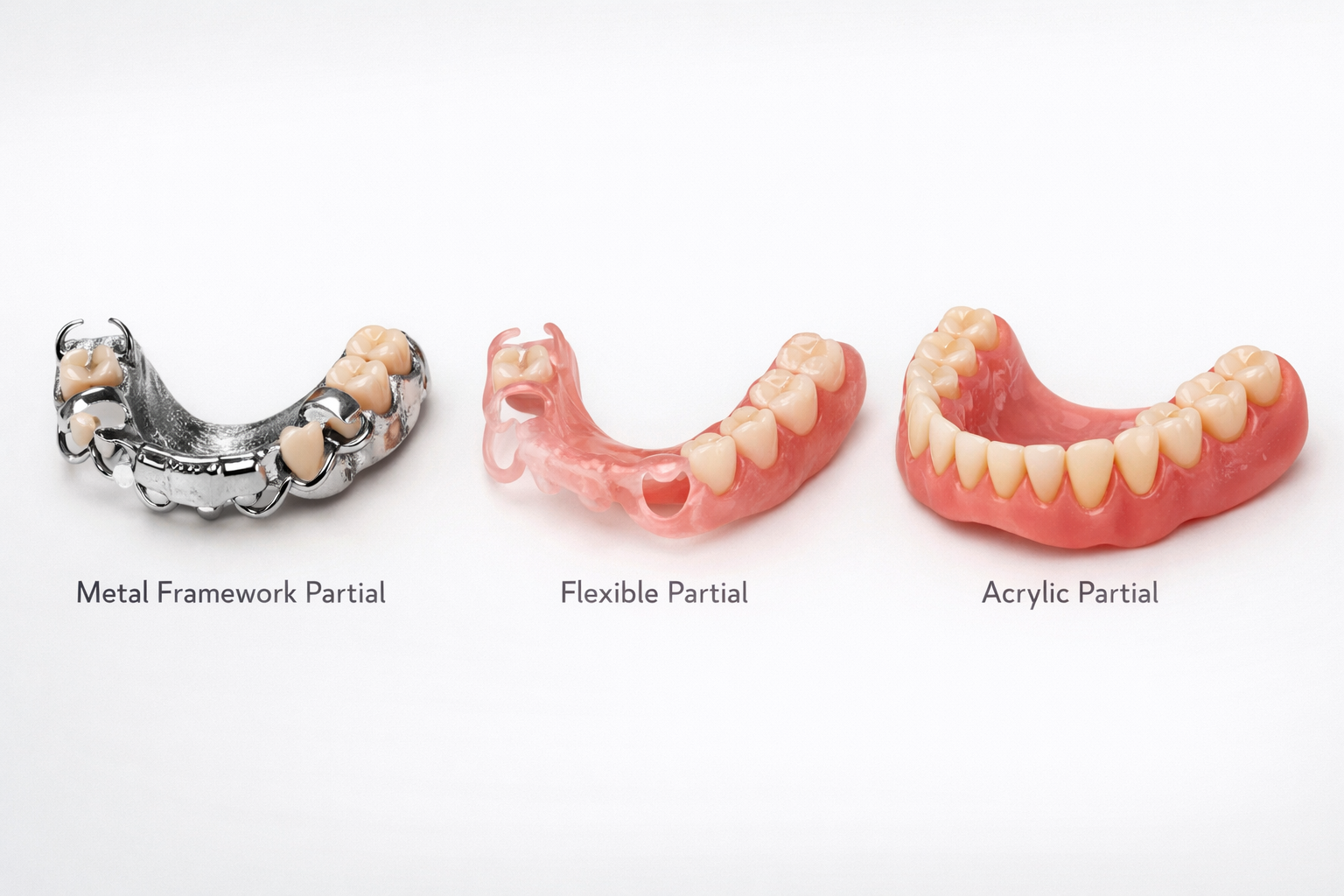
A lower denture partial is a removable dental appliance designed to replace one or more missing teeth in the lower arch, leveraging your remaining natural teeth for stability and support. Unlike full dentures, which replace an entire arch of teeth, partial dentures are custom-made to fit precisely around your existing teeth and gums. The goal is to restore chewing function, improve speech, prevent remaining teeth from shifting, and enhance the overall appearance of your smile.
In 2026, patients have several types of lower denture partials to choose from, each offering unique benefits and considerations. Understanding these options is the first step in determining which partial denture is right for you [7].
Traditional Cast Metal Framework Partials
These are often considered the most common and durable type of lower denture partial. They consist of a cast metal framework, typically made from chrome-cobalt alloy, to which artificial teeth and gum-colored acrylic are attached.
- Material Strength: Chrome-cobalt alloy remains the preferred material for partial denture frameworks due to its inherent strength, which allows for thinner, less bulky designs [5]. This strength contributes to their longevity and ability to withstand chewing forces.
- Precision Fit: Modern advancements, particularly the integration of digital design and CAD/CAM technology, allow for highly precise and reliable frameworks [2, 5]. Digital scanning creates accurate models, leading to a better fit and fewer sore spots [2].
- Thermal Conductivity: Chrome-cobalt offers better thermal conductivity than acrylic, allowing patients to sense the temperature of their food more naturally [5].
- Manufacturing Innovation: Selective Laser Melting (SLM) is an additive manufacturing technique revolutionizing the creation of these metal frameworks. SLM uses high-powered lasers to fuse powdered metal layer-by-layer, producing cobalt-chrome frameworks directly from digital designs. This process eliminates variability and improves consistency compared to traditional methods, drastically reducing turnaround times and the need for chairside adjustments [1].
Flexible Partial Dentures
Flexible partials are a popular choice for their comfort and aesthetics. They are made from lightweight thermoplastic materials, such as nylon.
- Comfort: The flexible material adapts well to the contours of the mouth, often leading to a more comfortable fit than rigid metal frameworks [4]. They are also less bulky than traditional partials.
- Aesthetics: These partials are nearly invisible when worn because the base material can be color-matched to your natural gum tissue, and they often don’t require unsightly metal clasps [4].
- Hypoallergenic: They are a good option for individuals who may have allergies to the metals used in traditional partial dentures.
- Limitations: While comfortable and aesthetic, flexible partials may not be suitable for all situations, particularly if significant chewing force is required or if numerous teeth need to be replaced.
Acrylic Partial Dentures (Flippers)
Acrylic partials are generally the most economical and often used as a temporary solution while waiting for a permanent restoration, such as a cast metal partial or dental implants.
- Cost-Effective: They are typically less expensive than other types of partial dentures.
- Temporary Use: Ideal for immediate tooth replacement after an extraction, allowing tissues to heal before a definitive prosthesis is made.
- Limitations: Acrylic partials are generally bulkier and less durable than metal framework or flexible partials. They may also rely on clasps that are visible, and their retention can be less secure.
Choosing the right type of lower denture partial depends on various factors, including the number and location of missing teeth, the health of your remaining natural teeth, your budget, and your aesthetic preferences. A consultation with an experienced dentist is vital to evaluate your specific situation and discuss the best tooth replacement options available.
Modern Advancements Enhancing Your Lower Denture Partial Experience
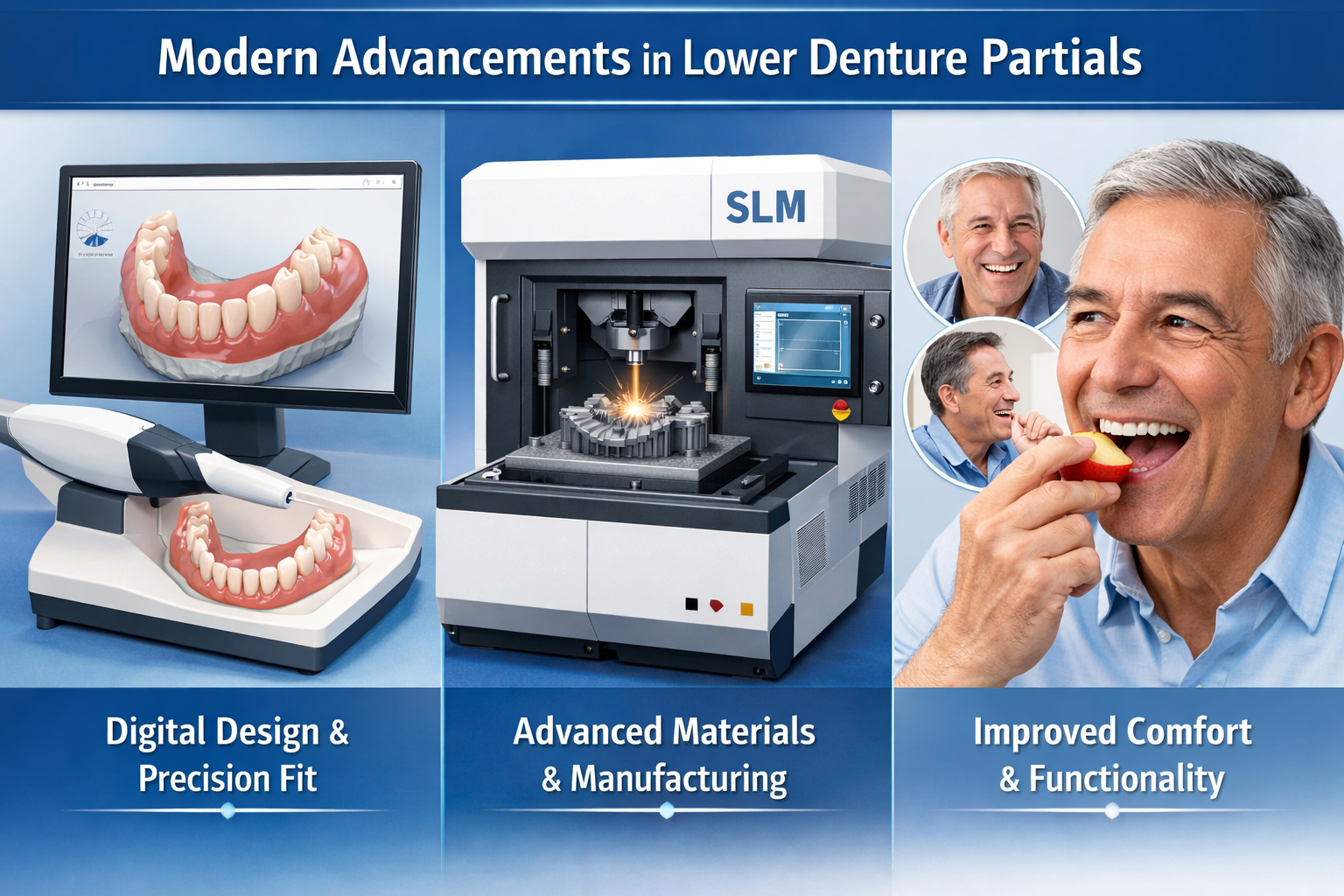
The field of dentistry is continuously evolving, and lower denture partials have greatly benefited from these innovations in 2026. Modern advancements focus on improving comfort, stability, functionality, and the overall patient experience. These technological leaps are making partial dentures a more appealing and effective solution for individuals with missing teeth.
Precision through Digital Design and Manufacturing
The integration of digital technology has revolutionized how lower denture partials are designed and fabricated.
- Digital Impressions: Instead of traditional messy impression materials, dentists can now use intraoral scanners to create highly accurate digital models of your mouth. This process is faster, more comfortable, and yields incredibly precise data.
- CAD/CAM Technology: Computer-Aided Design (CAD) software allows dentists and lab technicians to design your partial denture with unparalleled accuracy. Computer-Aided Manufacturing (CAM) then translates these digital designs into physical prosthetics. When combined with chrome-cobalt frameworks, CAD/CAM technology provides precise and reliable solutions for partial edentulism [5]. This leads to a much better initial fit, reducing the need for multiple adjustment appointments and minimizing potential sore spots [2].
- Selective Laser Melting (SLM): As mentioned earlier, SLM technology is transforming the fabrication of metal frameworks. This additive manufacturing technique creates highly consistent and precise cobalt-chrome frameworks directly from digital designs [1]. The result is a framework with reduced variability, improved overall turnaround times, and fewer chairside adjustments for the patient [1].
Enhanced Retention and Stability
One of the most significant improvements in modern partial dentures is their ability to stay securely in place.
- Improved Clasps and Attachments: Designs for clasps and other retention mechanisms have become more sophisticated, offering better grip on existing teeth without causing undue stress or damage.
- Suction-Effective Dentures: While more commonly associated with full dentures, the principles of creating superior peripheral seals and generating negative pressure to hold dentures firmly are also being applied to partials, improving their stability without the constant need for adhesives [5]. This is particularly beneficial for lower dentures, which traditionally face greater challenges with retention due due to the tongue’s movement and limited suction area.
- Implant-Supported Partials: For ultimate stability and chewing efficiency, some lower denture partials can be supported by dental implants. This hybrid approach offers unparalleled retention, preventing movement and enhancing comfort. For those considering this option, exploring the cost of implant-supported dentures in Dallas or the average cost of dental implants for dentures can provide valuable insights.
Improved Comfort and Functionality
Beyond just replacing teeth, modern lower denture partials aim to restore natural function and comfort.
- Better Bite Balance: Advances in design focus on precise bite alignment to reduce jaw strain, distribute pressure evenly while chewing, minimize denture tooth wear, and improve long-term comfort [2]. This contributes to more efficient chewing function and reduces the likelihood of discomfort or jaw pain.
- Neuromuscular Dentistry Integration: This approach considers the intricate relationship between jaw alignment, surrounding muscles, and the temporomandibular joints (TMJ) during denture creation [4]. By aligning the bite to the body’s natural resting position, it results in more balanced bites, improved chewing efficiency, and reduced facial muscle strain [4].
- Enhanced Aesthetics: With a focus on natural-looking materials and custom shading, modern partials blend seamlessly with your remaining natural teeth, enhancing your smile without appearing artificial [7].
- Speech Clarity: Well-fitting partial dentures improve speech by providing the necessary surfaces for tongue and lip articulation, which can be challenging with missing teeth.
These advancements mean that a lower denture partial in 2026 is far more than just a functional replacement; it’s a sophisticated dental prosthetic designed to integrate seamlessly into your life, offering comfort, confidence, and improved oral health. It’s important to consult with a dental professional to determine if a modern partial denture, or perhaps a different solution like a dental implant, is the best path for your unique needs. We also have a resource comparing dental implant vs bridge vs denture that may be helpful.
The Process of Getting a Lower Denture Partial
Obtaining a lower denture partial is a multi-step process that ensures the final appliance is custom-fitted, comfortable, and functional. From initial consultation to final adjustments, each stage is carefully managed by your dental team.
Initial Consultation and Examination
The journey begins with a thorough dental examination. During this appointment, your dentist will:
- Assess Your Oral Health: This includes examining your remaining natural teeth, gums, and supporting bone structure. X-rays and possibly 3D scans will be taken to get a complete picture of your oral anatomy.
- Discuss Your Needs and Goals: You’ll have the opportunity to share your concerns, aesthetic desires, and expectations for the partial denture.
- Review Tooth Replacement Options: Your dentist will explain whether a lower denture partial is the most suitable solution for you, or if other options like dental implants in Dallas or dental bridges might be more appropriate. They will discuss the pros and cons of each, including considerations such as the dental implant procedure and its potential costs.
Planning and Design
Once a lower denture partial is deemed the best option, your dentist will begin the detailed planning phase.
- Digital Impressions: As discussed, digital scanners are increasingly used to create highly accurate 3D models of your jaw, teeth, and gums. This eliminates the need for traditional, often uncomfortable, physical impressions [2].
- Treatment Planning: The dentist, often in collaboration with a dental lab, will use these digital models to design your partial denture, selecting the appropriate material (metal, flexible, or acrylic) and ensuring proper fit, bite alignment, and aesthetics.
- Tooth Preparation: In some cases, minor adjustments to your natural teeth (such as reshaping or adding small rests) may be necessary to ensure the partial denture fits securely and comfortably.
Fabrication
The fabrication of your lower denture partial typically takes place in a specialized dental laboratory.
- Crafting the Framework: For metal framework partials, this is where advanced techniques like SLM come into play, creating a precise, lightweight, and durable foundation [1]. For flexible partials, the thermoplastic material is molded.
- Adding Artificial Teeth: High-quality artificial teeth, chosen to match the shade and shape of your natural teeth, are then securely attached to the framework. Gum-colored acrylic is used to create the base, blending seamlessly with your natural gum tissue.
- Quality Control: Throughout the fabrication process, strict quality control measures are in place to ensure the partial denture meets the exact specifications of the digital design and the highest standards of craftsmanship.
Fitting and Adjustments
Once the partial denture is fabricated, you will return to the dental office for the fitting appointment.
- Initial Placement: Your dentist will carefully place the lower denture partial in your mouth, checking its fit, comfort, and how it interacts with your bite.
- Adjustments: It’s common for partial dentures to require minor adjustments to achieve an optimal fit. This might involve trimming small areas, refining the clasps, or adjusting the bite. Modern digital design minimizes these adjustments, but some fine-tuning is usually necessary [2].
- Instructions for Care: You will receive detailed instructions on how to insert and remove your partial denture, how to clean it properly, and what to expect during the initial adaptation period.
Follow-Up and Maintenance
Regular follow-up appointments are crucial for the long-term success and comfort of your lower denture partial.
- Periodic Check-ups: Your dentist will want to monitor your oral health, check the fit of your partial denture, and ensure your remaining natural teeth are healthy. These visits are essential for addressing any issues early.
- Professional Cleanings: Even with a partial denture, maintaining excellent oral hygiene is paramount. Your natural teeth still require professional cleanings to prevent decay and gum disease.
- Denture Adjustments: Over time, changes in your mouth can occur, necessitating adjustments or relines of your partial denture to maintain a snug fit. [8] warns that loose dentures are one of five signs you may need a new denture.
Throughout this process, patient safety and comfort are paramount. The goal is to provide a durable, functional, and aesthetically pleasing lower denture partial that enhances your quality of life. Regular consultation with a dentist is key to ensuring your oral health education remains up-to-date and your tooth replacement options continue to serve you well.
Living with a Lower Denture Partial: Care, Challenges, and Long-Term Health
Adjusting to a new lower denture partial takes time, but with proper care and patience, it can significantly improve your quality of life. Understanding how to maintain your partial denture and what to expect in the long run is crucial for both its longevity and your overall oral health.
Adapting to Your New Partial
When you first receive your lower denture partial, it’s normal to experience a period of adjustment.
- Speech and Chewing: Your mouth, tongue, and facial muscles will need to learn to work with the new appliance. You might notice slight changes in your speech initially, or find chewing feels different. Practicing reading aloud and starting with soft foods cut into small pieces can help.
- Increased Saliva: Your mouth may produce more saliva as it reacts to the new object. This usually subsides as you adapt.
- Sore Spots: It’s common to develop minor sore spots as your tissues adjust to the pressure of the partial denture. It’s essential to communicate any discomfort to your dentist, who can make the necessary adjustments. Never try to adjust your partial denture yourself.
- Feeling of Fullness: The partial denture may initially feel bulky or like a foreign object. This feeling generally diminishes over time as your mouth becomes accustomed to it.
Essential Care and Maintenance
Proper daily care is vital for both your lower denture partial and your remaining natural teeth.
- Daily Cleaning of the Partial: Remove your partial denture every day for thorough cleaning. Use a soft-bristled denture brush and a non-abrasive denture cleanser (never regular toothpaste, which can scratch the acrylic) to remove food particles, plaque, and bacteria. Rinse it thoroughly under running water.
- Cleaning Your Natural Teeth and Gums: Brush your natural teeth with fluoride toothpaste and floss daily. Pay special attention to the areas around your remaining teeth that abut the partial denture. Clean your tongue and gums, even in areas where teeth are missing, to promote good oral hygiene.
- Soaking Your Partial: Most partial dentures should be kept moist when not in use to prevent them from drying out and losing their shape. Use a denture soaking solution or plain water, as recommended by your dentist.
- Handle with Care: Dentures can break if dropped. Always handle your partial denture over a soft towel or a basin filled with water to cushion any accidental falls.
- Avoid Hot Water: Never use hot water to clean or soak your partial denture, as it can cause the material to warp.
For those considering implant-supported options, care instructions for dentures on implants are also essential. You can find comprehensive guides on mini implant denture maintenance for 2026.
Potential Challenges and When to Seek Help
While lower denture partials offer significant benefits, some challenges can arise.
- Loose Fit: Over time, changes in your jawbone and gums can cause your partial denture to become loose. A loose partial denture can lead to discomfort, difficulty chewing, and increased irritation of the gums. This often indicates the need for a reline or adjustment by your dentist [8].
- Breakage or Damage: Accidents can happen. If your partial denture cracks or breaks, do not attempt to repair it yourself. Contact your dentist immediately.
- Gum Irritation or Infections: Poor hygiene or a poorly fitting partial can lead to gum irritation, inflammation, or even fungal infections. If you notice persistent redness, swelling, or discomfort, see your dentist.
- Changes in Oral Health: Regular dental check-ups are crucial to monitor the health of your remaining natural teeth. Decay or gum disease in these teeth can affect the stability and longevity of your partial denture.
Long-Term Oral Health and Considerations
A lower denture partial is a long-term investment in your oral health, but it’s important to understand its role within the broader context of missing teeth solutions.
- Bone Preservation: While partial dentures restore function, they do not stimulate the jawbone in the same way natural tooth roots or dental implants do. Over time, some bone loss may still occur in the areas where teeth are missing. Dental implants, by contrast, help to preserve jawbone density.
- Natural Teeth Preservation: The health of your remaining natural teeth is paramount, as they provide support for your partial. Maintaining excellent oral hygiene and attending regular dental check-ups are critical to prevent cavities and gum disease around these teeth.
- Exploring Other Options: For patients in Dallas seeking more permanent solutions for missing teeth, exploring dental implants is always a valuable discussion with your dentist. Implants offer superior stability and bone preservation benefits. Understanding options like the cost of dental implants in Dallas can help you plan for the future.
Living with a lower denture partial is about proactive care and regular communication with your dental team. By following maintenance guidelines and addressing concerns promptly, you can ensure your partial denture continues to provide comfort, function, and a confident smile for many years to come.
Conclusion
A lower denture partial offers a practical, effective, and increasingly sophisticated solution for individuals in Dallas and beyond who are missing some, but not all, of their lower teeth. In 2026, advances in digital design, manufacturing techniques like Selective Laser Melting (SLM), and material science have transformed partial dentures into highly customized, comfortable, and aesthetically pleasing appliances. They play a vital role in restoring chewing function, improving speech, maintaining facial structure, and boosting self-confidence.
While traditional metal framework partials remain a strong, durable choice, flexible and acrylic options provide versatility depending on individual needs and preferences. Crucially, modern technology ensures a more precise fit, enhanced stability, and a more natural feel, significantly improving the patient experience.
However, it is paramount to remember that a lower denture partial requires diligent daily care and regular professional oversight to ensure its longevity and to protect the health of your remaining natural teeth. Adjusting to a new partial takes time and patience, but the benefits of restored function and aesthetics are well worth the effort.
For anyone considering a lower denture partial or exploring other missing teeth solutions, we strongly encourage a comprehensive consultation with a qualified dental professional. They can thoroughly assess your oral health, discuss all available tooth replacement options—including the benefits and considerations of dental implants in Dallas—and help you make an informed decision tailored to your unique circumstances and long-term oral health goals. Your journey to a healthier, more confident smile begins with that conversation.
References
[1] Revolutionizing Removables Slm Printed Metal Partial Dentures – https://glidewelldental.com/company/blog/Revolutionizing-Removables–SLM-Printed-Metal-Partial-Dentures [2] New Advances In Dentures Milton Patients Are Choosing In 2026 – https://tremainedentalca.wordpress.com/2026/01/15/new-advances-in-dentures-milton-patients-are-choosing-in-2026/ [4] Modern Dentures Latest Advances In Tooth Replacement – https://www.casasadobesdentistry.com/modern-dentures-latest-advances-in-tooth-replacement [5] High Tech Dentures Tips – https://www.avadent.com/high-tech-dentures-tips/ [7] What Are The Most Natural Looking Dentures – https://nationsdentalstudio.com/blog/what-are-the-most-natural-looking-dentures/ [8] 5 Signs You Need New Dentures – https://northernriversdentureclinic.com.au/5-signs-you-need-new-dentures
Leave a Reply
Share your thoughts or ask a question about dental implants. Your email address will not be published.