

Imagine biting into a crisp apple without hesitation, laughing freely without covering your mouth, or speaking confidently in meetings—all because you finally addressed those missing teeth that have been holding you back. That’s the transformative power of dental implants, and when we talk about lifelong smiles dental implants, we’re talking about more than just a dental procedure. We’re talking about reclaiming your confidence, your comfort, and your quality of life for decades to come.
If you’re researching dental implants—whether you’ve lost one tooth or several—you’re probably wondering about costs, the process, recovery time, and most importantly, whether this investment will truly last. The good news? With proper care and expert placement, dental implants can indeed give you a smile that lasts a lifetime. Let’s walk through everything you need to know about achieving lifelong smiles with dental implants.
Key Takeaways
- Dental implants are designed to last 25+ years or even a lifetime with proper care, making them the most durable tooth replacement option available
- Success rates exceed 95% when performed by experienced professionals and maintained with good oral hygiene
- The investment pays off over time because implants don’t need replacement like bridges or dentures, which typically last 5-10 years
- Your jawbone health is preserved with implants, preventing the bone loss that occurs with missing teeth
- The process typically takes 3-6 months from start to finish, but the results are worth the patience
What Makes Dental Implants “Lifelong”?
When we say “lifelong smiles dental implants,” we’re not just using marketing language—we’re describing a reality backed by decades of research and clinical success. But what exactly makes dental implants capable of lasting your entire lifetime?
The Science Behind Longevity
Dental implants are unique because they’re the only tooth replacement option that actually replaces the tooth root. The implant itself is a small titanium post surgically placed into your jawbone. Through a natural process called osseointegration, your bone actually grows around and fuses with the titanium implant over several months.
This biological integration creates a foundation that’s remarkably similar to your natural tooth root. Once complete, the implant becomes a permanent part of your jaw structure—and that’s why it can last so long.
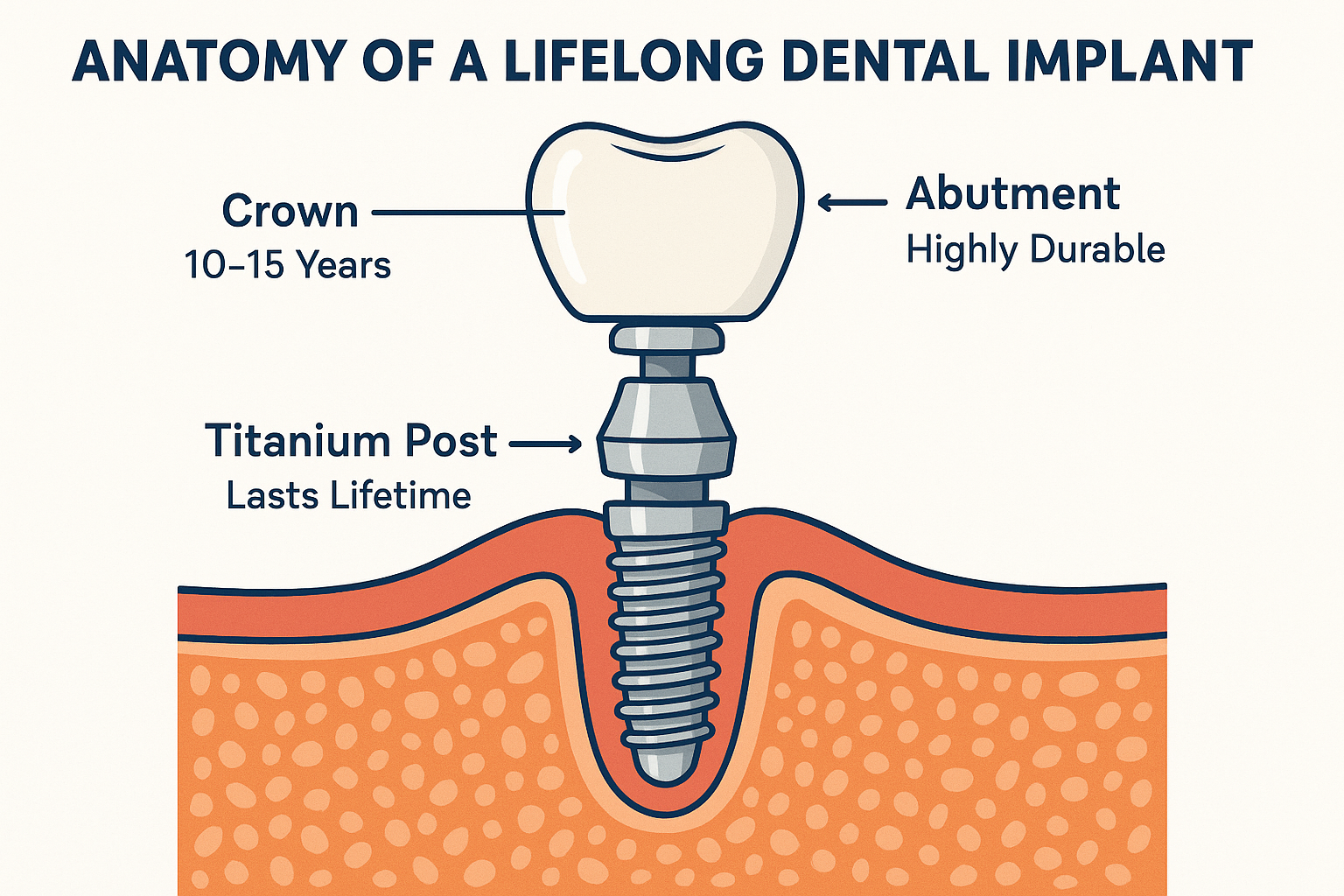
The Three Components of a Dental Implant
Understanding the parts helps you appreciate the longevity:
- The Implant (Titanium Post): This is the part that goes into your jawbone and can truly last a lifetime. Titanium is biocompatible and incredibly durable.
- The Abutment: This connector piece attaches to the implant and holds the crown. It’s also highly durable and rarely needs replacement.
- The Crown: This is the visible “tooth” part. While the implant itself may last forever, crowns typically need replacement after 10-15 years due to normal wear and tear—similar to how natural teeth can wear down.
Why Choose Lifelong Smiles Dental Implants Over Other Options?
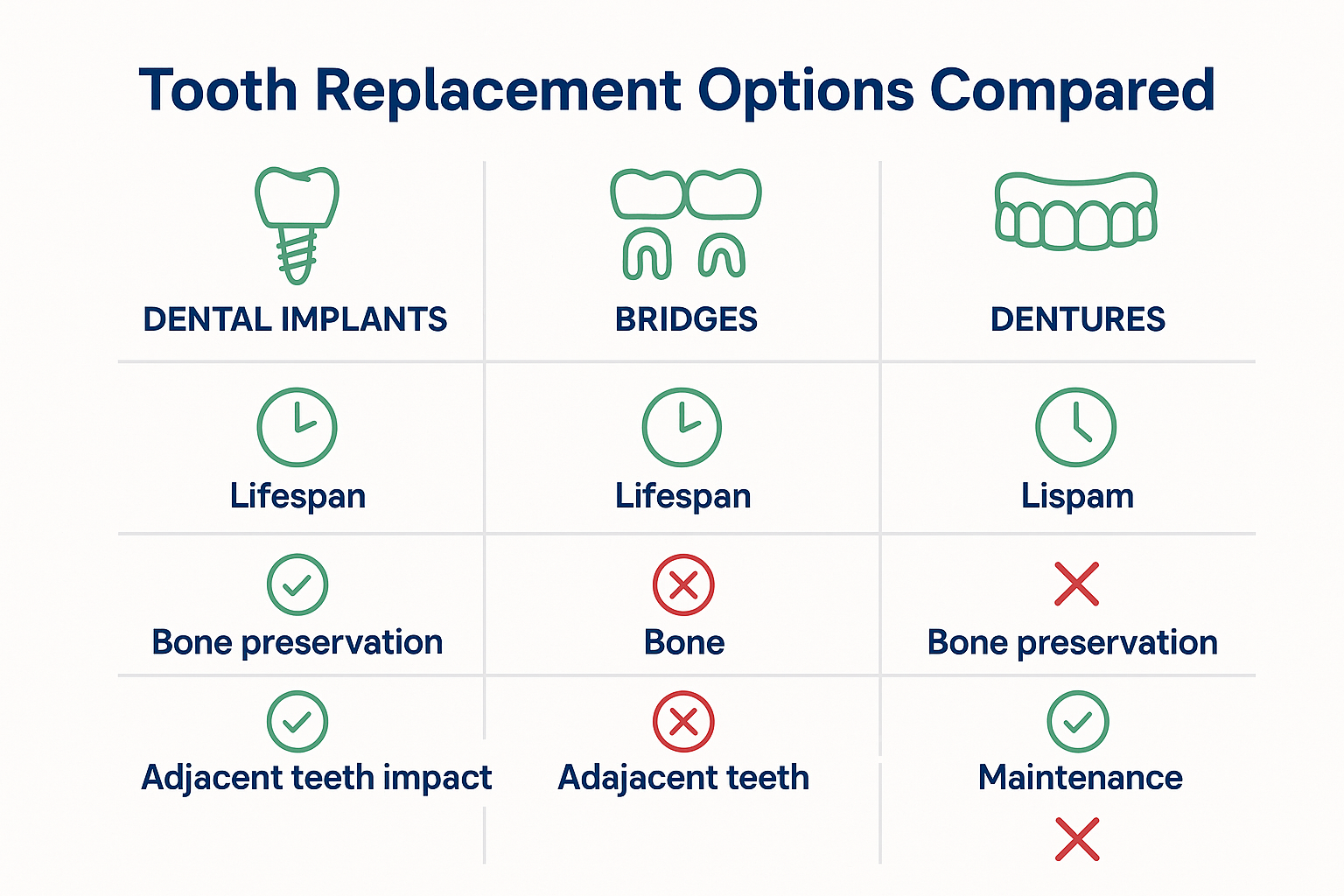
You have several choices when it comes to replacing missing teeth. Let’s look at how dental implants compare to alternatives in terms of longevity and overall value.
Dental Implants vs. Bridges vs. Dentures
| Feature | Dental Implants | Bridges | Dentures |
|---|---|---|---|
| Lifespan | 25+ years to lifetime | 5-10 years | 5-8 years |
| Preserves Jawbone | ✅ Yes | ❌ No | ❌ No |
| Affects Adjacent Teeth | ❌ No | ✅ Yes (must be filed down) | ❌ No |
| Feels Like Natural Teeth | ✅ Yes | Somewhat | Limited |
| Maintenance | Brush & floss normally | Special cleaning needed | Remove & clean daily |
| Eating Ability | 100% function | 80-90% function | 50-70% function |
| Upfront Cost | Higher | Moderate | Lower |
| Long-term Cost | Lower (no replacements) | Higher (multiple replacements) | Moderate (replacements & adjustments) |
As you can see, while dental implants require a larger initial investment, they’re actually the most cost-effective solution over time because they don’t need replacement. If you’re exploring ways to manage costs, check out our guide on discount tooth implants for practical strategies.
Real-World Success Rates
The numbers tell a compelling story:
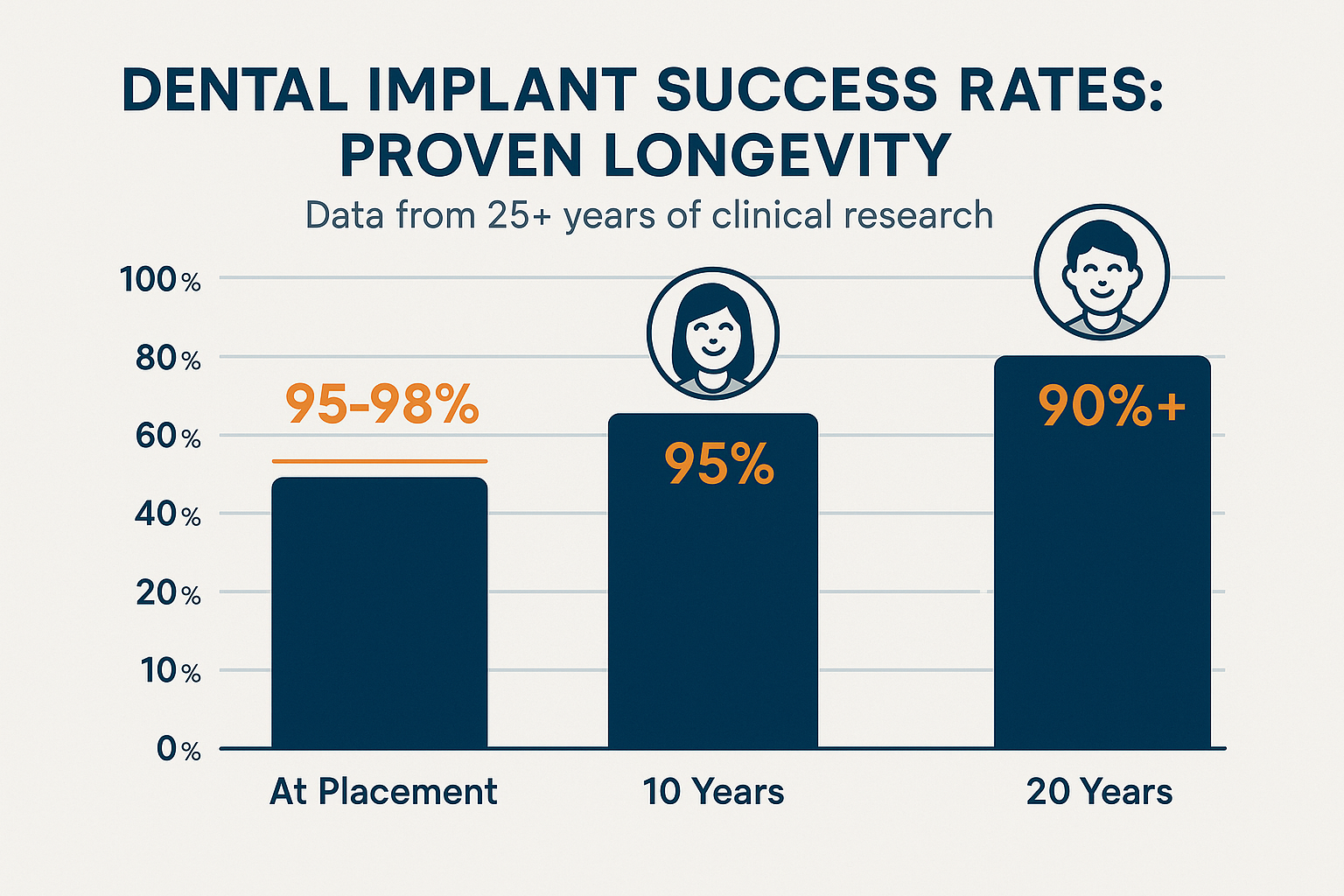
- Overall success rate: 95-98% for lower jaw implants, 90-95% for upper jaw implants
- 10-year survival rate: 95%
- 20-year survival rate: 90%+
These statistics mean that the vast majority of people who get dental implants will still have them functioning perfectly decades later. That’s what we mean by lifelong smiles dental implants—it’s not just possible, it’s probable.
The Journey to Your Lifelong Smile: What to Expect
Getting dental implants isn’t an overnight process, but understanding each step helps you feel confident and prepared. Here’s your journey to a lifelong smile.
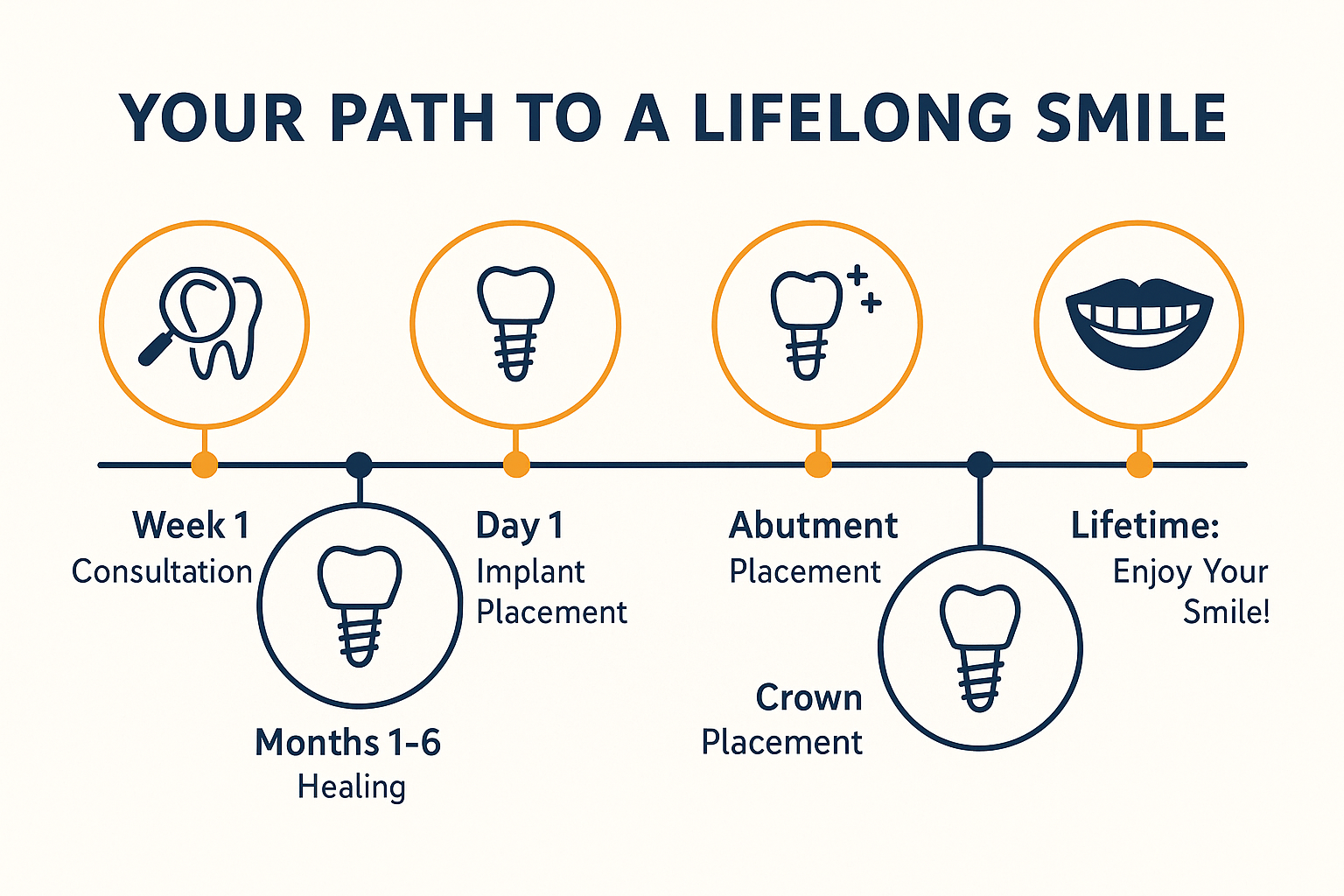
Step 1: Comprehensive Consultation & Planning (Week 1)
Your journey begins with a thorough evaluation. During this visit, your dental team will:
- Take 3D imaging scans of your jaw
- Assess your bone density and quality
- Review your medical history
- Discuss your goals and expectations
- Create a personalized treatment plan
This is also when you’ll discuss costs, financing options, and timeline. Don’t hesitate to ask questions—transparency is key to feeling confident about your decision.
Step 2: Preparatory Procedures (If Needed)
Some patients need additional procedures before implant placement:
- Bone grafting: If your jawbone isn’t thick enough, bone grafting builds up the area (adds 3-6 months to timeline)
- Tooth extraction: If the damaged tooth is still present, it needs to be removed first
- Sinus lift: For upper jaw implants, sometimes the sinus floor needs to be raised
While these steps extend your timeline, they’re essential for ensuring your implants last a lifetime. Rushing the process compromises long-term success.
Step 3: Implant Placement Surgery (Day 1)
The actual implant placement is typically done under local anesthesia, though sedation options are available if you’re anxious. Here’s what happens:
- The surgical site is carefully prepared
- A precise hole is drilled into the jawbone
- The titanium implant is placed
- The gum tissue is closed over or around the implant
- A temporary restoration may be placed for appearance
Most patients report that the procedure is far less uncomfortable than they expected. You’ll likely feel pressure but not pain during the surgery.
Step 4: Healing & Osseointegration (3-6 Months)
This is the waiting period where the magic happens. Your bone gradually grows around the implant, creating that permanent bond. During this time:
- You’ll maintain excellent oral hygiene
- Eat softer foods initially
- Attend follow-up appointments
- May wear a temporary restoration
Patience during this phase is crucial for achieving lifelong smiles dental implants. Rushing this process is one of the few things that can compromise long-term success.
Step 5: Abutment Placement (1 Visit)
Once osseointegration is complete, a small connector called an abutment is attached to the implant. This is a minor procedure, often done with just local anesthesia.
Step 6: Crown Placement (2-3 Weeks Later)
Finally, your custom-made crown is attached to the abutment. This is when you’ll see your complete new smile for the first time. The crown is carefully color-matched to your natural teeth and shaped for optimal function and aesthetics.
For patients replacing multiple teeth, exploring options like a dental implant bridge or complete dental implants might be more efficient and cost-effective.
Protecting Your Investment: How to Ensure Your Implants Last a Lifetime
Getting dental implants is just the beginning. The “lifelong” part of lifelong smiles dental implants depends significantly on how well you care for them.
Daily Care Essentials
Your implants need the same attention as natural teeth—actually, they deserve even more care given your investment:
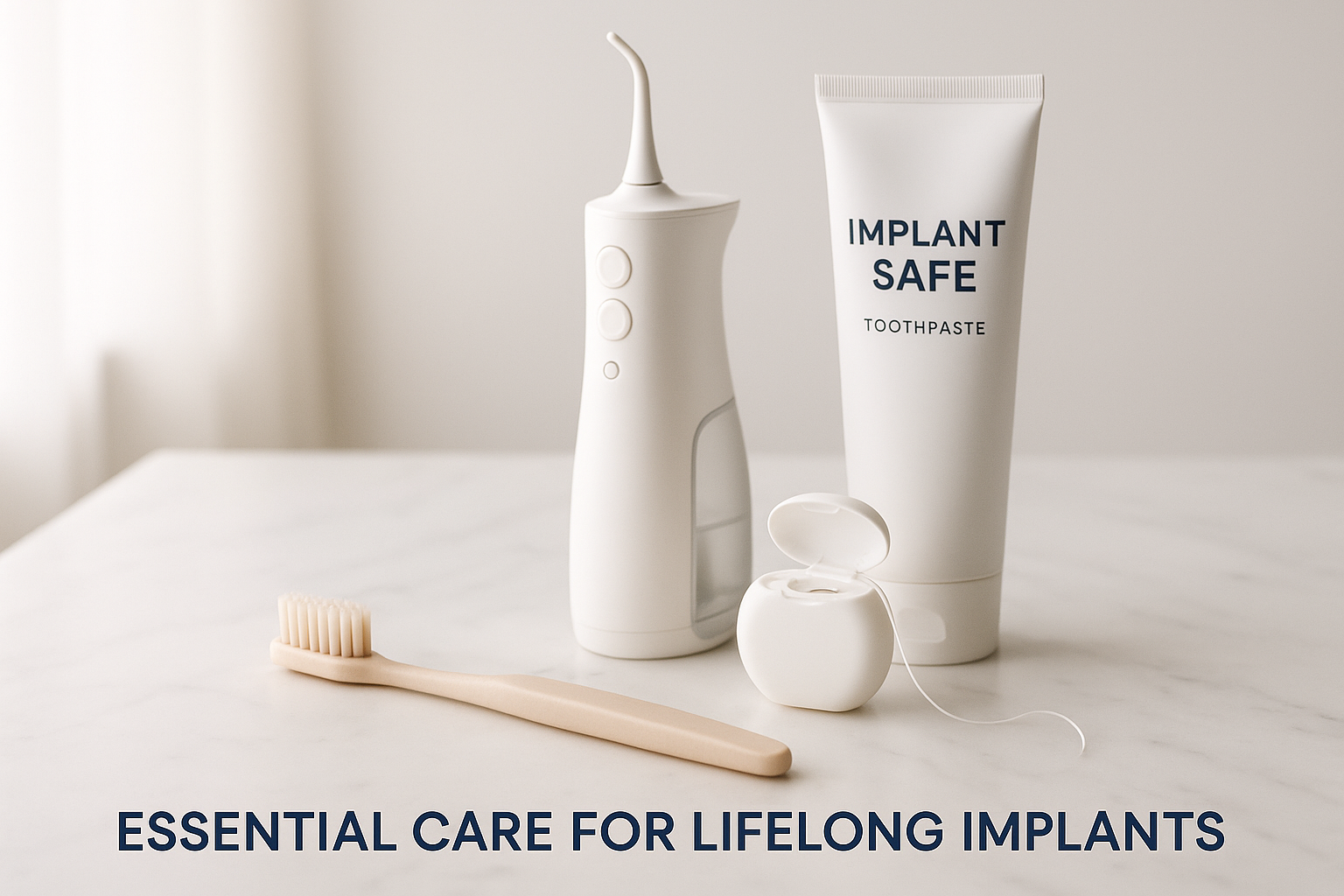
✅ Brush twice daily with a soft-bristled toothbrush ✅ Floss daily around implants and natural teeth ✅ Use the right toothpaste—avoid overly abrasive formulas that can scratch the crown (learn more about the best toothpaste for implants) ✅ Consider a water flosser for thorough cleaning around the implant ✅ Use an antibacterial mouthwash to keep bacteria at bay
Professional Maintenance
Regular dental visits are non-negotiable for implant longevity:
- Every 3-6 months: Professional cleanings and examinations
- Annual X-rays: To monitor bone levels around the implant
- Immediate attention: If you notice any changes in how your implant feels
Your dental team will use special instruments designed not to scratch the implant surface during cleanings.
Lifestyle Factors That Impact Longevity
Certain habits can significantly affect how long your implants last:
🚭 Don’t smoke: Smoking is the #1 preventable cause of implant failure, reducing success rates by up to 20%
💪 Manage chronic conditions: Diabetes and other systemic diseases require careful management
🦷 Address teeth grinding: If you grind your teeth (bruxism), a nightguard protects both implants and natural teeth
🥗 Maintain good nutrition: Adequate vitamin D and calcium support bone health around implants
Cost Considerations: Investing in Lifelong Smiles
Let’s address the elephant in the room: dental implants represent a significant financial investment. However, when you consider the lifespan and benefits, the value proposition becomes clear.
Breaking Down the Costs
In the Dallas area, typical costs include:
- Single implant with crown: $3,000-$5,000
- Multiple implants: Costs per tooth decrease with multiple placements
- Full arch restoration: $15,000-$30,000 per arch
- Additional procedures: Bone grafting ($300-$3,000), sinus lift ($1,500-$3,000)
These ranges vary based on your specific needs, the complexity of your case, and the expertise of your dental team. When researching options, consider visiting best dental implant centers to compare qualified providers.
Financing Your Lifelong Smile
Most dental practices offer multiple payment options:
- Dental financing plans: CareCredit, LendingClub, and similar services offer monthly payments
- In-house payment plans: Many practices offer interest-free or low-interest payment arrangements
- Health Savings Accounts (HSA) or Flexible Spending Accounts (FSA): Use pre-tax dollars
- Dental insurance: While most plans don’t fully cover implants, they may cover portions like the crown
Some patients also explore dental tourism options, though it’s important to carefully weigh the risks and benefits of traveling for dental care.
The Long-Term Value Equation
Consider this comparison over 20 years:
Dental Implant Option:
- Initial cost: $4,000
- Crown replacement (year 15): $1,500
- Total 20-year cost: $5,500
Dental Bridge Option:
- Initial cost: $2,500
- Replacement (year 8): $2,500
- Replacement (year 16): $2,500
- Additional tooth damage: Variable costs
- Total 20-year cost: $7,500+
Denture Option:
- Initial cost: $1,500
- Replacement (year 6): $1,500
- Replacement (year 12): $1,500
- Replacement (year 18): $1,500
- Relines & adjustments: $500+
- Total 20-year cost: $6,500+
When you factor in the superior function, comfort, and bone preservation, dental implants offer remarkable value for achieving lifelong smiles.
Special Considerations for Different Patient Needs
Every smile is unique, and your path to lifelong smiles dental implants may have special considerations.
For Patients with Full Dentures
If you currently wear full dentures, you have exciting options:
- All-on-4® or All-on-6: Full arch restoration using just 4-6 implants per arch
- Implant-supported dentures: More stability than traditional dentures at a lower cost than individual implants
- Hybrid solutions: Combining implants with denture technology
Many patients find that fixed dentures offer the perfect balance of stability and affordability. For those transitioning from traditional dentures, our denture implant guide provides comprehensive information.
For Seniors and Medicare Recipients
If you’re wondering about insurance coverage, it’s important to know that traditional Medicare does not cover dental implants in most cases. However, you have options:
- Medicare Advantage plans: Some include dental benefits
- Supplemental dental insurance: Can help offset costs
- Dental savings plans: Provide discounts at participating providers
- Payment plans: Make treatment affordable regardless of insurance
Age itself isn’t a barrier to dental implants. I’ve worked with patients in their 80s who successfully received implants. What matters is your overall health and bone quality, not the number on your birthday cake.
For Patients with Medical Conditions
Certain health conditions require extra planning but don’t necessarily disqualify you:
- Diabetes: Well-controlled diabetes doesn’t prevent implant success
- Osteoporosis: Medication timing may need adjustment, but implants are often still possible
- Heart conditions: Antibiotics may be prescribed before surgery
- Cancer history: Timing relative to radiation therapy is important
Always provide your complete medical history during consultation. Transparency ensures your safety and treatment success.
Common Concerns About Lifelong Smiles Dental Implants
Let’s address the questions I hear most often from patients considering dental implants.
“Will It Hurt?”
The honest answer: less than you probably think. During the procedure, you’re numbed with local anesthesia, so you feel pressure but not pain. Afterward, most patients describe the discomfort as less intense than a tooth extraction. Over-the-counter pain relievers typically manage any discomfort within a few days.
“How Long Before I Can Eat Normally?”
- Immediately after surgery: Soft foods only
- First week: Gradually introduce more textures
- After osseointegration (3-6 months): Full function restored
- With final crown: Eat anything you want!
That’s the beauty of lifelong smiles dental implants—once healed, you can enjoy all your favorite foods without restriction.
“What If My Implant Fails?”
Implant failure is rare (less than 5% of cases), and when it occurs, it’s usually early in the process before osseointegration completes. If an implant doesn’t integrate:
- The implant is removed
- The area heals for a few months
- A new implant is placed
- Most second attempts succeed
Many dental practices offer warranties or guarantees on their implant work. Ask about this during your consultation.
“Can Implants Get Cavities?”
Here’s some good news: the implant and crown themselves cannot decay. However, the gum tissue around the implant can still develop infection (called peri-implantitis), which is why excellent oral hygiene remains essential. Think of it as gum disease around an implant—preventable with proper care.
Finding the Right Provider for Your Lifelong Smile
The expertise of your dental team significantly impacts your implant success. Here’s what to look for:
Credentials and Experience
✅ Board certification in periodontics, oral surgery, or prosthodontics ✅ Years of experience specifically with implant placement ✅ Continuing education in the latest implant techniques ✅ Success rate statistics they’re willing to share ✅ Before-and-after photos of actual patients
Technology and Facilities
Modern technology improves precision and outcomes:
- 3D imaging (CBCT scans): For precise planning
- Computer-guided surgery: Enhances accuracy
- Digital impressions: More comfortable and accurate than traditional molds
- On-site surgical facilities: Convenience and coordinated care
Patient-Centered Approach
Your comfort and understanding matter:
- Transparent pricing: No hidden fees or surprise costs
- Clear communication: Explains procedures in understandable terms
- Sedation options: For anxious patients
- Emergency availability: If issues arise during healing
When researching providers, resources like our guide to dental implants in Dallas can help you identify qualified professionals in your area.
The Psychological Impact of Lifelong Smiles
Beyond the physical benefits, dental implants profoundly impact your emotional well-being and quality of life.
Confidence Restored
Missing teeth affect how you interact with the world. Patients consistently report:
- Smiling more freely in photos and social situations
- Speaking more confidently in professional settings
- Feeling younger and more vibrant
- Improved self-esteem in dating and relationships
These aren’t trivial benefits—they’re life-changing improvements that ripple through every aspect of your daily experience.
Social and Professional Benefits
Your smile is often the first thing people notice. Studies show that:
- People with healthy smiles are perceived as more successful and trustworthy
- Confident communication improves professional opportunities
- Social connections strengthen when you’re not self-conscious about your teeth
Investing in lifelong smiles dental implants is investing in your future relationships, career prospects, and overall happiness.
Freedom to Enjoy Life
Remember that apple we mentioned at the beginning? It’s not just about apples. It’s about:
- 🌽 Enjoying corn on the cob at summer barbecues
- 🥖 Biting into crusty bread without worry
- 🍎 Eating nutritious raw vegetables and fruits
- 🎤 Singing, laughing, and speaking without self-consciousness
- 💋 Kissing without concern
These simple pleasures are easy to take for granted until you lose them—and incredibly sweet to reclaim.
Alternative and Complementary Treatments
While we’re focused on lifelong smiles dental implants, it’s worth briefly mentioning complementary treatments that may enhance your overall results.
Bone Preservation Techniques
If you’re having a tooth extracted and planning an implant later, socket preservation can maintain bone volume during the healing period, making eventual implant placement easier and more successful.
Gum Grafting
For optimal aesthetics, especially in the “smile zone” (front teeth), gum grafting can create the ideal tissue contour around your implant crown, making it virtually indistinguishable from natural teeth.
Full-Mouth Rehabilitation
If you’re replacing multiple teeth, coordinating implants with other restorative treatments creates a comprehensive smile makeover. Your dental team can develop a phased treatment plan that addresses all your needs while managing costs over time.
Making Your Decision: Is Now the Right Time?
If you’ve been living with missing teeth for a while, you might wonder whether to move forward now or wait. Here’s what to consider:
Why Sooner Is Often Better
⏰ Bone loss progresses over time: The longer a tooth is missing, the more bone you lose, potentially making implant placement more complex
💰 Costs typically increase: Dental care rarely gets cheaper, and delaying may mean needing additional procedures later
😊 Quality of life: Every day you wait is another day not enjoying the benefits of a complete smile
🦷 Protecting adjacent teeth: Missing teeth cause neighboring teeth to shift, potentially creating additional problems
When Waiting Makes Sense
Sometimes, timing isn’t right:
- You’re undergoing active cancer treatment
- Recent major surgery or health crisis
- Significant life changes making it hard to commit to appointments
- Need time to save or arrange financing
If you need to wait, that’s okay. Use the time to research providers, save money, and prepare yourself mentally for the journey ahead.
💰 Lifelong Implant Cost Comparison Calculator
Compare the true long-term costs of dental implants vs. other tooth replacement options
Your 20-Year Cost Comparison
Conclusion: Your Journey to Lifelong Smiles Starts Today
Choosing dental implants is choosing to invest in yourself—in your health, your confidence, and your future. While the journey requires patience and financial commitment, the destination is worth every step: a smile that looks natural, feels comfortable, and lasts for decades.
Lifelong smiles dental implants aren’t just about replacing missing teeth. They’re about:
✨ Reclaiming your confidence to smile, speak, and laugh without self-consciousness
🍎 Enjoying your favorite foods without restriction or worry
💪 Preserving your jawbone and facial structure for long-term health
💰 Saving money over time compared to replacement options that need frequent updating
❤️ Improving your quality of life in ways both practical and emotional
The path forward is clear: research qualified providers, schedule consultations, ask questions, and make an informed decision that’s right for your unique situation. Whether you need to replace a single tooth or restore your entire smile, modern dental implant technology offers solutions that can truly last a lifetime.
Remember, every day you wait is another day living with the challenges of missing teeth. Your future self will thank you for taking action today.
Ready to take the next step toward your lifelong smile? Explore your options with experienced dental implant specialists who can create a personalized treatment plan designed specifically for your needs, goals, and budget.
Your smile deserves expert care, and we make it stress-free. Welcome to the beginning of your journey toward a confident, beautiful, lifelong smile.
Leave a Reply
Share your thoughts or ask a question about dental implants. Your email address will not be published.