

When I first learned that I might need jawbone grafting before getting dental implants, the question that kept me awake at night was: “How long will it take to recover?” If you’re facing a similar situation, you’re not alone in wondering about jawbone grafting recovery time. This procedure, while highly successful, requires patience and proper planning for the healing process ahead.
Key Takeaways
• Initial healing typically takes 2-4 weeks, while complete bone integration requires 3-6 months
• Recovery timeline varies based on graft type, location, and individual healing factors
• Proper aftercare significantly impacts healing speed and success rates
• Most patients can return to work within 3-7 days with some activity restrictions
• Full dental implant placement usually occurs 4-6 months after grafting
What Is Jawbone Grafting and Why Is Recovery Time Important?
Jawbone grafting is a surgical procedure that rebuilds or augments the jawbone structure to provide adequate support for dental implants. When you lose teeth, the surrounding bone begins to deteriorate due to lack of stimulation. This process, called bone resorption, can make it impossible to place dental implants without first rebuilding the bone foundation.
Understanding the jawbone grafting recovery time is crucial for several reasons:
- Treatment planning: Knowing the timeline helps you schedule the procedure and plan for time off work
- Expectation management: Realistic recovery expectations lead to better patient satisfaction
- Optimal outcomes: Following recovery guidelines ensures the best possible results
- Financial planning: Extended recovery may impact your budget and insurance coverage
The recovery process involves multiple phases, each with specific healing milestones and care requirements. Bone grafts for dental implants have become increasingly sophisticated, offering better outcomes and more predictable healing times.
Factors That Influence Jawbone Grafting Recovery Time
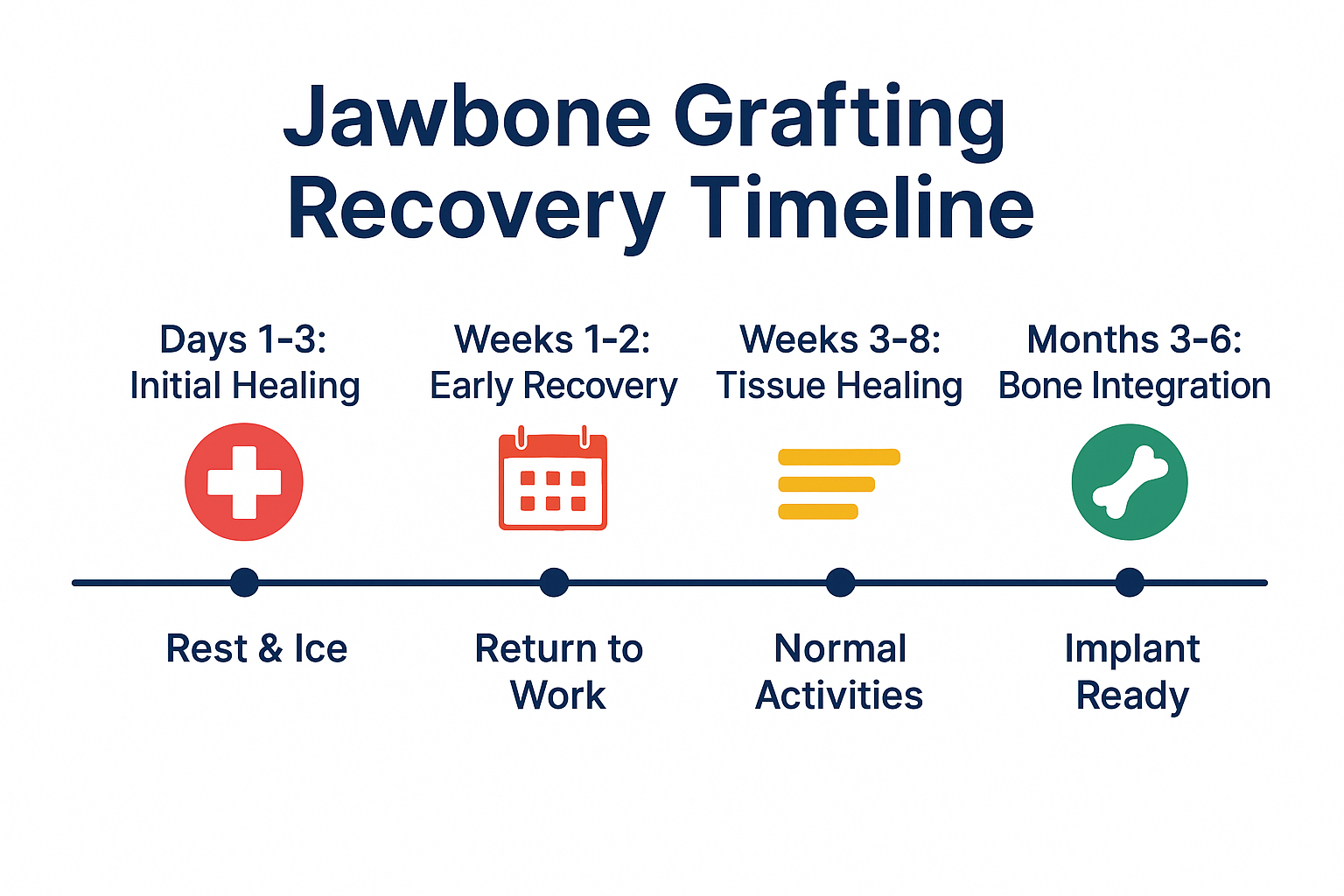
Several key factors determine how quickly you’ll heal from jawbone grafting surgery:
Patient-Specific Factors
Age and Overall Health 🏥
Younger patients typically heal faster due to more active cellular regeneration. However, healthy older adults can also achieve excellent results with proper care.
Smoking Status
Smoking significantly delays healing and increases complications. Nicotine restricts blood flow to the surgical site, potentially doubling recovery time.
Medical Conditions
Diabetes, osteoporosis, and autoimmune disorders can slow the healing process. Patients with significant bone loss may require extended recovery periods.
Surgical Factors
Type of Bone Graft
- Autografts (your own bone): 4-6 months healing time
- Allografts (donor bone): 4-8 months healing time
- Xenografts (animal-derived): 6-9 months healing time
- Synthetic materials: 4-6 months healing time
Graft Size and Location
Larger grafts and those in areas with poor blood supply take longer to integrate. Upper jaw procedures typically require more healing time than lower jaw grafts.
Surgical Technique
Minimally invasive techniques often result in faster recovery compared to more extensive surgical approaches.
Typical Jawbone Grafting Recovery Timeline
Understanding what to expect during each phase of recovery helps you prepare mentally and physically for the healing journey ahead.
Immediate Post-Surgery (Days 1-3)
The first 72 hours are critical for establishing proper healing patterns:
Day 1:
- Expect moderate discomfort and swelling
- Bleeding should be minimal and controlled with gauze
- Rest is essential – avoid physical activity
- Apply ice packs for 20 minutes on, 20 minutes off
Days 2-3:
- Swelling typically peaks on day 2-3
- Pain should be manageable with prescribed medications
- Begin gentle saltwater rinses if approved by your surgeon
- Maintain a soft food diet to protect the surgical site
Early Healing Phase (Week 1-2)
This phase focuses on soft tissue healing and initial bone graft stabilization:
Week 1:
- Swelling begins to subside significantly
- Most patients can return to desk work with modifications
- Continue soft diet and gentle oral hygiene
- Avoid strenuous activities and heavy lifting
Week 2:
- Sutures may be removed (if non-dissolvable)
- Discomfort should be minimal
- Gradual return to normal activities (with restrictions)
- Begin incorporating slightly firmer foods
Intermediate Healing (Weeks 3-8)
During this period, the bone graft begins integrating with your natural bone:
- Soft tissue healing is largely complete
- Bone cells start growing into the graft material
- Most dietary restrictions can be lifted
- Regular activities can resume with some limitations
Bone Integration Phase (Months 3-6)
This is when the magic happens – your bone grows into and around the graft material:
- New bone formation accelerates
- Graft material may begin to be replaced by natural bone
- Periodic X-rays monitor integration progress
- Planning for implant placement begins
The bone graft recovery process varies significantly between patients, but most achieve sufficient integration for implant placement within 4-6 months.
Managing Pain and Discomfort During Recovery
Effective pain management is crucial for a smooth recovery and optimal healing outcomes.
Medication Management
Prescription Pain Relievers
Your surgeon will typically prescribe:
- Opioid medications for the first 3-5 days
- Anti-inflammatory drugs to reduce swelling
- Antibiotics to prevent infection
Over-the-Counter Options
After the initial period:
- Ibuprofen (600-800mg) for inflammation
- Acetaminophen for additional pain relief
- Combination therapy often works better than single medications
Non-Medication Pain Relief
Ice Therapy ❄️
Apply ice packs for 20 minutes every hour during the first 48 hours. This significantly reduces swelling and numbs pain.
Elevation
Sleep with your head elevated on 2-3 pillows to minimize swelling and throbbing.
Rest and Relaxation
Adequate rest allows your body to focus energy on healing rather than daily activities.
Diet and Nutrition During Jawbone Grafting Recovery
Proper nutrition supports healing while protecting your surgical site from trauma.
Phase 1: Liquid Diet (Days 1-3)
- Protein shakes for essential amino acids
- Bone broth for minerals and collagen
- Smoothies with soft fruits and vegetables
- Avoid: Hot liquids, alcohol, and acidic beverages
Phase 2: Soft Foods (Days 4-14)
Gradually introduce foods that require minimal chewing:
| Recommended Foods | Foods to Avoid |
|---|---|
| Scrambled eggs | Crunchy cereals |
| Mashed potatoes | Nuts and seeds |
| Yogurt and pudding | Hard candies |
| Pasta with soft sauce | Popcorn |
| Soft fish | Raw vegetables |
Phase 3: Regular Diet (Weeks 3+)
Most foods can be reintroduced, but continue avoiding:
- Very hard foods that could dislodge the graft
- Sticky foods that might pull on sutures
- Extremely hot foods that could cause discomfort
Proper nutrition during recovery can significantly impact your jawbone grafting recovery time and overall success.
Activity Restrictions and Guidelines
Understanding activity limitations helps prevent complications and ensures optimal healing.
Immediate Restrictions (First Week)
Physical Activity 🚫
- No heavy lifting (over 10 pounds)
- Avoid bending over or straining
- No vigorous exercise or sports
- Limit walking to gentle, short distances
Oral Care Modifications
- No vigorous rinsing or spitting
- Gentle brushing away from surgical site
- Use prescribed mouthwash only
- Avoid commercial mouthwashes with alcohol
Gradual Activity Resumption
Week 2-4:
- Light walking and stretching
- Return to office work
- Gentle household activities
- Continue avoiding contact sports
Month 2-3:
- Moderate exercise (swimming, cycling)
- Normal work activities
- Most recreational activities
- Still avoid contact sports
Month 4+:
- Full activity resumption
- Contact sports (with protection)
- Heavy lifting and strenuous exercise
- Normal oral hygiene routine
Signs of Normal vs. Concerning Healing
Knowing what’s normal helps you identify when to contact your dental team.
Normal Healing Signs ✅
Days 1-7:
- Mild to moderate swelling
- Some bruising around the surgical site
- Minor bleeding that stops with pressure
- Discomfort manageable with medications
Weeks 2-4:
- Gradual reduction in swelling
- Minimal discomfort
- Soft tissue appears pink and healthy
- No signs of infection
Warning Signs Requiring Immediate Attention ⚠️
Infection Symptoms:
- Increasing pain after day 3
- Fever above 101°F (38.3°C)
- Pus or unusual discharge
- Foul taste or odor
Graft Complications:
- Graft material becoming visible or loose
- Severe, worsening pain
- Excessive bleeding that won’t stop
- Numbness that persists beyond expected timeframe
If you experience any concerning symptoms, contact your dental implant specialist immediately.
How Recovery Time Affects Dental Implant Placement
The relationship between bone graft healing and implant success is crucial to understand.
Integration Requirements
Minimum Healing Time
Most bone grafts require at least 3-4 months of integration before implant placement. However, optimal results often require 4-6 months.
Quality Assessment
Your surgeon will evaluate:
- Bone density through clinical examination
- Integration quality via X-rays or CT scans
- Soft tissue health around the graft site
- Overall healing progress compared to expected timeline
Simultaneous vs. Staged Procedures
Simultaneous Placement
In some cases, implants can be placed at the same time as bone grafting:
- Requires adequate existing bone for initial stability
- May extend overall jawbone grafting recovery time
- Reduces total treatment time
- Not suitable for all patients
Staged Approach
The traditional method involves separate procedures:
- Bone graft heals completely first
- Implant placement occurs 4-6 months later
- More predictable outcomes
- Longer overall treatment time
Understanding the dental implant healing stages helps you appreciate why patience during bone graft recovery is essential.
🦷 Jawbone Grafting Recovery Timeline Calculator
Your Personalized Recovery Timeline
Tips for Faster Healing and Better Outcomes
Optimizing your recovery can significantly reduce your jawbone grafting recovery time and improve long-term success.
Pre-Surgery Preparation
Optimize Your Health 💪
- Quit smoking at least 2 weeks before surgery
- Control diabetes and other chronic conditions
- Improve nutrition with protein-rich foods
- Stay well-hydrated leading up to surgery
Prepare Your Home
- Stock up on soft foods and meal replacements
- Arrange for help with daily activities
- Set up a comfortable recovery area
- Fill prescriptions in advance
Post-Surgery Best Practices
Follow Instructions Precisely
- Take medications exactly as prescribed
- Attend all follow-up appointments
- Maintain gentle oral hygiene
- Report any concerns immediately
Support Healing Naturally
- Get adequate sleep (7-9 hours nightly)
- Stay hydrated with water
- Eat protein-rich, nutrient-dense foods
- Avoid alcohol and tobacco completely
Manage Stress
Stress can slow healing by affecting your immune system. Consider:
- Meditation or relaxation techniques
- Light reading or entertainment
- Gentle walks when cleared by your surgeon
- Staying connected with supportive friends and family
When to Contact Your Dental Team
Knowing when to seek help can prevent complications and ensure optimal healing.
Routine Follow-Up Schedule
Week 1: Post-operative check and suture removal
Week 2-4: Healing assessment and activity clearance
Month 3: Integration evaluation with X-rays
Month 6: Final assessment and implant planning
Emergency Contact Situations 🚨
Contact your dental team immediately if you experience:
- Severe pain that worsens after day 3
- Signs of infection (fever, pus, foul odor)
- Excessive bleeding that won’t stop with pressure
- Graft exposure or loose graft material
- Allergic reactions to medications
- Persistent numbness beyond expected timeframe
Many patients worry unnecessarily about normal healing symptoms. When in doubt, it’s always better to call your dental implant specialist for guidance.
Long-Term Success and Maintenance
Understanding long-term care helps ensure your bone graft investment pays off for decades.
Ongoing Oral Health
Excellent Hygiene
Once fully healed, maintain:
- Regular brushing and flossing
- Professional cleanings every 3-6 months
- Use of antimicrobial mouthwash
- Proper implant maintenance after placement
Lifestyle Factors
- Continue avoiding tobacco products
- Limit alcohol consumption
- Maintain a balanced, nutritious diet
- Protect teeth from trauma during sports
Success Rates and Expectations
Modern bone grafting techniques achieve success rates of 90-95% when patients follow proper care guidelines. Factors that contribute to long-term success include:
- Adequate healing time before implant placement
- Excellent oral hygiene throughout the process
- Regular professional monitoring and maintenance
- Healthy lifestyle choices that support bone health
The investment in proper jawbone grafting recovery time pays dividends in implant longevity and oral health outcomes.
Conclusion
Understanding jawbone grafting recovery time empowers you to make informed decisions about your dental treatment and set realistic expectations for the healing process. While the journey requires patience—typically 4-6 months for complete integration—the vast majority of patients achieve excellent outcomes that provide a strong foundation for successful dental implants.
Your Next Steps:
- Consult with a qualified oral surgeon to assess your specific situation and treatment needs
- Prepare thoroughly for surgery by optimizing your health and arranging support
- Follow post-operative instructions meticulously to ensure optimal healing
- Maintain realistic expectations about the timeline and healing process
- Stay committed to long-term oral health practices for lasting success
Remember, every patient’s healing journey is unique. While this guide provides general timelines and expectations, your surgeon will provide personalized guidance based on your specific circumstances. The temporary inconvenience of recovery pales in comparison to the life-changing benefits of restored oral function and confidence.
If you’re considering jawbone grafting or have questions about the recovery process, don’t hesitate to reach out to experienced dental professionals who can guide you through this important step toward optimal oral health.
Leave a Reply
Share your thoughts or ask a question about dental implants. Your email address will not be published.