

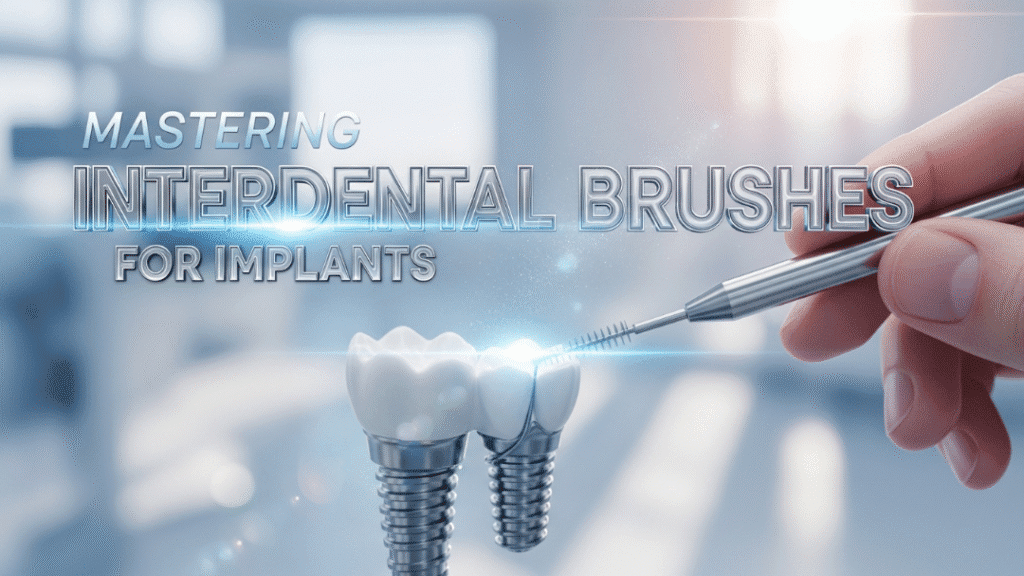
When I first got my dental implants, I thought regular brushing and flossing would be enough to keep them healthy. I was wrong. Like many patients, I discovered that the spaces around dental implants require special attention—and that’s where interdental brushes became a game-changer for my oral health routine.
If you’ve invested in dental implants, you want them to last a lifetime. The key to achieving this goal lies in proper maintenance, and interdental brushes for implants are one of the most effective tools you can use. These small, specialized brushes can mean the difference between healthy implants and costly complications down the road.
Key Takeaways
- Interdental brushes are more effective than floss for cleaning around dental implants due to their ability to disrupt biofilm and reach irregular surfaces
- Proper sizing is crucial—using the wrong size brush can either damage your gums or fail to clean effectively
- Daily use prevents peri-implantitis, a serious condition that can lead to implant failure
- Technique matters—gentle insertion and proper angle ensure optimal cleaning without tissue damage
- Clinical studies show significant improvement in implant health when interdental brushes are part of your daily routine
Why Interdental Brushes Are Essential for Dental Implant Care
Your dental implants are sophisticated replacements that require more attention than natural teeth. Unlike your original teeth, implants don’t have the same natural defense mechanisms against bacteria. The spaces around implants—particularly where the crown meets the gum line—create perfect hiding spots for harmful bacteria.
Interdental brushes for implants serve as your first line of defense against these bacterial invaders. These small, bottle-brush-like tools are specifically designed to clean the tight spaces that regular toothbrushes simply cannot reach effectively.
Here’s why they’re so important for your implant health:
- 🦠 Biofilm Disruption: Bacteria form sticky films around implants that can only be removed through mechanical action
- 🎯 Precision Cleaning: They reach areas where food particles and plaque accumulate most
- 💪 Gentle Yet Effective: Soft bristles clean thoroughly without damaging delicate gum tissue
- ⚡ Easy to Use: Simple technique that takes just minutes to master
The consequences of neglecting interdental cleaning around implants can be severe. Gum disease around dental implants, known as peri-implantitis, can lead to bone loss, implant loosening, and ultimately implant failure.

Clinical Evidence Supporting Interdental Brushes for Implants
The effectiveness of interdental brushes for implant care isn’t just anecdotal—it’s backed by solid scientific research. Multiple clinical studies have demonstrated their superior performance compared to traditional flossing methods.
A landmark study published in the Journal of Clinical Periodontology found that patients using interdental brushes showed 67% greater reduction in bleeding around implants compared to those using dental floss alone. The research followed 120 implant patients over six months, measuring inflammation markers and bacterial levels.
Key Research Findings:
| Study Parameter | Interdental Brushes | Dental Floss | Water Flossers |
|---|---|---|---|
| Plaque Removal | 89% effective | 63% effective | 71% effective |
| Bleeding Reduction | 67% improvement | 34% improvement | 45% improvement |
| Patient Compliance | 85% daily use | 52% daily use | 78% daily use |
| Bacterial Reduction | 72% decrease | 41% decrease | 58% decrease |
Another significant study from the International Journal of Implant Dentistry revealed that interdental brush users had 40% fewer complications during their first year post-implant placement. This research is particularly relevant for patients in their healing phase, as proper cleaning during this period sets the foundation for long-term success.
The superior effectiveness comes down to the brush’s design. Unlike floss, which can slide over bacterial deposits, interdental brushes use hundreds of tiny bristles that actively scrub surfaces clean. This mechanical action is essential for disrupting the biofilms that naturally form around implant surfaces.
Choosing the Right Interdental Brush Size for Your Implants
Selecting the correct interdental brush size is crucial for effective cleaning without causing damage. Using a brush that’s too small won’t clean effectively, while one that’s too large can injure your gums or create gaps that allow bacteria to flourish.
ISO Sizing Standards and Brush Shapes
The International Organization for Standardization (ISO) has established a color-coded sizing system that makes selection easier:
🔴 Pink (Size 0): 0.4mm diameter – For very tight spaces 🟠 Orange (Size 1): 0.5mm diameter – Small gaps around single implants
🟡 Yellow (Size 2): 0.6mm diameter – Most common size for implants 🟢 Green (Size 3): 0.7mm diameter – Larger spaces, multiple implants 🔵 Blue (Size 4): 0.8mm diameter – Wide gaps, bridge work 🟣 Purple (Size 5): 0.9mm diameter – Very large spaces ⚫ Black (Size 6): 1.1mm diameter – Maximum size for special cases
Beyond size, brush shapes matter too:
- Cylindrical: Best for uniform gaps around single implants
- Tapered: Ideal for varying space sizes, easy insertion
- Waist-shaped: Perfect for cleaning around implant crowns
Fitting the Brush to Implant Gap & Gum Spaces
Finding your perfect fit requires a simple test. Your interdental brush should slide into the space with slight resistance—not forcing its way in, but not loose either. Here’s how to determine your ideal size:
- Start Small: Begin with a pink or orange brush
- Test Gently: Insert at a slight angle, never force
- Feel for Resistance: The brush should touch both sides of the space
- Check for Comfort: No pain or excessive pressure on gums
- Size Up if Needed: If the brush slides in too easily, try the next size
Many patients find they need different sizes for different areas of their mouth. This is completely normal—the spaces around your molars may require larger brushes than those around your front teeth.
During your dental implant follow-up appointments in Dallas, your dental team can help you determine the optimal sizes for each area of your mouth.
🦷 Find Your Perfect Interdental Brush Size
1. How does a small brush feel when you try to insert it?
2. What type of implant restoration do you have?
3. How would you describe your gum tissue around the implants?
Step-by-Step Guide to Using Interdental Brushes for Implants
Proper technique is essential when using interdental brushes for implants. Unlike natural teeth, implants require a gentler approach to avoid damaging the delicate seal between the implant and your gum tissue.
The Correct Technique
Step 1: Prepare Your Brush Start with clean hands and a fresh interdental brush. If you’re using a reusable brush with replaceable heads, ensure the head is securely attached and the bristles are in good condition.
Step 2: Find the Right Angle Position the brush at a 45-degree angle to your gum line. This angle allows the bristles to slide naturally into the space without forcing against the gum tissue.
Step 3: Gentle Insertion Slowly insert the brush into the interdental space. You should feel slight resistance as the bristles contact both surfaces. Never force the brush—if it won’t go in easily, try a smaller size.
Step 4: The Cleaning Motion Once inserted, use gentle in-and-out motions rather than aggressive scrubbing. The bristles should do the work, not pressure from your hand. Make 3-4 gentle passes through each space.
Step 5: Rinse and Inspect After cleaning each area, rinse the brush under water to remove debris. Look for any bleeding or discomfort, which might indicate you’re using too much pressure or the wrong size.
Frequency and Timing
Daily use is essential for maintaining implant health. The best time to use interdental brushes is before your regular brushing routine. This sequence allows your toothpaste fluoride to reach the newly cleaned surfaces more effectively.
Many patients find success incorporating interdental brushing into their evening routine, as this gives the cleaned areas time to heal overnight. During your temporary teeth during implant healing phase, your dental team may recommend modified techniques or frequencies.

Brush Care and Replacement
Proper maintenance of your interdental brushes ensures optimal cleaning and prevents bacterial buildup:
- Rinse thoroughly after each use
- Air dry with bristles pointing up
- Replace weekly for optimal hygiene
- Store in a clean, dry place
- Never share brushes between family members
Tips to Maintain Implant Health with Interdental Brushes
Interdental brushes work best as part of a comprehensive oral care routine. Here are professional tips to maximize their effectiveness and ensure your implants stay healthy for decades to come.
Combining with Other Cleaning Methods
While interdental brushes are highly effective, they work best when combined with other cleaning tools:
🪥 Electric Toothbrush: Use after interdental cleaning to remove loosened debris 💧 Water Flosser: Excellent for flushing out particles from deep pockets 🧴 Antimicrobial Rinse: Helps control bacteria in hard-to-reach areas 🦷 Regular Dental Visits: Professional cleaning reaches areas you might miss
The key is sequencing. Start with interdental brushes, follow with water flossing if needed, then brush with an electric toothbrush. This sequence ensures maximum plaque removal without pushing debris deeper into gum pockets.
Avoiding Common Mistakes
Many patients make these mistakes when starting their interdental brush routine:
❌ Using Too Much Force: Gentle pressure is more effective and safer ❌ Wrong Size Selection: One size doesn’t fit all areas of your mouth
❌ Inconsistent Use: Sporadic cleaning allows bacteria to reestablish ❌ Ignoring Bleeding: Persistent bleeding may indicate infection or technique issues ❌ Using Worn Brushes: Old brushes lose effectiveness and can harbor bacteria
Special Considerations During Healing
If you’re in the early stages of implant healing, your cleaning routine may need modifications. Some patients experience dental implant sensitivity to cold or other sensitivities during this period.
Your dental team might recommend:
- Smaller brush sizes initially
- Reduced frequency until healing progresses
- Specific antimicrobial rinses to support healing
- Modified technique to accommodate temporary restorations
Monitoring Your Progress
Keep track of your implant health by noting:
- Bleeding patterns: Should decrease over time with proper cleaning
- Gum appearance: Healthy tissue appears pink and firm
- Comfort level: Pain or persistent discomfort needs professional evaluation
- Debris removal: You should see less buildup as your technique improves
Regular monitoring helps you catch potential issues early. If you notice persistent problems, don’t hesitate to contact your dental team. The cost of dental implant cleaning in Dallas is minimal compared to treating complications that arise from neglect.
Nutritional Support for Implant Health
Your diet plays a crucial role in maintaining healthy tissues around implants. Consider incorporating probiotics for dental implant healing and foods rich in:
- Vitamin C: Supports gum health and healing
- Vitamin D: Essential for bone maintenance around implants
- Omega-3 fatty acids: Reduce inflammation
- Calcium: Maintains bone density around implant sites
Frequently Asked Questions About Interdental Brushes for Implants
Are interdental brushes better than dental floss for implants?
Yes, interdental brushes are generally more effective than dental floss for implant care. Research shows they remove 89% of plaque compared to floss’s 63% effectiveness around implants. The cylindrical brush design with multiple bristles provides better mechanical cleaning action than the smooth surface of floss. However, some patients use both methods for comprehensive cleaning.
How often should I use interdental brushes for implants?
Daily use is recommended for optimal implant health. Most dental professionals suggest using interdental brushes once per day, preferably in the evening before regular brushing. During the initial healing period or if you have a history of gum disease, your dentist might recommend twice-daily use until inflammation resolves.
Can interdental brushes damage dental implants or gums?
When used correctly, interdental brushes are safe and won’t damage implants or healthy gum tissue. The key is using the proper size and gentle technique. Forcing a brush that’s too large or using excessive pressure can cause gum recession or irritation. If you experience persistent bleeding or pain, consult your dental team to ensure proper technique and sizing.
What size interdental brush should I use for my implant?
The correct size depends on the space around your specific implants. Most patients start with a Size 2 (Yellow, 0.6mm) brush, but you may need different sizes for different areas of your mouth. The brush should slide in with slight resistance—not loose, but not forced. Your dental hygienist can help determine the optimal sizes during your cleaning appointments.
Can interdental brushes help prevent peri-implantitis?
Yes, regular use of interdental brushes significantly reduces the risk of peri-implantitis. This serious condition, which causes inflammation and bone loss around implants, is primarily caused by bacterial buildup. Studies show that patients who use interdental brushes daily have 40% fewer implant complications. Early intervention with proper cleaning tools is the best prevention strategy.
Should I use interdental brushes if my implants are bleeding?
Gentle use of interdental brushes can actually help resolve bleeding around implants. Bleeding often indicates bacterial buildup and inflammation. However, if bleeding persists after a week of proper cleaning, or if you experience dental implant bleeding that seems excessive, contact your dental team immediately for evaluation.
How long do interdental brushes last?
Replace interdental brushes weekly for optimal hygiene and effectiveness. The bristles lose their shape and cleaning ability over time, and bacteria can accumulate even with thorough rinsing. Some patients prefer disposable brushes for convenience, while others use reusable handles with replaceable heads for environmental considerations.
Can I use interdental brushes with dental implant bridges?
Yes, interdental brushes are excellent for cleaning under and around implant-supported bridges. You’ll typically need larger sizes (Green Size 3 or Blue Size 4) to accommodate the spaces under bridge pontics. Special angled brushes or floss threaders might also be helpful for reaching all surfaces of your bridge restoration.
Keep Your Dental Implants Healthy with Regular Interdental Brushing
Your investment in dental implants represents more than just restored function—it’s an investment in your confidence, comfort, and quality of life. Protecting this investment requires daily commitment to proper oral hygiene, and interdental brushes for implants are one of your most powerful tools in this effort.
The evidence is clear: patients who incorporate interdental brushes into their daily routine experience significantly better implant outcomes. With 89% plaque removal effectiveness and a 67% reduction in bleeding, these simple tools can help ensure your implants serve you well for decades to come.
Remember these key points as you begin or refine your interdental brushing routine:
✅ Size matters: Take time to find the right brush size for each area of your mouth ✅ Technique is crucial: Gentle, consistent pressure works better than aggressive scrubbing
✅ Daily use is essential: Consistency prevents bacterial buildup and complications ✅ Monitor your progress: Healthy gums should become pinker and bleed less over time ✅ Seek professional guidance: Your dental team is your best resource for personalized advice
If you’re experiencing any concerns about your implant health or need guidance on proper cleaning techniques, don’t hesitate to reach out to dental implant specialists in Dallas. Regular professional care, combined with excellent home hygiene using interdental brushes, creates the perfect foundation for implant success.
Your smile deserves expert care, and maintaining it should never feel overwhelming. With the right tools, technique, and professional support, you can keep your dental implants healthy and functional for a lifetime. Start your interdental brushing routine today—your future self will thank you for taking this important step toward optimal oral health.
The journey to maintaining healthy implants doesn’t end with the procedure—it begins with your daily commitment to proper care. Make interdental brushes part of your routine, and enjoy the confidence that comes with knowing you’re doing everything possible to protect your investment in your smile.
Leave a Reply
Share your thoughts or ask a question about dental implants. Your email address will not be published.