

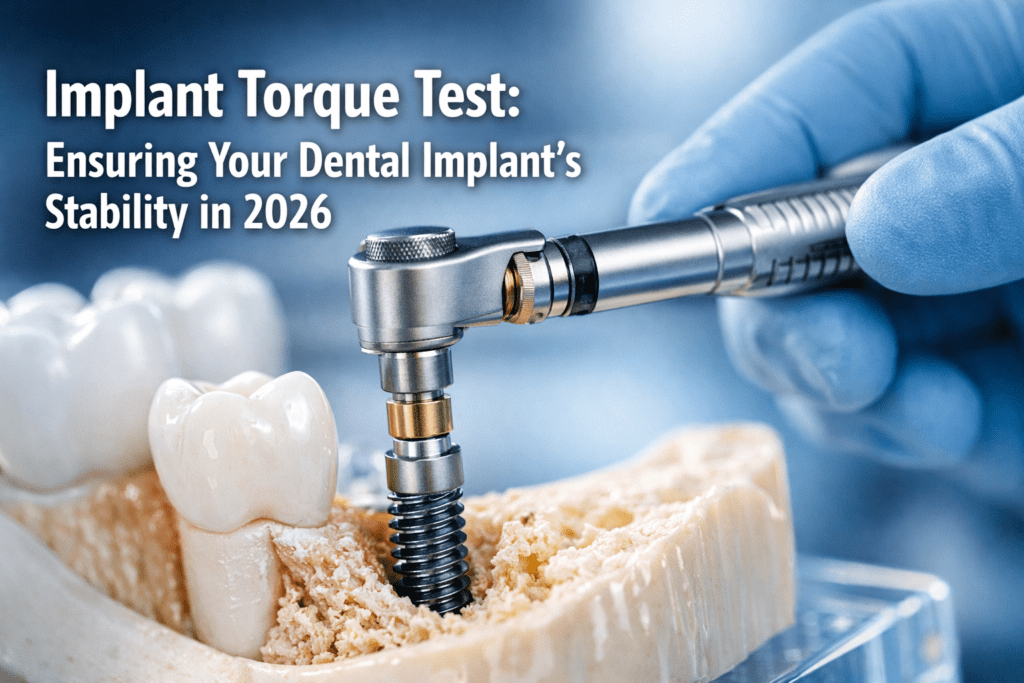
When considering tooth replacement options like dental implants in Dallas, it’s natural to have questions about the procedure’s precision and success. One critical aspect often discussed among dental professionals, but less commonly understood by patients, is the implant torque test. This measurement is a cornerstone of ensuring the immediate stability of your dental implant, directly impacting its long-term success and your overall oral health.
Key Takeaways
- The implant torque test measures the rotational force required to insert a dental implant into the jawbone.
- It is a crucial, though indirect, indicator of the implant’s primary stability, which is essential for successful osseointegration.
- Optimal insertion torque values typically range from 20-45 Ncm, with values below 10 Ncm suggesting poor prognosis.
- Different implant components, such as abutments and prosthetic screws, have specific recommended torque values.
- Complementary tests like Resonance Frequency Analysis (RFA) offer a more direct measure of stability and are often used alongside torque tests.
What is an Implant Torque Test and Why is it Essential for Dental Implants?
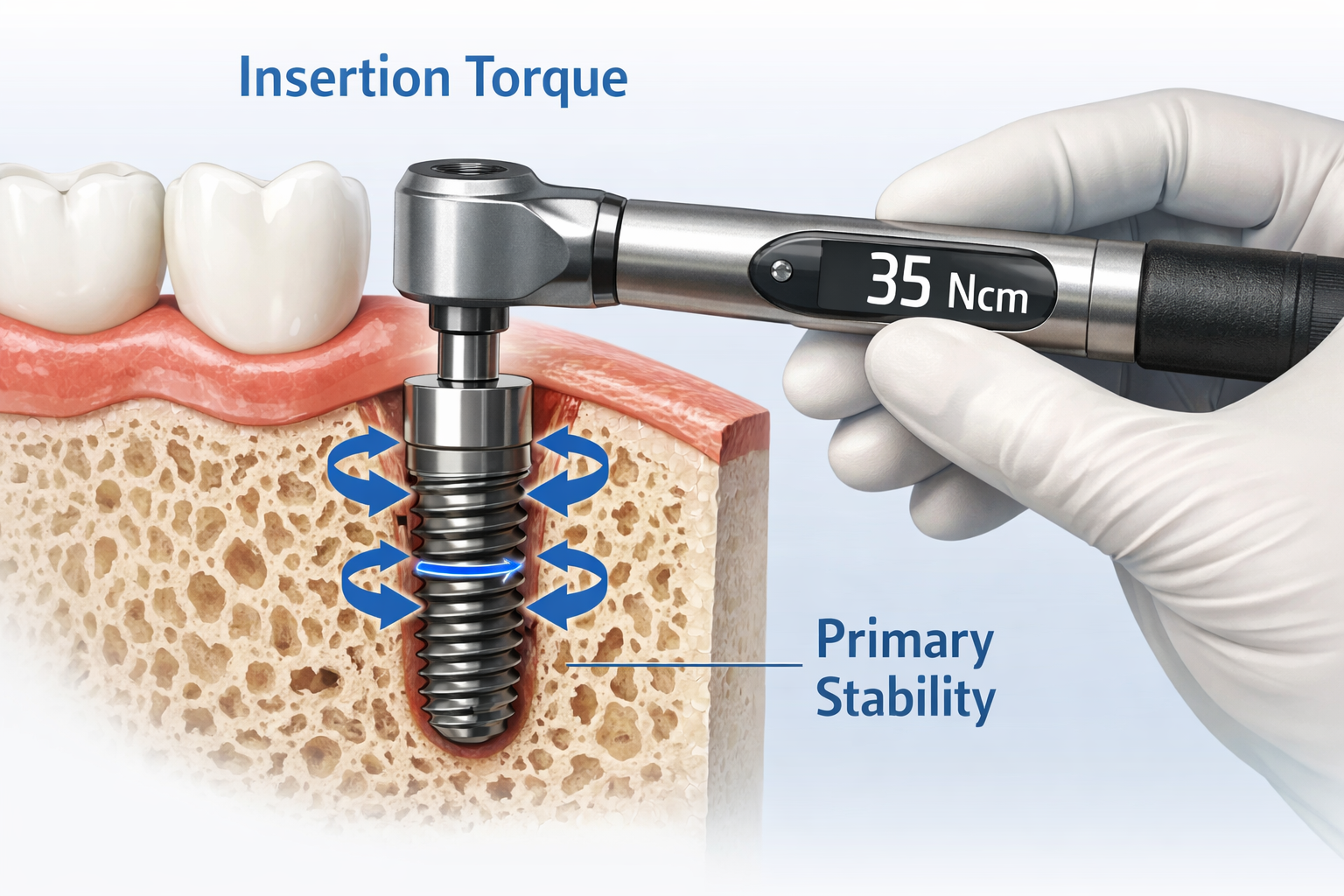
An implant torque test measures the amount of rotational force, or torque, needed to fully seat a dental implant into the jawbone. This measurement is essential because it provides an immediate, albeit indirect, indication of the implant’s primary stability — how firmly the implant is held in the bone immediately after placement [3]. Achieving adequate primary stability is a critical first step for the successful healing process known as osseointegration, where the bone grows directly onto the implant surface.
Without sufficient primary stability, the implant may experience micromovement, which can disrupt the delicate bone healing process and lead to implant failure. For patients seeking dental implants in Dallas, understanding this aspect of the procedure can offer reassurance regarding the meticulous care and precision involved in their dental implant journey.
Understanding Primary Stability
Primary stability refers to the mechanical stability of the implant at the time of insertion, independent of any biological bone growth. It’s achieved through the physical interlocking of the implant threads with the bone. Think of it like screwing a bolt into wood – the tighter the fit, the more stable it is initially.
- Mechanical Interlocking: The threads of the dental implant physically engage with the bone tissue.
- Absence of Micromovement: Adequate primary stability prevents excessive movement of the implant, which is crucial for undisturbed bone healing.
- Foundation for Osseointegration: This initial stability provides the necessary foundation for the biological process of osseointegration to occur over weeks and months.
The implant torque test helps dentists confirm that this mechanical interlocking is robust enough to support the healing process, especially important for immediate loading protocols where a temporary crown might be placed shortly after surgery.
How is an Implant Torque Test Performed During Dental Implant Placement?
Performing an implant torque test involves using a specialized torque-controlled surgical handpiece or a manual torque wrench during the dental implant procedure. As the implant is threaded into the prepared osteotomy (the hole drilled in the bone), the device measures the resistance encountered, expressing it in Newton centimeters (Ncm). This measurement is taken at the final stage of implant insertion, providing the maximum insertion torque value.
The process is integral to patient safety and the long-term success of the implant, allowing the dental surgeon to confirm appropriate bone engagement. It’s a key step in ensuring the foundational stability of your new tooth replacement.
The Procedure in Detail
During implant surgery, after the site for the dental implant is carefully prepared, the implant itself is gradually screwed into the bone.
- Preparation of Osteotomy: The dental surgeon first creates a pilot hole and progressively widens it according to the implant manufacturer’s specifications and the patient’s bone density.
- Implant Insertion: The dental implant is then inserted into this prepared site. This can be done either with a motorized surgical handpiece that has a controlled torque setting, or manually with a torque wrench.
- Torque Measurement: As the implant reaches its final position, the resistance from the bone is measured.
- Motorized Handpiece: These devices are programmed to stop at a pre-set torque value or display the maximum torque achieved.
- Manual Torque Wrench: For manual insertion, the dentist uses a calibrated wrench that clicks or indicates when a specific torque value is reached. The final turn to fully seat the implant provides the insertion torque value.
- Recording the Value: The achieved Ncm value is recorded, guiding the next steps in the treatment plan, such as whether immediate loading is an option.
This precise measurement ensures that the implant is neither under-tightened (leading to instability) nor over-tightened (which could cause bone damage or necrosis). For those undergoing a dental implant procedure, this careful attention to detail underlines the commitment to achieving optimal outcomes.
What are the Recommended Torque Values for Dental Implants and Their Components?
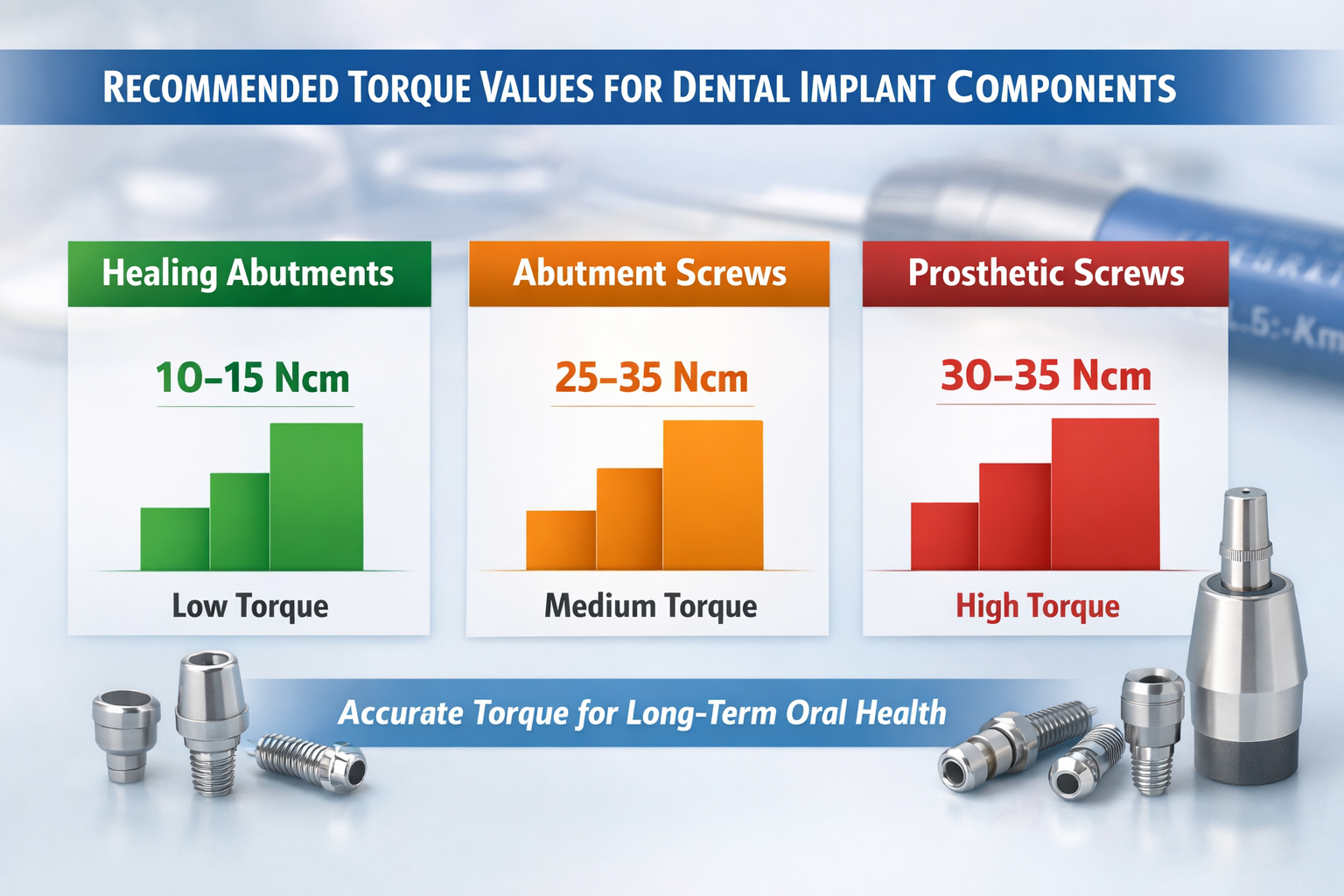
Recommended torque values for dental implants typically fall within a range considered optimal for primary stability, often between 20 Ncm and 45 Ncm, though specific values can vary based on implant design and bone quality. However, values below 10 Ncm are generally considered poor and indicate a higher risk of failure [3]. It’s also crucial to understand that different components of a dental implant system—like healing abutments, implant abutment screws, and prosthetic screws—each have their own specific, lower recommended torque settings to prevent damage and ensure longevity [2].
Adhering to these precise torque guidelines is fundamental for the integrity of the entire dental implant system and the overall success of your missing teeth solutions.
Torque Values for Different Components
The dental implant system is comprised of several parts, and each requires a specific torque value during its placement to function correctly and prevent complications.
- Implant Insertion Torque (Primary Stability):
- General Range: 20-45 Ncm. Achieving a value in this range indicates good primary stability, which is vital for proper osseointegration [3].
- Poor Prognosis: Values consistently below 10 Ncm suggest inadequate primary stability, potentially leading to implant failure [3].
- Over-Torquing: Exceeding recommended insertion torque values can risk bone damage, necrosis, or fracture of the implant itself.
- Healing Abutments: These temporary components guide gum tissue healing.
- Recommended Torque: Typically 15-20 Ncm [2]. Overtightening can cause discomfort or damage to the healing gum tissue.
- Implant Abutment Screws: These screws connect the abutment (the part that connects the crown to the implant) to the implant itself.
- Recommended Torque: Generally 30-35 Ncm [2]. This ensures a secure connection for the permanent restoration.
- Prosthetic Screws (for crowns, bridges, or dentures): These attach the final restoration to the abutment.
- Recommended Torque: Usually 20-30 Ncm [2]. This range provides sufficient retention without stressing the components.
It is also advisable to re-torque screws 5-10 minutes after initial application. This practice accounts for any minor settling that may occur at the screw-implant interface, ensuring continued optimal tightness [4]. This detailed approach is part of the comprehensive care you receive when choosing dental implants in Dallas.
What Factors Can Influence Implant Torque Test Readings?
Several critical factors can influence implant torque test readings, directly impacting the primary stability and ultimately the success of a dental implant. These include the density and quality of the patient’s jawbone, the specific design of the dental implant, and the surgical technique employed by the dentist. Understanding these variables helps dental professionals tailor the procedure for optimal results and contributes to the high dental implant success rate observed in properly managed cases.
For individuals exploring dental implant solutions, recognizing these factors underscores the personalized approach required for successful implant surgery.
Key Influencing Factors:
- Bone Density and Quality:
- Dense Bone (Type I & II): In highly dense bone, higher insertion torque values are naturally achieved due to greater resistance. However, excessive torque can lead to stress fractures or bone necrosis if not managed carefully [2].
- Porous Bone (Type III & IV): In softer, more porous bone, lower insertion torque values are expected. Achieving sufficient primary stability here often requires specific implant designs (e.g., tapered implants) or techniques like undersized osteotomy preparation. Values here must still be adequate to prevent micromovement [2].
- Implant Design:
- Thread Design: Implants with aggressive, self-tapping, or wider threads often achieve higher torque values.
- Tapered vs. Cylindrical: Tapered implants typically achieve higher insertion torque as they compress bone more effectively, especially in softer bone. A 2025 study noted that conical bone level tapered implants showed insertion torque values of 29.52-30.53 Ncm [1].
- Surface Treatment: While not directly influencing insertion torque, the implant’s surface treatment aids in long-term osseointegration.
- Surgical Technique:
- Osteotomy Preparation: The size and shape of the drilled osteotomy relative to the implant diameter significantly affect torque. An undersized osteotomy can increase torque, while an oversized one can decrease it.
- Insertion Speed and Load: A 2025 study found that increasing the insertion load from 1.0 N to 5.0 N could reduce insertion time by up to 12.52%, with significant differences observed in specific implant designs [1]. Consistent and controlled insertion is key.
- Irrigation: Adequate irrigation during drilling prevents bone overheating, which could compromise bone quality and affect torque readings.
- Experience of the Surgeon: An experienced dental implant specialist in Dallas understands how to manage these variables, adjust techniques, and interpret torque values to achieve the best possible outcome. Their expertise contributes significantly to a successful dental implant procedure.
Is an Implant Torque Test Sufficient on its Own to Assess Implant Stability?
While an implant torque test is a valuable and widely used indicator of primary stability, it is generally not considered sufficient on its own to fully assess the implant’s long-term stability and potential for successful osseointegration. Insertion torque is an indirect measure, primarily reflecting the mechanical grip of the implant in the bone [3]. For a comprehensive evaluation, particularly in cases involving immediate loading, dental professionals often recommend combining torque measurements with other diagnostic tools, such as Resonance Frequency Analysis (RFA).
This multi-faceted approach ensures a more accurate picture of the implant’s stability, contributing to greater patient safety and a higher dental implant success rate.
The Need for Complementary Assessments
Relying solely on insertion torque can sometimes be misleading because it only tells part of the story.
- Indirect Indicator: Insertion torque measures the immediate resistance encountered during placement. It doesn’t directly measure the biological potential for bone growth around the implant [3]. For example, in very dense bone, high torque might be achieved, but it could also indicate undue stress on the bone, potentially leading to micro-fractures or necrosis if not carefully managed.
- Resonance Frequency Analysis (RFA): This technique, which measures the Implant Stability Quotient (ISQ), provides a more objective and non-invasive assessment of both primary and secondary (biological) stability. An RFA device attaches a small transducer to the implant, which vibrates and measures the implant’s resistance to movement. Higher ISQ values (70 or above) generally indicate greater stability and a better prognosis for osseointegration, especially for immediate loading [3].
- Benefits of RFA:
- Objective: Provides a quantifiable number (ISQ) that can be tracked over time.
- Non-Invasive: Does not disturb the implant or surrounding tissues.
- Dynamic: Can assess stability at different stages of healing.
- Benefits of RFA:
By combining the information from the implant torque test with RFA, dentists in Dallas can make more informed decisions about treatment protocols, such as when to proceed with loading the implant, ensuring better long-term oral health for their patients.
What are the Implications of Low or High Implant Torque Values?
Low implant torque values (typically below 10 Ncm) generally indicate insufficient primary stability, which significantly increases the risk of implant failure due to excessive micromovement, hindering proper osseointegration [3]. Conversely, excessively high implant torque values, while seemingly positive for stability, can lead to complications such as bone compression, necrosis, or even implant fracture, impacting the long-term health of the surrounding bone. Both scenarios require careful clinical judgment and potential adjustments to the dental implant procedure.
Understanding the Risks and Responses
Both ends of the torque spectrum present unique challenges that must be addressed by the dental team.
Low Torque Values (<10 Ncm)
- Risk of Micromovement: Without sufficient grip, the implant can move slightly, disrupting the delicate bone cells trying to grow onto its surface. This often leads to fibrous tissue encapsulation instead of bone, preventing successful osseointegration.
- Implant Mobility: The implant may feel loose or become mobile soon after placement.
- Increased Failure Rate: Implants with very low insertion torque have a significantly higher risk of early failure.
- Clinical Response:
- Delayed Loading: The most common approach is to delay the placement of the prosthetic (crown/bridge) to allow for extended healing and potential improvement in secondary stability.
- Grafting: Additional bone grafting might be considered to enhance bone volume and density around the implant.
- Implant Removal: In some cases, if stability is critically low, the implant may need to be removed and the site allowed to heal before a new attempt.
High Torque Values (>45-50 Ncm)
- Bone Compression/Necrosis: While seemingly secure, very high torque can over-compress the bone, cutting off blood supply to bone cells and leading to necrosis (bone death). This can result in delayed healing or bone loss around the implant.
- Stress Fractures: The extreme force can cause micro-fractures in the surrounding bone, weakening its structure.
- Implant or Instrument Fracture: In rare cases, the implant itself or the surgical instrument could fracture under excessive torque.
- Clinical Response:
- Monitoring: Close monitoring of the implant and surrounding tissue for signs of inflammation or pain.
- Relief Drills: Some dentists may use specific drilling protocols (e.g., bone tapping or slightly wider final drills) in dense bone to avoid excessively high torque.
- Reduced Loading: Even if high stability is achieved, careful consideration is given to loading protocols to avoid placing undue stress on the bone.
Ultimately, the goal for any dental implant procedure is to achieve an optimal balance—enough torque for stability without causing trauma. This nuanced understanding is why seeking a highly qualified dental implant specialist in Dallas is paramount for successful long-term outcomes.
How Does Bone Density Affect Optimal Torque Values?
Bone density significantly impacts the optimal torque values needed for dental implant placement, as the quality and resistance of the jawbone directly influence how firmly an implant can be seated. In denser bone types (Type I and II), higher insertion torque can often be achieved, but careful management is required to prevent overtightening and potential bone trauma [2]. Conversely, in softer, less dense bone (Type III and IV), achieving adequate primary stability with lower torque values necessitates specific implant designs or surgical techniques to ensure proper osseointegration [2].
This variability underscores why a thorough dental implant consultation and detailed treatment planning are essential for successful outcomes in Dallas.
Bone Type and Torque Relationships
Dentists classify bone density into four main types (Type I to IV, from densest to least dense), which guide surgical strategy and expected torque values.
- Type I Bone (Dense Cortical Bone):
- Characteristics: Very dense, compact cortical bone, often found in the anterior mandible.
- Torque Implications: Can achieve very high insertion torque. The challenge here is preventing excessive compression and overheating, which can compromise bone viability. Precise drilling protocols and sometimes bone tapping are crucial.
- Risk: Overtightening can lead to bone necrosis or implant fracture.
- Type II Bone (Dense Cortical with Porous Trabecular Core):
- Characteristics: A thick layer of dense cortical bone surrounding a good volume of dense trabecular (spongy) bone.
- Torque Implications: Generally allows for ideal torque values (e.g., 20-45 Ncm), providing excellent primary stability and predictable osseointegration.
- Ideal for Implants: Often considered the most favorable bone type for dental implant placement.
- Type III Bone (Porous Cortical with Fine Trabecular Core):
- Characteristics: Thinner cortical layers with finer trabecular bone, found in most posterior maxilla and mandible.
- Torque Implications: Moderate torque values are typical. Surgeons may use undersized drills or tapered implants to achieve sufficient compression and primary stability.
- Consideration: Requires careful technique to ensure adequate initial grip without over-preparing the site.
- Type IV Bone (Very Thin Cortical with Low-Density Trabecular Bone):
- Characteristics: Very thin cortical layer and a coarse, low-density trabecular bone structure, common in the posterior maxilla.
- Torque Implications: Can be challenging to achieve high primary stability, often resulting in lower insertion torque values.
- Risk: Higher risk of micromovement and potential implant failure.
- Clinical Approaches: May require bone grafting before implant placement, the use of wider or aggressively threaded implants, or an extended healing period before loading. Resonance Frequency Analysis (RFA) becomes especially important here to monitor stability during healing.
For patients considering dental implants in Dallas, a comprehensive assessment of bone density is a key part of the planning phase, directly influencing the projected implant cost in Dallas and the overall treatment approach.
How Can an Implant Torque Test Contribute to the Long-Term Success of Dental Implants?
An implant torque test significantly contributes to the long-term success of dental implants by ensuring adequate primary stability at the time of placement, which is the foundational requirement for successful osseointegration. By confirming that the implant is firmly anchored in the bone without excessive micromovement, the test helps establish the ideal biological environment for bone cells to grow and integrate with the implant surface. This initial stability directly influences the durability, functionality, and overall longevity of your dental implants, helping to ensure they become a reliable missing teeth solution for years to come.
The Chain of Success
The positive impact of a properly performed implant torque test extends far beyond the initial surgery:
- Optimal Osseointegration: The primary role of the torque test is to verify that the implant is stable enough for bone to fuse with it. Without this initial stability, osseointegration is compromised, leading to implant failure. Proper torque ensures the bone-to-implant interface can form correctly.
- Reduced Risk of Early Failure: Implants with insufficient primary stability are highly susceptible to early failure. The torque test helps identify and mitigate this risk, either by confirming adequate stability for immediate protocols or by indicating the need for a delayed loading approach. This directly contributes to a higher dental implant success rate.
- Foundation for Restoration: A stable implant provides a robust foundation for the final prosthetic restoration—whether it’s a single crown, a bridge, or an implant-supported denture. If the implant moves, the restoration will fail, and the investment in the dental implant procedure will be lost.
- Minimizing Complications: By preventing overtightening, which could damage bone, or undertightening, which could lead to mobility, the implant torque test helps minimize surgical and post-operative complications, contributing to a smoother recovery.
- Predictable Treatment Outcomes: For dentists and patients alike, knowing the insertion torque helps predict healing times and guide subsequent treatment stages, such as when to place the abutment or final crown. This predictability is crucial for effective treatment planning, especially in areas like Dallas where patients seek reliable and effective oral health education and solutions.
In essence, the implant torque test is a quality control measure that sets the stage for a healthy, functional, and long-lasting dental implant, making it an indispensable part of modern implant dentistry.
FAQ About Implant Torque Test
Q1: What is a safe implant torque value?
A1: A safe and optimal implant insertion torque value typically ranges between 20 Ncm and 45 Ncm, indicating good primary stability for most dental implants [3].
Q2: Can too much torque damage the bone?
A2: Yes, excessively high torque (over-torquing) can compress the bone, potentially cutting off blood supply leading to bone necrosis (bone death) or causing stress fractures, which can compromise implant success [2].
Q3: What happens if implant torque is too low?
A3: If implant torque is too low (e.g., below 10 Ncm), it indicates insufficient primary stability, leading to excessive micromovement that can prevent osseointegration and significantly increase the risk of implant failure [3].
Q4: Is an implant torque test painful?
A4: No, the implant torque test is performed during the dental implant surgery, while the patient is under local anesthesia, so you will not feel any pain.
Q5: Is the implant torque test the only way to measure stability?
A5: No, while valuable, the implant torque test is an indirect measure. Resonance Frequency Analysis (RFA) is often used as a complementary, more objective test to assess implant stability (ISQ values) [3].
Q6: Do all dental implant components have the same torque values?
A6: No, different components such as healing abutments, implant abutment screws, and prosthetic screws have specific, lower recommended torque values compared to the initial implant insertion torque [2].
Q7: Why is re-torquing sometimes recommended?
A7: Re-torquing screws 5-10 minutes after initial application is advisable to compensate for minor settling or relaxation at the screw-implant interface, ensuring optimal long-term tightness [4].
Q8: Does bone density affect torque values?
A8: Yes, bone density greatly affects torque values. Denser bone generally yields higher torque, while softer bone results in lower torque. Dentists adjust surgical techniques based on bone type to achieve optimal stability [2].
Conclusion
The implant torque test is an indispensable component of successful dental implantology, providing crucial insights into the immediate stability of a newly placed implant. For patients considering dental implants in Dallas, understanding this precision-driven aspect of the procedure offers reassurance about the meticulous care and advanced techniques employed to ensure long-term success. While it’s an indirect measure, it sets the stage for successful osseointegration, protecting your investment in a healthy, confident smile.
When exploring tooth replacement options, always seek a thorough consultation with a dentist who prioritizes such critical details. Their expertise in evaluating bone quality, understanding implant designs, and meticulously applying the correct torque values is paramount to your journey towards optimal oral health.
Key Takeaways
- The implant torque test is a precise measurement of rotational force used during dental implant placement to gauge primary stability.
- Achieving optimal primary stability, typically within 20-45 Ncm, is critical for successful osseointegration and preventing early implant failure.
- Specific torque values are required for different implant components, including healing abutments (15-20 Ncm), abutment screws (30-35 Ncm), and prosthetic screws (20-30 Ncm) [2].
- Low torque values (<10 Ncm) signal inadequate stability, increasing failure risk, while excessively high values can cause bone trauma [3].
- Bone density directly influences torque readings, requiring dentists to adapt techniques for different bone types [2].
- The implant torque test should be complemented by other stability assessments, such as Resonance Frequency Analysis (RFA), for a comprehensive evaluation [3].
- Proper torque management contributes significantly to the long-term success, durability, and functionality of dental implants as a missing teeth solution.
- Re-torquing screws after initial placement can improve the stability of the screw-implant interface [4].
References
[1] Effect Of Insertion Load On Insertion Torque Value – https://www.straumann.com/en/discover/youtooth/article/education/2025/effect-of-insertion-load-on-insertion-torque-value.html
[2] What Does Torque Mean For Dental Implant Screws – https://www.ramlaouidds.com/what-does-torque-mean-for-dental-implant-screws/
[3] Implant Stability Torque Guide – https://uniqa.dental/articles/implant-stability-torque-guide/
[4] The Science Of Torque Why Getting Abutment Torque Values Right Matters – https://oemdent.com/blogs/blog/the-science-of-torque-why-getting-abutment-torque-values-right-matters
Leave a Reply
Share your thoughts or ask a question about dental implants. Your email address will not be published.