

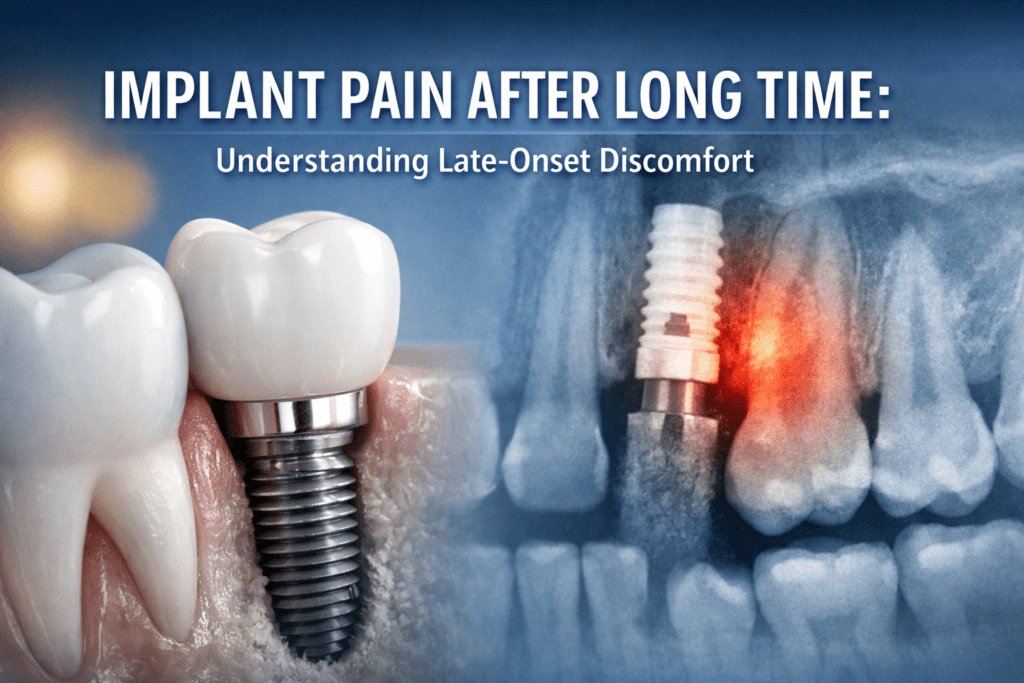
Experiencing implant pain after a long time can be unsettling, especially when your dental implants have provided years of comfort and stability. While dental implants boast high success rates and are renowned for their longevity, it’s important to understand that issues, including pain, can occasionally arise years after the initial procedure. This article aims to demystify why you might be experiencing implant pain after a long time, what symptoms to look for, and the crucial steps to take to ensure your long-term oral health.
Key Takeaways
- Late-onset implant pain is not normal and requires immediate dental evaluation.
- The most common cause of pain after a long time is peri-implantitis, an infection around the implant.
- Other causes include mechanical issues, nerve damage, or problems with adjacent teeth.
- Early diagnosis and intervention are crucial for successful treatment and implant salvage.
- Maintaining diligent oral hygiene and regular dental check-ups are key to prevention.
- A consultation with a dentist specializing in dental implants in Dallas is the first step towards resolving discomfort.
- Don’t ignore persistent or worsening pain; timely professional assessment is vital for patient safety and preserving your investment.
Quick Answer
Implant pain after a long time typically indicates an underlying issue, such as infection (peri-implantitis), mechanical problems, or nerve involvement, rather than normal aging of the implant. It is crucial to seek prompt professional dental care from your dentist in Dallas to identify the cause and initiate appropriate treatment to prevent further complications and ensure the longevity of your dental implant.
Why Does Implant Pain Occur Years After Placement?
Implant pain that develops long after the initial healing period is usually a sign that something is amiss with the dental implant or the surrounding tissues, as healthy, integrated implants should not cause discomfort. The initial recovery period following dental implant surgery typically involves some pain, which subsides as the site heals within the first few months [1]. However, if you experience new or returning pain years later, it indicates a secondary issue that needs professional attention.
Common Causes of Late-Onset Implant Pain
Several factors can contribute to pain developing years after your dental implant procedure:
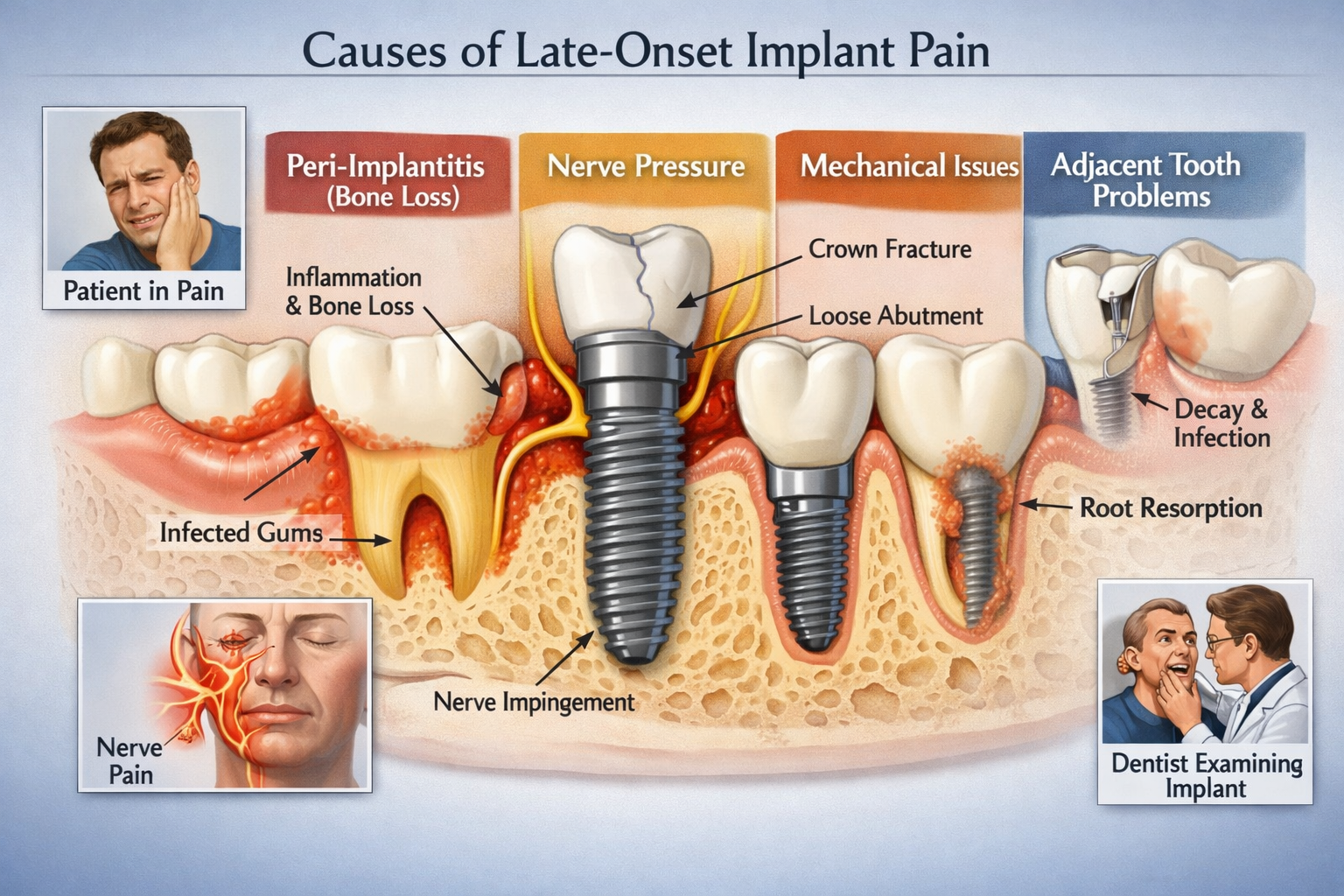
- Peri-implantitis: This is an inflammatory disease affecting the hard and soft tissues surrounding a dental implant, similar to periodontitis in natural teeth [4]. It’s the most common biological complication and a leading cause of late implant failure, characterized by inflammation, bleeding, pus, and progressive bone loss around the implant. Researchers are actively studying peri-implantitis as an emerging concern [4].
- Mechanical Complications: Over time, components of the implant can experience wear and tear. This might include a loose or fractured crown, a loose abutment (the connector between the implant and the crown), or even, rarely, a fracture of the implant itself. These issues can lead to discomfort when biting or chewing.
- Nerve Impingement or Damage: Although rare, if an implant was placed too close to a nerve during the initial surgery, symptoms might manifest immediately or develop over time as surrounding tissues shift or pressure increases. Persistent pain, numbness, or tingling can be indicators.
- Adjacent Teeth or Oral Structures: Sometimes, the pain might not originate from the implant itself but from an adjacent natural tooth that has developed a cavity, gum disease, or even a root canal issue. Referred pain can make it feel like the implant is the source of the problem.
- Inadequate Osseointegration: While rare for late-onset pain, if the implant never fully integrated with the bone, it might remain mobile or cause chronic, low-grade discomfort that becomes more pronounced over time.
- Trauma: A direct impact or injury to the mouth can affect an implant, even years after placement, potentially causing pain or damaging the implant or surrounding bone.
- Systemic Health Changes: Certain systemic conditions, such as uncontrolled diabetes or autoimmune disorders, can impact oral health and potentially contribute to implant complications, though this is less common as a direct cause of late-onset pain. For more on how health conditions impact recovery, see our guide on Diabetic Dental Implant Recovery: Guide & Timeline (2026).
Addressing the pain promptly is crucial not only for your comfort but also to prevent the underlying issue from escalating and potentially leading to implant failure. An expert consultation with a dentist in Dallas can help pinpoint the exact cause.
Recognizing the Symptoms: Is Your Implant Pain After a Long Time Serious?
Yes, any persistent implant pain after a long time should be considered serious and warrants immediate dental evaluation to prevent potentially more significant complications. While some mild, fleeting discomfort might not be alarming, ongoing or worsening pain indicates an underlying problem that requires professional diagnosis and intervention. Ignoring these symptoms can lead to advanced stages of infection, bone loss, or even implant loss.
Signs That Your Implant Pain Needs Immediate Attention
When evaluating implant pain that has developed long after your surgery, be vigilant for the following symptoms:
- Persistent or Worsening Pain: If the pain around your implant is constant, increasing in intensity, or doesn’t respond to over-the-counter pain relievers, it’s a red flag.
- Swelling or Redness: Inflammation of the gum tissue around the implant, accompanied by redness and tenderness, is a classic sign of infection, particularly peri-implantitis.
- Bleeding Gums: Gums that bleed easily when brushing or flossing around the implant area are another indicator of inflammation or infection.
- Pus Discharge: The presence of pus around the implant or from the gum tissue is a definitive sign of an active infection.
- Loose Implant or Crown: If the implant itself feels wobbly or the crown on top of it feels loose, it suggests a problem with the implant’s integration, a mechanical failure, or significant bone loss.
- Difficulty Chewing: Pain or discomfort when chewing or applying pressure to the implant can indicate an underlying issue affecting its stability or function.
- Bad Taste or Bad Breath: Persistent bad breath or a metallic taste in your mouth, specifically localized to the implant area, can be a symptom of infection. You can learn more about this in our article on Bad Breath from Dental Implants: Causes & Solutions 2026.
- Receding Gums Around the Implant: The gum line pulling away from the implant can expose parts of the implant that should be covered, often a sign of bone loss.
- Changes in Bite: If your bite feels “off” or uncomfortable, it could signal a mechanical issue with the crown or abutment.
These symptoms indicate that a professional assessment is critical. A dentist can accurately diagnose the cause using clinical examination and imaging, such as X-rays or 3D scans, to assess the bone level around the implant [9]. Early detection of issues like peri-implantitis offers a better prognosis for successful treatment and implant preservation.
Diagnosing the Root Cause of Your Late-Onset Implant Pain
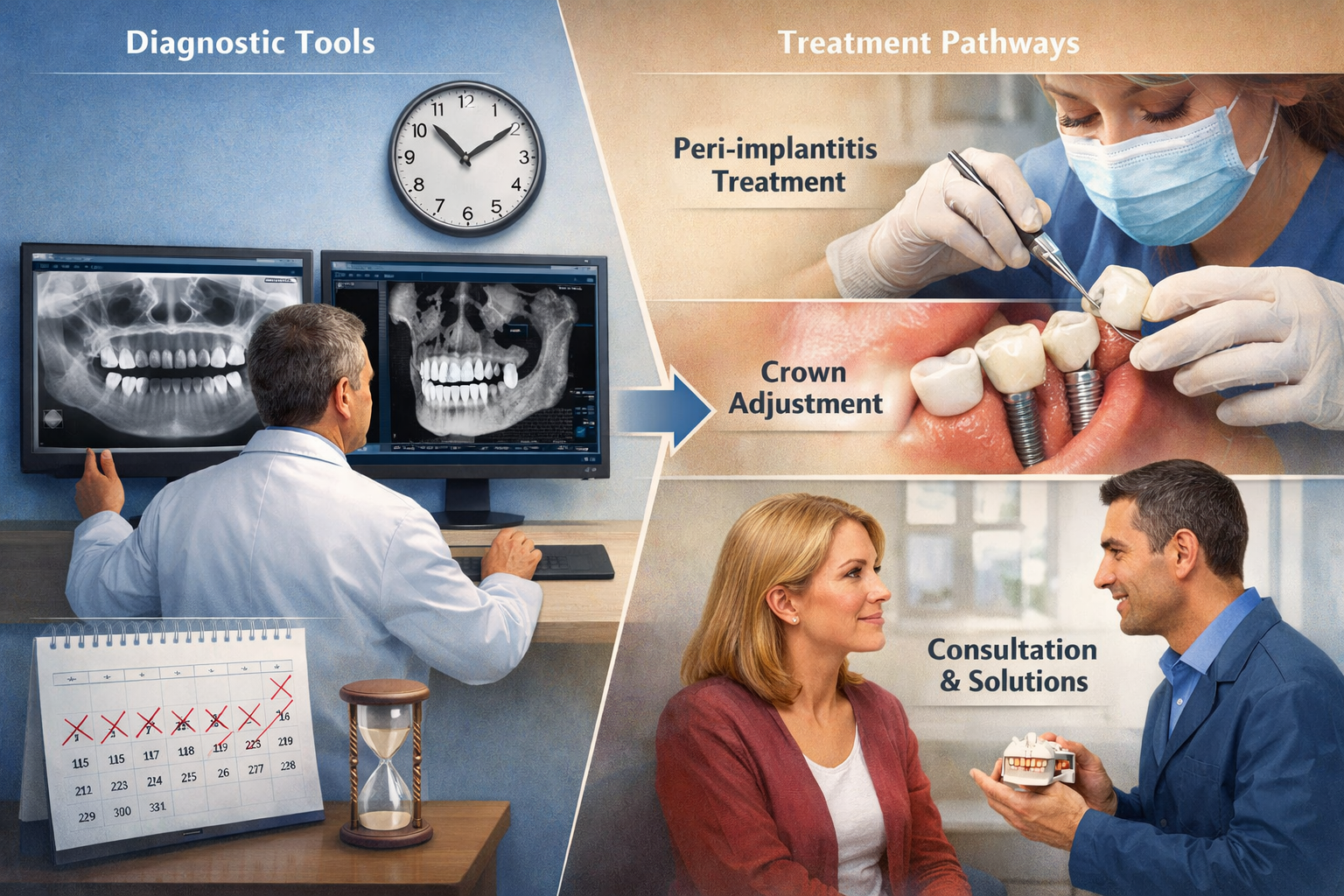
Diagnosing the root cause of late-onset implant pain involves a thorough examination by a qualified dental professional, utilizing both visual inspection and advanced imaging techniques. A dentist will systematically evaluate the implant site, surrounding tissues, and the implant components to pinpoint the specific issue.
Diagnostic Steps
When you present with implant pain after a long time, your dentist will typically follow these diagnostic procedures:
- Comprehensive Oral Examination: The dentist will visually inspect the implant site, checking for signs of inflammation, redness, swelling, bleeding, or pus discharge. They will also gently probe the gum tissue around the implant to measure pocket depths, which can indicate bone loss. The condition of the implant crown and abutment will be assessed for any signs of loosening or fracture.
- Radiographic Imaging (X-rays and 3D Scans):
- Periapical X-rays: These provide detailed images of individual teeth and implants, showing the bone level around the implant and any signs of infection at the tip of the implant.
- Panoramic X-rays: These offer a broader view of your entire mouth, including all implants and surrounding structures, helping to identify generalized issues or problems with adjacent teeth [9]. Our guide on Dental Implant X-Ray Frequency Guide 2026 provides more details.
- Cone Beam Computed Tomography (CBCT) Scans: For more complex cases, a 3D CBCT scan can provide highly detailed cross-sectional images of the bone and soft tissues, allowing the dentist to assess bone density, nerve pathways, and the extent of any bone loss with greater precision [9]. This is particularly useful for diagnosing peri-implantitis or nerve impingement.
- Bite Assessment: The dentist will evaluate your bite to ensure the implant crown is not experiencing excessive force or uneven pressure, which could contribute to pain or mechanical issues.
- Review of Medical History: Your dentist will review your medical history, including any systemic conditions (e.g., diabetes, osteoporosis) or medications that could impact oral health or implant stability.
- Patient History and Symptoms: You will be asked about the nature of the pain (sharp, dull, throbbing), when it started, what makes it better or worse, and any other associated symptoms.
By combining these diagnostic tools, your dental professional can accurately identify whether the pain is due to peri-implantitis, a mechanical problem, nerve involvement, or another issue entirely. This precise diagnosis is the cornerstone of effective treatment for implant pain after a long time.
Treatment Options for Implant Pain After a Long Time
Treatment for implant pain after a long time is highly dependent on the underlying cause identified during diagnosis. The goal is always to alleviate discomfort, resolve the root problem, and preserve the dental implant if possible. Your dentist in Dallas will discuss the most appropriate course of action based on your specific situation.
Common Treatment Approaches
Here’s a breakdown of potential treatment options:
For Peri-Implantitis:
- Non-Surgical Debridement: For early-stage peri-implantitis, meticulous cleaning of the implant surface to remove plaque and calculus, often combined with antiseptic rinses or local antibiotics, can reduce inflammation and halt disease progression.
- Surgical Intervention: If bone loss is significant, surgical procedures may be necessary. This could involve:
- Debridement and Detoxification: Opening the gum tissue to thoroughly clean the implant surface and remove diseased tissue.
- Bone Grafting: In some cases, bone grafting material can be used to regenerate lost bone around the implant, helping to stabilize it. Our article on Bone Graft Healing for Dental Implants: Your 2026 Timeline offers more insights.
- Guided Tissue Regeneration: Using membranes to encourage bone and tissue regrowth.
- Implant Removal: In severe cases where the implant is highly unstable, severely infected, or bone loss is extensive, removal of the dental implant may be the only viable option to resolve the infection and prepare the site for future tooth replacement options. Learn more about Dental Implant Recovery Complications Dallas.
For Mechanical Complications:
- Loose Crown/Abutment: The crown or abutment can often be tightened or recemented.
- Fractured Crown: A fractured crown will need to be replaced. The Dental Implant Crown Replacement Cost Dallas | 2026 Guide provides cost details.
- Implant Fracture: While rare, if the implant body itself is fractured, it typically requires removal and replacement.
For Nerve Impingement:
- Mild cases might be managed with medication to reduce inflammation.
- In more severe cases, surgical intervention may be required to relieve pressure on the nerve, or the implant may need to be removed.
For Problems with Adjacent Teeth:
- Treatment will focus on addressing the issue with the natural tooth, such as a filling for a cavity, root canal therapy, or gum disease treatment.
Medication: Depending on the diagnosis, your dentist may prescribe antibiotics to combat infection, anti-inflammatory drugs to reduce swelling and pain, or specific pain relievers.
After treatment, diligent follow-up care and strict adherence to oral hygiene instructions are paramount to ensure successful healing and prevent recurrence. For general pain relief guidance, consult our Dental Implant Pain Relief Guide: Manage Discomfort in 2026.
Preventing Future Implant Pain and Ensuring Long-Term Oral Health
Preventing future implant pain and ensuring the long-term success of your dental implants relies heavily on consistent oral hygiene, regular professional care, and a proactive approach to your overall health. While dental implants are a durable and reliable solution for missing teeth, they are not immune to issues, especially over time.
Key Strategies for Prevention
To safeguard your dental implants and promote lasting oral health, consider these essential preventive measures:
Maintain Exemplary Oral Hygiene:
- Brush Twice Daily: Use a soft-bristled toothbrush or an electric toothbrush, paying special attention to the areas around your implants and natural teeth.
- Floss Daily: Flossing is critical for removing plaque and food particles from between teeth and around the implant, where brushes can’t reach. Special implant-specific floss or interdental brushes can be particularly effective.
- Use an Antimicrobial Mouthwash: Your dentist may recommend an antimicrobial mouthwash to further reduce bacteria in your mouth.
- For All-on-4 patients, specialized cleaning routines are essential. Refer to our All-on-4 Dental Implant Cleaning Routine: 2026 Guide.
Regular Dental Check-ups and Professional Cleanings:
- Schedule appointments with your dentist at least twice a year, or more frequently if recommended. These visits allow for professional cleaning, which removes hardened plaque (calculus) that at-home brushing can’t.
- Your dentist will also perform thorough examinations, including X-rays periodically, to monitor the health of your implants, surrounding bone, and gum tissue, catching early signs of issues like peri-implantitis or mechanical complications before they become painful [9].
Avoid Harmful Habits:
- Tobacco Use: Smoking significantly increases the risk of peri-implantitis and implant failure. Quitting smoking is one of the most impactful steps you can take for your oral and overall health.
- Excessive Alcohol Consumption: Heavy alcohol use can also negatively impact oral health and healing.
- Grinding or Clenching (Bruxism): If you grind or clench your teeth, especially at night, discuss this with your dentist. They may recommend a nightguard to protect your implants and natural teeth from excessive force.
Address Systemic Health Conditions:
- Manage chronic conditions like diabetes effectively, as uncontrolled diabetes can increase the risk of infections and impair healing.
- Communicate any changes in your health or medications to your dentist, as these can impact your oral health.
Promptly Address Any Concerns:
- If you notice any unusual sensations, mild discomfort, or changes around your implant, even if not immediately painful, contact your dentist. Early intervention is key to preventing minor issues from escalating.
By adhering to these guidelines, you can significantly enhance the longevity of your dental implants and minimize the chances of experiencing implant pain after a long time, ensuring continued comfort and function for years to come. Dental Implant Education – Dallas TX is committed to providing patients with the knowledge to maintain their long-term oral health.
When to Seek Professional Consultation for Implant Pain
You should seek professional consultation with a dentist promptly if you experience any new, persistent, or worsening pain around your dental implant, regardless of how long it has been since the initial surgery. Early intervention is crucial for diagnosing and treating potential issues effectively, often leading to better outcomes and preventing more complex problems.
Indicators to Schedule an Appointment Immediately
Do not delay in contacting your dentist if you notice any of the following:
- Persistent Pain: Any discomfort that lasts for more than a day or two and does not subside.
- Worsening Pain: If the intensity of the pain increases over time.
- Swelling or Redness: Visible inflammation or discoloration of the gums around the implant.
- Bleeding or Pus: Any bleeding when brushing or flossing, or the presence of pus discharge from the gum line near the implant.
- Loose Feeling: If your implant crown feels loose, or the implant itself feels mobile when touched.
- Difficulty Chewing: Pain or significant discomfort when biting or chewing food.
- Fever or Malaise: Systemic symptoms accompanying oral pain can indicate a more severe infection.
For individuals in Dallas, Texas, seeking a dentist experienced in managing dental implant complications is essential. A specialist in oral health education will conduct a thorough examination, including advanced imaging if necessary, to accurately diagnose the problem and recommend the most appropriate course of action. Delaying care can lead to the progression of conditions like peri-implantitis, potentially jeopardizing the implant and requiring more invasive or costly treatments. Your long-term oral health and patient safety are our priorities.
Comparing Solutions: When is Implant Removal Necessary?
Implant removal, while a last resort, becomes necessary when an implant is severely compromised, causing persistent issues that cannot be resolved through other treatments, or when its presence poses a risk to overall oral health. The decision to remove an implant is carefully considered by your dentist, weighing the benefits of removal against the potential for further complications if left in place.
Factors Leading to Implant Removal
Several situations might necessitate the removal of a dental implant, particularly when dealing with implant pain after a long time:
- Advanced Peri-Implantitis: If peri-implantitis has progressed to a severe stage with extensive bone loss, making it impossible to stabilize the implant or regenerate lost tissue, removal may be the only way to eliminate the infection and prepare the site for future tooth replacement options. Researchers at the Eastman Institute are actively studying implant failures, including those related to peri-implantitis [4].
- Persistent Infection: Even after attempting various treatments, if the infection around the implant cannot be controlled, leading to chronic pain, swelling, or pus, removal is often indicated.
- Irreparable Mechanical Failure: A fractured implant body is typically beyond repair and usually necessitates removal. Fractures of the crown or abutment are generally repairable, but a full implant fracture means the structural integrity is compromised.
- Unresolved Nerve Impingement: If an implant is impinging on a nerve and causing chronic pain, numbness, or paresthesia that cannot be relieved by other means, removal might be necessary to alleviate nerve damage.
- Failed Osseointegration (Late-Stage): While more common in early stages, sometimes an implant that initially seemed stable can lose its integration with the bone over many years due to various factors, becoming mobile and painful.
- Severe Aesthetic Compromise: In rare cases where the implant’s position leads to severe aesthetic issues (e.g., gum recession exposing metal) and cannot be corrected, removal might be considered, especially if accompanying pain or discomfort is present.
The process of implant removal is typically a minor surgical procedure. After removal, the site needs to heal, and often bone grafting is performed to restore the bone volume, creating a suitable foundation for a new implant or other tooth replacement options in the future. Understanding the Cost of Dental Implant Removal in 2025 can help patients prepare for this possibility.
FAQ About Implant Pain After a Long Time
What is peri-implantitis?
Peri-implantitis is an inflammatory disease affecting the gum tissue and bone surrounding a dental implant, similar to gum disease in natural teeth. It can lead to bone loss and implant failure if untreated [4].
Is it normal for a dental implant to hurt years later?
No, it is not normal for a dental implant to hurt years after it has successfully integrated and healed. Any new or persistent pain indicates an underlying problem that requires professional evaluation.
Can an implant get infected years after placement?
Yes, a dental implant can get infected years after placement, primarily due to peri-implantitis. This can occur if oral hygiene is poor or due to other risk factors. You can learn more in our article, “Can Dental Implants Get Infected Years Later? Your 2026 Gui.”
What are the signs of a failing dental implant after many years?
Signs of a failing implant include persistent pain, swelling, redness, bleeding or pus around the implant, a loose implant or crown, and receding gums around the implant.
Can old implants cause nerve problems?
While rare, if an implant was placed too close to a nerve initially, or if surrounding tissues change over time, it could potentially cause nerve-related pain, numbness, or tingling years later.
What should I do if I feel pain around my dental implant?
If you feel pain around your dental implant, contact your dentist in Dallas immediately for an evaluation. Early diagnosis and treatment are crucial to prevent further complications.
How are mechanical issues with implants resolved?
Mechanical issues like loose crowns or abutments can often be tightened or recemented. A fractured crown will need replacement. Fractured implants typically require removal.
Can an implant be saved if it’s infected after a long time?
Many cases of early-stage peri-implantitis can be successfully treated with non-surgical or surgical methods to save the implant. However, advanced cases may require implant removal.
Is dental implant removal painful?
Dental implant removal is performed under local anesthesia, so you should not feel pain during the procedure. There may be some discomfort and swelling during the recovery period, which can be managed with medication.
How much does it cost to fix implant pain in Dallas?
The cost to address implant pain in Dallas varies widely depending on the underlying cause and the required treatment. Simple adjustments might be inexpensive, while treatments for peri-implantitis or implant replacement can be significant. Costs could range from a few hundred dollars for minor adjustments to several thousands for complex surgical interventions.
Conclusion
Experiencing implant pain after a long time can be a cause for concern, but it’s important to remember that most issues are treatable, especially with prompt attention. Dental implants are a highly successful and durable solution for missing teeth, offering significant improvements in oral health and quality of life for many in Dallas. However, like natural teeth, they require ongoing care and vigilance.
If you are experiencing any form of discomfort, swelling, or other unusual symptoms around your dental implant, do not hesitate to contact a qualified dental professional specializing in dental implants in Dallas. Early diagnosis and intervention are critical for addressing problems like peri-implantitis or mechanical complications, often preventing more severe outcomes and preserving your valuable investment in your smile. Our commitment at Dental Implant Education – Dallas TX is to empower patients with the knowledge needed to maintain their long-term oral health and make informed decisions about their care.
Meta Title
Implant Pain After Long Time: Causes & Treatments in Dallas 2026
Meta Description
Experiencing implant pain after a long time? Understand common causes like peri-implantitis, symptoms, and treatment options in Dallas, TX for long-term oral health.
References
[1] bioinformation – https://www.bioinformation.net/022/973206300220508.pdf
[2] pubmed.ncbi.nlm.nih.gov – https://pubmed.ncbi.nlm.nih.gov/41691517/
[3] Clinical Study January 2026 Patient Perspectives On Immediate Zirconia Implant Therapy – https://www.swissdentalsolutions.com/us/blog/clinical-study-january-2026-patient-perspectives-on-immediate-zirconia-implant-therapy
[4] Eastman Institute Awarded 2 9 Million To Study Dental Implant Failures – https://www.urmc.rochester.edu/news/story/eastman-institute-awarded-2-9-million-to-study-dental-implant-failures
[5] Recruiting Ongoing Upcoming Completed – https://www.nationaldentalpbrn.org/recruiting-ongoing-upcoming-completed/
[6] Dental Implant Risks Complications In 2026 – https://www.oceanicdental.com/resource/dental-implant-risks-complications-in-2026
[7] Tooth Loss And Implant Demand Trends – https://www.bonitadelrey.com/blog/tooth-loss-and-implant-demand-trends/
[8] The Implant Surge In 2026 And What It Means For Missing Tooth Solutions – https://trinitydentalcares.com/the-implant-surge-in-2026-and-what-it-means-for-missing-tooth-solutions/
[9] onlinelibrary.wiley – https://onlinelibrary.wiley.com/doi/abs/10.1111/cid.70118
Leave a Reply
Share your thoughts or ask a question about dental implants. Your email address will not be published.