

Experiencing persistent discomfort or pain around a dental implant more than a year after its placement can be concerning and certainly warrants attention. While dental implants boast a remarkably high success rate and are designed for long-term durability, the onset of Implant Pain After 1 Year – Causes & Treatment is a real issue for some patients. If you’ve enjoyed a period of comfort only to find pain resurfacing, you’re likely wondering what’s happening and what can be done. This comprehensive guide will delve into the various reasons why late-onset implant pain occurs, how it’s diagnosed, and the most effective treatment strategies available in 2026.
Key Takeaways
- Late-Onset Pain is Not Normal: While initial post-surgical discomfort is expected, pain persisting or developing Implant Pain After 1 Year signifies an underlying issue that needs professional evaluation.
- Peri-implantitis is a Major Cause: This inflammatory condition, similar to periodontal disease, is the most common reason for implant complications leading to pain and potential implant loss.
- Accurate Diagnosis is Crucial: A thorough examination, including advanced imaging, is essential to pinpoint the exact cause of the pain, whether it’s infection, nerve issues, or mechanical problems.
- Treatment Varies by Cause: Solutions range from non-surgical interventions like deep cleaning and medication to surgical procedures such as bone grafting or, in rare cases, implant removal and replacement.
- Prevention and Maintenance are Key: Regular dental check-ups, diligent oral hygiene, and addressing issues early can prevent many late-onset implant problems.
Understanding Implant Pain After 1 Year – Causes and What It Means
A dental implant is a sophisticated medical device designed to integrate with your jawbone, providing a stable foundation for a crown, bridge, or denture. The healing process, known as osseointegration, typically takes several months. After this initial period, and often after the final restoration (crown, bridge) is placed, the implant should feel like a natural tooth – comfortable and functional. Therefore, any Implant Pain After 1 Year – Causes & Treatment indicates that something has gone awry.
It’s important to distinguish between general sensitivity and acute pain. General sensitivity might be a temporary issue, perhaps related to diet or minor gum irritation. However, persistent throbbing, sharp pain, swelling, or difficulty chewing around the implant site are clear signals that you need to see your dentist or periodontist promptly. Ignoring these symptoms can lead to more severe complications, including implant failure.
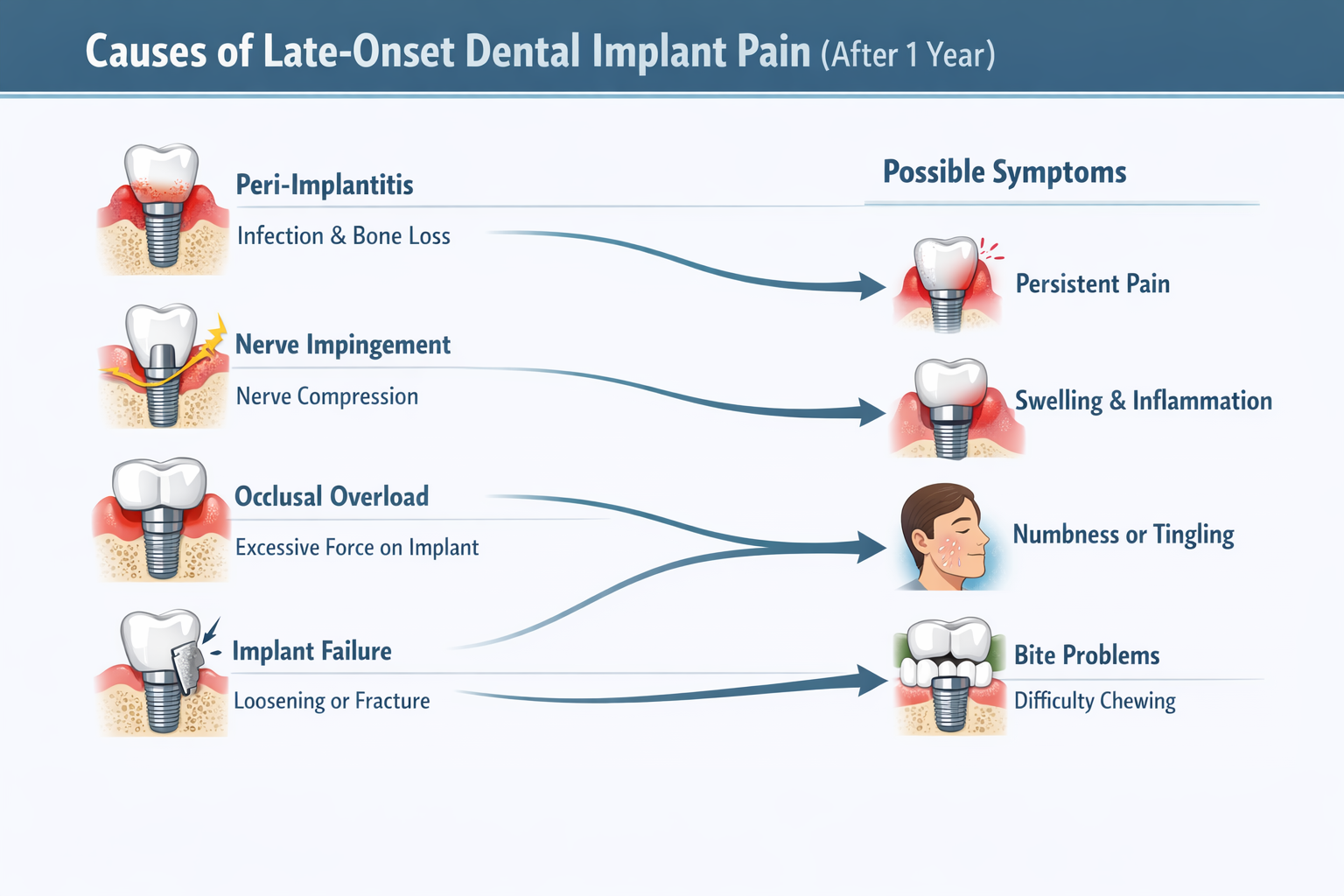
Common Causes of Implant Pain After 1 Year
There are several reasons why you might experience discomfort around your dental implant long after the initial healing phase. Understanding these causes is the first step toward effective treatment.
1. Peri-implantitis
Peri-implantitis is arguably the most common and serious cause of late-onset implant pain. It is an inflammatory condition affecting the tissues surrounding a dental implant, leading to progressive bone loss around the implant [1]. Think of it as the dental implant equivalent of periodontal (gum) disease.
Causes of Peri-implantitis:
- Poor Oral Hygiene: Inadequate brushing and flossing allow bacteria to accumulate around the implant, forming plaque and tartar, which irritate the gums and initiate inflammation.
- Smoking: Tobacco use significantly increases the risk of peri-implantitis and can hinder the body’s ability to heal [2].
- Systemic Diseases: Uncontrolled diabetes, certain autoimmune conditions, and other systemic health issues can compromise immune function and increase susceptibility to infection.
- Excess Cement: If excess cement used to bond the crown to the abutment is left in the gumline, it can act as an irritant and a breeding ground for bacteria.
- Occlusal Overload: Excessive biting forces on the implant can contribute to bone loss and inflammation.
- Genetic Predisposition: Some individuals may be more genetically prone to inflammatory responses.
Symptoms of Peri-implantitis:
- Pain or tenderness around the implant
- Red, swollen, or bleeding gums
- Pus discharge from the gum line
- Receding gums around the implant
- Mobility of the implant (in advanced stages)
- A dull ache or throbbing sensation
2. Nerve Impingement or Damage
While less common, nerve issues can cause significant Implant Pain After 1 Year. During the initial surgical placement of a dental implant, there’s a small risk of the implant coming into contact with or impinging on a nerve, particularly in the lower jaw where the inferior alveolar nerve runs.
Causes of Nerve Issues:
- Implant Misplacement: If the implant is placed too close to a nerve bundle during surgery, it can cause immediate or delayed nerve irritation.
- Bone Density Issues: In areas of compromised bone density, the implant might shift slightly over time, leading to nerve contact.
Symptoms of Nerve Impingement:
- Numbness or tingling (paresthesia) in the lip, chin, or tongue
- Burning sensation
- Sharp, shooting pain
- Altered sensation in the area
3. Occlusal Overload or Malocclusion
Occlusal overload refers to excessive or uneven biting forces on the implant. Malocclusion, or a “bad bite,” means the upper and lower teeth don’t come together correctly.
Causes of Occlusal Overload/Malocclusion:
- Improper Crown Design: A crown that is too high or improperly shaped can bear excessive force when you bite down.
- Bruxism (Teeth Grinding/Clenching): Chronic grinding or clenching puts tremendous stress on all teeth, including implants.
- Changes in Bite: Over time, natural teeth can shift, altering your bite and potentially leading to uneven pressure on the implant.
Symptoms:
- Pain or soreness, especially when chewing
- Sensitivity to pressure
- Fracture of the crown or implant components
- Bone loss around the implant due to chronic stress
4. Mechanical Complications
Dental implants are made of several components: the implant post (fixture), the abutment, and the crown. Problems with any of these parts can lead to pain.
Types of Mechanical Issues:
- Loose or Fractured Abutment/Screw: The abutment connects the crown to the implant. If the screw holding it in place loosens or fractures, it can cause instability and pain.
- Loose or Fractured Crown: A crown can become loose or develop a crack, leading to discomfort or sensitivity.
- Implant Fracture: While rare, an implant post can fracture, often due to extreme forces or manufacturing defects.
- Failed Osseointegration (Late Failure): Although the implant may have initially integrated, in some cases, the bone-to-implant connection can deteriorate over time.
Symptoms:
- Pain, especially when biting
- Feeling of looseness or movement
- Clicking sound
- Difficulty chewing
- Swelling
5. Adjacent Tooth Issues
Sometimes, the pain you feel might not be directly from the implant but from a nearby tooth or gum tissue.
Examples:
- Decay in an Adjacent Tooth: A cavity in a neighboring tooth can mimic implant pain.
- Gum Disease in Adjacent Area: Periodontal disease around natural teeth can spread.
- Root Canal Problems: If an adjacent tooth had a root canal previously, a new infection or reinfection could cause referred pain.
Symptoms:
- Pain that seems to originate from the general area but is not pinpointed to the implant
- Sensitivity in adjacent teeth
- Swelling or tenderness in the gum surrounding neighboring teeth
Diagnosing Implant Pain After 1 Year – Causes & Treatment Strategies
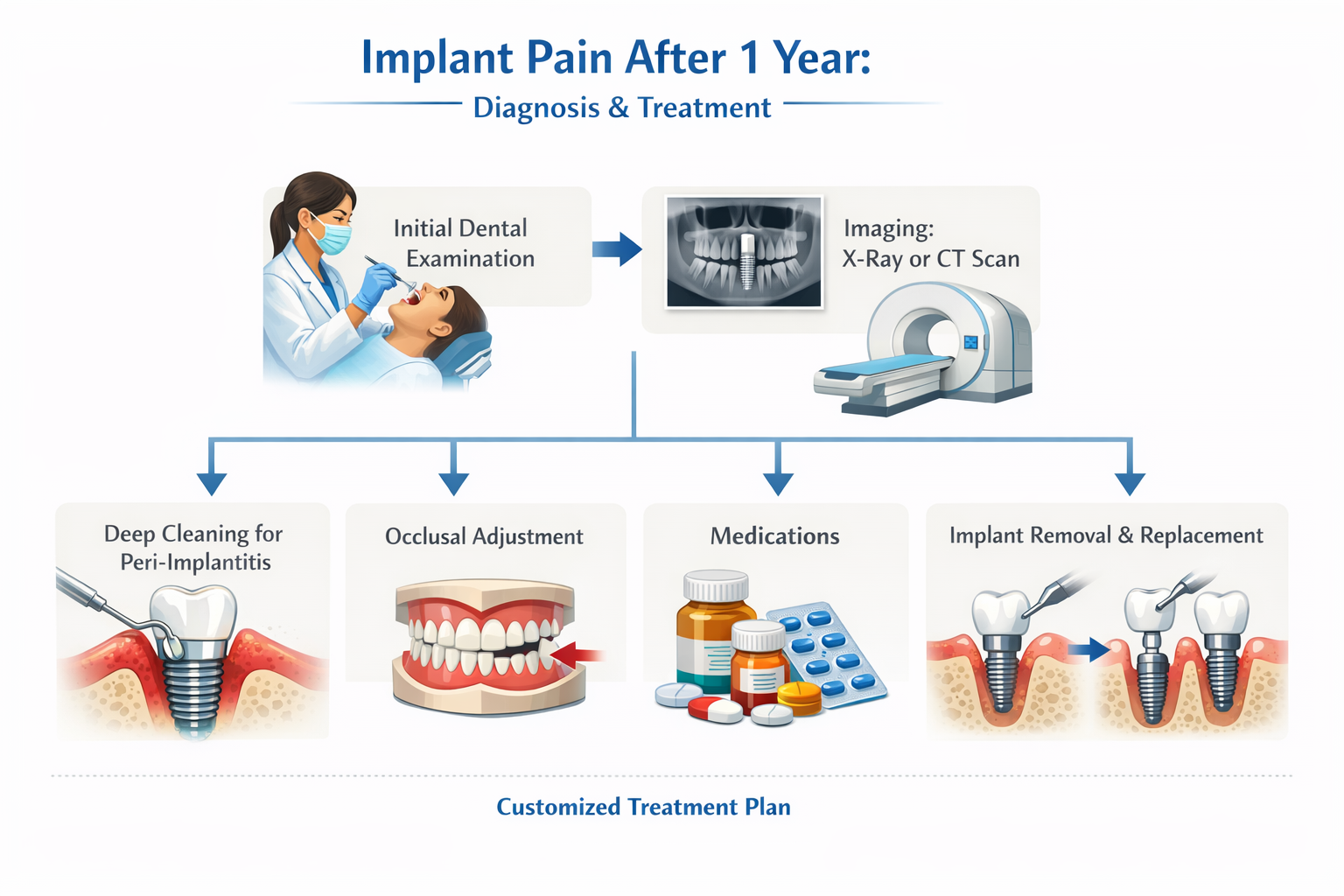
When you experience Implant Pain After 1 Year, an accurate diagnosis is paramount. Your dentist or oral surgeon will conduct a thorough examination to determine the root cause of your discomfort.
The Diagnostic Process
Clinical Examination:
- Visual Inspection: Checking for redness, swelling, pus, or receding gums around the implant.
- Probing: Gently measuring the depth of the gum pocket around the implant to detect signs of inflammation or bone loss, similar to how one might check for gum disease around natural teeth.
- Mobility Check: Gently testing the implant for any movement, which could indicate peri-implantitis or a mechanical issue.
- Occlusal Assessment: Evaluating your bite to identify any excessive forces on the implant.
Radiographic Imaging:
- X-rays (Periapical & Panoramic): These will show the bone level around the implant, revealing any bone loss associated with peri-implantitis or implant failure. They can also highlight issues with adjacent teeth.
- 3D Cone Beam Computed Tomography (CBCT): A more advanced imaging technique, CBCT provides detailed 3D views of the bone and surrounding structures, which is invaluable for identifying nerve impingement, hairline implant fractures, or the extent of bone loss that might not be visible on 2D X-rays. This is often crucial for diagnosing complex cases and planning treatment.
Patient History Review:
- Your dentist will ask about your medical history, medications, habits (e.g., smoking, bruxism), and the timeline of your symptoms. This information helps in identifying risk factors for peri-implantitis or other complications.
Treatment Options for Implant Pain After 1 Year
Once the cause of your implant pain is identified, your dental professional will recommend a tailored treatment plan. The goal is always to resolve the pain, address the underlying problem, and preserve the implant if possible.
1. Treatment for Peri-implantitis
- Non-Surgical Debridement: For early stages, this involves thorough cleaning of the implant surface to remove plaque and calculus. This might be combined with antimicrobial rinses or localized antibiotic application.
- Surgical Debridement: If non-surgical methods are insufficient, surgery may be required to access the implant surface, remove infected tissue, and decontaminate the implant.
- Guided Bone Regeneration (GBR): If bone loss has occurred, bone grafting procedures may be performed to encourage the regeneration of bone around the implant, improving its stability. You can learn more about bone grafts for dental implants here.
- Implant Surface Decontamination: Various techniques and instruments are used to clean the implant surface without damaging its titanium surface, which is crucial for re-osseointegration.
- Implant Removal: In severe, untreatable cases of peri-implantitis where significant bone loss and mobility are present, the implant may need to be removed. After the site heals, a new implant can sometimes be placed.
2. Treatment for Nerve Impingement
- Observation & Medication: If symptoms are mild, anti-inflammatory medications and observation might be recommended.
- Implant Removal: If the nerve impingement is causing severe, persistent pain or significant numbness, the implant may need to be removed to relieve pressure on the nerve. In some cases, a new implant can be placed in a slightly different position after a healing period.
3. Treatment for Occlusal Overload or Malocclusion
- Occlusal Adjustment: Your dentist will carefully adjust the biting surface of the implant crown to ensure it meets your opposing teeth evenly and without excessive force. This might involve grinding down tiny amounts of the crown material.
- Nightguard/Splint: If bruxism is the cause, a custom-made nightguard can protect the implant (and your other teeth) from grinding forces while you sleep.
- Orthodontic Treatment: In rare cases of significant malocclusion, orthodontic treatment might be considered to realign your bite.
4. Treatment for Mechanical Complications
- Tightening/Replacing Screws: A loose abutment screw can often be tightened or replaced. This is a relatively simple procedure.
- Replacing Abutment/Crown: If the abutment or crown is fractured or severely damaged, it will need to be replaced. For more information on crowns, see our guide to a complete guide to dental implant crowns.
- Implant Removal: If the implant itself is fractured, it usually cannot be repaired and will need to be removed. Depending on the bone quality and location, a new implant may be placed.
5. Treatment for Adjacent Tooth Issues
- Addressing the Underlying Problem: If the pain originates from an adjacent natural tooth, the treatment will focus on that tooth. This could involve fillings for decay, root canal therapy, or periodontal treatment for gum disease.
Proactive Steps: Preventing Implant Pain After 1 Year
Prevention is always better than cure. Here’s how you can minimize your risk of developing Implant Pain After 1 Year:
- Maintain Excellent Oral Hygiene: Brush twice daily, floss daily, and use an antimicrobial mouthwash. Pay special attention to cleaning around your implant.
- Regular Dental Check-ups: Visit your dentist for professional cleanings and examinations at least twice a year. Your dentist can spot early signs of trouble before they become major issues. For example, a dental implant cleaning can help prevent serious issues.
- Address Bruxism: If you grind or clench your teeth, discuss a nightguard with your dentist.
- Quit Smoking: Smoking dramatically increases the risk of implant complications.
- Control Systemic Diseases: Manage conditions like diabetes effectively, as they can impact oral health and implant success.
- Choose an Experienced Surgeon: Ensure your initial implant placement is performed by a qualified and experienced oral surgeon or periodontist, as proper placement significantly reduces risks. You can learn more about our experienced team by visiting our about us page.
When to Seek Immediate Professional Help
Do not delay seeking professional help if you experience any of the following symptoms:
- Severe or worsening pain around your implant
- Significant swelling or pus discharge
- Fever along with implant pain
- Bleeding gums around the implant
- Feeling of implant looseness or movement
- Difficulty opening your mouth or swallowing
These symptoms could indicate a serious infection or other urgent issue that requires prompt intervention. The sooner you address implant pain, the better the chances of a successful outcome and preservation of your dental investment.
Pull Quote: “Don’t ignore persistent implant pain. Early detection and intervention are critical for preserving your implant and ensuring long-term oral health.”
Interactive Tool: Dental Implant Pain Symptom Checker
To help you better understand potential causes of your implant pain, use this interactive symptom checker. Please note, this tool is for informational purposes only and does not replace professional medical advice. Always consult with a qualified dental professional for diagnosis and treatment.
Dental Implant Pain Symptom Checker
Possible Causes Based on Your Symptoms:
Disclaimer: This tool provides general information and is not a substitute for professional dental advice. Always consult a qualified dentist or oral surgeon for accurate diagnosis and personalized treatment for any implant pain after 1 year.
Conclusion
Experiencing Implant Pain After 1 Year can be unsettling, but it's important to remember that it's often treatable, especially with early intervention. Dental implants are a fantastic long-term solution for tooth replacement, offering durability and aesthetic appeal. However, like natural teeth, they require diligent care and attention.
If you are experiencing any discomfort, swelling, or unusual sensations around your dental implant, do not hesitate to contact your dental professional. Procrastination can lead to more complex and costly treatments, or even the loss of your implant. A thorough examination, including appropriate imaging like X-rays or CBCT scans, will help pinpoint the exact cause of the pain, whether it's peri-implantitis, a mechanical issue, or nerve involvement.
Remember, your oral health is an integral part of your overall well-being. By staying vigilant, maintaining excellent oral hygiene, and regularly visiting your dentist for check-ups, you can significantly enhance the longevity and comfort of your dental implants for many years to come. For patients in the Dallas area, our team at Dental Implants Dallas TX is ready to provide expert care and guidance.
References
[1] Albrektsson, T., & Isidor, F. (1994). Consensus report of Session IV. Clinical Materials, 15(2), 173-176. (This refers to early literature on implant complications; the understanding of peri-implantitis has evolved but this establishes foundational recognition of implant-related inflammation).
[2] Pye, A. D., Lockhart, D. E., Dawson, J., & Smith, A. J. (2012). A Review of Peri-Implantitis: An Oral Disease of Increasing Importance. British Dental Journal, 212(4), E2.
Leave a Reply
Share your thoughts or ask a question about dental implants. Your email address will not be published.