

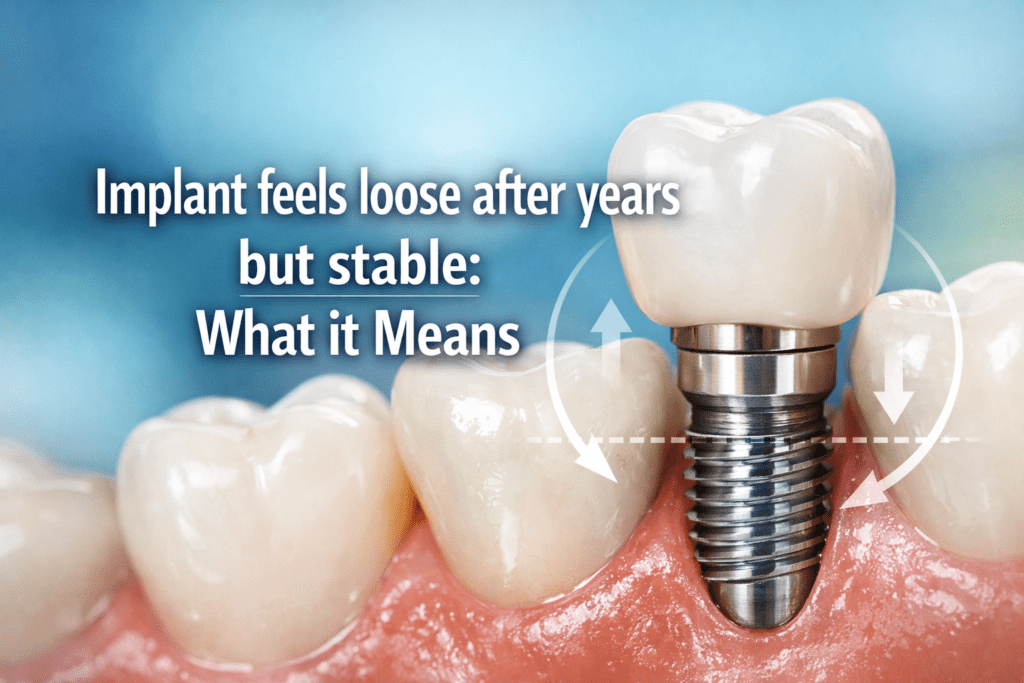
If you’ve had dental implants for several years and suddenly experience a sensation that your implant feels loose, but it seems stable when you test it, it’s natural to be concerned. This sensation, where an implant feels loose after years but stable, is a common issue that often indicates a problem with a component attached to the implant, rather than the implant itself moving within your jawbone. It’s crucial to understand that while this can be unsettling, it doesn’t always signify implant failure, but rather a need for professional evaluation to determine the exact cause and appropriate solution.
Key Takeaways
- A feeling of looseness in a dental implant after years often points to an issue with the prosthetic components (crown, abutment) rather than the implant fixture itself.
- True implant mobility is rare after successful osseointegration and typically indicates a significant problem requiring immediate dental attention.
- Common causes for a perceived loose implant include a loose abutment screw, cement failure, crown damage, or gum recession.
- Prompt consultation with a dentist specializing in dental implants in Dallas is essential for accurate diagnosis and timely intervention.
- Diagnostic tools like X-rays and Resonance Frequency Analysis (RFA) help differentiate between prosthetic issues and actual implant instability.
- Treatment options range from simple screw tightening or re-cementation to replacement of the crown or abutment.
- Maintaining excellent oral hygiene and regular dental check-ups are key to preventing such issues and ensuring long-term oral health.
- Addressing these concerns early can prevent more significant, costly problems and protect your dental implant investment.
Quick Answer
When an implant feels loose after years but stable, it typically means there is a problem with the crown or abutment component attached to the implant, not the implant itself moving in your jawbone. The implant fixture, once successfully integrated with the bone (a process called osseointegration), should be immobile and stable. This perceived looseness necessitates an immediate visit to your dentist to identify if it’s a simple fix, like a loose screw, or something more complex.
Understanding the Sensation: Why an Implant Feels Loose But is Stable
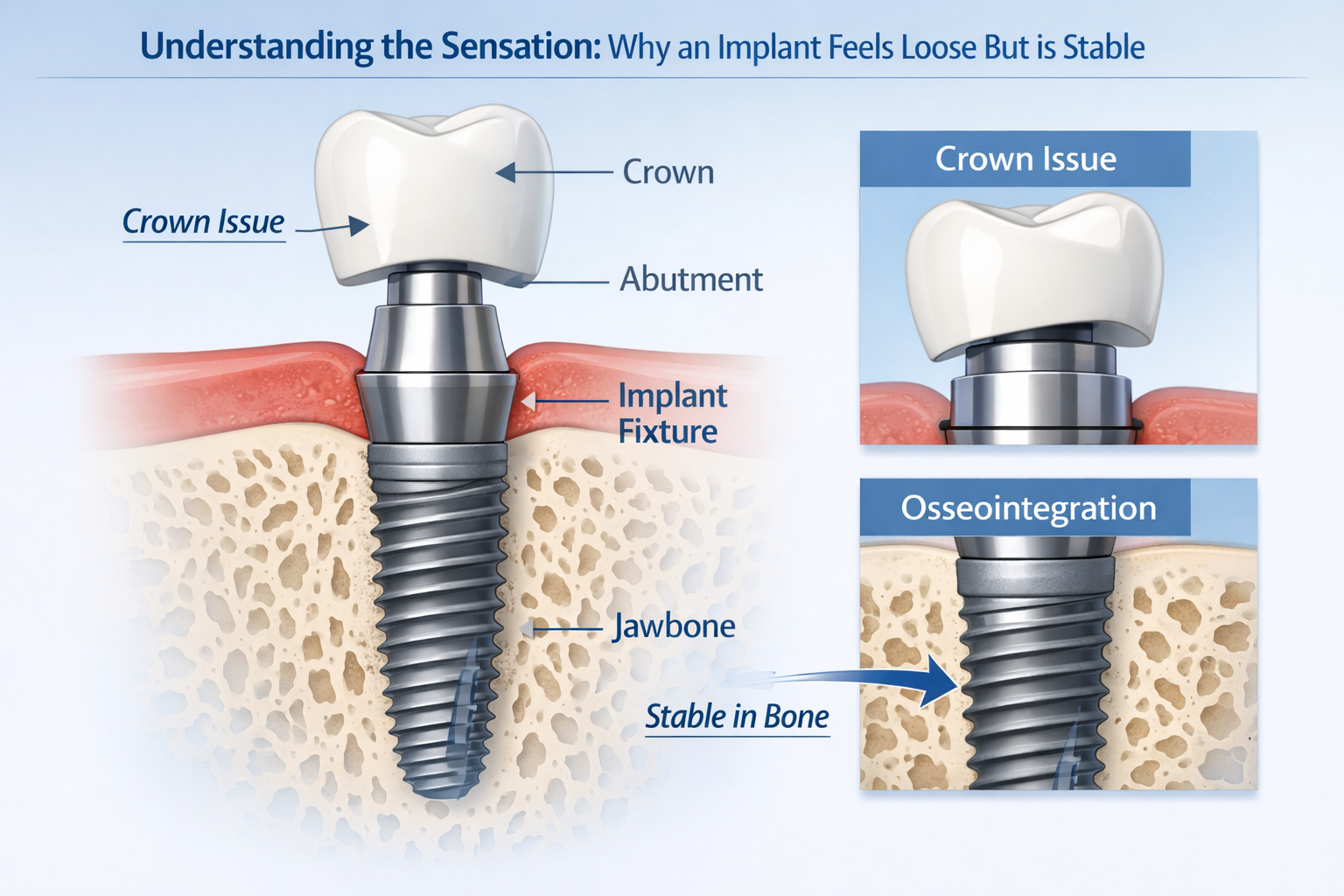
The sensation of a dental implant feeling loose, even when it appears stable, can be perplexing because the implant itself—the titanium post surgically placed into your jawbone—is designed to be a permanent, unmoving fixture. This feeling usually arises when there’s an issue with the prosthetic components attached to the implant, such as the crown (the visible tooth part) or the abutment (the connector between the implant and the crown).
When a patient reports that their implant feels loose after years but stable, it indicates that the core osseointegration, where the implant fixture has fused with the jawbone, is likely intact. A successfully osseointegrated implant exhibits high stability, often quantified by an Implant Stability Quotient (ISQ) of 70 or higher, measured through Resonance Frequency Analysis (RFA) [2]. If this underlying stability is present, the sensation of looseness is almost always originating from the components above the gum line. For instance, a loose crown might wobble slightly, or a detached abutment screw could cause movement that feels like the entire implant is shifting. It’s important for patients to differentiate between true implant mobility, which is a serious concern, and movement in the crown or abutment, which is often a more easily resolvable issue. This distinction highlights why a thorough dental evaluation is critical.
Identifying True Instability vs. Perceived Looseness
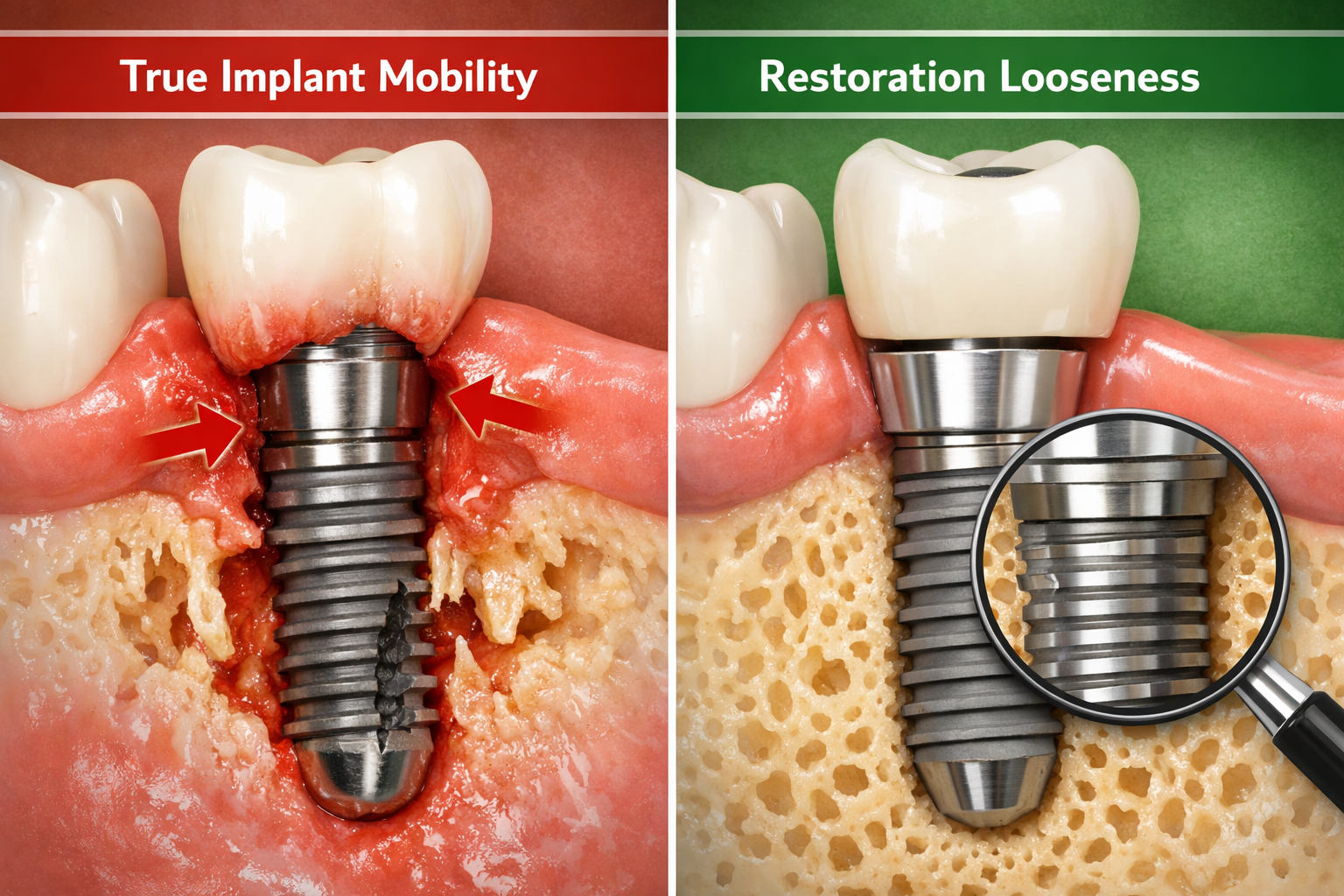
Distinguishing between true implant instability and a perceived looseness is paramount for effective treatment and maintaining long-term oral health. True implant instability, also known as implant failure, involves the actual implant fixture moving within the bone, whereas perceived looseness typically relates to the crown or abutment.
True implant instability is a serious condition where the dental implant has failed to integrate with the jawbone or has lost its integration over time. This can be caused by infection, excessive chewing forces, poor bone quality, or trauma. A truly unstable implant will exhibit palpable movement when gently wiggled by a dental professional, and it may be accompanied by pain, swelling, or pus. Long-term studies indicate that while dental implants have high survival rates, a small percentage can fail over many years due to various factors, including peri-implantitis (gum disease around the implant) [3]. If you suspect true implant instability, immediate consultation with a dentist specializing in dental implants in Dallas is non-negotiable, as early intervention can sometimes salvage the situation or prepare for revision dental implant surgery.
On the other hand, perceived looseness, where the implant feels loose after years but stable, means the titanium implant post is still firmly fused to your jawbone. The sensation of movement originates from the components above the gum line. This could be a loose crown, a loose abutment (the connector), or a loose screw within the abutment. These issues are generally less severe than true implant failure and are often easily corrected by a dental professional. For example, a dentist can simply tighten a loose abutment screw or re-cement a dislodged crown. Understanding this difference can help alleviate initial anxiety, but it should never deter you from seeking professional dental care. Your dentist will conduct a thorough examination, including X-rays, to confirm the source of the sensation.
Common Causes of a Perceived Loose Implant After Years
Several factors can contribute to the sensation that your implant feels loose after years but stable, and most of these involve the components above the gum line rather than the implant post itself. Understanding these common causes can help you describe your symptoms more accurately to your dentist.
Here are the most frequent culprits:
- Loose Abutment Screw: The abutment is the connector between the implant fixture (in the bone) and the prosthetic crown. It is held in place by a small screw. Over time, due to normal chewing forces or occlusal stress, this screw can gradually loosen. This loosening can cause the crown to feel wobbly or loose, even if the implant itself is perfectly stable. This is one of the most common and often simplest issues to resolve.
- Cement Failure: If your dental crown was cemented onto the abutment, the cement can sometimes degrade or wash out over many years. When this happens, the crown can become loose or even detach entirely, creating the feeling that the entire implant is loose. The crown itself may move or click, but the underlying implant and abutment remain secure.
- Crown Fracture or Damage: The prosthetic crown itself can fracture, chip, or crack due to strong biting forces, teeth grinding (bruxism), or accidental trauma. A damaged crown can feel unstable or sharp, leading to a sensation of looseness even if its attachment to the abutment is still firm. In such cases, the crown typically needs to be repaired or replaced. For patients who grind their teeth, wearing a dental implant night guard can help prevent future damage.
- Abutment Fracture: While less common, the abutment itself can fracture or become damaged. This would create instability between the crown and the implant, resulting in a loose feeling. Abutment fractures usually require replacement of the abutment and potentially the crown.
- Gum Recession: Although not directly making the implant feel loose, significant gum recession around the implant can expose parts of the abutment or even the implant collar. This exposure might change the sensation around the implant, making it feel “different” or less secure, even if the implant is stable. Gum recession can also sometimes expose residual cement, which can irritate the gum tissue and lead to inflammation, further altering how the area feels. Addressing long-term oral health and gum care is vital.
- Trauma: An injury or blow to the face can impact the dental implant and its components. While the implant fixture is strong, significant trauma can potentially loosen the abutment or crown, or in severe cases, even compromise the osseointegration itself.
It’s important to remember that self-diagnosis is not recommended. Only a qualified dental professional can accurately diagnose the cause of your discomfort.
The Importance of Prompt Dental Evaluation for a Loose Implant
Regardless of whether your implant feels loose after years but stable, or if you suspect true mobility, prompt dental evaluation is essential. Delaying a visit to your dentist, especially if you have a dental implant, can lead to more complex problems and potentially jeopardize the long-term success of your implant.
When you notice any unusual sensation, movement, or discomfort with your dental implant, it’s a clear signal that something needs attention. Even if it’s merely a loose crown, leaving it unaddressed can allow bacteria to accumulate under the crown, potentially leading to peri-implantitis—an infection around the implant that can cause bone loss and ultimately implant failure [3]. Moreover, a loose crown or abutment can alter your bite, leading to uneven chewing forces that put undue stress on the implant and surrounding teeth. Early detection and intervention mean that many issues, like a loose screw or a failed cement bond, can be resolved quickly and affordably. Waiting too long might necessitate more extensive and costly procedures, such as needing a revision dental implant surgery in Dallas. Prioritizing patient safety and long-term oral health means acting decisively when symptoms arise.
Diagnostic Steps for an Implant That Feels Loose But is Stable
When you visit a dentist in Dallas with a complaint that your implant feels loose after years but stable, a thorough diagnostic process will be initiated to pinpoint the exact cause of the sensation. This methodical approach ensures that the correct problem is identified and the most effective treatment plan is developed.
The diagnostic steps typically include:
- Clinical Examination: The dentist will visually inspect the implant site and surrounding tissues. They will gently test the crown and abutment for any palpable movement using specialized instruments. They will also check for signs of inflammation, redness, swelling, or pus, which could indicate infection or peri-implantitis. The bite will be assessed to check for any uneven pressure on the implant.
- Radiographic Evaluation (X-rays): This is a critical step.
- Periapical X-rays: These standard dental X-rays provide a two-dimensional view of the implant and the surrounding bone. They help the dentist assess the bone level around the implant, check for any bone loss (a sign of potential peri-implantitis or true implant failure), and visualize the integrity of the implant fixture itself.
- CBCT Scan (Cone Beam Computed Tomography): In some cases, a 3D CBCT scan may be recommended. This advanced imaging technique provides a detailed three-dimensional view of the jawbone and implant, offering superior information on bone density, the implant’s position, and any subtle bone changes that might not be visible on a standard X-ray.
- Resonance Frequency Analysis (RFA): This non-invasive diagnostic tool measures implant stability using an Implant Stability Quotient (ISQ). A small transducer is attached to the implant, and its resonance frequency is measured. Higher ISQ values (typically 70 and above) indicate greater stability and successful osseointegration [2]. If the ISQ is high, it strongly suggests the implant itself is stable, directing the focus to the prosthetic components.
- Occlusal Analysis: The dentist will evaluate your bite to see if there are any abnormal forces or premature contacts on the implant crown. Excessive force can loosen components or even lead to implant failure over time. This analysis may involve using articulating paper to identify high spots.
- Review of Medical and Dental History: Your dentist will review your complete medical and dental history, including when the implant was placed, any previous issues, and current medications, as these can influence implant health. For example, conditions like diabetes can affect diabetic dental implant recovery and long-term success.
By systematically going through these diagnostic steps, your dentist can accurately determine if the sensation of looseness is due to a minor prosthetic issue or a more significant concern with the implant fixture itself.
Treatment Options When Your Implant Feels Loose But is Stable
When your implant feels loose after years but stable, the treatment approach will depend directly on the specific cause identified during the diagnostic process. Fortunately, most issues causing a perceived looseness are highly treatable, often with straightforward procedures.
Here are the typical treatment options:
- Tightening a Loose Abutment Screw: This is often the simplest and most common solution. The dentist will carefully remove the crown (if it’s a screw-retained crown) or access the screw through a small hole in the biting surface of the crown (for cement-retained crowns with screw access). The loose abutment screw is then re-tightened to the proper torque specifications using a specialized instrument. After tightening, the access hole is filled with a tooth-colored material.
- Re-cementing a Loose Crown: If the crown has become debonded due to cement failure, the dentist will remove the loose crown, clean any old cement from both the crown and the abutment, and then re-cement the crown securely back in place using fresh dental cement. In some cases, a new crown may be necessary if the existing one is damaged or no longer fits properly.
- Replacing a Damaged or Fractured Crown/Abutment: If the crown or abutment is fractured, severely chipped, or otherwise damaged beyond repair, it will need to be replaced. This often involves taking new impressions and fabricating a new custom crown or abutment. The cost of a replacement crown for a single tooth implant will be part of the single tooth implant costs in Dallas.
- Addressing Peri-implantitis (if present): If the diagnostic evaluation reveals signs of peri-implantitis (inflammation and bone loss around the implant), a more involved treatment plan will be necessary. This can range from non-surgical treatments like deep cleaning around the implant (debridement) and antibiotic therapy, to surgical procedures to remove infected tissue, clean the implant surface, and potentially graft bone to regenerate lost bone support. Early detection significantly improves the prognosis for treating peri-implantitis.
- Occlusal Adjustment: If the issue is determined to be due to excessive biting forces or an uneven bite, the dentist may perform an occlusal adjustment to relieve pressure on the implant crown. This involves carefully reshaping the biting surface of the crown or opposing teeth to ensure even contact and distribution of forces. A dental implant night guard may also be recommended if bruxism is a contributing factor.
The goal of treatment is to restore the integrity and comfort of your dental implant system, ensuring its longevity and your continued satisfaction with your tooth replacement options. Your dentist will discuss the recommended approach and ensure you understand the procedure fully.
Preventing Perceived Looseness and Ensuring Long-Term Implant Health
Maintaining the health and stability of your dental implants over many years requires a proactive approach to oral hygiene and regular professional care. While some issues like a loosening screw can occur even with excellent care, many problems leading to a perceived loose implant can be prevented.
Here are key strategies to ensure long-term implant health:
- Commit to Excellent Oral Hygiene: Just like natural teeth, dental implants require meticulous daily cleaning.
- Brushing: Brush twice daily with a soft-bristled toothbrush. Pay special attention to the areas around the implant crowns and gum line.
- Flossing/Interdental Cleaning: Use dental floss, interdental brushes, or a water flosser specifically designed for implants to clean around the implant abutments and under the crowns where food particles and plaque can accumulate. Special sulcus brushes for implants can be very effective.
- Antimicrobial Mouthwash: Your dentist may recommend an antimicrobial mouthwash to help control bacteria and reduce the risk of gum inflammation around the implant.
- Regular Dental Check-ups and Cleanings: Schedule routine visits with your dentist and dental hygienist every six months, or more frequently if recommended. These appointments are crucial for:
- Professional Cleaning: Hygienists use specialized tools designed for implants to gently clean around them without scratching the surface.
- Comprehensive Examination: The dentist will check the integrity of your implant, abutment, and crown, assess gum health, and take X-rays periodically to monitor bone levels. Early detection of issues like peri-implantitis or a loosening screw is vital.
- Address Bruxism (Teeth Grinding/Clenching): If you grind or clench your teeth, especially at night, the excessive forces can put immense stress on your dental implants, leading to component loosening or even fractures. Your dentist may recommend a custom-fitted dental implant night guard to protect your implants and natural teeth.
- Avoid Hard and Sticky Foods: While dental implants are strong, it’s wise to avoid excessively hard foods (like hard candies, ice, or nuts) or extremely sticky foods that could potentially dislodge a crown or damage components.
- Don’t Use Your Teeth as Tools: Avoid using your implant teeth (or any teeth) to open packages, bite nails, or hold objects, as this can exert undue force and lead to damage.
- Maintain Overall Health: Systemic conditions like uncontrolled diabetes can negatively impact oral health and the longevity of dental implants. Managing chronic conditions and maintaining a healthy lifestyle supports your long-term oral health.
- Promptly Address Any Concerns: If you notice any changes—a sensation of looseness, pain, swelling, or unusual clicking—contact your dental professional in Dallas immediately. Early intervention is always better.
By adhering to these preventive measures, you significantly increase the chances of your dental implants lasting for decades, providing you with a stable and functional solution for missing teeth. Dental implants often exceed 20 to 30 years with proper care [4].
Costs Associated with Addressing a Loose-Feeling Implant in Dallas
Understanding the potential costs involved in addressing a dental implant that feels loose but stable is an important part of patient-first care. The actual cost will vary widely depending on the underlying cause, the complexity of the repair, and the materials required. These costs are important considerations for anyone with dental implants in Dallas.
Here’s a general overview of potential costs for various scenarios:
- Simple Screw Tightening: This is typically the least expensive fix. It involves chair time for the dentist to access and re-tighten the abutment screw. The cost might range from $75 to $250, often considered a minor procedure.
- Re-cementing a Crown: If a crown has debonded, cleaning and re-cementing it is generally a straightforward procedure. This could cost anywhere from $100 to $350.
- Replacing a Damaged Crown: If the existing crown is fractured or severely damaged and needs to be replaced entirely, the cost will be higher. A new dental crown can range from $1,000 to $2,500 or more, depending on the material (porcelain, zirconia, etc.) and the laboratory fees. This is similar to the cost of a new crown for a natural tooth. For more insights on costs, you can explore resources like the single tooth implant costs in Dallas 2026.
- Replacing a Damaged Abutment: If the abutment itself is damaged and requires replacement, the cost could range from $300 to $1,000, in addition to the cost of a new crown if the old one is incompatible or damaged.
- Treating Peri-implantitis: If infection and bone loss are present (peri-implantitis), the treatment can be more extensive and therefore more costly.
- Non-surgical debridement and antibiotics: This might range from $200 to $700.
- Surgical intervention (e.g., debridement, bone graft): These procedures can be significantly more expensive, ranging from $800 to several thousand dollars, depending on the extent of bone loss and the complexity of the surgery.
- Diagnostic Fees: Initial consultations and diagnostic imaging (X-rays, CBCT scans) will also incur fees. An initial consultation might be $50 to $150, with X-rays adding $25 to $150 per film, and a CBCT scan potentially $300 to $600.
It’s important to note that these are estimated costs for the Dallas, TX area in 2026. Many dental offices offer financing options like CareCredit or in-house payment plans. While dental insurance often covers a portion of diagnostic services and some restorative procedures (like crowns), coverage for implant-related issues can vary. It is always recommended to discuss all costs and financing options directly with your dental provider in Dallas during your consultation. Transparent discussions about implant cost in Dallas are a cornerstone of patient care.
FAQs About a Loose-Feeling Dental Implant
Q1: My dental implant feels loose but isn’t painful. Is it still serious?
A1: Yes, any sensation of looseness, even without pain, warrants immediate dental evaluation. While it may not be true implant failure, it could indicate a loose crown or abutment, which can lead to complications like infection or further damage if not addressed.
Q2: Can a loose dental implant tighten itself?
A2: No, a truly loose dental implant fixture will not tighten itself. If the sensation is due to a loose crown or abutment screw, it requires professional intervention to re-tighten or re-cement the component.
Q3: How do dentists check if an implant is truly stable?
A3: Dentists use several methods, including a clinical examination to check for mobility, X-rays to assess bone levels, and sometimes Resonance Frequency Analysis (RFA) which provides an Implant Stability Quotient (ISQ) value, where higher numbers indicate greater stability [2].
Q4: What is osseointegration, and why is it important for implant stability?
A4: Osseointegration is the direct structural and functional connection between living bone and the surface of a load-bearing artificial implant. It’s crucial because it’s what securely anchors the dental implant fixture into your jawbone, providing the stable foundation for your prosthetic tooth.
Q5: What are the signs of true dental implant failure?
A5: Signs of true dental implant failure include visible implant mobility, persistent pain, swelling, pus around the implant, significant bone loss visible on X-rays, or the implant falling out entirely. If you experience any of these, seek immediate dental care.
Q6: Can teeth grinding (bruxism) cause my implant to feel loose?
A6: Yes, chronic teeth grinding or clenching (bruxism) can exert excessive forces on your dental implant components, potentially leading to a loosened abutment screw, crown damage, or even impacting the long-term stability of the implant itself. A dental implant night guard is often recommended in such cases.
Q7: How long do dental implants typically last?
A7: With proper care and good oral hygiene, dental implants can last for 20 to 30 years or even a lifetime. The titanium implant post itself is highly durable once osseointegrated [4]. The crowns, however, may need replacement every 10-15 years due to normal wear and tear.
Q8: What should I do if my dental implant feels loose after hours when dental offices are closed?
A8: If you feel your implant is loose after hours, try to avoid disturbing it. Do not chew on that side of your mouth and refrain from wiggling it with your tongue or fingers. Contact your dental professional first thing the next morning, or seek emergency dental implant care if there’s significant pain or swelling.
Conclusion
Experiencing a sensation where your implant feels loose after years but stable can be unnerving, but it’s important to remember that this often points to an issue with the prosthetic components rather than a failing implant. Whether it’s a loose abutment screw, cement failure, or crown damage, these issues are typically highly treatable. The key is to seek prompt professional evaluation from a dentist specializing in dental implants in Dallas, TX. Early diagnosis using clinical examination, X-rays, and tools like Resonance Frequency Analysis can pinpoint the problem and guide appropriate intervention, from a simple tightening to a new crown. By prioritizing regular dental check-ups, maintaining excellent oral hygiene, and addressing any concerns immediately, you can ensure the long-term oral health and stability of your valuable dental implant investment. Don’t hesitate to reach out to a trusted dental professional for a comprehensive consultation to safeguard your smile.
References
[1] bioinformation – https://www.bioinformation.net/022/973206300220508.pdf
[2] Nct07162389 – https://clinicaltrials.gov/study/NCT07162389
[3] pubmed.ncbi.nlm.nih.gov – https://pubmed.ncbi.nlm.nih.gov/41691517/
[4] The Long Term Value Of Dental Implants – https://www.phdental.com/oral-health-news/2026/january/the-long-term-value-of-dental-implants/
Leave a Reply
Share your thoughts or ask a question about dental implants. Your email address will not be published.