

Experiencing the sensation that your new or existing dental implant feels high when you bite down can be unsettling and disruptive. This common concern, often described as feeling like the implant tooth is “taller” than your other teeth, is a key indicator that your bite might be off. Understanding why this happens and what steps you should take is crucial for the long-term success of your dental implant and your overall oral health. In Dallas, Texas, our goal at Dental Implant Education is to provide clear, medically responsible information to help you navigate such situations and ensure you receive appropriate care.
Key Takeaways
- “Implant feels high when I bite” is a common symptom indicating bite pressure issues that require professional evaluation.
- Unlike natural teeth, implants lack a periodontal ligament to cushion bite forces, making them sensitive to uneven pressure [1].
- Initial bite adjustments are often necessary after crown placement to ensure even force distribution and prevent discomfort [1].
- Ignoring a “high” bite can lead to complications such as inflammation, bone loss around the implant, or implant failure [1, 4].
- The feeling can develop over time due to shifting teeth or changes in bite patterns, not just immediately after placement [2, 3].
- Contact your dental professional promptly if you experience this sensation for an accurate diagnosis and timely adjustment.
- Regular dental check-ups are vital for monitoring your bite and implant health, especially for dental implants in Dallas.
- A simple bite adjustment by your dentist often resolves the problem, restoring comfort and preventing further issues [1].
Quick Answer
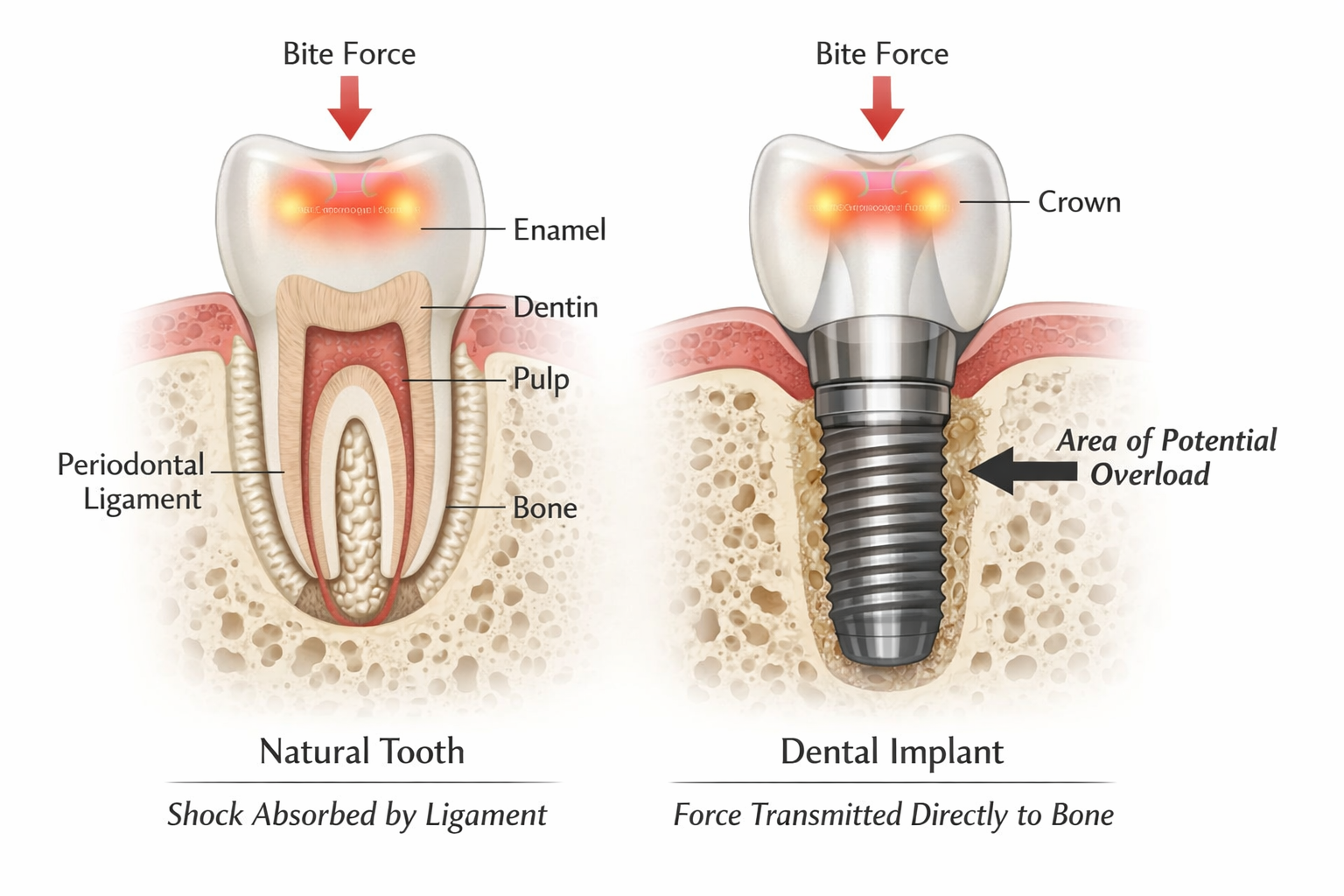
If your dental implant feels high when you bite, it typically means there is uneven pressure on the implant crown, causing it to contact opposing teeth before your natural teeth. This sensation warrants immediate attention from your dentist or oral surgeon, as it can lead to discomfort, inflammation, and potential damage to the implant if left unaddressed. A professional evaluation and a minor bite adjustment are usually effective in resolving this issue [1].
Why Does My Dental Implant Feel High When I Bite? Understanding Bite Dynamics
The sensation of your dental implant feeling high when you bite is primarily due to an imbalance in your occlusion, or bite, where the implant crown makes premature or excessive contact with the opposing arch. This issue arises because dental implants behave differently from natural teeth under pressure.
Unlike natural teeth, which are surrounded by a periodontal ligament that provides a shock-absorbing cushion and allows for slight movement, dental implants are rigidly integrated directly into the jawbone [1]. This direct connection, known as osseointegration, means that any bite force applied to the implant is transmitted directly to the bone without the natural cushioning mechanism [1]. When the implant crown is even slightly “high,” these uneven forces can lead to discomfort, a feeling of pressure, or even localized pain, particularly when chewing [1]. This is a characteristic symptom of implant bite pressure and overload [1].
Several factors can contribute to an implant feeling high:
- Initial Crown Placement: When the permanent crown is first placed on the implant, it might be slightly too tall or have an improper contour. While dentists strive for perfect alignment, minor adjustments are often needed after the patient has had some time to chew and assess their bite.
- Changes in Bite Over Time: Your bite is not static; it can change over time due to various factors. Adjacent teeth can shift, other restorations might wear down, or natural tooth wear can alter your bite pattern [3]. These subtle changes can cause an implant that initially felt fine to start feeling high. Bite force changes occur dynamically as patients adjust to implants, with notable alterations within as little as three months post-operation [3].
- Bruxism (Teeth Grinding or Clenching): Patients who grind or clench their teeth, especially during sleep, can exert significant and unnatural forces on their dental implants. This can exacerbate any existing high spots on the crown or lead to the sensation of high pressure, causing discomfort and potential damage. For more information on managing this, you can read about Preventing Teeth Grinding & Dental Implant Damage in 2026.
- Inflammation or Swelling: Although less common for a “high” feeling, localized inflammation around the implant site can sometimes alter the way pressure is perceived, making the crown feel prominent. This is usually accompanied by other symptoms like pain or redness.
- Incorrect Implant Placement (Rare): In very rare cases, if the implant post itself was placed at an incorrect angle, it could affect how the final crown seats and interacts with the opposing teeth. However, modern implant surgery, especially with 3D guided implant surgery in Dallas, TX, significantly minimizes this risk.
Understanding these biomechanical differences and potential causes is the first step in addressing the problem. It’s crucial not to ignore the feeling that your implant feels high when you bite, as chronic uneven pressure can lead to more significant issues down the line.
What Are the Risks of Ignoring a Dental Implant That Feels High When I Bite?
Ignoring a dental implant that feels high when you bite can lead to a cascade of problems, ranging from minor discomfort to serious complications that could jeopardize the long-term success of your implant. Because dental implants lack the natural cushioning of a periodontal ligament, they are more susceptible to the adverse effects of uneven biting forces compared to natural teeth [1].
Here are the primary risks associated with an unadjusted “high” implant:
- Chronic Pain and Discomfort: The most immediate consequence is persistent discomfort or pain, especially when chewing [1]. This can range from a dull ache to sharp sensitivity in the affected area, making eating and speaking uncomfortable. Pain that occurs only when chewing, especially on one specific spot, combined with tenderness when gently tapping teeth together, indicates bite pressure issues [1].
- Implant Overload and Bone Loss: Sustained excessive or uneven pressure on a dental implant can lead to what is known as “implant overload.” This constant stress can cause the bone around the implant to resorb or recede, weakening the implant’s integration with the jawbone [1]. Over time, this bone loss can compromise the stability of the implant.
- Peri-implantitis: Chronic inflammation around the implant, often triggered or exacerbated by excessive biting forces, can lead to peri-implantitis. This is a severe inflammatory condition affecting the soft tissues and bone surrounding a dental implant, similar to periodontal disease in natural teeth [4]. If left untreated, peri-implantitis can cause significant bone loss and eventually lead to implant failure. For more details on this, you can explore Peri-Implantitis Treatment Costs Dallas 2026.
- Damage to the Implant Crown or Abutment: Excessive force can also damage the implant crown itself, leading to chips, cracks, or even fracture. The abutment, which connects the crown to the implant, can also become loose or damaged under chronic stress.
- Damage to Opposing Teeth: The constant, uneven contact can also affect the natural teeth or restorations in the opposing arch, leading to excessive wear, sensitivity, or even fracture of those teeth.
- Compromised Osseointegration: If the implant is still in the process of osseointegration (fusing with the bone) when it is experiencing excessive bite forces, it can disrupt this delicate healing process and potentially lead to implant failure.
- Difficulty with Oral Hygiene: Pain or discomfort can make proper brushing and flossing difficult around the affected implant, increasing the risk of plaque accumulation and further inflammation.
Given these potential complications, it’s clear that the sensation of a high implant is not something to be overlooked. Prompt evaluation by your dental professional is essential to prevent these issues and ensure the longevity and comfort of your dental implant.
When Should You Contact Your Dentist or Oral Surgeon in Dallas for a “High” Implant?
If your dental implant feels high when you bite, you should contact your dentist or oral surgeon in Dallas as soon as possible. While some minor initial sensations after a new crown placement might settle, persistent discomfort or a distinct feeling that the implant tooth is “taller” than others warrants immediate professional attention [1].
Here’s a breakdown of when and why you should reach out:
- Immediately If You Notice the Sensation: Don’t wait for pain to become severe or for other symptoms to develop. The moment you feel your implant is high, or your bite feels “off,” it’s time to call. Early intervention often means a quicker, simpler fix, such as a minor bite adjustment [1].
- If Discomfort Occurs Only When Chewing: If you experience pain or tenderness specifically when you bite down or chew, particularly on that one implant, this is a strong indicator of a bite issue [1].
- If You Feel Tenderness When Tapping Teeth: Gently tapping your teeth together and feeling tenderness specifically on the implant tooth is another sign pointing to bite pressure problems [1].
- If the Feeling Persists After the Initial Healing Phase: If your implant crown was recently placed, your dentist might advise a short period for you to adjust. However, if the “high” feeling doesn’t resolve or worsens after a few days to a week, it’s time for a follow-up appointment. For general timelines, consider our guide on How Long Does Dental Implant Process Take? 2026 Guide.
- If Accompanied by Other Symptoms: Should the high sensation be paired with any other concerning symptoms like swelling, redness, bleeding, unusual taste, or increasing pain, contact your dentist immediately. While often a bite issue, these could also indicate other complications requiring urgent evaluation [4]. For concerns about bleeding, see Spitting Blood After Dental Implant: Guide & When to Worry.
- If You Have a History of Bruxism: If you are known to grind or clench your teeth, you are at a higher risk for implant bite issues, and any sensation of a high implant should be promptly evaluated to prevent damage.
Your dental professional in Dallas is equipped to accurately diagnose the cause of the problem and provide the necessary treatment. Ignoring bite overload can lead to more serious implant complications [1]. Encouraging informed decision-making and professional consultation is key to maintaining long-term oral health.
The Diagnostic Process for a High-Feeling Dental Implant
When you consult your dentist in Dallas about an implant that feels high when you bite, they will follow a systematic diagnostic process to identify the exact cause and determine the best course of action. This thorough approach ensures that any underlying issues are addressed correctly, safeguarding your long-term oral health.
The diagnostic process typically includes:
Comprehensive Oral Examination:
- Visual Inspection: The dentist will first visually inspect the implant, the crown, and the surrounding gum tissue for any signs of inflammation, redness, or swelling. They will also look for any visible chips or cracks in the crown itself.
- Manual Palpation: Gently feeling the area around the implant can reveal tenderness or swelling.
Occlusal Assessment (Bite Check):
- Articulating Paper: This is a crucial step. The dentist will use thin articulating paper, often colored, for you to bite down on. The paper leaves marks on your teeth and the implant crown, indicating where contact points are too heavy or premature. This allows the dentist to precisely identify the “high spots” [1].
- Patient Feedback: Your subjective feedback is invaluable. The dentist will ask you to describe exactly where and when you feel the high spot, if it’s constant or only when chewing, and the intensity of the discomfort.
- Observing Jaw Movement: The dentist will observe your jaw movements and how your teeth come together from different angles to understand your natural bite pattern.
Radiographic Evaluation (X-rays):
- Periapical and Panoramic X-rays: X-rays are essential to assess the bone level around the implant and check for any signs of bone loss, which could indicate implant overload or peri-implantitis [4]. They can also reveal issues with the implant post itself or the abutment connection.
- 3D Cone Beam CT (CBCT) Scan (if necessary): For more complex cases or if initial X-rays are inconclusive, a CBCT scan might be recommended. This provides a detailed 3D view of the bone structure, implant position, and surrounding anatomical features, offering a comprehensive understanding of the situation. This advanced imaging is a cornerstone for Dental implants in Dallas.
Implant Mobility Test:
- The dentist might gently test the implant for any signs of mobility, though this is usually not an issue with a “high” bite unless significant bone loss has occurred.
Review of Medical and Dental History:
- The dentist will review your medical history, looking for any systemic conditions that might affect implant health (e.g., uncontrolled diabetes, which can impact Diabetic Dental Implant Recovery), and your dental history, including any history of bruxism or previous implant complications.
By combining these diagnostic tools, your Dallas dentist can accurately pinpoint why your implant feels high when you bite and formulate an effective treatment plan to restore comfort and function.
Treatment Options for a Dental Implant That Feels High
Once your dentist in Dallas has diagnosed the cause of your “high” feeling implant, they will recommend a specific treatment plan aimed at restoring a comfortable and functional bite. The good news is that for many cases, the solution is straightforward and highly effective.
Here are the common treatment options:
1. Occlusal Adjustment (Bite Adjustment)
- The Most Common Solution: For the vast majority of cases where an implant feels high, a simple occlusal adjustment is performed. This involves gently reshaping the chewing surface of the implant crown [1].
- Procedure: Using the articulating paper to identify the high spots, your dentist will carefully use a fine polishing bur to remove minuscule amounts of material from the crown. This process is precise and often performed incrementally, with repeated bite checks, until your bite feels even and comfortable.
- Why it Works: This adjustment ensures that the implant crown integrates smoothly into your overall bite, distributing forces evenly across all your teeth, similar to how natural teeth interact [1]. Bite overload often improves dramatically after minor bite adjustments [1].
- Pain-Free: This procedure is typically painless and does not require anesthesia, as it only involves reshaping the inert crown material.
2. Replacing the Crown or Abutment
- When It’s Needed: If the implant crown is significantly misaligned, poorly designed, or damaged (e.g., a deep crack), a simple adjustment might not be sufficient. In such cases, the crown may need to be remade and replaced. Similarly, if the abutment (the connector between the implant and the crown) is ill-fitting or damaged, it may also need replacement.
- Procedure: This involves removing the existing crown and potentially the abutment, taking new impressions, and fabricating a new crown designed to fit perfectly into your bite. This process will ensure proper bite alignment and esthetics.
3. Addressing Bruxism
- If Teeth Grinding is a Factor: If your dentist determines that bruxism (teeth grinding or clenching) is contributing to the high sensation or putting excessive stress on your implant, addressing this habit is crucial.
- Solutions: This typically involves prescribing a custom-fitted nightguard or occlusal splint. Worn during sleep, the nightguard acts as a protective barrier, cushioning the bite forces and preventing direct stress on your implants and natural teeth. Our article on Bruxism & Dental Implants: Prevent Damage in 2026 provides more detailed information.
- Other Approaches: Stress management techniques, biofeedback, or, in some cases, muscle relaxants may also be recommended to reduce bruxism.
4. Rarely, Implant Revision Surgery
- For Complex or Severe Issues: In very rare and severe cases, such as an incorrectly placed implant that cannot be functionally restored with a new crown or if significant bone loss has occurred due to chronic overload, revision dental implant surgery might be considered [4]. This is a more extensive procedure and would only be recommended after all other conservative options have been exhausted. For complex cases, consider learning about Revision Dental Implant Surgery Dallas: Expert Care 2026.
The recommended action is to have your oral surgeon or dentist evaluate the sensation to rule out other causes and determine if bite adjustment is needed [1]. Prompt treatment is key to alleviating discomfort and ensuring the long-term success of your dental implant, which is vital for patients seeking missing teeth solutions in Dallas.
Maintaining Your Dental Implant Comfort and Oral Health
Ensuring your dental implant remains comfortable and functional is an ongoing process that extends beyond initial treatment. Maintaining good oral health and adhering to professional recommendations are crucial for the longevity of your implant and your overall well-being. This is especially important for patients who have invested in dental implants in Dallas and want to protect their investment.
Here are key strategies for maintaining your implant comfort and oral health:
1. Excellent Oral Hygiene Practices
- Brush and Floss Daily: Just like natural teeth, dental implants require meticulous oral hygiene. Brush at least twice a day with a soft-bristled toothbrush and a non-abrasive toothpaste. Floss daily, paying special attention to cleaning around the implant, using dental floss, interdental brushes, or a water flosser. For All-on-4 implants, a specific routine is vital; see our All-on-4 Dental Implant Cleaning Routine: 2026 Guide.
- Use Antimicrobial Mouthwash: Your dentist might recommend an antimicrobial mouthwash to help reduce bacteria and prevent gum inflammation around the implant.
2. Regular Dental Check-ups and Professional Cleanings
- Scheduled Appointments: Adhere to your dentist’s recommendations for regular check-ups, typically every six months. These appointments are vital for monitoring the health of your implant, assessing your bite, and performing professional cleanings.
- Early Detection: Regular visits allow your dentist to detect and address potential issues like early signs of peri-implantitis, or subtle changes in your bite, before they become serious [4]. Early intervention can prevent minor issues from escalating into complex problems.
- Implant-Specific Care: Dental hygienists trained in implant care use specialized instruments that won’t scratch the implant surface, ensuring a thorough yet gentle cleaning.
3. Address Bruxism Proactively
- Nightguard Use: If you have a history of teeth grinding or clenching, consistently wearing a custom-fitted nightguard as prescribed by your dentist is non-negotiable. This protects your implants and natural teeth from excessive forces. Learn more in our guide on Bruxism & Dental Implants: Prevent Damage in 2026.
4. Avoid Hard and Sticky Foods (Initially and with Caution)
- During Healing: Especially during the initial healing phase after implant surgery, avoid very hard, crunchy, or sticky foods that could put undue stress on the implant or dislodge a temporary crown.
- Long-Term Caution: While implants are strong, exercising caution with extremely hard foods (like ice, hard candies, or unpopped popcorn kernels) can help prevent damage to your implant crown or even the implant itself over the long term.
5. Monitor Your Bite and Sensations
- Be Mindful: Pay attention to how your bite feels. If you notice any changes, such as your implant feeling high, discomfort when chewing, or any persistent strange sensations, contact your dentist promptly. Ignoring a high implant can lead to more serious complications [1].
- Don’t Self-Diagnose or Adjust: Never attempt to adjust your bite or tamper with your implant or crown yourself. Always seek professional advice.
By following these guidelines, you play an active role in protecting your dental implant investment and ensuring a comfortable, functional, and healthy smile for years to come. For those considering tooth replacement options, it’s important to understand the long-term commitment to oral health education and care.
Common Misconceptions About Dental Implant Sensations
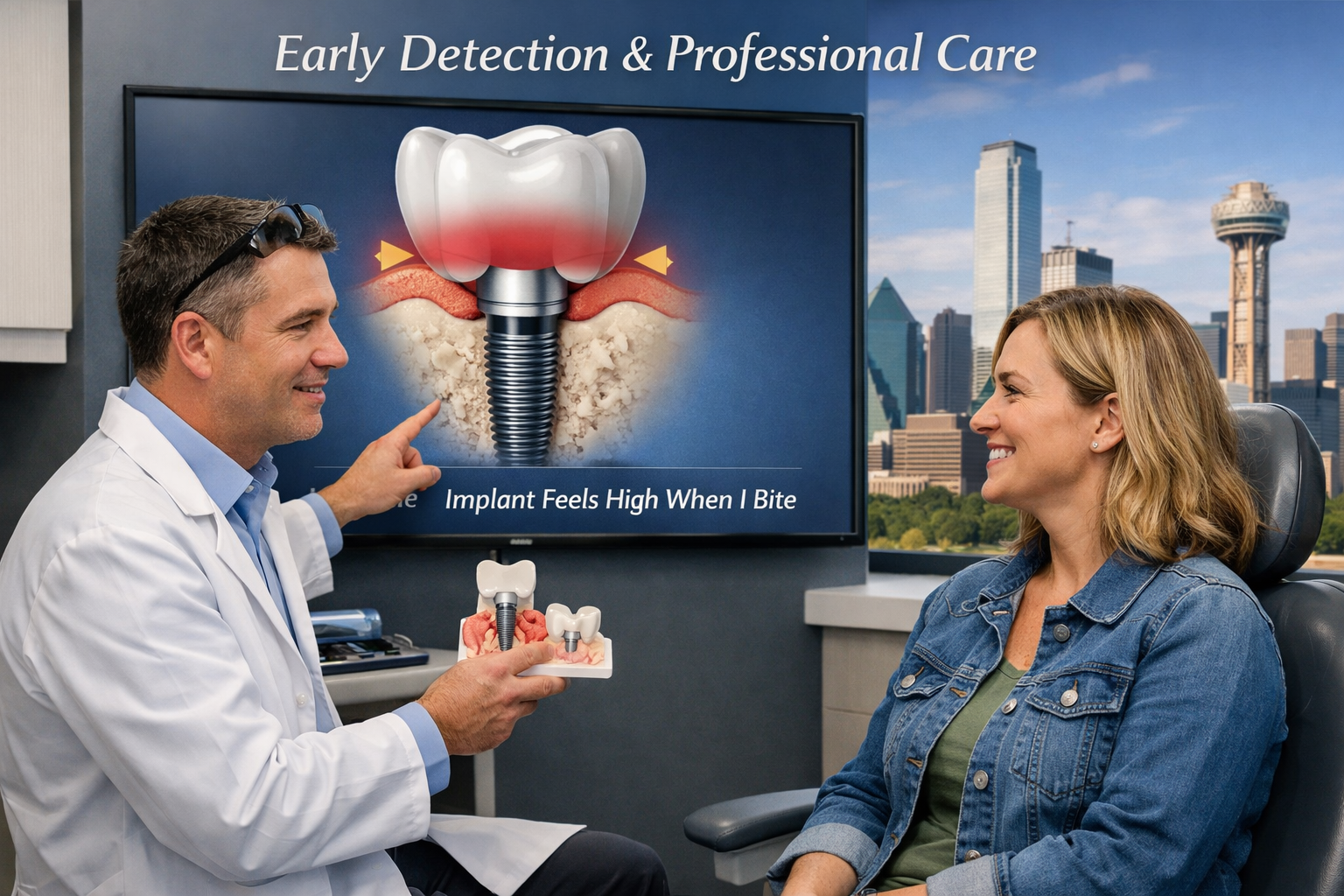
When you have a dental implant, it’s natural to be highly attuned to any unusual sensations. However, several common misconceptions can lead to unnecessary worry or, conversely, to ignoring genuine issues. Understanding these can help you manage expectations and know when to seek professional advice, especially regarding the feeling that your implant feels high when you bite.
Here are some common misconceptions:
- Misconception 1: “Dental implants should feel exactly like natural teeth immediately.”
- Reality: While the goal is for implants to feel very natural, there can be an initial adjustment period. It’s common for a dental implant to “feel weird” or like a foreign object initially, particularly as your mouth adjusts to the new addition [https://dentalimplantsdallastx.com/how-long-until-a-dental-implant-stops-feeling-weird-or-like-a-foreign-object/]. Full adaptation can take time, but any sharp pain or a persistent “high” feeling indicates a problem, not just adjustment [1].
- Misconception 2: “If my implant hurts, it means it’s failing.”
- Reality: Pain or discomfort, including the sensation that your implant feels high when you bite, does not automatically mean implant failure. Often, it’s a sign of a bite imbalance that can be easily corrected with an occlusal adjustment [1]. While pain can be a symptom of more serious issues like infection or failure [4], many causes are treatable. Always consult your dentist for an accurate diagnosis.
- Misconception 3: “A little discomfort is normal and will go away on its own.”
- Reality: While minor post-surgical soreness is expected, persistent or increasing discomfort, especially pain with chewing, or the feeling that your implant is high, is not normal and should not be ignored [1]. Unlike natural teeth that might adapt to slight bite discrepancies, implants lack the physiological cushioning of a ligament [1]. Ignoring these signs can lead to implant overload and long-term complications [1].
- Misconception 4: “Implants don’t get cavities, so I don’t need regular check-ups.”
- Reality: While implant crowns are artificial and won’t get cavities, the surrounding gum tissue and bone are still susceptible to inflammation and infection, such as peri-implantitis [4]. Regular dental check-ups and professional cleanings are crucial for monitoring the health of your implant, assessing your bite, and maintaining overall oral health.
- Misconception 5: “Only new implants have bite issues.”
- Reality: While bite issues can occur shortly after crown placement, an implant that initially felt fine can start to feel high years later. This can happen due to natural shifts in your other teeth, wear and tear on existing restorations, or changes in your bite pattern over time [3]. Your bite is dynamic, and periodic adjustments may be necessary throughout the life of your implant.
By dispelling these misconceptions, patients can approach their dental implant care with greater confidence and make informed decisions about when and why to seek professional guidance for any unusual sensations, including when their implant feels high when they bite.
The Dental Implant Procedure and Healing Timeline in Dallas
Understanding the overall dental implant procedure and its healing timeline can provide context for why sensations like an implant feeling high when you bite might occur, especially in the early stages. The process of getting dental implants in Dallas involves several key phases, each with its own recovery considerations.
Phases of the Dental Implant Procedure
- Initial Consultation and Treatment Planning:
- This first step involves a comprehensive oral health assessment, including X-rays and potentially 3D scans, to determine if you are a suitable candidate for dental implants. Your dentist will discuss tooth replacement options, cost, and the entire implant surgery process. This stage is crucial for patient safety and establishing realistic expectations.
- Tooth Extraction (if necessary):
- If the damaged tooth is still present, it must be extracted first. The socket then needs to heal, which can take several weeks or months.
- Bone Grafting (if necessary):
- For patients with insufficient jawbone density, a bone graft may be needed to create a strong foundation for the implant. This significantly extends the healing timeline, as the graft material needs time to integrate with your natural bone. Learn more about Bone Graft Costs for Dental Implants in Dallas.
- Implant Placement Surgery:
- During this minor surgical procedure, the titanium implant post is surgically inserted into your jawbone. This is typically done under local anesthesia, and sometimes sedation.
- Osseointegration (Healing Phase):
- This is the most critical healing period, lasting typically 3 to 6 months, but sometimes longer depending on individual healing rates and whether a bone graft was performed. During osseointegration, the implant fuses directly with the jawbone, providing a stable anchor for the new tooth. During this time, initial bite forces can change dynamically [3].
- A temporary crown or bridge might be placed to maintain aesthetics and function, though care must be taken not to put excessive pressure on the healing implant.
- Abutment Placement:
- Once osseointegration is complete, a small connector piece called an abutment is attached to the implant post. In some cases, the abutment is placed at the same time as the implant. The gum tissue then heals around the abutment for about two weeks.
- Crown Placement:
- After the gums have healed around the abutment, impressions are taken of your mouth. A custom-made crown is then fabricated to match your natural teeth in shape, size, and color. This is the final restoration placed on the abutment. This is typically when an implant might initially feel high when you bite, requiring adjustment [1].
Healing Timeline Considerations
- Initial Discomfort: Immediately after implant surgery, some discomfort, swelling, and minor bleeding are normal. This typically subsides within a few days to a week. For issues like spitting blood, refer to Spitting Blood After Dental Implant: Guide & When to Worry.
- Osseointegration Period: The 3-6 month osseointegration period is vital. During this time, avoid placing heavy chewing forces directly on the implant site to ensure successful fusion.
- Crown Adjustment: After the permanent crown is placed, your dentist will check your bite thoroughly. Even with precise placement, a feeling that the implant feels high when you bite is not uncommon, and a quick adjustment will resolve it [1]. Significant discomfort “doesn’t appear overnight because it builds up over time” if the implant was incorrectly placed or the crown is too large [2].
- Full Adaptation: Full adaptation to your new implant, where it truly feels like a natural part of your mouth, can take several weeks or months after the final crown placement as your muscles, nerves, and jaw adjust.
Throughout this process, open communication with your Dallas dentist is essential. They will guide you through each stage, addressing any concerns you might have about comfort or the function of your new tooth. For seniors, specific healing considerations apply, which you can learn about in our Senior Dental Implant Healing Time: Guide for 2026.
What to Expect During a Dental Implant Bite Adjustment
If you’re experiencing the sensation that your dental implant feels high when you bite, your dentist will most likely recommend a bite adjustment, also known as occlusal adjustment or equilibration. This is a common, non-invasive procedure designed to rebalance the forces in your bite and restore comfortable chewing.
Here’s what you can typically expect during a dental implant bite adjustment:
Initial Assessment and Discussion:
- Your Dallas dentist will first listen carefully to your concerns, asking you to describe exactly where and when you feel the high spot. This initial discussion is crucial for guiding the adjustment process.
- They will visually examine your implant and the surrounding tissues to rule out any other obvious issues.
Using Articulating Paper to Identify High Spots:
- This is the core of the adjustment. Your dentist will place a thin, colored piece of articulating paper (often blue or red) between your implant crown and the opposing teeth.
- You’ll be instructed to gently bite down, tap your teeth together, and possibly slide your jaw side-to-side, mimicking natural chewing movements.
- The paper will leave distinct marks on your implant crown and opposing teeth, highlighting areas of premature or excessive contact. Heavier, darker marks indicate higher pressure points [1].
Careful Reshaping of the Crown:
- Using a small, fine-grit polishing bur, your dentist will gently and incrementally remove minuscule amounts of material from the marked high spots on the implant crown.
- The goal is to reshape the chewing surface of the crown so that it harmonizes with the rest of your bite, ensuring that all your teeth contact evenly when you bite down. This gentle reshaping process helps distribute forces more uniformly across your bite, alleviating the “high” sensation [1].
- It’s important to note that this procedure is typically painless, as only the inert crown material is being adjusted. Anesthesia is generally not required.
Repeated Bite Checks:
- The adjustment process is iterative. After each minor adjustment, your dentist will re-check your bite using the articulating paper and ask for your feedback.
- You’ll be asked if the implant still feels high when you bite and if your bite feels more even and comfortable. This back-and-forth process continues until both you and the dentist are satisfied with the occlusion.
Polishing:
- Once the desired bite is achieved, the adjusted area of the crown will be polished smooth to prevent any rough edges from irritating your tongue or cheeks.
Post-Adjustment Instructions:
- Your dentist might provide specific post-adjustment instructions, although typically, there are no special restrictions. You should immediately feel more comfortable chewing.
- They will likely ask you to monitor your bite over the next few days and contact them if the high sensation returns or if you experience any new discomfort.
A dental implant bite adjustment is a common and highly effective procedure for resolving the sensation of a high implant. It is a critical part of ensuring the long-term comfort and success of your tooth replacement options.
Costs Associated with Dental Implant Bite Adjustment in Dallas (2026)
When an implant feels high when you bite, addressing it promptly is important for your comfort and the longevity of your implant. Fortunately, a simple bite adjustment is typically a minor procedure with relatively low or no associated costs, especially compared to the overall dental implant cost in Dallas.
Here’s a breakdown of what to expect regarding costs in Dallas in 2026:
- Initial Bite Adjustment (Post-Crown Placement):
- Often Included: If the “high” feeling occurs shortly after your permanent crown has been placed (typically within a few weeks or months), most reputable dental practices in Dallas will include the initial bite adjustment as part of the overall dental implant procedure cost. This is considered a standard part of ensuring proper fit and function of your new restoration. You should clarify this with your dentist during your consultation or at the time of crown placement.
- Subsequent Bite Adjustments (Years Later):
- Minor Fee: If your implant feels high years after the crown was initially placed (due to natural changes in your bite, wear, or bruxism), there might be a minor fee for a standalone bite adjustment appointment.
- Typical Cost Range in Dallas: For a single, uncomplicated occlusal adjustment, you might expect to pay between $50 and $200 in Dallas in 2026. This fee covers the dentist’s time, use of articulating paper, and any necessary polishing.
- Insurance Coverage: Some dental insurance plans may offer partial coverage for occlusal adjustments, especially if coded as part of a routine examination or maintenance. It’s always best to check with your specific insurance provider. For insights into coverage, refer to our guide on Best Dental Insurance for Implants in Texas 2026.
- Replacing the Crown or Abutment:
- Higher Cost: If the issue cannot be resolved with an adjustment and requires replacing the crown or abutment (e.g., due to a manufacturing defect, significant damage, or severe misalignment), the cost will be considerably higher.
- Crown Replacement Cost: A new implant crown can range from $1,000 to $3,000 or more in Dallas, depending on the materials used (e.g., porcelain-fused-to-metal, all-ceramic, zirconia) and the complexity of the case. This would be similar to the cost of a Single Tooth Implant Cost Dallas 2026 crown component.
- Abutment Cost: If the abutment also needs replacement, this would add to the overall cost, typically ranging from $300 to $1,000.
- Insurance & Payment Plans: Insurance coverage for replacement crowns varies, and many patients utilize payment plans or dental financing options for these larger expenses.
- Treatment for Bruxism:
- Nightguard Cost: A custom-fitted nightguard for bruxism prevention typically costs between $300 and $800 in Dallas in 2026. This is an investment in protecting your implants and natural teeth from excessive forces. Some insurance plans may cover a portion of this.
It’s important to have an open conversation with your Dallas dentist about the expected costs before any procedure. They can provide a detailed estimate and discuss available payment options to ensure you receive the necessary care for your long-term oral health.
Frequently Asked Questions About a High-Feeling Dental Implant
Q1: Is it normal for a new dental implant to feel high?
A1: It is not uncommon for a new dental implant crown to feel slightly high or “different” initially. Your dentist will check your bite carefully, but minor adjustments are often needed after you’ve had some time to chew and adapt. However, persistent discomfort or a distinct “high” sensation means it needs adjustment [1].
Q2: How long does it take for a dental implant to feel normal?
A2: While the implant itself integrates with bone over 3-6 months, the sensation of the new crown feeling “normal” can take a few weeks to several months. Your mouth needs time to adjust to the new bite, but any sharp or persistent discomfort should be evaluated by your dentist [https://dentalimplantsdallastx.com/how-long-until-a-dental-implant-stops-feeling-weird-or-like-a-foreign-object/].
Q3: Can a high dental implant cause pain?
A3: Yes, a dental implant that feels high can definitely cause pain or discomfort, especially when chewing. This is because excessive or uneven pressure is being placed on the implant, which lacks the natural cushioning of a regular tooth [1].
Q4: What happens if I ignore a high dental implant?
A4: Ignoring a high dental implant can lead to serious complications, including chronic pain, bone loss around the implant (implant overload), inflammation (peri-implantitis), damage to the implant crown or abutment, and even implant failure over time [1, 4].
Q5: How does a dentist fix a high dental implant?
A5: A dentist fixes a high dental implant through a process called occlusal adjustment. They use thin articulating paper to identify the high spots on the crown and then carefully remove minuscule amounts of material from the crown’s surface until the bite is even and comfortable [1].
Q6: Can my bite change after getting an implant?
A6: Yes, your bite can subtly change over time, even years after implant placement. Natural teeth can shift, wear down, or other dental work can alter your bite. This is why an implant that once felt fine might start feeling high [3].
Q7: Will my dental insurance cover a bite adjustment?
A7: Coverage for a dental implant bite adjustment varies by insurance plan. If it’s done shortly after crown placement, it’s often included. For later adjustments, some plans may cover it as part of routine maintenance. It’s best to contact your specific dental insurance provider in Dallas for details [https://dallasdentalimplantcost.com/best-dental-insurance-for-implants-in-texas-2026-ppo-vs-hmo-coverage-comparison/].
Q8: Can bruxism (teeth grinding) make my implant feel high?
A8: Yes, bruxism can contribute to a high-feeling implant by exerting excessive and uneven forces on the crown, exacerbating any existing high spots, and causing discomfort or even damage [https://dentalimplantsdallastx.com/preventing-teeth-grinding-dental-implant-damage-a-comprehensive-guide-for-2026/].
Q9: Is it common for dental implants to need adjustments?
A9: Yes, it is quite common for dental implant crowns to require one or more minor bite adjustments, both shortly after placement and sometimes years later, to ensure optimal comfort and function.
Q10: How much does a dental implant bite adjustment cost in Dallas?
A10: If done soon after crown placement, it’s often included in the overall cost. For later, standalone adjustments in Dallas, the cost can range from $50 to $200 in 2026, depending on the complexity and your dental office’s fees.
Conclusion
The sensation of “Implant feels high when I bite” is a common and understandable concern for many dental implant patients in Dallas, Texas. While dental implants offer an excellent solution for missing teeth, their unique biomechanical interaction with the jawbone means that precise bite alignment is critical. Unlike natural teeth, implants lack the cushioning periodontal ligament, making them more sensitive to uneven pressure [1].
If you experience this sensation, it’s crucial not to ignore it. Prompt consultation with your Dallas dentist or oral surgeon is the most responsible step. Often, a simple and painless occlusal adjustment can dramatically improve comfort and prevent more serious complications like implant overload or peri-implantitis [1]. Investing in your long-term oral health means staying vigilant about how your implants feel and seeking professional guidance when something seems amiss. Your dental professional is your best resource for ensuring your dental implants continue to provide a comfortable, functional, and beautiful smile for years to come.
References
[1] Why Feel Pressure Dental Implants – https://www.temeculafacialoralsurgery.com/why-feel-pressure-dental-implants/
[2] Chewing Woes Why Does My Dental Implant Hurt When I Bite Down – https://cwfamilydental.com/chewing-woes-why-does-my-dental-implant-hurt-when-i-bite-down/
[3] Pmc12818635 – https://pmc.ncbi.nlm.nih.gov/articles/PMC12818635/
[4] Dental Implant Risks Complications In 2026 – https://www.oceanicdental.com/resource/dental-implant-risks-complications-in-2026
[5] Can Cause Roof Of Mouth Pain After Implants – https://allin1dental.com/can-cause-roof-of-mouth-pain-after-implants/
[6] The Implant Surge In 2026 And What It Means For Missing Tooth Solutions – https://trinitydentalcares.com/the-implant-surge-in-2026-and-what-it-means-for-missing-tooth-solutions/
[7] Watch – https://www.youtube.com/watch?v=9R7Y2mhRpr4
[8] Pressure On New Implants – https://www.seapointclinic.ie/blog/pressure-on-new-implants/
Leave a Reply
Share your thoughts or ask a question about dental implants. Your email address will not be published.