

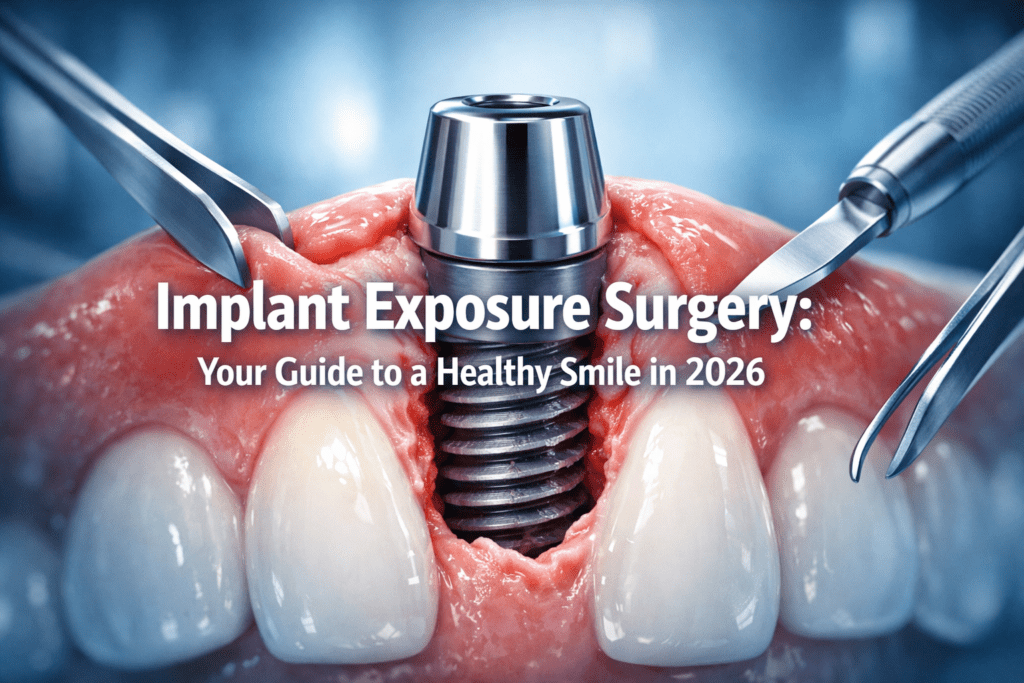
Successfully restoring a missing tooth with a dental implant involves several precise steps. One crucial phase in the dental implant procedure, often overlooked by patients, is implant exposure surgery. This procedure is typically performed after the dental implant has had sufficient time to integrate with the jawbone, ensuring it’s ready to support a prosthetic tooth. Understanding implant exposure surgery is key to appreciating the full journey of obtaining dental implants in Dallas and maintaining long-term oral health.
Key Takeaways
- Implant exposure surgery is a minor procedure to uncover a dental implant after it has healed and fused with the jawbone.
- It is essential to prepare the implant for the attachment of an abutment and ultimately, a crown or bridge.
- Advanced techniques, including lasers and 3D imaging, make the procedure precise and minimally invasive in 2026 [3, 5].
- Proper aftercare is vital for successful healing and avoiding complications.
- Consulting with an experienced dental professional in Dallas is crucial for personalized advice and successful outcomes.
What is Implant Exposure Surgery?
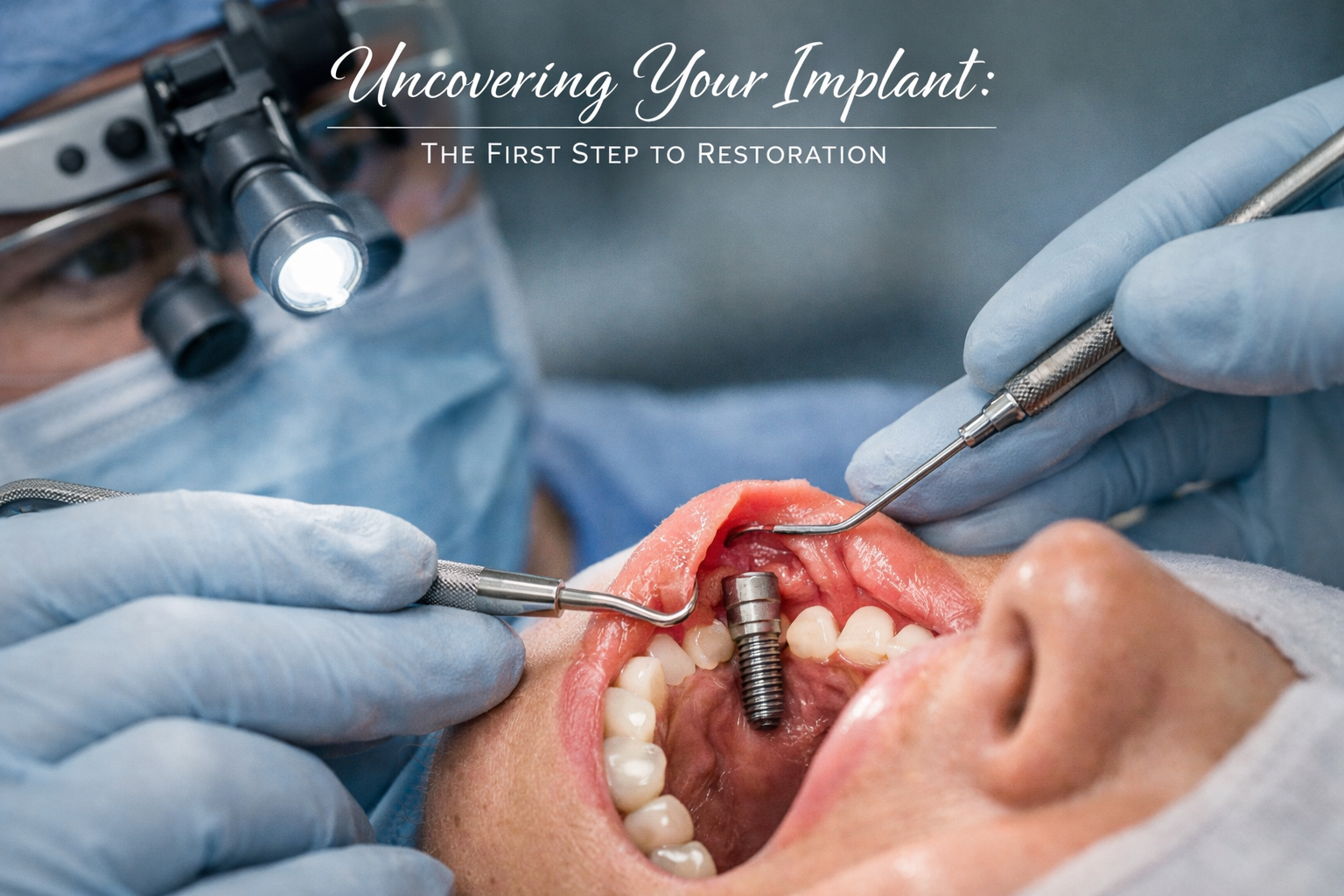
Implant exposure surgery is a minor surgical procedure performed to gently uncover a dental implant that has been placed beneath the gum line and allowed to heal and integrate with the surrounding bone. This step is necessary to attach a healing abutment, which helps shape the gum tissue, or to directly connect the final abutment that will support the new prosthetic tooth.
Following the initial placement of a dental implant, it is often covered by gum tissue to protect it during the osseointegration period—the crucial time when the implant fuses with the jawbone [1]. Once this healing is complete, typically several months later, the implant must be “exposed” to allow the next phases of restoration to proceed. This procedure ensures the implant is accessible for the attachment of the abutment and subsequent crown, bridge, or denture, moving you closer to a complete and functional smile.
Why is Implant Exposure Surgery Performed?
Implant exposure surgery is performed primarily to reveal the dental implant post-osseointegration, enabling the attachment of prosthetic components. After a dental implant is initially placed, it is typically left undisturbed beneath the gum tissue to allow for optimal healing and fusion with the jawbone, a process known as osseointegration. This critical period, which can range from a few months to half a year, establishes the stable foundation required for a successful tooth replacement [1].
Once osseointegration is confirmed, the implant exposure surgery serves several vital purposes:
- Access for Abutment Placement: The primary reason for the procedure is to provide access to the top of the dental implant so that a healing abutment or the final abutment can be securely attached. The healing abutment is a small, temporary component that extends through the gum line and helps the surrounding gum tissue heal and contour naturally around where the final crown will eventually sit.
- Gum Tissue Shaping: The healing abutment plays a crucial role in shaping the gum tissue to create an aesthetic and natural-looking emergence profile for the final restoration. This ensures the new tooth replacement blends seamlessly with your existing teeth.
- Preparation for Final Restoration: Exposing the implant is the definitive step before impressions are taken for the custom fabrication of your crown, bridge, or denture. Without this step, the restorative phase cannot begin.
- Addressing Buried Implants: In some cases, a dental implant might be deliberately buried beneath the gum for enhanced protection during healing or due to specific anatomical considerations. The exposure surgery then becomes essential to bring it into functional use.
While some advanced techniques allow for immediate loading or single-stage implant placement where the implant is visible from the start, a two-stage approach requiring implant exposure remains common, especially for complex cases or when maximum healing is desired before any prosthetic components are attached [7]. This careful, staged approach contributes significantly to the long-term success and stability of dental implants, a key focus for professionals offering dental implants in Dallas.
How is Implant Exposure Surgery Performed?
Implant exposure surgery is a relatively straightforward and minimally invasive procedure typically performed under local anesthesia. The goal is to gently remove a small amount of gum tissue to reveal the top of the integrated dental implant.
Here’s a breakdown of the typical steps involved:
- Anesthesia: The area around the implant site is numbed using a local anesthetic to ensure comfort throughout the procedure. For patients with dental anxiety, options like dental implant with sedation twilight sleep can be discussed to provide a more relaxed experience [6].
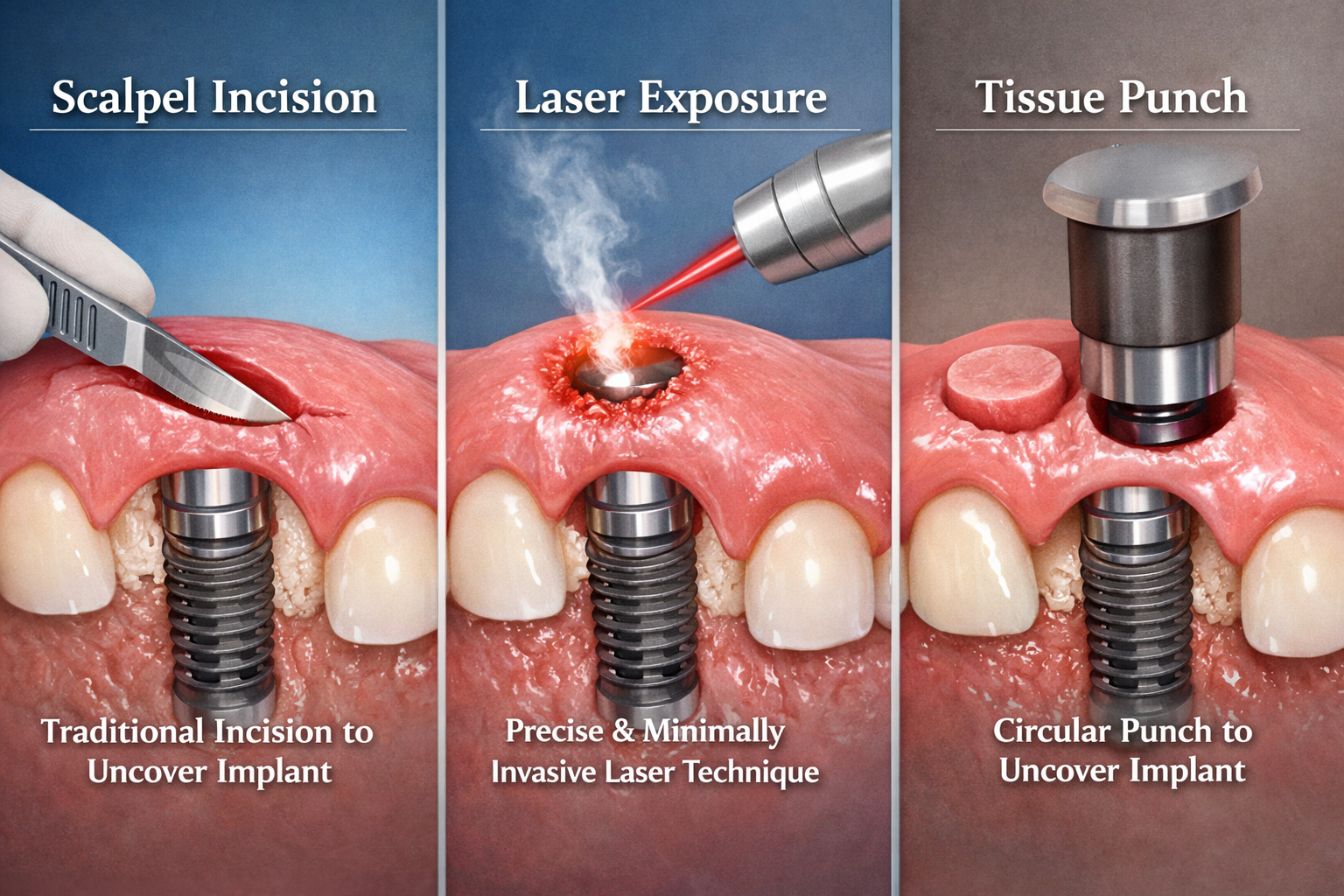
- Accessing the Implant: The oral surgeon or periodontist carefully makes a small incision in the gum tissue directly over the buried implant.
- Traditional Method (Scalpel): A small, precise incision is made with a scalpel to lift a small flap of gum tissue.
- Punch Technique: In cases where the gum tissue over the implant is thin and healthy, a specialized circular tissue punch may be used to remove a small, round piece of gum tissue directly above the implant. This is a very minimally invasive approach.
- Laser Dentistry: Modern dental practices, including those offering dental implants in Dallas, are increasingly utilizing lasers for implant exposure [5]. Lasers offer several advantages:
- Precision: Allows for very precise removal of gum tissue.
- Reduced Bleeding: Lasers cauterize blood vessels as they cut, leading to minimal to no bleeding during the procedure.
- Faster Healing: The clean cut and reduced trauma can often result in quicker and more comfortable healing for the patient.
- Reduced Risk of Infection: The sterile nature of the laser beam can help minimize the risk of infection.
- Removing the Cover Screw: Once the implant is visible, the small cover screw that protected the internal threads of the implant during the healing phase is removed.
- Placing the Healing Abutment: A healing abutment is then screwed into the top of the dental implant. This small, cuff-like component protrudes through the gum line and helps shape the gum tissue, preparing it for the final crown. The size and shape of the healing abutment are chosen to mimic the emergence profile of a natural tooth.
- Suturing (if necessary): In some cases, especially with traditional flap techniques, a few sutures may be placed to reposition the gum tissue around the healing abutment. With laser or punch techniques, sutures are often not needed.
- Post-Procedure Instructions: Detailed post-operative instructions will be provided, similar to those for the initial implant surgery, focusing on pain management, oral hygiene, and dietary recommendations.
The entire implant exposure surgery is generally quick, often taking only about 15-30 minutes per implant. The choice of technique will depend on the individual patient’s anatomy, gum tissue thickness, and the dental professional’s expertise. Advances in technology, such as 3D imaging and guided surgery, allow for precise planning, making procedures like this even safer and more predictable [3].
Recovery and Aftercare for Implant Exposure Surgery
Recovery from implant exposure surgery is typically swift and straightforward, as it’s a relatively minor procedure. However, proper aftercare is crucial to ensure optimal healing and the long-term success of your dental implant. Your dental professional in Dallas will provide specific instructions tailored to your situation, but here are general guidelines:
Immediate Post-Operative Care (First 24-48 hours):
- Pain Management: You might experience mild discomfort or soreness. Over-the-counter pain relievers like ibuprofen or acetaminophen are usually sufficient. Your dentist may prescribe stronger medication if needed.
- Swelling: Some minor swelling is normal. Applying a cold compress to the outside of your cheek intermittently for the first 24 hours can help reduce swelling.
- Bleeding: Minimal bleeding or oozing is expected. Avoid spitting or rinsing vigorously, as this can dislodge the blood clot.
- Diet: Stick to soft foods for the first few days. Avoid hot liquids, spicy foods, and anything that requires excessive chewing near the surgical site.
- Oral Hygiene:
- Avoid brushing the surgical site directly for the first 24 hours.
- After 24 hours, you can gently brush other areas of your mouth.
- Your dentist might recommend a chlorhexidine-based mouthwash to keep the area clean and reduce bacterial load. Avoid alcohol-based mouthwashes.
- Activity: Rest and avoid strenuous physical activity for at least 24-48 hours.
Long-Term Healing and Maintenance:
- Keep the Healing Abutment Clean: The healing abutment is designed to protrude through your gum. It’s essential to keep it meticulously clean to prevent plaque buildup and peri-implantitis. Gently brush around it with a soft-bristled toothbrush and use interdental brushes or floss specifically designed for implants.
- Follow Dietary Restrictions: Continue to avoid chewing directly on the healing abutment until instructed otherwise by your dentist.
- Avoid Smoking and Alcohol: Both can significantly hinder healing and increase the risk of complications.
- Attend Follow-up Appointments: Your dentist will schedule follow-up visits to monitor the healing process, check the abutment, and eventually take impressions for your final restoration.
- Maintain Excellent Oral Hygiene: Once your final restoration is in place, continue a rigorous oral hygiene routine, including regular brushing, flossing, and professional cleanings. For specific guidance, you may find our “All-on-4 Dental Implant Cleaning Routine: 2026 Guide” helpful.
- Regular Dental Check-ups: Consistent visits to your dentist in Dallas for routine check-ups and professional cleanings are vital for the long-term success of your dental implants.
Most patients resume their normal activities within a day or two after implant exposure surgery. Any persistent pain, excessive bleeding, or signs of infection (fever, pus, severe swelling) should be reported to your dental professional immediately.
Potential Complications of Implant Exposure Surgery
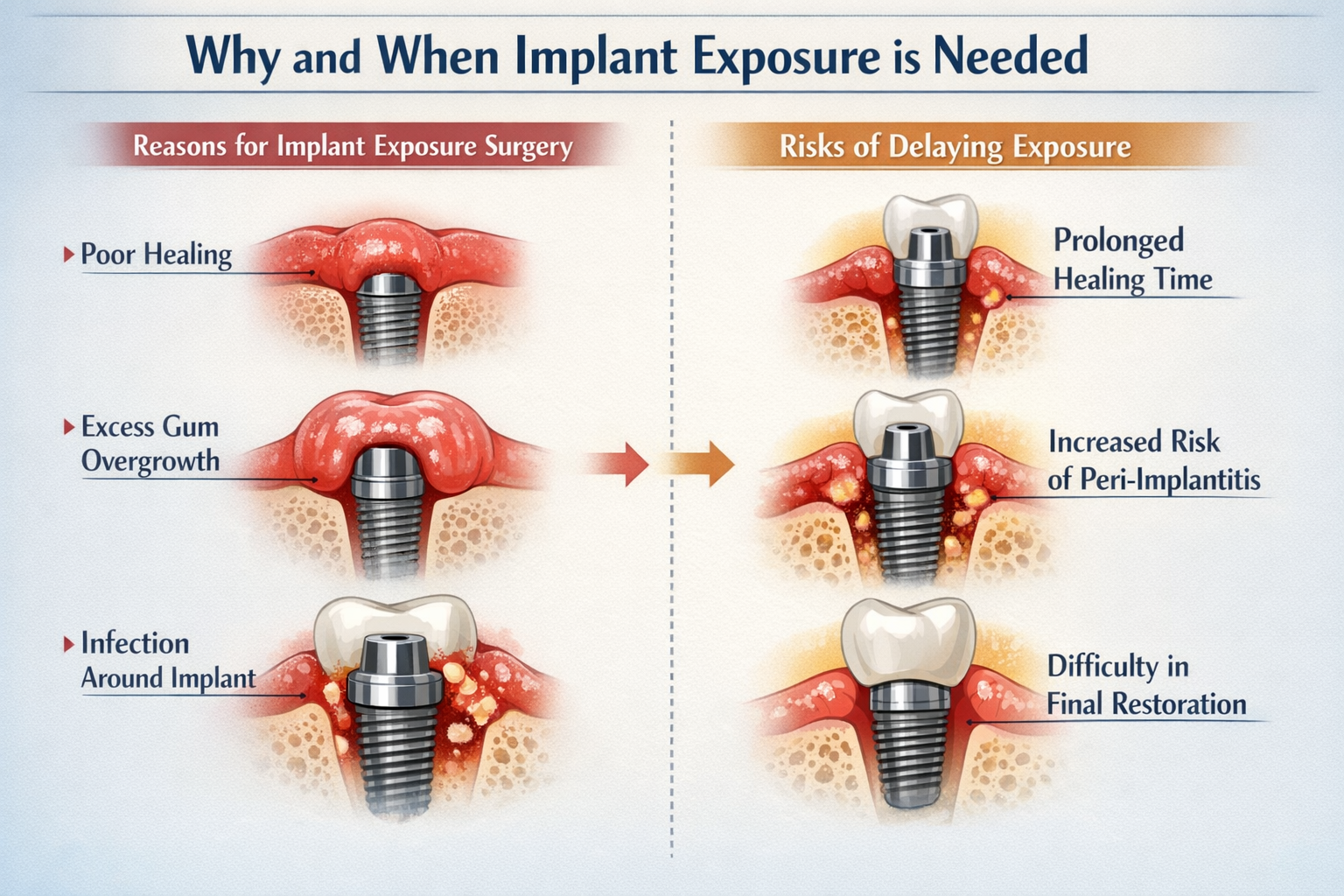
While implant exposure surgery is a safe and common procedure, like any surgical intervention, it carries a small risk of potential complications. Being aware of these can help patients undergoing dental implant procedures in Dallas make informed decisions and know when to contact their dental professional.
Common potential complications include:
- Pain and Swelling: While mild discomfort is normal, severe or prolonged pain and swelling beyond the initial 48 hours could indicate an issue.
- Infection: Despite sterile techniques, infection around the exposed implant or healing abutment can occur. Signs include redness, swelling, pus, tenderness, and fever. Good oral hygiene, as outlined in our “Post Dental Implant Instructions: Essential Recovery Guide 2”, is crucial in preventing this.
- Bleeding: Persistent or excessive bleeding that doesn’t subside with gentle pressure is uncommon but requires attention.
- Abutment Loosening: The healing abutment can sometimes loosen or fall off. This is usually not an emergency but should be reported to your dentist so it can be re-tightened or replaced.
- Gum Recession: In some instances, the gum tissue around the implant may recede, potentially exposing a portion of the implant collar. This can sometimes be managed with minor soft tissue grafting if aesthetics are compromised.
- Nerve Damage (Rare): Although extremely rare in implant exposure surgery, there’s a minimal risk of temporary or permanent nerve damage, leading to numbness or altered sensation in the lip, tongue, or chin. This is usually more associated with the initial implant placement.
- Insufficient Osseointegration: If the implant has not fully integrated with the bone, exposing it prematurely can lead to implant failure. This is why a thorough assessment, often with X-rays or 3D scans, is done before planning the exposure surgery [3]. In such cases, a revision dental implant surgery might be necessary [6].
It’s important to remember that serious complications are infrequent, especially when the procedure is performed by an experienced oral surgeon or periodontist. Your dental team will take every precaution to minimize these risks and ensure a smooth recovery. Should you experience any unusual symptoms or concerns after your implant exposure surgery, it is vital to contact your dental professional in Dallas immediately for guidance.
When is Implant Exposure Surgery Not Needed?
Not all dental implant procedures require a separate implant exposure surgery. In certain situations, the implant is designed to be visible from the moment it’s placed, eliminating the need for a second surgical step.
Here are the primary scenarios where implant exposure surgery might not be necessary:
- One-Stage Implant Placement: In a one-stage approach, the dental implant is placed, and a healing abutment is attached immediately, protruding through the gum tissue [7]. This means the implant is “exposed” from the outset, and no further surgery is needed to uncover it after osseointegration. This method is often chosen when:
- There is sufficient bone quality and quantity to achieve good initial stability of the implant.
- The patient has good oral hygiene and low risk of complications.
- Aesthetic demands allow for immediate visibility of the healing abutment.
- For some patients, this can shorten the overall treatment timeline for dental implants.
- Immediate Loading Protocols: In specific cases, particularly with modern advancements in implant design and surgical techniques, a temporary crown or restoration can be placed on the implant shortly after it is inserted into the jawbone. This is known as immediate loading [1, 2]. While the implant still needs to osseointegrate, its functional part is already exposed and supporting a temporary prosthetic, bypassing the need for a separate exposure surgery. This option is typically suitable for:
- Patients with excellent bone density.
- Situations where high primary stability of the implant can be achieved.
- Front teeth, where aesthetics are critical and immediate results are desired.
- Mini Dental Implants: These smaller-diameter implants are often placed in a one-stage procedure, with the top of the implant and its ball-shaped abutment immediately visible above the gum line. They are frequently used to stabilize dentures. For those considering tooth replacement options, it’s beneficial to understand how different implant types fit into the broader dental implant procedure.
Your dental professional will assess your individual case, including your bone quality, overall oral health, and aesthetic goals, to determine whether a one-stage approach, immediate loading, or a two-stage approach with implant exposure surgery is the most appropriate and predictable path for your dental implants in Dallas. This decision is always made with your long-term oral health and successful outcome as the top priority.
What is the Cost of Implant Exposure Surgery in Dallas?
The cost of implant exposure surgery in Dallas, as with any dental procedure, can vary based on several factors. It’s important to understand that this procedure is often part of the larger overall dental implant cost.
Factors influencing the cost include:
- Number of Implants: The cost will increase if multiple implants require exposure.
- Surgical Technique: More advanced techniques, such as laser-assisted exposure, might have a slightly different fee structure compared to traditional scalpel methods.
- Anesthesia: While local anesthesia is typically included, additional sedation options, such as dental implant with sedation twilight sleep, will incur extra costs.
- Complexity: Cases with unusual anatomical challenges or excessive gum tissue might require more intricate work, potentially affecting the price.
- Location and Practice: Costs can vary between different dental practices in Dallas due to overhead, expertise, and technology used.
- Insurance Coverage: Dental insurance plans vary widely. Some may cover a portion of the surgical procedure, while others might not. It’s crucial to check with your insurance provider about your specific benefits.
In Dallas, the cost for a single implant exposure surgery, when billed separately, typically ranges from a few hundred dollars. However, it is often bundled into the overall treatment plan for dental implants. When considering the full scope of the financial commitment, it’s helpful to discuss all aspects of the implant cost in Dallas during your initial consultation.
For a comprehensive understanding of the financial aspect of dental implants, including various components and options, exploring resources such as “Why Dental Implants Cost So Much in Dallas | 2025 Price Guide” or “Dallas Dental Implant Financing Options | Payment Plans 2025” can be highly beneficial. Many practices offer payment plans or work with third-party financing to make dental implants more accessible.
It’s always recommended to schedule a consultation with a dentist specializing in dental implants in Dallas. During this consultation, you will receive a personalized treatment plan and a detailed breakdown of all associated costs, allowing you to make an informed decision about your tooth replacement options.
Innovations Enhancing Implant Exposure Surgery in 2026
The field of dental implantology is continually evolving, and 2026 sees continued advancements that enhance the precision, safety, and patient experience of procedures like implant exposure surgery [1, 2, 7]. These innovations contribute to more predictable outcomes and often quicker healing times for patients seeking missing teeth solutions.
Key innovations include:
- 3D Imaging and Guided Surgery:
- Cone-Beam Computed Tomography (CBCT): This advanced imaging technology provides highly detailed, three-dimensional images of the jawbone, nerves, and surrounding structures [3]. It allows for incredibly precise pre-surgical planning, identifying the exact location of the buried implant and the thickness of the overlying gum tissue.
- Surgical Guides: Based on CBCT scans, custom surgical guides can be fabricated (often through 3D printing) to direct the exact entry point and depth for tissue removal during implant exposure. This minimizes guesswork, ensures optimal placement of the healing abutment, and often leads to less invasive procedures and faster recovery [3].
- Laser Dentistry: As mentioned, dental lasers are increasingly used for implant exposure due to their precision, ability to minimize bleeding, and potential for reduced post-operative discomfort and faster healing [5]. Different types of lasers, such as diode or Erbium lasers, are employed depending on the specific tissue characteristics.
- Minimally Invasive Techniques: Beyond lasers, a general trend in implant dentistry is towards less invasive approaches. The punch technique, where a small circular piece of gum tissue is removed, exemplifies this by avoiding the need for a larger flap or sutures in suitable cases.
- Biomaterials and Growth Factors: While more relevant to the initial implant placement and bone grafting innovations [4], advances in biomaterials are also indirectly improving the surrounding soft tissue health, potentially influencing the ease and success of subsequent exposure procedures. Growth factors, for instance, can enhance tissue regeneration.
- AI Integration: Artificial intelligence (AI) is beginning to play a role in dental implant planning and analysis [8]. AI algorithms can assist in interpreting CBCT scans, predicting optimal implant positions, and even evaluating the success of osseointegration, potentially guiding the timing and technique for implant exposure.
- Enhanced Implant Surfaces and Designs: Modern dental implants are designed with specialized surfaces that promote faster and stronger osseointegration [1]. While not directly part of the exposure surgery, improved integration means the implant is more securely fused by the time it’s ready for exposure, contributing to a stable foundation for the final restoration.
These ongoing technological and procedural advancements mean that patients receiving dental implants in Dallas in 2026 can benefit from highly precise, efficient, and comfortable treatment journeys, from initial placement through to final restoration.
Comparison: One-Stage vs. Two-Stage Implant Placement
When considering dental implants, patients often encounter two primary approaches to their placement: one-stage (or single-stage) and two-stage implant surgery. The decision between these methods, which directly impacts whether implant exposure surgery is needed, is made by your dental professional based on clinical factors, patient health, and treatment goals.
Here’s a comparison to help understand the differences:
| Feature | One-Stage Implant Placement | Two-Stage Implant Placement (Requires Implant Exposure Surgery) |
|---|---|---|
| Initial Placement | Implant and healing abutment placed simultaneously. | Implant placed and fully covered by gum tissue, protected by a cover screw. |
| Healing Phase | Healing abutment protrudes through gum; gum heals around it. | Implant heals completely beneath gum tissue (osseointegration). |
| Surgical Procedures | One surgical procedure for implant placement. | Two surgical procedures: initial placement + later implant exposure surgery. |
| Visibility of Implant | Healing abutment is visible from day one. | Implant is completely hidden during the healing phase. |
| Healing Time | Overall treatment time might be slightly shorter due to fewer surgical steps. | Healing time for osseointegration is the same, but involves a second minor surgery for exposure. |
| Risk of Infection | Slightly higher theoretical risk if the exposed abutment is not meticulously cleaned during initial healing. | Reduced risk of early infection during osseointegration as the implant is protected. |
| Ideal For | Cases with good bone quality, favorable aesthetics, or patient preference for fewer surgeries. | Cases requiring extensive bone grafting, compromised bone quality, or where maximum protection during healing is desired. |
| Advantages | Fewer appointments, potentially quicker overall treatment, avoids second surgery. | Maximum protection for the implant during osseointegration, often preferred for complex cases, reduced load on implant during healing. |
| Disadvantages | Healing abutment visible during healing, requires diligent cleaning immediately. | Requires a second minor surgical procedure (implant exposure surgery), slightly longer overall treatment period. |
The choice between one-stage and two-stage implant placement is a crucial aspect of your dental implant procedure and directly influences whether you will undergo implant exposure surgery. Your dental professional will discuss which approach is best suited for your specific needs, always prioritizing patient safety and long-term success. Regardless of the approach, the goal remains the same: to provide a stable, functional, and aesthetically pleasing tooth replacement.
FAQ About Implant Exposure Surgery
Q1: Is implant exposure surgery painful?
A1: Implant exposure surgery is typically not painful. It is performed under local anesthesia, so you should only feel pressure, not pain. Mild discomfort or soreness may be experienced after the anesthesia wears off, which can usually be managed with over-the-counter pain relievers.
Q2: How long does implant exposure surgery take?
A2: The procedure is usually quick, often taking only about 15-30 minutes per implant. This time does not include any pre-operative preparation or post-operative instructions.
Q3: What is a healing abutment?
A3: A healing abutment is a small, temporary component placed on top of the exposed dental implant. It extends through the gum line and helps the gum tissue heal and shape properly around the future crown or prosthetic.
Q4: How long do I wear the healing abutment?
A4: You typically wear the healing abutment for a few weeks to a couple of months. This allows the gum tissue to mature and contour around it, creating a natural emergence profile for your final restoration.
Q5: Can I eat normally after implant exposure surgery?
A5: You should stick to soft foods for the first few days after the procedure. Avoid very hot, spicy, or crunchy foods. Gradually reintroduce normal foods as comfort allows, but avoid chewing directly on the healing abutment area if possible.
Q6: What if my healing abutment falls out?
A6: If your healing abutment becomes loose or falls out, contact your dental professional in Dallas immediately. While it’s usually not an emergency, it needs to be re-tightened or replaced to ensure proper gum healing and prevent tissue overgrowth.
Q7: Is implant exposure surgery covered by insurance?
A7: Coverage for implant exposure surgery, like other dental implant procedure components, varies by insurance plan. It’s essential to check with your specific dental insurance provider to understand what portion, if any, will be covered. Your dental office in Dallas can often help you verify your benefits.
Q8: What are the signs of infection after the procedure?
A8: Signs of infection include persistent or worsening pain, excessive swelling, redness, warmth around the site, fever, or the presence of pus. If you notice any of these symptoms, contact your dental professional immediately.
Q9: Can implant exposure surgery be done with a laser?
A9: Yes, many dental professionals use lasers for implant exposure surgery in 2026. Laser techniques offer benefits such as greater precision, minimal bleeding, reduced swelling, and potentially faster healing compared to traditional methods [5].
Q10: What happens after the healing abutment is removed?
A10: Once the gum tissue has healed and shaped correctly around the healing abutment, it will be removed. Your dentist will then take impressions to custom fabricate your permanent crown, bridge, or denture, which will eventually be attached to the implant via a final abutment.
Key Takeaways
- Implant exposure surgery is a routine and minor step in the dental implant journey, necessary to uncover a healed implant for final restoration.
- The primary purpose is to allow the placement of a healing abutment, which guides gum tissue shaping, or to connect the final prosthetic components.
- Modern techniques, including laser dentistry and 3D guided surgery, make the procedure precise, minimally invasive, and enhance patient comfort and recovery [3, 5].
- Proper post-operative care, including diligent oral hygiene around the healing abutment, is crucial for preventing complications and ensuring long-term implant success.
- Not all implant cases require exposure surgery; one-stage placement or immediate loading protocols can sometimes bypass this step depending on clinical factors.
- Understanding the costs involved and discussing financing options with your dental professional in Dallas can help manage the financial aspect of your treatment.
- Any unusual pain, swelling, or signs of infection post-surgery should prompt immediate contact with your dental team.
- Regular check-ups and maintenance are vital for the longevity of your dental implants and overall oral health.
Conclusion
Implant exposure surgery is a critical, yet typically minor, step in the journey towards a complete and functional smile with dental implants. By carefully uncovering the integrated implant, your dental professional prepares the foundation for your new tooth, ensuring both aesthetic harmony and long-term stability. With the advanced technologies and refined techniques available in 2026, such as 3D imaging and laser-assisted procedures, this phase of the dental implant procedure is more predictable and comfortable than ever before.
For those in Dallas considering dental implants as a solution for missing teeth, understanding each step, including implant exposure surgery, is essential for informed decision-making. We encourage you to seek a consultation with an experienced dental professional specializing in dental implants in Dallas. They can provide a thorough evaluation, discuss your specific needs, explain the entire implant surgery process, and outline all tooth replacement options tailored to your long-term oral health goals. A well-informed patient is an empowered patient, ready to embark on the path to a restored, confident smile.
References
[1] Dental Implants In 2026 Advances In Longevity Materials And Faster Recovery – https://trinitydentist.com/dental-implants-in-2026-advances-in-longevity-materials-and-faster-recovery/
[2] Whats New In Dental Implants For 2025 – https://www.coastaldental.com.au/whats-new-in-dental-implants-for-2025/
[3] 3d Guided Dental Implant Surgery How Precision Technology Is Revolutionizing Torrance Patients Treatment Outcomes – https://www.torranceoralsurgerycenter.com/blog/3d-guided-dental-implant-surgery-how-precision-technology-is-revolutionizing-torrance-patients-treatment-outcomes/
[4] Innovations In Bone Grafting For Implants – https://www.mnofs.com/innovations-in-bone-grafting-for-implants/
[5] Newest Dental Implant Technology In Woodhaven 2026 Advancements Options – https://brownstowndentalcare.com/newest-dental-implant-technology-in-woodhaven-2026-advancements-options/
[6] Pmc12867947 – https://pmc.ncbi.nlm.nih.gov/articles/PMC12867947/
[7] Evolving Dental Implant Solutions Journey From Traditional To Modern – https://clarahyundmd.com/blog/our-office/2026/14834/evolving-dental-implant-solutions-journey-from-traditional-to-modern/
[8] Ai Powered Dental Implants 2026 – https://dr-abdurrahmanozturk.com/ai-powered-dental-implants-2026/
Leave a Reply
Share your thoughts or ask a question about dental implants. Your email address will not be published.