

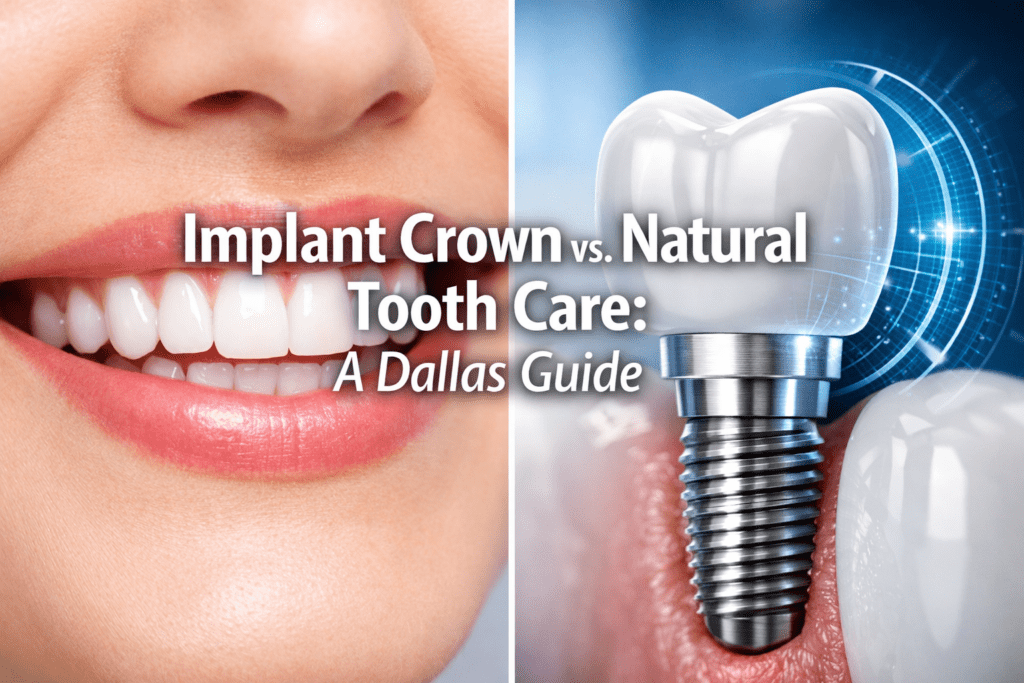
Considering tooth replacement options like dental implants often leads to questions about how they compare to natural teeth, especially when it comes to daily care and long-term maintenance. Understanding the differences in “Implant crown vs natural tooth care” is crucial for making informed decisions about your oral health in Dallas. While both require diligent hygiene, the specific approaches and potential issues vary significantly.
Key Takeaways
- Distinct Structures: Natural teeth have a root, pulp, and periodontal ligament, while dental implants consist of a titanium post, abutment, and crown.
- Hygiene Essentials: Both require daily brushing and flossing, but implants may benefit from specialized tools like water flossers or interdental brushes.
- Gum Health: Natural teeth are susceptible to periodontal disease; implants can develop peri-implantitis, which specifically affects the tissues around the implant.
- Sensory Differences: Natural teeth have nerves and can sense pressure and temperature; implants do not, requiring careful biting awareness.
- Professional Maintenance: Regular dental check-ups are vital for both, but implant patients in Dallas need dentists experienced in monitoring implant health.
- Longevity: With proper care, both can last many years, but implants are immune to cavities, while natural teeth are not.
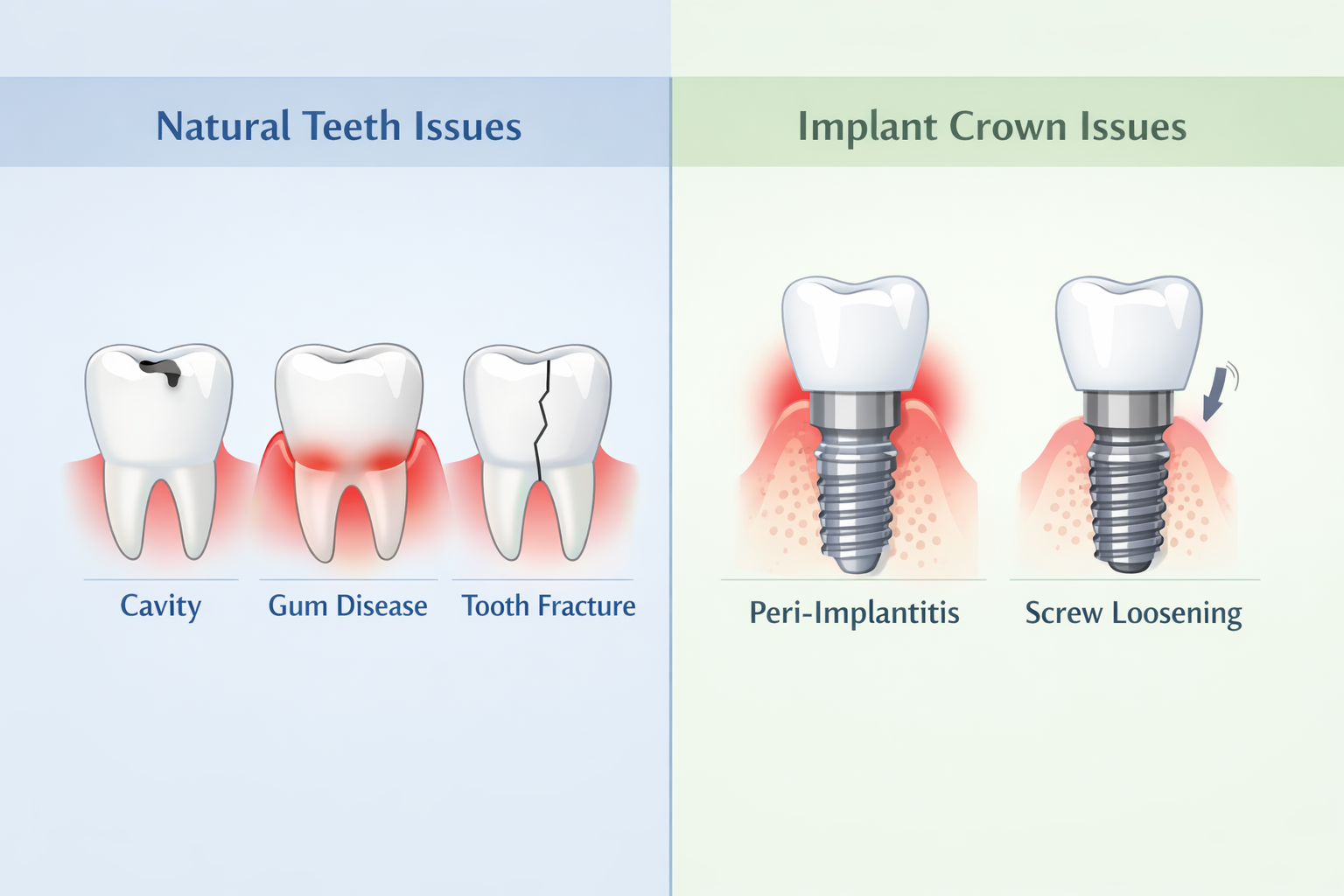
- Damage & Repair: Natural teeth can fracture or decay; implant crowns can chip or loosen, and components may need replacement.
Quick Answer
Caring for an implant crown differs from natural tooth care primarily due to structural differences and how they integrate with the jawbone and surrounding tissues. While both demand excellent oral hygiene, implant crowns require specific cleaning techniques to prevent peri-implantitis, and their lack of sensation means patients must be mindful of chewing forces. Regular professional maintenance with a dentist experienced in dental implants in Dallas is essential for both, but with an emphasis on monitoring the implant’s stability and tissue health.
Understanding the Structural Differences: Implant Crown vs. Natural Tooth
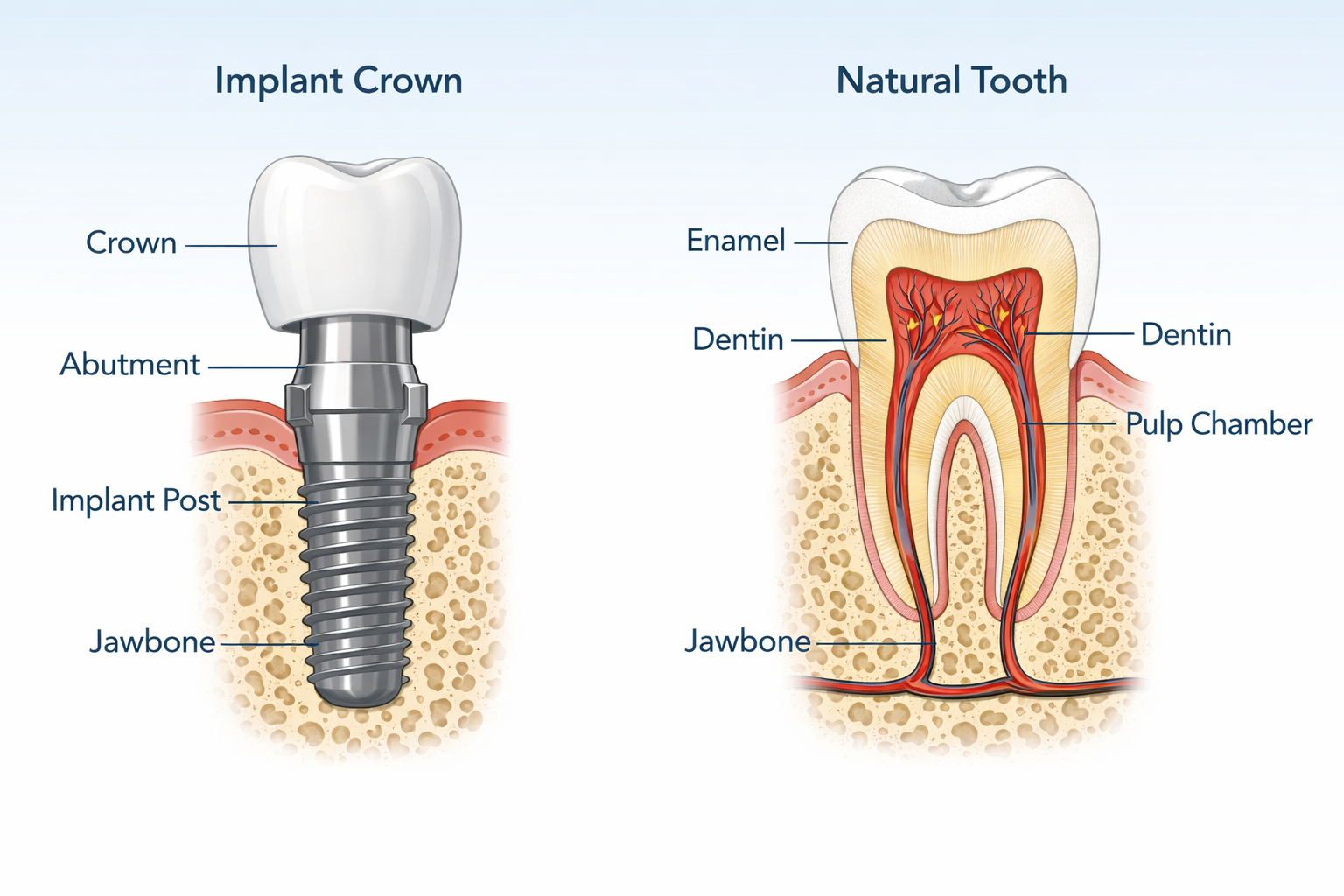
The fundamental distinction in “Implant crown vs natural tooth care” begins with their anatomy. A natural tooth is a complex biological structure with a root, pulp (containing nerves and blood vessels), dentin, and an enamel crown, anchored to the jawbone by a periodontal ligament that provides cushioning and sensory feedback.
{{IMG_SLOT_1}}
A dental implant, conversely, is a prosthetic tooth replacement option. It consists of three main parts:
- Implant Post (Fixture): A small, biocompatible titanium screw surgically placed into the jawbone, acting as an artificial tooth root. This forms a strong bond with the bone through a process called osseointegration.
- Abutment: A connector piece that attaches to the implant post and extends above the gum line.
- Crown: The visible, custom-made ceramic restoration that is cemented or screwed onto the abutment, designed to mimic the appearance and function of a natural tooth.
This difference in structure means natural teeth have a living connection to the body that responds to external stimuli, while implants are essentially inert, relying on the surrounding bone and gum tissue for support and health. Patients considering single tooth implant costs in Dallas 2026 should also factor in long-term care needs.
Daily Oral Hygiene: How Care Differs for an Implant Crown vs. Natural Tooth
Maintaining excellent oral hygiene is paramount for both implant crowns and natural teeth, but the specific techniques and tools can vary to ensure their long-term health and stability.
For natural teeth, daily care typically involves:
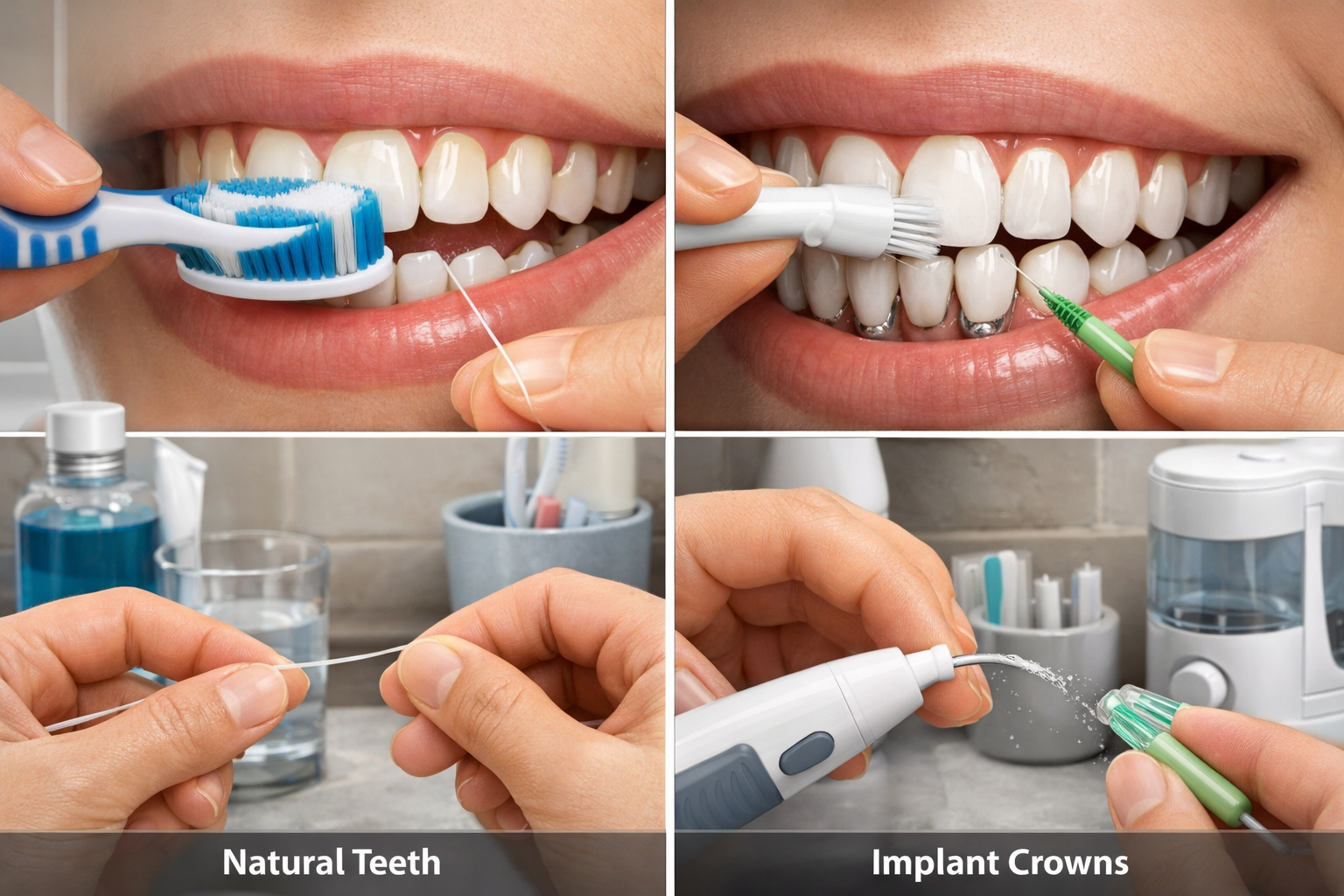
- Brushing: Brushing twice daily for two minutes with a soft-bristle toothbrush and fluoride toothpaste.
- Flossing: Daily flossing to remove plaque and food particles from between teeth and under the gumline.
- Mouthwash: Using an antimicrobial mouthwash as recommended by your dentist to reduce bacteria.
When it comes to “Implant crown vs natural tooth care,” implant crowns require a slightly different approach:
- Gentle Brushing: Use a soft-bristle toothbrush (manual or electric) and non-abrasive toothpaste. Aggressive brushing can irritate the gum tissue around the implant.
- Specialized Flossing: Regular floss can be used, but patients often find interdental brushes, floss threaders, or a water flosser (oral irrigator) more effective for cleaning around the implant abutment and crown. These tools can reach areas traditional floss might miss, preventing plaque buildup that leads to peri-implantitis.
- Antimicrobial Rinses: Your dentist may recommend a specific antimicrobial mouthwash to manage bacteria around the implant.
- Avoid Abrasives: Steer clear of harsh abrasive toothpastes or instruments that could scratch the crown or the exposed abutment surface, which can create areas for bacteria to adhere.
The key difference in hygiene is the necessity to meticulously clean around the gum line of the implant to prevent inflammation and infection, known as peri-implantitis, which is distinct from periodontal disease in natural teeth.
Professional Maintenance and Monitoring
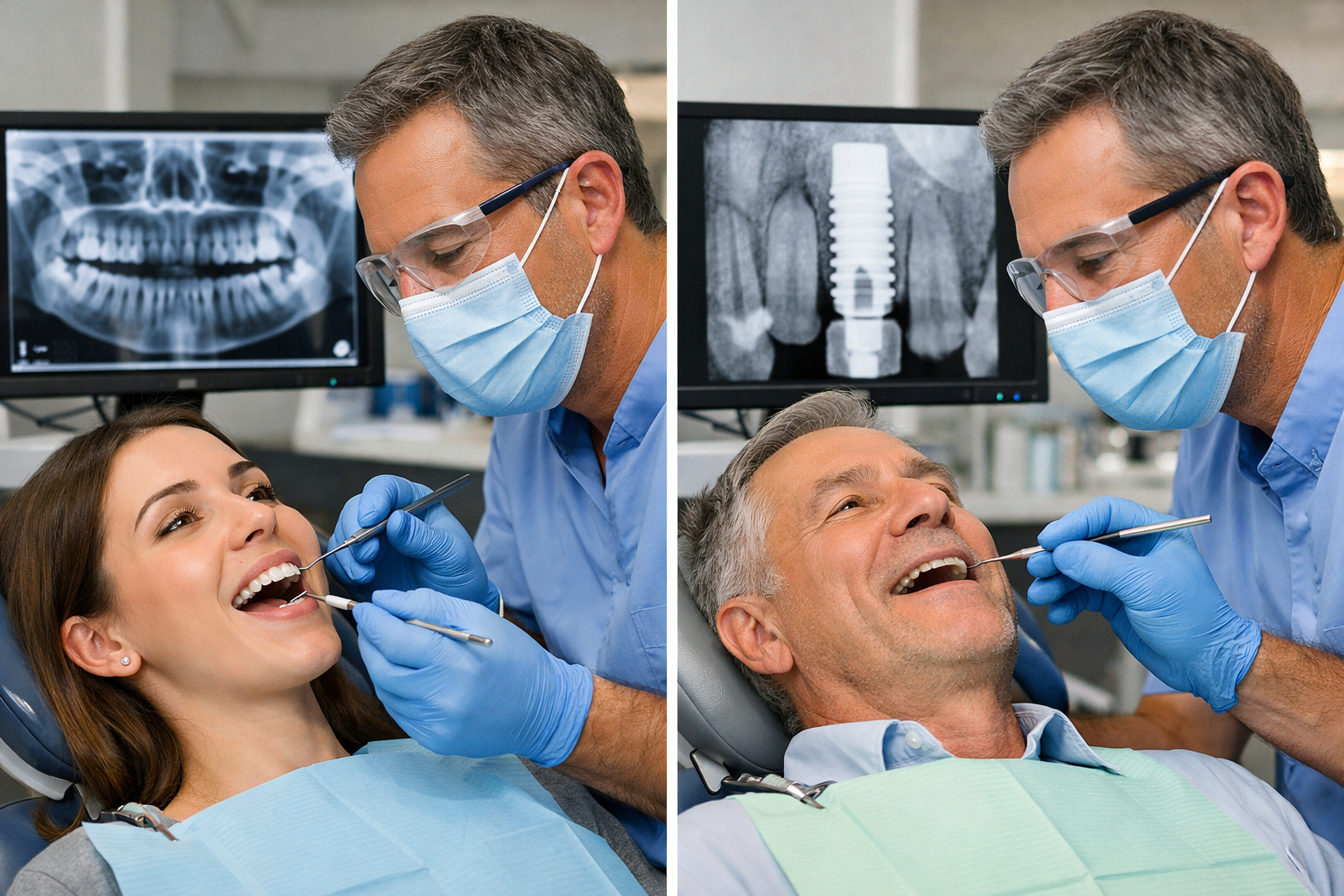
Regular professional dental check-ups are critical for everyone, but patients with dental implants in Dallas require specialized attention to ensure the longevity of their tooth replacement options.
For natural teeth, routine dental visits typically include:
- Comprehensive Exam: Checking for cavities, gum disease, and other oral health issues.
- Professional Cleaning: Removing plaque and tartar buildup from tooth surfaces and below the gumline.
- X-rays: Periodic X-rays to detect hidden problems such as interproximal cavities or bone loss.
For “Implant crown vs natural tooth care,” professional maintenance for implants involves:
- Specialized Instruments: Dental hygienists use specific plastic or titanium instruments, rather than traditional metal scalers, to clean around implant crowns. This prevents scratching the implant surface, which could harbor bacteria.
- Implant Assessment: The dentist will carefully check the stability of the implant and abutment, assess the surrounding gum tissue for signs of inflammation (like redness, swelling, or bleeding), and ensure the crown is secure.
- Radiographic Monitoring: X-rays are taken periodically to monitor the bone level around the implant, looking for any signs of bone loss that could indicate peri-implantitis.
- Bite Analysis: The dentist will also check the bite to ensure the implant crown is not subjected to excessive force, which could lead to complications.
- Instruction and Advice: Patients receive personalized advice on at-home care, especially if specific areas need more attention.
Choosing a dentist in Dallas with expertise in implant surgery and post-operative care is vital for long-term oral health. This specialized attention helps detect and address potential issues early, safeguarding your investment in a dental implant procedure.
Potential Complications and Longevity: Implant Crown vs. Natural Tooth
While both natural teeth and implant crowns are designed for durability, they face different sets of potential complications and have distinct factors influencing their longevity. Understanding these differences is key when comparing “Implant crown vs natural tooth care.”
Natural Teeth Complications:
- Dental Caries (Cavities): Susceptible to decay from bacteria, requiring fillings, crowns, or root canal therapy.
- Periodontal Disease: Infection of the gums and bone supporting the teeth, leading to bone loss and potential tooth loss if untreated.
- Fractures/Chips: Can occur from trauma, hard foods, or grinding.
- Pulpitis: Inflammation of the tooth’s nerve, often requiring root canal treatment.
- Erosion/Attrition: Wear from acid or grinding.
Implant Crown Complications:
- Peri-implantitis: Inflammation and infection of the gum tissue and bone surrounding the implant. This is analogous to periodontal disease in natural teeth but requires specific treatment protocols. Poor oral hygiene is a primary cause.
- Abutment or Crown Loosening: The abutment or crown can occasionally loosen and may need to be tightened or re-cemented.
- Crown Fracture/Chipping: The ceramic crown can chip or fracture, especially if subjected to excessive biting forces. While the implant itself is very strong, the crown can be damaged.
- Osseointegration Failure: In rare cases, the implant may not fully fuse with the bone, leading to implant mobility and requiring removal. This is more common in the initial healing phase.
- Nerve Damage: Extremely rare, but possible during the initial implant surgery if not performed with precision. This underscores the importance of choosing a highly skilled professional for your implant surgery process.
Longevity:
- Natural Teeth: With excellent care, natural teeth can last a lifetime. Factors like genetics, diet, hygiene, and regular dental visits heavily influence their lifespan.
- Dental Implants: Dental implants boast a high success rate, often exceeding 95% over 10 years, and with diligent care, they can last for many decades, even a lifetime. The implant post itself is incredibly durable, but the crown may need replacement after 10-15 years due to wear or damage. Unlike natural teeth, implants are not susceptible to decay or traditional periodontal disease, but they are vulnerable to peri-implantitis if not maintained.
Choosing dental implants offers a long-term, stable solution for missing teeth solutions, but their success heavily relies on both the skill of the dental professional performing the dental implant procedure and the patient’s commitment to specific oral hygiene practices.
Sensory Feedback and Chewing Experience
A notable difference in “Implant crown vs natural tooth care” is the absence of sensory feedback in an implant. Natural teeth are equipped with an intricate network of nerves within the pulp and the periodontal ligament. This network allows us to:
- Sense Pressure: Feel the subtle pressure of chewing, helping to regulate biting forces.
- Detect Temperature: Register hot and cold stimuli.
- Identify Texture: Differentiate between various food textures.
- Warn of Problems: Signal pain when a tooth is damaged, decayed, or infected.
Dental implants, by contrast, lack these internal nerves and the periodontal ligament. This means:
- No Direct Sensation: An implant crown cannot directly sense pressure, temperature, or pain. The sensation of biting comes from the surrounding gum tissue and other natural teeth.
- Careful Chewing: Patients with implants may need to be more conscious of their biting force, especially with very hard foods, to avoid placing excessive stress on the implant or the opposing natural teeth.
- Delayed Problem Detection: Without a direct pain response, issues like peri-implantitis might not be noticed until they are more advanced, emphasizing the critical role of regular dental check-ups for patient safety.
While the lack of sensation may feel unusual at first, most patients adapt quickly to their dental implants, reporting a comfortable and functional chewing experience. It simply means that monitoring the implant’s health relies more on visual inspection and professional assessments rather than immediate sensory cues.
Cost Considerations: Implants vs. Ongoing Natural Tooth Care
When evaluating “Implant crown vs natural tooth care,” it’s natural to consider the financial aspect, both in terms of initial investment and long-term maintenance.
The initial implant cost in Dallas is higher than many traditional tooth restoration options like fillings or root canals. A single tooth implant in Dallas can range from approximately $3,000 to $5,500, which typically covers the implant post, abutment, and crown, though this can vary based on clinic, materials, and complexity. This cost may also involve preparatory procedures like bone grafts if necessary. However, it’s often a one-time investment for a solution designed to last decades.
For natural teeth, ongoing care involves:
- Preventative Care: Regular check-ups and cleanings, usually covered partially or fully by dental insurance.
- Restorative Procedures: Fillings for cavities (ranging from $100-$300+), root canals (from $700-$2,000+), and crowns ($800-$1,500+) if decay or damage occurs. These costs can accrue over a lifetime.
- Periodontal Treatment: If gum disease develops, scaling and root planing, or more advanced gum surgeries, can be significant expenses.
While the upfront cost of dental implants in Dallas TX is substantial, their long-term value lies in their durability and the prevention of future dental problems associated with missing teeth, such as bone loss or shifting adjacent teeth. Many dental offices in Dallas offer dental implant financing options to make the procedure more accessible. For some, the peace of mind and improved quality of life offered by implants outweigh the initial investment compared to recurring expenses and potential complications with natural teeth or less permanent solutions.
Comparison Table: Implant Crown vs. Natural Tooth Care Summary
| Feature | Natural Tooth Care | Implant Crown Care |
|---|---|---|
| Structure | Root, pulp, dentin, enamel; periodontal ligament | Titanium post, abutment, ceramic crown; osseointegrated |
| Daily Hygiene | Brushing (soft brush), flossing (standard), mouthwash | Brushing (soft brush/non-abrasive paste), water flosser, interdental brushes, specialized rinses |
| Sensory Feedback | Yes (pressure, temperature, pain) | No direct sensation in the implant itself |
| Vulnerable To | Cavities, periodontal disease, fractures, erosion | Peri-implantitis, crown chipping/loosening, osseointegration failure |
| Professional Cleaning | Standard metal instruments, scaling & root planing | Plastic/titanium instruments, gentle cleaning around implant |
| Pain Response | Direct pain signal from nerve | No direct pain; discomfort from surrounding tissue if issue arises |
| Longevity | Can last a lifetime with proper care | Can last decades, often a lifetime with proper maintenance; crown may need replacement |
| Initial Cost | Lower for fillings, higher for root canals/crowns | Higher initial investment for the full procedure |
| Long-Term Cost | Ongoing treatments for decay/gum disease | Regular check-ups, potential for minor repairs or crown replacement |
Conclusion
Understanding the distinctions in “Implant crown vs natural tooth care” is essential for anyone navigating their oral health journey, especially when considering tooth replacement options. While both natural teeth and dental implants require meticulous daily hygiene and regular professional check-ups, their structural differences necessitate varied care approaches. Implants are immune to cavities but demand specific cleaning techniques to prevent peri-implantitis, and their lack of sensation means a greater reliance on professional monitoring.
For residents in Dallas seeking to replace missing teeth, dental implants offer a durable and aesthetically pleasing solution that can significantly improve quality of life and long-term oral health. The investment in a dental implant procedure not only restores function but also helps preserve jawbone integrity.
If you have missing teeth or are considering dental implants, the best next step is to schedule a consultation with a dentist experienced in dental implants in Dallas. They can assess your specific oral health needs, discuss whether an implant is the right choice for you, and provide a personalized care plan, ensuring you are well-informed and confident in your decision.
Related Reading
- Single Tooth Implant Cost Dallas 2026: What $1,500-$5,500 Really Buys
- Dental Implant Financing Options Dallas: 0% Plans, CareCredit, and No Credit Check Deals
- What Happens If You Wait Too Long for Dental Implants?
FAQ
Is caring for an implant crown harder than a natural tooth?
No, it’s not necessarily harder, but different. Implants require specific cleaning techniques, such as using interdental brushes or water flossers, to prevent peri-implantitis, whereas natural teeth are more susceptible to cavities and traditional gum disease.
Do dental implants need root canals?
No, dental implants do not need root canals because they are artificial structures and do not contain a nerve or pulp like natural teeth.
Can you get a cavity on a dental implant?
No, the crown of a dental implant, typically made of ceramic or porcelain, cannot get a cavity. However, the surrounding gum and bone tissue are still susceptible to infection (peri-implantitis).
How often should I see the dentist with dental implants?
It is generally recommended to visit your dentist every six months for routine check-ups and cleanings, just like with natural teeth. Your Dallas dentist will pay special attention to your implants during these visits.
Can dental implants get gum disease?
Yes, dental implants can get a condition called peri-implantitis, which is an inflammatory process affecting the soft and hard tissues surrounding an osseointegrated implant, similar to gum disease in natural teeth.
How do I clean under my dental implant crown?
Cleaning under your implant crown is crucial. Use a soft-bristle toothbrush, and incorporate specialized tools like floss threaders, interdental brushes, or a water flosser to effectively clean around the implant and under the crown.
Can implant crowns chip or break?
Yes, like natural teeth, dental implant crowns can chip or break if subjected to excessive force or trauma, or if they are made from certain materials. If this occurs, the crown may need to be repaired or replaced.
Do implants feel like natural teeth?
While dental implants are designed to function and look like natural teeth, they lack the periodontal ligament that provides natural teeth with sensory feedback for pressure, temperature, and pain. Most patients adapt well, but the sensation of biting may feel slightly different.
Sources
- American Academy of Periodontology. (n.d.). Dental Implants. Retrieved from https://www.perio.org/for-patients/periodontal-diseases/dental-implant-health/ (Accessed 2026)
- American Dental Association. (n.d.). Dental Implants. Retrieved from https://www.mouthhealthy.org/all-topics-a-z/dental-implants (Accessed 2026)
Leave a Reply
Share your thoughts or ask a question about dental implants. Your email address will not be published.