

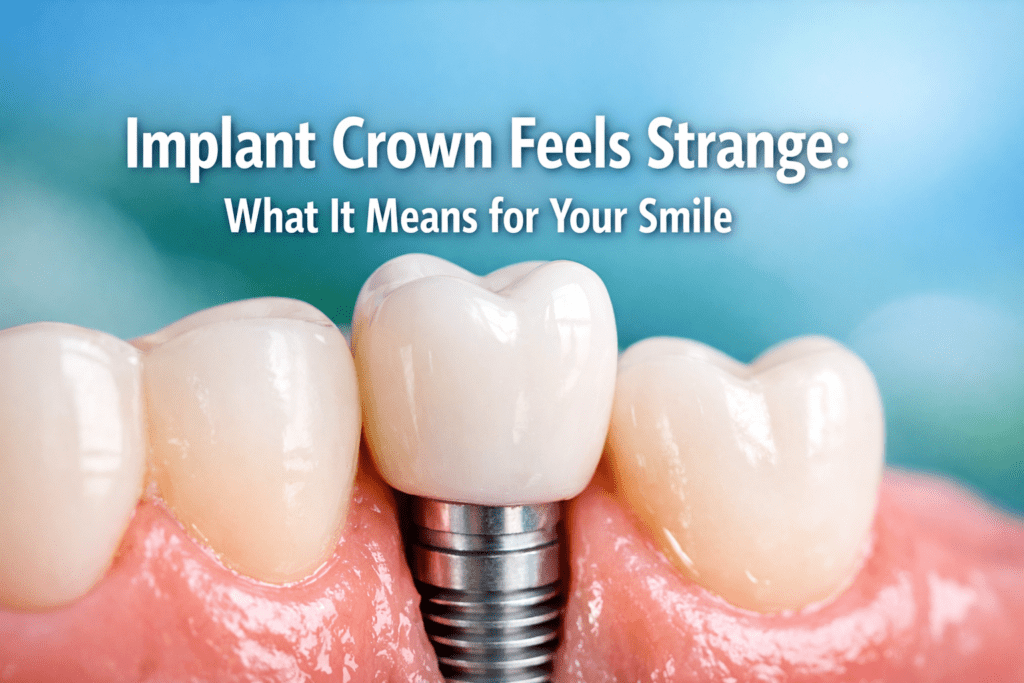
When your implant crown feels strange, it can be a source of significant concern, especially if you’ve recently undergone a dental implant procedure or have had your implant for some time. This unusual sensation, whether it’s a feeling of looseness, pressure, or an altered bite, is a clear signal that something might not be perfectly aligned with your dental implant system. Understanding the potential causes and knowing when to seek professional dental care in Dallas is crucial for maintaining your long-term oral health and ensuring the success of your tooth replacement options.
Key Takeaways
- A strange feeling in your implant crown can stem from several issues, including bite problems, a loose crown or abutment, or gum irritation.
- Initial discomfort or a “foreign object” sensation can be normal shortly after the crown placement, but persistent or worsening symptoms require attention.
- Common symptoms indicating a potential problem include pain, clicking sounds, visible movement, difficulty chewing, or redness/swelling around the implant.
- Ignoring a strange-feeling implant crown can lead to complications such as implant failure or peri-implantitis.
- A dental professional can diagnose the exact cause through examination, X-rays, and bite assessment.
- Timely intervention is key, and treatment options range from simple adjustments to crown replacement or addressing underlying implant issues.
- Regular dental check-ups and proper oral hygiene are essential for preventing issues and ensuring the longevity of your dental implants in Dallas.
Quick Answer
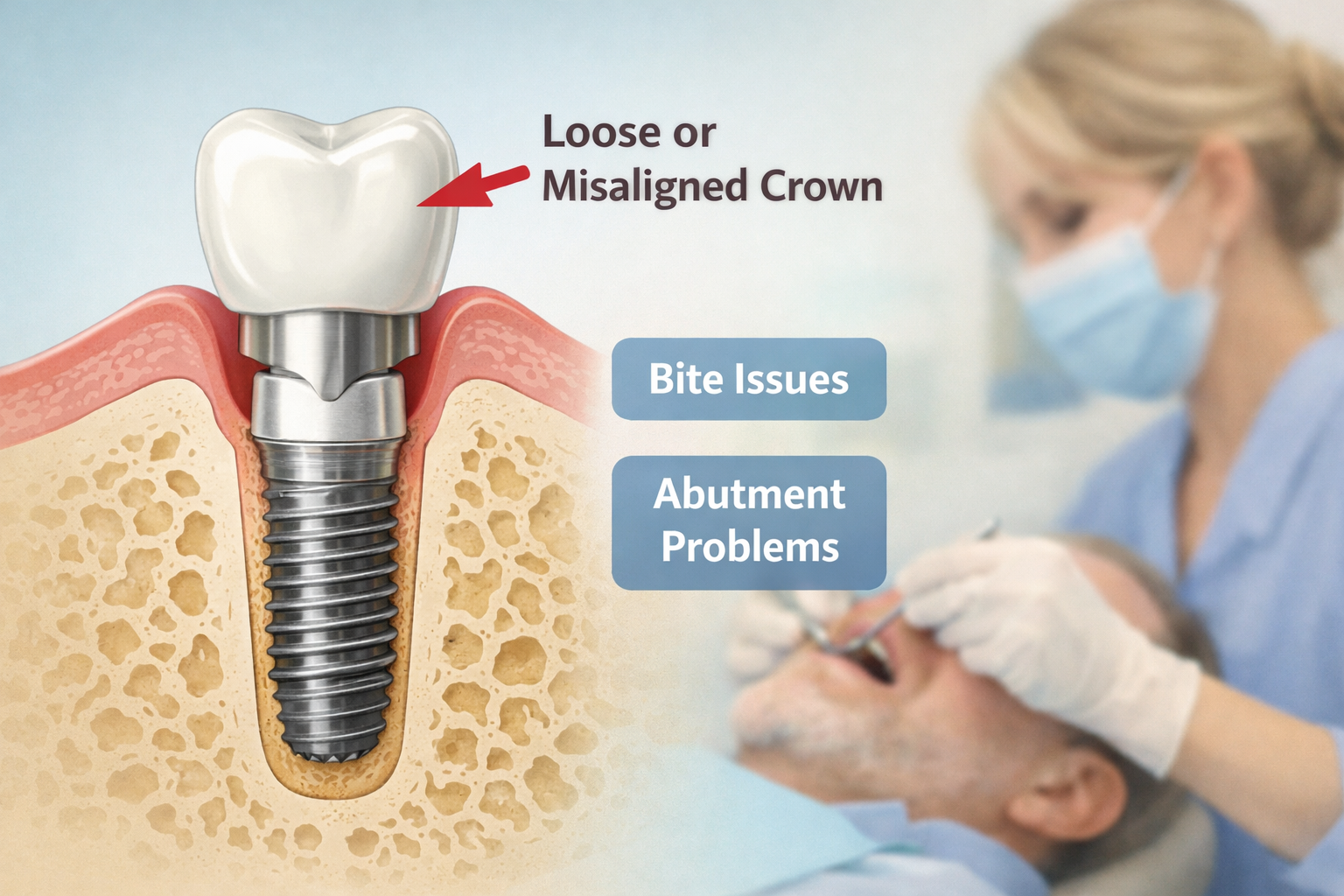
If your implant crown feels strange, it’s often an indication of a minor adjustment needed or, in some cases, a more significant issue like a loose crown, abutment, or even a problem with the implant itself. It’s essential to consult with your Dallas dentist promptly, as early diagnosis and intervention can prevent further complications and ensure the long-term success of your dental implant.
What Causes Your Implant Crown to Feel Strange?
If your implant crown feels strange, it’s often due to mechanical issues with the crown or abutment, or a problem with your bite, rather than the implant itself. These sensations can range from a subtle pressure or altered feel to a more noticeable looseness or discomfort [1, 2]. Addressing these concerns early with your dentist is crucial to prevent further complications.
There are several common reasons why an implant crown might not feel quite right:
- Bite Misalignment: One of the most frequent causes of a strange feeling is an uneven bite. If the new crown is slightly higher or shaped differently than your natural teeth, it can alter how your upper and lower teeth meet, causing pressure or discomfort during chewing [2]. This can lead to your implant crown feeling strange because it’s absorbing too much force.
- Loose Crown or Abutment: The dental implant system consists of three main parts: the implant screw, the abutment (connector), and the crown. If the screw connecting the crown to the abutment, or the abutment to the implant, becomes loose, the crown can feel wobbly or shift when you chew or speak [1, 3]. This is a common mechanical issue that a dentist can often resolve by tightening the components.
- Cement Issues: If your implant crown is cemented in place, sometimes the cement can wash out or degrade over time, leading to the crown feeling loose or causing food impaction around it [4].
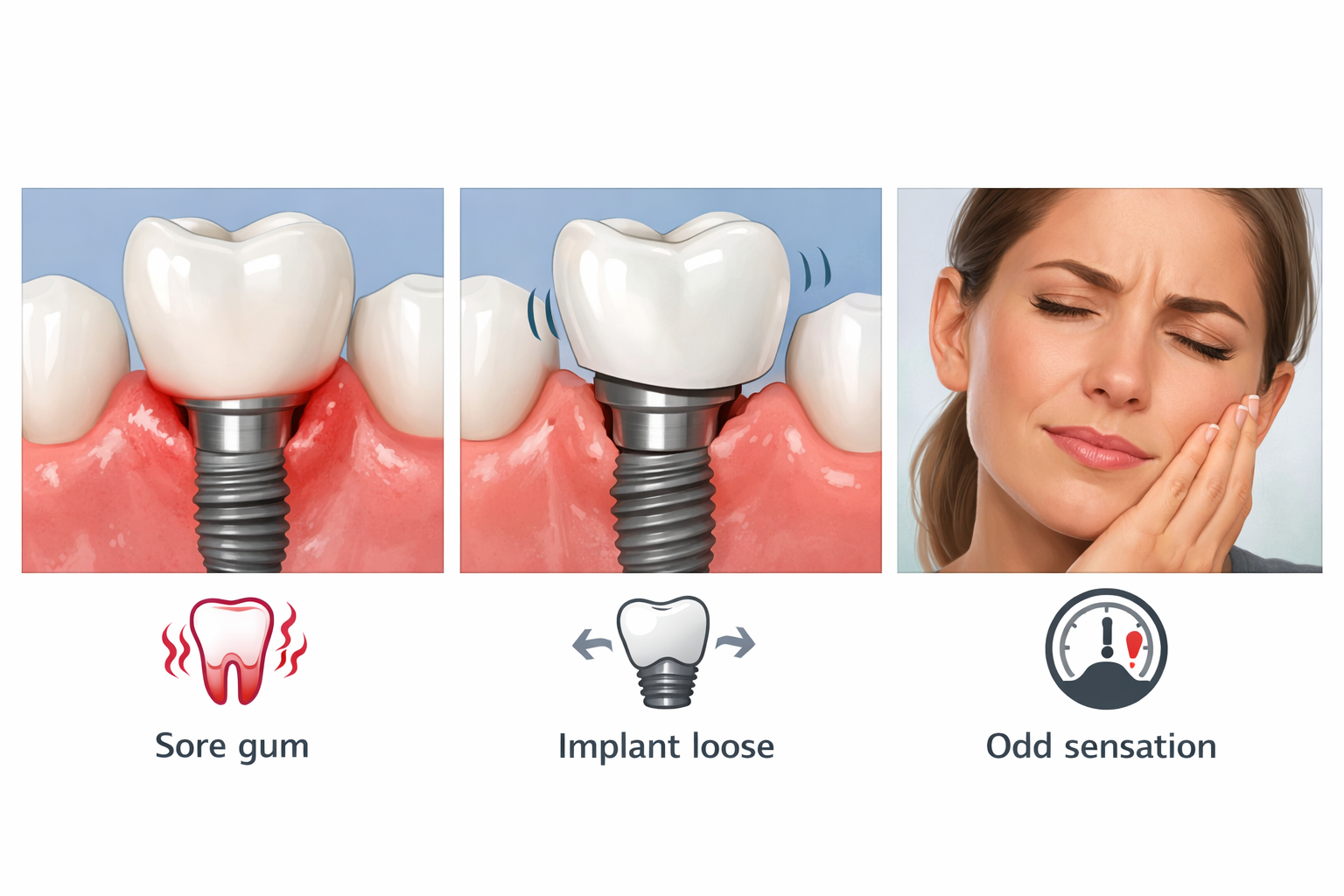
- Gum Irritation or Inflammation: While the implant itself shouldn’t cause pain if integrated, the surrounding gum tissue can become irritated or inflamed. This might be due to trapped food, improper cleaning, or an ill-fitting crown margin that irritates the gums, leading to a strange, sometimes tender, sensation [2].
- Peri-implantitis: In more serious cases, a strange feeling might be an early sign of peri-implantitis, an inflammatory condition affecting the tissues around a dental implant. This condition can lead to bone loss if left untreated [7]. Symptoms might include swelling, redness, bleeding, or tenderness around the implant, along with a feeling of looseness or discomfort [2]. For more information on prevention and treatment, see our guide on Peri-Implantitis Prevention Dallas.
- Fractured Crown: Although rare, the crown itself can chip or fracture, leading to sharp edges or an altered biting surface that feels strange or uncomfortable [4].
- Implant Failure: In rare instances, a strange sensation, especially coupled with pain, swelling, or persistent looseness, could indicate an issue with the implant integrating with the bone, or even implant failure [7]. However, dental implant survival rates are generally very high, with many studies showing 95-98% long-term success. If you suspect implant failure, understanding the Dental Implant Failure Symptoms can be helpful.
It’s important to distinguish between a temporary, mild sensation (which can be normal during the initial healing period or after crown placement) and persistent or worsening feelings. If the sensation lasts for more than a few days, or if it’s accompanied by pain, swelling, or difficulty chewing, contacting your Dallas dentist is the appropriate next step.
Identifying Symptoms: How to Tell If Your Implant Crown Feels Strange Beyond Normal
It’s normal to feel something different after a dental implant crown is placed, as your mouth adjusts to the new tooth replacement. However, recognizing specific symptoms can help you determine if your implant crown feels strange in a way that warrants professional attention, distinguishing it from routine post-procedure sensations.
Understanding the difference between expected adjustment and potential problems is key. Immediately after a crown is placed on an implant, it might feel a little “different” or like a “foreign object.” This often subsides as you get used to it. However, if the sensation persists, worsens, or is accompanied by other signs, it’s time to investigate further.
Here are symptoms that indicate your implant crown feels strange in a way that suggests a problem:
- Persistent Pressure or Discomfort: While minor initial pressure can be normal, if you experience ongoing or increasing pressure, throbbing, or discomfort around the implant crown that doesn’t subside after a few days, it could signal an issue with the bite or underlying inflammation [6].
- Sensation of Looseness or Movement: A healthy implant crown should feel as solid and stable as a natural tooth. If you notice any wiggling, rocking, or movement when you touch it, chew, or even speak, this is a clear sign of a loose crown or abutment [1, 3, 5].
- Clicking or Popping Sounds: Hearing clicking, popping, or grinding noises when you chew can indicate that the crown or abutment components are loose and moving against each other [1]. For more on this, check out our guide on Dental Implant Clicking Noise.
- Changes in Bite: If your bite feels “off,” as if the crown is too high, or if you can’t bite down comfortably without feeling undue pressure on the implant, this suggests a bite misalignment that needs adjustment [2].
- Difficulty Chewing: If chewing certain foods becomes painful or uncomfortable specifically around the implant, it could be due to a loose crown, an incorrect bite, or irritation of the surrounding tissues [6].
- Swelling, Redness, or Bleeding Gums: These are classic signs of inflammation or infection around the implant (peri-implantitis). While not directly about the crown feeling strange, these symptoms often accompany sensations of discomfort or pressure [2, 7].
- Food Trapping: If food consistently gets stuck under or around the implant crown in a way that didn’t happen before, it might indicate an ill-fitting crown or a gap that has developed [4].
- Bad Breath or Taste: Persistent bad breath or a strange taste in your mouth around the implant area could be a sign of infection or trapped food leading to bacterial growth [2]. This is explored further in Bad Breath from Dental Implants.
When to Contact Your Dentist in Dallas:
You should contact your dentist in Dallas promptly if you experience any of the above symptoms, especially if they are persistent, severe, or worsening. Early intervention can prevent minor issues from escalating into more significant problems, protecting your investment in dental implants. Even if you’re unsure, a quick consultation can provide peace of mind and ensure the longevity of your implant.
Diagnosing a Strange Feeling Implant Crown: What to Expect at Your Dallas Dentist
When your implant crown feels strange, a thorough dental examination by a qualified professional in Dallas is essential to identify the root cause. Your dentist will use a combination of visual inspection, physical assessment, and diagnostic imaging to accurately diagnose the problem and recommend appropriate treatment.
Here’s what you can expect during the diagnostic process when your implant crown feels strange:
Patient History and Symptom Description: Your dentist will begin by asking detailed questions about your symptoms. Be prepared to describe:
- When the strange feeling started: Was it immediately after the crown was placed, or did it develop gradually?
- The nature of the sensation: Is it pain, pressure, looseness, a weird taste, or something else?
- What exacerbates it: Does it feel worse when you chew, talk, or touch it?
- Accompanying symptoms: Have you noticed any swelling, redness, bleeding, or clicking sounds?
- Your dental implant history: Details about your original dental implant procedure and previous appointments.
Visual and Manual Examination:
- Visual Inspection: The dentist will carefully examine the implant crown, surrounding gum tissue, and adjacent teeth for any visible signs of issues such as redness, swelling, pus, recession, chips, cracks, or gaps [2]. They will also check the overall hygiene of the area.
- Palpation: Gentle pressure may be applied around the implant and gums to check for tenderness or swelling.
- Mobility Test: The dentist may gently attempt to move the crown to assess for any looseness [1, 5]. A healthy implant crown should feel completely stable.
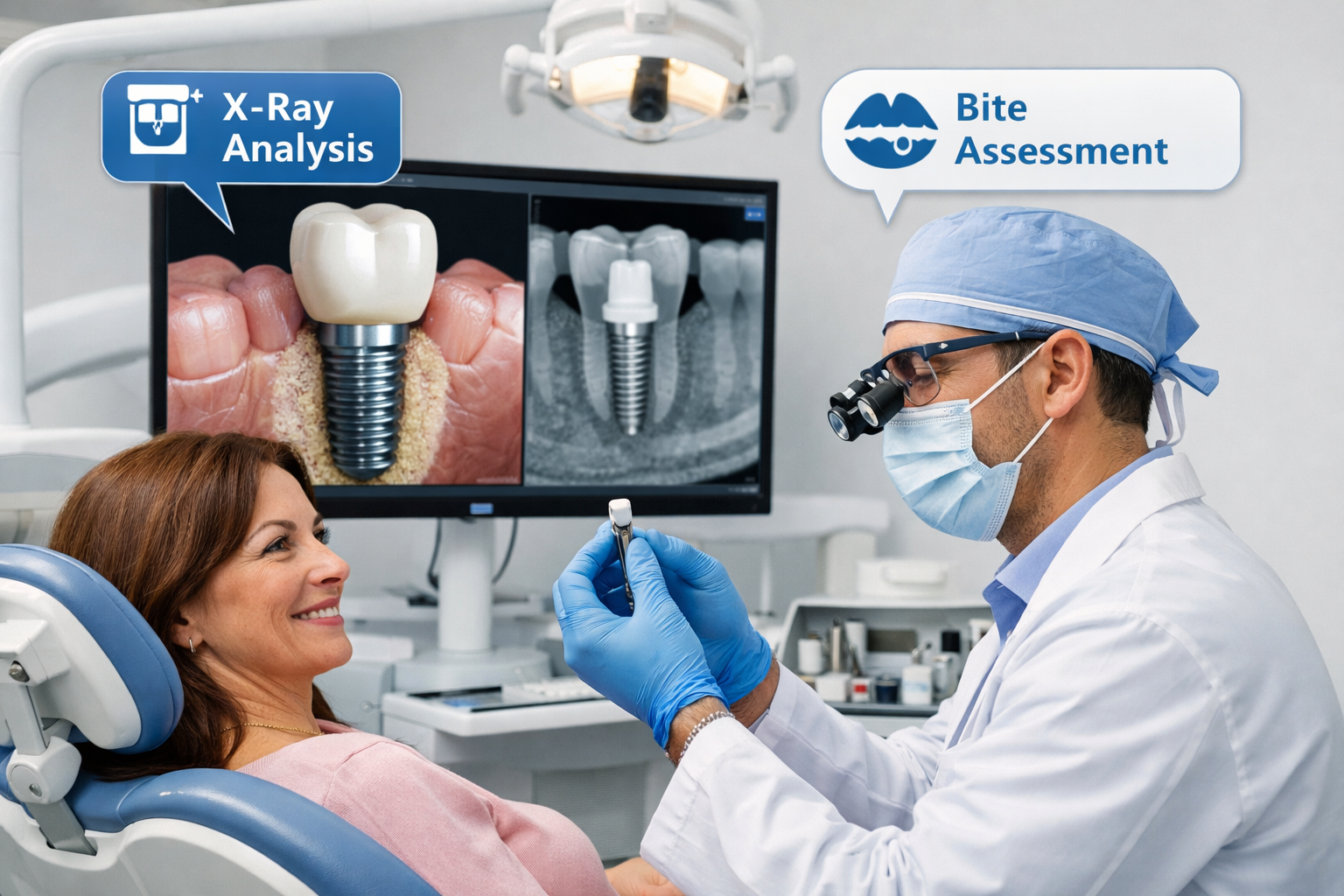
- Bite Assessment: You’ll be asked to bite down on a piece of articulating paper. This helps the dentist identify any “high spots” or uneven pressure points on the crown that might be causing bite misalignment and subsequent discomfort [2]. Adjusting the bite can sometimes resolve a strange feeling in the implant crown.
Radiographic Imaging (X-rays):
- Periapical or Bitewing X-rays: These images provide a detailed view of the implant, the abutment, the crown, and the surrounding bone [2]. They can reveal issues not visible during a clinical exam, such as a loose abutment screw, bone loss around the implant, or a fracture in the implant itself.
- 3D Cone Beam Computed Tomography (CBCT): In more complex cases, a CBCT scan may be recommended. This advanced imaging provides a three-dimensional view, offering a comprehensive assessment of the bone structure, implant position, and any subtle issues that traditional X-rays might miss. Dentists in Dallas are increasingly using 3D Guided Implant Surgery for precision. For guidance on optimal imaging frequency, refer to our Optimal Dental Implant X-Ray Frequency guide.
Periodontal Probing: A small probe may be used to measure the depth of the gum pockets around the implant. Increased pocket depths can be a sign of gum inflammation or peri-implantitis [2].
Decision Rule for Diagnosis:
If the examination reveals a loose crown or abutment, the first step is typically to attempt tightening. If bite issues are identified, adjustments to the crown surface will be made. If signs of infection or bone loss are present, a more extensive treatment plan for peri-implantitis or other complications will be discussed. The goal is always to address the specific cause of why your implant crown feels strange with the least invasive and most effective solution.
What Are the Potential Solutions When Your Implant Crown Feels Strange?
When your implant crown feels strange, the good news is that many issues have straightforward solutions, especially when addressed promptly. The specific treatment depends entirely on the underlying cause identified during your dental examination.
Here are the potential solutions for common reasons why an implant crown feels strange:
Bite Adjustment (Occlusal Adjustment):
- When applicable: If the primary issue is an uneven or “high” bite, causing undue pressure on the implant crown [2].
- Solution: The dentist will use articulating paper to identify the high spots on the crown that are making contact too strongly with opposing teeth. They will then carefully and gently reshape the crown’s surface using a dental drill to create a balanced bite. This often provides immediate relief and makes your implant crown feel natural again.
Tightening of Loose Components:
- When applicable: If the implant crown itself or the abutment (the connector between the implant and crown) is loose [1, 3, 5].
- Solution: The dentist will access the screw that holds the crown to the abutment or the abutment to the implant. Using specialized tools, they will tighten this screw to the correct torque. If the screw itself is stripped or broken, it may need to be replaced. This simple procedure can immediately resolve the feeling of a wobbly or strange implant crown.
Recementation or Replacement of Crown:
- When applicable: If a cemented crown has become debonded (cement washed out) [4], or if the crown is damaged (e.g., fractured or heavily worn) [4].
- Solution: For a debonded crown, the dentist will clean the crown and the abutment and re-cement the crown in place with fresh dental cement. If the crown is damaged beyond repair, a new crown will need to be fabricated and placed. This might involve taking new impressions. You can learn more about Dental Implant Crown Replacement Cost Dallas for context.
Treatment for Gum Irritation or Peri-implantitis:
- When applicable: If the strange feeling is accompanied by redness, swelling, bleeding, or discomfort in the surrounding gum tissue, indicating inflammation or infection [2, 7].
- Solution:
- Improved Oral Hygiene: Often, improved brushing and flossing techniques around the implant can resolve mild inflammation. The dentist may provide specific instructions or recommend specialized brushes (like a sulcus brush for implants).
- Professional Cleaning: A thorough professional cleaning (debridement) to remove plaque and calculus from around the implant and under the gum line is crucial.
- Antimicrobial Rinses/Antibiotics: In some cases, medicated mouth rinses or a course of antibiotics may be prescribed to control infection.
- Surgical Intervention: For advanced peri-implantitis with significant bone loss, surgical procedures may be necessary to clean the implant surface, regenerate bone, or reshape gum tissue. These procedures can range in cost, with Peri-Implantitis Treatment Costs Dallas 2026 typically ranging from $800 to $4,000 depending on severity.
Addressing Implant Failure:
- When applicable: If the strange feeling, often accompanied by pain, swelling, mobility of the implant itself, or significant bone loss, indicates the dental implant has failed [7].
- Solution: If an implant has truly failed, it may need to be removed. After the site has healed, and any underlying issues (like infection or insufficient bone) are addressed, a new implant may be placed in a process called Revision Dental Implant Surgery Dallas. This is a more involved process, but modern techniques offer excellent chances for successful re-treatment.
Prevention is Key: Regular dental check-ups and diligent oral hygiene are your best defense against your implant crown feeling strange. Your Dallas dentist can spot potential issues early and help you maintain your long-term oral health.
The Importance of Early Intervention When Your Implant Crown Feels Strange
Early intervention is paramount when your implant crown feels strange, as delaying professional assessment and treatment can lead to escalating complications, increased discomfort, and potentially more invasive and costly repairs. Just like any other aspect of your oral health, addressing concerns promptly safeguards your investment in dental implants.
When you notice your implant crown feels strange, here’s why immediate action is critical:
- Preventing Minor Issues from Worsening: A loose screw or a slightly off-kilter bite might seem minor, but if left unaddressed, these issues can put undue stress on the implant and surrounding bone. For instance, a loose crown can allow bacteria to enter and accumulate, potentially leading to infection around the implant (peri-implantitis) [1, 2].
- Avoiding Implant Damage: Constant pressure from a misaligned bite can cause the crown to chip, fracture, or even damage the implant itself over time [2]. Similarly, excessive movement from a loose abutment can stress the implant-bone connection, potentially compromising its stability.
- Protecting Your Oral Health: Untreated inflammation or infection around an implant (peri-implantitis) can lead to bone loss, which is the very foundation supporting your implant [7]. Significant bone loss can compromise the implant’s stability and eventually lead to implant failure.
- Minimizing Discomfort: What starts as a mild, strange sensation can quickly progress to significant pain, making chewing, speaking, and even daily activities uncomfortable [6]. Addressing the issue early can alleviate discomfort sooner.
- Cost-Effectiveness: Simple adjustments like bite correction or tightening a screw are relatively inexpensive procedures. However, if a problem escalates to the point of needing a new crown, treating advanced peri-implantitis, or even replacing a failed implant, the costs can increase significantly [4]. Understanding factors affecting implant cost in Dallas can highlight the financial benefit of early care.
- Preserving Implant Longevity: Dental implants are designed to be a long-term solution for missing teeth, often lasting decades with proper care [2]. Promptly resolving any issues that cause your implant crown to feel strange is essential for ensuring its longevity and protecting your long-term oral health.
- Maintaining Aesthetic Results: A damaged or infected implant can not only impact function but also compromise the aesthetic appearance of your smile. Early intervention helps maintain the beautiful, natural-looking results you achieved with your dental implant.
Actionable Next Steps for Dallas Patients:
If your implant crown feels strange, do not wait. Contact your Dallas dentist to schedule an appointment. Explain your symptoms clearly so they can allocate appropriate time for examination and potential immediate solutions. Avoid trying to fix the issue yourself or ignoring it in hopes that it will resolve on its own. Your proactive approach is the best way to safeguard your dental implant and overall oral health.
Navigating Your Post-Implant Journey: When Does the “Strange” Feeling Become Normal?
It is entirely normal for a dental implant and its crown to feel “different” or even a bit strange initially, as your mouth adjusts to a new component. This sensation usually subsides within a few days or weeks as your body adapts. However, if this unusual feeling persists or worsens, it moves beyond normal adaptation and warrants professional evaluation.
The journey with a new dental implant, from the initial surgery to the placement of the crown, involves several stages of healing and adaptation. Here’s a timeline for what is considered normal and when to be concerned:
Immediately After Crown Placement (First few days to 1 week):
- Normal: It’s common to notice the presence of the new crown. It might feel slightly different in size or shape compared to your natural tooth, or you might feel subtle pressure [8]. Your tongue might repeatedly touch it as it gets used to the new surface. Minor adjustments to your bite might also be felt as your jaw settles into its new alignment. This is often described as feeling like a “foreign object.”
- When to be concerned: If you experience sharp pain, significant pressure that doesn’t ease, constant throbbing, or the crown feels loose, contact your dentist immediately.
First Few Weeks (1 to 4 weeks):
- Normal: The initial “foreign” feeling should gradually diminish as your mouth adapts. You should start to feel more comfortable chewing and speaking. The crown should begin to feel like a natural part of your mouth, and any initial bite adjustments should settle.
- When to be concerned: If the strange feeling persists without improvement, or if new symptoms like clicking, increased pain, swelling, or redness appear, it’s a sign that something might be amiss [2, 7].
Beyond One Month (Long-term):
- Normal: Your implant crown should feel completely natural and function just like your other teeth. You should not be consciously aware of its presence, and it should not cause any discomfort or strange sensations during normal activities like eating, speaking, or cleaning.
- When to be concerned: If at any point an implant crown feels strange – whether it’s a sudden shift, a new sensation of looseness, or recurring pain or discomfort – this is a clear indicator that something has changed and needs professional attention [1, 6].
Understanding Adaptation vs. Problem:
The key distinction is between adaptation and dysfunction. Adaptation involves your body getting used to a new, healthy component. Dysfunction means there’s an underlying issue that needs to be corrected. If the feeling prevents you from eating normally, causes persistent pain, or feels unstable, it’s likely a problem. Our guide Dental Implant Feels Weird? Timeline to Natural Comfort provides further insights into this adjustment period.
Ultimately, your dental implant and crown should integrate seamlessly into your mouth, becoming indistinguishable from your natural teeth in terms of comfort and function. Any persistent or newly developed strange feeling warrants a call to your dentist in Dallas to ensure the long-term success and health of your implant.
Preventing Your Implant Crown from Feeling Strange: Best Practices for Dallas Patients
Preventing your implant crown from feeling strange involves a combination of meticulous oral hygiene, regular dental check-ups, and careful attention to your overall health. For patients with dental implants in Dallas, adopting these best practices is crucial for ensuring the longevity and comfort of their tooth replacement options.
Here’s how you can proactively prevent issues that might make your implant crown feel strange:
Maintain Excellent Oral Hygiene:
- Brush Regularly: Brush your implant crown and surrounding gums gently twice a day with a soft-bristled toothbrush and non-abrasive toothpaste [2]. Electric toothbrushes designed for implants can also be beneficial.
- Floss Daily: Use dental floss, interdental brushes, or a water flosser specifically designed for implants to clean around the implant and under the gum line, removing plaque and food debris [2]. This helps prevent gum irritation and peri-implantitis.
- Antimicrobial Rinses: Your dentist might recommend an antimicrobial mouthrinse, especially if you are prone to gum inflammation, to keep the area clean.
Attend Regular Dental Check-ups in Dallas:
- Professional Cleanings: Schedule professional cleanings every six months, or as recommended by your dentist. Hygienists are trained to clean around implants without causing damage.
- Comprehensive Examinations: Your dentist will visually inspect your implant, assess your bite, and take regular X-rays to monitor the health of the implant, bone levels, and surrounding tissues [2]. This allows for early detection of any issues that could make your implant crown feel strange before they become serious. For questions to ask your dentist, consult Essential Questions to Ask Your Dentist About Implants in 2026.
- Proactive Adjustments: Your dentist can identify and correct minor bite discrepancies or tighten loose components during these routine visits, preventing discomfort and complications [2].
Protect Against Bruxism (Teeth Grinding):
- If you grind or clench your teeth (bruxism), the excessive force can put significant stress on your implant crown and the implant itself, leading to loosening, fractures, or discomfort [2].
- Solution: Your dentist may recommend a custom-fitted nightguard to protect your implants and natural teeth from nocturnal grinding. Learn more about Bruxism & Dental Implants: Prevent Damage in 2026.
Avoid Harmful Habits:
- Don’t Chew Hard Objects: Avoid biting on ice, hard candies, popcorn kernels, or using your teeth as tools (e.g., opening packages). These habits can damage both natural teeth and implant crowns.
- Stop Smoking: Smoking significantly increases the risk of gum disease and implant failure, affecting the overall health and stability of your implant [2].
Manage Systemic Health Conditions:
- Certain health conditions, like diabetes, can affect healing and increase the risk of implant complications. Ensure these conditions are well-managed with your healthcare provider. For diabetic patients, our guide on Diabetic Dental Implant Recovery offers specific advice.
By following these guidelines, you can significantly reduce the likelihood of your implant crown feeling strange and ensure the lasting success and comfort of your dental implants in Dallas. Proactive care is the best investment in your long-term oral health.
Cost Implications of Addressing a Strange Feeling Implant Crown in Dallas
The cost of addressing an implant crown that feels strange in Dallas can vary widely, depending on the underlying cause and the complexity of the required treatment. Simple adjustments are usually inexpensive, while more involved procedures like crown replacement or treating severe peri-implantitis will naturally incur higher costs.
Understanding the potential financial implications can help you prepare and make informed decisions about your long-term oral health and dental implant care in Dallas.
Here’s a breakdown of potential costs, keeping in mind that these are estimates and can vary based on the dental practice, materials used, and your specific case:
Minor Adjustments (Bite Adjustment, Screw Tightening):
- Cost: Generally, these are the least expensive solutions. A simple bite adjustment may be a standalone fee or sometimes included as part of a follow-up visit. Tightening a loose abutment or crown screw is also usually a minor charge.
- Estimate: $50 – $200. Some follow-up adjustments might even be covered within the initial implant crown cost if done soon after placement.
Recementation of a Crown:
- Cost: If your cemented crown has come loose and can be re-bonded, this is a relatively straightforward procedure.
- Estimate: $100 – $300.
Replacement of a Screw or Abutment:
- Cost: If a screw is stripped or broken, or the abutment itself is damaged, these components will need to be replaced. The cost includes the part and the labor for replacement.
- Estimate: $300 – $800, depending on the type of screw/abutment and complexity.
New Implant Crown Fabrication and Placement:
- Cost: If your implant crown is fractured, extensively damaged, or beyond repair, a completely new crown will be necessary. This involves new impressions, fabrication, and seating the new crown.
- Estimate: $1,000 – $3,000 or more per crown in Dallas, depending on the material (porcelain, zirconia) and lab fees. For a detailed breakdown, see our guide on Dental Implant Crown Replacement Cost Dallas | 2026 Guide.
Treatment for Peri-implantitis (Gum Disease Around Implants):
- Cost: This can range from non-surgical treatments to more involved surgical procedures.
- Non-surgical (deep cleaning, antibiotics): $200 – $1,000 per implant.
- Surgical (debridement, bone graft, tissue regeneration): $800 – $4,000 per implant, depending on the severity and techniques used [2].
- For a comprehensive understanding, consult Peri-Implantitis Treatment Costs Dallas 2026.
- Cost: This can range from non-surgical treatments to more involved surgical procedures.
Implant Removal and Re-implantation:
- Cost: This is the most extensive and costly solution, reserved for cases of implant failure. It involves removal of the failed implant, potential bone grafting (see Bone Graft Costs for Dental Implants in Dallas), a healing period, and then placement of a new implant.
- Estimate: Varies greatly, but can range from $3,000 – $8,000 or more per implant, encompassing all stages. This is comparable to the initial cost of a single tooth implant in Dallas.
Insurance Coverage:
It’s important to check with your dental insurance provider regarding coverage for these procedures. While initial implant placement might have limited coverage, treatments for complications, like crown replacement or peri-implantitis therapy, may be partially covered. Our guide on Best Dental Insurance Implants Dallas 2025 can offer insights.
Bottom Line: Early detection and intervention for an implant crown that feels strange are not only crucial for your oral health but can also significantly reduce the long-term financial burden. If you notice any unusual sensations, consulting your Dallas dentist promptly is the most cost-effective approach.
Conclusion
Experiencing a sensation of “my implant crown feels strange” can be unsettling, but it’s important to remember that many causes are treatable, especially with timely professional care. Whether it’s a simple bite adjustment, a loose component, or gum irritation, your Dallas dental professional is equipped to diagnose and address the issue effectively. Delaying treatment can lead to more significant problems, impacting your long-term oral health and the success of your dental implant investment.
We encourage anyone in Dallas and the surrounding areas experiencing unusual sensations with their dental implants to schedule a consultation with a qualified implant dentist. They can provide a thorough examination, accurate diagnosis, and a personalized treatment plan to restore your comfort and confidence. Your long-term oral health is our priority, and informed decision-making, coupled with expert care, ensures the best outcomes for your missing teeth solutions.
FAQ
Is it normal for an implant crown to feel different?
Yes, it is normal for an implant crown to feel slightly different immediately after placement as your mouth adjusts. However, this feeling should subside within a few days to a week. If it persists, worsens, or is accompanied by pain or looseness, it’s not normal and should be checked by a dentist.
What are the warning signs of a problem with an implant crown?
Warning signs include persistent pain, a feeling of looseness or movement in the crown, clicking sounds when chewing, changes in your bite, swelling or redness around the implant, or chronic bad breath [1, 7].
Can a loose implant crown be tightened?
Yes, often a loose implant crown is due to a loosened screw connecting it to the abutment or the implant itself [1]. A dentist can usually tighten this screw, resolving the issue. If the screw is damaged, it may need replacement.
How is a bite problem with an implant crown corrected?
If your implant crown feels strange due to a bite problem, your dentist will perform an occlusal adjustment. This involves carefully reshaping the crown’s surface to ensure even contact with opposing teeth, alleviating undue pressure [2].
Can gum irritation around an implant crown be serious?
Yes, gum irritation, if left untreated, can progress to peri-implantitis, an inflammatory condition that can lead to bone loss around the implant [2, 7]. Early intervention with improved hygiene and professional cleaning is crucial.
Will I need a new crown if my implant crown feels strange?
Not necessarily. Many issues, like bite problems or loose screws, can be resolved with simple adjustments [2]. A new crown is usually only needed if the existing one is fractured, heavily worn, or has a significant fit issue that cannot be corrected.
How long do dental implant crowns last?
With proper care and maintenance, dental implant crowns can last 10 to 15 years or even longer [2]. The implant itself can last a lifetime with good oral hygiene and regular dental check-ups.
What should I do if my implant crown feels strange?
If your implant crown feels strange, contact your Dallas dentist as soon as possible for an evaluation. Avoid trying to fix it yourself or ignoring the symptoms, as early diagnosis and treatment can prevent more serious complications.
References
[1] Symptoms Of A Loose Dental Implant Crown – https://dentalspecialtiesnw.com/symptoms-of-a-loose-dental-implant-crown/
[2] Discomfort After Crown On Dental Implant Causes Solutions – https://www.bloomdentalofarlington.com/blog/discomfort-after-crown-on-dental-implant-causes-solutions/
[3] Symptoms Of A Loose Dental Implant Crown – https://riverview.dental/symptoms-of-a-loose-dental-implant-crown/
[4] Signs Your Dental Implant Crown Need Repair Or Replacement – https://potachmitchelldental.com/2024/09/signs-your-dental-implant-crown-need-repair-or-replacement/
[5] What Are The Symptoms Of A Loose Dental Implant Crown – https://taylor.acedentaloftexas.com/what-are-the-symptoms-of-a-loose-dental-implant-crown
[6] Why Is My Dental Implant Hurting – https://yourtotaldental.com/why-is-my-dental-implant-hurting/
[7] Warning Signs Of Dental Implant Failure – https://www.drjaydental.com/warning-signs-of-dental-implant-failure/
[8] Does Getting A Crown On An Implant Hurt – https://www.nyimplantdentistry.com/does-getting-a-crown-on-an-implant-hurt/
[9] Feeling Pain Around Your Dental Implant Here Is What You Should Know – https://www.getabettersmile.com/feeling-pain-around-your-dental-implant-here-is-what-you-should-know
Leave a Reply
Share your thoughts or ask a question about dental implants. Your email address will not be published.