

Losing a tooth can significantly impact your confidence, daily comfort, and overall oral health. In 2026, advances in dental technology offer remarkable solutions, and among the most sought-after is the concept of immediate dental implants. Unlike traditional methods that often require months of waiting between tooth extraction and implant placement, immediate dental implants aim to condense this timeline, allowing for a quicker return to a full, functional smile. This innovative approach provides a timely solution for many individuals in Dallas, TX, looking to restore their missing teeth without extended delays.
Key Takeaways
- Immediate dental implants involve placing the implant at the same appointment as a tooth extraction, potentially shortening treatment time.
- Successful immediate implant placement relies on specific criteria, including adequate bone quality, absence of infection, and achieving high primary stability.
- This advanced procedure can offer significant benefits such as bone preservation, improved aesthetics, and faster restoration of chewing function.
- Digital planning tools like CBCT scans and guided surgery enhance precision and safety for immediate dental implant procedures.
- While offering quick results, immediate dental implants are not suitable for everyone and require a thorough consultation with a qualified dental professional to determine eligibility.
What Exactly Are Immediate Dental Implants?
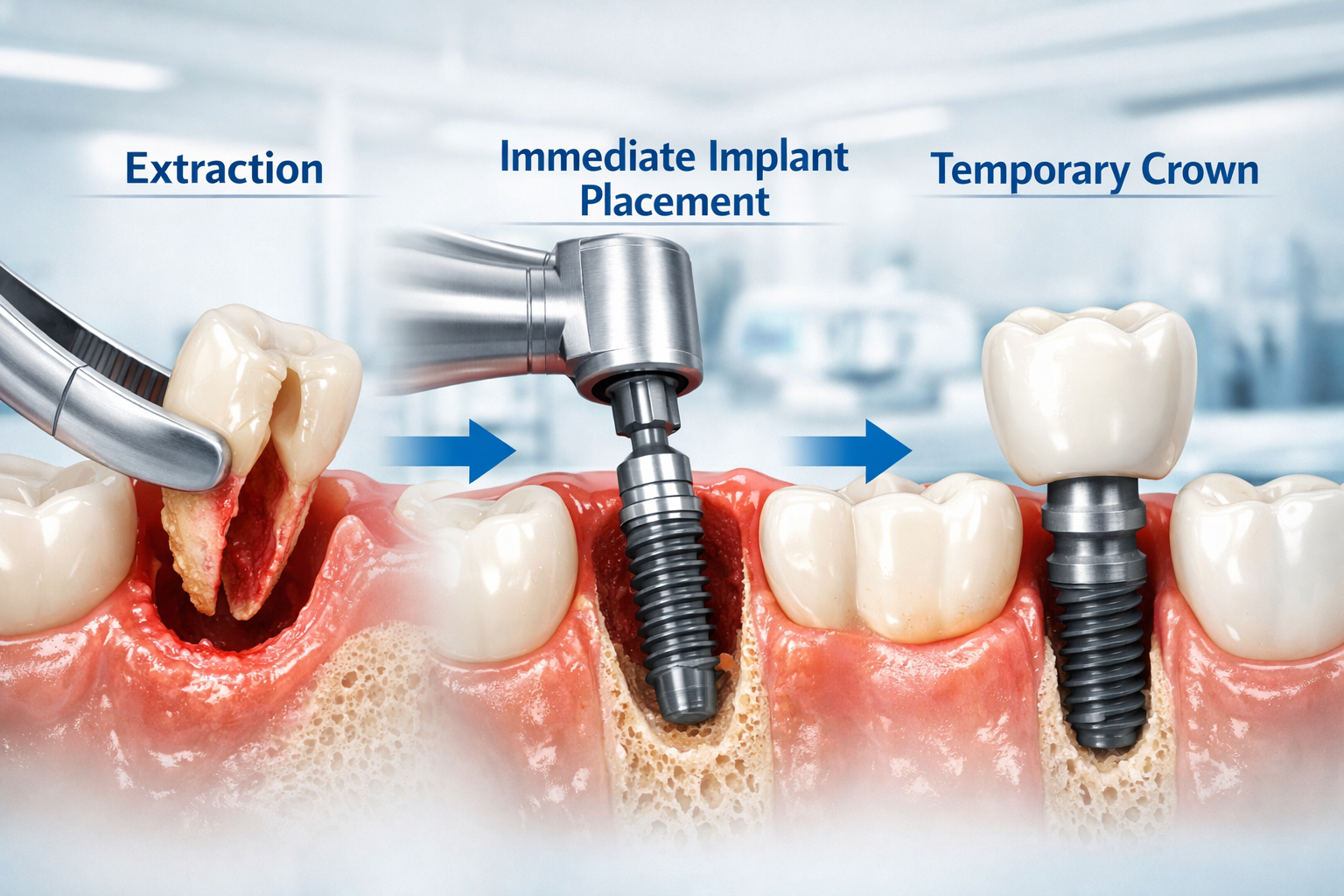
Immediate dental implants refer to the placement of a dental implant directly into the socket immediately following a tooth extraction, often during the same appointment [1, 4]. This procedure is distinct from immediate loading, which involves attaching a temporary crown to the newly placed implant during the same visit [1]. While an immediate implant might be placed, it isn’t always immediately loaded with a functional tooth; sometimes, it’s left to heal without a temporary crown, especially in areas with high chewing forces [4].
The primary goal of immediate placement is to minimize the time between tooth loss and the complete restoration of your smile, preserving bone and gum tissue that might otherwise recede. This modern approach to tooth replacement options aims to provide both functional and aesthetic benefits more swiftly than traditional multi-stage implant procedures.
How Do Immediate Dental Implants Work?
Immediate dental implant procedures streamline the tooth replacement process by placing the implant shortly after extraction, often during the same visit, provided specific clinical conditions are met [1]. The dentist first carefully extracts the compromised tooth, ensuring minimal trauma to the surrounding bone and gum tissue. Immediately following extraction, the dental implant is precisely placed into the fresh socket, taking advantage of the natural bone contours [1].
This immediate insertion helps to stabilize the bone, potentially reducing bone loss that can occur after an extraction. If conditions allow for immediate loading (meaning a temporary crown is attached), it can further enhance the aesthetic outcome and offer immediate functionality, although the implant must still undergo a healing period for osseointegration [1]. Digital surgical planning and guided implant placement technologies are often employed to ensure millimeter-level precision, particularly in visible areas of the mouth [1].
Who Is a Good Candidate for Immediate Dental Implants?
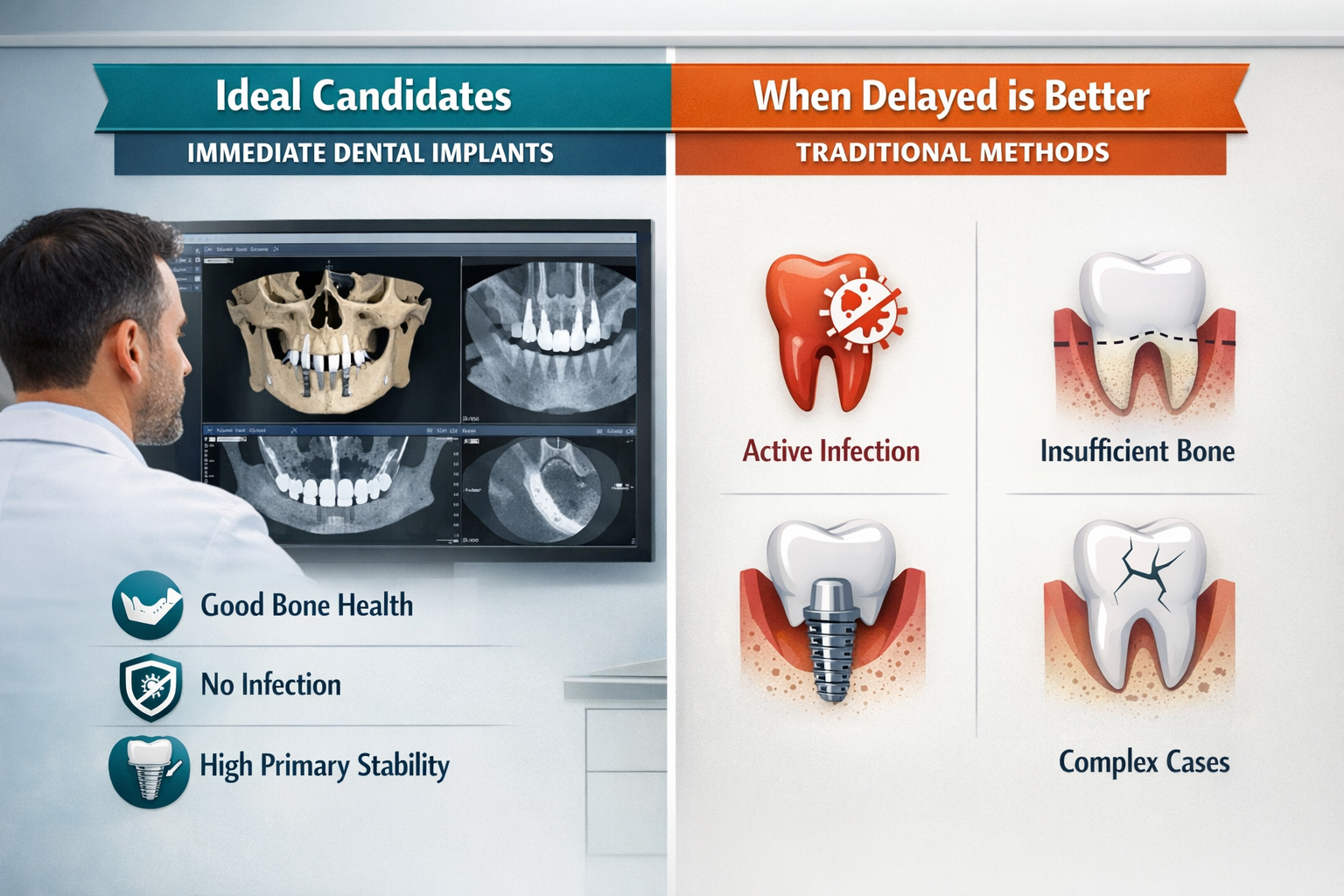
An ideal candidate for immediate dental implants typically possesses excellent oral health, sufficient bone quality and volume, and the absence of active infection at the extraction site [1]. Achieving high primary stability—the implant’s initial grip in the bone—is crucial for success, especially if immediate loading is considered [1].
Individuals who have lost a tooth due to trauma, decay, or gum disease but have otherwise healthy surrounding tissues and robust bone structure are often prime candidates. However, patients with uncontrolled active infection, compromised socket walls, or inadequate bone support may require delayed placement or additional procedures like bone grafting [1]. For a personalized assessment and to understand your specific eligibility, a detailed dental implant consultation with a qualified dentist in Dallas, TX, is essential.
Key Eligibility Criteria:
- Adequate Bone Quality and Volume: Sufficient bone density is necessary to firmly anchor the implant [1].
- Absence of Active Infection: Any active infection in the area must be resolved before immediate placement to prevent complications [1].
- Achievable Primary Stability: The implant must achieve a high level of initial stability in the bone at the time of placement [1]. This is often measured using techniques like insertion torque values and resonance frequency analysis [1].
- Controlled Bite Management: For immediate loading cases, the bite must be carefully managed to prevent excessive force on the healing implant, which could compromise integration [1].
- Overall Health: Good general health and habits (e.g., non-smoker or willingness to reduce smoking) also contribute to successful healing.
What Are the Benefits of Choosing Immediate Dental Implants?
Choosing immediate dental implants offers several significant advantages over traditional, multi-stage implant procedures, especially for patients looking for efficient and less disruptive tooth replacement options.
- Faster Treatment Timeline: Perhaps the most compelling benefit is the reduced overall treatment time. Instead of waiting months for an extraction site to heal before implant placement, the entire initial procedure can often be completed in a single appointment [1, 4]. This means you can begin your journey to a restored smile much sooner.
- Improved Aesthetics: For teeth in the front of the mouth, immediate placement often allows for the attachment of a temporary crown immediately, providing an instant aesthetic improvement. This can significantly boost confidence and comfort during the healing phase, avoiding gaps in your smile [1, 2].
- Enhanced Bone Preservation: Placing an implant directly into the fresh extraction socket helps to stimulate and preserve the surrounding bone. Without immediate placement, the jawbone can begin to resorb (shrink) after a tooth is removed, potentially requiring additional bone grafting procedures later [1].
- Reduced Number of Surgical Procedures: Consolidating the extraction and implant placement into one visit can reduce the total number of surgical appointments, making the process more convenient and potentially less stressful for the patient.
- Patient Satisfaction: Studies have shown high patient satisfaction rates with immediate dental implant therapy, with patients reporting significant improvements in chewing, speaking, comfort, and social confidence [2]. A multicenter study reported a 94.99% overall patient satisfaction rate with 100% implant survival after a mean follow-up of over eight years [2].
- Maintained Gum Contour: Immediate placement can help maintain the natural gum line and tissue architecture, leading to a more aesthetically pleasing final restoration that closely mimics natural teeth.
These advantages make immediate dental implants a highly attractive option for many patients in Dallas, TX, seeking efficient and effective solutions for missing teeth. For a deeper dive into the advantages, explore our article on “Immediate Dental Implant Benefits in 2025 | Restore Your Smile Fast“.
Potential Risks and Considerations for Immediate Dental Implants
While immediate dental implants offer compelling benefits, it’s crucial to be aware of the potential risks and specific considerations associated with this advanced procedure. A thorough understanding of these factors helps ensure informed decision-making and optimal patient safety.
Potential Risks:
- Higher Risk of Failure if Criteria Not Met: The success of immediate dental implants is highly dependent on strict adherence to specific clinical criteria, especially achieving sufficient primary stability of the implant in the bone [1]. If primary stability cannot be confirmed, or if there’s an active infection, the risk of the implant failing to integrate (osseointegrate) with the bone increases significantly [1, 4].
- Increased Complexity: Placing an implant into a fresh extraction socket is often more technically demanding than placing it into a fully healed site. It requires advanced surgical skill and precise execution to avoid damaging surrounding structures or compromising bone integrity.
- Swelling and Discomfort: While common with any dental surgery, some patients might experience more pronounced swelling or discomfort initially, especially if the extraction was complex. Managing post-operative pain is crucial for a comfortable recovery.
- Infection: As with any surgical procedure, there’s a risk of infection. Following dental implant post-op instructions diligently, including proper oral hygiene and medication, is vital to minimize this risk.
- Bone Grafting Needs: Even with immediate placement, some cases may still require minor bone grafting to fill small gaps between the implant and the socket walls to ensure optimal healing and long-term stability [1].
Important Considerations:
- Patient Selection is Paramount: Not all patients are suitable for immediate dental implants. Factors such as bone quality, quantity, systemic health conditions, and habits like smoking can influence eligibility [1]. Patients with severe gum disease, uncontrolled diabetes, or certain bone disorders may be better suited for traditional, delayed implant placement.
- Load Management (Immediate Loading): If the immediate implant is also immediately loaded with a temporary crown, careful management of chewing forces is critical. Excessive pressure on a newly placed implant can lead to micromovement, which disrupts the healing process and can cause failure [1]. This is particularly a concern for back teeth, which often face stronger chewing forces [4].
- Expertise of the Dental Professional: Due to the complexity, choosing an experienced and highly skilled dental implant specialist in Dallas, TX, is essential. Their expertise in diagnosis, surgical technique, and post-operative care directly impacts the success of the immediate dental implant procedure.
- Healing Time Still Required: While the initial placement is immediate, the implant still needs time to fully integrate with the jawbone (osseointegration), typically several months. During this period, careful adherence to dietary restrictions and oral hygiene is necessary.
- Cost Implications: While the procedure might be quicker, the overall dental implant cost in Dallas can vary based on the complexity, materials used, and whether additional procedures like grafting are required.
Understanding these risks and considerations allows patients to have realistic expectations and make informed decisions in consultation with their dental care provider.
The Immediate Dental Implant Procedure: What to Expect in 2026
The immediate dental implant procedure in 2026 benefits from advanced technologies and refined techniques, making it a more predictable and patient-friendly experience than ever before. Here’s a breakdown of what you can typically expect:
Initial Consultation and Comprehensive Evaluation: The process begins with a thorough examination, including a review of your medical and dental history. Advanced diagnostic tools like Cone Beam Computed Tomography (CBCT) scans are crucial. CBCT-based risk mapping allows for a three-dimensional assessment of the tooth socket’s anatomy, bone density, and the proximity of vital structures like nerves and sinuses [1]. This detailed planning helps determine if you are a suitable candidate and reduces placement error. You can learn more about this in our Dental Implant Consultation: What to Expect in 2026 guide.
Digital Surgical Planning: Using the CBCT data, your dental professional will employ specialized software to digitally plan the exact position, angle, and depth for the implant placement. This digital blueprint guides the surgery, often through custom-fabricated surgical guides, ensuring precision [1].
Tooth Extraction: On the day of the procedure, the compromised tooth is carefully extracted. The dentist takes great care to preserve as much surrounding bone and gum tissue as possible to create an optimal site for the implant.
Immediate Implant Placement: Immediately after extraction, the dental implant—a small, screw-shaped post—is precisely inserted into the tooth socket according to the digital plan. Modern implants often feature surface-optimized designs with advanced bioactive coatings that promote faster osseointegration and increase stability during the early healing phase [1, 3]. Primary stability, measured by insertion torque values and resonance frequency analysis, is confirmed at this stage [1].
Temporary Restoration (Optional – Immediate Loading): If the implant achieves sufficient primary stability and is in a low-stress area, a temporary crown or bridge may be attached to the implant immediately. This temporary restoration provides an aesthetic solution and allows for limited function while the implant heals [1]. In some cases, especially for back teeth or if primary stability isn’t ideal, the implant may be left to heal uncovered or with a healing cap, without immediate loading [4].
Osseointegration and Healing: Over the next few months, the implant will fuse with your jawbone through a process called osseointegration. This creates a strong, stable foundation for the permanent restoration. During this period, it’s vital to follow all post-operative instructions to ensure successful healing.
Placement of Permanent Restoration: Once osseointegration is complete, an impression is taken, and a custom-made permanent crown, bridge, or denture is fabricated. This restoration is then securely attached to the implant, completing your new, functional smile.
| Step | Description | Typical Timeline (Immediate vs. Traditional) |
|---|---|---|
| Initial Consultation & Planning | Comprehensive exam, X-rays, CBCT scan, digital planning | Same for both |
| Tooth Extraction | Removal of the damaged tooth | Same for both |
| Implant Placement | Immediate: Implant placed directly into extraction socket | Immediate: Same day as extraction |
| Traditional: Extraction site heals (3-6 months), then implant placed | Traditional: 3-6 months after extraction | |
| Temporary Restoration | Immediate: Temporary crown often placed same day (if conditions allow) | Immediate: Same day as placement (for immediate loading) |
| Traditional: Healing cap or no temporary | Traditional: After implant placement | |
| Osseointegration (Healing) | Implant fuses with jawbone | 3-6 months for both |
| Permanent Restoration | Custom crown, bridge, or denture attached | After osseointegration is complete |
The timeline for immediate dental implants significantly condenses the initial phases, allowing patients to achieve a restored smile in a shorter overall timeframe.
Cost of Immediate Dental Implants in Dallas, TX, 2026
The cost of immediate dental implants in Dallas, TX, for 2026 can vary widely depending on several factors, including the number of implants, the complexity of the case, the specific materials used, and any additional procedures required. While often seen as a premium solution due to its advanced nature and immediate benefits, the efficiency of consolidating multiple appointments might offset some costs in the long run.
Generally, a single dental implant (which includes the implant post, abutment, and crown) can range significantly in price. For immediate dental implants, the cost might be slightly higher than traditional methods because of the specialized skill required and the potential need for immediate temporary restorations.
Factors Influencing Cost:
- Number of Implants: Replacing a single tooth will naturally cost less than multiple immediate dental implants or a full-arch solution like All-on-4.
- Location and Reputation of Clinic: Specialist clinics in prime locations like Dallas, TX, with state-of-the-art technology and highly experienced surgeons, may have higher fees.
- Additional Procedures: If bone grafting or sinus lifts are necessary to ensure adequate bone volume, these will add to the overall cost [1]. While immediate placement often preserves bone, some minor grafting might still be needed.
- Type of Material: The type of implant material (e.g., titanium, zirconia) and the crown material (e.g., porcelain, ceramic) can affect the price.
- Temporary vs. Permanent Restoration: The cost of an immediate temporary crown is factored in when immediate loading is part of the treatment plan.
- Insurance Coverage: Dental insurance rarely covers the full cost of dental implants, though some plans may cover a portion of diagnostic procedures or preparatory work. Many patients explore dental implant financing options or payment plans.
- Technology Used: The use of advanced digital planning, guided surgery, and CBCT scans contributes to the precision and success rate but is also reflected in the cost.
For a comprehensive understanding of what you might expect to pay, it is crucial to have a detailed consultation with a local dental implant specialist in Dallas. They can provide a personalized treatment plan and a transparent breakdown of all associated costs. You can also explore our guide on “How Much Do Dental Implants Cost in 2025” for more general cost information.
How Long Do Immediate Dental Implants Last?
Immediate dental implants are designed for long-term durability and can last for many years, often a lifetime, with proper care and maintenance. The longevity is comparable to traditional dental implants, as the underlying principle of osseointegration (the fusion of the implant with the jawbone) remains the same [1].
Several factors influence the lifespan of immediate dental implants:
- Successful Osseointegration: The initial fusion of the implant with the bone is critical. If primary stability is achieved and the implant integrates successfully, it creates a strong foundation.
- Oral Hygiene: Consistent and thorough oral hygiene, including brushing, flossing, and regular dental check-ups, is paramount. Poor hygiene can lead to peri-implantitis, an infection around the implant that can compromise its stability.
- Patient Health: Overall health, lifestyle choices (such as smoking), and underlying medical conditions (like uncontrolled diabetes) can affect the implant’s longevity.
- Bite Forces: Excessive or improper bite forces can stress the implant. Patients with bruxism (teeth grinding) may need protective nightguards to prevent damage. Read more about “Bruxism & Dental Implants: Prevent Damage in 2026” for preventive measures.
- Quality of Materials and Workmanship: High-quality implant materials (e.g., medical-grade titanium or zirconia) and the expertise of the dental professional contribute significantly to the implant’s durability [2, 3].
- Regular Dental Check-ups: Routine visits allow your dentist to monitor the implant’s health, detect any issues early, and perform professional cleanings specific to implants.
A multicenter study tracking zirconia immediate implants reported a 100% implant survival rate over a mean follow-up of 8.1 years, indicating excellent long-term success when appropriate criteria are met [2]. With dedication to oral health education and a patient-first approach, immediate dental implants can provide a stable and lasting solution for missing teeth.
Alternatives to Immediate Dental Implants
While immediate dental implants offer a fast and effective solution for missing teeth, they are not suitable for everyone. Fortunately, there are several other reliable tooth replacement options available in Dallas, TX, each with its own benefits and considerations.
Traditional Dental Implants (Delayed Placement):
- Description: This is the most common form of dental implant procedure. After a tooth extraction, the site is allowed to heal for several months (typically 3-6 months) before the implant is surgically placed [1, 4]. This ensures the bone has fully recovered and is stable.
- Pros: Highly predictable success rates, allows for healing of the extraction site, suitable for a wider range of patients including those with bone deficiencies (often combined with grafting).
- Cons: Longer overall treatment time, multiple surgical appointments, potential for bone loss during the healing period before implant placement.
- Best For: Patients who require bone grafting, have active infections, or prefer a more conservative, staged approach.
Dental Bridges:
- Description: A dental bridge consists of one or more artificial teeth (pontics) held in place by dental crowns cemented onto the natural teeth adjacent to the gap.
- Pros: Can be a quicker solution than implants (often 2-3 appointments), non-surgical, more affordable than implants initially.
- Cons: Requires modifying (grinding down) healthy adjacent teeth, does not stimulate the jawbone (which can lead to bone loss over time), and has a shorter lifespan than implants (typically 5-15 years).
- Best For: Patients missing one or two teeth, with strong adjacent teeth, who are not candidates for implants, or prefer a less invasive option. Learn more about “Dental Bridge vs. Implant Cost in 2025.”
Removable Partial or Complete Dentures:
- Description: These are removable appliances that replace missing teeth and surrounding gum tissue. Partial dentures replace a few missing teeth, while complete dentures replace an entire arch.
- Pros: Most affordable option, non-invasive, can replace multiple teeth or a full arch.
- Cons: Less stable and can feel less natural than implants or bridges, may require adhesives, can affect speech and eating, contributes to continued bone loss over time, requires daily removal and cleaning.
- Best For: Patients seeking the most economical option, those with extensive tooth loss, or those with medical conditions preventing surgery. For more stable removable options, consider removable dental implant options.
Each of these tooth replacement options has distinct advantages and disadvantages. The best choice depends on your specific oral health needs, budget, preferences, and the recommendations of a qualified dental professional in Dallas. A comprehensive dental implant consultation is crucial to determine the most suitable solution for your long-term oral health.
FAQ About Immediate Dental Implants
Q1: Is the immediate dental implant procedure painful?
A1: The procedure is typically performed under local anesthesia, so you should not feel pain during the surgery. Post-operative discomfort is common but can be managed with prescribed pain medication.
Q2: How long is the recovery time for immediate dental implants?
A2: While the implant is placed immediately, the full healing process (osseointegration) takes 3-6 months. Initial discomfort subsides within a few days to a week. You must follow dental implant post-op instructions carefully during this time.
Q3: Can I eat normally immediately after getting immediate dental implants?
A3: If you receive a temporary crown (immediate loading), you will typically be advised to stick to a soft diet for several weeks to months to prevent excessive pressure on the healing implant and ensure proper osseointegration.
Q4: Are immediate dental implants more expensive than traditional implants?
A4: The overall cost can be comparable or slightly higher due to the specialized nature and immediate temporary restoration, but it varies by case. A personalized quote during a consultation with a dentist is necessary.
Q5: What is the success rate of immediate dental implants?
A5: When performed on suitable candidates by experienced professionals, immediate dental implants have a high success rate, often comparable to traditional implants, with some studies reporting 100% survival rates over several years for specific types of implants [2].
Q6: Can anyone get immediate dental implants?
A6: No, strict criteria regarding bone quality, absence of infection, and primary implant stability must be met. A thorough evaluation by a dental professional is essential to determine eligibility [1].
Q7: What’s the difference between immediate placement and immediate loading?
A7: Immediate placement means the implant is placed directly into the tooth socket after extraction. Immediate loading means a temporary tooth (crown) is attached to that new implant during the same appointment [1]. Not all immediate placements are immediately loaded.
Q8: Will I have a gap in my smile while the implant heals?
A8: If immediate loading is performed, a temporary crown or restoration is placed, ensuring you do not have a visible gap during the healing period, especially for teeth in the aesthetic zone.
Q9: What happens if an immediate dental implant fails?
A9: If an implant fails to integrate, it may need to be removed. After a healing period, it may be possible to attempt another implant placement or consider alternative tooth replacement options.
Conclusion
Immediate dental implants represent a significant advancement in modern dentistry, offering a swift and effective solution for individuals seeking to replace missing teeth and restore their smiles. For many in Dallas, TX, this innovative procedure provides the compelling advantages of bone preservation, improved aesthetics, and a remarkably faster return to full function compared to traditional implant methods.
However, it is crucial to remember that the success of immediate dental implants hinges on precise patient selection, the absence of active infection, adequate bone quality, and the expertise of the dental professional. While the promise of a quicker smile is enticing, a medically responsible and patient-first approach dictates that not every individual will be an ideal candidate.
If you are considering immediate dental implants or other missing teeth solutions, the most important next step is to schedule a comprehensive consultation with a dentist. During this consultation, a thorough evaluation, including advanced diagnostics, will help determine your eligibility and guide you toward the best long-term oral health solution tailored to your unique needs. We are dedicated to providing clear, factual information to empower your informed decision-making process for a healthy, confident smile in 2026 and beyond.
Key Takeaways
- Immediate Placement Defined: Immediate dental implants involve placing the implant at the same time a tooth is extracted, aiming to reduce overall treatment time [1, 4].
- Strict Eligibility: Success depends on critical factors like excellent bone quality, absence of infection, and high primary stability, making a thorough evaluation essential [1].
- Significant Benefits: Advantages include faster aesthetic improvement, enhanced bone preservation, reduced surgical appointments, and high patient satisfaction [1, 2].
- Advanced Technology: Modern procedures leverage CBCT scans and digital surgical planning for precise and safe implant placement [1, 5].
- Not for Everyone: Patients with active infections, compromised socket walls, or insufficient bone may require traditional, delayed implant approaches [1, 4].
- Distinction from Loading: Immediate placement is distinct from immediate loading (placing a temporary crown), though they can occur simultaneously if conditions permit [1].
- Long-Term Durability: With proper care, immediate dental implants can offer a durable and long-lasting tooth replacement solution, comparable to traditional implants [2].
- Consultation is Key: A professional consultation with a dentist in Dallas, TX, is vital to assess individual suitability, discuss potential risks, and explore all tooth replacement options.
- Consider Alternatives: If immediate implants aren’t suitable, options like traditional implants, dental bridges, or dentures remain viable and effective solutions for missing teeth.
References
[1] Immediate Implant In 2026 – https://medicoclinic.net/dental-implants/immediate-implant-in-2026/
[2] Clinical Study January 2026 Patient Perspectives On Immediate Zirconia Implant Therapy – https://www.swissdentalsolutions.com/us/blog/clinical-study-january-2026-patient-perspectives-on-immediate-zirconia-implant-therapy
[3] Dental Implants In 2026 Advances In Longevity Materials And Faster Recovery – https://trinitydentist.com/dental-implants-in-2026-advances-in-longevity-materials-and-faster-recovery/
[4] Immediate Dental Implants Ultimate Guide – https://www.magrabihealth.com/blog/immediate-dental-implants-ultimate-guide
[5] 7 Latest Dental Technologies 2026 – https://mainstreetdentalnewark.com/7-latest-dental-technologies-2026/
Related Reading
Leave a Reply
Share your thoughts or ask a question about dental implants. Your email address will not be published.