

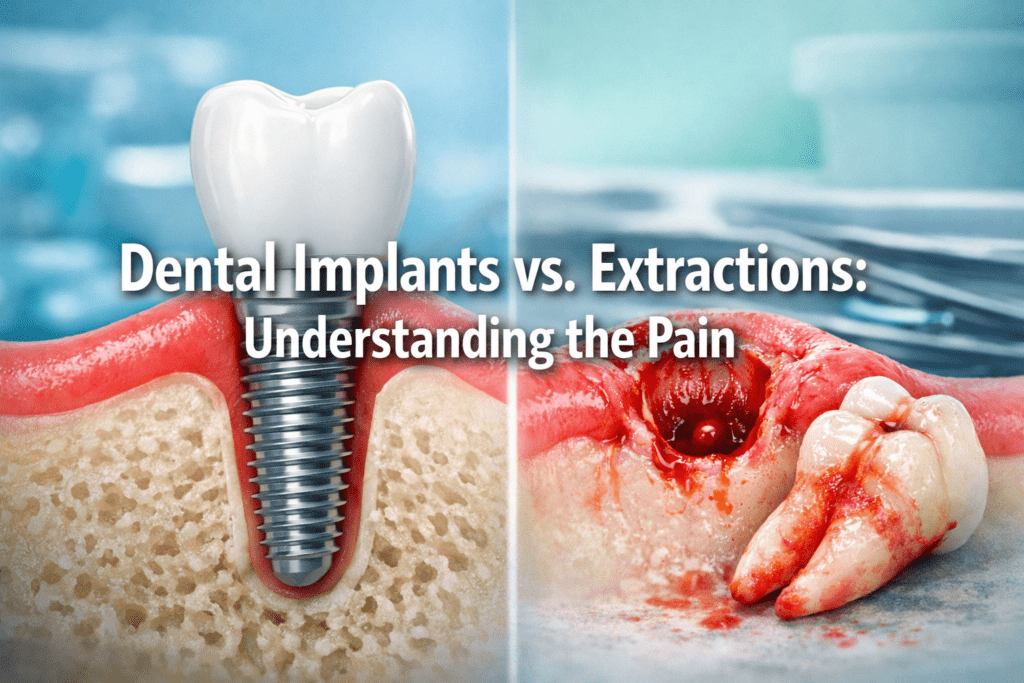
When facing the need to remove a tooth or replace a missing one, a common and understandable concern is the level of pain involved. Many patients ask, “How painful are dental implants compared to tooth extraction?” The reality is that while both procedures involve some level of discomfort, most patients report that dental implant placement is often less painful than a complex tooth extraction, and the recovery is generally smoother.
Key Takeaways
- Less Painful Than Expected: Most patients find dental implant surgery to be less painful than anticipated, often comparable to or even less painful than a tooth extraction.
- Quicker Resolution of Discomfort: Post-surgical discomfort from dental implants typically subsides within 2-4 days, whereas extraction pain can last 5-7 days.
- Anesthesia Ensures Comfort: Both procedures are performed under local anesthesia, ensuring you feel no pain during the actual process. Sedation options are also available for added comfort.
- Reduced Tissue Trauma: Implant placement is a controlled, precise process, often resulting in less soft tissue inflammation and swelling compared to the forceful nature of some extractions.
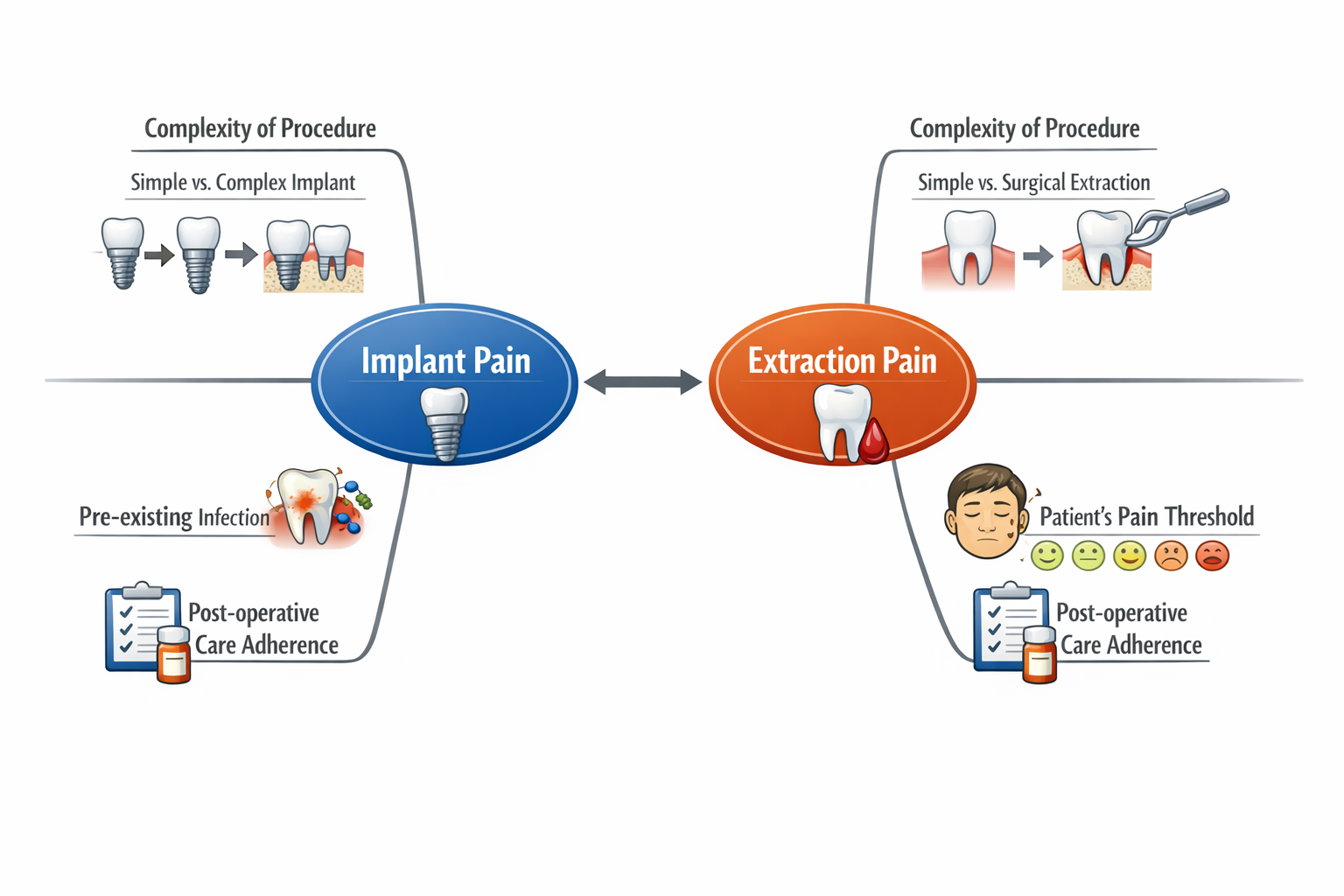
- Individual Variability: Pain perception varies by individual, but factors like procedure complexity, pre-existing inflammation, and adherence to post-operative care significantly influence the experience.
- Long-Term Comfort & Function: While initial discomfort is temporary, dental implants offer a permanent, stable solution that integrates with your jawbone, providing excellent long-term oral health and comfort.
- Consultation is Key: Discussing your concerns and medical history with a qualified dentist in Dallas is crucial to understanding your specific pain management plan and expected recovery for any tooth replacement option.
Quick Answer
Most patients find that dental implant surgery is surprisingly less painful than they expect, often reporting less post-operative discomfort than they experienced with a tooth extraction. While extractions can involve acute initial pain, the controlled nature of implant placement typically leads to milder, more manageable pain that resolves faster, usually within 2-4 days, thanks to modern surgical techniques and effective pain management.
Understanding Pain Perception in Dental Procedures
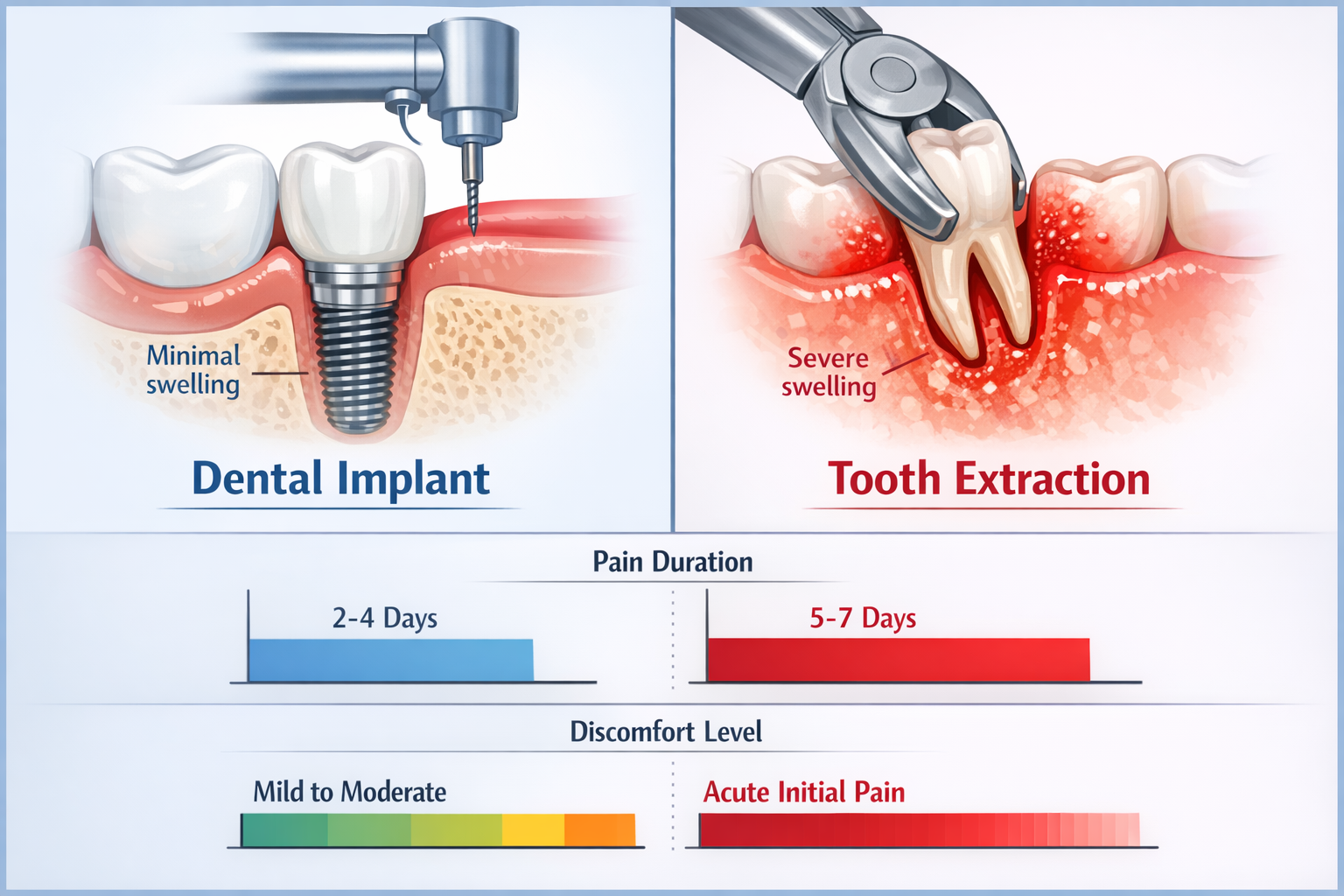
When considering dental interventions, pain is a primary concern. However, it’s important to understand that “painful” can be subjective. For both tooth extractions and dental implant procedures, modern dentistry prioritizes patient comfort through advanced anesthesia and pain management techniques. Generally, studies and patient reports indicate that dental implant placement often results in less post-surgical pain compared to surgical tooth extraction, especially when the extracted tooth was already inflamed.
During the actual procedure, local anesthesia ensures you won’t feel pain. What patients usually refer to as “pain” is the discomfort experienced after the anesthesia wears off. The difference in this post-operative discomfort between extractions and implants lies in the nature of the surgical intervention and the healing process.
How Painful Are Dental Implants Compared to Tooth Extraction?
Dental implant placement is generally perceived as less painful post-operatively than a tooth extraction, particularly complex extractions. While both procedures utilize local anesthesia to prevent pain during surgery, the recovery phase for implants often involves milder discomfort that resolves more quickly.
Implant placement surgery typically produces only mild to moderate post-surgical discomfort, and patients who have undergone both procedures frequently report significantly less pain during the implant surgery itself [1]. This is largely because implant placement involves a controlled drilling process to create a precise site for the implant, rather than the forceful pulling and manipulation required for tooth extraction, which can cause more trauma to surrounding tissues.
What to Expect During Dental Implant Surgery: Pain Management and Procedure
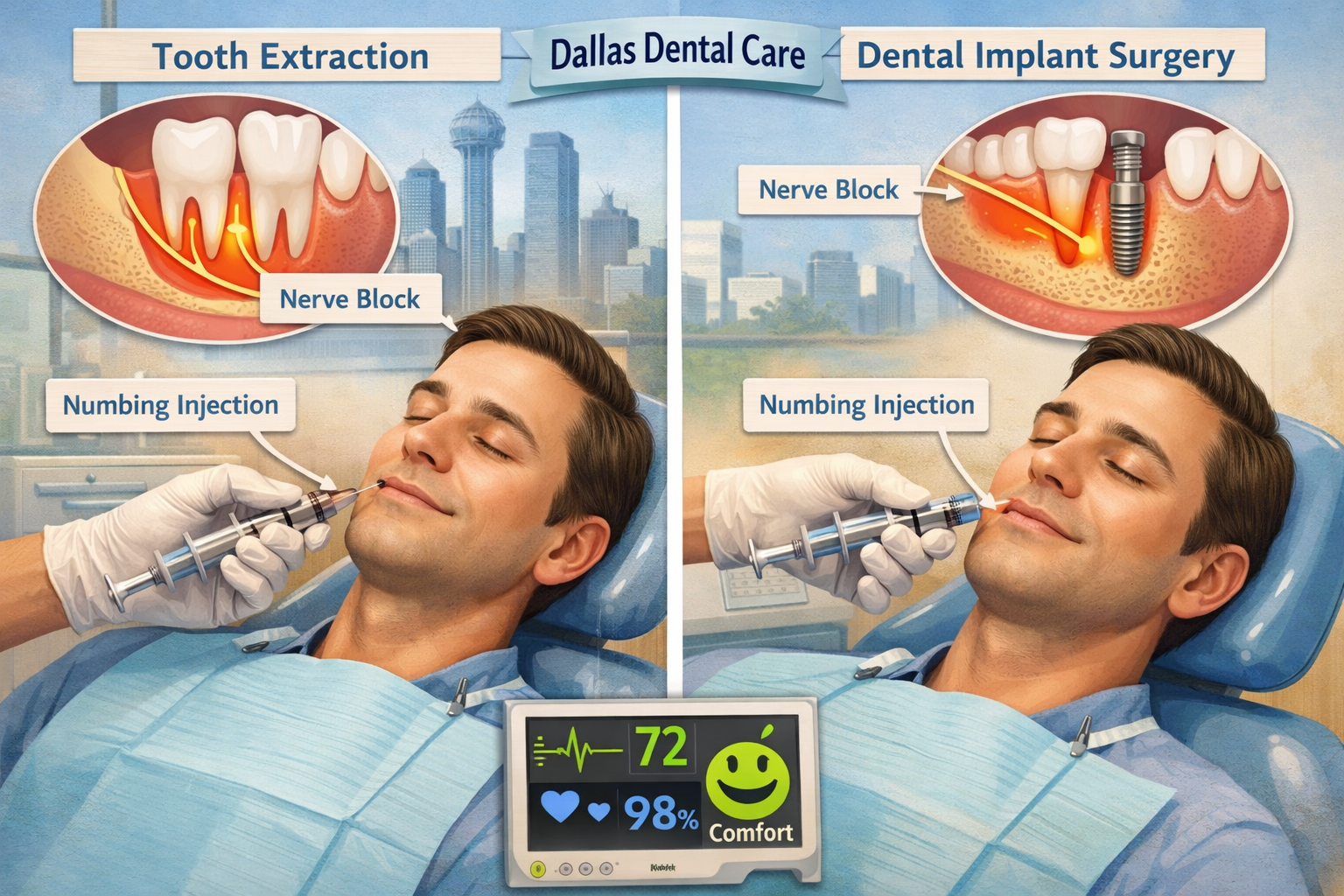
During dental implant surgery, your comfort is a top priority, and you should expect to feel no pain thanks to effective local anesthesia. The procedure itself is highly controlled and precise, designed to minimize trauma to surrounding tissues.
Anesthesia and Sedation Options
- Local Anesthesia: This is the standard for dental implant placement, numbing the surgical area completely so you only feel pressure, not pain.
- Sedation Dentistry: For patients with dental anxiety or those undergoing more extensive procedures, options like oral conscious sedation or IV sedation can be provided to help you relax or even drift off during the procedure. This significantly reduces anxiety and perception of the experience.
- Minimal Nerve Involvement: Implant procedures are designed to target the jawbone directly, and with careful planning, affect fewer nerves than extractions, contributing to less post-operative discomfort [4].
The Surgical Process
The dental implant procedure involves carefully creating a small osteotomy (a hole) in the jawbone where the titanium implant post will be placed. This is a precise process, and unlike extractions that may involve tearing or pulling of soft tissues, implant placement uses smooth insertion techniques that minimize surrounding tissue trauma [3]. While the highest anxiety might occur on the day of surgery, effective local anesthesia ensures that the actual implant surgery process is pain-free [1].
For those considering dental implants in Dallas, it’s reassuring to know that modern techniques and dedicated oral health education ensure a comfortable experience. You can learn more about the overall process and what to expect from our guide on how long the dental implant process takes.
Recovery and Post-Operative Discomfort: Implants vs. Extractions
The recovery period for dental implants typically involves less intense and shorter-lived discomfort compared to tooth extractions. While an extraction site may experience dull discomfort or throbbing with moderate swelling lasting several days to a week, implant sites generally feel more stable with less inflammation during comparable healing periods [3, 4].
Dental Implant Recovery
- Duration of Discomfort: Post-operative discomfort from implant placement usually resolves within 2-4 days [3].
- Type of Pain: Patients often describe it as mild to moderate soreness, pressure, or a dull ache.
- Swelling and Bruising: Simple implant procedures generally result in similar or even less swelling and bruising than simple extractions. However, more complex implant procedures involving bone grafting might lead to more swelling and bruising initially [1]. For information on managing discomfort, refer to our Dental Implant Pain Relief Guide.
- Activity Disruption: Implant placement causes less limitation of daily activities compared to extraction, with limitations significantly diminishing by the second or third day post-surgery [1].
Tooth Extraction Recovery
- Duration of Discomfort: Extraction pain typically lasts 5-7 days [3].
- Type of Pain: Initial pain can be more acute and throbbing, especially for surgical extractions or those involving an infected tooth [2].
- Inflammation: The forceful nature of extraction can cause more significant soft tissue inflammation and swelling. Pre-existing inflammation or infection can intensify extraction pain up to threefold [1].
- Daily Activities: Disruption to daily activities might be more pronounced due to the acute pain and swelling associated with some extractions.
Factors Influencing Pain and Recovery
Several factors can influence the level of pain and the duration of recovery for both dental implants and tooth extractions. These include the complexity of the procedure, the patient’s individual pain threshold, and the presence of any pre-existing conditions.
Procedure Complexity
- Simple Extraction: A straightforward removal of a visible, non-impacted tooth often results in less pain than a surgical extraction.
- Surgical/Impacted Tooth Extraction: Removing an impacted wisdom tooth, for instance, involves more tissue manipulation, bone removal, and sutures, leading to greater post-operative pain and swelling. You can read more about this on our page discussing the cost of a wisdom tooth extraction.
- Simple Implant Placement: Placing an implant in a healthy, adequate bone site is less invasive.
- Complex Implant Placement: Procedures involving bone grafting (e.g., sinus lift) or multiple implants will naturally lead to more initial discomfort and a longer recovery due to the additional surgical steps. Details about bone grafting costs for dental implants are available on our site.
Pre-existing Conditions
- Infection/Inflammation: An already infected or inflamed tooth before extraction will significantly increase post-operative pain, as inflammatory mediators heighten nerve sensitivity [1].
- Bone Density: Poor bone density might require grafting, which adds to the complexity and potential discomfort of implant surgery.
Individual Pain Threshold and Post-Operative Care
- Personal Tolerance: Everyone experiences pain differently. While anesthesia ensures comfort during the procedure, individual pain tolerance plays a role in how post-operative discomfort is perceived [5].
- Adherence to Instructions: Following your dentist’s post-operative instructions, including medication, diet, and oral hygiene, is critical for minimizing pain and promoting healing. Neglecting these instructions can lead to complications and increased discomfort.
- Consultation with a Dentist: A thorough consultation with a dentist in Dallas allows for a personalized pain management plan based on your health history and the specific tooth replacement options being considered.
Long-Term Benefits of Dental Implants
Beyond the initial recovery, dental implants offer significant long-term benefits for oral health, function, and aesthetics that far outweigh the temporary discomfort of the procedure. They are designed to be a permanent missing teeth solution, offering unparalleled stability and comfort.
Stability and Function
Dental implants integrate directly with your jawbone through a process called osseointegration, providing a stable foundation for a replacement tooth that acts just like a natural tooth. This stability allows you to eat, speak, and smile with confidence, without the slippage or discomfort associated with dentures.
Preservation of Jawbone
Unlike bridges or dentures, dental implants stimulate the jawbone, preventing the bone loss that typically occurs after a tooth extraction. This preserves your facial structure and prevents adjacent teeth from shifting, maintaining long-term oral health.
Durability and Longevity
With proper care, dental implants can last a lifetime, making them a durable and cost-effective tooth replacement option. While the initial implant cost in Dallas might seem higher than other options, their longevity often makes them a superior investment. To understand the various aspects of implant costs, you can explore resources like our guide on dental implant cost per tooth in 2025.
Enhanced Quality of Life
By restoring a complete and healthy smile, dental implants significantly enhance your quality of life, allowing you to enjoy your favorite foods, speak clearly, and feel confident in social situations. This patient safety and peace of mind are invaluable.
When to Consider Dental Implants in Dallas
If you have a missing tooth or require a tooth extraction due to decay, damage, or disease, dental implants are often the preferred tooth replacement option for long-term oral health. Consulting with a dentist in Dallas is the first step to determine if you are a suitable candidate.
You should consider dental implants if:
- You have one or more missing teeth.
- You have healthy gums and sufficient jawbone to support an implant, or are willing to undergo bone grafting if needed.
- You are looking for a permanent and stable tooth replacement option.
- You want to preserve your existing jawbone structure and prevent bone loss.
- You seek a solution that looks, feels, and functions like a natural tooth.
A comprehensive consultation with a qualified dental professional will involve evaluating your oral health, discussing your medical history, and reviewing dental X-rays or 3D scans. This helps create a personalized treatment plan that addresses your specific needs and ensures the best possible outcome. For more detailed information on options and pricing, our 2026 Dallas Dental Implant Cost Update can be a valuable resource.
Conclusion

When asking “How painful are dental implants compared to tooth extraction?”, the consensus among patients and dental professionals is that dental implant surgery is often surprisingly less painful than a tooth extraction, especially a complex one. While both procedures involve temporary discomfort, implant post-operative pain tends to be milder, resolves more quickly, and causes less disruption to daily activities. This is largely due to the precise nature of implant placement and advancements in pain management.
Choosing between a dental implant and an extraction is a significant decision for your long-term oral health. Dental implants offer a durable, functional, and aesthetically pleasing solution for missing teeth, preserving jawbone health and enhancing your quality of life. We encourage you to seek a consultation with a dentist in Dallas to discuss your individual situation, explore the best tooth replacement options for you, and ensure patient safety and comfort throughout the process. An informed decision, guided by expert advice, is key to achieving a confident and healthy smile.
FAQ
Q1: Is dental implant surgery more painful than a tooth extraction?
A1: Most patients report that dental implant surgery is often less painful than a complex tooth extraction, with milder and shorter-lasting post-operative discomfort.
Q2: How long does discomfort last after a dental implant?
A2: Discomfort after dental implant placement typically lasts 2-4 days, gradually subsiding as healing progresses.
Q3: How long does pain last after a tooth extraction?
A3: Pain after a tooth extraction typically lasts 5-7 days, with initial acute discomfort that gradually improves.
Q4: Is local anesthesia used for both procedures?
A4: Yes, local anesthesia is standard for both dental implant placement and tooth extraction, ensuring you feel no pain during the actual procedure.
Q5: Can I get sedation for dental implant surgery?
A5: Yes, sedation options like oral conscious sedation or IV sedation are often available for dental implant surgery to help manage anxiety and enhance comfort.
Q6: Why might dental implants be less painful than extractions?
A6: Dental implant placement involves precise, controlled drilling into the jawbone, which often causes less trauma to surrounding soft tissues compared to the forceful pulling and manipulation of a tooth extraction.
Q7: Does pre-existing infection affect pain levels?
A7: Yes, if a tooth is already infected or inflamed before extraction, the post-operative pain can be significantly more intense than a non-infected tooth extraction or an implant procedure.
Q8: Will I need strong painkillers after dental implant surgery?
A8: Most patients manage post-implant discomfort with over-the-counter pain relievers or mild prescription medication, depending on the complexity of the procedure and individual pain tolerance.
Q9: Do dental implants cause more swelling than extractions?
A9: Simple implant procedures often result in similar or less swelling than simple extractions. However, complex implant cases involving bone grafting might lead to more initial swelling and bruising.
Q10: What are the long-term pain benefits of dental implants?
A10: Once healed, dental implants integrate with your jawbone, eliminating the chronic pain, discomfort, and instability often associated with missing teeth or ill-fitting traditional tooth replacement options like dentures.
References
- Aghaloo, T. L., & Moy, P. K. (2007). Which surgical procedures are associated with more pain? Clinical Implant Dentistry and Related Research, 9(3), 154-159.
- Jackson, L., et al. (2018). Pain after dental extraction: a systematic review of the literature. Oral Surgery, Oral Medicine, Oral Pathology and Oral Radiology, 126(3), 209-220.
- American Academy of Periodontology. (n.d.). Dental Implants. Retrieved from https://www.perio.org/consumer/dental-implants
- Misch, C. E. (2008). Contemporary Implant Dentistry. Mosby Elsevier.
- International Association for the Study of Pain. (n.d.). Pain Definitions. Retrieved from https://www.iasp-pain.org/resources/terminology/pain-definitions/
Leave a Reply
Share your thoughts or ask a question about dental implants. Your email address will not be published.