

Getting dental implants is a significant investment in your oral health and overall quality of life. Once these marvels of modern dentistry are in place, a common and critical question arises: how often dental implants should be checked to ensure their long-term success and prevent complications? Just like natural teeth, dental implants require consistent care and professional monitoring. In 2026, understanding the optimal check-up schedule is paramount for protecting your investment and maintaining a healthy, confident smile.
This comprehensive guide will delve into the recommended frequency for dental implant check-ups, explore the factors influencing these schedules, and outline what you can expect during these vital appointments. Our goal is to empower you with the knowledge needed to collaborate effectively with your dental professional and ensure your dental implants last a lifetime.
Key Takeaways
- Initial Year is Crucial: During the first year after placement, especially, 3-month recall intervals are highly recommended to monitor healing and integration and reduce failure rates [6].
- Risk-Stratified Approach: Your specific maintenance schedule (2 to 6 months) will be tailored by your dentist based on individual risk factors like smoking, gum disease history, systemic health, and oral hygiene habits [5].
- Comprehensive Professional Care: Regular check-ups include evaluating oral and general health, clinical and radiographic examination, implant stability assessment, and professional cleaning to prevent issues [4].
- Essential Home Care: Daily brushing (twice with a soft brush) and flossing are non-negotiable for successful long-term implant health between professional visits [1, 3].
- Radiographic Monitoring: X-rays are typically taken at 6-8 months, then at 1 year, and every 1-2 years thereafter to monitor bone levels and detect problems early [4, 5].
The Critical Role of Regular Check-ups: How Often Dental Implants Should Be Checked
Dental implants boast an impressive success rate, often exceeding 95% when properly cared for [4, 9]. However, this high success rate isn’t solely due to the strength of the titanium post; it’s heavily influenced by consistent, appropriate maintenance. Regular professional check-ups are the cornerstone of this maintenance, acting as an early warning system against potential issues that could compromise your implant’s stability and longevity. Neglecting these appointments can lead to complications such as peri-implantitis (gum disease around the implant), mechanical failures, or even implant loss.
Think of it like maintaining a high-performance vehicle: you wouldn’t skip its scheduled oil changes and inspections, because you know small issues can quickly become major problems. Your dental implants deserve the same proactive attention.
Why Are Regular Check-ups So Important for Dental Implants?
- Early Detection of Issues: Many implant complications, such as peri-implantitis or subtle changes in bite, develop slowly and may not present with noticeable symptoms until they are advanced. Regular check-ups allow your dentist to spot these issues in their earliest stages, when they are much easier and less costly to treat [4].
- Prevention of Peri-Implantitis: This inflammatory condition affecting the gum and bone tissue around a dental implant is the most common cause of late implant failure. Professional cleanings remove plaque and tartar buildup that home care might miss, significantly reducing the risk of peri-implantitis [3]. We have a comprehensive guide on Can Dental Implants Get Infected Years Later? Your 2026 Gui that delves deeper into this topic.
- Assessment of Bite and Occlusion: An improperly balanced bite can place excessive stress on an implant, leading to wear, loosening of components, or even bone loss. Your dentist will regularly assess your bite to ensure even distribution of forces [2].
- Integrity of Components: Dental implants are made up of several components: the implant post, the abutment, and the crown or prosthesis. Over time, fixation screws can loosen, or attachment mechanisms can wear out. Regular checks ensure all components are secure and functioning correctly [2].
- Oral Health Link: Dental health is intrinsically linked to overall systemic health. Your professional check-ups also monitor the health of your remaining natural teeth and gums, which impacts the longevity of your implants [4].
Understanding the Recommended Schedule: How Often Dental Implants Should Be Checked
The frequency of your dental implant check-ups isn’t a one-size-fits-all recommendation. While there are general guidelines, your specific schedule will be customized by your dental professional based on various factors.
The Initial Year: A Critical Period
During the first year following dental implant placement, the frequency of check-ups is generally more intensive. This period is crucial for:
- Osseointegration: Ensuring the implant post properly fuses with your jawbone.
- Soft Tissue Healing: Monitoring the health and stability of the gums around the implant.
- Prosthesis Integration: Checking the fit and function of your new crown, bridge, or denture.
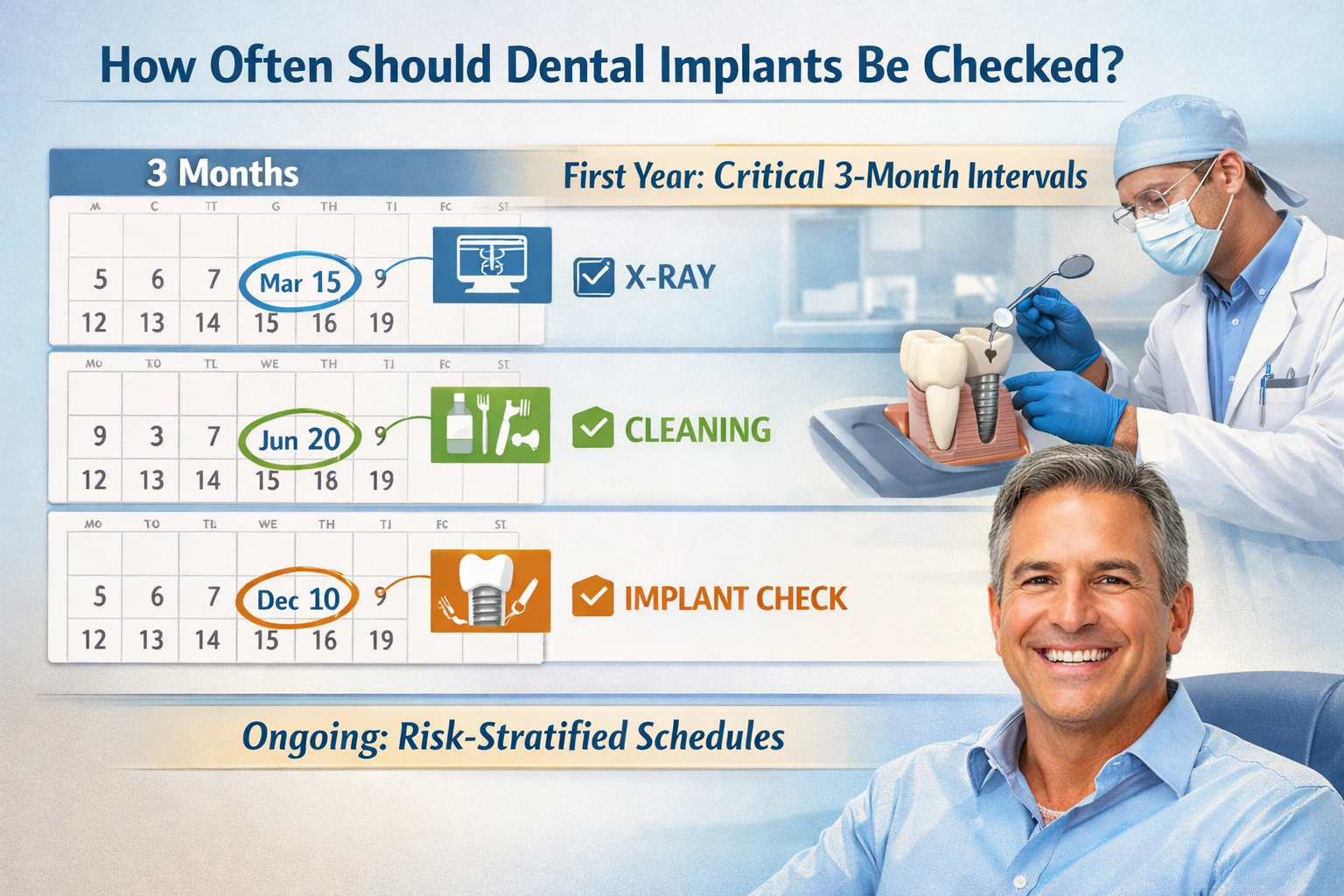
According to updated 2025 implant maintenance guidelines, 3-month recall intervals are highly recommended, especially during the first year after implant placement. This frequent monitoring is a key strategy to reduce early failure rates and establish a baseline of health [6]. These initial visits are essential for addressing any minor concerns before they escalate.
Post-First-Year Maintenance: A Tailored Approach
After the initial year, if your implants are stable and healthy, the check-up frequency may adjust. However, it’s important to note that most patients should still adhere to a more rigorous schedule than someone with only natural teeth.
General Recommendation: For many patients without significant risk factors, preventative dental visits every 6 months are considered beneficial for ongoing implant monitoring [7]. This aligns with standard general dental check-up advice.
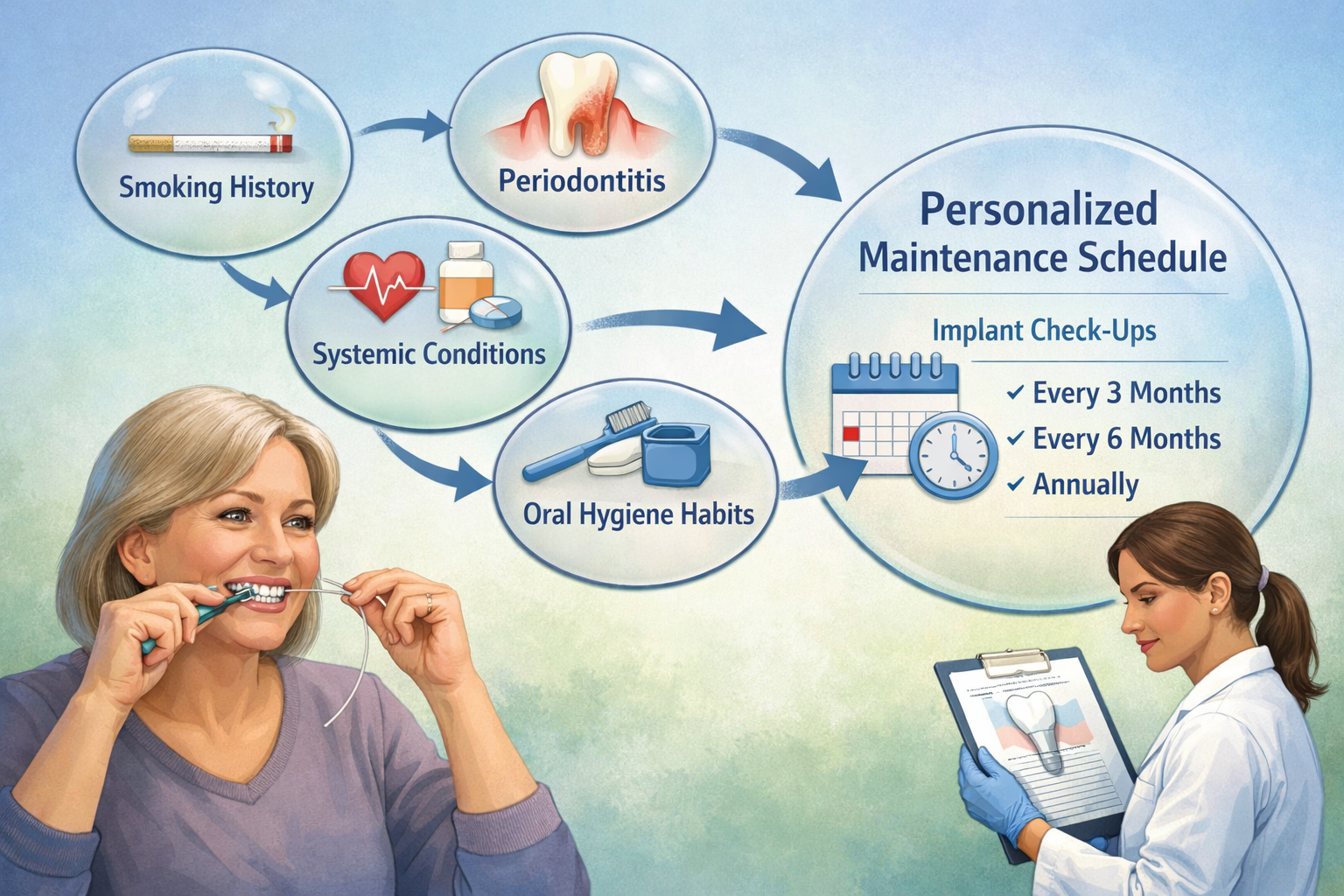
Risk-Stratified Intervals: The American College of Prosthodontists (ACP) emphasizes a personalized approach, recommending in-office maintenance appointments at 2- to 6-month intervals [5]. This risk-stratified model considers several individual factors:
- History of Periodontitis: Patients who have a history of gum disease are at a higher risk for peri-implantitis and may require more frequent visits [5].
- Smoking History: Smoking significantly increases the risk of implant complications and can necessitate more frequent monitoring [5].
- Systemic Conditions: Certain health conditions, such as diabetes, can affect healing and overall implant health, requiring closer observation [5]. Our guide on Diabetic Dental Implant Recovery: Guide & Timeline (2026) offers more insights.
- Oral Hygiene Dexterity: How well a patient performs daily home care plays a huge role. Those with limited dexterity might need more frequent professional cleanings [5].
- Type of Prosthesis: Full-arch restorations, like All-on-4 implants, may have specific maintenance needs. After the initial year, these typically transition to ongoing maintenance every 4-6 months depending on patient needs [2]. Our article on All-on-4 Dental Implant Cleaning Routine: 2026 Guide provides details on this.
- Bruxism (Teeth Grinding): Patients who grind or clench their teeth can put excessive pressure on implants, requiring careful monitoring and potentially a Dental Implant Night Guard: Essential Protection in 2026 [5].
A typical maintenance visit should last approximately 1 hour and include a comprehensive evaluation [4].
Table: Recommended Dental Implant Check-up Schedule
| Timeline | Recommended Frequency | Key Focus Areas |
|---|---|---|
| First Year Post-Placement | Every 3 months (quarterly) [6] | Healing, osseointegration, soft tissue health, prosthesis fit, early complication detection. |
| Ongoing (After First Year) | Every 2-6 months (risk-based) [5] | Peri-implantitis prevention, bite assessment, component integrity, general oral health. |
| For Most Healthy Patients | Every 6 months [7] | General monitoring, professional cleaning, X-ray comparison (every 1-2 years). |
| High-Risk Patients | Every 2-4 months [5] | Intensive monitoring for gum disease, smoking, systemic conditions, or complex prostheses. |
| Radiographic Monitoring (X-rays) | 6-8 months, then 1 year, then every 1-2 years [4, 5] | Assessing bone level changes, detecting bone loss, identifying potential infections or implant failure symptoms. |
What Happens During a Dental Implant Check-up?
A thorough dental implant check-up is more than just a quick glance. It’s a systematic evaluation designed to ensure every aspect of your implant and surrounding oral health is optimal. These appointments are usually conducted by your general dentist or a specialist, such as a periodontist or prosthodontist, especially if you had a Dental Implant Specialist Follow Up Dallas 2026 | Guide & Pl after your initial surgery.
Here’s what you can expect during a typical visit:
- Review of Medical and Dental History: Your dental professional will start by asking about any changes in your general health or medications since your last visit. This information is crucial as systemic health impacts oral health and implant longevity [4].
- Clinical Examination:
- Soft Tissue Evaluation: The gums and tissues around your implants will be carefully examined for any signs of inflammation, redness, bleeding, or swelling, which could indicate peri-implantitis [2, 3].
- Probing Depths: A special probe may be used to measure the depth of the gum pockets around your implants. Consistent or increasing pocket depths can signal trouble.
- Implant Stability Testing: Your dentist will gently check the implant for any mobility. A healthy implant should be completely stable [4].
- Bite and Occlusion Assessment: The way your upper and lower teeth meet will be checked to ensure there are no excessive forces on the implant crown, which can cause complications over time [2].
- Prosthesis Inspection: If you have a crown, bridge, or denture attached to your implants, its integrity, fit, and any signs of wear will be thoroughly checked. This includes inspecting for chips, cracks, or loose components [2, 3].
- Radiographic Examination (X-rays):
- Frequency: Periapical or vertical bitewing radiographs are typically taken at 6-8 months after implant placement, again at 1 year, and then usually every 1-2 years thereafter, or whenever there are clinical signs of a problem [4, 5].
- Purpose: These X-rays are critical for assessing bone level changes around the implant. Bone loss is a primary indicator of peri-implantitis or other issues. They also help detect any potential issues with the implant itself or the surrounding bone that aren’t visible clinically [4, 5]. Our article on Optimal Dental Implant X-Ray Frequency: Your 2026 Guide provides further detail.
- Professional Cleaning:
- Specialized Tools: Dental hygienists use specialized tools made of plastic or graphite (not traditional metal scalers) to clean around implants, preventing damage to the implant surface [1, 3].
- Plaque and Tartar Removal: Even with diligent home care, plaque and tartar can accumulate, especially in hard-to-reach areas. Professional cleaning removes these deposits to prevent inflammation and disease [1, 3].
- Home Care Instruction Review: Your dental team will review your oral hygiene techniques, ensuring you’re using the correct brushing and flossing methods for your implants. They may recommend specific tools like interdental brushes, water flossers, or a sulcus brush for implants [1, 3].
The Importance of Daily Home Care Between Visits
While professional check-ups are non-negotiable, the daily care you provide your dental implants at home is equally, if not more, important. Excellent home hygiene is the frontline defense against plaque buildup and peri-implantitis.
Essential Home Care Practices:
- Brushing Twice Daily: Use a soft-bristled toothbrush and a non-abrasive toothpaste. Gently brush around the implant, crown, and gum line, just as you would your natural teeth [1, 3].
- Daily Flossing: Regular flossing is critical to remove plaque and food particles from between your implant and adjacent teeth, and below the gum line. Special implant-specific floss or a water flosser can be highly effective [1, 3].
- Interdental Brushes: These tiny brushes can effectively clean the spaces between your implants and natural teeth, or underneath implant bridges [1, 3].
- Mouthwash: An antimicrobial mouthwash may be recommended by your dentist to help control bacteria, but always choose one that is alcohol-free to avoid irritation [1, 3].
- Quit Smoking: If you smoke, quitting is one of the most impactful steps you can take to protect your dental implants. Smoking dramatically increases the risk of complications and implant failure [5].
For a more detailed guide on daily maintenance, refer to our article on How to Clean Dental Implants.
Long-Term Component Maintenance
Beyond the biological aspect, dental implants are prosthetic devices with various components that may require periodic attention or replacement. Understanding this is part of appreciating the long-term investment.
- Abutments: The connector piece between the implant post and the crown. These may need replacement every 10-15 years [2].
- Fixation Screws: These tiny screws secure the abutment to the implant. They can occasionally loosen or wear and may need replacement every 5-7 years [2].
- Attachment Mechanisms: For removable overdentures supported by implants, the attachment mechanisms (like O-rings or clips) experience wear and typically need replacement every 1-2 years to maintain a secure fit [2].
- Crowns/Prostheses: While the titanium implant post can last a lifetime, the crowns, bridges, or dentures attached to them are subject to wear and tear. They may need replacement after 10-15 years, similar to natural tooth crowns [2]. Learn more about Dental Implant Crown Replacement Cost Dallas | 2026 Guide.
These component replacements are generally straightforward procedures and are part of the expected long-term maintenance of your implant-supported restoration.
Cost-Effectiveness of Regular Check-ups
Some patients might be concerned about the cost of frequent dental visits. However, viewing these check-ups as a preventative investment rather than an expense is crucial.
- Preventing Costly Repairs: Addressing minor issues early on is significantly less expensive than treating advanced peri-implantitis or replacing a failed implant. A professional cleaning visit typically costs $150-$300, while a comprehensive annual evaluation might range from $250-$500 [2]. In contrast, revision dental implant surgery can be much more complex and costly.
- Maximizing Longevity: Regular maintenance directly contributes to the lifelong success of your implants, protecting your initial investment which can be substantial (you can learn more about Why Dental Implants Cost So Much in Dallas | 2025 Price Guide and explore Dental Implant Payment Plans No Credit Check | 2025 Guide if financing is a concern).
- Avoiding Discomfort and Inconvenience: Preventing complications means avoiding the pain, discomfort, and disruption to your daily life that can accompany implant problems or failure.
Consider discussing various financing options with your clinic, as many offer plans or work with third-party providers. Our guide on Can I Afford Dental Implants Bad Credit in 2026? Yes! might offer helpful insights.
Conclusion
Understanding how often dental implants should be checked is fundamental to their long-term success. In 2026, the clear consensus among dental professionals points to a proactive, personalized approach to implant maintenance. During the critical first year, quarterly visits are essential for ensuring proper healing and integration. Thereafter, a risk-stratified schedule, often ranging from every 2 to 6 months, will be tailored to your individual needs, considering factors like your medical history, oral hygiene, and the type of restoration you have.
Remember, your dental implants are a significant investment in your health and confidence. Just as you care for your natural teeth, these replacements demand consistent attention, both through diligent home care and regular professional check-ups. By adhering to your recommended maintenance schedule, engaging actively with your dental team, and practicing excellent oral hygiene daily, you are taking the most crucial steps to ensure your dental implants serve you well for many decades to come. Don’t hesitate to reach out to your dental professional in Dallas or elsewhere to discuss your specific maintenance plan and ensure your smile remains healthy and radiant.
References
[1] Dental Implant Maintenance Guide Ensuring Longevity And Health – https://4mdentalimplants.com/dental-implant-maintenance-guide-ensuring-longevity-and-health/
[2] All On 4 Implants Long Term Maintenance – https://www.myimagedental.com/blog/all-on-4-implants-long-term-maintenance/
[3] The Guide To Long Term Success Proper Dental Implant Maintenance – https://www.stillwaterfamilydental.com/the-guide-to-long-term-success-proper-dental-implant-maintenance
[4] Pmc4897104 – https://pmc.ncbi.nlm.nih.gov/articles/PMC4897104/
[5] Position Statement Maintenance Of Full Arch Implant Restorations – https://www.prosthodontics.org/about-acp/position-statement-maintenance-of-full-arch-implant-restorations/
[6] New 2025 Implant Maintenance Guidelines Reduce Failure Rates – https://omnidentalgrp.com/new-2025-implant-maintenance-guidelines-reduce-failure-rates/
[7] Preventive Dental Care Trends 2026 – https://www.raiodental.com/blog/preventive-dental-care-trends-2026
[8] 06 102%20implant%20maintenance%20procedures – https://www.unicare.com/ms/dentalproviders/2026/06-102%20Implant%20Maintenance%20Procedures.pdf
[9] Dental Health Statistics – https://www.imagineyoursmile.com/blog/dental-health-statistics/
Leave a Reply
Share your thoughts or ask a question about dental implants. Your email address will not be published.