

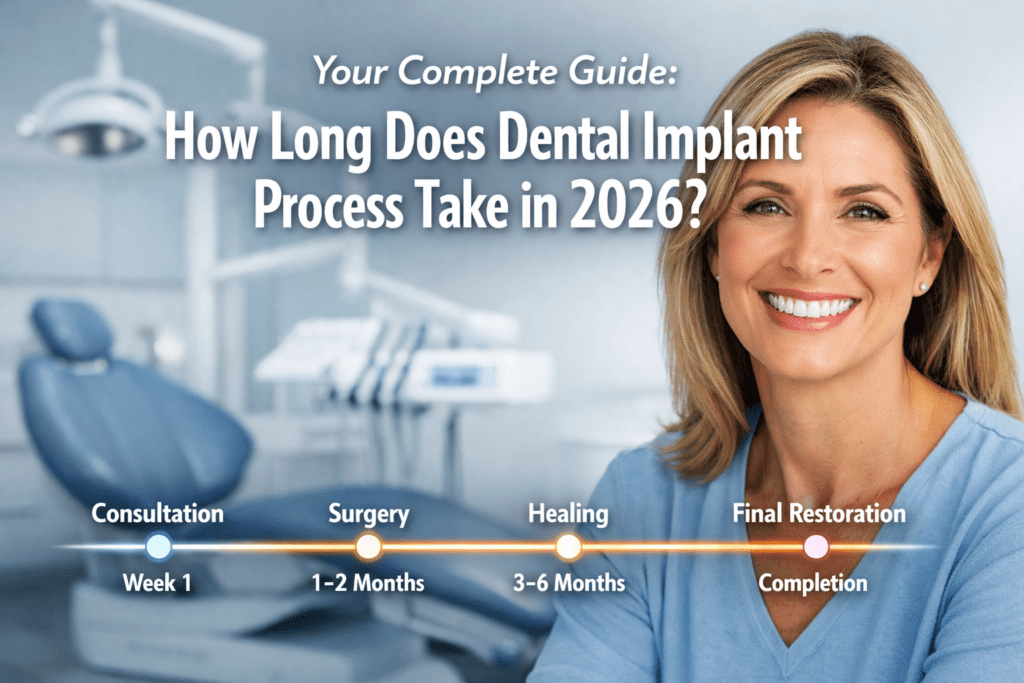
Embarking on the journey to restore your smile with dental implants is an exciting prospect, promising a durable, natural-looking solution for missing teeth. However, one of the most common questions we hear at our practice is: “how long does dental implant process take?” It’s a valid concern, as the process isn’t a one-day affair. Understanding the timeline involved can help you prepare mentally, physically, and financially for this transformative procedure. In 2026, while advancements continue to streamline certain aspects, the fundamental biological processes that dictate healing and integration still require a specific timeframe. This comprehensive guide will break down each stage, clarify common misconceptions, and provide a realistic expectation for your dental implant journey.
Key Takeaways
- The total dental implant process typically spans 3 to 9 months, but can extend to over a year in complex cases.
- Osseointegration, the fusion of the implant with your jawbone, is the most time-consuming yet crucial phase, often taking 3-6 months.
- Factors like bone density, overall health, and the need for supplementary procedures (e.g., bone grafts) significantly impact the timeline.
- The process involves several distinct stages: initial consultation, implant placement, osseointegration, abutment placement, and crown attachment.
- Choosing an experienced dental implant specialist is paramount for an efficient and successful outcome.
Understanding the Initial Phases: Consultation and Planning
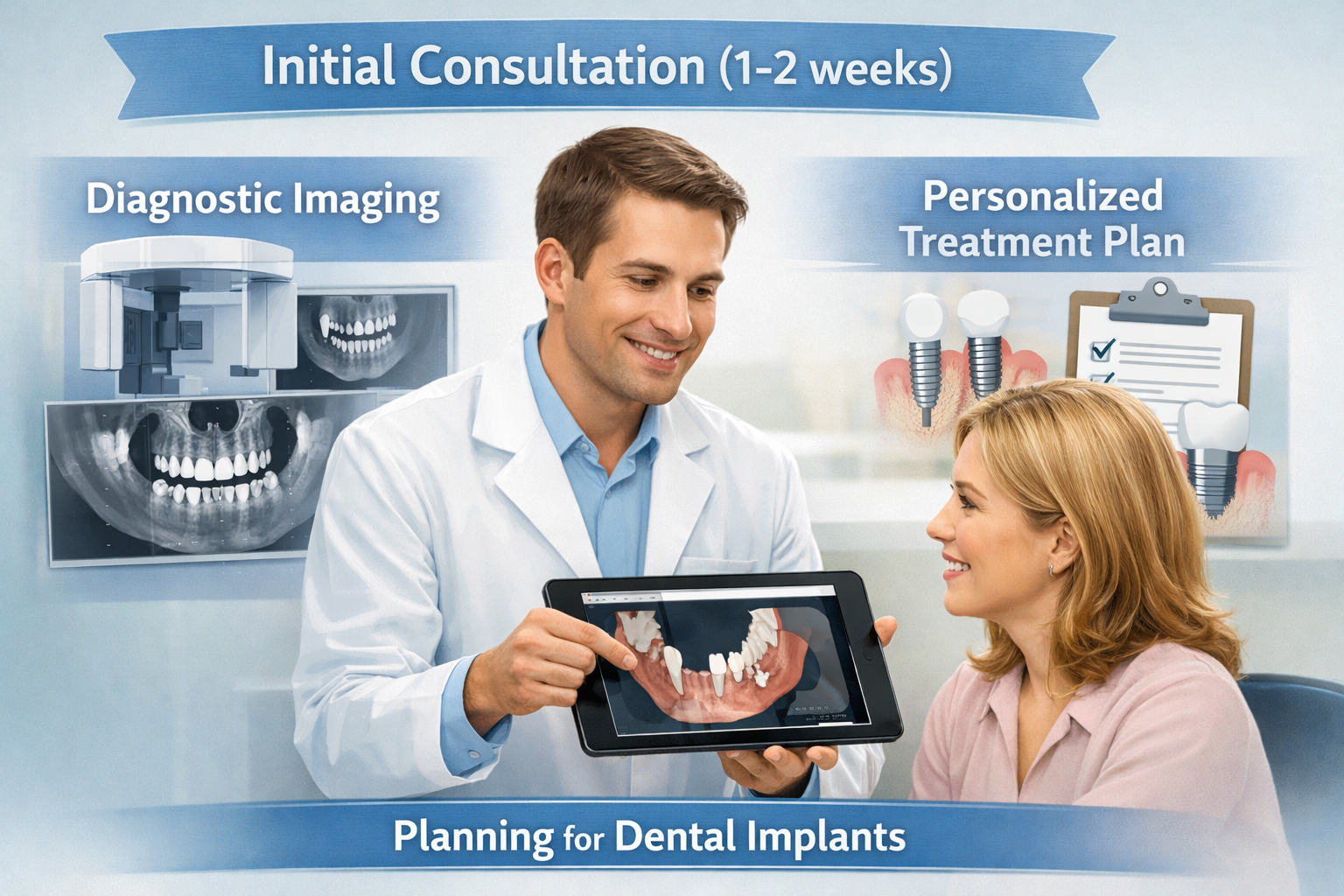
The first step in answering “how long does dental implant process take” begins long before any surgery: with a thorough consultation and meticulous planning. This foundational phase is critical for ensuring the success and predictability of your entire implant journey.
Your First Steps: Comprehensive Assessment and Imaging
When you first visit a dental implant specialist, they will conduct a detailed examination of your oral health. This isn’t just a quick look; it’s a deep dive into the state of your teeth, gums, and crucially, your jawbone. This initial assessment typically involves:
- Clinical Examination: Your dentist will visually inspect your mouth, assessing the general health of your existing teeth and gums.
- Dental X-rays: Standard X-rays provide a two-dimensional view of your teeth and bone structure.
- 3D Cone Beam Computed Tomography (CBCT) Scans: This is perhaps the most vital diagnostic tool. CBCT scans provide highly detailed, three-dimensional images of your jawbone, nerves, and sinus cavities. This allows your dentist to accurately measure bone density, identify vital structures to avoid, and determine the optimal placement for the implant [1]. You can learn more about the importance of a CT scan for dental implants here: CT scan and dental implants.
- Review of Medical History: Your overall health plays a significant role in your suitability for implants and the healing process. Conditions like diabetes or osteoporosis, and medications you might be taking, will be thoroughly reviewed.
This diagnostic phase usually takes 1-2 appointments over a period of 1 to 2 weeks. During this time, your dental team will gather all the necessary information to create a personalized treatment plan.
Crafting Your Personalized Treatment Plan
Once all diagnostic information is collected, your dental implant specialist will develop a precise treatment plan tailored to your unique needs. This plan will outline:
- Number and Type of Implants: Whether you need a single implant, multiple implants, or a full-arch solution like All-on-4® or All-on-6®.
- Implant Location: The exact spots where the implants will be placed.
- Need for Supplemental Procedures: This is a crucial aspect that often extends the overall timeline. If your jawbone isn’t dense or voluminous enough to support an implant, a bone graft may be necessary. Similarly, if implants are planned in the upper jaw near the sinus cavities, a sinus lift might be required.
- Sedation Options: Discussing pain management and anxiety control during the procedure.
- Estimated Timeline and Cost: Providing a clear expectation of how long the dental implant process will take and the associated investment.
“Thorough planning is the bedrock of successful dental implant treatment. It allows us to anticipate challenges and ensure the best possible outcome for our patients, directly impacting how long the dental implant process takes.”
This planning stage, while not involving any active treatment, can be the most influential in determining the total duration of your journey. If supplementary procedures are needed, this initial estimate will immediately reflect a longer overall timeline.
Surgical Placement of the Implant and Osseointegration
This is where the actual “implant” part of the dental implant process takes place. It’s a multi-stage process involving surgery and a critical healing period.
The Implant Placement Surgery
The surgical placement of the dental implant post is typically an outpatient procedure performed under local anesthesia, often with oral or intravenous sedation to ensure your comfort.
- Anesthesia: The area will be numbed, and if chosen, sedation will be administered to help you relax.
- Incision: A small incision is made in your gum tissue to expose the jawbone.
- Pilot Hole: A small hole is carefully drilled into the jawbone at the precise location determined during the planning phase.
- Implant Insertion: The titanium dental implant post, which resembles a small screw, is then gently threaded into this pilot hole.
- Gum Closure: The gum tissue is usually closed over the implant with stitches, completely covering it. In some cases, a healing abutment might be placed immediately, allowing the gum to heal around it.
The actual implant placement surgery for a single implant usually takes about 1 to 2 hours. For multiple implants, it will naturally take longer. For more complex cases like full mouth dental implants, the procedure might take several hours. While the surgery itself is relatively quick, it marks the beginning of the longest and most crucial phase: osseointegration.
The Critical Healing Phase: Osseointegration
This is the most significant factor influencing “how long does dental implant process take.” Osseointegration is the biological process where the titanium implant post fuses directly with your jawbone. It’s what makes dental implants incredibly stable and durable, mimicking the root of a natural tooth.
- Why Titanium? Titanium is biocompatible, meaning your body readily accepts it and allows bone cells to grow onto and around its surface.
- What Happens During Osseointegration? Over several months, your bone cells gradually migrate and grow around the implant surface, locking it firmly into place. This creates a strong, stable foundation for your new tooth.
- Duration: This healing period typically lasts anywhere from 3 to 6 months. However, it can vary significantly based on individual healing capabilities, bone density, and whether any bone grafting was performed. During this time, you’ll need to follow specific post-operative care instructions to ensure proper healing. You can find detailed aftercare instructions here: Dental Implant Aftercare Instructions.
It’s important to be patient during this stage. Rushing the process can compromise the success of the implant. While waiting, you may be fitted with a temporary crown or a temporary partial denture to maintain your aesthetic and chewing function.
Factors That Extend the Dental Implant Timeline
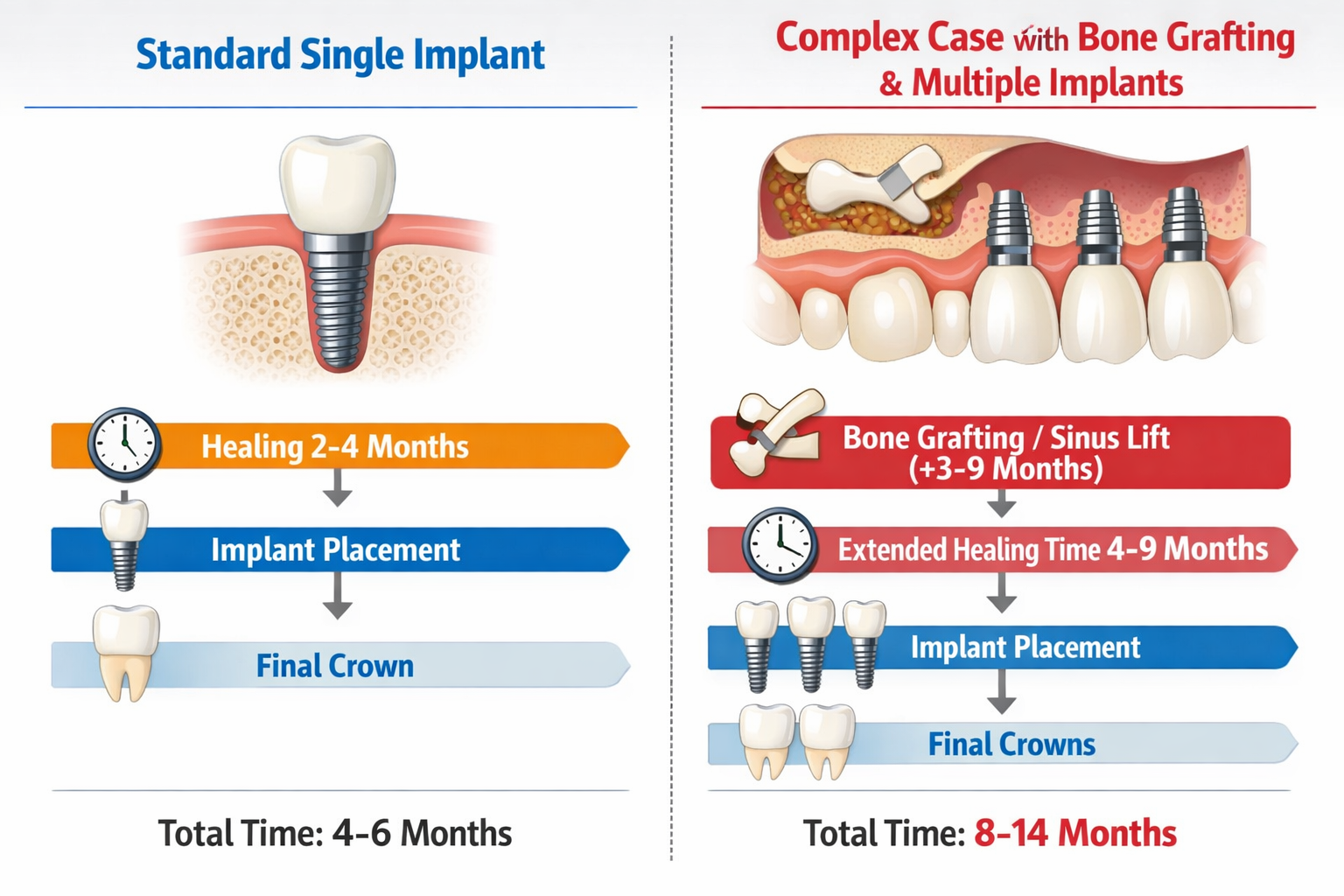
While the general timeline for “how long does dental implant process take” is 3-9 months, several factors can significantly extend this duration. Being aware of these can help manage your expectations.
Supplementary Procedures: Bone Grafts and Sinus Lifts
The most common reason for a longer dental implant timeline is the need for supplementary bone augmentation procedures.
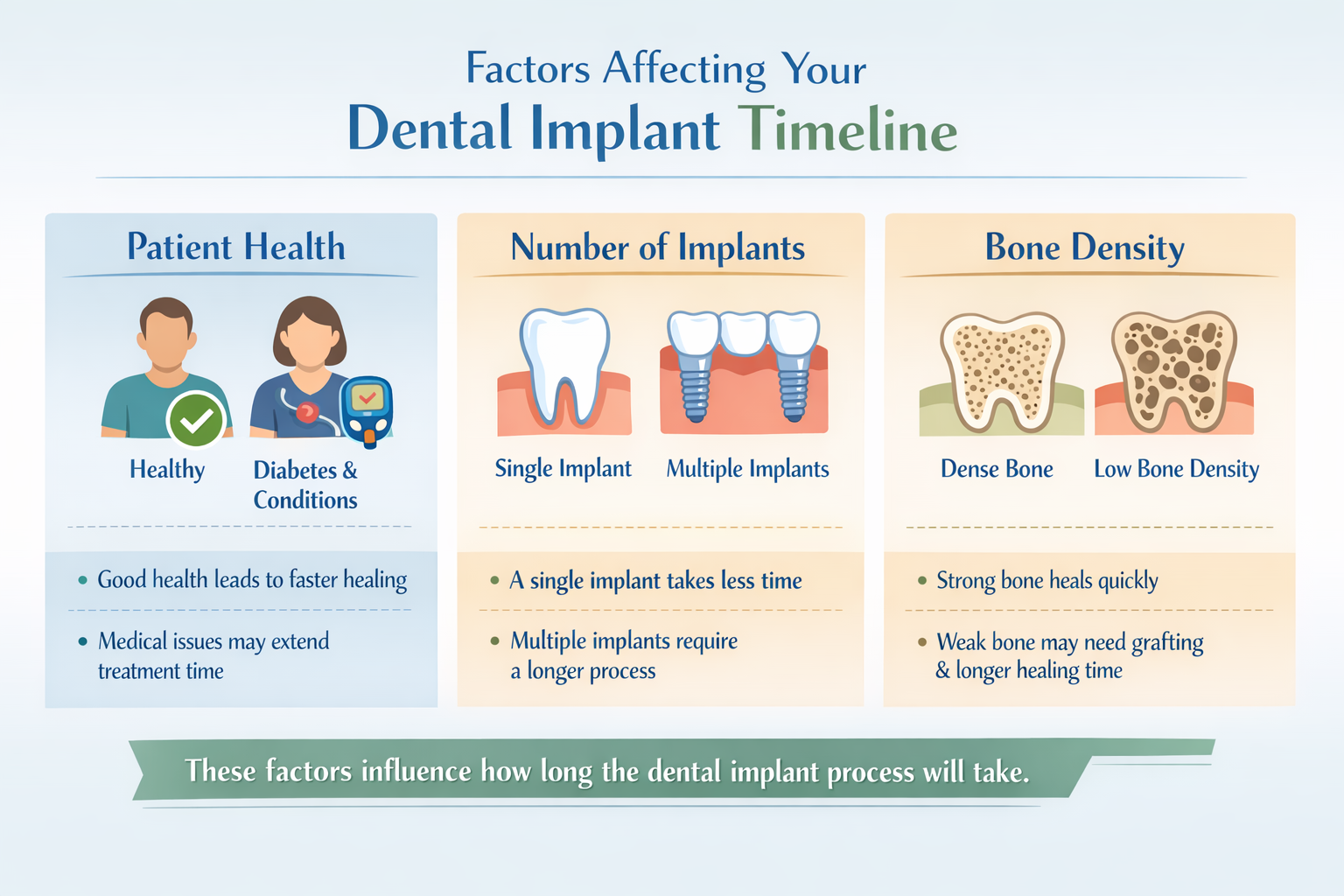
- Bone Grafting: If your jawbone is not thick or dense enough to support an implant, a bone graft is required. This involves adding bone material (from your own body, a donor, or synthetic sources) to the area.
- Healing Time: A bone graft itself requires a significant healing period before an implant can be placed, typically 3 to 9 months. This allows the grafted material to integrate with your existing bone and create a strong foundation. In some cases, a small graft might be done at the same time as implant placement, but larger grafts necessitate separate procedures and longer healing. Learn more about bone graft healing here: Dental Bone Graft Healing.
- Sinus Lift: If implants are needed in the upper jaw and there isn’t enough bone between the jaw and the sinus cavity, a sinus lift might be performed. This procedure involves lifting the sinus membrane and placing bone graft material into the space.
- Healing Time: Similar to a bone graft, a sinus lift requires 4 to 9 months of healing before the implants can be placed.
“A healthy, adequate jawbone is non-negotiable for successful dental implants. If nature hasn’t provided it, we augment it, adding several months to the overall dental implant process, but ensuring long-term stability.”
These procedures, while adding time, are often crucial for the long-term success and stability of your dental implants. Skipping them when indicated would lead to implant failure.
Patient Health and Lifestyle Choices
Your overall health and daily habits can also play a role in how long the dental implant process takes.
- Systemic Health Conditions:
- Diabetes: Uncontrolled diabetes can impair healing and increase the risk of infection, potentially extending the osseointegration period.
- Autoimmune Diseases: Certain conditions or medications for them can affect bone healing.
- Osteoporosis: While not an absolute contraindication, severe osteoporosis can affect bone quality and the success of osseointegration.
- Smoking: Smoking significantly hinders blood flow to the gums and bone, slowing down healing and increasing the risk of implant failure. Many specialists require patients to quit smoking before and after implant surgery.
- Oral Hygiene: Poor oral hygiene can lead to peri-implantitis (gum disease around the implant), which can jeopardize the implant and extend treatment time if complications arise.
- Medications: Certain medications, especially those affecting bone metabolism (like some bisphosphonates), need to be discussed thoroughly with your dentist and physician, as they can impact healing.
Number of Implants and Extent of Treatment
- Single Implant vs. Multiple Implants: A single implant procedure is generally quicker than placing multiple implants or a full-arch restoration like All-on-4® or All-on-6®. While the individual implant osseointegration time remains similar, the surgical time for placement and the complexity of coordinating multiple restorations will naturally extend the overall timeline.
- Tooth Extraction: If a tooth needs to be extracted before implant placement, this will add a healing period (typically 6-10 weeks) for the extraction site before the implant can be surgically placed. Sometimes, immediate implant placement after extraction is possible, but this depends on the health of the extraction site.
These variables underscore why a personalized consultation is so important. A generic “how long does dental implant process take” answer often doesn’t capture the nuances of individual patient needs.
Abutment Placement and Crown Attachment
Once osseointegration is complete and your jawbone has fully integrated with the implant, the final stages of your treatment can begin. This brings you much closer to enjoying your new, fully functional teeth.
Revealing the Implant and Placing the Abutment
After the osseointegration period (typically 3-6 months), your implant is ready for the next step.
- Uncovering the Implant: If the implant was completely covered by gum tissue during the initial healing, a minor surgical procedure is performed to uncover the top of the implant. This involves a small incision in the gum to expose the implant.
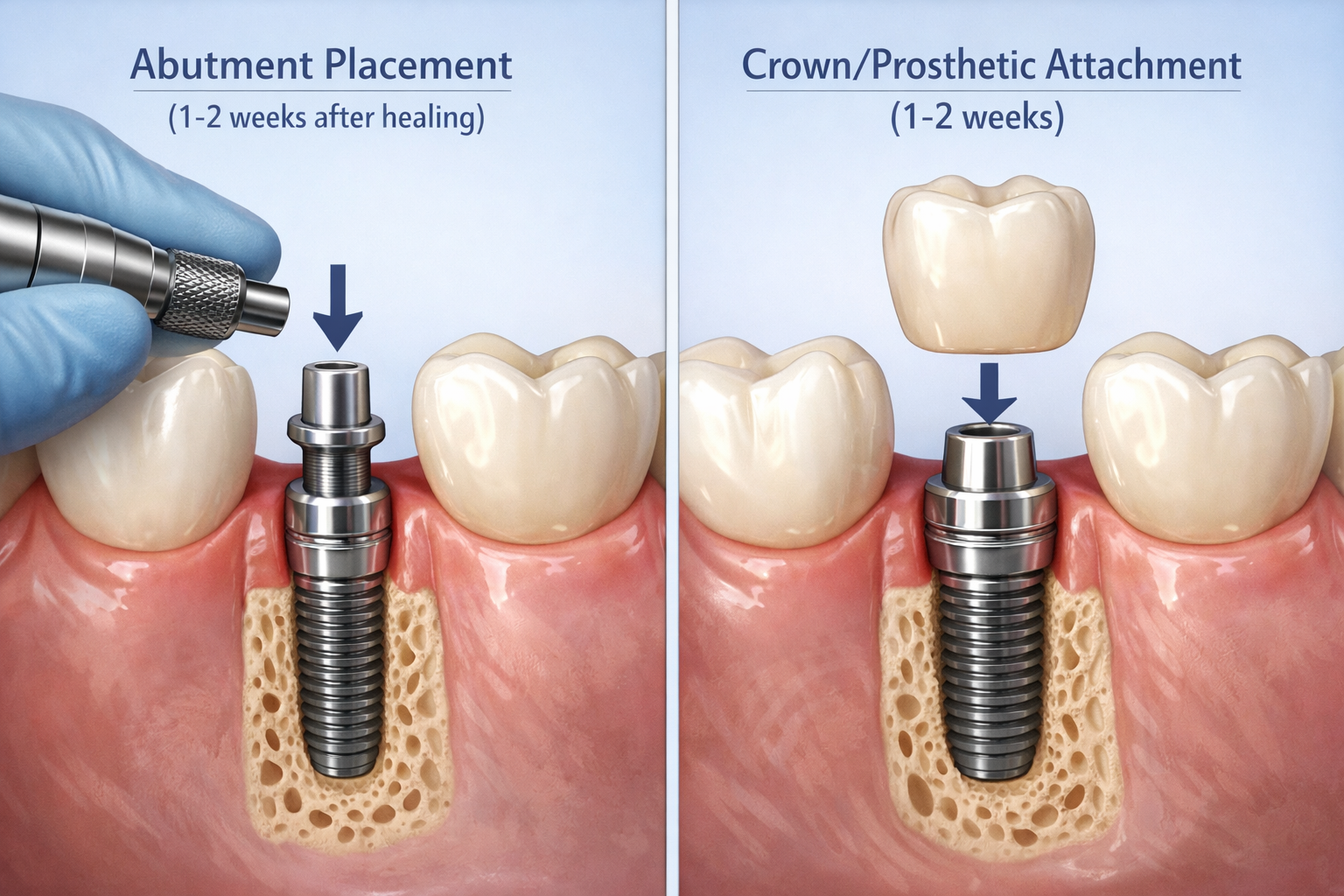
- Abutment Attachment: An abutment is a small connector piece that screws into the top of the dental implant. It protrudes through the gum line and serves as the anchor for your new crown, bridge, or denture.
- Healing Time: The gum tissue around the abutment needs to heal and conform to its shape, which typically takes about 1 to 2 weeks. This allows for a proper seal around the abutment, preventing bacteria from reaching the implant. You can read more about this crucial stage here: Complete Guide to the Dental Implant Abutment Procedure.
In some cases, especially with immediate load implants or if a healing abutment was placed during the initial surgery, this uncovering step may not be necessary, slightly shortening this phase.
Fabricating and Attaching Your Permanent Restoration
This is the moment you’ve been waiting for – receiving your new, permanent tooth!
- Impressions: Once the gum tissue around the abutment has healed, your dentist will take impressions (molds) of your mouth. These impressions are sent to a dental lab, where a custom-made crown, bridge, or denture will be fabricated to precisely fit your mouth and match your natural teeth in shape, size, and color.
- Trial Fitting (Optional): For larger restorations or complex cases, a trial fitting might be conducted to ensure perfect fit and aesthetics before the final restoration is permanently attached.
- Final Attachment: Once your custom restoration is ready (which usually takes 2 to 4 weeks for the lab to create), you’ll return to the dentist for its final placement. The crown is either cemented or screwed onto the abutment. Your dentist will ensure your bite is correct and make any necessary adjustments.
- Immediate Load Implants: In very specific cases where a patient has excellent bone density and the implant has achieved significant stability upon placement, a temporary crown might be placed directly after implant surgery (within 48 hours). This is known as “immediate load” or “teeth in a day” implants. While appealing, it’s not suitable for everyone and requires strict adherence to a soft diet for several months. For a full-arch solution like All-on-4, a temporary prosthetic is almost always placed on the day of surgery, allowing patients to leave with a functional set of teeth, even as osseointegration continues.
The final placement of the restoration marks the completion of the active dental implant process. You’ll then be ready to enjoy the full benefits of your new, beautiful, and functional smile. Aftercare and regular dental check-ups will be essential for the long-term success of your implants. We often advise patients about the best toothpaste for implants best toothpaste for implants.
A Typical Dental Implant Timeline (2026)
To provide a clearer picture of how long the dental implant process takes, let’s outline a few common scenarios. Remember, these are estimates, and your individual timeline may vary.
Scenario 1: Straightforward Single Implant (Best Case)
This timeline applies to patients with good overall health, excellent bone density, and no need for extractions or bone grafting.
| Stage | Estimated Timeframe | Total Cumulative Time |
|---|---|---|
| Initial Consultation & Planning | 1-2 weeks | 1-2 weeks |
| Implant Placement Surgery | 1 day | 1-2 weeks |
| Osseointegration (Healing) | 3-4 months | 3.5 – 4.5 months |
| Abutment Placement | 1-2 weeks (including gum healing) | 4 – 5 months |
| Crown Fabrication & Attachment | 2-3 weeks (lab time + final placement) | 4.5 – 5.5 months |
| Total Time (Approximate) | 4.5 – 5.5 months |
This is often the ideal scenario and represents the quicker end of the “how long does dental implant process take” spectrum.
Scenario 2: Single Implant with Bone Graft
This is a very common scenario where some bone loss has occurred, requiring augmentation.
| Stage | Estimated Timeframe | Total Cumulative Time |
|---|---|---|
| Initial Consultation & Planning | 1-2 weeks | 1-2 weeks |
| Bone Grafting Procedure | 1 day | 1-2 weeks |
| Bone Graft Healing | 3-6 months (before implant placement) | 3.5 – 6.5 months |
| Implant Placement Surgery | 1 day | 3.5 – 6.5 months |
| Osseointegration (Implant Healing) | 3-6 months (after implant placement) | 6.5 – 12.5 months |
| Abutment Placement | 1-2 weeks | 7 – 13 months |
| Crown Fabrication & Attachment | 2-3 weeks | 7.5 – 13.5 months |
| Total Time (Approximate) | 7.5 – 13.5 months or potentially longer |
As you can see, the addition of a bone graft significantly extends how long the dental implant process takes, sometimes doubling the overall duration. We have more information on bone grafting for dental implants here: Bone Grafts for Dental Implants.
Scenario 3: Full Mouth Implants (e.g., All-on-4® or All-on-6®)
These procedures often involve multiple extractions and simultaneous implant placement, with a temporary prosthetic immediately placed.
| Stage | Estimated Timeframe | Total Cumulative Time |
|---|---|---|
| Initial Consultation & Planning | 1-3 weeks (more extensive planning) | 1-3 weeks |
| Extractions & Implant Placement | 1 day (often involves multiple teeth and 4-6 implants) | 1-3 weeks |
| Temporary Prosthetic Attachment | 1-2 days (often same day or next day) | 1-3 weeks |
| Osseointegration (Healing) | 4-6 months (implants fuse with bone under temporary bridge) | 4-7 months |
| Final Prosthetic Impressions | 1-2 appointments after healing (weeks 16-24) | 4-7 months |
| Final Prosthetic Fabrication & Attachment | 3-6 weeks (lab work + multiple fitting appointments) | 5-8 months |
| Total Time (Approximate) | 5 – 8 months |
While you get a functional, aesthetic temporary set of teeth quickly, the complete process for full-arch implants still requires several months for the underlying implants to fully integrate before the final, permanent prosthetic can be placed. This scenario highlights that even with “teeth in a day” concepts, the full biological healing process still dictates the total how long the dental implant process takes. For more details on full-arch options, visit All-on-4 Dental Implants Dallas.
Maintaining Your Implants for Long-Term Success
Congratulations! You’ve navigated the entire dental implant process, and your new smile is complete. But the journey doesn’t end there. Proper maintenance is crucial for ensuring your implants last a lifetime.
The Importance of Ongoing Care
Just like natural teeth, dental implants require diligent care to remain healthy and functional. While implants themselves can’t get cavities, the surrounding gum tissue can still develop issues like peri-implantitis, a form of gum disease that can lead to bone loss around the implant if left untreated.
Excellent Oral Hygiene: This is paramount.
- Brushing: Brush twice daily with a soft-bristled toothbrush, paying special attention to the areas around your implants.
- Flossing: Use dental floss, interdental brushes, or a water flosser to clean around and between your implants and natural teeth. Water flossers are particularly effective for reaching areas around implants. Discover the best water flosser for dental implants.
- Mouthwash: Your dentist might recommend a specific antimicrobial mouthwash.
Regular Dental Check-ups: These appointments are vital. Your dentist and hygienist will:
- Clean your implants professionally.
- Monitor the health of your gums and surrounding bone.
- Check the integrity of the implant, abutment, and crown.
- Take X-rays periodically to assess bone levels around the implants.
Longevity of Dental Implants
With proper care, dental implants can last 25 years or even a lifetime [2]. The longevity makes the initial investment and the duration of the “how long does dental implant process take” worthwhile. The crown itself may need replacement after 10-15 years due to wear and tear, but the implant post integrated into your bone is designed to be permanent.
“Dental implants are a long-term investment in your oral health and quality of life. The time you commit to the process now, combined with meticulous daily care and regular check-ups, ensures a lifetime of confident smiles.”
Your commitment to hygiene and follow-up appointments is the final, essential component in the overall success and longevity of your dental implant treatment. For a more detailed guide on what to expect at every stage of recovery, read our Complete Dental Implant Recovery Timeline.
Conclusion
Understanding “how long does dental implant process take” is essential for anyone considering this life-changing procedure. While the journey can range from a relatively swift 4-6 months for straightforward cases to over a year for more complex situations requiring bone grafts or multiple procedures, the investment of time and patience is overwhelmingly rewarded.
The overall timeline is dictated by a series of precise steps: initial consultation and planning, the surgical placement of the implant, the critical osseointegration period where the implant fuses with your jawbone, and finally, the placement of the abutment and your custom-made crown. Each stage is crucial, and rushing any part can compromise the long-term success of your implant.
Remember that factors such as your general health, lifestyle choices, and the need for supplementary procedures like bone grafting or sinus lifts can all influence your individual timeline. A personalized treatment plan developed by an experienced dental implant specialist is key to understanding what your specific journey will entail.
If you’re considering dental implants, the best first step is to schedule a comprehensive consultation with a qualified professional. They can accurately assess your unique oral health needs, discuss all available options, and provide you with a precise, personalized timeline for restoring your smile. Don’t let the question of “how long does dental implant process take” deter you from exploring a solution that offers unparalleled stability, aesthetics, and functionality for your missing teeth. Take the first step towards a healthier, more confident smile in 2026. For those in Dallas, TX, you can reach out for a dental implant consultation to begin your journey.
References
[1] European Association for Osseointegration (EAO). (2020). Consensus Statements and Clinical Recommendations for the use of cone beam computed tomography (CBCT) in oral implantology. Clinical Oral Implants Research, 31(S20), 1-13.
[2] Moraschini, V., de Moraschini, K. C. G., & dos Santos, G. O. (2015). Survival of dental implants in the anterior maxilla: a systematic review. International Journal of Oral Maxillofacial Surgery, 44(8), 983-991
Dental Implant Timeline Estimator (2026)
Use this tool to get a personalized estimate for how long your dental implant process might take.
Disclaimer: This calculator provides a general estimate based on common scenarios in 2026. It is not a substitute for a professional dental consultation. Your actual timeline will depend on a thorough assessment by a qualified dental implant specialist.
Leave a Reply
Share your thoughts or ask a question about dental implants. Your email address will not be published.